MedChem
 Call Kai
 Learn
Learn Practice Test
 Spaced Repetition
 Match
Match Flashcards
 Knowt Play
1/68

There's no tags or description
Looks like no tags are added yet.
Name | Mastery | Learn | Test | Matching | Spaced | Call with Kai | Chat |
|---|
No analytics yet
Send a link to your students to track their progress
69 Terms
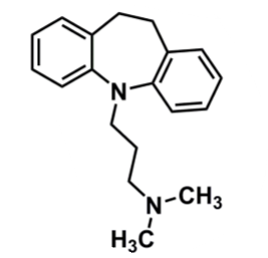
Imipramine
What is important to know about imipramine?
pharmacophore: dihydrodibenzoazepine
propyl side chain + tertiary amine → lipophilicity
can undergo meatbolic conversion to secondary amine → desipramine (both active)
non-selective b/w NET and SERT
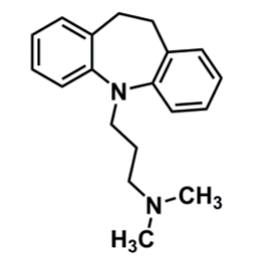
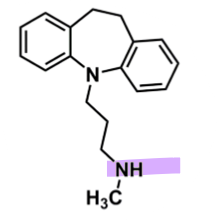
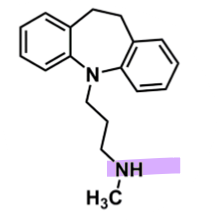
Despiramine
What is important about desipramine?
pharmacophore: dihydrodibenzoazepine
secondary amine
makes it more selective to NET
better oral bioavailability and less ADEs
less lipophilic → less into CNS, why less ADEs
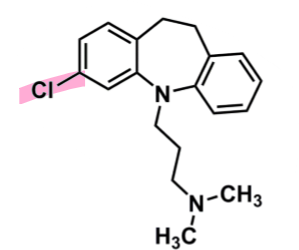
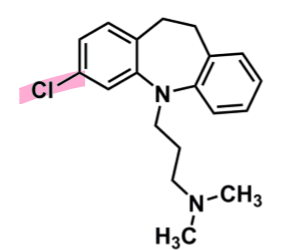
Clomipramine
What is important about clomipramine?
pharmacophore: dihydrodibenzoazepine
+ Cl → enhances binding affinity and lipophilicity
more potent than imipramine
tertiary amine
can be converted to secondary amine and still active - metabolite more selective to NET
can inhibit DAT
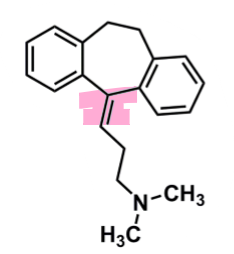
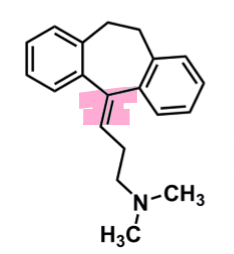
Amitriptyline
What is important about amitriptyline?
pharmacophore: dibenzocycloheptene
no nitrogen - all carbons in center ring
same pharmacological activity
light sensitive due to double bond
tertiary amine
can be converted to secondary amine → nortriptyline
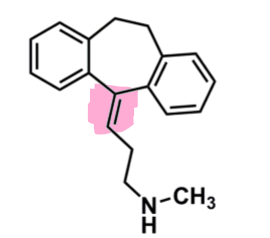
Nortriptyline
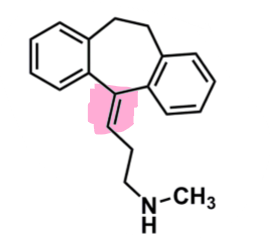
What is important about nortriptyline?
pharmacophore: dibenzocycloheptene
no nitrogen - all carbons in center ring
same pharmacological activity
light sensitive due to double bond
secondary amine → more selective to NET
less lipophilic, so less CNS and less ADEs
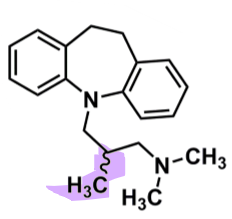
Timipramine
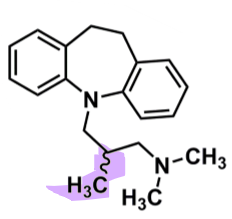
What is important about trimipramine?
pharmacophore: dihydrodibenzoazepine
imipramine derivative
shorter half-life compared to imipramine due to branched methyl
creates a stereocenter (both active)
decreases binding affinity to NE and 5-HT receptors
tertiary amine
can be metabolized to secondary that is more selective to NET
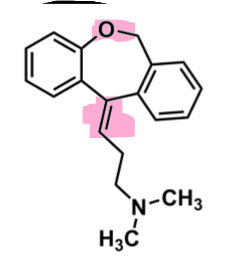
Doxepin
What is important about doxepin?
dibenzeoxepin derivative
added O → creates diastereomers (E better activity)
E-isomer more selective to NET
lower binding affinity versus imipramine
tertiary amine
can be converted to secondary amine more selective to NET
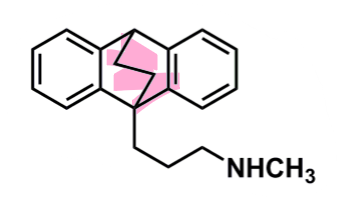
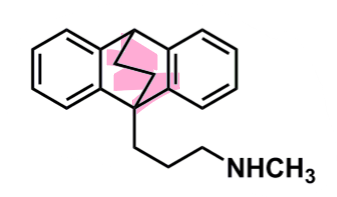
Maprotiline
What is important about maprotiline?
tetracyclic anthracene derivative
central ring structure is a bicyclic ring
secondary amine → selective to NET
convert to primary and weak/little activity
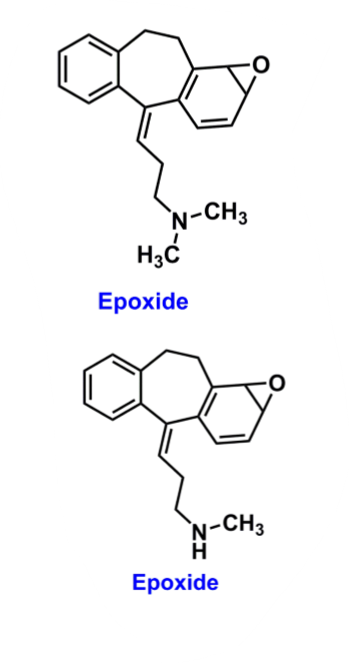
What causes TCA mediated toxicities?
epoxide metabolites (tertiary or secondary amines)
are electrophiles and react with cellular proteins that can trigger an immune response → hypersensitivity reactions in susceptible patients
What helps bind TCAs with SERT?
at physiological pH, tertiary amine undergoes protonation
allows for ionic interaction with aspartic acid in binding site → locks molecule in place
What is the SAR of TCAs?
central ring structure - 3 rings, 2 of which are benzene
ring B (center) tolerates carbon, nitrogen and oxygen atoms @ C10/C11
halogens @C3/7 enhance SERT selectivity
3 carbon spacer (propyl) @C/N5 necessary
increase or decrease length decreases or loses activity
amines
tertiary → inhibits SERT/NET, reduced oral bioavailability
secondary → NET selective, superior oral bioavailability to tertiaries, reduced ADEs
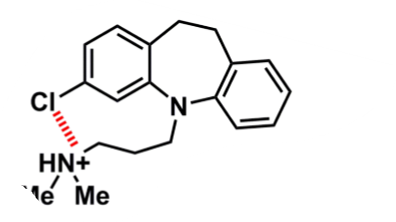
Why do halogens at C3/7 position enhance SERT selectivity?
halogen can interact with protonated amine group
locks into a bioactive conformation which favours SERT
improves activity and potency
Trazodone
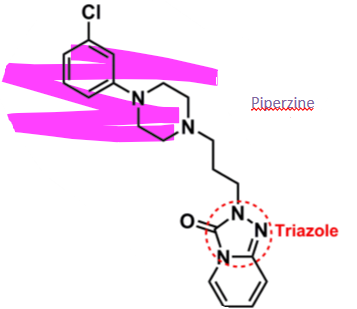
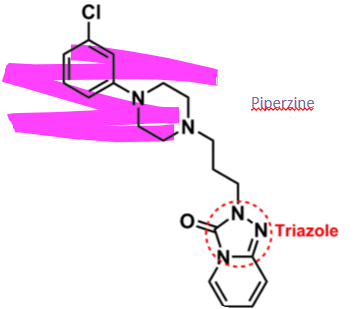
What is important about trazodone?
pharmacophore: phenylpiperazine
chlorobenzene → more lipophilic, more into CNS
piperazine → enhances oral bioavailability
fused bicyclic ring structure = triazole + benzene
enhances binding affinity
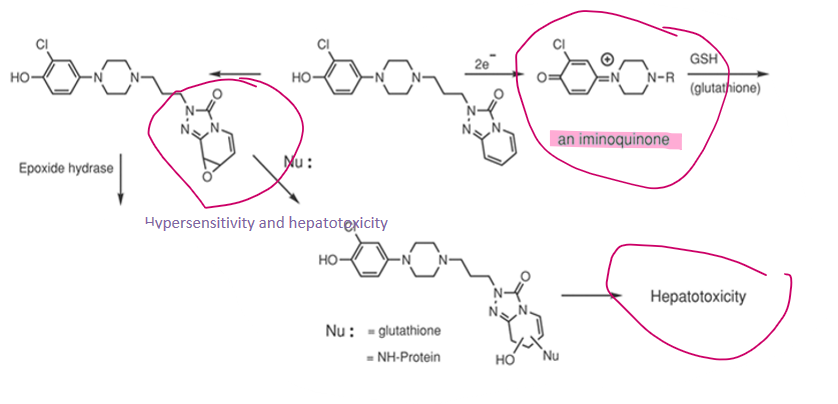
What are the concerning metabolites of trazodone and why?
epoxide metabolite (off benzene fused ring)
can cause hypersensitivity and hepatotoxicity
If loses propyl group + fused rings → iminoquinone
electrophile/oxidant, and can cause cellular damage and toxicity
Mianserin
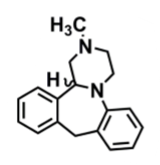
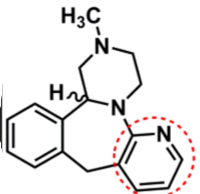
What is important about mianserin?
pharmacophore: benzoazepine
tetracyclic
benzene + benzene + 7 member ring + piperazine
benzene had poor oral bioavailability and caused ADEs like glucopenia
had to do SAR, could not continue using
Mirtazapine
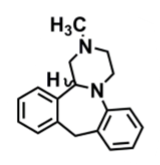
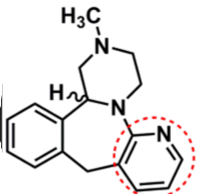
What is important about mirtazapine?
pharmacophore: benzoazepine
tetracyclic
benzene + pyridine + 7 member ring + piperazine
changing benzene to pyridine → less lipophilic, more bioavailable and less ADEs
“considered most effective antidepressant”
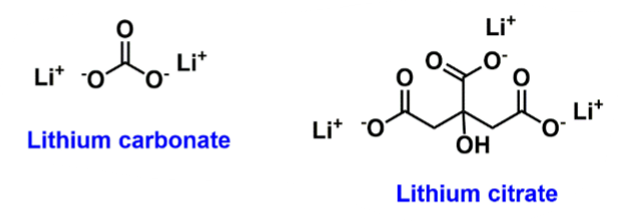
Lithium carbonate
Lithium citrate
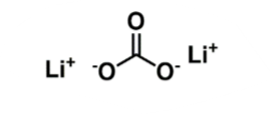
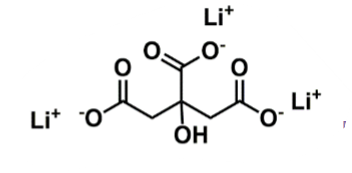
What is important about lithium carbonate and lithium citrate?
inorganic molecules (cations)
monovalent cation → other cations replaced with Li, most times bind more efficiently
adenylyl cyclase has Mg+, when replaced limits activity → reduces cAMP in brain
replaces Na+ in GCPR, prevents activation
narrow therapeutic index
Fluvoxamine
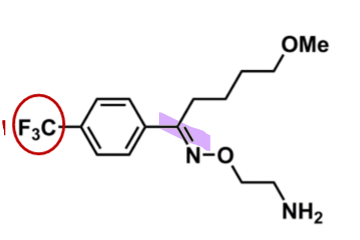
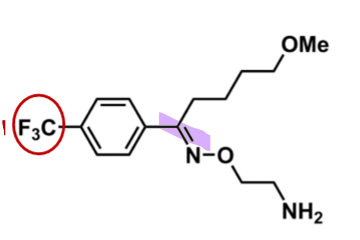
What is important about fluvoxamine?
2-aminoethyl oxime derivative
primary amine → protonation will intaact with aspartic acid in binding site of SERT
trifluoromethyl (EWG) @ para position
enhances binding affinity to SERT
E-isomer active
double bond = light sensitive → light will convert to Z and decrease activity
Fluoxetine
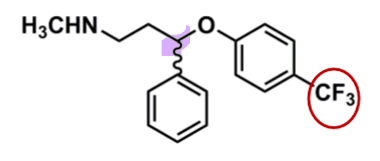
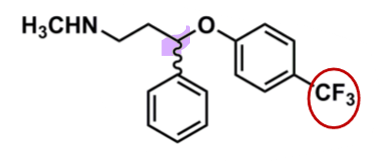
What is important about fluoxetine?
phenoxyphenylalkylamine derivative
2 benzenes make it highly lipophilic
trifluoromethyl (EWG) @ para position (lipophilic)
enhances binding affinity to SERT
stereocenter → is a racemic mixtiure
S-enantiomer has better activity 100x more
very lipophilic → long half-life (24-72h)
secondary amine
can be converted to primary amine → norfluoxetine and still be active long half-life (4-16 days)
Paroxetine
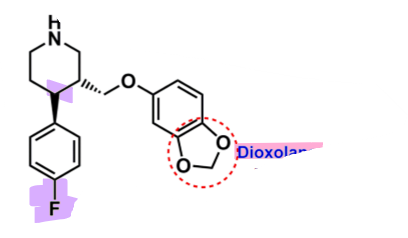
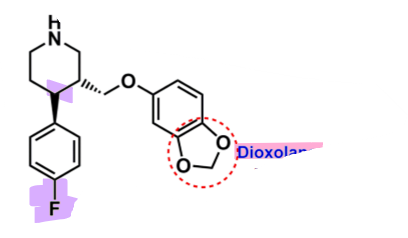
What is important about paroxetine?
pharmacophore: phenylpiperidine
Fluorine (EWG) @ para position
dioxolane → enhances oral bioavailability compared to fluoxetine
2 stereocenters → Trans is active
secondary amine
NO metabolism to other amine metabolites
more potent to SERT than fluoxetine
Sertraline
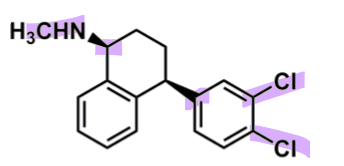
What is important about sertraline?
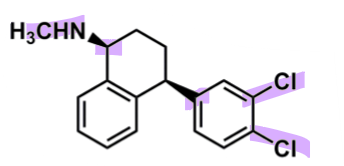
pharmacophore: phenylalkylamine
dichlorobenzene, Cl @3 & 4
enhance binding affinity by interacting with halogen binding pocket in SERT (most potent SERT inhibitor)
increase lipophilicity
poor oral bioavailability to others
2 stereoisomers → Cis geometry active, enhances binding affinity
secondary amine
converts to primary, but weaker activity
Citalopram
What is important about citalopram?
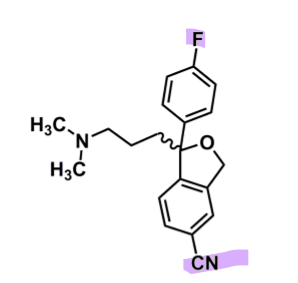
pharmacophore: benzofuran
Fluorine and cyanide (EWGs) @ para positions
enhance binding affinity
racemic mixture where S-stereoisomer only is active = escitalopram
tertiary amine
converted to secondary and primary, both have weak activity
Escitalopram
What is important about escitalopram?
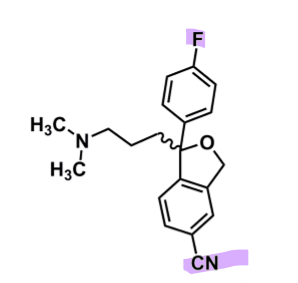
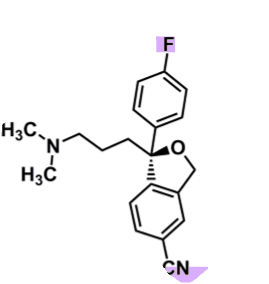
pharmacophore: benzofuran
Fluorine and cyanide (EWGs) @ para positions
enhance binding affinity
only S-stereoisomer
tertiary amine
converted to secondary and primary, both have weak activity
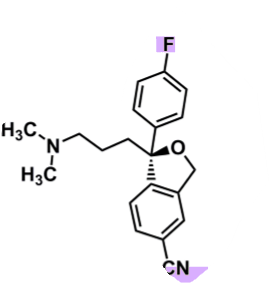
What is the SAR of SSRIs?
need a hydrophobic (lipophilic) region
fluorophenyl, dichloromethyl, alkylmethoxy
positive ionizable, polar regions - to bind with aspartic acid
secondary or tertiary amine
aromatic rings with substituted EWGs
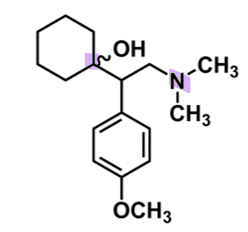
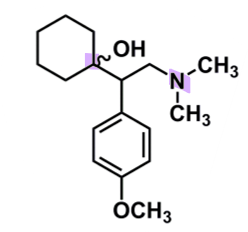
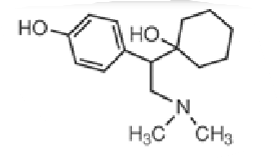
Venlafaxine
What is important about venlafaxine?
methoxyphenylethylamine derivative
racemic mixture
tertiary amine
secondary amine is NOT active
methoxy (EDG) @ para position
short half-life b/c poor bioavailability due to rapid first pass effect
major metabolite → oxidized aromatic ring to phenol group = desvenlafaxine - better activity, longer half-life and potency
further conjugated to secondary amine, no longer active
minor metabolite - secondary amine
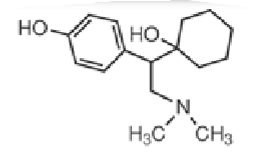
Desvenlafaxine
What is important about desvenlafaxine?
methoxyphenylethylamine derivative
racemic mixture
tertiary amine
secondary amine is NOT active
methoxy (EDG) @ para position
Active metabolite of venlafaxine (phenol vs methoxybenzene)
better activity, bioavailability, longer half-life and potency
30x more potent of SERT vs NET
Duloxetine
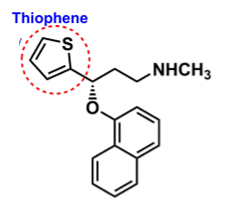
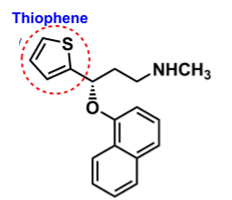
What is important about duloxetine?
pharmacophore: naphthalene
increases lipophilicity and CNS activity
derived from fluoxetine
thiophene → enhances binding affinity
secondary amine
primary weak activity
S-enantiomer is active
Bupropion
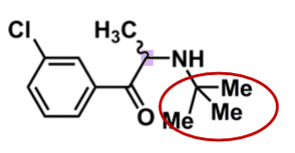
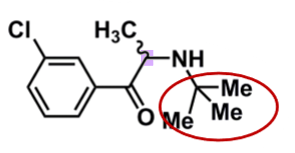
What is important about bupropion?
pharmacophore: phenyl-tert-butylamine
tertiary butyl group → increases lipophilicity
Chlorine substituent on phenyl → enhances ability to get into CNS
racemic mixture → similar activity
considered prodrug
poor oral bioavailability due to extensive and RAPID metabolism
metabolites, both active:
hydroxybupropion → methyl oxidized to alcohol
hydrobupropion → ketone converted to hydroxy (causes insomnia and dry mouth)
Diazepam
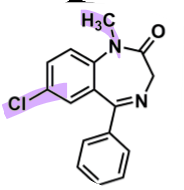
What is important about diazepam?
pharmacophore: 1,4-benzodiazepines
Cl @ C7 → increases lipophilicity and binding affinity
benzene @ C5 → increases lipophilicity and CNS conc
tertiary amine
metabolized to active secondary amine → long half-life
primary amine NOT active
Clonazepam
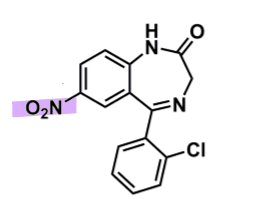
pharmacophore: 1,4-benzodiazepines
nitrogen dioxide (EWG)@ C7 → increases lipophilicity and binding affinity
benzene @ C5 → increases lipophilicity and CNS conc
with ortho Cl substituent → enhances binding affinity
secondary amine
metabolized primary amine which is NOT active
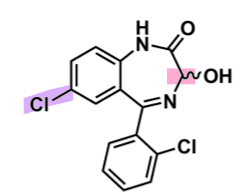
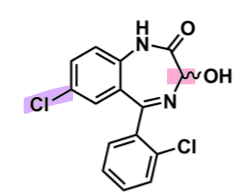
Lorazepam
pharmacophore: 1,4-benzodiazepines
Cl @ C7 → increases lipophilicity and binding affinity
benzene @ C5 → increases lipophilicity and CNS conc
with ortho Cl substituent → enhances binding affinity
hydroxy @ C3 → more polar, faster elimination due to phase II conjugation reactions (glucuronidation)
secondary amine
metabolized primary amine which is NOT active
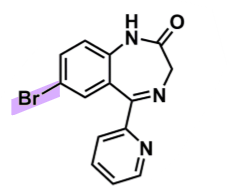
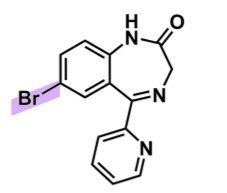
Bromazepam
pharmacophore: 1,4-benzodiazepines
Br @ C7 → increases lipophilicity and binding affinity
pyridine@ C5 → less lipophilic
tertiary amine
metabolized to active secondary amine → long half-life
primary amine NOT active
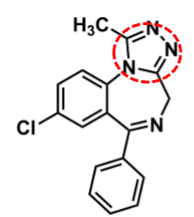
Alprazolam
What is important about alprazolam?
pharmacophore: 1,4-benzodiazepines
Cl @ C7 → increases lipophilicity and binding affinity
benzene @ C5 → increases lipophilicity and CNS conc
fused triazole → enhances oral bioavailability
short acting b/c now substrate of 3A4
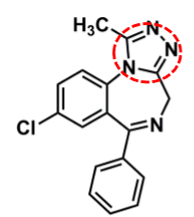
What is the SAR for benzodiazepines?
1,4-benzodiazepine ring essential for activity
N-1 position tolerate alkyl groups
N4-C5 double bond necessary
ring A and C can be phenyl or heterocyclic
need EWG @ C7
EWG at ortho/diortho on ring C increase activity
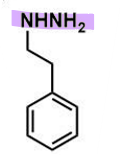
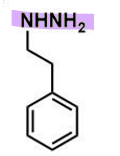
Phenelzine
What is important about phenelzine?
hydrazine group → causes hepatotoxicity
covalently binds with MAO-A and MAO-B (irreversible, nonselective binding)
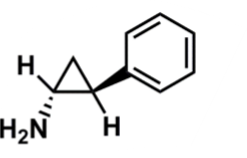
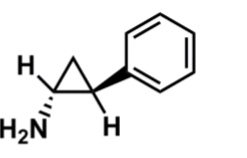
Tranylcypromine
What is important about tranylcypromine?
nonhydrazine amphentamine derivative
covalently binds with MAO-A and MAO-B (irreversible, nonselective binding)
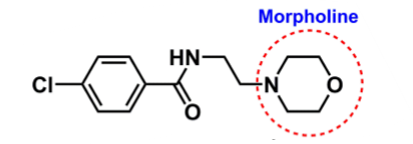
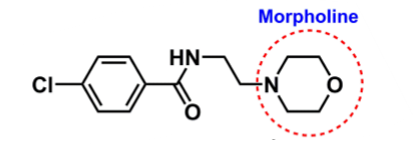
Moclobemide
What is important about moclobemide?
nonhydralazine benzamide derivative
pharmacophore: morpholine
increases oral bioavailability due to enhancing PK properties
selective reversible inhibitor of MAO-A
time-dependent complex with MAO-A
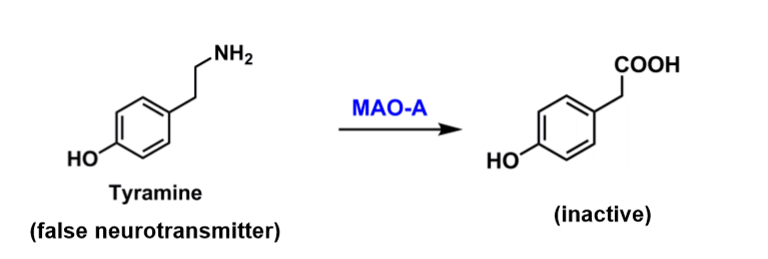
Why can irreversible MAOIs cause hypertensive crisis and not reversible MAOIs?
irreversible MAOIs covalently bind with MAO-A, which tyramine requires for metabolism to inactive metabolite
causes accumulation of tyramine, which acts as a “false NT” b/c structurally similar to NE and DA → activates alpha1 receptors → vasoconstriction → HTN crisis
In contrast, reversible MAOIs do not permanently inhibit MAO-A
tyramine has higher affinity for MAO-A than moclobemide, so will be replaced
allowing for periodic metabolism of tyramine, thereby reducing the risk of hypertensive crises