Cervical Spine Positioning (Unit 4)
 Call Kai
 Learn
Learn Practice Test
 Spaced Repetition
 Match
Match Flashcards
 Knowt Play
1/9

There's no tags or description
Looks like no tags are added yet.
Name | Mastery | Learn | Test | Matching | Spaced | Call with Kai | Chat |
|---|
No analytics yet
Send a link to your students to track their progress
10 Terms
- Remove everything from the waist down including glasses, dentures, hearing aids, facial piercings, teeth bridges, and bras
- Erect
- Supine
- Yes
- Yes
- Radiation to the thyroid
- Small focal spot and 70-85 kVp
- 72"
- 40"
- How is the patient dressed?
- How is the patient positioned when checking for the natural curvature of the spine on a lateral and oblique cervical spine?
- How is the patient positioned for an AP and odontoid cervical spine?
- Do you collimate for the cervical spine?
- Is the patient shielded?
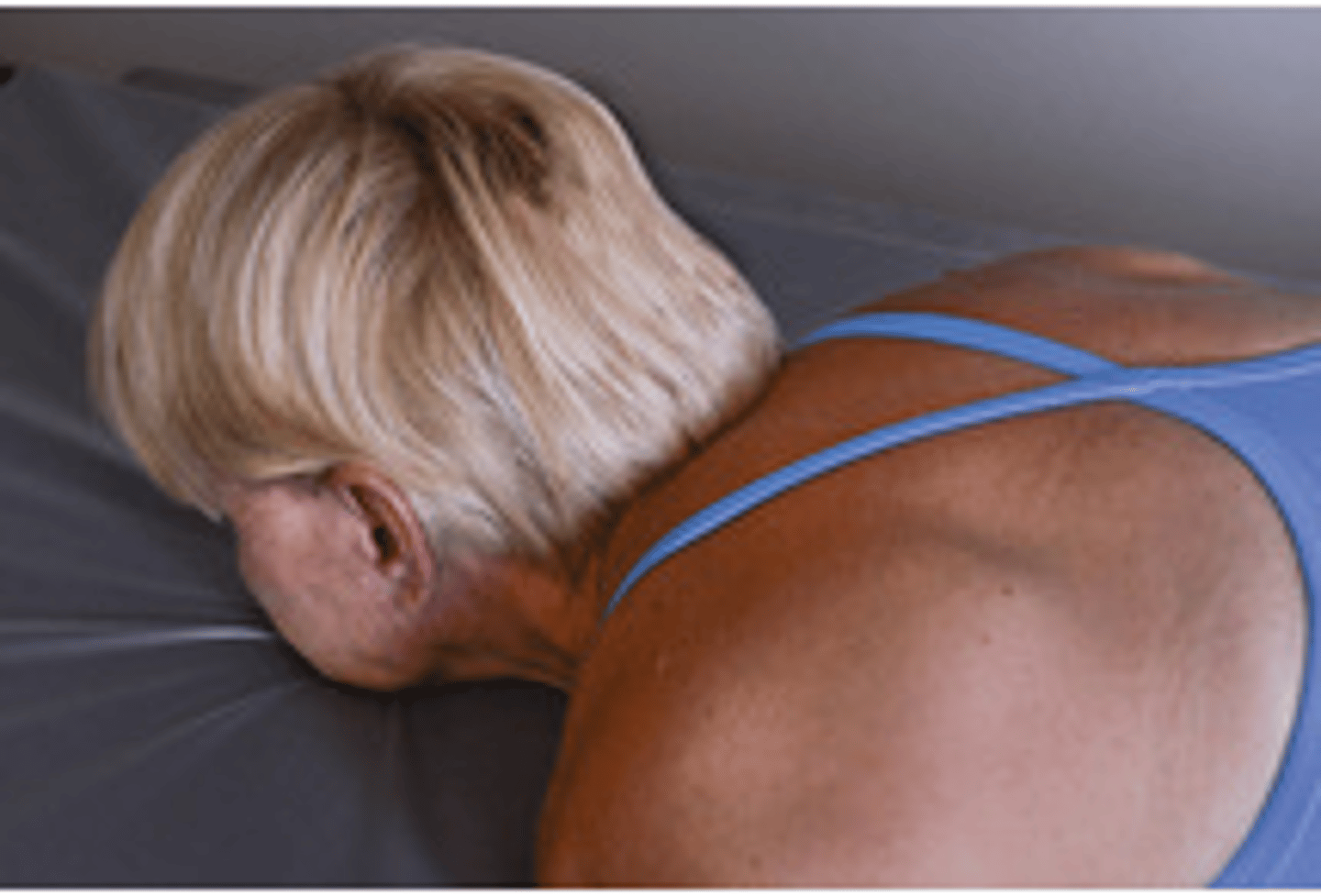
- When doing a patient prone for a cervical spine what is reduced?
- What is the focal spot size and kVp for cervical spines?
- What is the SID for an upright cervical spine?
- What is the SID for a supine cervical spine?
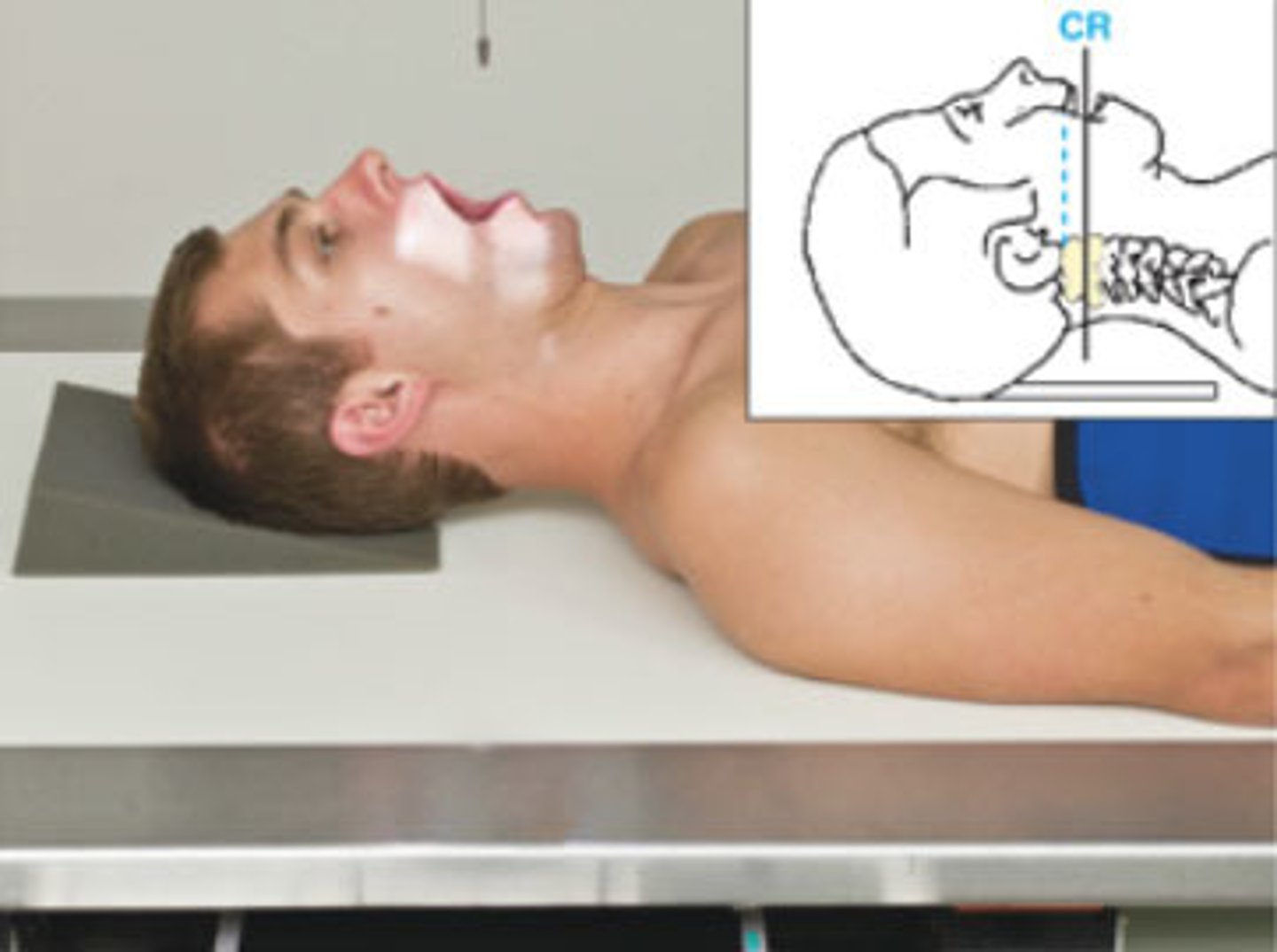
- AP Open Mouth Odontoid
- Pathology involving C1 and C2
- 40"
- Supine or erect with arms by the side
- Base of the skull
- Through center of open mouth
- Suspend respiration
- Odontoid process
- What is the exam?
- What is the view used to demonstrate?
- What is the SID?
- What is the patient's position?
- What should the chewing surface of the upper incisors be in line with?
- Where is the CR directed?
- What are the breathing instructions?
- What anatomy should be in the center?
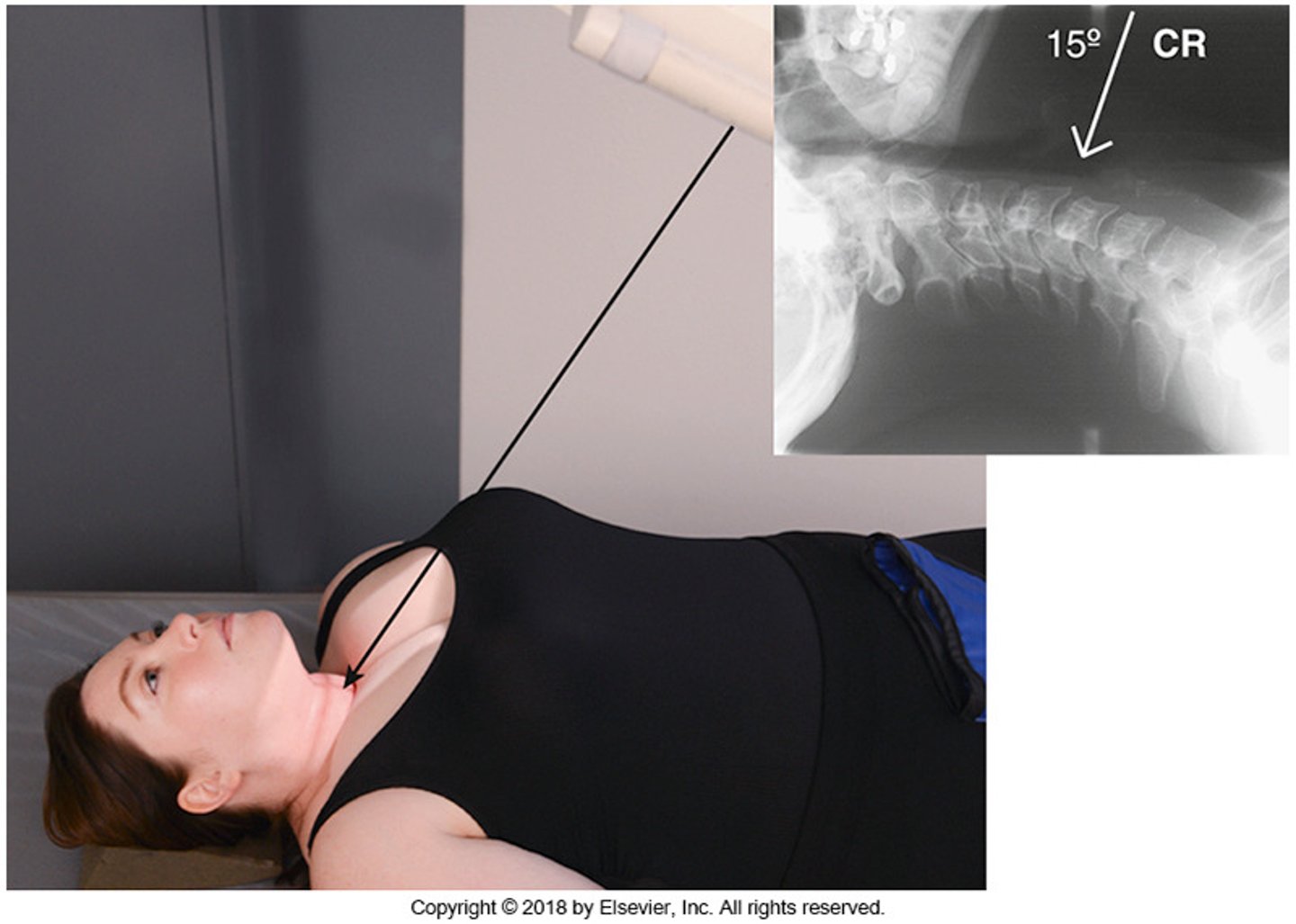
- AP Axial Cervical Spine
- C3 to C7
- 40"
- Supine without a pillow, arms at side, and chin up (Can be done erect)
- 15°-20° cephalic
- C4 at the level of the thyroid cartilage
- Suspend respiration
- Intervertebral disk space
- What is the exam?
- What is this view used to demonstrate?
- What is the SID?
- What is the patient's position?
- What is the angle of the CR?
- Where is the CR directed?
- What are the breathing instructions?
- What space is open?
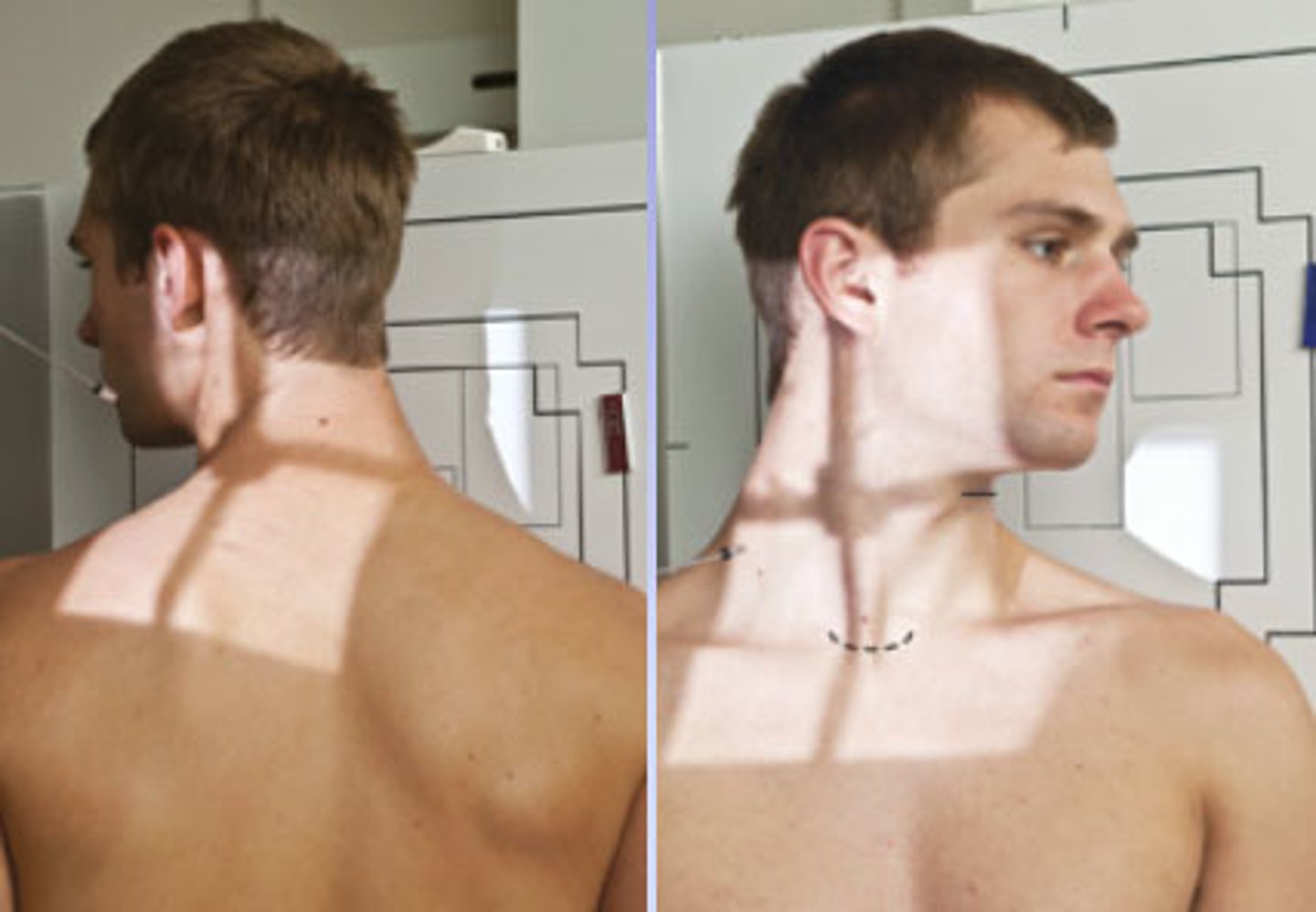
- Cervical Spine
- AP Axial Oblique
- RPO/LPO
- RAO/LAO
- Intervertebral foramen farthest from the IR
- 72"
- Erect or sitting
- 45°
- 15°-20° cephalic
- C4 at the level of the thyroid cartilage
- 15°-20° caudal
- What is the exam?
- What is the projection?
- What is the position used?
- What positions are used to reduce radiation dose to thyroid?
- What anatomy is visualized in this view?
- What is the SID?
- What is the patient's position?
- How many degrees are the head and body rotated?
- What is the angle of the CR?
- Where is the CR directed?
- If this exam was done with an RAO/LAO position, how is the CR angled?
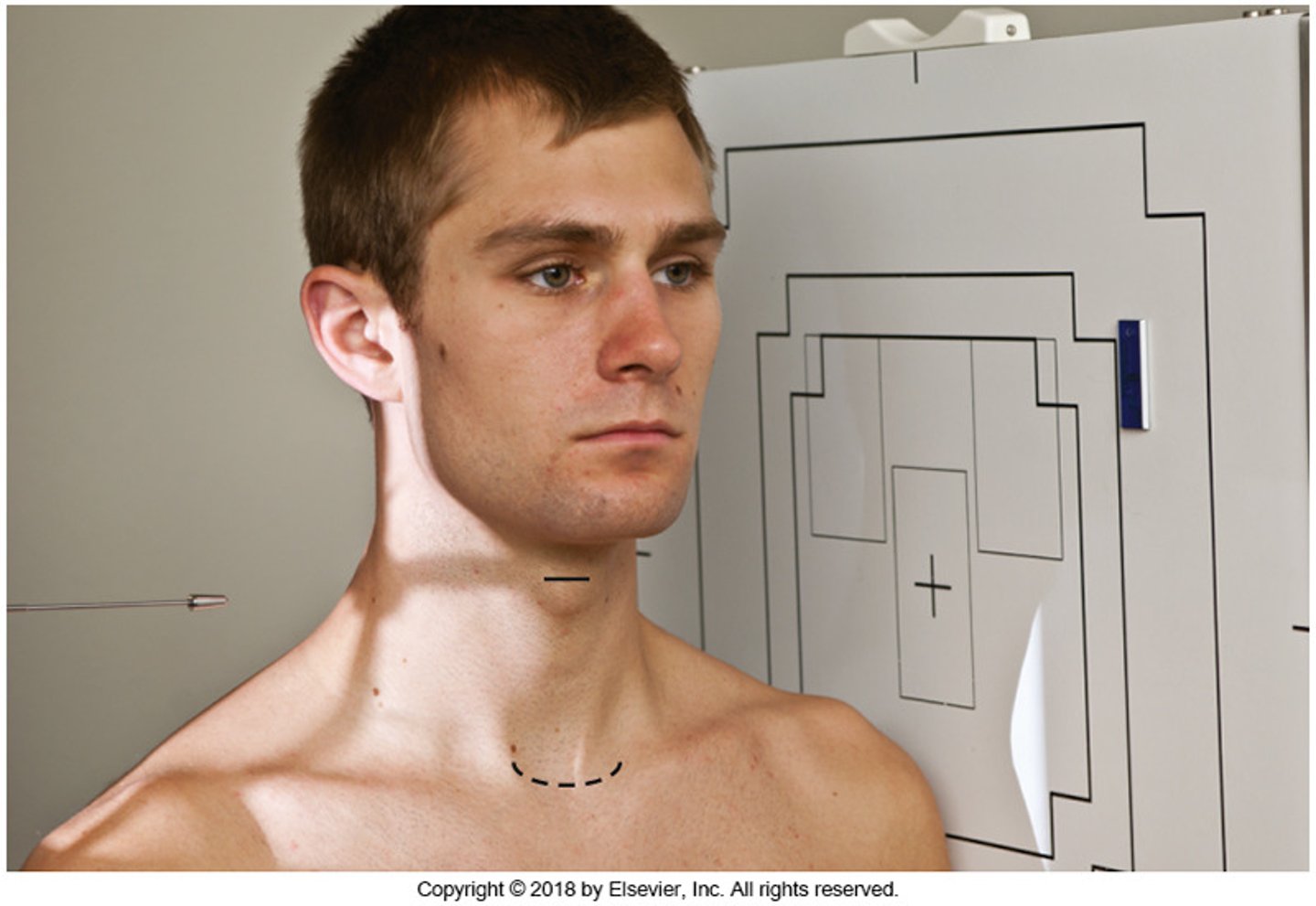
- Lateral Cervical Spine
- Lateral
- C1 to C7 and Zygapophyseal joint space open
- 72"
- Erect or sitting with shoulder against IR
- Relax their shoulders
- Give them weights or tell them to put their hands behind their back
- 1-2 inches above the external auditory meatus (EAM)
- C4 at the level of the thyroid cartilage
- Suspend respiration on full expiration
- What is the exam?
- What is the position?
- What is demonstrated in this view?
- What is the SID?
- What is the patient's position?
- What do you ask the patient to do with their shoulders?
- What can you give or have the patient do if they can't relax their shoulders?
- The top of the IR should be about how many inches above what anatomy?
- Where is the CR directed?
- What are the breathing instructions?
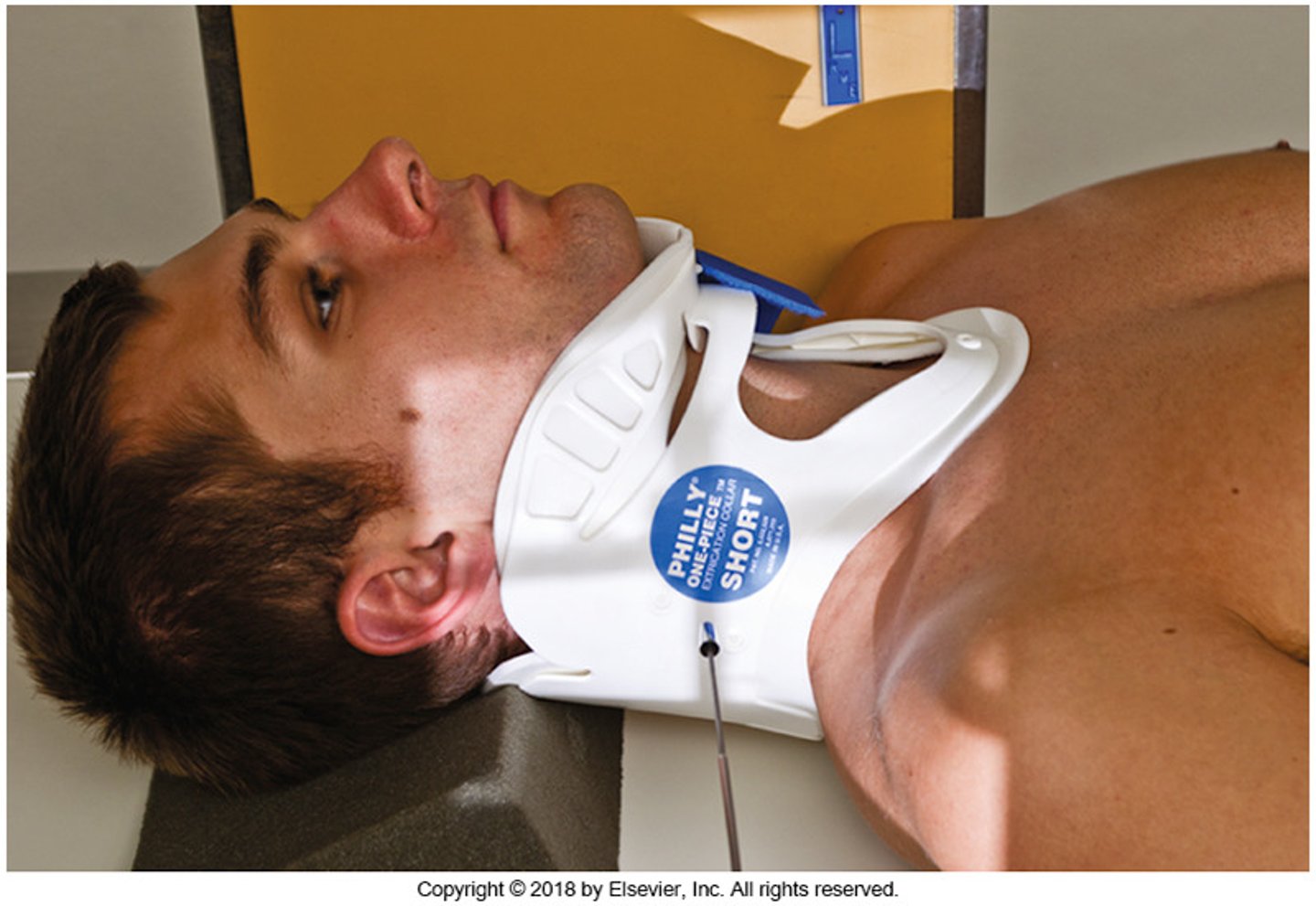
- Cervical Spine
- Lateral and horizontal beam
- Trauma
- No
- Supine on stretcher or radiographic table with shoulders relaxed
- C4 at the level of the thyroid cartilage
- Suspend respiration on full expiration
- What is the exam?
- What is the position and beam?
- Is this a trauma or non-trauma view?
- Is the C-collar ever removed unless told to do so?
- How is the patient positioned?
- Where is the CR directed?
- What are the breathing instructions?
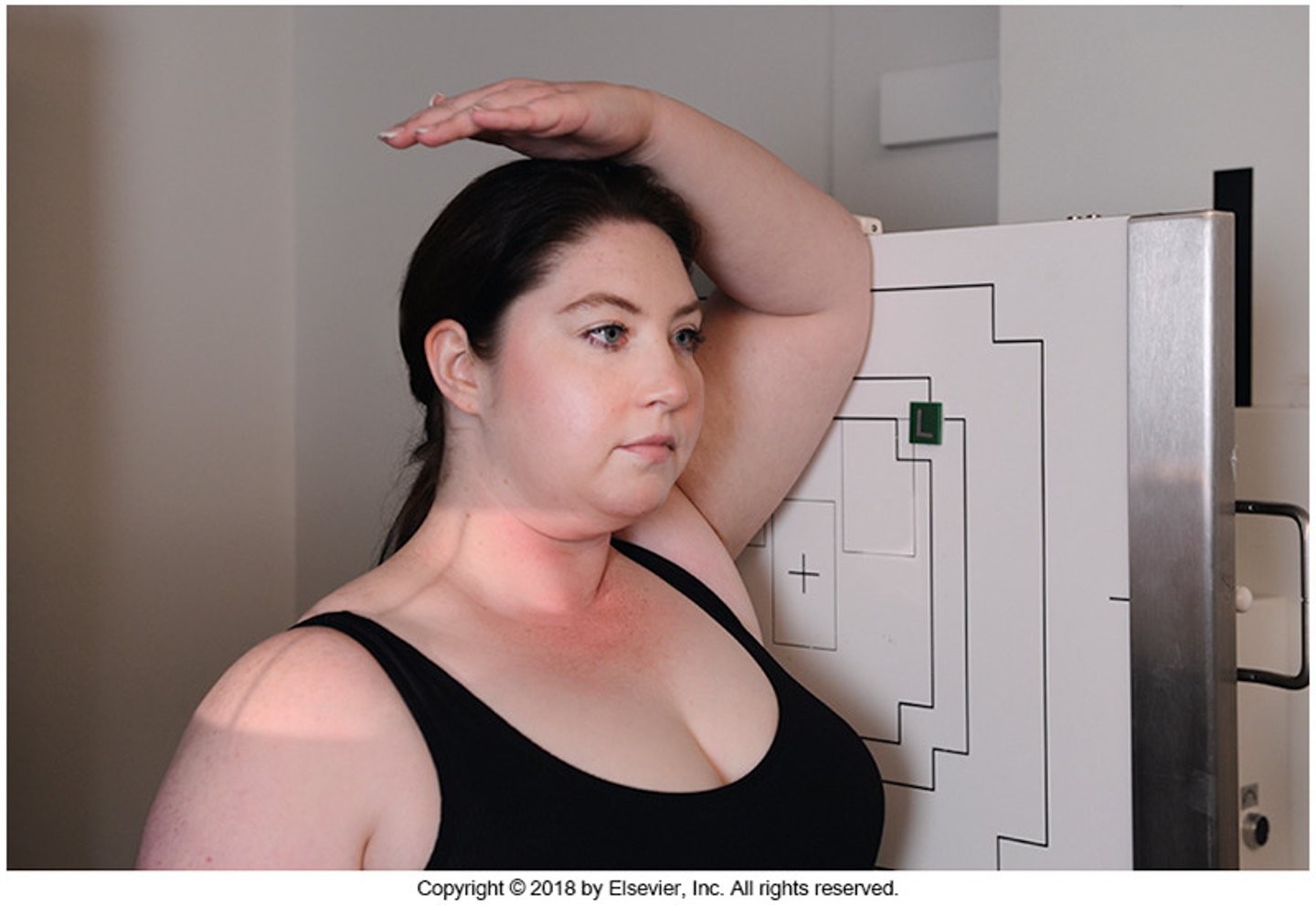
- Cervical Spine
- Cervicothoracic (Swimmer's) Lateral
- 72"
- 40"
- When C7 to T1 is not visualized on a lateral cervical spine
- Erect with arm closest to IR up and over the head
- 3°-5° caudal
- T1 about 1" above the jugular notch
- Orthostatic breathing with a 3-4 sec exposure
- What is the exam?
- What is the position?
- What is the SID?
- What is the SID supine?
- What is this position good for?
- How is the patient positioned?
- What is the angle of the CR?
- Where is the CR directed?
- What are the breathing instructions and how long is the exposure time?
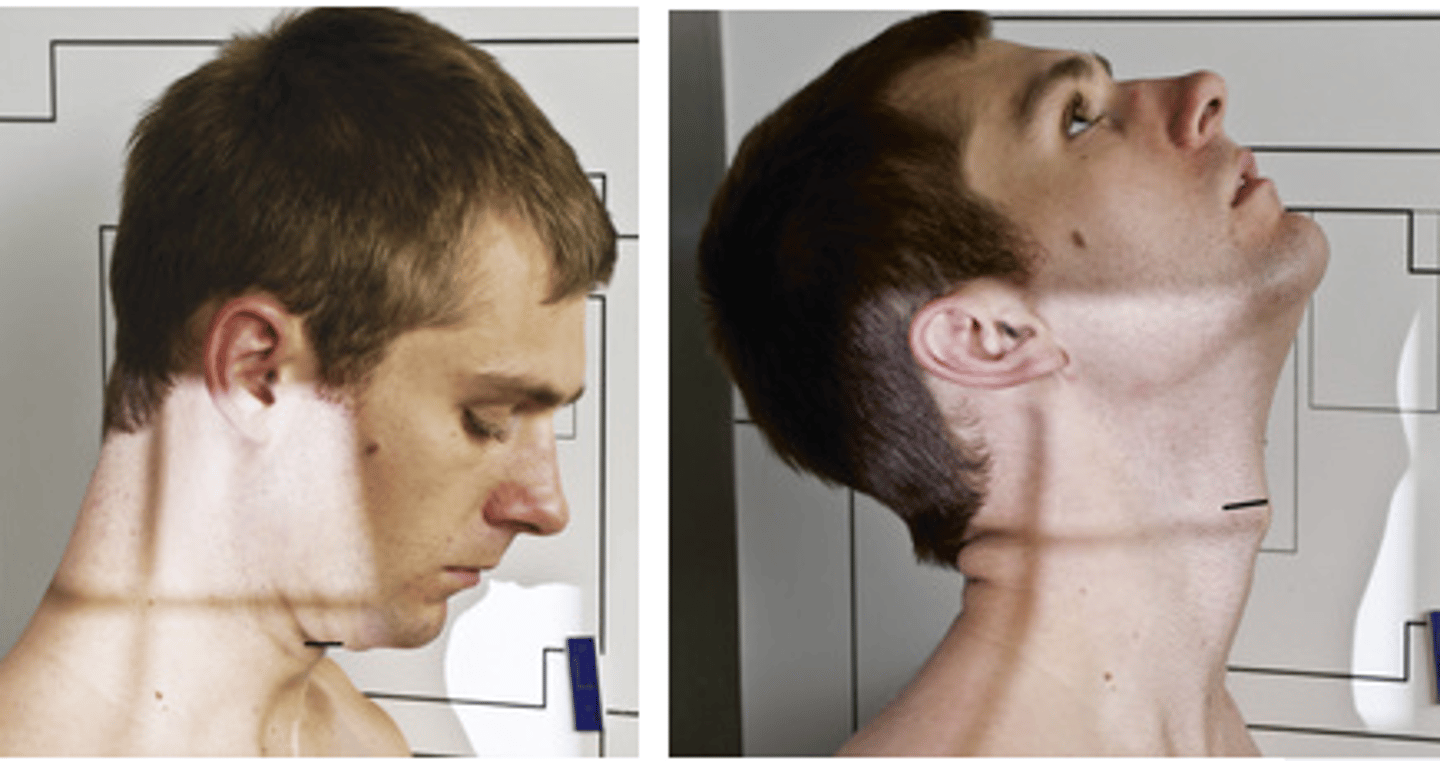
- Cervical Spine
- Lateral hyperflexion and hyperextension
- 72"
- Functional study to show anteroposterior vertebral mobility
- Erect lateral position, arms pulled down or holding weights
- Flexed down as far as possible or extended as far as possible
- Spinous processes
- Cervical bodies
- Down External Acoustic Meatus and C4 at the level of the thyroid cartilage
- Suspend respiration on full expiration
- What is the exam?
- What is the position?
- What is the SID?
- What is this view used for?
- What is the patient's position?
- What is done to the patient's head?
- What is opened when the head is hyperflexed?
- What is opened when the head is hyperextended?
- Where is the CR directed?
- What are the breathing instructions?
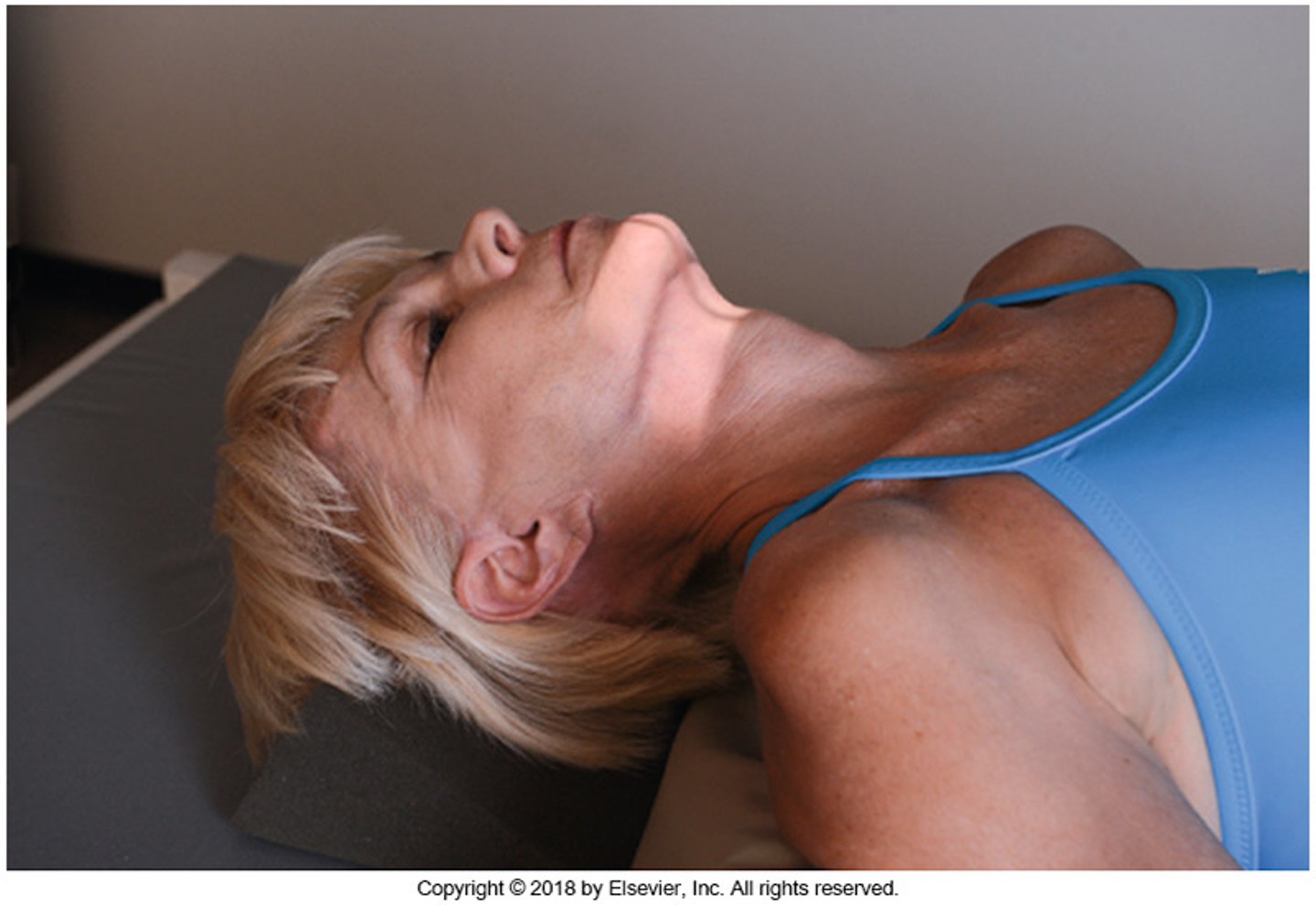
- Odontoid Cervical Spine
- Fuch Method
- Superior portion of the dens when not well seen on AP open mouth
- 40"
- Supine
- Mentometal Line (MML)
- Parallel to MML line
- 5 X 5
- Suspend respiration
- What is the exam?
- What is the method?
- What is this view used to see?
- What is the SID?
- What is the patient's position?
- Elevate the chin to bring what near perpendicular to the tabletop?
- Where is the CR directed?
- What is the field size?
- What are the breathing instructions?
- Odontoid Cervical Spine
- Judd Method
- Superior portion of the dens when not well seen on AP open mouth
- 40"
- Prone
- Mentomental Line (MML)
- Parallel to MML line
- 5 x 5
- Suspend respiration
- What is the exam?
- What is the method?
- What is this view used to see?
- What is the SID?
- What is the patient's position?
- With chin resting on table, bring what near perpendicular to the tabletop?
- Where is the CR directed?
- What is the field size?
- What are the breathing instructions?