Teas 7 science!!
 Call Kai
 Learn
Learn Practice Test
 Spaced Repetition
 Match
Match Flashcards
 Knowt Play
1/100

There's no tags or description
Looks like no tags are added yet.
Name | Mastery | Learn | Test | Matching | Spaced | Call with Kai |
|---|
No analytics yet
Send a link to your students to track their progress
101 Terms
Cephalic
head
Cranial
skull
Facial
face
Frontal
forehead
Occipital
base of skull
temporal
temple
orbital or ocular
eye
Otic
ear
Buccal
cheek
Nasal
nose
Oral
mouth
Mental
chin
Cervical
neck
Sternal
breastbone
Thoracic
chest
Mammary
breast
Acromial
shoulder
Scapular
shoulder blade
Vertebral
spinal column
Lumbar
lower back
Dorsal
back
Axillary
armpit
Brachial
arm
Antecubital
front of elbow
olecranal or cubital
back of elbow
Antebrachial
forearm
Carpal
wrist
Palmar
palm
Pollex
thumb
dorsum
back of hand
manual
hand
digital or phalangeal
fingers
Abdominal
abdomen
Umbilical
navel
Coxa
hip
Scaral
between hips
coccygeal
tailbone
Gluteal
buttock
pelvis
Pelivis
Pubic
pubis
Perineal
between anus and external genitalia
Inguinal
groin
Femoral
thigh
Patella
front of knee
Popliteal
back of knee
Crural
shin
Sural
calf
Pedal
foot
Tarsal
ankle
digital of phalangeal
toes
Plantar
sole of foot
Calcaneal
heel
dorsum
top of foot
Hallux
great toe (big toe)
Anterior
front of the body
Posterior
back of body
Superior
toward the head end or upper part of a structure or the body; above; hands included
Inferior
away from the head end or toward the lower part of a structure or the body; below; feet included
Medial
Toward the midline of the body
Lateral
Away from the midline of the body
Proximal
Closer to the trunk of the body
Distal
Farther from the trunk of the body
sagittal plane or median
vertical plane that divides the body into right and left halves
frontal plane (coronal plane)
vertical plane that divides the body into anterior and posterior portions
transverse plane or cross section
a horizontal plane that divides the body into superior (upper) and inferior (lower) halves
structure of respiratory system
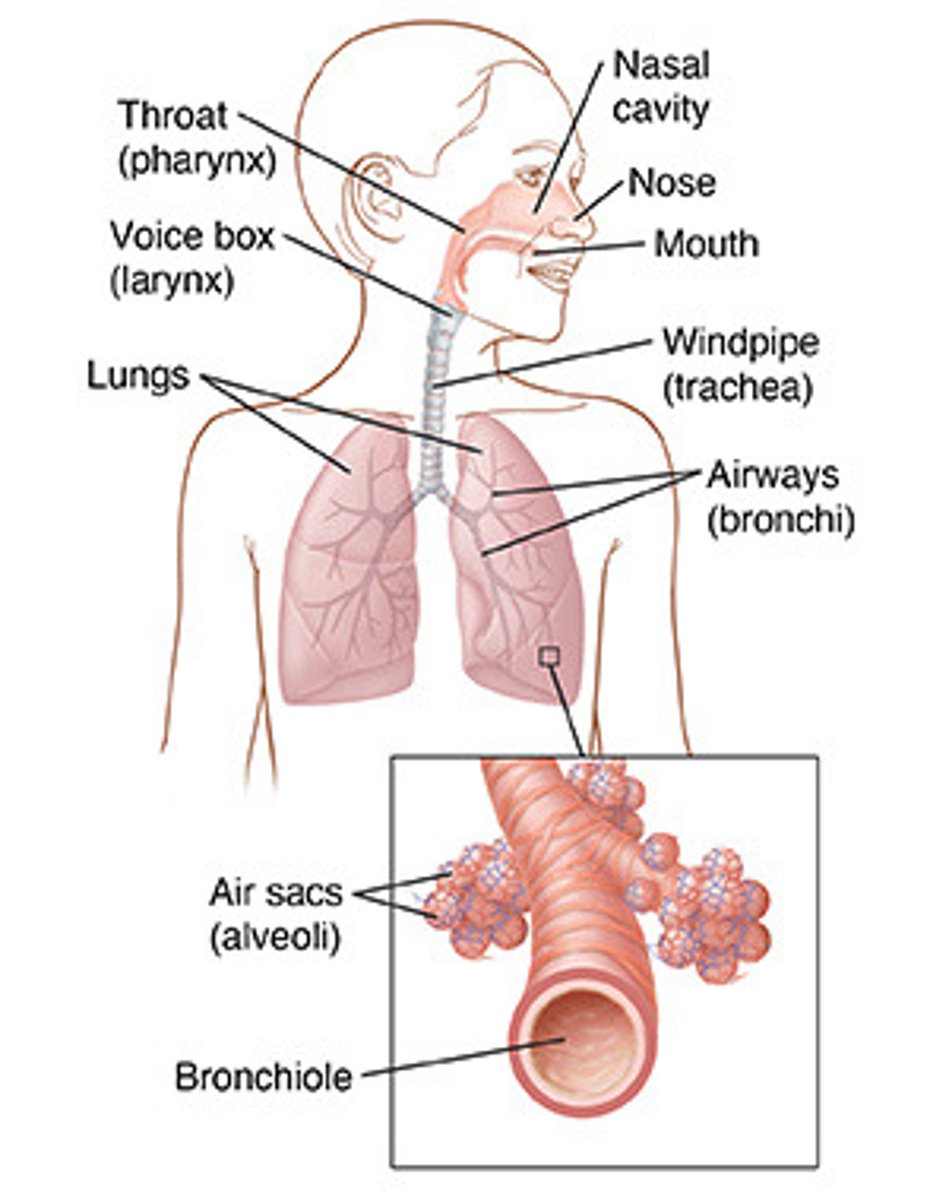
Nasal cavity
Air is warm, humidified, and filtered by mucus and hair
Pharynx
Junction for both food and air
Larynx
voice box; passageway for air moving from pharynx to trachea; contains vocal cords
Treachea
Cylinder tube with rings of cartilage that provide support
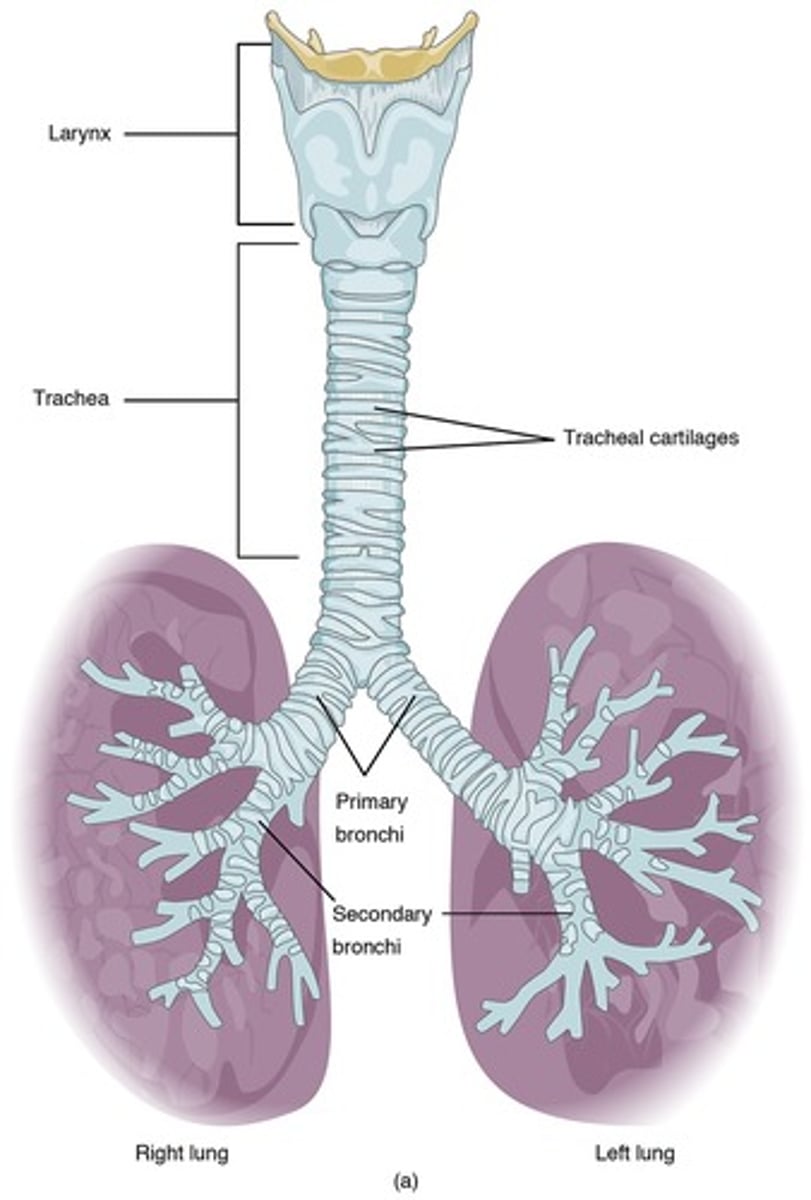
Bronchi
There are two bronchus: left and right
Bronchioles
Smaller branches of bronchial airways
Alveoli
Tiny air sacs of the lungs which allow for rapid gaseous exchange
Conduction zone
Transports air from the outside environment to the site of gas exchange; includes trachea, bronchi, and terminal bronchioles
Anatomical dead space
air that never reaches the alveoli, no gas exchange
Respiratory zone
Structures in the lungs where gas exchange takes place; includes respiratory bronchial, alveolar ducts, and alveoli
exhalation/expiration
diaphragm relaxes (moves up); thoracic cavity volume decreases
Inhalation/Inspiration
diaphragm contracts and lowers; thoracic cavity volume increases
Perfusion
delivery of blood to body tissues, organs, and cells
Ventilation
movement of air into and out of the lungs
Hyperventilation
pH basic
fast breathing
⬆️ O2 (hyperoxia)
⬇️ CO2 (hypocapnia)
hypoventilation
pH acidic
Slow breathing
⬇️ O2 (hypoxia)
⬆️ CO2 (hypercapnia)
Blood becomes too acidic
Metabolic acidosis created resulting in too low of blood pH; removed excess acid through respiratory system
Respiratory and cardiovascular systems
Oxygen delivery & carbon dioxide pick up
Respiratory and muscular
Diaphragm & intercostal muscles (in between ribs)
Resporatory system and skeletal
Cage protecting lungs
Respiratory and nervous systems
Voluntary and involuntary controls of respiratory system by using pH
Respiratory: pH scale
Increase in acidity signals brain to increase respirations; restores and stabilizes pH to maintain homeostasis 7.4
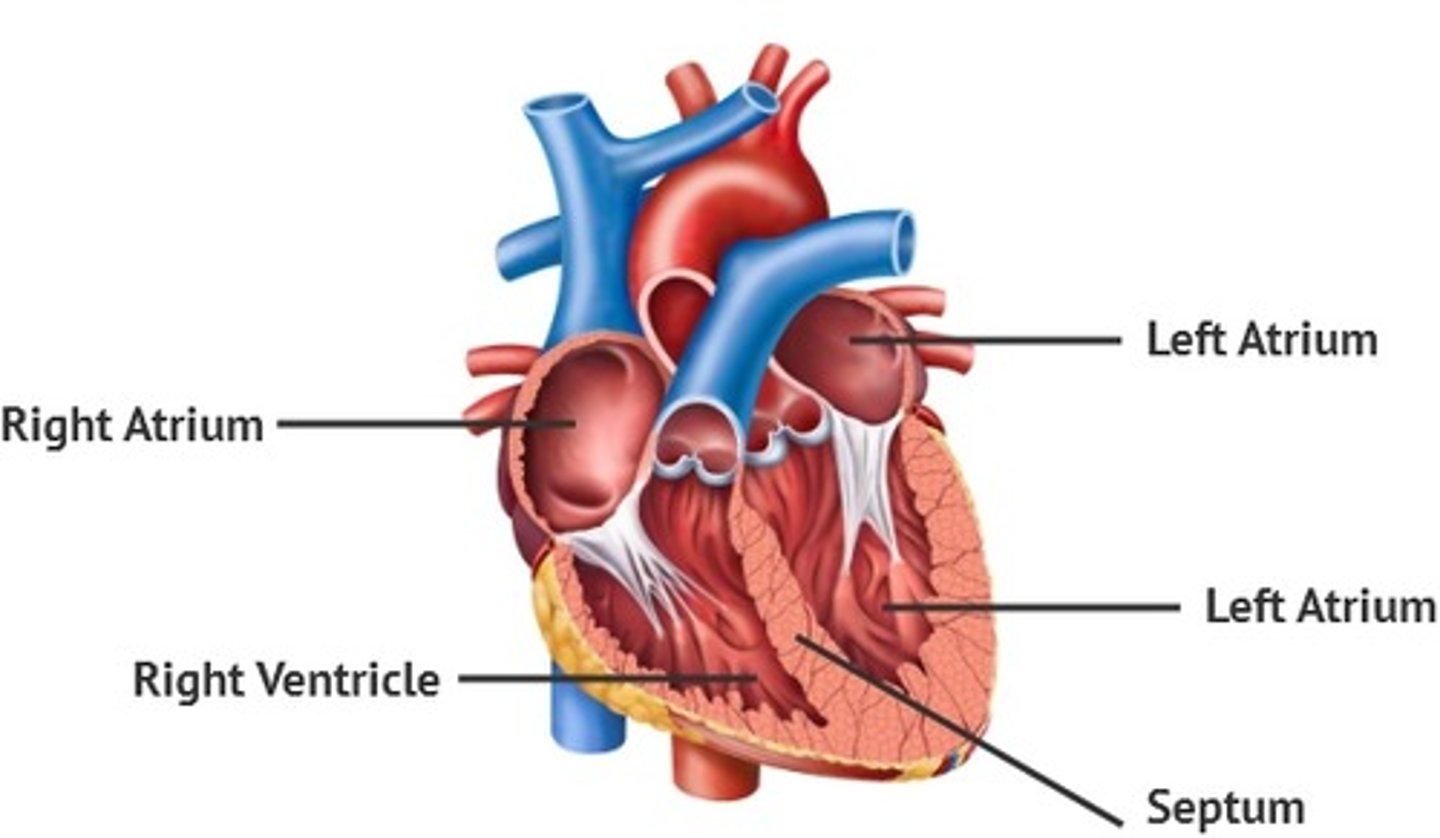
structure of cardiovascular system
-Four chambers: right atrium, left atrium, right ventricle, and left ventricle.
-Septum: separates the left and right chambers
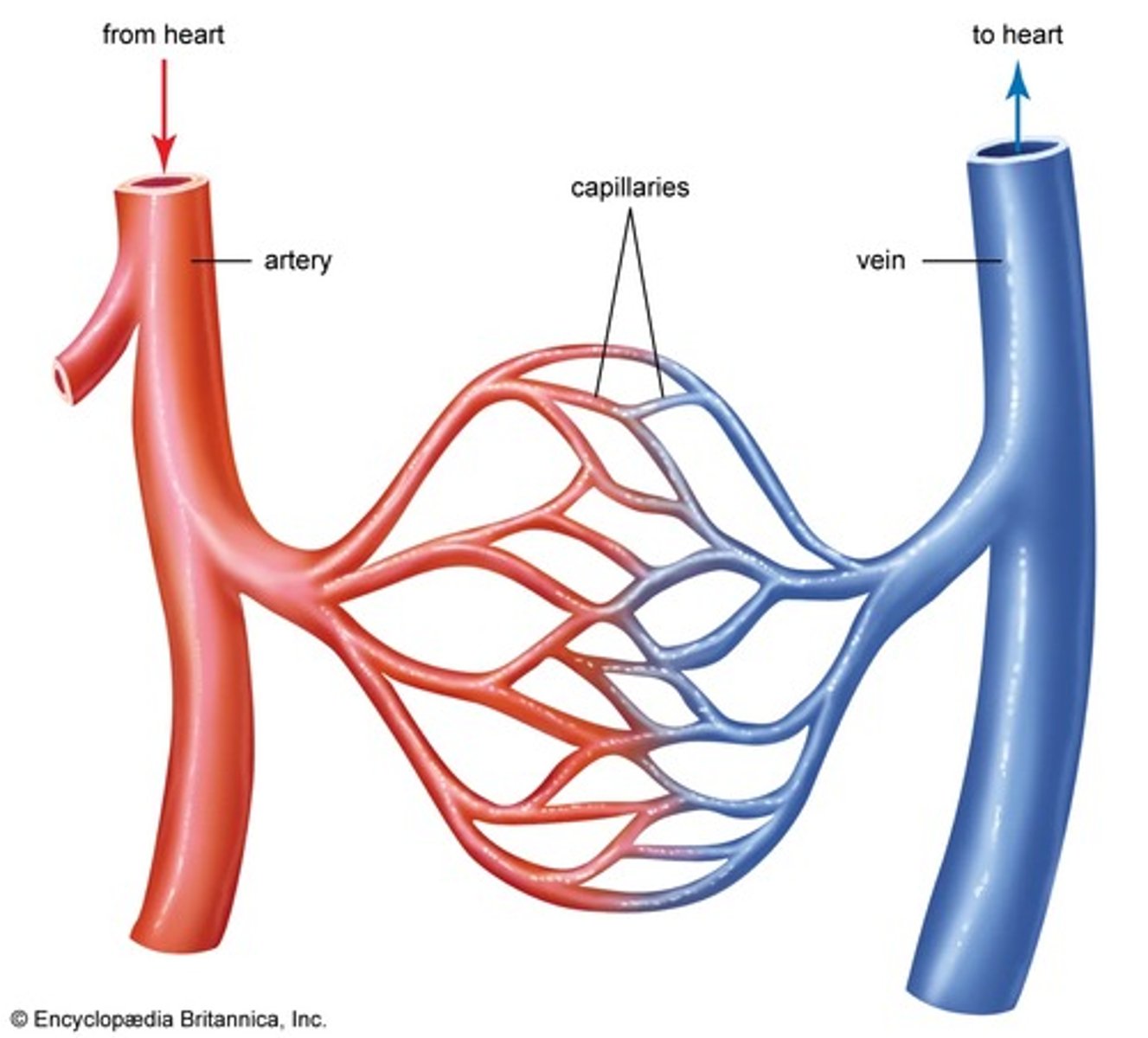
blood vessels (carries blood through the body)
-Arteries: oxygenated blood-away from the heart
-Veins: deoxygenated blood- back to the heart
-Capillaries: connect arteries & veins; site for exchange of O2 and CO2
—Blood: carry oxygen & nutrients to cells and CO2 and waste way from cells
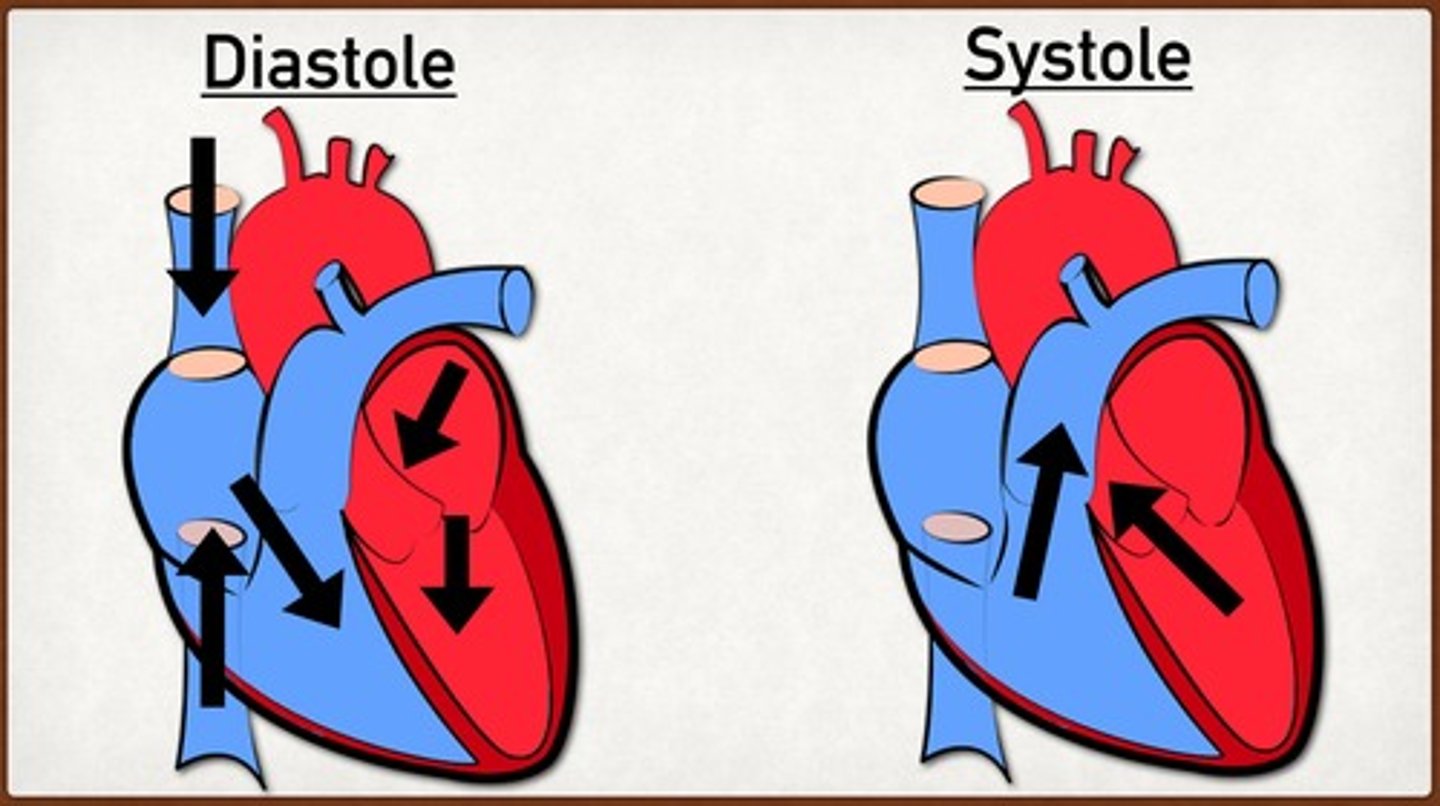
Type cycles of contraction: BP
Systole/systolic: contraction of the heart -"lub" sound
Diastole/diastolic: relaxation of the heart -"dub" sound
function of respiratory system
bring in oxygen and get rid of carbon dioxide; maintains pH
heart's electrical system
- Sinoatrial Node
- Atrioventricular Node
- Bundle of His
- Left & Right Bundle Branch
- Purkinje Fibers
Blood flow of the heart
Deoxygenated blood: Superior/inferior venae cavae > right atrium > tricuspid valve > right ventricle > pulmonic valve > pulmonary artery > lungs
Oxygenated blood: lungs > pulmonary vein > left atrium > bicuspid/mitral valve > aortic valve > aorta
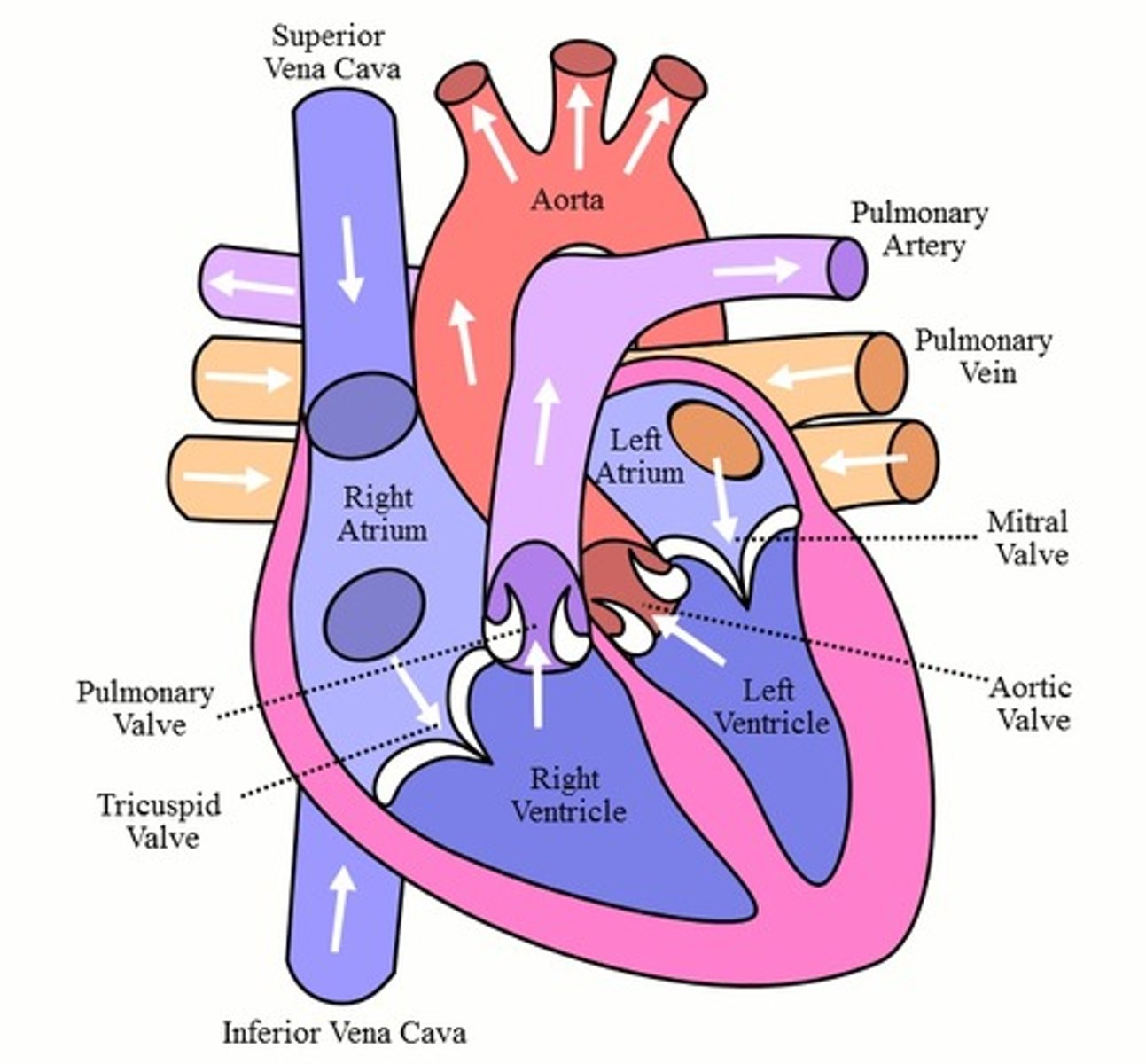
Blood flow
Deoxygenated blood > vein> right Atrium>right ventricle>lungs
Oxygenated blood > lungs>left atrium>left ventricle >aorta>body
Functions of the cardiovascular system
deliver oxygen and nutrients to cells and the body and removes CO2 and waste
Maintain blood pressure
Regulate body temp
Maintain body pH
Transports hormones, fights infection, aids in digestion, assist in repair of damaged tissues
Osmotic pressure
Functions
Distribution of nutrients > digestive
Distribution of O2 & CO2 > respiratory
Distribution of hormones > endocrine
Removal of waste & conditioning of blood > liver & kidney
Overview of heart
⬆️ arteries - have thin walls
Overview of heart
⬇️ ventricles - thick walls
heart valves function
prevent backflow of blood