Fetal Development and Maternal Adaptations
 Call Kai
 Learn
Learn Practice Test
 Spaced Repetition
 Match
Match Flashcards
 Knowt Play
1/74

There's no tags or description
Looks like no tags are added yet.
Name | Mastery | Learn | Test | Matching | Spaced | Call with Kai | Chat |
|---|
No analytics yet
Send a link to your students to track their progress
75 Terms
goal gestation
37-42 wks
preterm
<37 weeks gestation
early term
37-38/6 wks
full term
39-40/6 wks
late term
41-41/6 wks
postterm
>42 wks gestation
antepartum
prior to labor and childbirth
intrapartum
onset of labor through the delivery of the placenta
postpartum
after birth and until return of reproductive organs to normal nonpregnant state (estaminte 6 wks)
gestation
process of carrying embryo/fetus in the uterus
abortion
loss prior to 20 wks gestation
stillbirth
fetal death occuring at 20 wks or later
gravida
pregnancy
parity
birth after 20 wks
nulligravida
never been pregnant
primigravida
first pregnancy
multigravida
multiple pregnancies
nullipara
no pregnacy beyond the stage of viability
primipara
one pregnancy who’s reached at least 20 wks gestation
multipara
multiple pregnancies that reached at least 20 wks gestation
TPAL
term
preterm
abortion
living
What is the GP-TPAL?
Mrs. Smith has been pregnant 4 times. Her first pregnancy resulted in SAB at 8 wks. 2nd & 3rd pregnacy delivered at 38/4 and 37/6. The 4th pregnancy delivered at 36/2. She has 2 boys and 1 girl living.
G: 4
P: 3
T: 2
P: 1
A: 1
L:3
What is the GP-TPAL?
Mrs. Youing is pregnant for the 5th time. Her first 3 pregnancies resulted in SAB at 7 wks, 8 wks, and 6 wks. Her 4th pregnancy she delivered twins at 37/1 who are now 3 y/o.
G: 5
P: 1
T: 1
P: 0
A: 3
L: 2
embryonic stage
implantation to end of 8th wk post conception
fetal stage
beginning of 9th wk post conception-birth
about 11wks gestation
Factors Affecting Embryonic & Fetal Development
Quality of Ova & Sperm: miscarriage, anomalies, chromosomal, & genetic problems
Intrauterine Environment: unsuitable uterus = SAB, STI, STD surgieries, infections
Teratogens: agents can cause development of abnormal sturctures - drugs, virues, alcohol, stress
Teratogens
chemical: alcohol, tobacco, vape, illicit drugs, medications (accutane, lithium, coumadin, phenytoin)
infections: rubella, cytomegalovirus (CMV), syphilis, toxoplasmosis, zika
embryonic membranes
chorion: outermost layer w/ finger like projections (chorionic vili) assist in attaching and implanting into uterus → placenta
amnion: fuses w/ chorion to become amniotic sac (thin inner protective membrane contains the embryo and amniotic fluid)
amniotic fluid
fetus swallows and urinates it
T: 700-1,000mL
polyhydramnios
>2000mL
caused by GI problems/anomalies
oligohydramnios
<500 mL
caused by renal anomalies; poor placental perfusion
amniotic fluid functions
shields against pressure and provides cushion
helps control temp
allows symmetrical growth & development
MSK development
protects against cord compression
prevents membranes from adhering to fetal parts: amniotic bands
placenta
one layer of cells between maternal/fetal circulation
metabolic and nutrient exchange
many things cross
endocrine gland: produces hormones for pregnancy
Human Chorionic Gonadotropin (HCG)
serum 7-10 days after fertilization
urine at missed menses
stays high until placenta is fully functioning and producing its own estrogen and progesterone
Estrogen
growth in uterus & breasts
increased vascularity
increased vasodilation
progesterone
essential for pregnancy
development of endometrium for implantation
decreases contractility of uterus
prolactin
importan role in lactation
Human Placental Lactogen (HPL)
stimulates changes in maternal metabolism
insulin resistance → gestational DM
Relaxin
softens ligaments and cartilage in skeletal system
quiets the myometrium
Umbilical Cord
connects embryo/fetus to placenta
1 large vein (oxygenated → embryo/fetus) and 2 small arteries:AVA (deoxygenated → placenta)
Wharton’s jelly
insertion of cord: center
check cord at birth for vessels
check for nuchal cord, knots
Fetal Circulation
placenta
umbilical vein (oxygenated blood)
ductus venosus (liver)
foramen ovale (between 2 atriums)
ductus arteriosus
2 umbilical arteries (unoxygenated blood)
Pulmonary pressure
high
takes path with least resistance
systemic pressure
low
gets blood to the body
FHR w/ doppler
8-12 wks
quickening
20 wks
earlier for multipara
earliest point of viability
22 wks
production of surfactant
more developed respiratory system
28 wks
sucking reflex
32 wks
survival w/ little support
36 wks
lung maturation
22wks surfactant is starting to be produced
further into gestation more surfactant is produced
surfactant
mixture of fats and proteins that reduces surface tension and coats the alveoli
prevents alveoli from sticking together
presumptive signs (subjective)
amenorrhea
N/V
breast tenderness/changes
fatigue
reported weight gain
increased urinary frequency
quickening
probable signs (objective)
Hegar sign
Chadwick sign
Goodell signs
Positive pregnancy tests (serum/urine)
Ballottement
Enlarging abdomen
Fetal outline felt by examiner
Positive signs
fetal visualization (US)
FHT
fetal movement detected/palpated by examiner
Pregnancy tests
hCG: 7-10 days after conception
serum hCG-blood (high accuracy)
urine hCG (home pregnancy tests) - first voided morining, repeat in one wk if negative or no period, follow up w. PCP.
McDonald’s Rule - fundal height
level of umbilicus by approx. 20 wks; approx; 1 cm per week
findal heigh correlates with gestational age: 32 wks = 32 cms
uterus
quickening 16-20wks
ballottement 16-18wks
braxton hicks 20wks
lightening 38-40wks - fundal height decreases as fetus descends into pelvis for birth
cervix
Chadwicks sign
Goodell’s sign
Mucus plug
increased friability
ripening last 4 wks of gestation
vag
pH changes (more alkaline)
Glycogen rich (candidiasis - yeast)
leukorrhea (increased clear/white slippery vaginal discharge)
breasts
enlargement (heaviness, fullness, and tenderness)
nipple and areola become larger and darker
integumentary
striae gravidarum
chloasma/melasma
linea nigra
cardiovascular
increase blood volume (30-50%)
increase HR, systolic murmur, S3
32 wks: 10-15bpm increase from baseline
vasodilation
pseudo-anemia (hemodilution) - Hgb 12-16, Hct 38-47
elevated clotting factors = hypercoagulable state
Vena cava syndrome - supine hypotension
respiratory
O2 increases
Increase RR
3rd trimester: larger uterus pushed diaphragm upward → pressure on lungs
→ SOB & decreased lung capacity
GI
N/V
constipation
heartburn
food aversions/cravings
PICA
Renal
increased GFR
increased urianry frequency
OP remains same
MSK
relaxin
icnreased mobility (pelvic joints → pain, lordosis)
change in center of gravity/balance
diastasis recti
Endocrine/Metabolic
increased BMR
increase intake of calories, protein, carbs, & water
placenta (endocrine gland) → hCG, estrogen, progesterone, HPL, etc
weight gain
pattern
3.5-5 lbs (1st trimester)
1lb per week (2nd/3rd trimester)
recommendations (IOM)
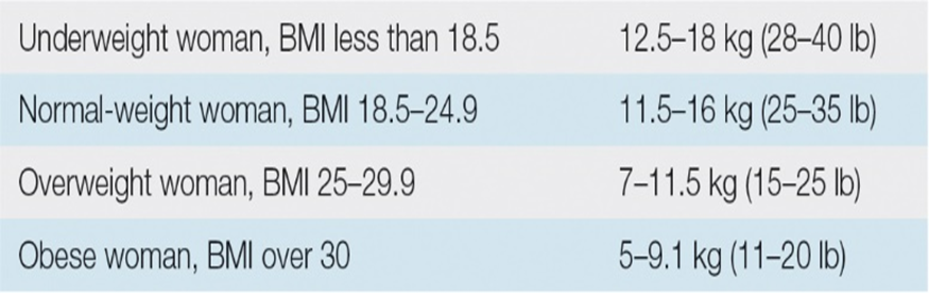
energy
additional 340 kcal 2nd tirmester
450 kcal 3rd trimester
fluids
8-10 glasses per day
4-6 glasses → water
protein
element basic to growth
calcium
bone and teeth formation of developing fetus
milk, nuts, legumes, dark green leafy vegetables
water soluble vitamins
folic acid (foalte) 400/600 mcg → reduce neural tube defects
fortified grains/cereals/breads, leafy vegetables, dried peas/beans, seeds, orange juice
pyridoxine (B6) → helps w/ N/V
Vit C (ascorbic acid) → enhance absorption of iron
Iron
iron supplements → prenatal plan (2nd and 3rd trimesters)
empty stomach/between meals
combine w/ Vit C for enhanced absorption
avoid milk, caffeine, and tea
can cause GI discomfort & constipation
before bed to avoid N/V
stool softners
green, tarry, thick bowel movements
fetal liver stores (3rd trimester)
Pregnancy (nutritional issues)
No alcholol
avoid caffeine
no more than 200mg daily
infertility, SAB, IUGR
Fish & mercury levels (avoid shark, swordfish, tuna, king mackerel, tile fish)
Listeriosis
avoid hotdogs, lunch meat, deli meat, soft cheeses (brie, feta)
avoid unpasteurized milk/dairy
PICA
Risk: family hx, childhood hx, low SES, iron/zinc deficiency