0.7 Gene Pools and Mechanisms for Evolution
 Call Kai
 Learn
Learn Practice Test
 Spaced Repetition
 Match
Match Flashcards
 Knowt Play
1/53

There's no tags or description
Looks like no tags are added yet.
Name | Mastery | Learn | Test | Matching | Spaced | Call with Kai | Chat |
|---|
No analytics yet
Send a link to your students to track their progress
54 Terms
Population
a group of organisms of the same species that are found in the same area and can interbreed
Gene pool
total sum of all alleles of all genes of all individuals in a population at any one time
Can be used to compare populations at different times or locations
Allele
a version of a gene, a heritable unit that controls a particular feature of an orgamism
Allele frequency
refers to how common an allele is in a population
Determined by counting how many times the allele appears in the population then dividing by the total number of copies of the gene
Genetic variation
variation in alleles of genes that occur both within and among a population
Genetic variation causes
Mutation
Random (independent) assortment
Crossing over of homologous chromosomes during meiosis
Random fertilisation
Random mating of individuals with varying traits
Mutations
permanent structural alteration in an organisms dna
Considered the ultimate source of genetic variation because they are the only process that creates new alleles. Other mechanisms such as crossing over an independent assortment only reshuffle existing alleles.
They are random - whether a particular mutation happens or not is unrelated to how useful that mutation would be
Can be beneficial neutral or harmful for the organism but mutations do not “try” to supply what the organism “needs”
Not all matter for evolution
Somatic mutations occur in non-reproductive cells and won’t be passed on offspring
Random (independent) assortment
as the chromosomes move apart the opposite side of the cell during the first division of meiosis each pair moves independently and does not affect or influence the movement of any other pair
In humans (23 chromosome pairs) this creates over 8.4 million possible chromosome combinations in the ovum and the sperm cells
Crossing over of homologous chromosomes during meiosis
Results in a recombination of the order of the alleles on chromatids
Random fertilisation
One of millions of sperm cells may fertilise the ovum
Random mating of individuals with varying traits
A random meeting between individuals with different genetic characteristics can increase variation within a population
Random variation example
Despite snail shells being different colours they’re all belong to a single species
The range of colours and banding pattern is only part of the variation that makes each of them unique
That variation is the raw material upon which natural selection acts and is the basis for evolutionary change
What is evolution?
The gradual process of changed in the inherited traits of a population of organisms from one generation to the next
OR
A permanent change in a population gene pool from one generation to the next
Mechanisms for evolution
Evolution only occurs when there is a change in gene frequency within a population overtime
Processes that provide the basis for evolutionary change
Natural selection
Genetic drift
Migration (gene flow)
Natural selection
A scientific theory that organisms best adapt to their environment tend to survive and out multiply (reproduce) those that are less well adapted
Is the process by which random evolutionary changes are selected four by nature and a consistent orderly non-random way
Selection
when some individuals with particular features have a greater chance than others of leaving fertile offspring
Survival of the fittest
The “fittest” are those phenotypes best city to the environment relative to other phenotypes present
Biological fitness
Measured by the relative proportion of fertile offspring left by an individual in the next generation
Evolutionary success of an individual
Depends on how fit he/she is
Fit individuals are well adapted
Allele frequency and natural selection
natural selection affects a frequency of alleles in a population gene pool
The frequency of alleles determining favourable traits increases and the frequency of the alleles determining unfavourable traits decreases
The process of natural selection
Overproduction
Variation
Struggle for survival
Adaptation
Survival of the fittest
Reproductive fitness
Allele carryover
Changes to the gene pool (evolution)
Overproduction
more younger born than survived to maturity
Variation
Sexually Reproducing species show variation in all inherited features
via random assortment, crossing over, mutations and random mating
Struggle for survival
Individuals and a population and complete with one other for survival
Example: Competition for resources, (food, water, shelter), mates or against predators and disease
Adaptation
Any characteristic/feature that helps an organism survive in its environment
It is the process by which an organism becomes better suited with environment
Survival of the fittest
Some individuals are better adapted to their environment and they are more likely to survive than others
Reproductive fitness
those who survive longest are likely to successfully raise the most offspring
Allele carryover
offspring that survival carry the alleles that determine adaptive features
Changes to the gene pool (evolution)
A little that determine favourable features will increase in the gene pool, whereas unfavourable alleles will decrease
What does natural selection determine?
Which mutations remain in gene pool and which ones are eliminated
It does not create the variation
It acts in the variation that is already present in the population
Selective pressures
Drives natural selection
External agents which affect an organisms ability to survive in a given environment
Can be negative, which decreases the occur occurrence of a trait or positive which increases the proportion of a trait
Can be density density-dependent (affected by population size) or density-independent (unaffected by population)
Resource availability
Presence of sufficient food, habitat (shelter/territory) and mates
Resource availability
Presence of sufficient food, habitat (shelter/territory) and mates
Environmental conditions
Temperature, weather conditions or geographical access
Biological factors
Predators and pathogens diseases
Examples of density dependent selection pressure factors
P redators
A vailability of recourses (eg shelter, water)
N utrient supply (eg food source)
D isease/ pathogenic spread
A ccumilation of wastes
Examples of density independence selection pressure factors
P henomena (eg natural disasters)
A biotic factors (eg temoerature, CO2 levels)
W rather conditions (eg floods, storms)
Genetic drift
refers to the random change in the allele frequencies in a population over generations
Due to chance events
Affects small populations more than large populations
Example of genetic drift
the frequency of our particular trait could for no obvious reason drift from 2% in generation one to 11% in generation 2 to 5% in generation three
The effects of genetic drift
traits being lost from small populations
Unusual traits or mutations not commonly found in the current population and that are often non-adaptive becoming established
Effects of genetic drift on small breeding population example
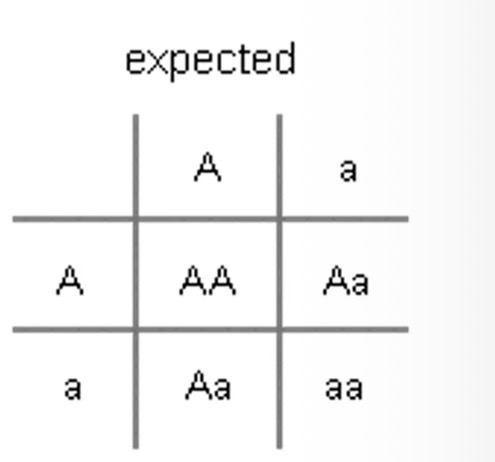
When Woman and their mates are both heterozygous (Aa) for a trait, we would expect that 25% of that children will be homozygous recessive (aa).
By chance, however, a particular couple might not have any children with this genotype
Unless other families have an unpredictably large number of homozygous recessive children for this chat to counter the random deviation, the populations gene pool frequencies will change in the direction of having fewer recessive alleles - genetic drift will occur
Two forms of genetic drift
Bottleneck effect
Founder effect
both effects show how chance events can lead to significant changes in all frequencies and genetic diversity, especially in small populations.
Large population size
Individuals make only a small contribution to the gene pool
Evolution occurs slowly
Most changes are adaptive (have a survival advantage)
Natural selection is the main driving force
Small population size
Individuals make a relatively large contribution to the gene pool
Evolution can occur rapidly
Many changes are non-adaptive (provide no survival advantage)
Many changes are due to chance events (genetic drift, founder effect)
Bottleneck effect
Occurs when the abundance and distribution of an existing population dramatically reduces
This can be caused by an event that results in a drastic decrease in a population e.g. natural disaster, deforestation, and pollution
Increases the rate of genetic drift and decreases genetic diversity
Bottleneck effect example
In the original population there are green, orange, and red individuals living in a habitat
Orange makes out the majority of the population. The colours represent alleles for a colour gene.
When disaster strikes, only a few random individuals make it out alive
By pure luck, most of the survivors are red with a few green and one orange
Overtime the population grows again but now the major majority of members are red and there are just a few orange. This is very different from the original population before the disaster happened.
This illustrates that when a bottleneck event happens the variety in a population can decrease and the proportions of different alleles can change completely
The founder effect
Occurs when a small number of people migrate away from the ‘parent’ population and settle in a new area
The founding population carry only a small fracture of the original ‘parent’ populations, genetic variation (e.g. they are not representative of the entire gene pool)
They increase in number and retain their frequencies, maintaining the differences to the original group
As a result they may differ both genetically and in appearance compared to the parent population
The smaller the number of individuals found in the new colony the smaller the genetic diversity
This can lead to speciation if the colony is separated by some barrier/isolated
Founder effect example
an island in the Pacific was colonised in 1790
Today the population of the island is 44 people
The population exhibits reduced genetic diversity because it descended from a small number of founders
This small initial population means that certain alleles including those genetic conditions were present higher frequencies by chance alone
Therefore, they have higher incidences of certain genetic disorders that are rare in the general population
Migration – gene flow
Gene flow is when there are changes in a little frequencies in a gene pool due to Migration
Gene flow may influence the genetic composition of a population if there are differences in allelic frequencies between native and immigrant populations
The greater the immigration rate and differences in allelic frequencies between populations, the greater the impact of gene flow
Barriers to gene flow
populations are often kept apart by geographical barriers, (oceans, mountain ranges, deserts etc), mechanical, behavioural, (religious, cultural Barriers, language, and race in humans) that inhibit the amount of interbreeding between them
Due to the difference as an environment, the environmental pressure on one population will differ from the pressure on another
This results in slightly different characteristics being favoured in one population compared to another
Overtime the allele frequencies of each gene pool will change depending on which character characteristics are favoured for survival
Isolation results in the development of separate gene pools
Coin flipping experiment
The expectations that heads will turn up 50% of the time because there are only two sides to a coin, heads and tails
If you flip a coin 10 times, it may or may not result in five heads
The more times that you flip your coin, the more likely it will approach the expected 50% heads
If you do an infinite number of times it will be 50%. In other words when a sample is very small the probable outcome may not occur.
As a sample increase increases in size, it will get progressively closer to it
In-breeding
Reduce mating opportunities often lead to an increase in in–breeding
Results in reduced genetic diversity in the populations gene pool
Consequences of in–breeding
Can result in non-adaptive changes occurring
Can amplify undesirable traits
Can (more frequently) greatly increase the risk of unusual, often harmful traits being expressed