DAM Lecture 1 - Tooth ID systems and basic tooth structures
 Call Kai
 Learn
Learn Practice Test
 Spaced Repetition
 Match
Match Flashcards
 Knowt Play
1/19

There's no tags or description
Looks like no tags are added yet.
Name | Mastery | Learn | Test | Matching | Spaced | Call with Kai | Chat |
|---|
No analytics yet
Send a link to your students to track their progress
20 Terms
Dentition and types and amount
All the teeth together in the mouth
- primary/ decidious: baby teeth (20)
- secondary: permenant (32)
Incisors
- Central and lateral
- Cutting and shearing food
Canines
longest roots
Premolars
- first and second
- tearing food (like canines and molars)
Molars
- first, second, third
- fulcrum, closest to TMJ
Universal Secondary teeth
Upper: (1-> 16)
Lower: (32->17)
NOTES:
- canines: 6, 11 & 22, 27
- front: 8, 9 & 24, 25
Universal Primary teeth
Upper: (A-J)
Lower: (T-K)
NOTES:
- canines: C, H & M, R
- front: E, F & O, P
Palmer Secondary teeth
Used in orthodontics and o.s.
R (8
R (8
Palmer Primary teeth
R (E
R (E
FDI Secondary teeth
1. (8
Dental formula decidious teeth and what everything stands for
*note: this formula only represents one side (L or R) of mouth
I 2/2 C 1/1 M 2/2
I= incisor (2 top 2 bottom)
C= canine (1 top 1 bottom)
M= molar (2 top 2 bottom)
*no premolars for primary
Dental formula secondary teeth and what everything stands for
*note: this formula only represents one side (L or R) of mouth
I 2/2 C 1/1 PM 2/2 M 3/3
I= incisor (2 top 2 bottom)
C= canine (1 top 1 bottom)
PM= pre molar (2 top 2 bottom)
M= molar (3 top 3 bottom)
Anatomical vs Clinical (root and crown)
Anatomical: expected root and crown
Clinical: crown is whatever is exposed, root is what is not exposed
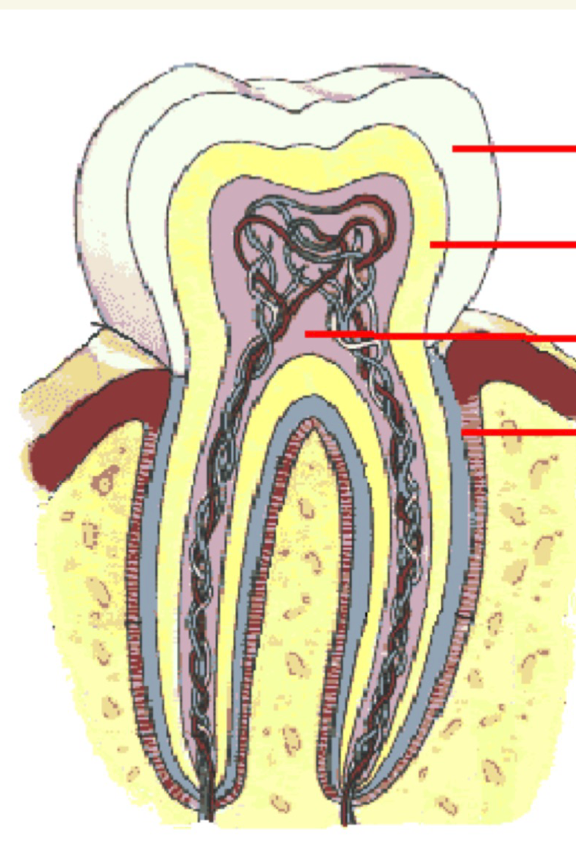
label the 4 red lines on the right
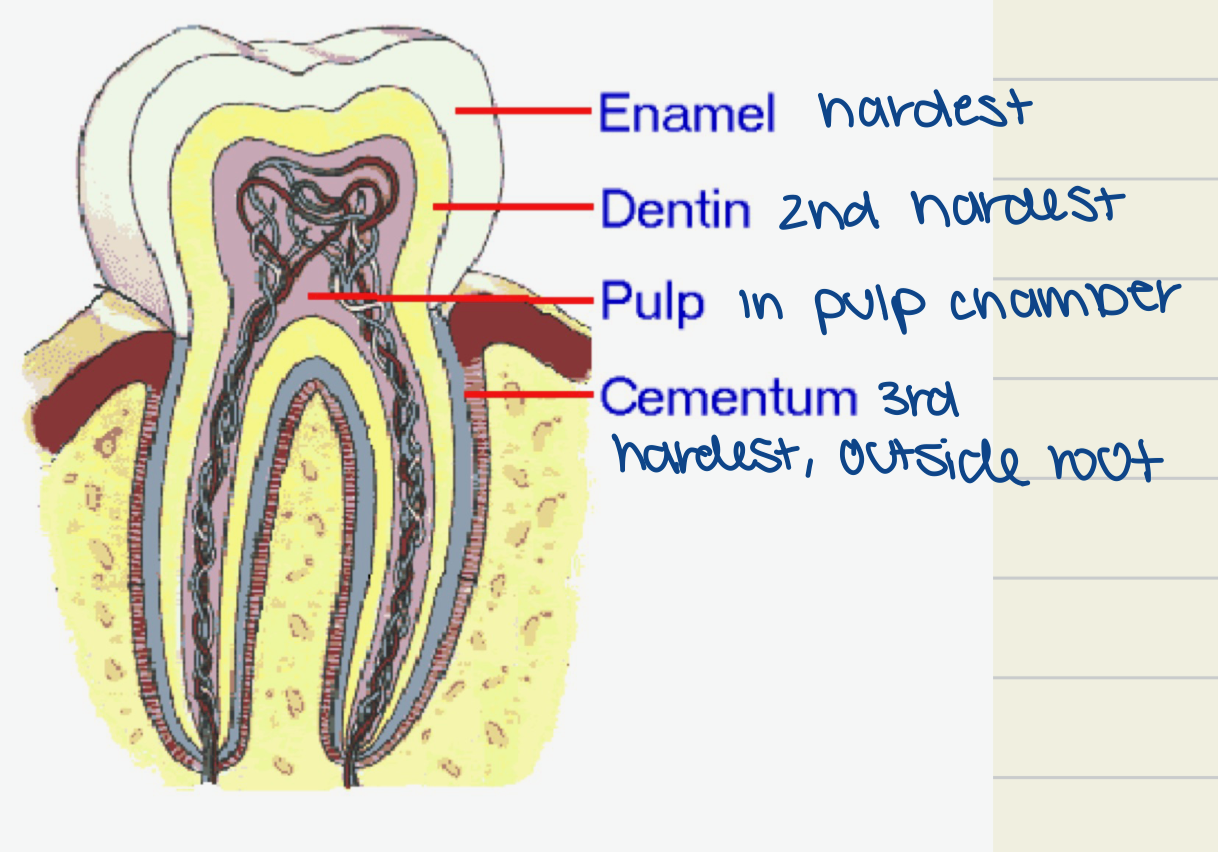
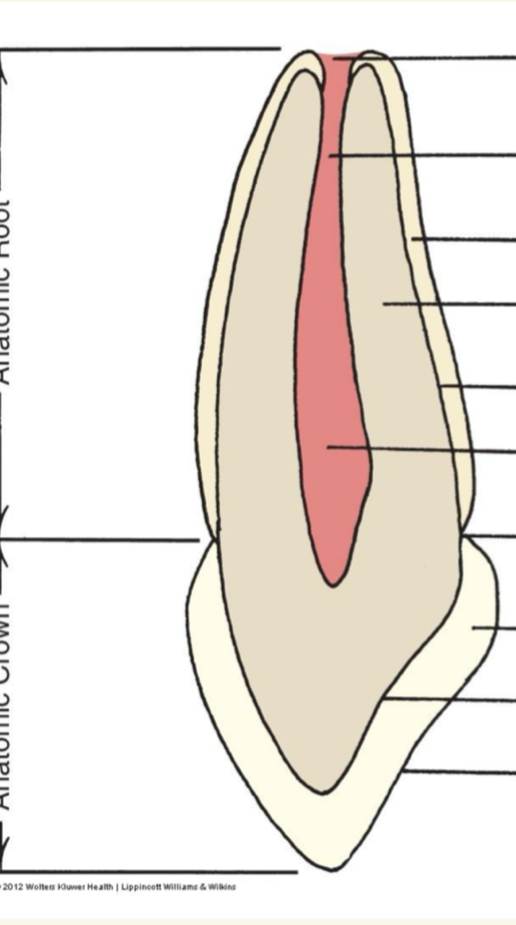
label all the markings on the right
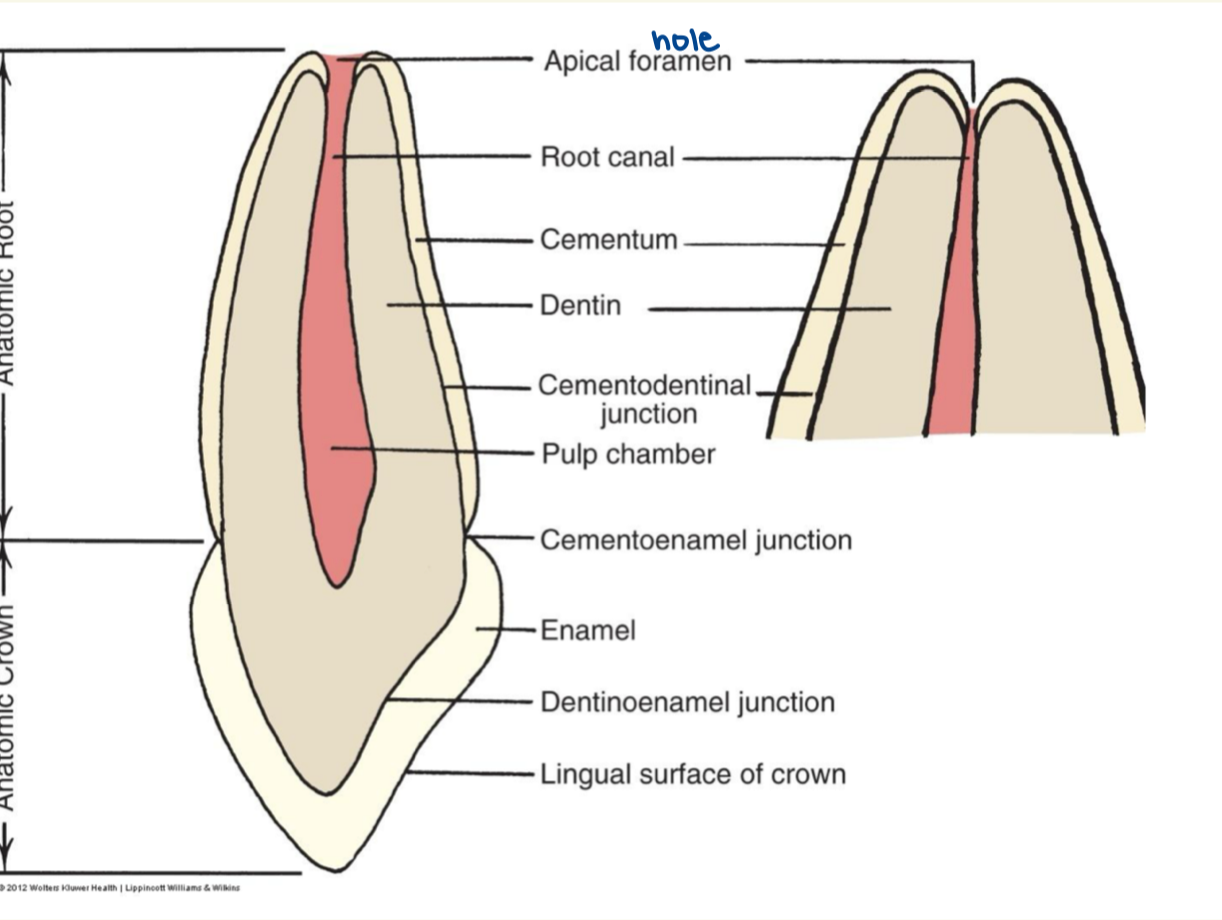
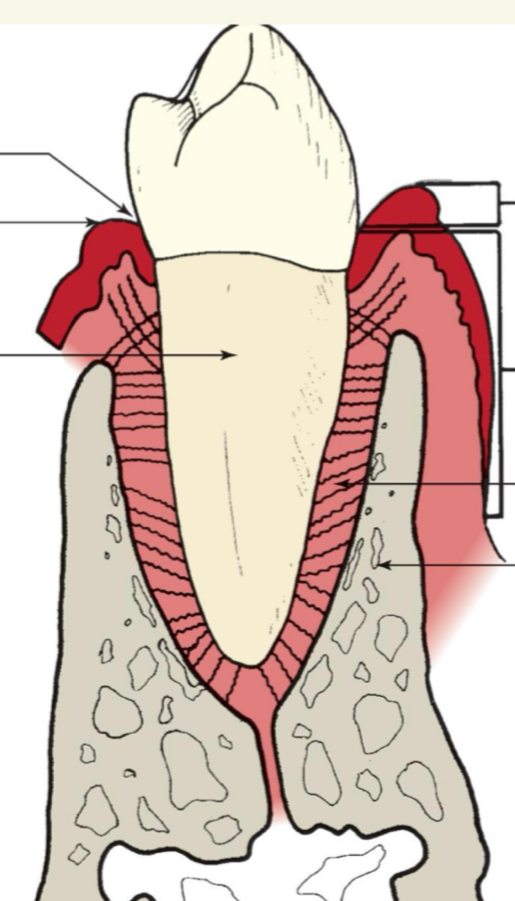
Label the left three arrows
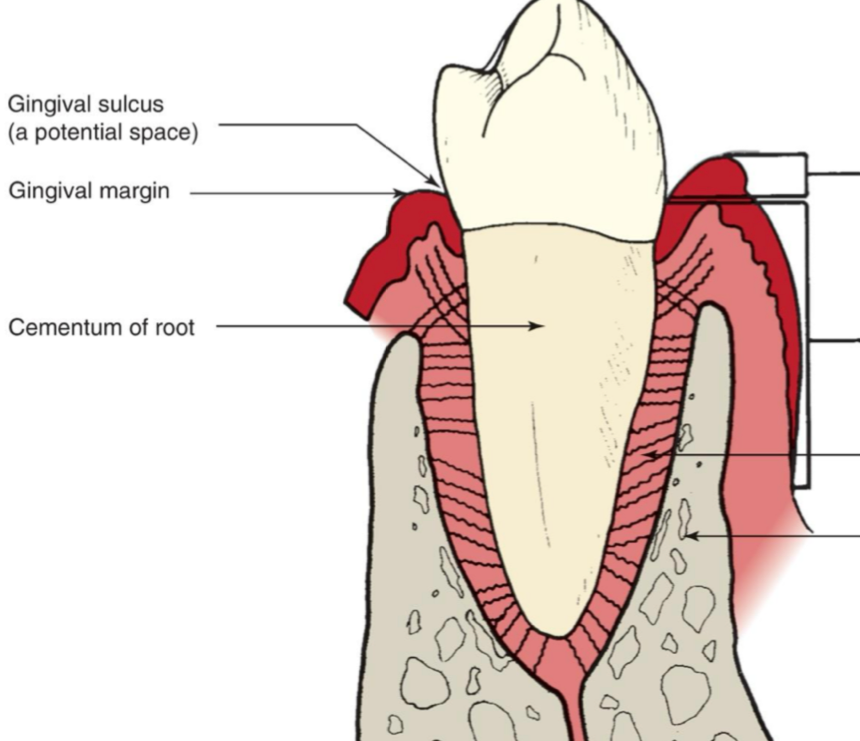
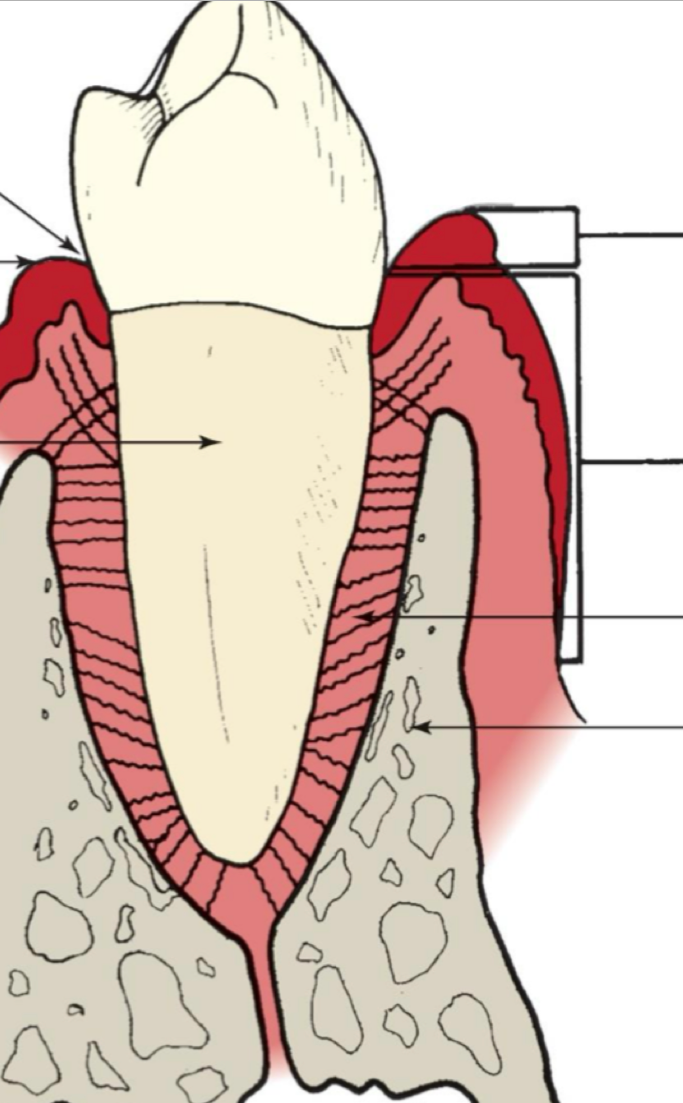
Label the right 4 arrows
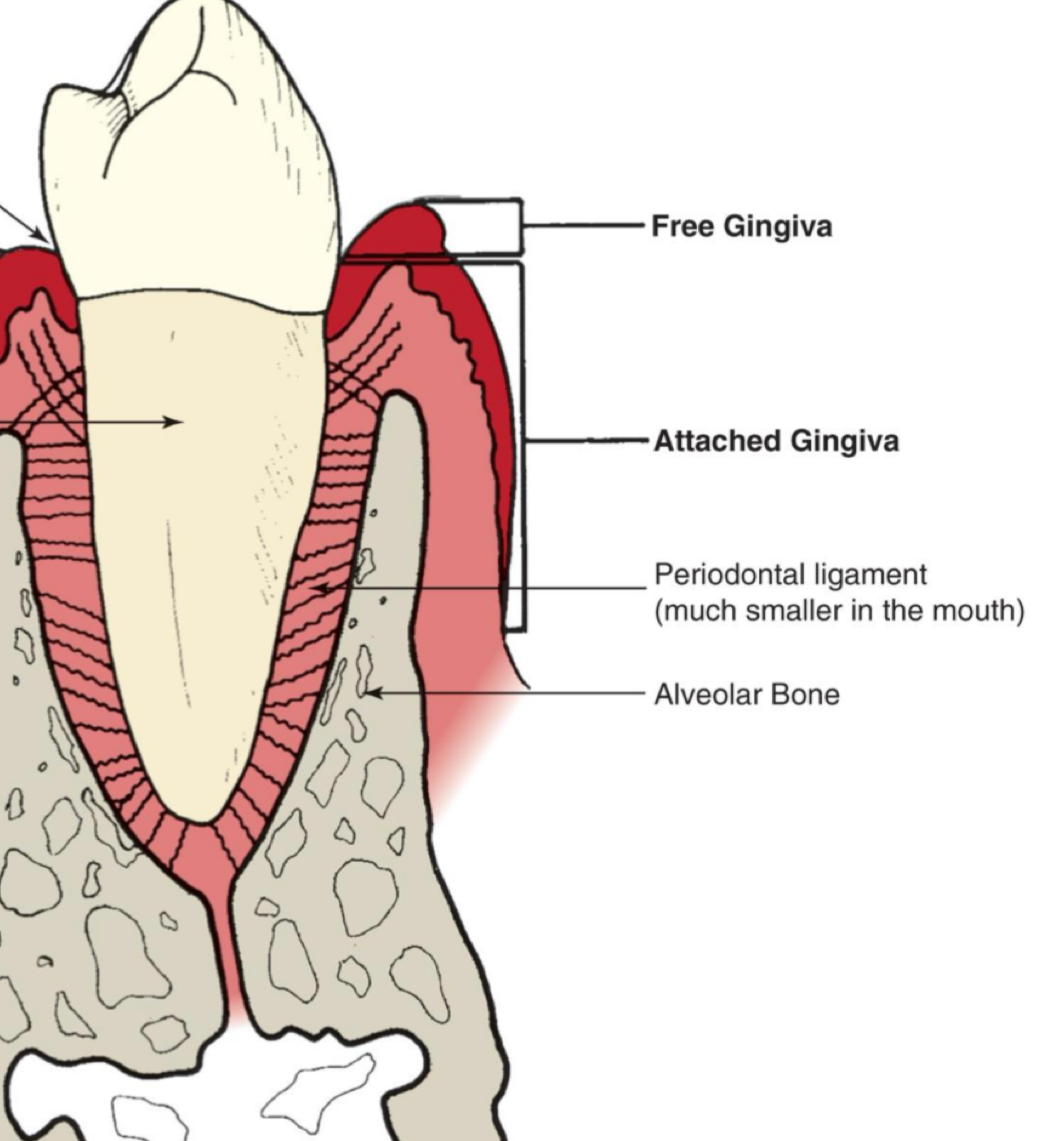
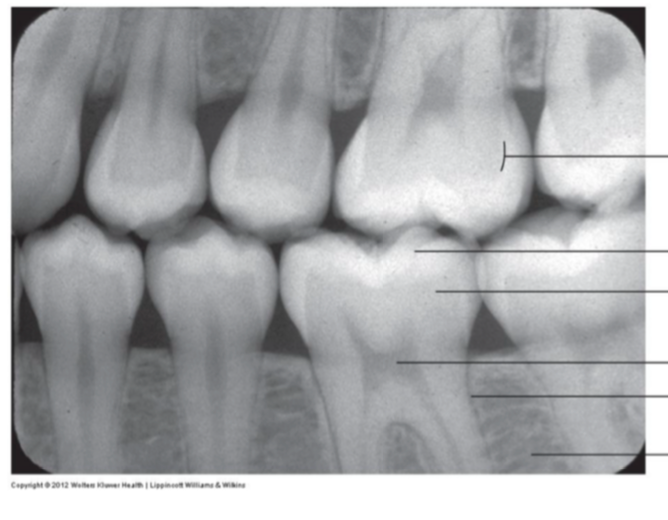
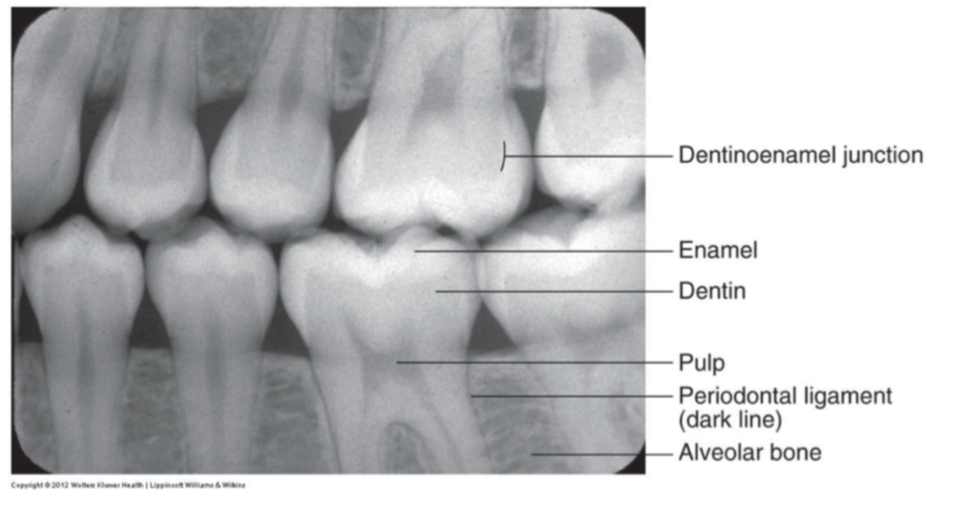
label everything on the right
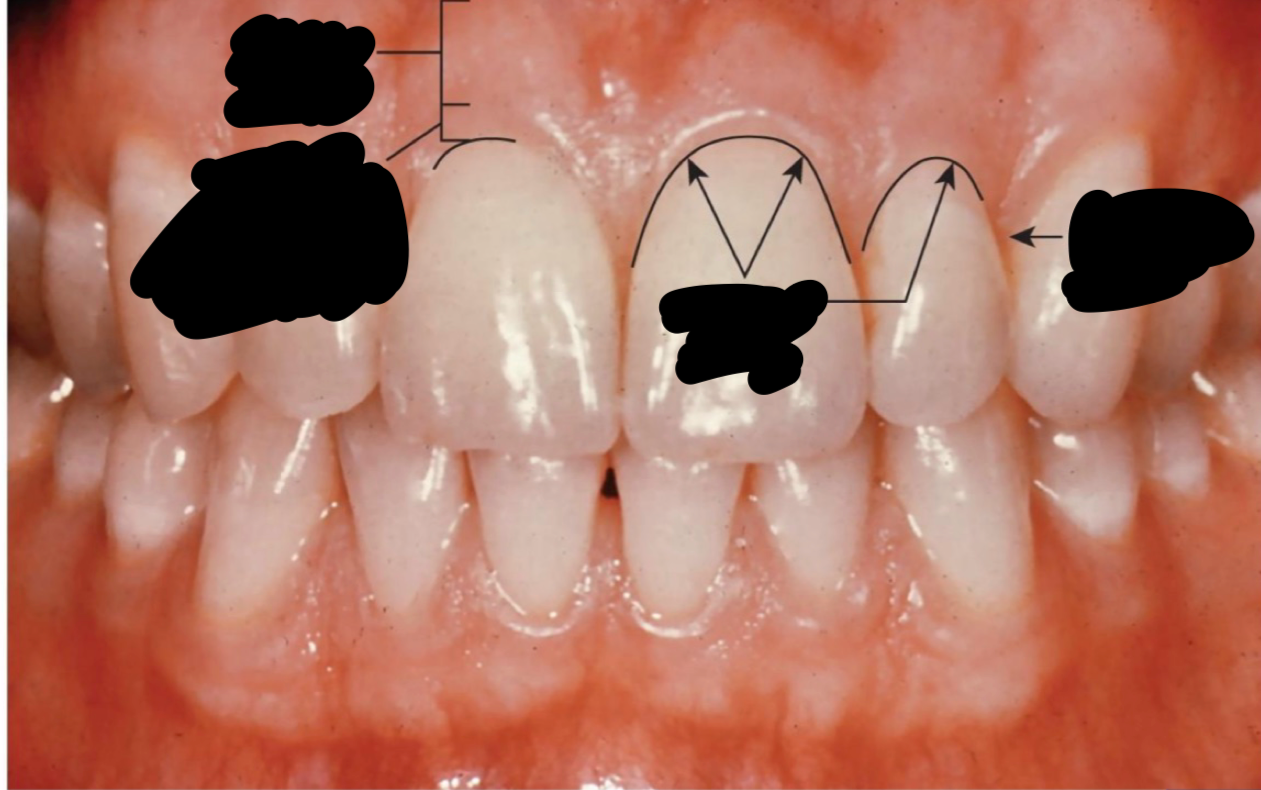
Label everything
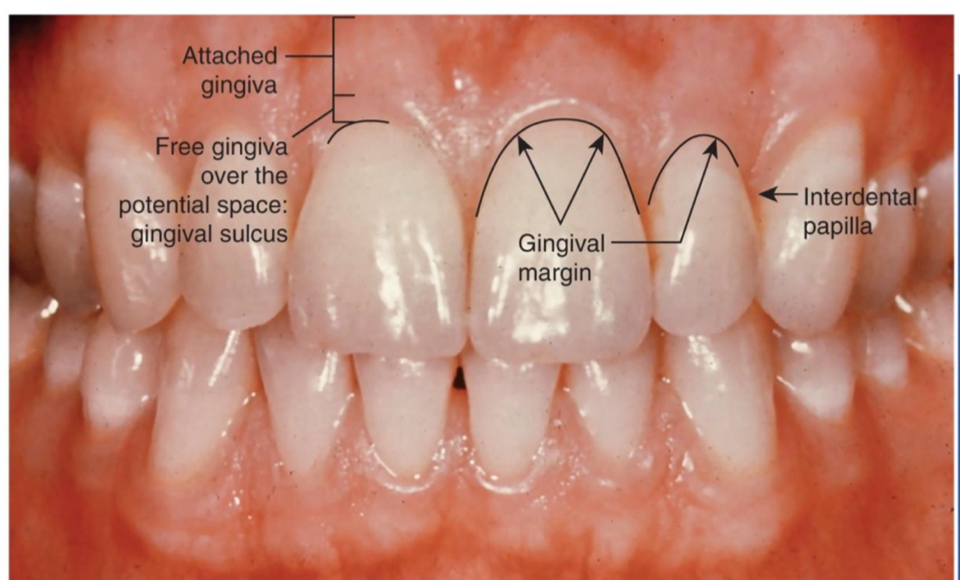
On dental radiographs, what does it mean to see black vs white areas?
Black: Radiolucent, less dense
White: Radiopaque, more dense