AP Psychology Unit 3
0.0(0)Studied by 65 people
Build your Mastery score
 Multiple Choice & FRQ
 Call Kai
Card Sorting
1/48

Earn XP
Description and Tags
49 Terms
1
New cards
Sensation
the process by which our sensory receptors and nervous system receive stimulus energies from our environment
2
New cards
perception
the process of organizing and interpreting sensory information, enabling us to recognize meaningful objects and events
3
New cards
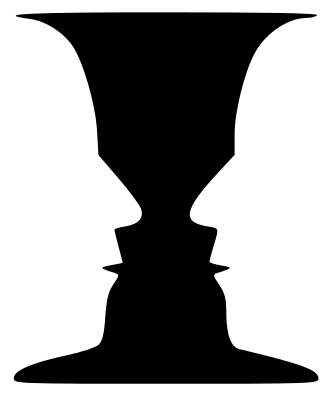
figure-ground
the tendency to focus on one object or sound and, in doing so, perceiving the other objects or sounds as being in the background.
4
New cards
Gestalt
an organized whole that is perceived as more than the sum of its parts.
5
New cards
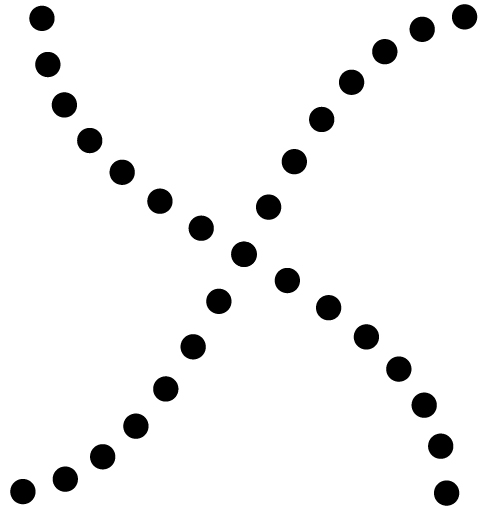
continuation
A line or edge that continues from one form to another, allowing the eye to move smoothly through a composition
6
New cards
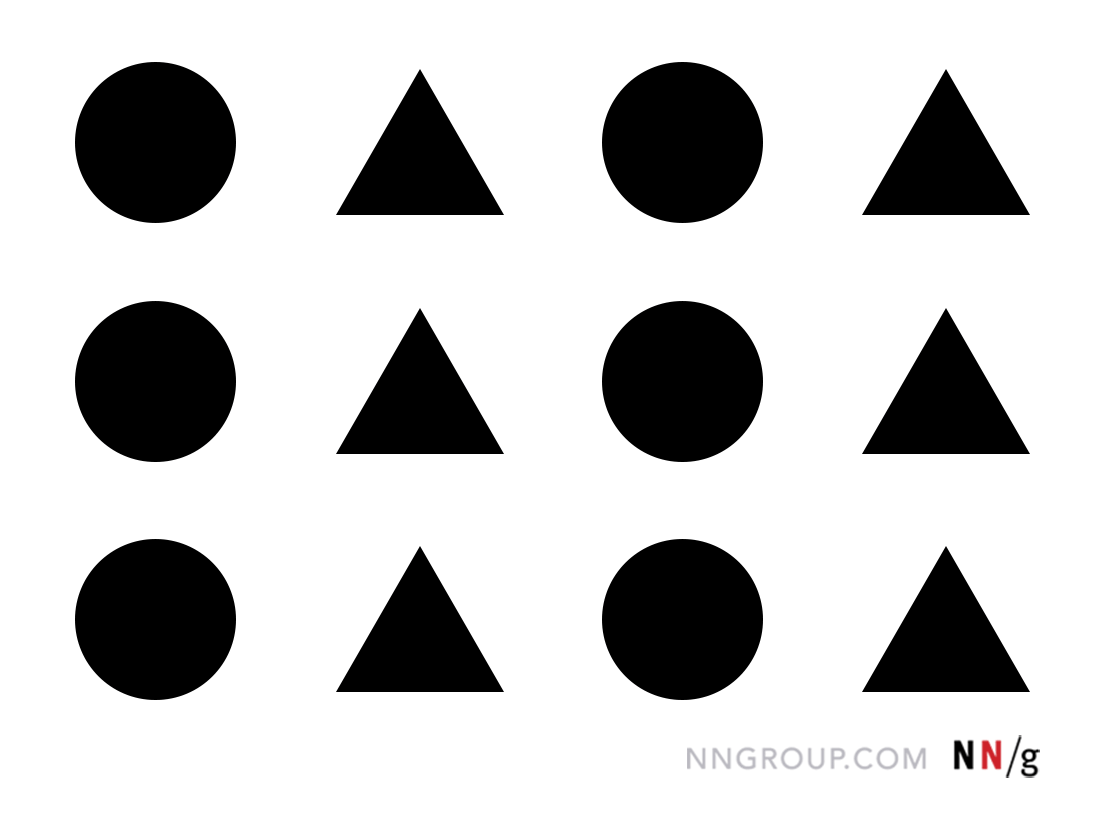
similarity
the tendency to perceive things that look similar to each other as being part of the same group
7
New cards
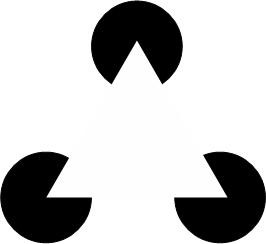
closure
the tendency to complete figures that are incomplete
8
New cards
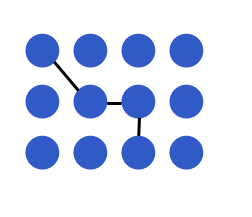
connectedness
spots, lines, and areas are seen as unit when connected
9
New cards
proximity
group nearby figures together

10
New cards
depth perception
allows you the ability to determine the distance between you and an object and to perceive the world in three dimensions
11
New cards
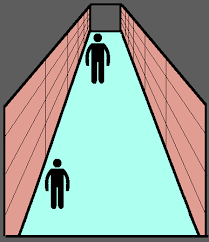
visual cliff experiment
created by E.J. Gibson, used to determine when infants can perceive depth (showed that depth perception is perceived at a very young age)
12
New cards
monocular cues
depth cues available to either eye alone (you don't need both eyes to perceive these cues)
13
New cards
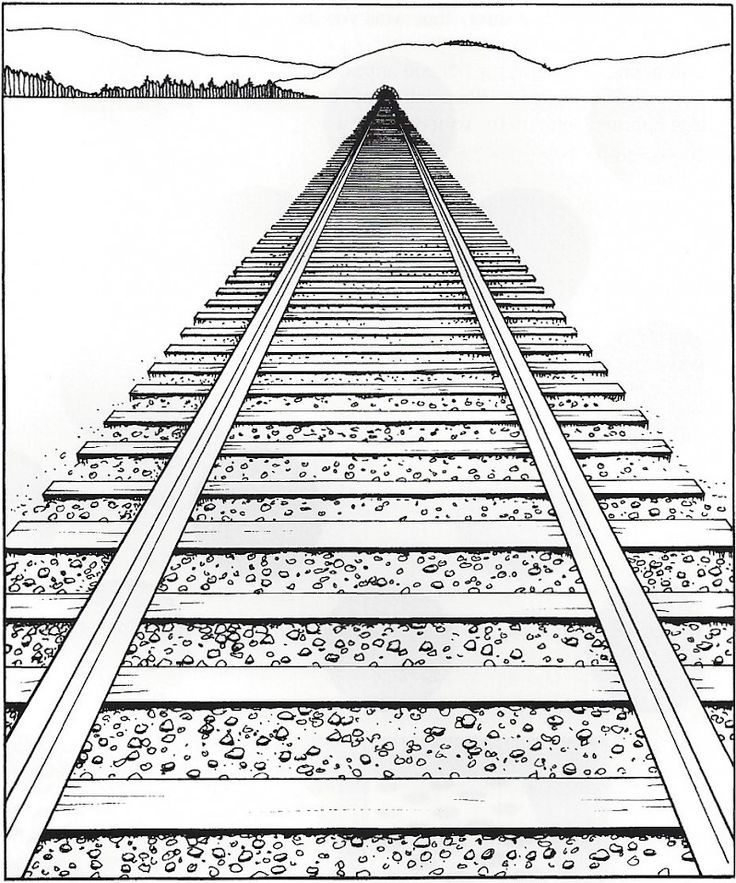
linear perspective
a monocular cue (a cue that can be seen with just one eye) that perceives that parallel lines appear to converge with distance
14
New cards
binocular cues
depth cues, such as retinal disparity and convergence, that depend on the use of two eyes
15
New cards
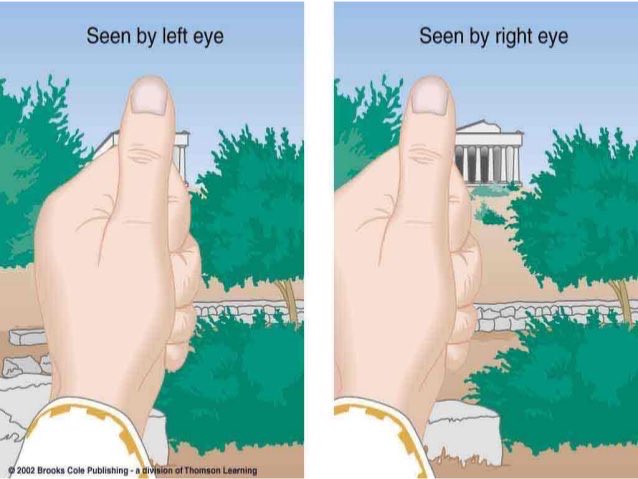
retinal disparity
a binocular cue (requiring both eyes) that perceives the differences between the images stimulating each eye
16
New cards
convergence
A binocular cue - the extent to which the eyes converge/move inward the closer an object is (cross eyed)

17
New cards
absolute threshold
the minimum intensity of stimulation that must occur before you experience a sensation (i.e. sounds that one person can hear but another can't)
18
New cards
difference threshold (just noticeable difference)
the amount something must be changed in order for a difference to be noticeable, detectable at least half the time.
19
New cards
sensory adaptation
diminished sensitivity as a consequence of constant stimulation (i.e. becoming "nose blind" to a scent that you are used to smelling, or not noticing you are wearing a mask all day).
20
New cards
top-down processing
the use of preexisting knowledge to guide your perception and organize individual features into a unified whole (i.e. the woman not liking clam chowder once she found out it had seafood)
21
New cards
bottom-up processing
analysis that begins with the sensory receptors and works up to the brain's integration of sensory information (i.e. the woman liking clam chowder before knowing it had seafood in it)
22
New cards
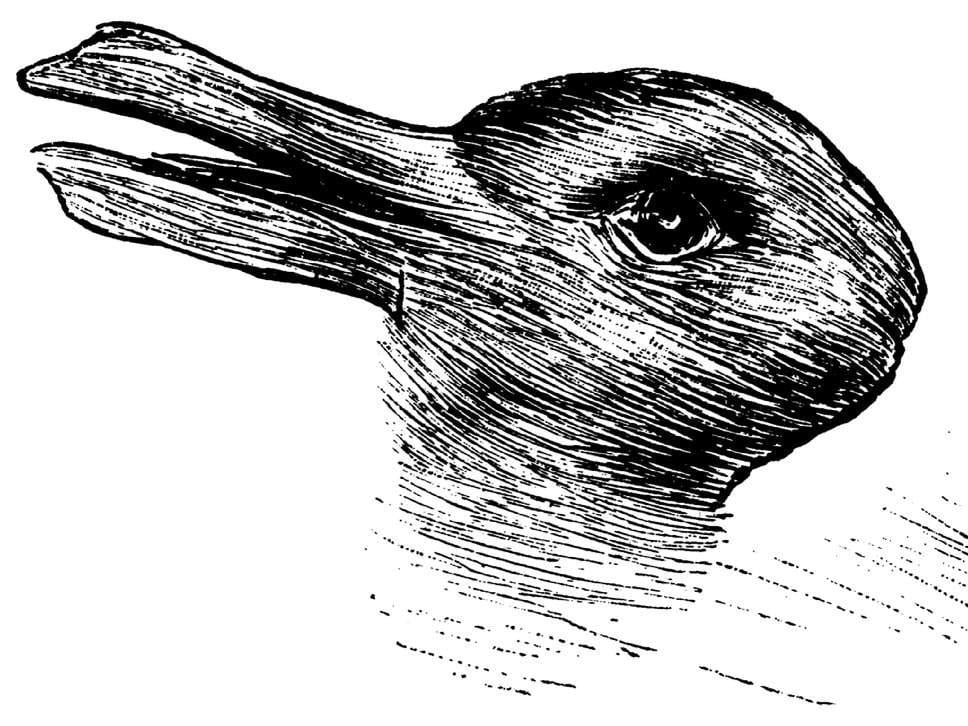
perceptual set (perceptual expectancy)
a mental predisposition to perceive one thing and not another based on several factors such as expectation and culture
23
New cards
Schema
a conceptual framework a person uses to make sense of the world, based on expectation and influences our perceptual set.
24
New cards
perceptual adaptation
in vision, the ability to adjust to an artificially displaced or even inverted visual field
25
New cards
Rods
receptors in the retina that detect black, white, and gray; necessary for peripheral and twilight vision
26
New cards
Cones
receptor cells in the retina that detect fine detail (the fovea) and color sensations.
27
New cards
Retina
the light-sensitive inner surface of the eye, containing the receptor rods and cones plus layers of neurons that begin the processing of visual information.
28
New cards
layers of retina
rods/cones --\> bipolar cells --\> ganglion cells
29
New cards
Vision Transduction
occurs in the retina and travels to the occipital lobe
30
New cards
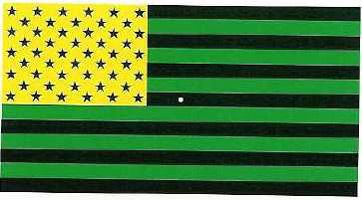
opponent processing theory
Helps to explain negative afterimages. This is because the chemical reaction reverses once you've seen one of the colors.
31
New cards
monochromatic
seeing only one color
32
New cards
dichromatic
seeing only two colors. people who are color blind typically see in this way.
33
New cards
trichromatic theory
theory of color vision that proposes three types of cones: red, blue, and green
34
New cards
Frequency
also known as pitch
35
New cards
Amplitude
also known as volume
36
New cards
outer ear
where sound waves travel through the pinna --\> auditory canal --\> hit the eardrum
37
New cards
middle ear
the chamber between the eardrum and cochlea containing three tiny bones (hammer, anvil, and stirrup) that vibrate to the impact of the eardrum
38
New cards
inner ear
the innermost part of the ear, containing the cochlea (with the cilia) and the semicircular canals. this is where transduction occurs (specifically in the hair like cilia)
39
New cards
taste buds
sensory organs in the mouth (below the papillae) that contain the receptors for taste/ where taste is transduced
40
New cards
What are the 5 tastes?
sweet, sour, salty, bitter, umami
41
New cards
olfactory transduction
conversion of chemical molecules in the air into neural impulses by attaching to receptors in the olfactory epithelium
42
New cards
olfaction and memory
(1) Olfaction doesn't pass through the thalamus, so smell triggers the strongest memories. (2) olfactory bulb is very close to the hippocampus
43
New cards
gate control theory of pain
based on the idea that signals arriving from pain receptors in the body can be stopped, or gated, by interneurons in the spinal cord due to external factors (i.e. medication, physically alleviating through massaging)
44
New cards
somatosensory cortex
registers and processes body touch and movement sensations
45
New cards
vestibular sense
a sensory system located in structures of the inner ear (semicircular canals) that registers the orientation of the head and sense of balance
46
New cards
Homunculus Man
The more sensitive the body part, the more space/activation that body part activates in the somatosensory cortex.
47
New cards
example of just noticeable difference
If you change the color of your packaging from very light blue to light blue, customers might not notice. If you change the color of your packaging from light blue to red, your customers will notice
48
New cards
inattentional blindness
failing to see visible objects when our attention is directed elsewhere
49
New cards
change blindness
failing to notice changes in the environment