Era 3, 1750 - 1900 CE: The Industrial Revolution (Quizlet Unit #16)
 Studied by 0 people
 Call Kai
 Learn
Learn Practice Test
 Spaced Repetition
 Match
Match Flashcards
 Knowt Play
1/28

There's no tags or description
Looks like no tags are added yet.
Name | Mastery | Learn | Test | Matching | Spaced |
|---|
No study sessions yet.
29 Terms
1. The Industrial Revolution 1750 - 1900 CE
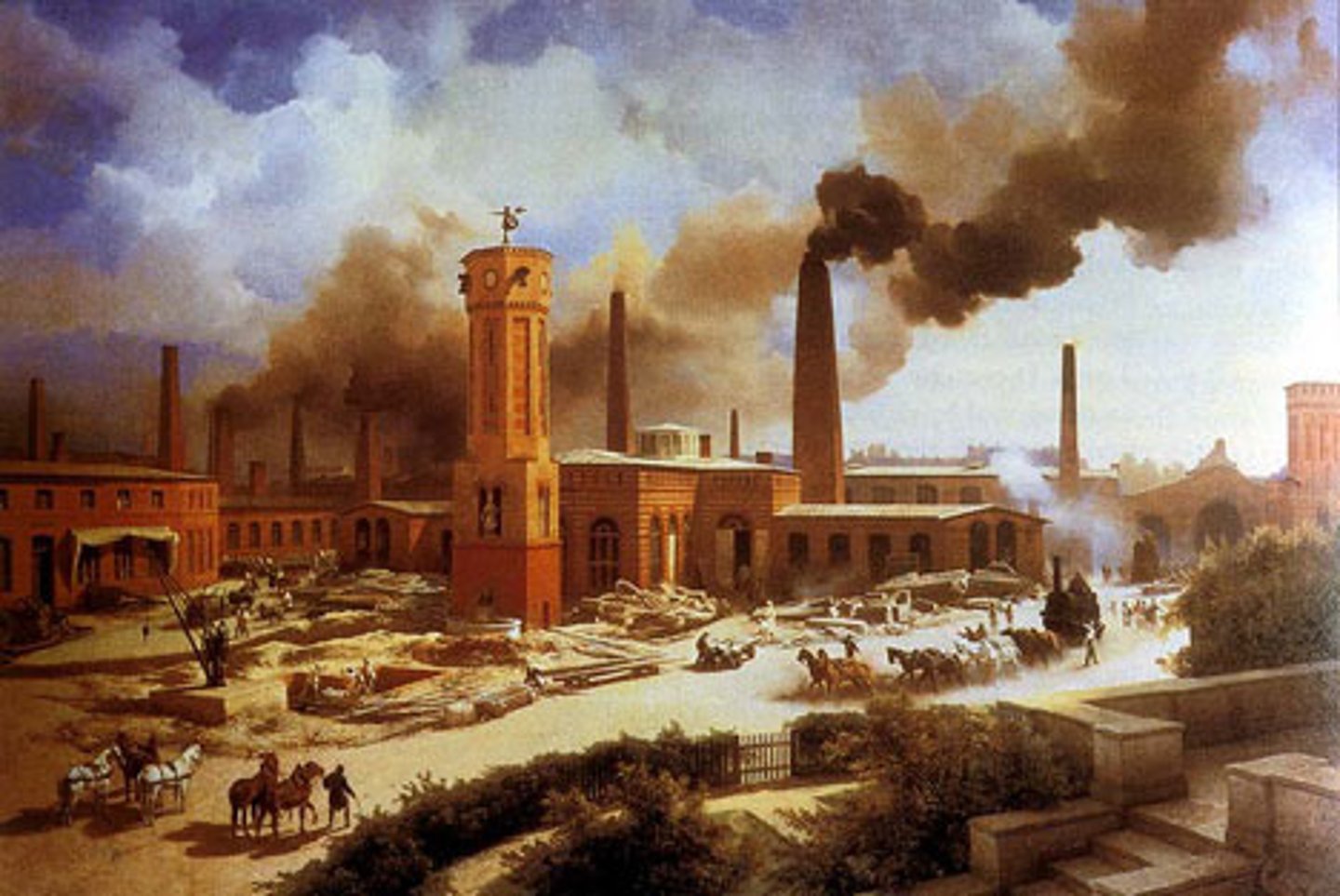
-From 1750 - 1900 CE, there was a dramatic change in the world's economy as Western Europe and the United States began to produce "goods" in massively different ways
-New machines such as the steam engine and internal combustion engine powered other machines in massive factories
-Fossil fuels such as coal and oil became incredibly valuable in order to power the factories
-The assembly line and mass production increased efficiency and lowered costs
-Transportation was changed immensely with the railroad, steamship, and canals
-It wasn't all improvements; working conditions were horrible, and massive urbanization (movement to cities) led to horrible and unsanitary conditions in the tenements
-All of these changes are part of the ___________________________________________
2. The Steam Engine 1780 CE
-Before the Industrial Revolution, factories were incredibly small and had to be near a river or use animals to get power
-During the Industrial Revolution, inventors created machines that could burn fossil fuels such as coal and oil to produce power; this allowed factories to be anywhere
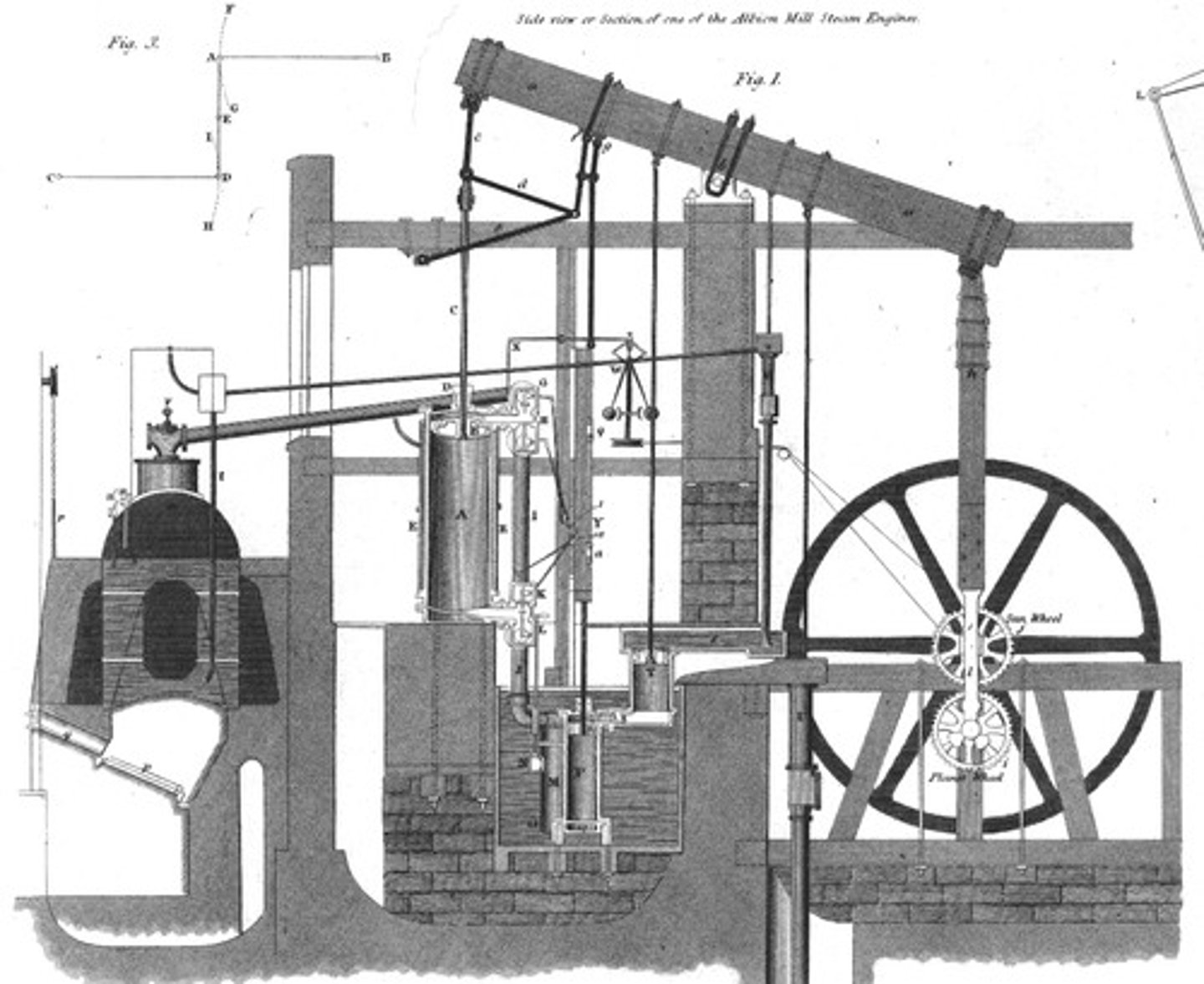
-This invention, created by James Watt in Britain, burned coal and then used ____________________ to power an engine
-The _______________ ___________ could be used to power any number of machines in a factory or a railroad car
-They were especially useful in Britain's textile (cloth making) industry; over 1,000 were in use by 1800
3. The Internal Combustion Engine
-Before the Industrial Revolution, factories were incredibly small and had to be near a river or use animals to get power
-During the Industrial Revolution, inventors created machines that could burn fossil fuels such as coal and oil to produce power; this allowed factories to be anywhere
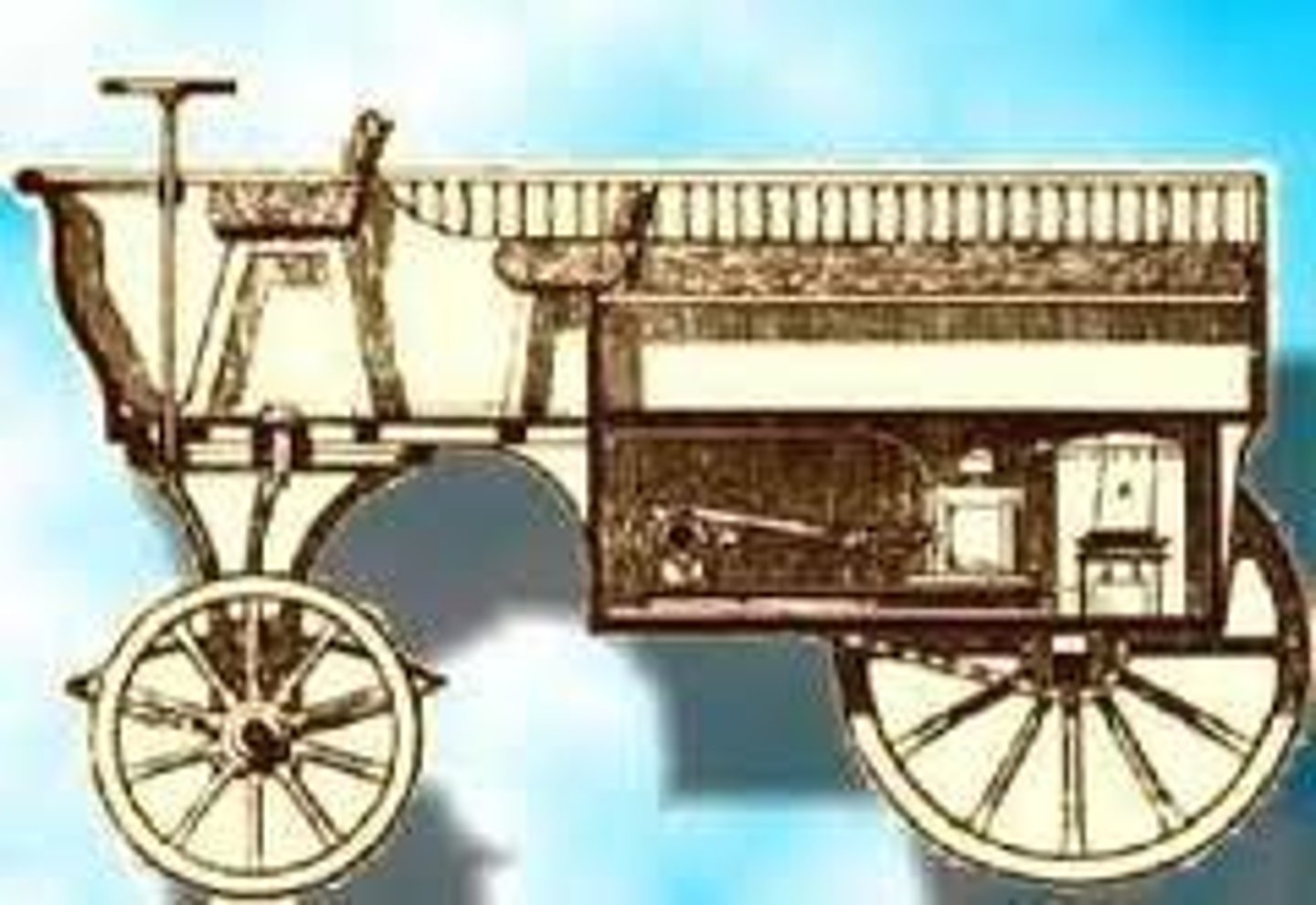
-This invention, created by Siegfried Marcus. in Europe, burned burned oil in a small space and used the energy from the burning oil to rotate something
-The energy from the rotation is used to power machines in factories and also moving vehicles, such as railroads or later cars
4. Fossil Fuels: Coal and Oil
-Before the Industrial Revolution, factories were incredibly small and had to be near a river or use animals to get power
-During the Industrial Revolution, James Watt invented the Steam Engine and Siegfried Marcus came up with the internal combustion engine; these were now used to power factories
-In order to run these engines, the inventors used __________________________
-There were two major fossil fuels were: ___________ and _______________
-These products became incredibly valuable and the Europeans practiced imperialism to obtain them; capitalists like Rockefeller made a fortune selling these fuels during the Industrial Revolution
-They also led to increased pollution, creating problems like asthma, lung disease, and global warming
5. The Factory System and Specialization of Labor
-During the Industrial Revolution, there was a massive change in the way the workplace was organized
-When you worked in a factory, people started to become really good at one job. They would learn how to work one machine or do one skill over and over again throughout the day. This was called the specialization of labor
-People like Henry Ford used a technique called the ASSEMBLY LINE, where each worker repeated one task over and over to build something. For instance, a worker at the Ford car plant might only attach steering wheels. Then the next worker would only attach brakes. Then the next worker would put the seats in, etc. At the end of the line, a car would be produced!
-This was incredibly boring, but very efficient
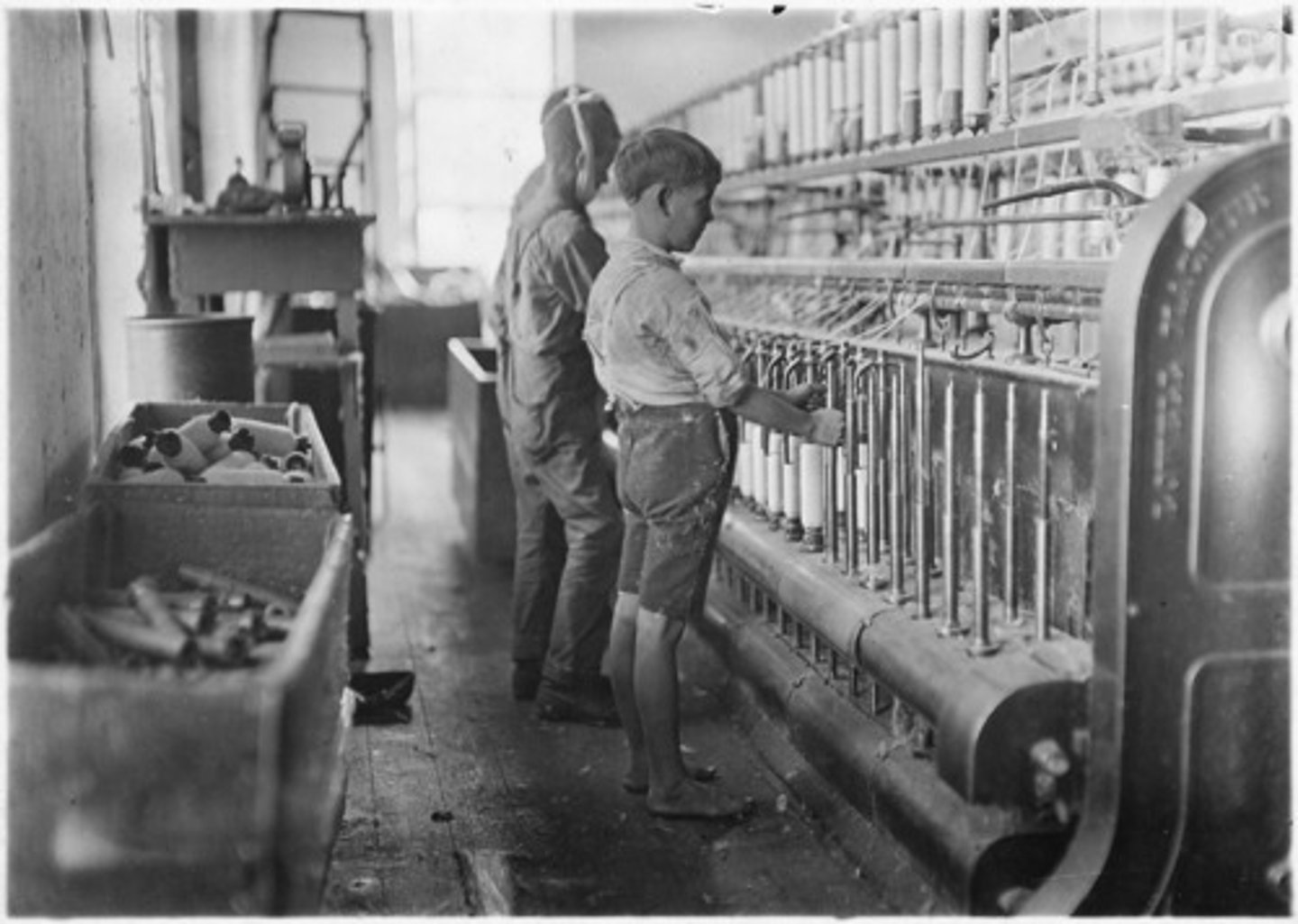
-Workers often had to work 12 to 14 hours a day in hot, dirty, smelly, and dangerous conditions
-Sadly Child Labor became widespread during this time, as capitalist business owners tried to increase profits by using children to perform the worst, most boring, and repetitive tasks. Orphans were often exploited in this system
-In the United States, European and Chinese immigrants were also often exploited and paid miserably low wages and forced to work in inhumane conditions where accidents and deaths were common
-This whole system was called the _____________________________________

6. The Assembly Line
-During the Industrial Revolution, there was a massive change in the way the workplace was organized
-When you worked in a factory, people started to become really good at one job. They would learn how to work one machine or do one skill over and over again throughout the day. This was called the specialization of labor
-People like Henry Ford used a technique called the ___________________________________ , where each worker repeated one task over and over to build something. For instance, a worker at the Ford car plant might only attach steering wheels. Then the next worker would only attach brakes. Then the next worker would put the seats in, etc. At the end of the line, a car would be produced!
-This was incredibly boring, but very efficient
-It was especially effective for building cars, airplanes, electronics, furniture, etc.
7. The Bessemer Process for Steel
-During the Industrial Revolution, an inventor named Henry ________________ created a cheap and fast way to make steel from iron
-This process involved heating iron up to extremely high temperatures, melting it, and then using a blast of air to create steel from the iron
-Once he came up with this, people began using steel to build factories, railroads, and buildings
-Andrew Carnegie made a fortune in the United States using this method and selling this product

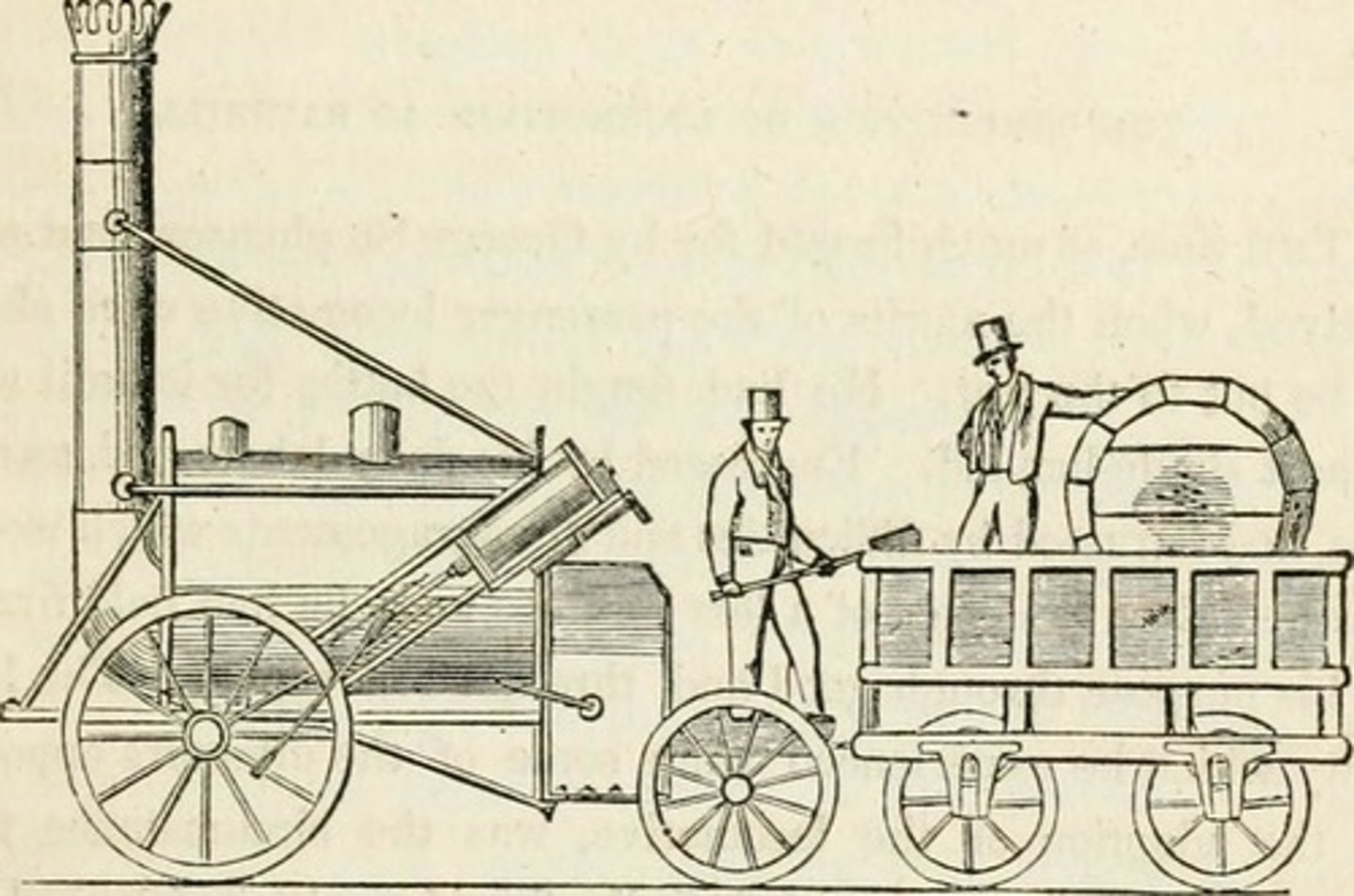
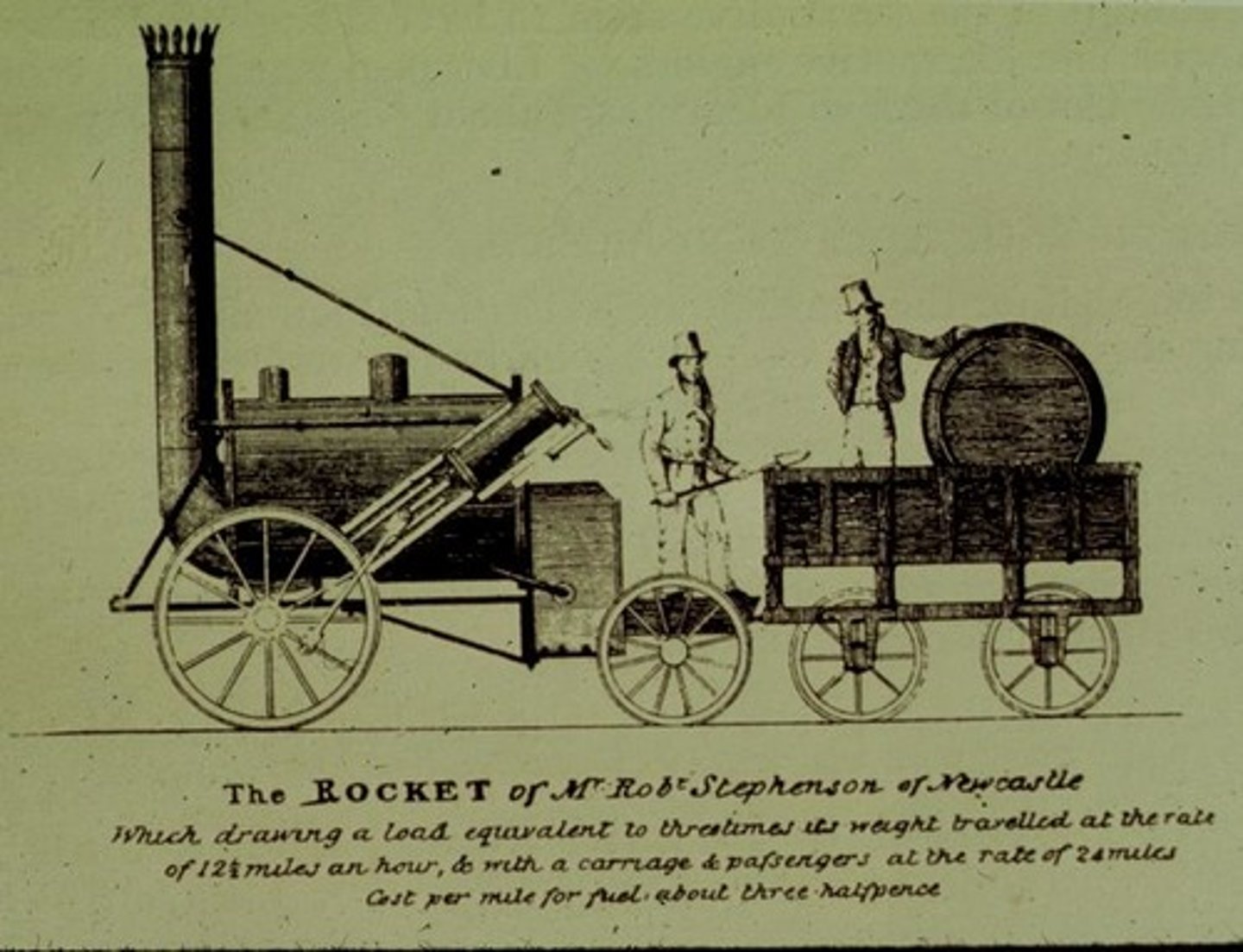
8. George Stephenson and the Railroad 1850 CE
-During the Industrial Revolution, transportation was crucial. The factories were mass producing goods in one place, but they had to be carried to the markets
-This inventor used Watt's Steam Engine to provide the power for the first _____________________
-This invention would revolutionize transportation; thousands of miles of track would be laid down across Europe and the United States by the 1860's
-They even built a track all the way across Siberia in Russia under Industrialization Chief Sergei Witte
-For full credit, you must name the INVENTOR and the Invention
9. Steamships 1860 CE
-Before the Industrial Revolution, ships could only sail with the wind or with the current of the river; after this was invented, boats could now travel directly up a river or against the wind
-This revolutionized maritime (ocean) travel and trade; it was now much easier to ship massive quantities of goods and to travel uprivers
-It used Watt's ______________ engine
-Canals were built for it
-The invention of this finally allowed a traveler to beat Ibn Battuta's record for distance traveled!
-This invention also led to increases in international and long distance trade on the oceans, as these boats could travel much faster, further, and carry heavier cargo [goods] than sailboats
![<p>-Before the Industrial Revolution, ships could only sail with the wind or with the current of the river; after this was invented, boats could now travel directly up a river or against the wind</p><p>-This revolutionized maritime (ocean) travel and trade; it was now much easier to ship massive quantities of goods and to travel uprivers</p><p>-It used Watt's ______________ engine</p><p>-Canals were built for it</p><p>-The invention of this finally allowed a traveler to beat Ibn Battuta's record for distance traveled!</p><p>-This invention also led to increases in international and long distance trade on the oceans, as these boats could travel much faster, further, and carry heavier cargo [goods] than sailboats</p>](https://knowt-user-attachments.s3.amazonaws.com/a7734c31-65ad-43df-b4c5-f822a750da42.jpg)
10. Canals
-Once the Transportation Revolution hit as part of the Industrial Revolution, people wanted to be able to ship large amounts of goods from factories on water
-Sometimes large industrial cities were not near a river; so if the people wanted a river there, they would just build one! These were called _________________. They would dig a long trench [ditch] in the ground, fill it with water, and basically create a human-made river.
-There are massive, very important ___________________ in Panama, the Suez (Egypt), and the Erie ____________ in New York.
![<p>-Once the Transportation Revolution hit as part of the Industrial Revolution, people wanted to be able to ship large amounts of goods from factories on water</p><p>-Sometimes large industrial cities were not near a river; so if the people wanted a river there, they would just build one! These were called _________________. They would dig a long trench [ditch] in the ground, fill it with water, and basically create a human-made river. </p><p>-There are massive, very important ___________________ in Panama, the Suez (Egypt), and the Erie ____________ in New York.</p>](https://knowt-user-attachments.s3.amazonaws.com/53fbf72f-036c-4bcf-b900-9755ff505696.jpg)
11. Telegraphs
-Transportation and Factories weren't the only things changing during the Industrial Revolution; Communication changed massively as well
-This invention came before the phone; it sent a series of taps through a wire and on the other end of the cable, the taps could be translated into letters
-Through this way, you could send messages over very long distances, as long as you laid the cable down
-This led to thousands of miles of cables being laid down across the world, including one across the Atlantic Ocean
Thomas Edison and Electricity 1870's
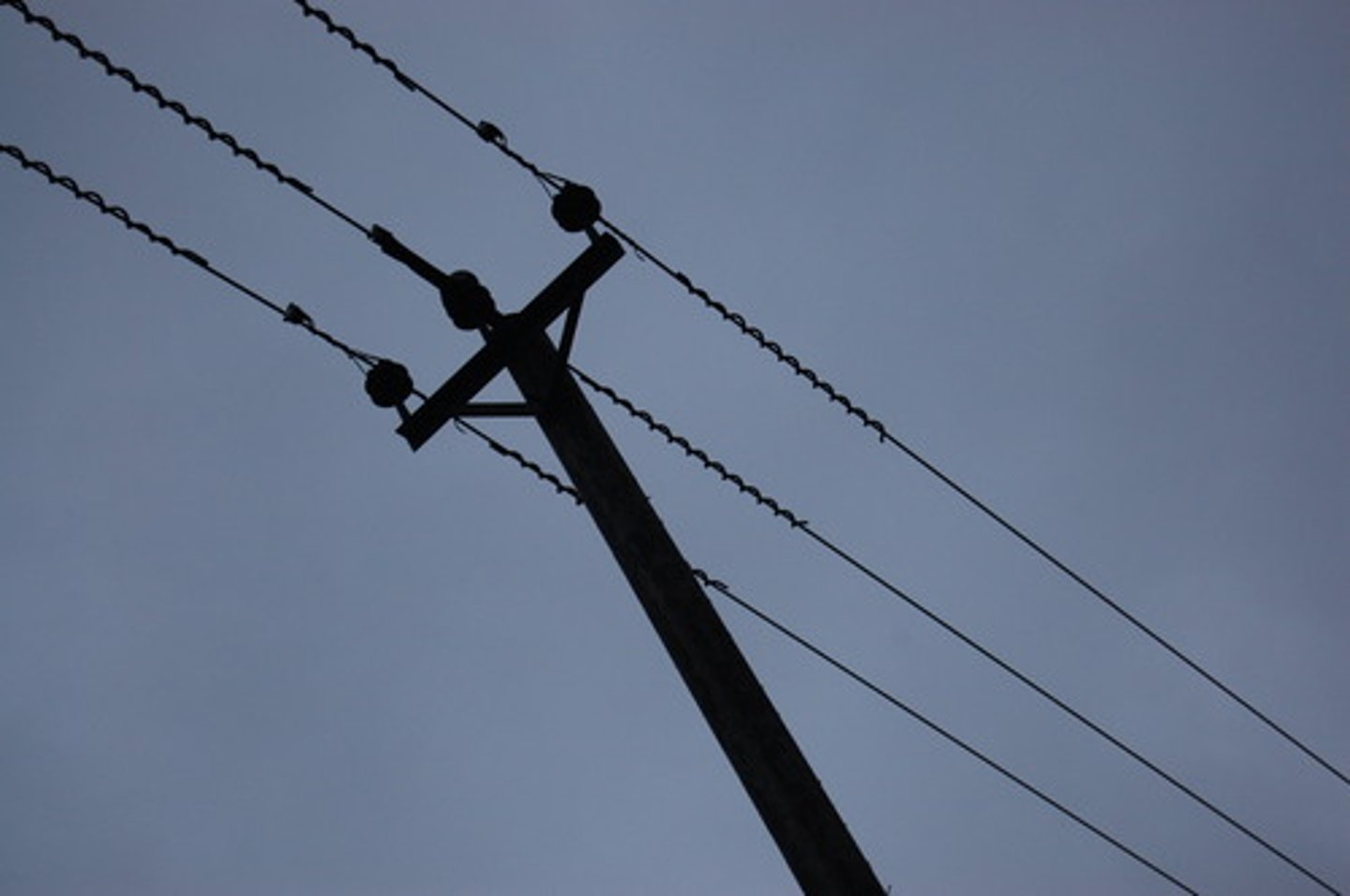
-Part of the major driving force of Industrialization was the invention of electricity! This would happen later in the Industrial Revolution, but when it took off, it was critical
-Electricity was used to power many factories and manufacturing processes
-One of the most famous uses of electricity is the invention of the Incandescent Light Bulb, developed by the famous American inventor ____________________________
-This inventor developed over 1,093 patented inventions in his Invention Factory in New Jersey, including the light bulb and the motion picture camera

13. Inventions from the Industrial Revolution
Here is a list of some of the most important inventions from the Industrial Revolution:
-Railroads, cars, steamships, canals, later airplanes
-Steam Engine and Internal Combustion Engine
-Electricity and Light Bulb, battery
-Camera, zipper, telegraph, telephone
-Machine gun, rifle, steam boiler for hot showers,
-The bicycle and the motorcycle
-cotton gin, spinning jenny, zipper
14. Industrialization Spreads
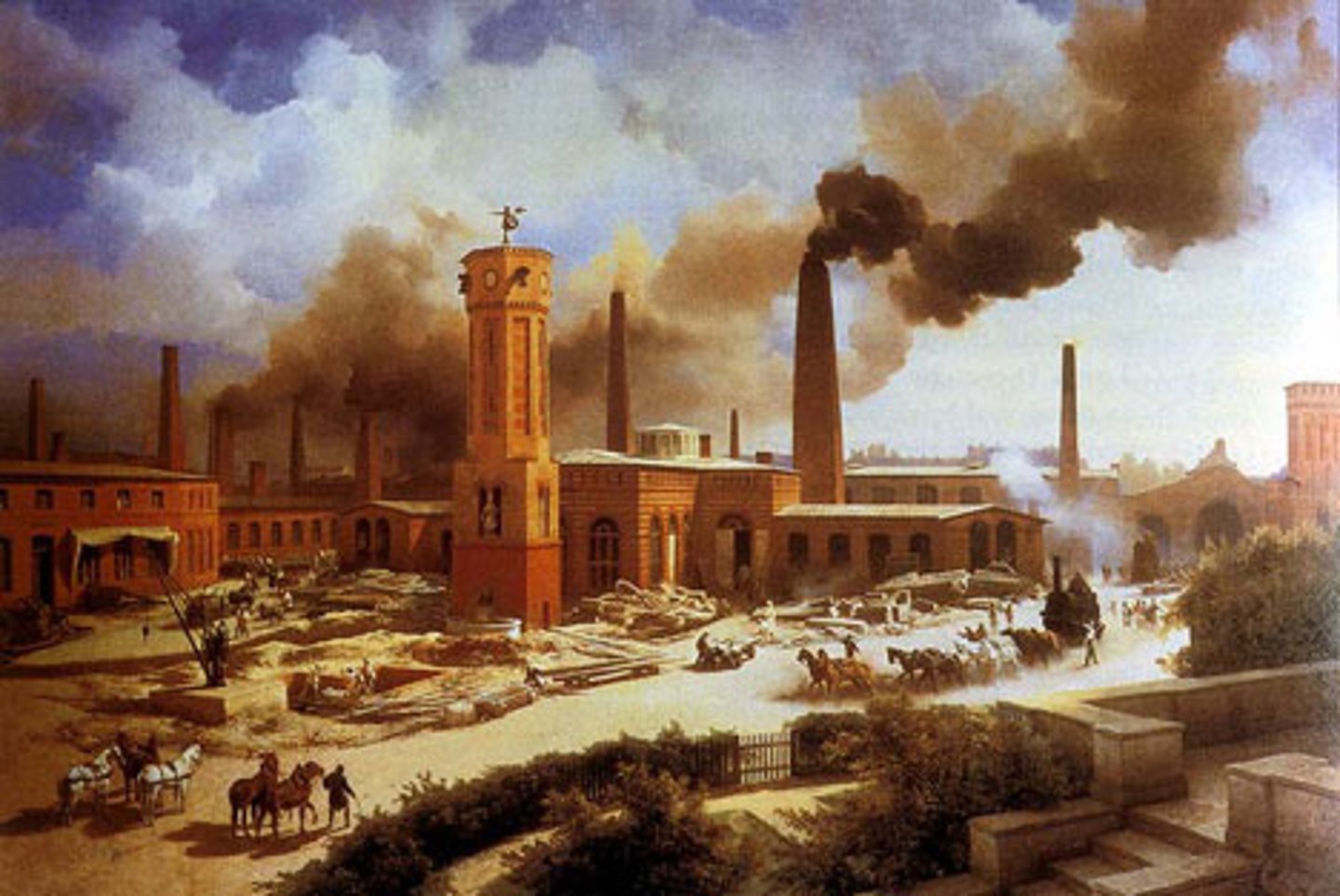
-The British and the United States led the charge in Industrialization ; the rest of the Western Europeans followed quickly after to maintain the competition
-Industrialization also spread to Russia and Japan
-The Ottomans and Qings attempted to implement Industrialization, but struggled due to resistance within the culture and other economic difficulties
-Much of Africa, Latin America, and Asia became export economies as they provided the raw materials for the Western European, Russian, Japanese, and America factories
-Industrialized powers gained massive military and economic advantages over non-Industrialized nations
15. Industrialization's Effect on Non-European Countries
-From 1750 - 1900 CE, there was a dramatic change in the world's economy as Europe and the United States began to produce "goods" in massively different ways
-To power the Industrial Revolution, the Factories required fossil fuels such as oil and coal
-They also required massive amounts of raw materials such as rubber and cotton
-Often, the Europeans would practice Imperialism [conquering other countries] to take over countries in Africa, South America, and Asia to get their raw materials (example: Belgians in the Congo w/cutting off hands for rubber)
-Therefore in this time period, Industrialization was a pretty negative force for Asia, Africa, and Latin America, as they didn't have the inventions and were outgunned and turned into raw material producers
![<p>-From 1750 - 1900 CE, there was a dramatic change in the world's economy as Europe and the United States began to produce "goods" in massively different ways</p><p>-To power the Industrial Revolution, the Factories required fossil fuels such as oil and coal</p><p>-They also required massive amounts of raw materials such as rubber and cotton</p><p>-Often, the Europeans would practice Imperialism [conquering other countries] to take over countries in Africa, South America, and Asia to get their raw materials (example: Belgians in the Congo w/cutting off hands for rubber)</p><p>-Therefore in this time period, Industrialization was a pretty negative force for Asia, Africa, and Latin America, as they didn't have the inventions and were outgunned and turned into raw material producers</p>](https://knowt-user-attachments.s3.amazonaws.com/e37eaade-4491-4be1-91e4-61542fd05517.jpg)
16. Single Export Economies in the Non-European Countries
-From 1750 - 1900 CE, there was a dramatic change in the world's economy as Europe and the United States began to produce "goods" in massively different ways
-To power the Industrial Revolution, the Factories required fossil fuels such as oil and coal
-They also required massive amounts of raw materials such as rubber and cotton
-Countries in Latin America, Asia, and Africa began producing one or two major raw materials and exporting them to the Europeans
-For instance, India began producing vast amounts of cotton to send to the British textile factories
-The Belgians forced the Congolese to send rubber to them, or they would cut their hands off
-This meant that many of the economies in these countries became dependent on the Europeans, and the rest of their agriculture and economy declined
-Countries that focused on one product to send to the Europeans were called _______________________________________________________________________________

17. Industrialization's Effect on India's Textile Industry
-The Middle East and Asia had previously been strong economically and played big roles in manufacturing
-Even without large factories, the Middle East and Asia would still produce manufactured products like porcelain, silk and cotton textiles (cloths), and other finished goods to be sold in markets
-With the rise of Industrialization, the Industrialized countries began gaining a larger share of the global market for finished goods
-In India, the Indian production of cotton textiles could not compete with the production in the British factories, which used the assembly line and steam engine
-The British colonized India and forced it to become an exporter of raw materials, rather than a producer of finished goods; as this happened, the Indian share of the global market in textiles declined, and the British increased
-This same process happened throughout the Middle East and Asia, as non-Industrialized countries who used to make manufactured goods now lost out to the Industrialized powers
18. Capitalism
-During the Industrial Revolution, there was a massive change in the way economies were run and how they worked
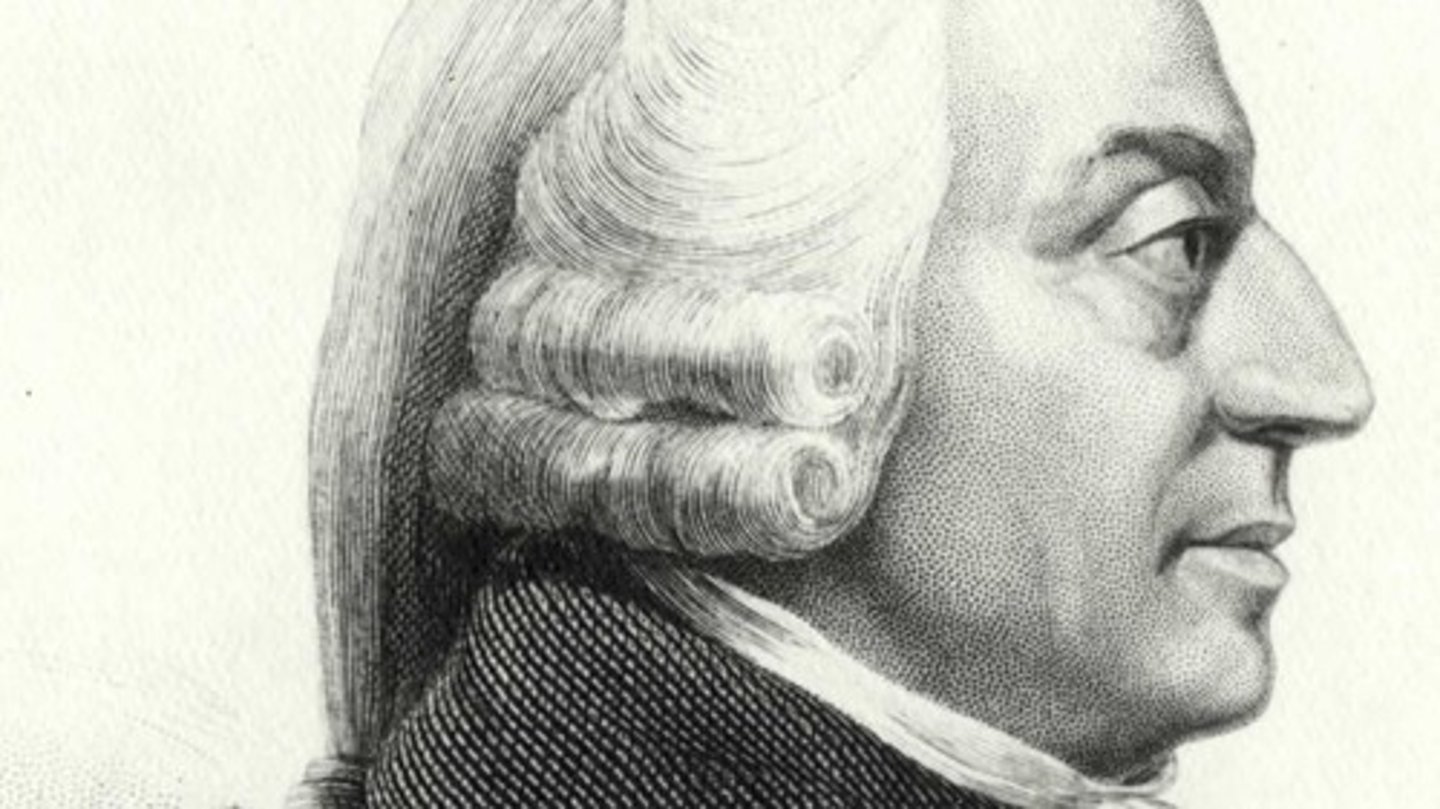
-Adam Smith wrote a book called "The Wealth of Nations" where he promoted an economic theory called ____________________________
-This theory relied on competition between businesses; competition would drive all the prices in the free market economy
-The "Invisible Hand" of competition would knock bad businesses out of business; the businesses that could become more efficient would be the ones that did well
-This system promoted individuals to compete for themselves; "Every person for themselves" mentality
-It led to very strong inventions and economies, but it also led to huge gaps between the rich and the poor as some people like Carnegie and Rockefeller got incredibly rich, while the factory workers remained very poor

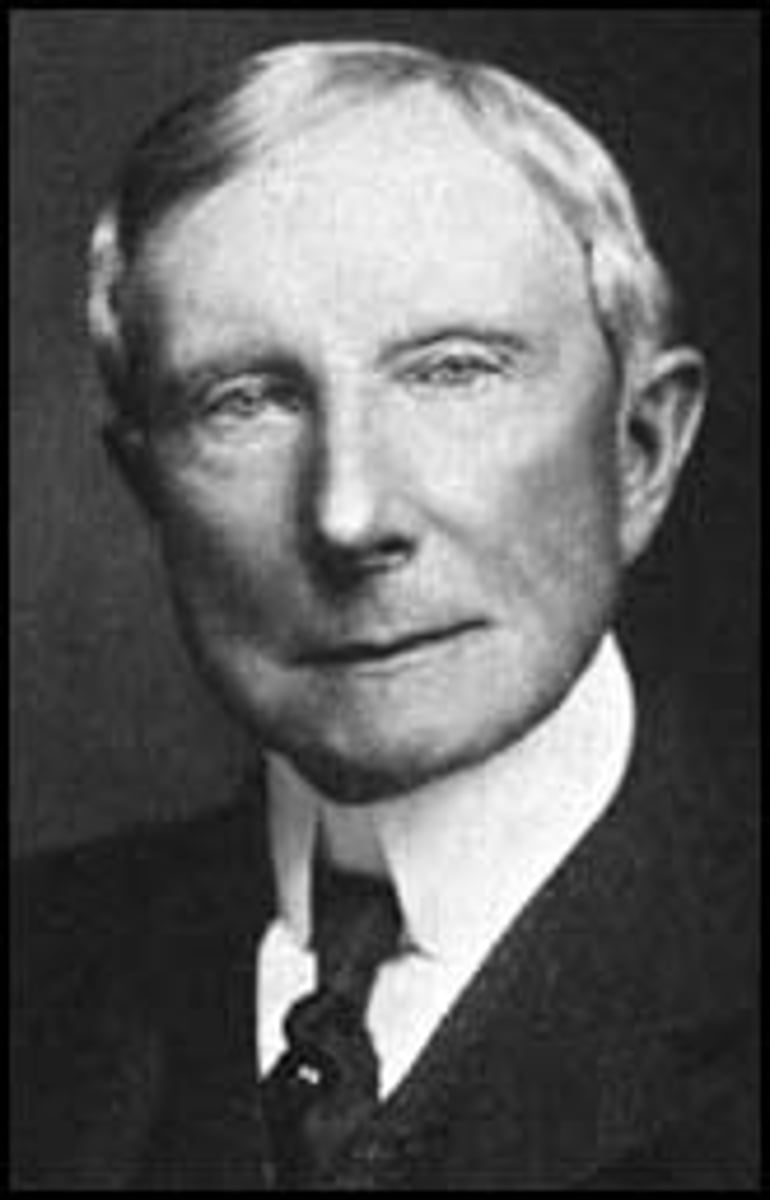
19. John D. Rockefeller and Standard Oil (1839-1937)
-one of the wealthiest humans of all-time, became fabulously wealthy from the profits of his company, Standard Oil
-Started out as a clerk making 50 cents a day, rose to eventually become the most powerful business leader in the world
-Used VERTICAL INTEGRATION, which was a strategy where he bought all the steps of production involved in his business. For instance, for Standard Oil, instead of paying a different company to lay the pipe, instead of paying to barrel the oil, instead of paying a different railroad company to transport the oil, he bought his own pipe company, bought his own railroads, built his own barrel factory, etc.
-By doing that, he was able to make his cost of production way lower than his competitors, since he wasn't charging himself extra along the way
-Also used HORIZONTAL INTEGRATION, where he bought out all of his competitors and created a monopoly, where one business dominates the market
-Lived from 1839-1937. In modern dollars, he made between 300 and 400 billion dollars, making him possibly the richest human of all-time. Gave away roughly 1/3 of his money to philanthropy/charity.
-Criticized for using bribes, spies, and being corrupt
20. Adam Smith and "The Wealth of Nations"
During the Industrial Revolution, there was a massive change in the way economies were run and how they worked
-Adam _______________wrote a book called ________________________where he promoted an economic theory called capitalism
-This theory relied on competition between businesses; competition would drive all the prices in the free market economy
-The "Invisible Hand" of competition would knock bad businesses out of business; the businesses that could become more efficient would be the ones that did well
-This system promoted individuals to compete for themselves; "Every person for themselves" mentality
-It led to very strong inventions and economies, but it also led to huge gaps between the rich and the poor as some people like Carnegie and Rockefeller got incredibly rich, while the factory workers remained very poor
-This term is the name of the economist and the book he published
21. John Stuart Mill 1860 CE
-One of the results of Industrialization was that the poor were really suffering and living in bad conditions
-This English philosopher tried to help individuals out by writing about ways to protect the rights of individuals and minorities in the new industrial work
-He advocated (supported) the right for people to form labor unions and supported universal women's suffrage [vote]
-He has been called "the most influential English speaking philosopher of the 19th century"
-Father of Liberalism
![<p>-One of the results of Industrialization was that the poor were really suffering and living in bad conditions</p><p>-This English philosopher tried to help individuals out by writing about ways to protect the rights of individuals and minorities in the new industrial work</p><p>-He advocated (supported) the right for people to form labor unions and supported universal women's suffrage [vote]</p><p>-He has been called "the most influential English speaking philosopher of the 19th century"</p><p>-Father of Liberalism</p>](https://knowt-user-attachments.s3.amazonaws.com/749e5b53-dea8-461e-8b7e-8ccd11112c4e.jpg)
22. Financial Instruments: the Stock Market
-A financial instrument is anything that can be used that can be traded as money; for instance, paper money, coins, gold, silver, etc.
-During the Industrial Revolution from 1750 - 1900 CE, as capitalism took off, there was an increase in the variety of financial instruments available
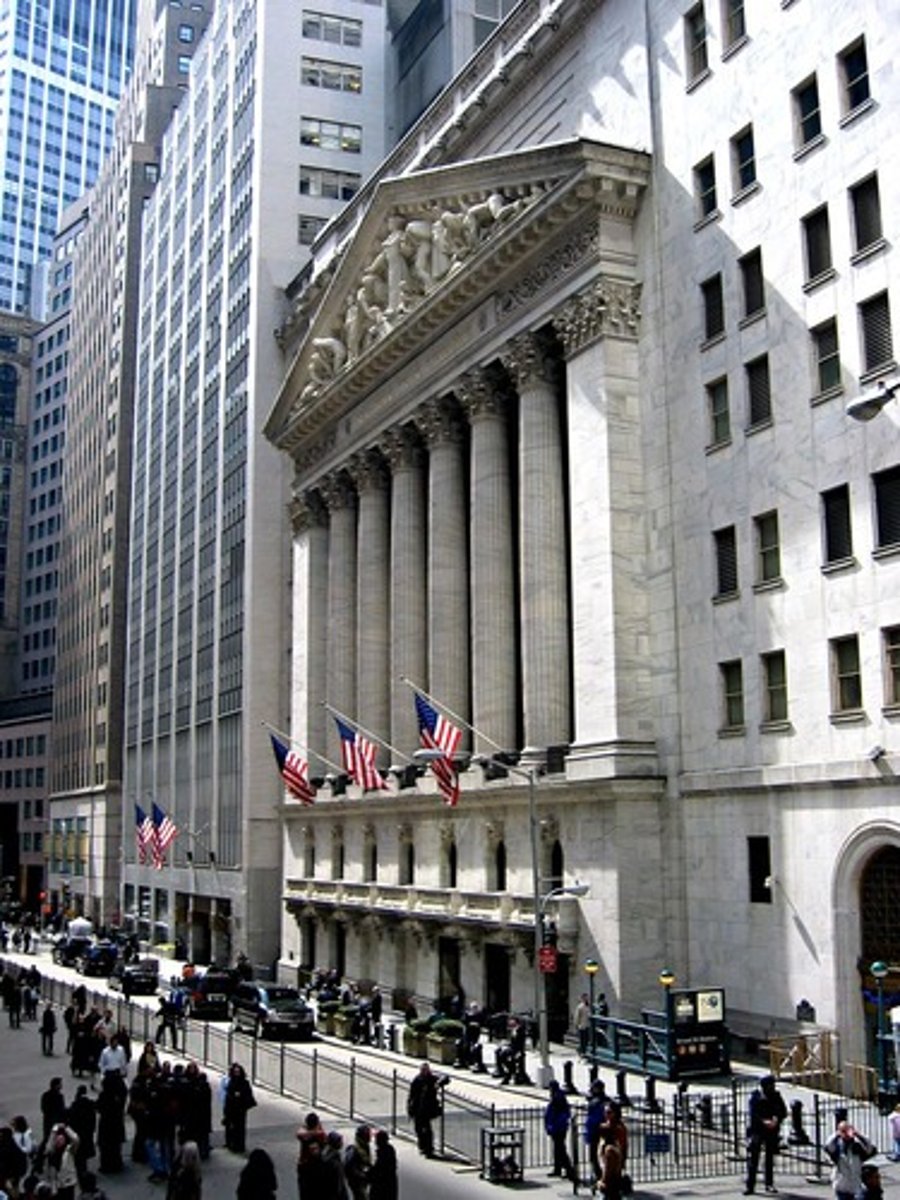
-One thing that people began trading A LOT was STOCKS. People owned parts of companies and they could sell their part of a company to someone else for money
-A place or way was created to sell these stocks. This place, where you could buy and sell stocks, was called the _________________________________
-This led to a large increase in massive corporations and businesses
23. Karl Marx and Marxism 1848 CE
-During the Industrial Revolution, there was a massive change in the way economies were run and how they worked
-Adam Smith wrote a book called "The Wealth of Nations" where he promoted an economic theory called Capitalism
-This theory relied on competition between individuals; it was "every man for himself"
-One of the problems of capitalism was that due to the competition, some people like Rockefeller and Carnegie became wildly wealthy, while most people remained in the lower classes working in the factories
-A German philosopher named ____________________ came up with a different theory called ___________________________ . In this theory, he was against capitalism, and he said that ultimately the lower classes were going to rise up and overthrow capitalism and create an equal society
-This theory emphasized class struggle, and claimed that capitalism was wrong and would be overthrown
-This theory inspired communism and socialism; this man became a hero in the Soviet Union and was the basis for much of the communist thought in the 20th century
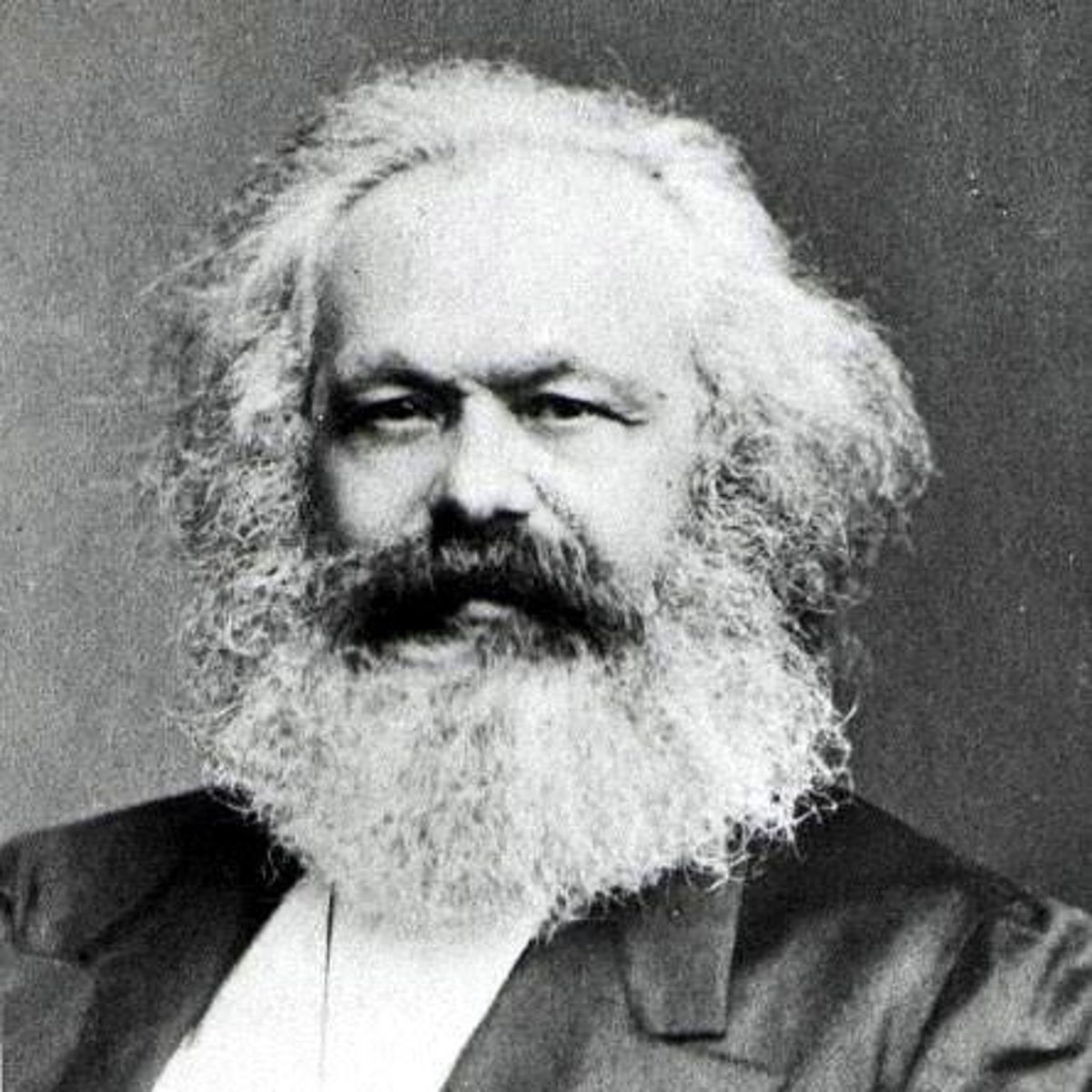
24. Karl Marx and "The Communist Manifesto" 1848 CE
-During the Industrial Revolution, there was a massive change in the way economies were run and how they worked
-Adam Smith wrote a book called "The Wealth of Nations" where he promoted an economic theory called Capitalism
-This theory relied on competition between individuals; it was "every person for themselves"
-One of the problems of capitalism was that due to the competition, some people like Rockefeller and Carnegie became wildly wealthy, while most people remained in the lower classes working in the factories
-A German philosopher named Karl Marx came up with a different theory called Marxism . In this theory, he was against capitalism, and he said that ultimately the lower classes were going to rise up and overthrow capitalism and create an equal society
-Marx and his partner Engels published a book in 1848 CE that outlined how he thought the lower classes would rise up and replace capitalism with communism. The name of this book was __________________________________
-It was incredibly popular and influential and spread like wildfire through Europe, where the "proletariat" lower classes were suffering in the factories.
-This book inspired communism and socialism; this man became a hero in the Soviet Union and was the basis for much of the communist thought in the 20th century
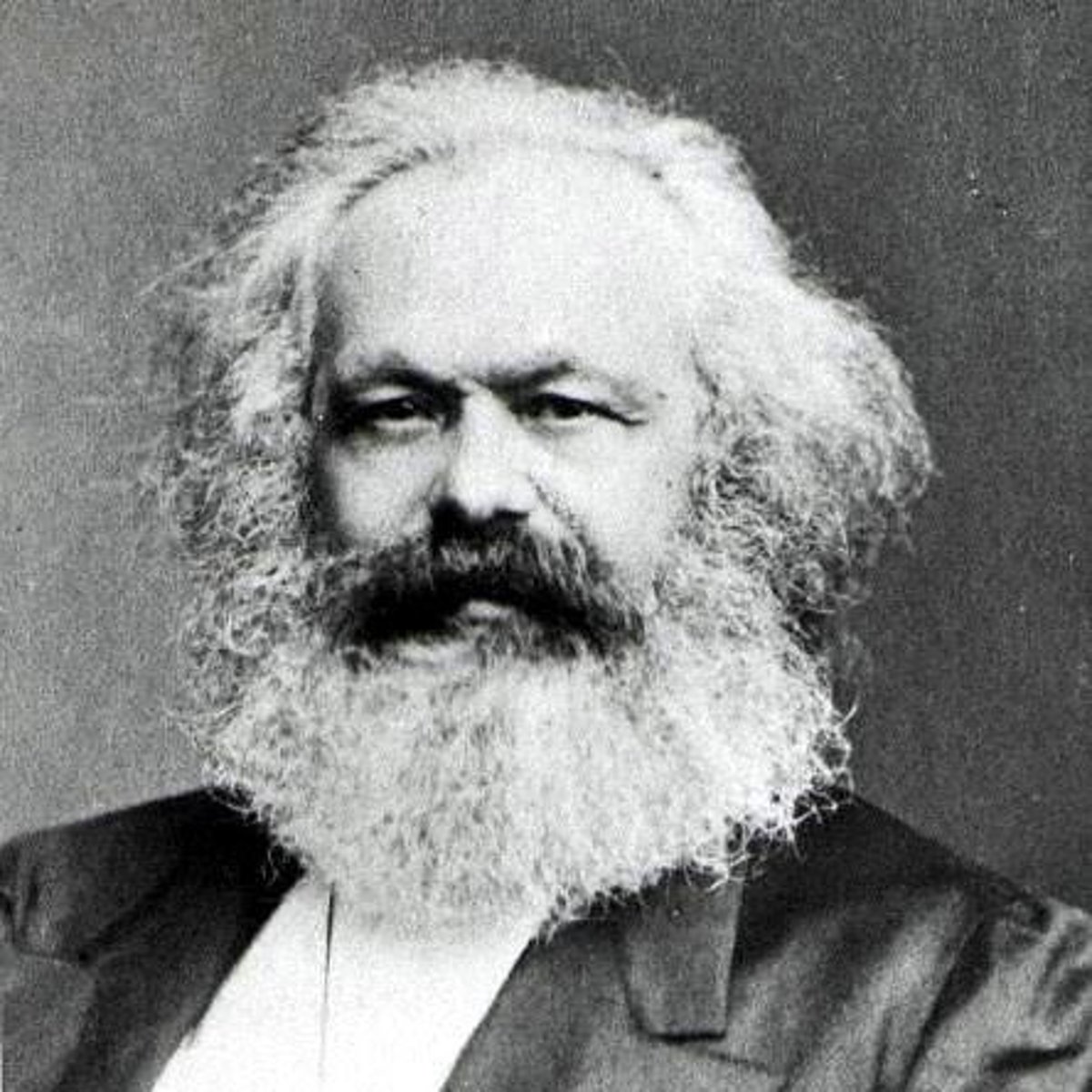
25. Socialism and Socialists
-During the Industrial Revolution, there was a massive change in the way economies were run and how they worked as Capitalism spread
-This theory relied on competition between individuals; it was "every person for themselves"
-One of the problems of capitalism was that due to the competition, some people like Rockefeller and Carnegie became wildly wealthy, while most people remained in the lower classes working in the factories
-A group of people who were angry about the inequalities of capitalism came up with _______________________________________, which is very similar to communism, but came before it
-In _____________________-ism, the government controls all of the land, the factories, and the economy. The government is run by the people, and one of the goals is to set up a system where everyone was equal
-Different _________________ists had different ideas on how to set up an equal society; Robert Owen was a very famous ____________________ist
-The most famous __________________ist was a German philosopher named Karl Marx came up with a different theory called Marxism. In this theory, he was against capitalism, and he said that ultimately the lower classes were going to rise up and overthrow capitalism and create an equal society, which he called communism
-So __________________-ism was the idea that everyone would be equal, and it came before communism, which is a type of socialism
26. Communism
-During the Industrial Revolution, there was a massive change in the way economies were run and how they worked as Capitalism spread
-This theory relied on competition between individuals; it was "every man for himself"
-One of the problems of capitalism was that due to the competition, some people like Rockefeller and Carnegie became wildly wealthy, while most people remained in the lower classes working in the factories
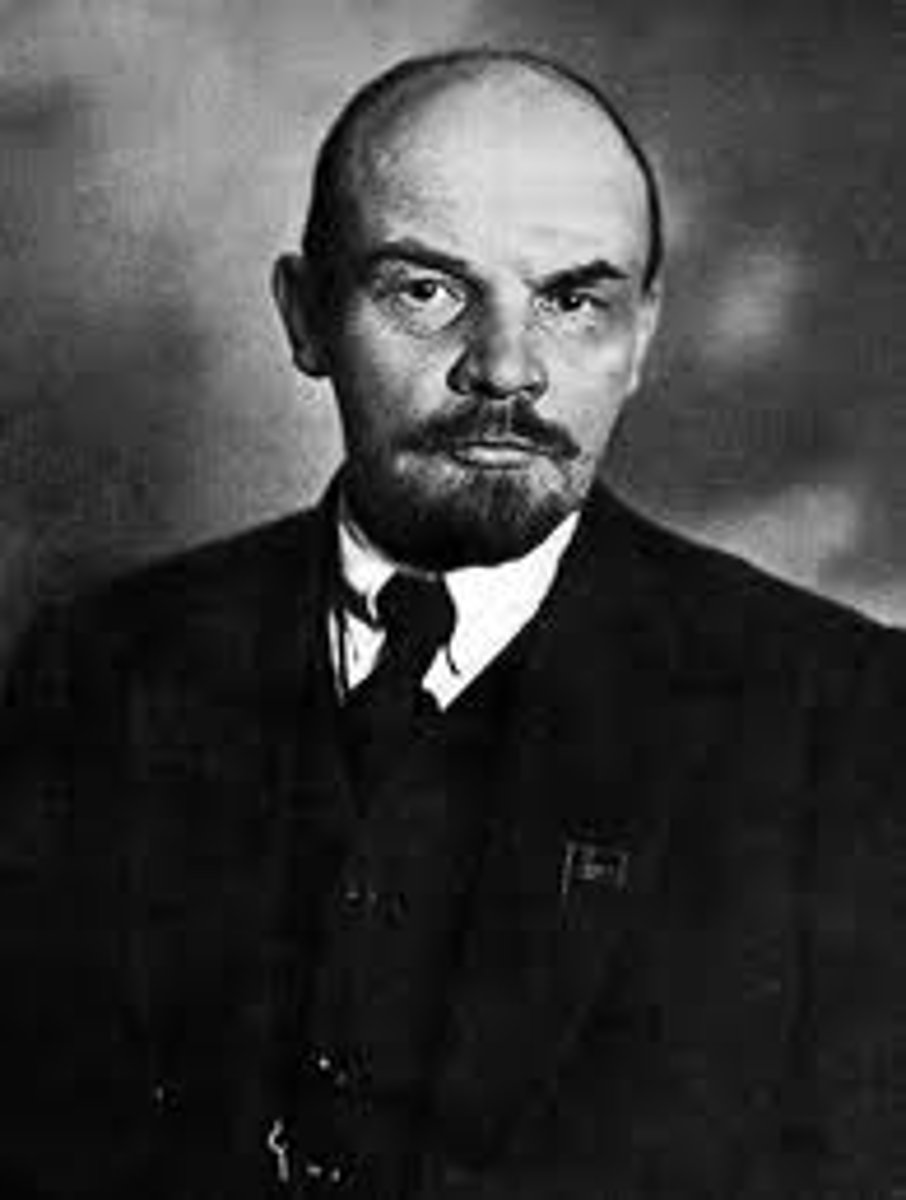
-A group of people who were angry about the inequalities of capitalism came up with Socialism, which is very similar to _____________________ but came before it
-In Socialism, the government controls all of the land, the factories, and the economy. The government is run by the people, and one of the goals is to set up a system where everyone was equal
-The most famous Socialist was a German philosopher named Karl Marx came up with a different theory called Marxism. In this theory, he was against capitalism, and he said that ultimately the lower classes were going to rise up and overthrow capitalism and create an equal society, which he called ___________________
-So Socialism was the idea that everyone would be equal, and it came before _____________________, which is a type of socialism
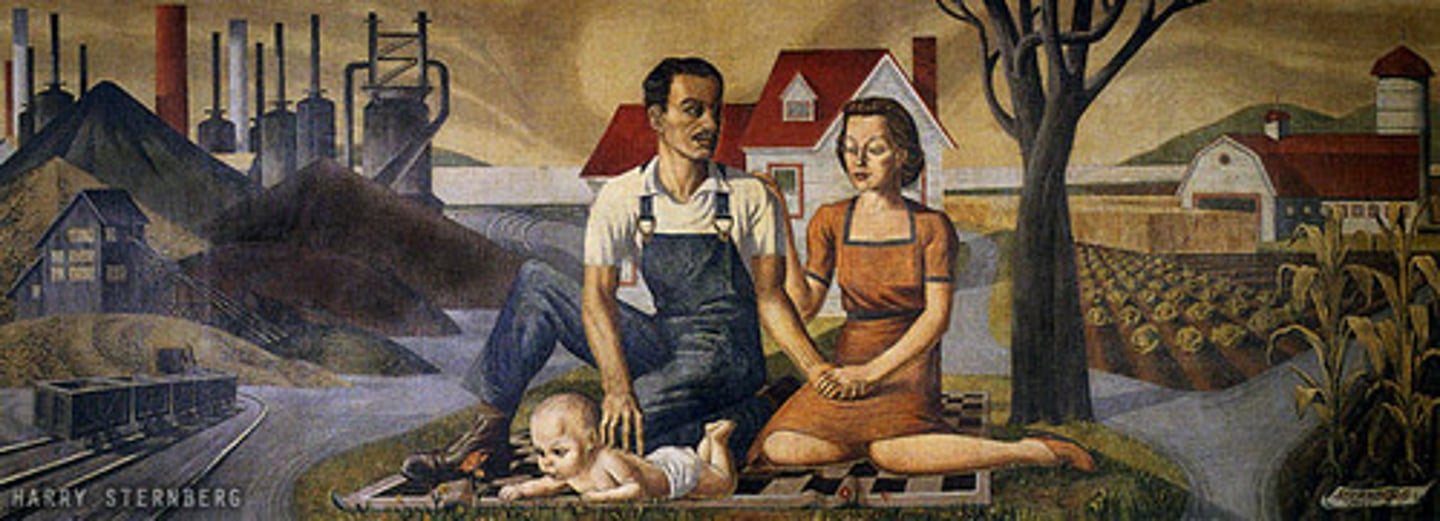
27. The Impact of Industrialization on Family Demographic
-During the Industrial Revolution, there was a massive change in the way economies were run and how they worked as Capitalism spread throughout Europe and the Americas
-The demographics of how families were set up were impacted massively by the spread of Industrialization. Before Industrialization, families often worked together in a group on the farm.
-Now, each member of the family went their separate ways for as long as 14 hours in a day. Dad worked at one factory, mom at another, and poor children often had to work too. Families began to spend less time together
-Men gained even more power as the biggest wage earner in the family; families also became smaller; the "Nuclear Family" included only Mom/Dad/Children, but not the extended family of grandparents, cousins, etc that often lived together on a farm or in a village
28. Urbanization 1750 - 1914 CE
-During the Industrial Revolution, there was a massive change in the way economies were run and how they worked as Capitalism spread throughout Europe and the Americas
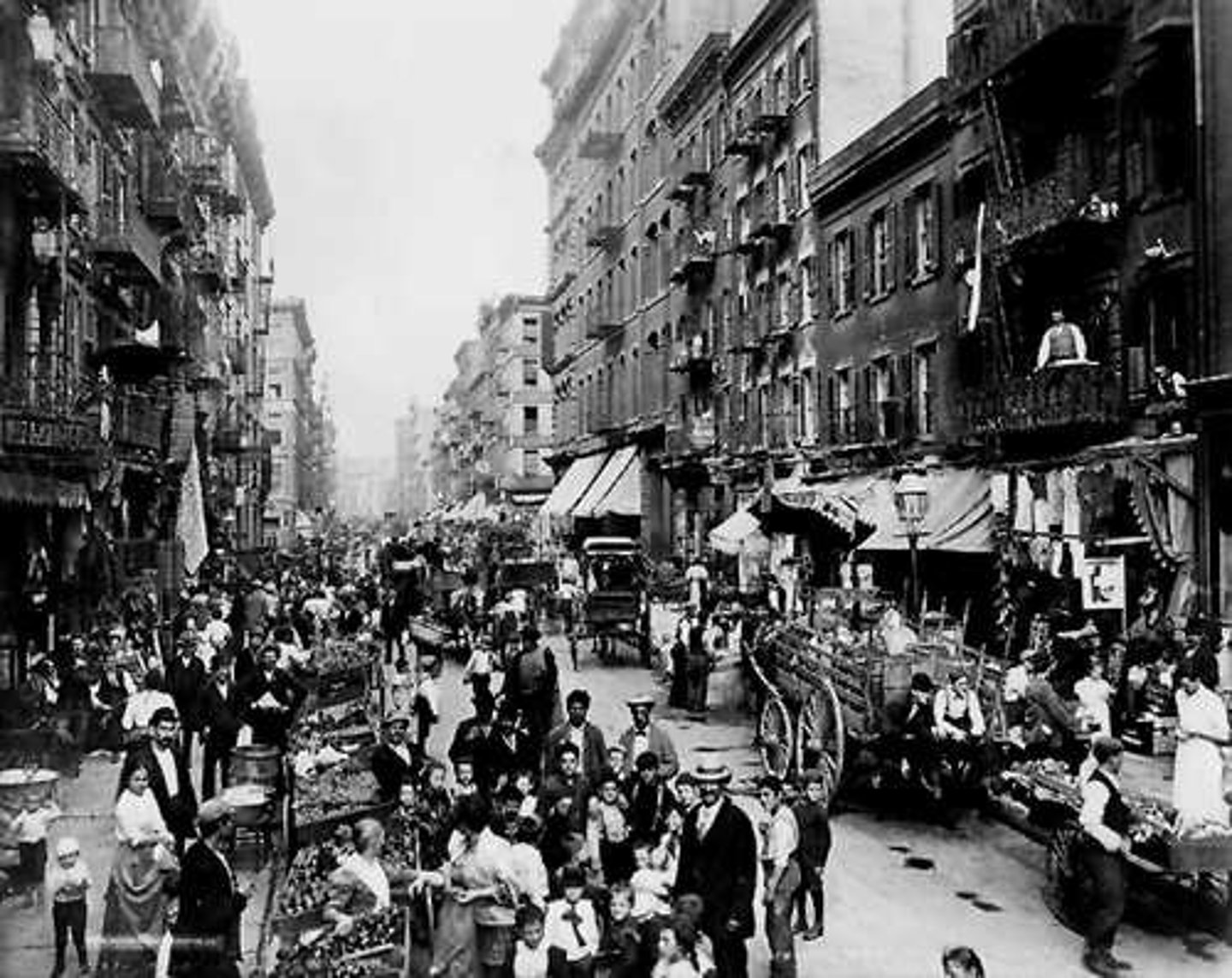
-As Factories sprang up all around European and American cities, the cities themselves grew MASSIVELY. By 1900, over 50 percent of people lived in a city in industrialized nations. This was a HUGE change
-As cities grew, there were problems. Industrial cities were polluted, unsanitary places without proper plumbing or clean water. Diseases persisted.
-Poverty was widespread as the poor lower class lived in huge TENEMENTS (dirty, nasty apt. buildings). Crime increased.
-New immigrants from the countryside and from other countries kept the cities constantly growing and full of energy and bustle
29. The Industrial Middle Class 1800's CE
-During the Industrial Revolution, there was a massive change in the way economies were run and how they worked as Capitalism spread throughout Europe and the Americas
-Capitalism and Industrialization from 1750 - 1900 CE had a big impact on social classes in Industrial society; the lower class grew immense and was composed of (made up of) a the industrial working class, the people working in the factories
- A new ______________ CLASS was developed, a group that was not employed in the lower level factories but was not in the elite aristocracy; they had jobs like teachers, doctors, lawyers, and store owners
-This new ________________ class enjoyed new leisure activities like watching sports, listening to live music, and traveling on the railroads, steamships, and canals
