ANAT 5010 - unit 4
 Call Kai
 Learn
Learn Practice Test
 Spaced Repetition
 Match
Match Flashcards
 Knowt Play
1/80

There's no tags or description
Looks like no tags are added yet.
Name | Mastery | Learn | Test | Matching | Spaced | Call with Kai | Chat |
|---|
No analytics yet
Send a link to your students to track their progress
81 Terms
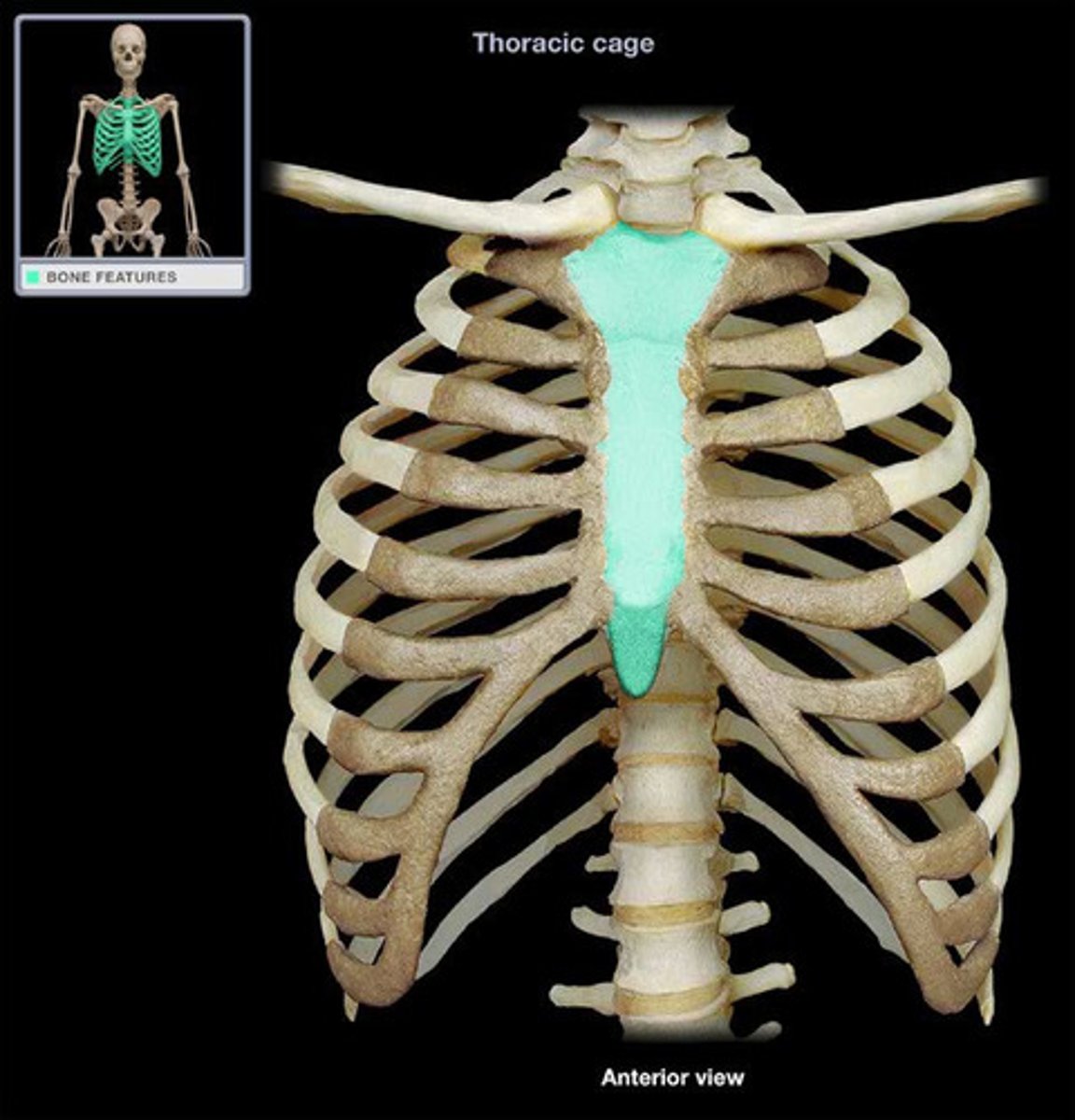
sternum
consists of the manubrium, body, and xiphoid process
costal arch
the lower anterior margin of the chest wall consisting of the costal cartilages of ribs 7-10
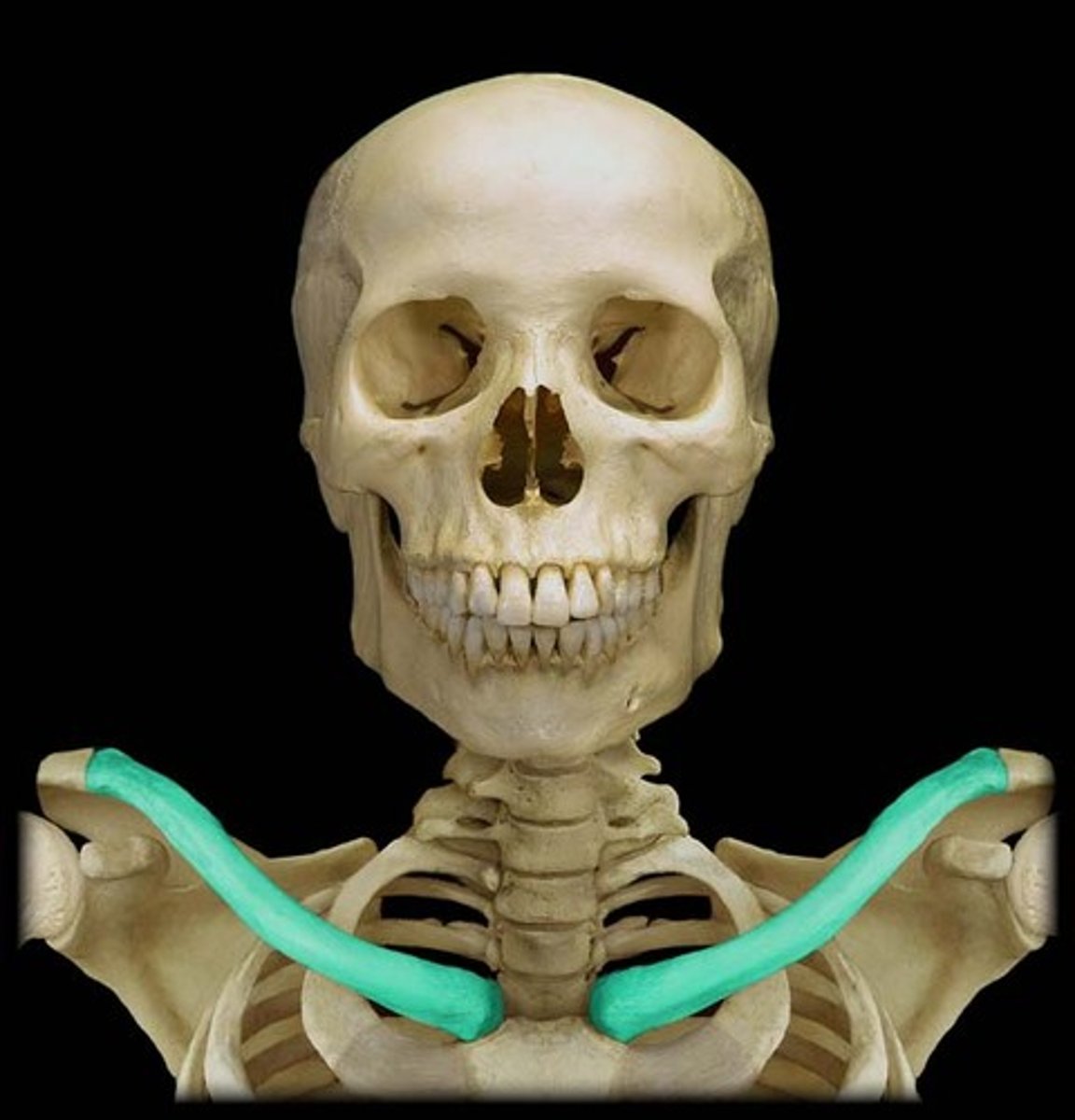
clavicle
articulates medially with the sternum and laterally with acromion process
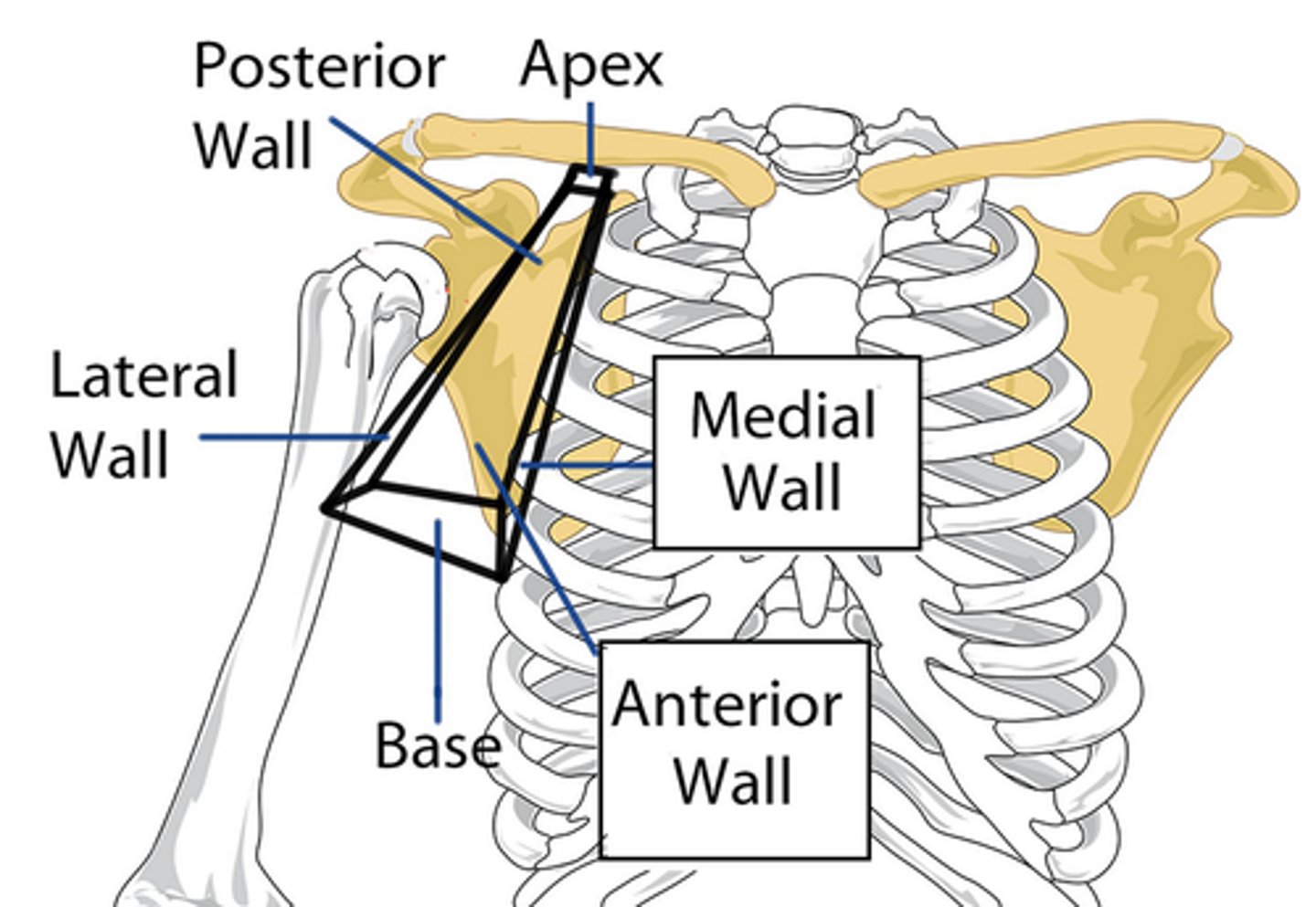
axilla
a space between the shoulder and chest wall; shaped like a pyramid
- brachial plexus
- axillary vessels
- lymph nodes
- fat
what does the axilla contain?
posterior wall of the axilla
formed by subscapularis, teres major, and latissimus dorsi
base of the axilla
formed by the skin and axillary fascia
inlet of the axilla
bounded by lateral border of first rib, clavicle, and superior border of the scapula
medial wall of the axilla
formed by serratus anterior muscle on top of ribs
anterior wall of the axilla
formed by the subclavius, pectoralis major, and pectoralis minor muscles and fascia
anterior axillary fold
formed by the lower border of pectoral muscles
posterior axillary fold
formed by scapula and associated muscles
axillary fossa
between anterior and posterior axillary folds
T4 dermatomes
skin over the nipple and 4th intercostal space
T6 dermatomes
skin in the bad covering the xiphoid process
- extends from the 2nd-6thor7th rib and sternum to axilla
- roughly 2/3 lies on the pectoralis major muscle, and 1/3 on serratus anterior muscle
- confined to the superficial fascia and, except during pregnancy, consists mostly of fat
describe the location of the breast
lactiferous sinus
where a drop of milk accumulates in a nursing woman
lactiferous duct
lobules of the breast secrete into the -
suspensory ligaments of cooper
firmly attach breast to the skin
areola
darkly pigmented area that surrounds the nipple and contains sebaceous glands that secrete a protective lubricant
- 75% drains laterally to the axillary lymph nodes
- 25% drains medially to the parasternal lymph nodes or to the other breast
explain lymphatic drainage of the breast
superficial fascia
layer of loose, irregular connective tissue just deep to the skin
deep fascia
layer of fascia that envelops striated (skeletal) muscle
origin: medial part of clavicle, sternum, costal cartilages of ribs 2-5
insertion: crest of greater tubercle of humerus
what is the origin and insertion of the pectoralis major?
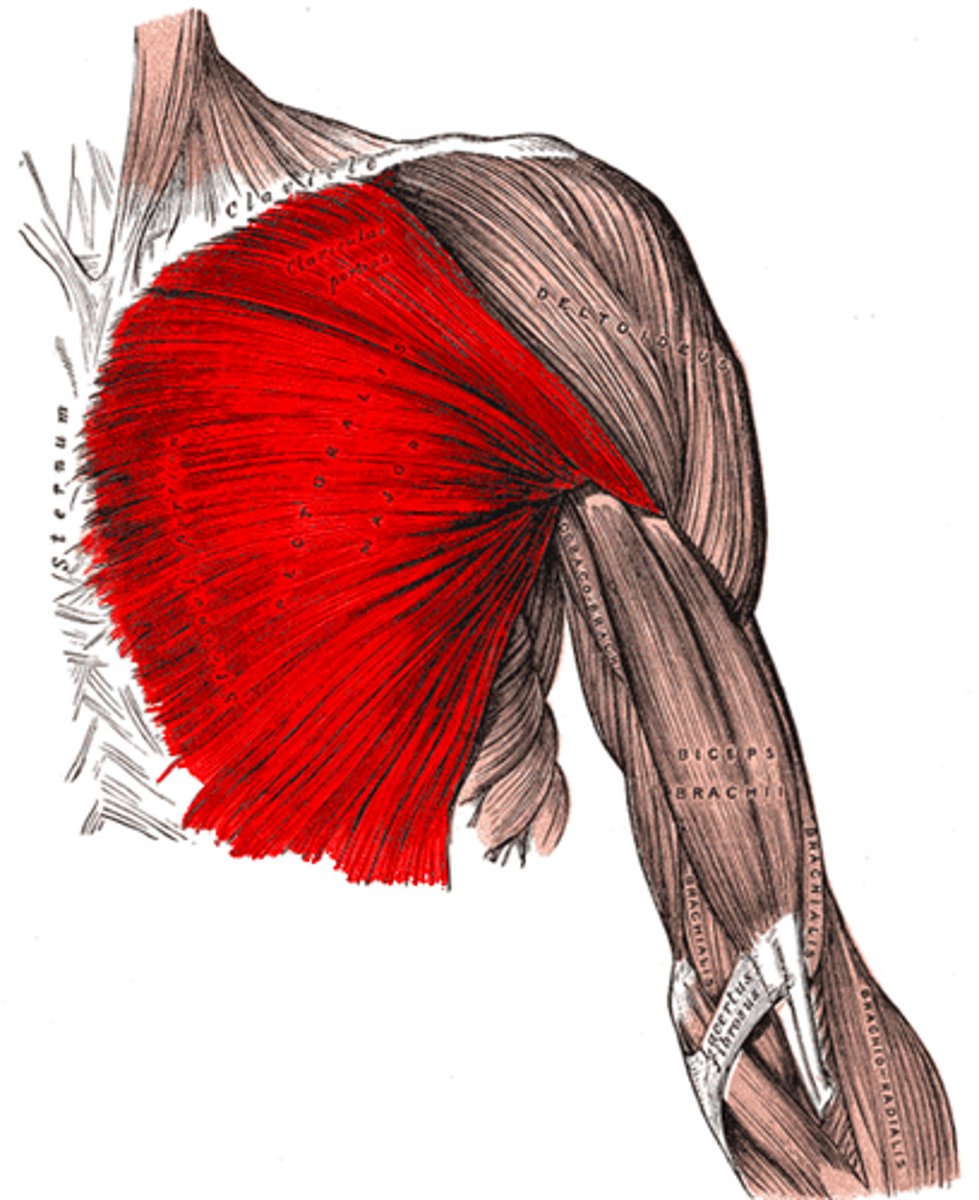
action: adduction, medial rotation, and flexion of arm at shoulder joint
innervation: medial pectoral nerve and lateral pectoral nerve
what is the action and innervation of the pectoralis major?
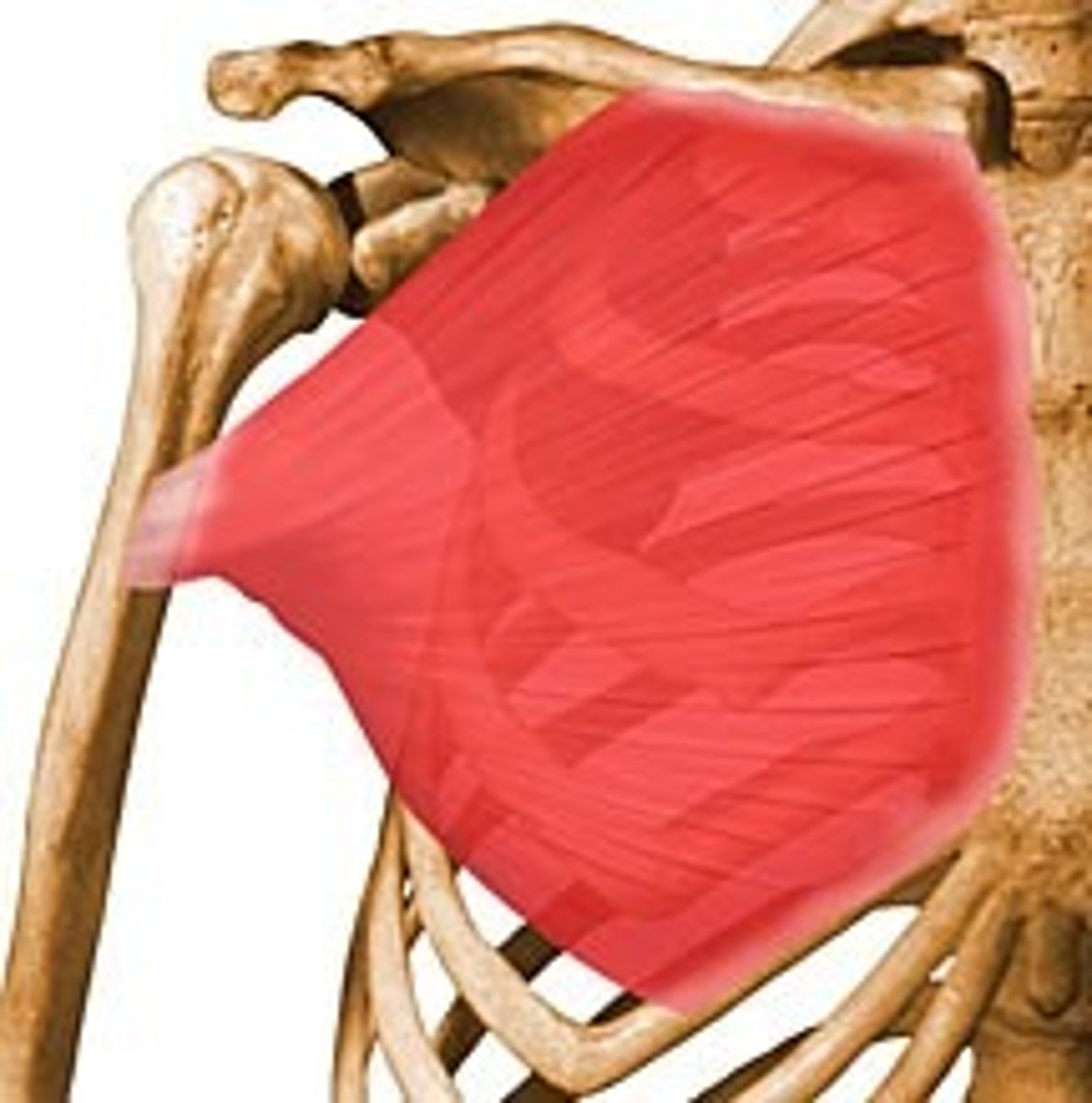
origin: ribs 2-4 or 3-5
insertion: coracoid process of scapula
what is the origin and insertion of the pectoralis minor?
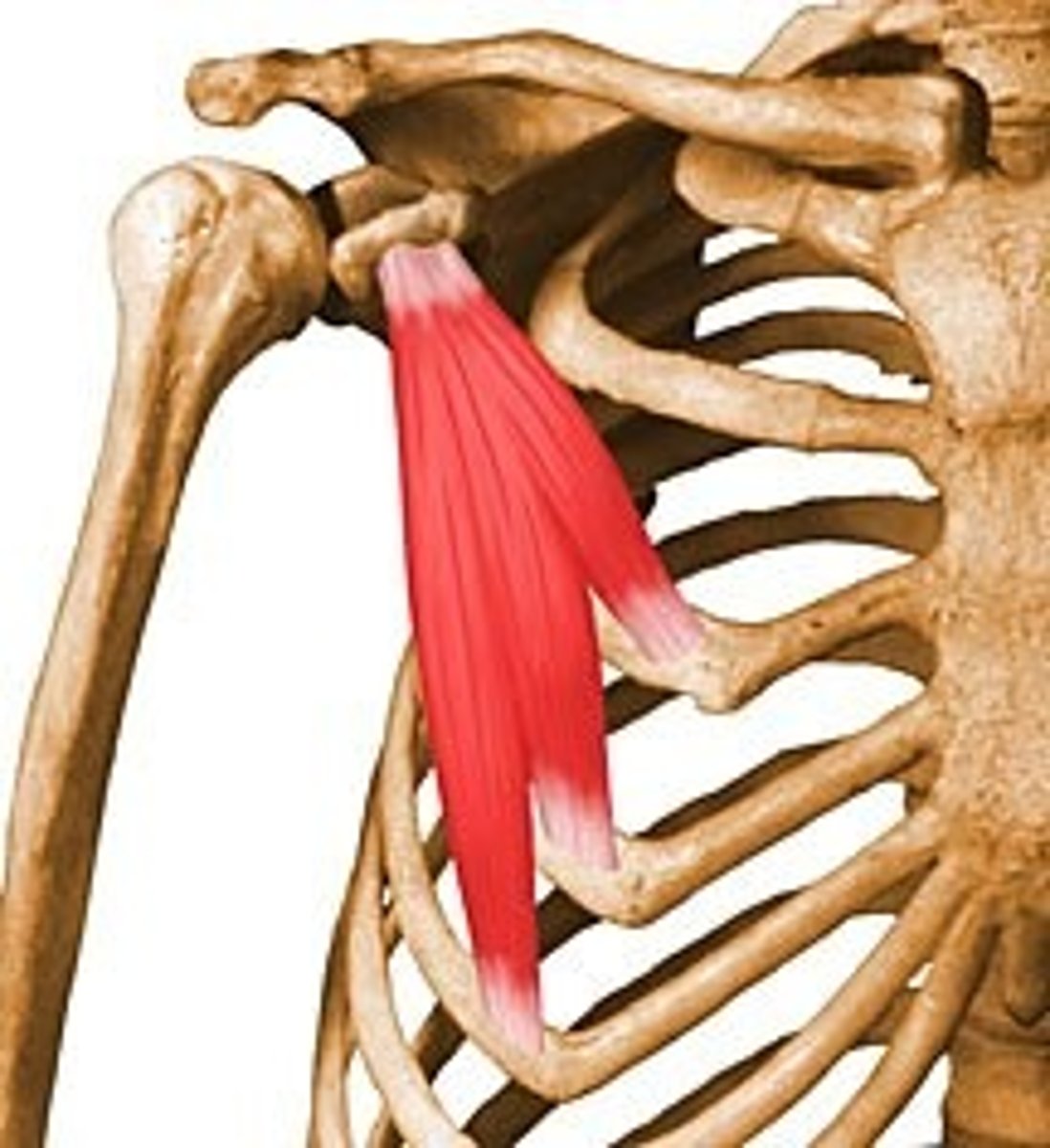
action: protracts and depresses scapula
innervation: medial pectoral nerve
what is the action and innervation of the pectoralis minor?
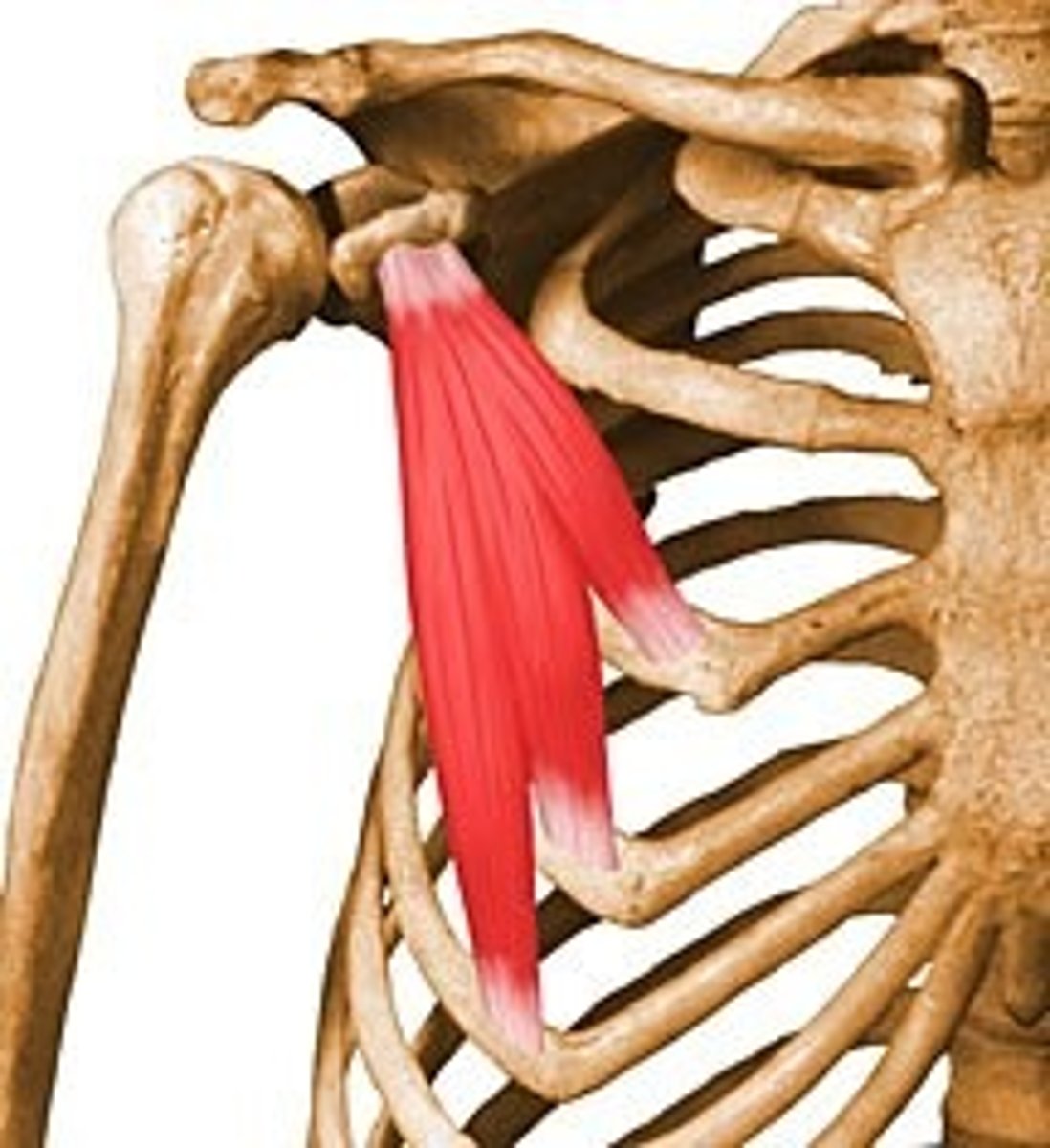
origin: junction of first rib and its cartilage
insertion: inferior surface of clavicle
what is the origin and insertion of the subclavius?
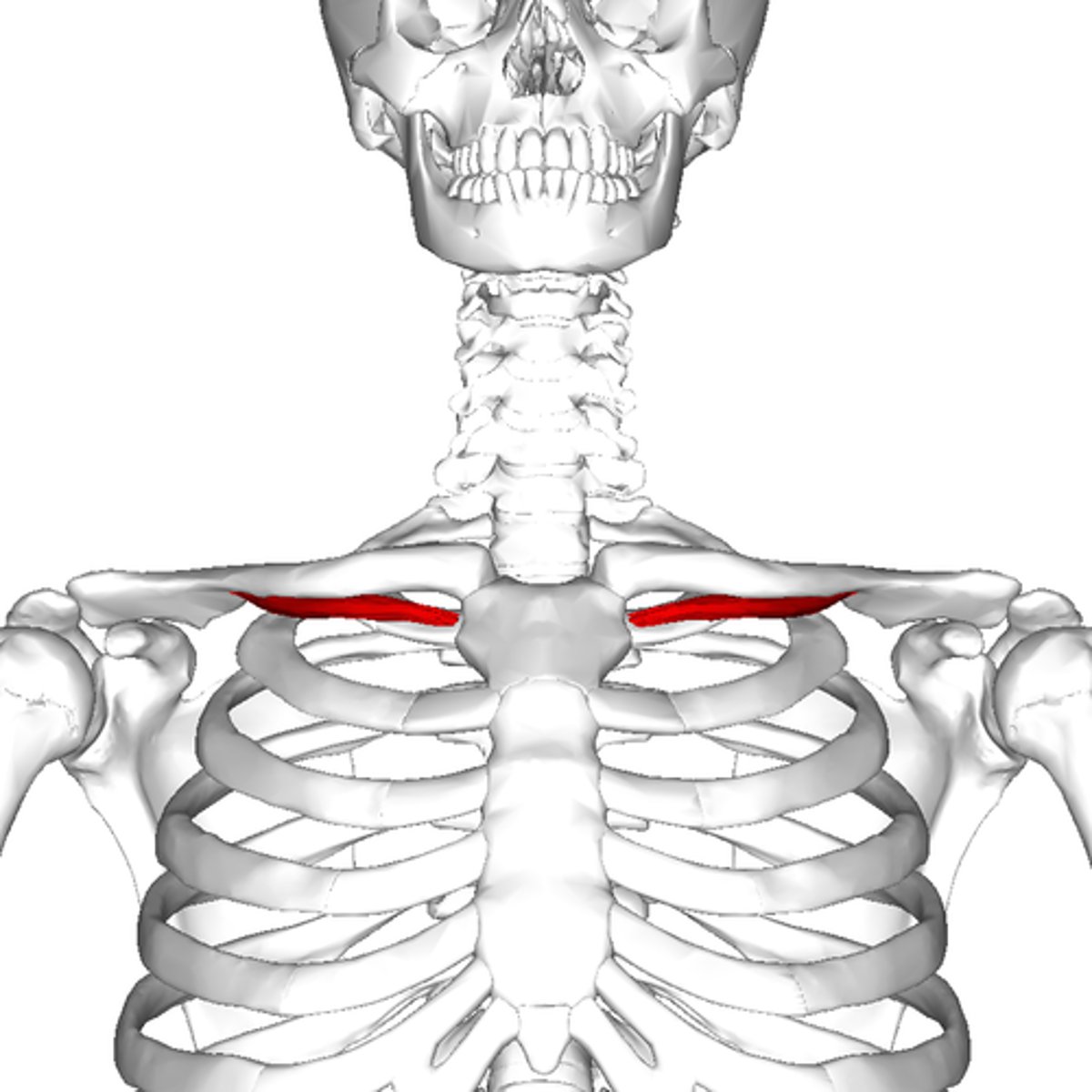
action: depresses clavicle
innervation: nerve to subclavius
what is the action and innervation of the subclavius?
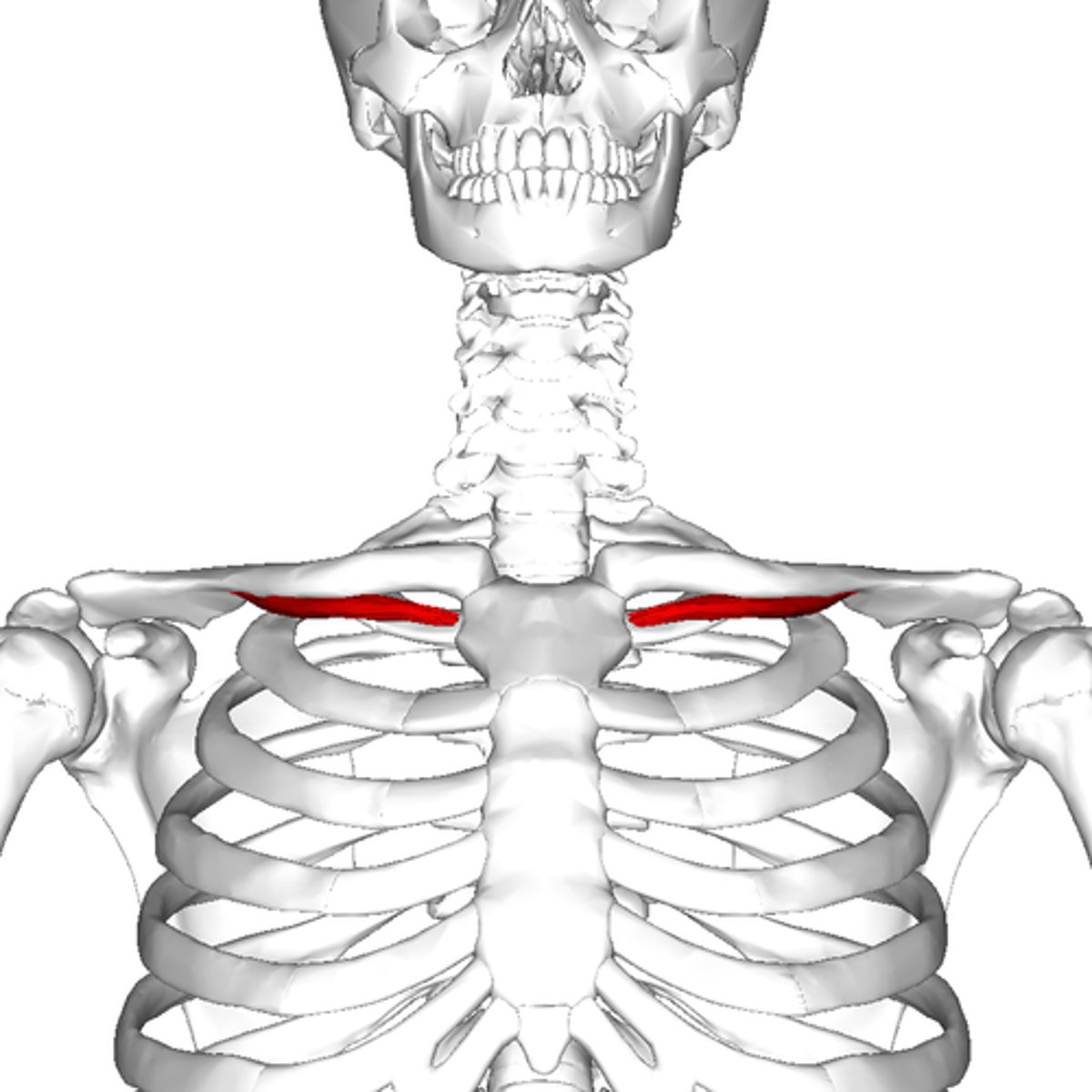
origin: upper 8 ribs
insertion: vertebral border of the scapula (has to pass under the scapula)
what is the origin and insertion of the serratus anterior?
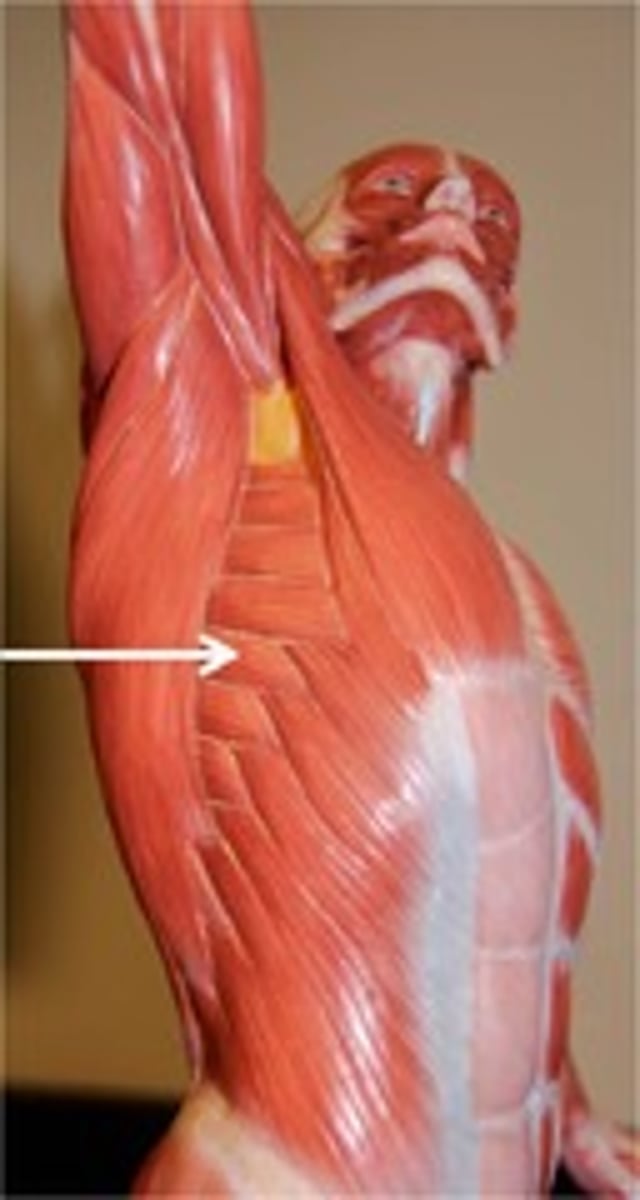
action: protracts scapula, rotates scapula
innervation: long thoracic nerve (on the superficial surface)
what is the action and innervation of the serratus anterior?
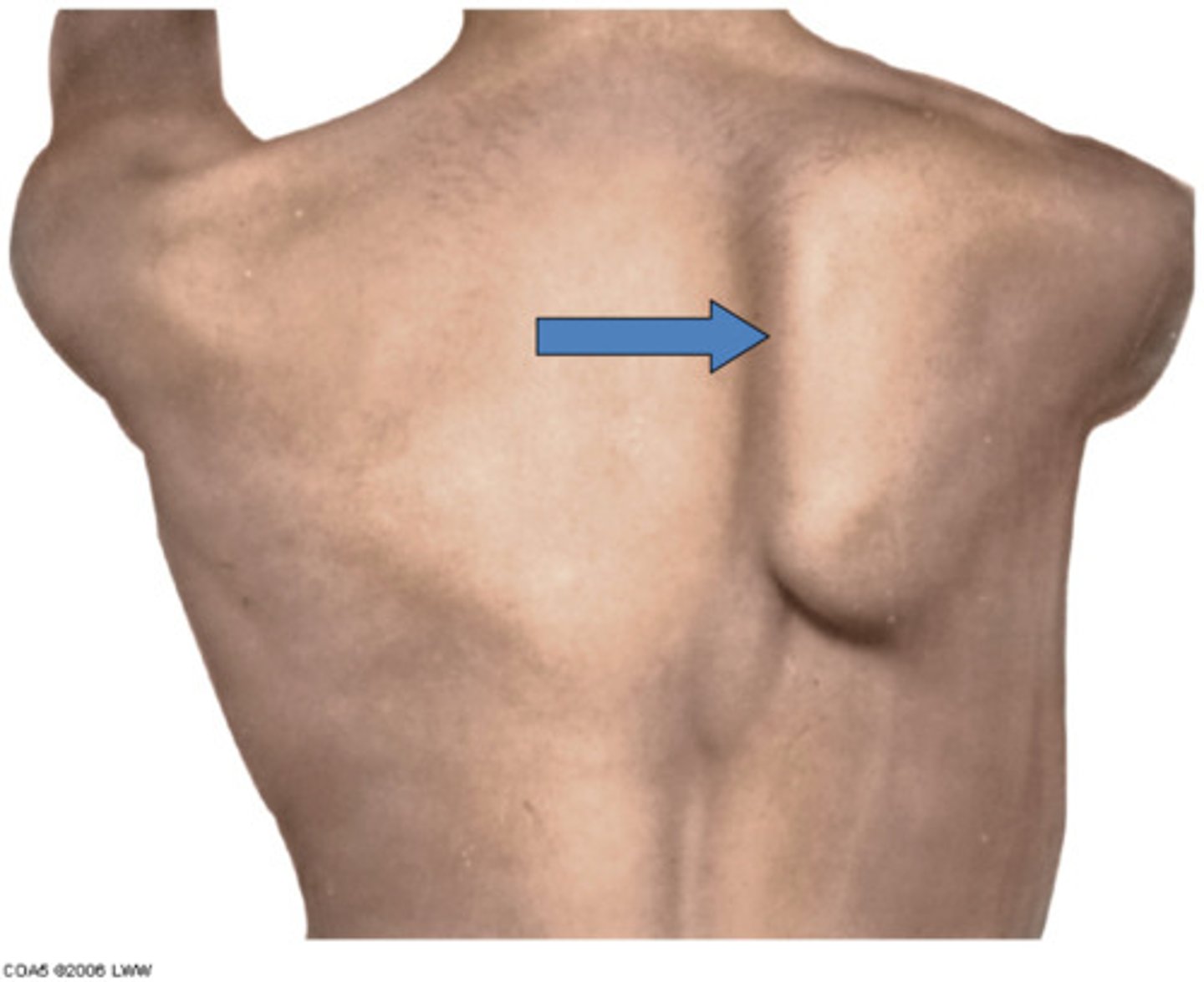
paralysis of the serratus anterior due to injury of the long thoracic nerve
what causes a winged scapula?
subclavian artery
one of the major branches of the aorta (left) or brachiocephalic trunk (right)
axillary artery
the artery that supplies the axillary region
brachial artery
the artery that supplies the brachial region
lateral border of the first rib
the subclavian artery changes to the axillary artery at the -
inferior border of the teres major muscle
the axillary artery changes to the brachial artery at the -
radial and ulnar arteries
the brachial artery terminates by dividing into the - and -
superior thoracic artery; first two intercostal spaces
what is the branch of the 1st part of the axillary artery called? what does it supply?
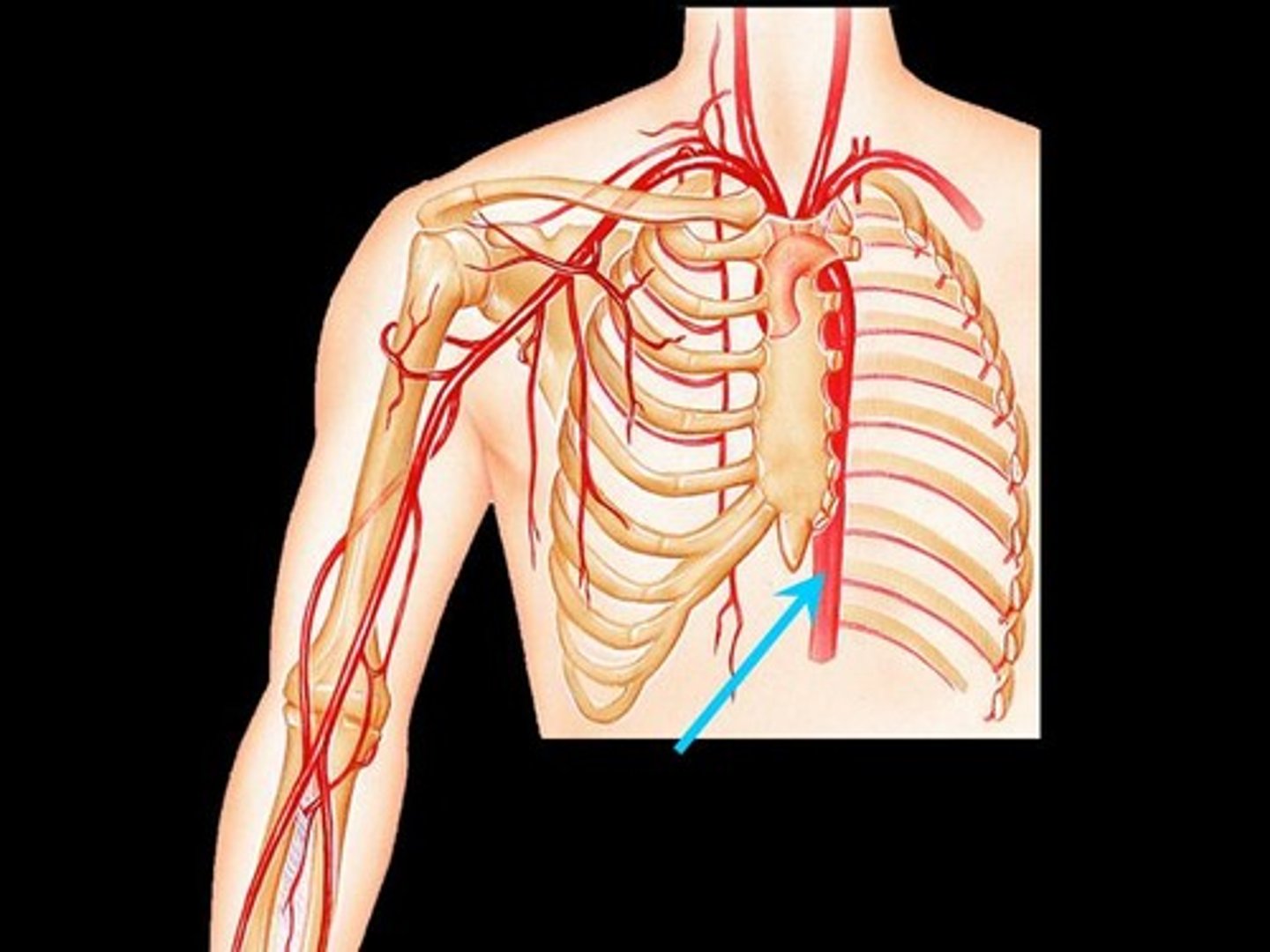
thoracoromial trunk; lateral thoracic artery
what does the 2nd part of the axillary artery divide into?
thoracoromial trunk
found near the superior border of the pectoralis major; quickly divides into four branches
lateral thoracic artery
found near the inferior border of the pectoralis minor; supplies lower medial aspects of the axilla and pectoral region
- subscapular artery (breaks into the scapular circumflex and the thoracodorsal arteries)
- anterior humeral circumflex
- posterior humeral circumflex
what does the 3rd part of the axillary artery divide into?
subscapular artery
the largest branch of the axillary artery; branches into the scapular circumflex and thoracodorsal arteries
anterior and posterior humeral circumflex arteries
encircle the humerus
superficial veins
in subcutaneous tissue; independent of named arteries
deep veins
are deep to deep fascias; accompany arteries; typically paired and wrap around arteries
basilic vein
found on medial aspect of arm without corresponding artery; superficial vein that pierces deep fascia in arm
cephalic vein
pierces clavipectoral fascia in the deltopectoral triangle
deltopectoral traingle
the cephalic vein travels in the -
deltoid artery
the - runs with the cephalic vein
anterior rami
roots of the brachial plexus are formed by the - of C5-T1 spinal cord levels
- roots
- trunks
- divisions
- cords
- terminal branches
what is the order of the parts of the brachial plexus?
roots
- of brachial plexus pass in between anterior and middle scalene muscles
trunks
roots unite to form - in inferior neck
anterior and posterior divisions
each trunk splits into - and - as they pass deep to clavicle
medial, lateral, and posterior cords
divisions combine to form - , - , and - , named based off of relation to the second part of the axillary artery
terminal branches
cords give rise to -
suprascapular nerve (C5-C6)
supraspinatus and infraspinatus muscles; from superior trunk; goes through scapular notch
dorsal scapular nerve
to rhomboid muscles; from anterior primary ramus of C5
nerve to subclavius (subclavian nerve)
from upper trunk
long thoracic nerve
to serratus anterior; from anterior primary rami of C5, 6, 7; prevents winged scapula
- suprascapular nerve
- dorsal scapular nerve
- nerve to subclavius
- long thoracic nerve
what makes up the supraclavicular branches of the brachial plexus?
musculocutaneous nerve
to anterior compartment of nerve; pierces coracobrachialis muscle; supplies everything between the shoulder and elbow
lateral pectoral nerve
to pectoralis major muscle from lateral cord; found superior and medial to pec minor
musculocutaneous nerve and lateral pectoral nerve
what makes up the infraclavicular branches of the brachial plexus from the lateral cord?
medial pectoral nerve
to pectoralis major and minor muscles; pierces the pectoralis minor and continues on to pectoralis major
ulnar nerve
major nerve to hand
medial brachial cutaneous nerve and medial antebrachial cutaneous nerve
run alongside the ulnar nerve, but branch to provide cutaneous sensation; stay superficial
- ulnar nerve
- medial pectoral nerve
- medial brachial cutaneous nerve
- medial antebrachial cutaneous nerve
what makes up the infraclavicular branches of the brachial plexus from the medial cord?
axillary nerve
to deltoid and teres minor muscles
radial nerve
to all dorsal muscles of the upper limb; supply the entire posterior compartment of the arm and forearm
upper subscapular nerve
to subscapularis muscle
middle subscapular nerve (thoracodorsal nerve)
to latissimus dorsi muscle
lower subscapular nerve
to subscapularis and teres major muscles
- axillary nerve
- radial nerve
- upper subscapular nerve
- middle subscapular nerve (thoracodorsal nerve)
- lower subscapular nerve
what makes up the infraclavicular branches of the brachial plexus from the posterior cord?
median nerve
the major nerve to the anterior forearm
posterior humeral circumflex artery
the radial nerve enters the axillary space with the -
jugular notch
at level between TV2/3
sternal angle
at the level of 2nd rib anteriorly, and between TV4/5 posteriorly
xiphisternal junction
at level of TV9