Health Assessment Exam 1
 Call Kai
 Learn
Learn Practice Test
 Spaced Repetition
 Match
Match Flashcards
 Knowt Play
1/186

There's no tags or description
Looks like no tags are added yet.
Name | Mastery | Learn | Test | Matching | Spaced | Call with Kai | Chat |
|---|
No analytics yet
Send a link to your students to track their progress
187 Terms
Nurse’s role in heath assessment
To perform assessment as a foundation for the nursing process.
What happens step 1 of the nursing process
Assessment: nurse gathers, analyzes, and synthesizes data.
Initial comprehensive assessment.
Done when a patient is first admitted. Collects data subjective about heath history, family history, and lifestyle. Collects objective data from physical exam.
Ongoing/partial assessment
Occurs after a comprehensive database is established. Is a follow-up on a patient’s heath status, usually done whenever nurse interacts with patient, can change frequency based on patient needs.
Focused or Problem-Oriented Assessment
Assessment of a specific health concern only. Does NOT replace comprehensive assessment.
Emergency Assessment
Performed in life-threating situations that don’t allow time for comprehensive assessment. Focuses on stabilization.
Steps of health assessment
Collection of subjective data from patient interview, collection of objective data from nursing assessment, validation of data, and documentation of data.
Purpose of validating data
Nurse clarifies information with patient to prevent incorrect data being recorded. Data can also be verified by asking a college for a second opinion.
Importance of accurate documentation in EHR
Provides information about a patient for their accurate care. Allows the entire healthcare team to access the information easily. Serves as a legal record as well.
S of SBAR
Situation - who are you, where are you, what is going on with the patient
B of SBAR
Background - what is the clinical context of the patient
A of SBAR
Assessment - what do I think the problem is
R of SBAR
Recommendation/Request - what would I do to correct the issue
How to verbally communicate with other heath care workers
Use SBAR to be concise and accurate.
What is subjective data?
In heath assessment, subjective data is reported by the patient. It is symptoms that the patient tells you they are experiencing.
Pre-introductory phase of patient interview
Before you see the patient review EHR to obtain PMH and reason for seeking care. Look for language and cultural barriers.
Introductory phase of patient interview
Introduce yourself to the client, explain the interview process and that it will involve many questions, explain that you may be taking notes, assure pt of confidentiality and privacy.
Working phase of patient interview
Nurse will use listening, critical thinking, and intuition skills to ask questions to gather a heath history and review of systems from the patient.
Summary + closing phase of patient interview
Summarize the information obtained, validate problems and goals with the patient, ask follow up questions to fill any gaps in data.
How to listen
Be present and engaged, keep an open mind, empathize and clarify, listen and learn
Opened ended questions
Allows patient to elaborate and express in their own words. Typically begins with words like “how” or “what”.
Closed ended questions
Require one word answers or yes/no.
Adapting interview for older patients.
Don’t assume hearing status, speak clearly, use straightforward language, show respect.
Adapting interview for depression
Express understanding, don’t be inappropriately cheery, respond neutrally
Adapting interview for anxious client
Be calm, simple, and concise
Adapting interview for patient with cultural differences
May need an interpreter, be aware of cultural practices and variations in communication
The 8 sections of a complete health history
Biographical, reason for seeking care, history of present health concern, personal health history, family health history, review of systems, lifestyle + health promotion, and developmental level
COLDSPA
Character, Onset, Location, Duration, Severity, Pattern, Associated factors
Interview for newborns
Dependent on health records and parents
Interview techniques for older adults
Be aware of potential reluctance to share information
Interviewing older children and adolescents
Allow for privacy from parents, talk to as an equal, avoid close ended questions
Equipment for physical exam
Thermometer, stethoscope, watch with second hand, pulse ox, pen light, gloves, charting system. Sometimes reflex hammer.
How to prepare environment for physical environment
Comfortable temp, private area, quite area, adequate lighting, firm exam table/bed, and bedside table/tray to hold equipment.
How to prepare yourself for physical exam of a patient
Practice makes perfect, try your best to not be anxious as pt will sense it, take precautions to prevent infections
Standard precautions
Hand hygiene, gloves, clean equipment, proper pt placement based on precautions, and occupation health on blood-borne pathogens
Contact precaution
Gown and gloves
Droplet precaution
Gown, gloves, surgical mask
Airborne precautions
Gown, gloves, and fitted N-95 mask
How to approach newborns/infants for physical exam
Explain process to parent, listen to lungs + heart while infant is quiet, keep infant in diaper until needed off (keep infant comfortable).
How to approach children for physical exam
Allow children to play with equipment to mitigate fear, use age appropriate distractions, complete least invasive procedures first
How to approach older adults for physical exam
You may need to limit time if pt tires easily, be respectful and don’t assume status, simplify or rephrase questions if needed.
When do we use sitting position?
Taking vitals, listening to heart and lungs

What is this position and when do we use it?
Supine, for abdominal assessment
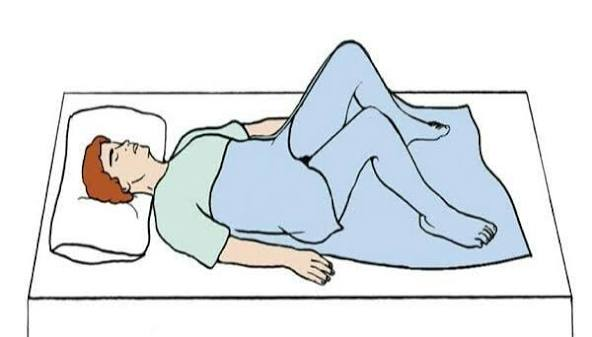
What is this position and when do we use it?
Dorsal recumbent, vaginal exam

What is this position and when do we use it?
Sim’s Position, access to vaginal and rectal areas
What do we use standing position for
Assessing posture, gait, or male genitalia

What is this position?
Prone

What is this position and when do we use it?
Knee-chest, rectal exam
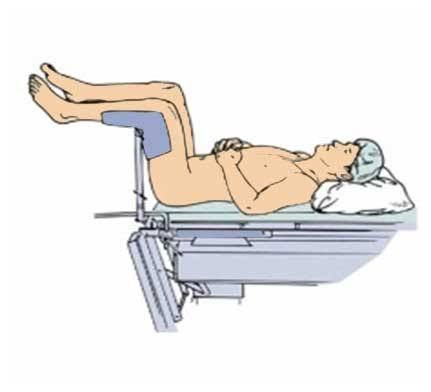
What is this position and when do we use it?
Lithotomy, vaginal exam
What is inspection?
Assessing the patient by simply viewing/smelling. Should be done first as other parts of the exam may alter the state of the pt.
What is palpation
Using parts of the hand to touch and feel for texture, temp, moisture, pulse, size, shape, tenderness, consistency, and mass mobility
What are the finger pads used for in palpation?
Pulse, texture, air under skin
What is the ulnar side of the hand used for in palpation?
Feeling vibration
What is the dorsal side of the hand used for in palpation?
Temperature
What is percussion?
Tapping various parts of the body to produce sound waves
Resonance
Loud, low, hollow sound. Should come from hollow organs like the lungs.
Hyperresonance
Very loud, low, booming sound. Comes from conditions like over-inflated lungs.
Tympany
Loud, high, drum-like sound. Comes from stomach and intestines.
Dullness (sound)
Medium volume, medium pitch, thud-like sound. Comes from solid organ like the liver.
Flatness (sound)
Soft, high pitch, flat sound. Comes from bone and muscle.
Auscultation
Listening - requires use of stethoscope
Diaphragm of stethoscope
Larger side. Used to detect high-pitched sounds like heart, lungs, and bowels.
Bell of stethoscope
Smaller side. Used to detect low-pitched sounds such as abnormal heart sounds or the carotid artery.
Components of a general survey
Begins the moment the nurse sees the pt. Nurse observes skin color, dress, hygiene, grooming, posture, gait, apparent age, LOC, facial affect, speech, and behaviors.
Sites you can take temperature
Oral, tympanic, axillary (armpit), temporal, rectal.
Normal temperature
35.9-38 degrees C
Normal pulse
60-100 BPM
Normal respiratory rate
12-20 breaths per min
Regular pulse oximetry
95-100% (90-100% good in acute care settings)
Orthostatic Hypotension
Drop of more that 20 mmHg systolic or 10 mmHg diastolic WITH 10-20% increase in HR
Normal blood pressure
Less than 120/80
Hypotensive
Less than 90/60
Elevated BP
120-129 and >80 mmHg
Stage 1 hypertension
130-139 or 80-89 mmHg
Stage 2 hypertension
>140 or >90
Hypertensive crisis
>180 and/or diastolic >120
Pulse pressure
Difference between systolic and diastolic. Normal range is 30-50 mmHg.
Differences in vitals for childbearing women
BP may be increased slightly, pulse may increase 10-15 BPM, temp should be stable, weight gain normal.
Differences in vitals for infants (28 days - 1 yr)
HR: 120-160
RR: 30-60
Differences in HR for children (2-11)
HR for 2-10 yrs: 70-110
HR for 10+: 55-90
Differences in RR for children
3-5 yrs: 20-28
6-11 yrs: 18-25
12-15 yrs: 12-20
Differences in vitals for adolescents
Vitals begin to normalize to adult numbers at 11-15
Differences in vitals for geriatrics
Temp: 35-36.4 degrees C
Pulse: may feel more rigid
BP: My be higher
Early warning scoring systems
In hospital EHRs, automatically calculates changes in vitals to assess risk of deterioration. There is low, moderate, and high risk.
Analyzing data signs
Identify abnormal findings, compile pt data to reveal patterns, assess for opportunities for pt improvement, risks, actual instabilities, and medical problems (provider diagnosis).
Frontal lobe function
Voluntary movement, emotions, behavior
Parietal lobe function
General touch, pain, temperature sensation
Temporal lobe function
Hearing
Occipital lobe function
Sight
Cerebellum function
Coordination, balance
What is a dermatome
An area of skin supplied by a singe nerve.
Subjective data questions in neuro assessment about current health concern
Ask about any headaches, seizures, dizziness, numbness/tingling, change in senses, difficulty speaking or swallowing, muscle control, or memory loss.
Subjective data questions in neuro assessment about past heath history
History of head injury, meningitis, encephalitis, spinal cord injury, or stroke
Subjective data questions in neuro assessment about family history
Hypertension, stroke, dementia, seizers
Subjective data questions in neuro assessment about lifestyle
Alcohol, drug use, smoking, medication, seatbelt/helmet use, diet, ADLs, stress, chemical exposure.
When is a brief neurological screening used?
When pt is not complaining of any neuro symptoms.
What does a brief neurological screening entail?
LOC, pupils, movement/strength, sensation, vitals.
Alert and oriented
Pt knows who they are, where they are, when they are, and what’s happing (to be A&O x4).
Lethargic
Drowsy, slow to answer questions or is inattentive
Obtunded
Difficult to arouse, requires constant stimulation to follow commands