TEAS- BIOL
 Call Kai
 Learn
Learn Practice Test
 Spaced Repetition
 Match
Match Flashcards
 Knowt Play
1/208

There's no tags or description
Looks like no tags are added yet.
Name | Mastery | Learn | Test | Matching | Spaced | Call with Kai | Chat |
|---|
No analytics yet
Send a link to your students to track their progress
209 Terms
Epithelial tissue
2 functions:
provide covering (skin tissue)
produce secretions (glandular tissue)
-exists in sheets and does not have its own blood supply.
-can regenerate easily if well nourished.
classified 2 ways:
number of cell layers
cell shape (squamous, cuboidal, columnar)
Connective tissue
found throughout the body.
function:
connect different structures of the body.
-has its own blood supply (except, connective tissue ligaments do not.)
(bone, cartilage, adipose (fat), blood vessel)
Muscle tissue
producing movement.
3 types:
skeletal, cardiac, and smooth.
Skeletal: supports voluntary movements
Smooth: under involuntary control. found in walls of hollow organs (intestines, blood vessels, bladder,and uterus)
Cardiac: involuntary. found only in the heart
Nervous tissue
provides the structure for the brain, spinal cord, and nerves.
nerves made of neurons that send electrical impulses throughout the body. (myelin-help protect nervous tissue.)
Circulatory system
aka. cardiovascular system
function: supports the circulation and distribution of various substances throughout the body
digestive system
consists of all organs from the mouth to the anus.
esophagus, stomach, small intestine, large intestine, rectum, and anus.
-small intestine: absorption 80% of nutrients (duodenum, jejenum, ileum)
-Large intestine resorbs water through osmosis along with ions from feces. -- additional absorption occurs in colon.
-liver: produces bile break down fats.
-pancrease: delivers enzymes to the small intestine that aid in digestion.
Endocrine system
serves to control body functions. Glands in the endocrine system secrete hormones that travel through the blood to organs throughout the body.
glands: pineal, pituitary, thalamus, hypothalamus, thyroid, thymus, and adrenal regulate growth and metabolism.
-pancreas, testis, and ovaries have endocrine functions.
Integumentary system
consists of skin, mucous membranes, hair, and nails.
-protects internal tissues from injury, waterproofs the body, and regulates temperature.
-serves as barrier to pathogens.
relationship w/ other systems:
-respiratory and digestive: provide oxygen and nutrients to the skin to maintain health.
-oxygen and nutrients for the skin travel through blood vessels in the cardiovascular system.
-lymphatic: picks up excess fluid from the sin to avoid swelling.
-skeletal: provides shape and support
-endocrine: hormones system regulate hair growht and hydration
-the skin serves to protect internal organs including reproductive system.
Lymphatic system
consists of lymph nodes, lymph vessels that carry lymph (clear fluid rich in antibodies), the spleen, the thymus and tonsils (made out of lymphoid tissue).
supports the immune system by housing and transporting white blood cells to and from lymph nodes.
-also returns fluid that has leaked from the cardiovascular system back into the vessels.
Muscular system
consists of skeletal muscles, tendons that connect muscles to bones, ligaments that attach bones together to form joints.
-NOT included cardiac and smooth muscles
Nervous system
consists of brain, spinal cord, nerves and serves as the body's control system.
relationship w/other systems:
- Endocrine: releases hormones that regulate the activity of neurons
-Urinary: helps dispose metabolic wastes and maintains the correct electrolyte balance for proper nerve function
Reproductive system
produce offspring.
consists of testes, penis, ovaries, vagina, breasts.
-has hormones that influence masculine or feminine body characteristics.
Respiratory system
keeps body's cells supplied with oxygen and removes carbon dioxide as it is released from the cells.
consists of the nasal cavity, pharynx, larynx, trachea, bronchi, and lungs.
-Alveoli: walls of alveoli that oxygen and carbon dioxide move in and out of the lungs via small blood vessels called arterioles.
relationship w/ other systems:
-lymphatic: transports sex hormones
-muscular: involved in childbirth
respiratory: increases during pregnancy
Skeletal system
provides support and protection for the body and its organs, supplies a framework used with muscles=creates movement.
consists of bone, cartilage, ligaments, and joints.
-Also used for storage for minerals-calcium and phosphorus.
relationship w/other systems:
-endocrine: releases hormones that regulate growth
and calcum
-digestive: provides nutrients for the mineralization of bones.
-urinary: activates Vitamin D which is necessary for calcium absorption into bone.
Urinary system
helps maintain the water and electrolyte (sodium, chloride, and potassium) balance within the body.
-regulates acid-base balance of blood
-removes all nitrogen-containing wates from the body.
nitrogen containing wastes are by products of the breakdown of proteins and nucleic acids.
relationship w/ other systems:
-endocrine: helps regulate the reabsorption of water and electrolytes in the kidneys.
- digestive (the liver)- synthesizes urea that must be excreted by the kidneys.
Anatomical position
body is facing forward, feet are parallel to each other and arms are at he sides with palms facing forward)
superior
toward the upper end of the body
inferior
lower end of the body
anterior
front of the body
posterior
back of the body
medial
middle of the body
lateral
outer sides of the body
intermediate
between medial and lateral
distal
away from the origin of the body part or point of attachment.
superficial
at the body surface
deep
below the body surface
sagittal section
cut made along a longitudinal plane dividing body into right and left parts
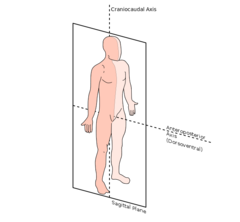
midsagittal section
sagittal section made down the median of the body

transverse section
cut made along a horizontal plane to divide the body into upper and lower region
frontal section
divides the body into front and back regions
dorsal body cavity
contains the cranial cavity and spinal column

ventral body cavity
contains all the structures within the chest and abdomen
functions of the body
adaptation, circulation, elimination, locomotion, nutrition, oxygenation, regulation, self-duplication
adaptation
receive interpret, respond to internal and external stimuli via nervous system
circulation
transport oxygen and other nutrients to tissues via cardiovascular system
elimination
remove metabolic wastes from the body via renal system
locomotion
allow voluntary and involuntary movement of the body via musculoskeletal and neurological systems
nutrition
take in and break down nutrients to be used for metabolism via digestive system
oxygenation
take in oxygen and expel carbon dioxide via respiratory system
regulation
hormonal control of body functions via endocrine system
self-duplication
production of offspring via reproductive system
Respiratory system air exchange
primary function of lungs= breathing in oxygen and exhaling carbon dioxide
1) air is inhaled through nose into the TRACHEA
2) passing through BRONCHIAL TUBES
3) within bronchial tubes are CILIA (keep airway clear by removing unwanted matter from the lungs)
4) After leaving bronchial tubes, air travels into ALVEOLI (tiny air sacs surrounded by capillaries) permit exchange of oxygen and carbon dioxide to occur
5) Oxygen is transported via red blood cells into blood stream
6) Diaphragm (abdominal muscle contracts, pulls air into the lungs during INSPIRATION (act of taking in oxygenated air)
7) Diaphragm relaxes carbon dioxide is forced out of the body via EXPIRATION
autonomic nervous sytem
controls automatic body functions (heartbeat and digestion) include SYMPATHETIC NERVES and PARASYMPATHETIC NERVES
sympathetic nerves
are active when person is excited or scared "fight or flight"
parasympathetic nerves
active when a person is eating or at rest "rest and digest"
dendrites
receive stimuli from the internal and external environment and bring those stimuli to the neurons
neurons
specialized cells that make up the nervous system and transmit messages
nervous system functions
3 functions:
-provide sensory, motor, and integrative functions within the body.
they all react to stimuli and maintain homeostasis within the body.
reflex
when the body senses pain, it may automatically withdraw from it.
Digestive system (Alimentary canal)
mouth, esophagus, stomach, small intestine, large intestine, anus
Digestive system (Accessory structures)
teeth, salivary glands, pancreas, liver, and gallbladder
Peristalsis
rhythmic contractions that propel food towards the colon and anus.
intrinsic factor
increases stomach absorption of Vitamn B12.
Enzymes
chemicals that break down proteins, carbohydrates, and fats into nutrients that can be absorbed through the wall of the intestine into the blood stream.
pyloric sphincter
releases chyme from the stomach into the small intestine
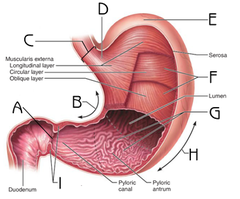
Duodenum
FIRST section of the small intestine releases 2 hormones (secretin and cholecystokinin (CKK))
secretin- travels to pancreas to trigger release of bicarbonate= neutralizes stomach acid entering duodenum
CCK-released from duodenum and initiates bile release from gall bladder while decreasing motility and acid production by the stomach.
Immune system
tissues, cells, and organs that fight off illness and disease is composed of both innate (NONSPECIFIC) and adaptive (SPECIFIC) defenses that are designed to protect the body from pathogens (foreign invaders)
Innate immune functions
occur in the same way every time regardless of the type or number of pathogens present.
-include first line of defense, physical and chemical barriers (skin, mucous membranes, and digestive enzyme)
-2nd line of defense (fever, inflammation, phagocytosis, natural killer cells, interferons, chemotaxis, and release of cytokines.
Fever
mild to moderate fevers- benefit by killing pathogens that grow better at lower body temps.
4 signs of inflammation
redness, heat, swelling, and pain
Natural Killer Cells (NK)
produce perforins (pore-forming proteins) that target cancer and virus cells.
- cause cells to lyse/rupture
Interferons
body's response to viral infection and prevent replication of the virus 7-10 days. activate macrophages and NK cells.
Chemotaxis
method by which leukocytes respond to damaged body tissues.
Diapedesis
process of white blood cells squeezing through capillary slits in response to cytokines. followed by CAMs (cellular adhesion molecules) guiding white blood cells to the site of damage/infection.
Adaptive Immune functions
3rd line of defense.
Specific diseases.
Include Humoral, anti-body mediate, and cell-mediated responses.
antibodies- produced for specific invading antigen.
Active immunty
Vaccines: stimulates an actual infection by a pathogen, stimulating the body to produce antibodies for future protection.
Passive immunity
individual does not produce his or her antibodies, receives them directly from ANOTHER source (mother t infant through breast milk.)
T cells
lymphocyte that triggers the action of other lymphocytes.
-Macrophage capture nonself-cell> T- helper cell binds to it and secretes cytokine> signals Cytotoxic T Cell> Cytotoxic T cell responds destroys nonself cell.
B cells
types of lymphocytes or small leukocytes followed by T helper cells, produce antibodies.
cytokines
chemical messengers that are released by damaged tissue
fertility rates
average number of children a woman will have during her childbearing years between ages of 15-44.
-fertility rates in LESS developed countries are much higher
crude birth rate
number of births per 1,000 people per year
crude death rate
number of deaths per 1,000 people per year
Immigration
act of an individual moving into a region or country to live (migrate into)
Emigration
act of an individual moving out of one region or country to live (migrate out of)
8 levels of TAXONOMY
1)domain
2)kingdom
3)phylum
4)class
5)order
6) family
7)genus
8)species
6 kingdoms
EUKARYA domain:
1)Animalia
2)Fungi
3)Plantae
4)Protista
5)EUBACTERIA
ARCHAE domain:
6)Archaebacteria
Charles Darwin
first to study and write about species adaptation.
wrote "On the Origin of Species" after spending time in the Galapagos island.
first to coin "natural selection"
Natural Selection
occurs when some individuals of a species are better able to survive in their environment and reproduce than others. aka "survival of the fittest"
ex) resistance to antibiotics amongst certain bacterial strains.
Adaptation
through mutations, some species are able to survive and adapt to the environment in which they live.
*If variation/mutation causes positive result that makes it easier for organism to survive environmental pressures= adapation.
mutations
permanent changes in the DNA that affect the way a gene functions
Genes
stretches of DNA on a chromosome that provide information for an organism's characteristics, responsible for heredity.
Nucleic acids
to store and transmit hereditary information. contains chain of nucleotides.
Nucleotides
consists of a pentose, phosphate group, and a nitrogenous base
pentose
type of sugar
nitrogenous base
molecule found in DNA and RNA that encodes the genetic information in cells
5 types
BOTH DNA and RNA:
adenine
cytosine
guanine
DNA:
thymine
RNA:
uracil
DNA
double helix
adenine always pairs with thymine
guanine always pairs with cytosine
purine
A-G
have two rings
pyrimidines
T-C
have one ring
Translation
process of protein production from messenger RNA
Transcription
cells copy the instructions in the DNA into RNA and send the messenger RNA to the ribosomes
PROKARYOTIC CELL (bacterial)
contain:
cell wall
cytoplasm
nucleoid
organelles
plasmids
ribosomes
flagella
cell wall
outside rigid layer that helps separate the inside and outside of the cell, and an inside plasma membrane that is semipermeable, allowing certain substances in and out of the cell as needed.
cytoplasm
inner layer rich protein fluid with gel-like consistency that houses organelles (tiny organs)
Nucleoid
is the condensed DNA of the cell. It contains genes and genetic blue prints for the formation of proteins that make up the machinery of the cell.
plasmids
small circular portions of DNA not associate with the nucleoid. contain small number of genes compared to the DNA in the nucleoid.
RNA is copied from the DNA to take instructions from the nucleoid to the rest of the cell.
Chemically similar to DNA.
Ribosomes
manufacture proteins for the cell from the RNA messages.
They are very small bodies that free-floating within the cytoplasm. Proteins do most of the work in th cell.
EUKARYA (animal)
eukaryotic cells.
contain:
plasma membrane
ribosomes
endoplasmic reticulum
golgi apparatus
vesicles
vacuole
mitochondria
microtubules
*nucleus
Nucleolus
more complex than prokaryotic cells, but also larger.
-some live as single cells, but may exists as part of a larger complex of cells containing multicellular organism.
Endoplasmic reticulum
tubular transport network within the cell.
*responsible for moving proteins from one part of the cell to another and moving proteins outside the cell (secretion)
2 types:
smooth and rough
Rough ER
studded with ribosomes, gritty appearance.