DIPC 5001 - Prevention of Dental Caries by Dietary Management
 Studied by 0 people
 Call with Kai
 Learn
Learn Practice Test
 Spaced Repetition
 Match
Match Flashcards
 Knowt Play
1/54

There's no tags or description
Looks like no tags are added yet.
Name | Mastery | Learn | Test | Matching | Spaced | Call with Kai |
|---|
No study sessions yet.
55 Terms
cariogenic
foods/beverages that contain fermentable carbohydrates that can be metabolized by bacteria to produce acid
- demineralizes enamel
anti-cariogenic
foods/beverages that can prevent cariogenic activity when eaten
cariostatic
foods/beverages that cannot be metabolized by bacteria and do not cause a DIP in salivary pH
most of what we know about the relationship of carbohydrates and dental caries is a result of the
Vipeholm study
purpose of the Vipeholm study
- does an increase in carbohydrate intake cause an increase or decrease in caries?
3 groups of research subjects in the Vipeholm study
1) sucrose group
2) bread group
3) candy group
the sucrose group's basal diet contained _______ during meals
300g of additional sugar in solution (sweetened beverage)
the bread group's basal diet contained ______ during meals
50g of additional sugar with bread
the candy group's basal diet contained ______
in-between snacks of toffee and sugar candy
results of the study showed that an increase in dietary carbohydrate
DID increase the caries activity
the risk of caries is greater if sugar is consumed in the
retentive form on the tooth surfaces
when sugar was consumed between meals, caries formation was noted to be
greater
when dietary sugar is withdrawn, caries activity
diminished
caries rate was highest in this group
candy group
_____ is a PRIMARY factor in caries actvitiy
frequency of sugar eaten
true or false: the form of foods can increase incidence
true
- retentive foods that stay in the oral cavity longer increase rate of caries
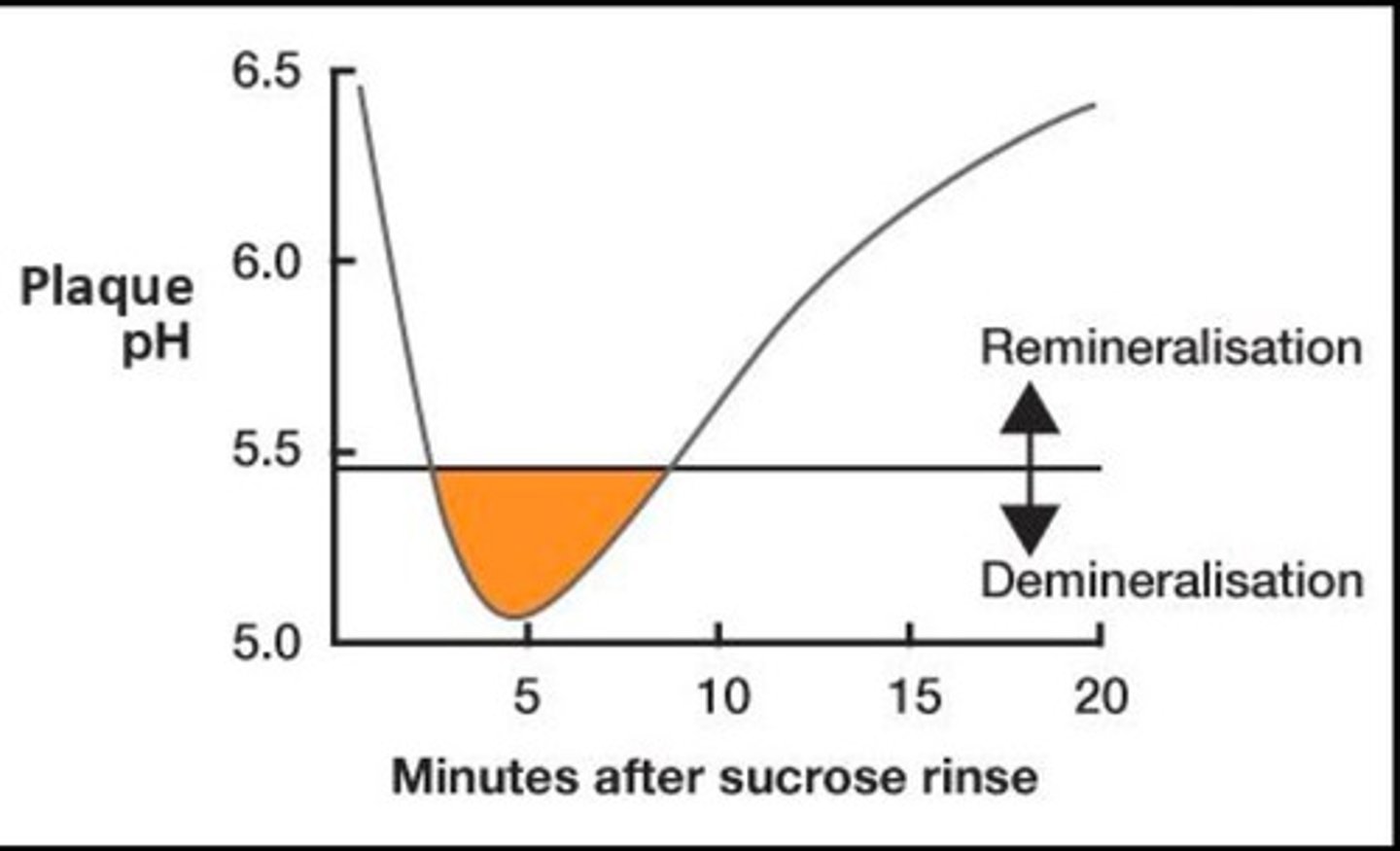
oral pH drops within ______ of rinsing with/ eating sucrose
3 minutes
the critical pH is _____ because that's the pH that can demineralize hard tooth structure
5.5. VERY IMPORTANT
stephan curve
true or false: sticky foods are hard to be cleared from the oral cavity
FALSE
- misleading; they're actually easily cleared. ex: caramels, jellybeans, raisins, chocolate bars
examples of retentive starchy foods
cookies, crackers, potato chips (most retentive)
both sticky AND retentive foods are
cariogenic
all food and beverages that contain sugars have the
potential to cause dental caries
- food label will show sugar as one of the main ingredients
true or false: if it doesn't taste sweet, it doesn't have sugar
FALSE
ultra-processed foods that do not taste sweet may have high-fructose corn syrup to improve shelf life
plaque bacteria feed on
carbohydrates and produce acid that demineralizes enamel
- they produce it as long as the carbs remain in the mouth
eating behaviors very detrimental to teeth
sipping and grazing
- every time you eat or take a sip is an opportunity for bacteria to make acid
cariogenic foods
fermentable carbohydrates
- monosaccharides
- disaccharides
- sweeteners used in manufacturing (juice, honey, glucose, starch)
ultra-processed foods contain about ____% sucrose
20%
true or false: sugar is synonymous with sucrose
FALSE
- sucrose is table sugar
- sugar encompasses all mono, di, and polysaccharides
fermentable carbohydrates include
all sugars or cooked starches metabolized by oral bacteria to produce acids
addition of sucrose ___ the cariogenicity of cooked starchy foods
increases
cooked starchy foods have lower cariogenicity potential IF
- sugar is NOT added
- NOT combined with protein
raw and uncooked starches have ____ caries-promoting activity
low
- less refined starchy grains and cereals contain phytate and/or fiber that may protect teeth
examples of cariostatic foods
- cheese/dairy
- nuts
- proteins
- fruits and vegetables
- sugar-free gum or mints made with Xylitol
- appropriate food combinations
examples of highly acidic foods
- citrus fruits
- acidogenic sports drinks
- snacks with citric acid
- carbonated beverages
- lemon-flavored iced tea
both synthetic sweeteners and sugar alcohols are
cariostatic
synthetic sweeteners examples
- aspartame (180x sweeter than sucrose)
- saccharine (300x sweeter than sucrose)
- sucralose
sugar alcohols are ____ chemical based
LESS chemical based
- chemically altered fruits, veggies, and starches
- incompletely absorbed in the intestine
- can have GI effects if more than 3 pieces a day
- reduces calories
- all forms are cariostatic
the most desirable of all sugar substitutes is
xylitol
- not metabolized by bacterial plaque
- reduces S/ mutans in the oral cavity
- has capability to remineralize incipient decay
TEST QUESTION: how to change your diet for caries prevention?
1) change food frequency
2) type of food
3) protective food combinations
cariostatic foods and factors
- water and saliva
- phytates
- proteins
- cheeses
- fats (healthy)
- xylitol
foods to create a neutral oral pH
- combine cooked starches with veggies/dairy
- eat high quality lean proteins
- combine dairy foods w/cooked starch
populations with increased caries prevalence
- low socioeconomic groups
- certain ethnic minorities
- medically compromised people
- people with chronic diseases
- receiving pharmaceutical and medical therapies
- people with physical disabilities
risk factors for caries
- age
- gender
- fluoride exposure
- systemic illness
- medications
- oral hygiene
- salivary function
how to know if someone has a cariogenic vs. cariostatic diet
- grams of sugar per day
- type of carbohydrate consumed
- timing of carbohydrate consumption
- frequency of acid intake events
factors most implicated in early childhood caries
- prolonged use of baby bottles containing highly fermentable sugars
- pacifiers dipped or filled with sweet agents
- snacking on sugary foods
tooth erosion is associated with _____ by athletes
prolonged use of sports drinks
- combination of acidogenic medium with sucrose accelerates erosion and caries
- should combine with sugar-free gum OR have the drinks more periodically
in elderly, ____ are more common
root caries
- due to exposed dentin from gingival recession, associated changes in the oral mucosa, and periodontium
- changes in teeth and masticatory function affect dietary intake
- if treatment is to include oral hygiene along with proper dietary changes, tooth loss is probable
on side 1 of the Nutritional Assessment Form is the
Concise Dietary Assessment
on side 2 of the nutritional assessment form is the
Foods High in Sugar
to determine a patient's nutritional health, they were asked to
detail everything they ate/drank within a 24hr period.
- includes portions, eating times, preparation method, added items, between meal times, and nonfood items
- does not provide accurate picture of nutrient consumption
- useful for dentistry because it shows us the usual eating habits
EXAM QUESTION: a person should eat _____ g of sugar daily
less than 55g
stage I of caries prevention
diet interview
stage II of caries prevention
dietary advice
for ample saliva and to help clear the oral cavity, you should include
one crunchy food with each meal