POLYSACCHARIDES: starch + glycogen + cellulose
 Call Kai
 Learn
Learn Practice Test
 Spaced Repetition
 Match
Match Flashcards
 Knowt Play
1/30

There's no tags or description
Looks like no tags are added yet.
Name | Mastery | Learn | Test | Matching | Spaced | Call with Kai | Chat |
|---|
No analytics yet
Send a link to your students to track their progress
31 Terms
bonds in amylose
1,4 glycosidic bond
bonds in amylopectin
1,4 and 1,6 glycosidic bonds
bonds in glycogen
1,4 and 1,6 glycosidic bonds
bonds in cellulose
1,4 glycosidic bonds
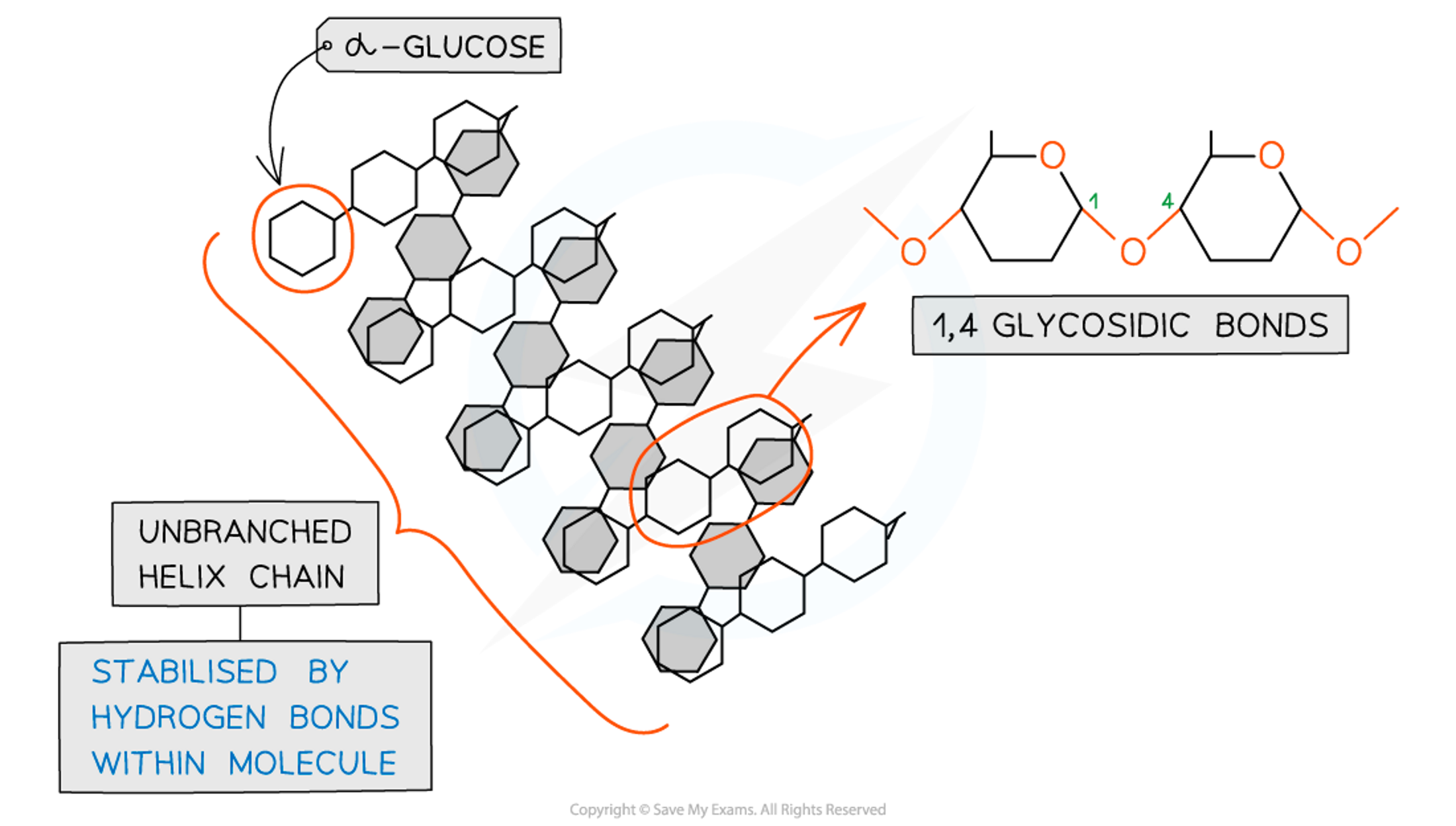
what is this?
amylose
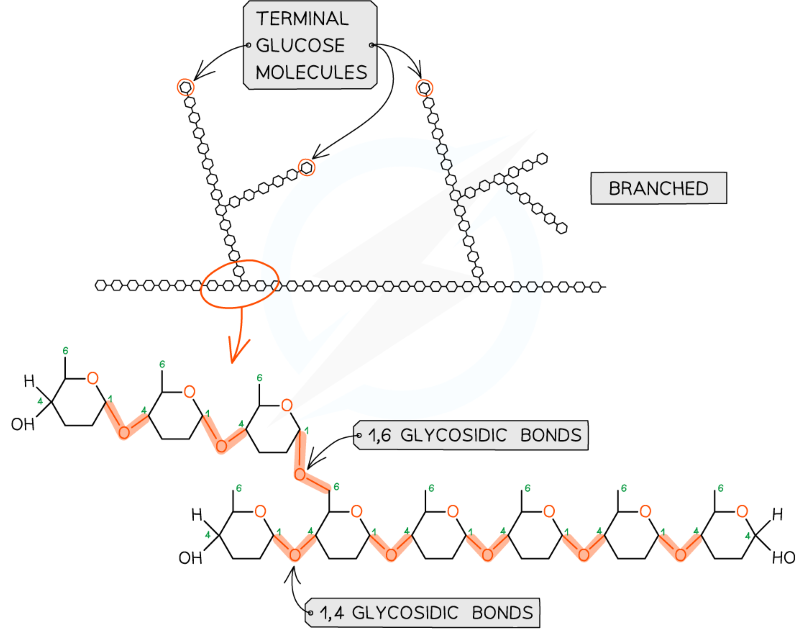
what is this?
amylopectin
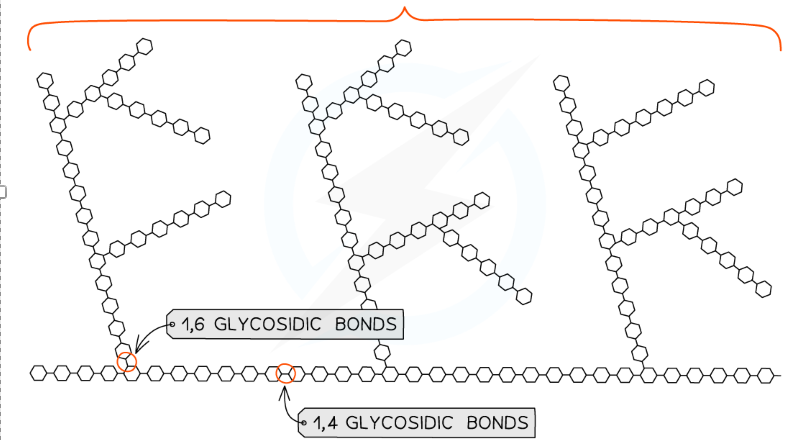
what is this?
glycogen
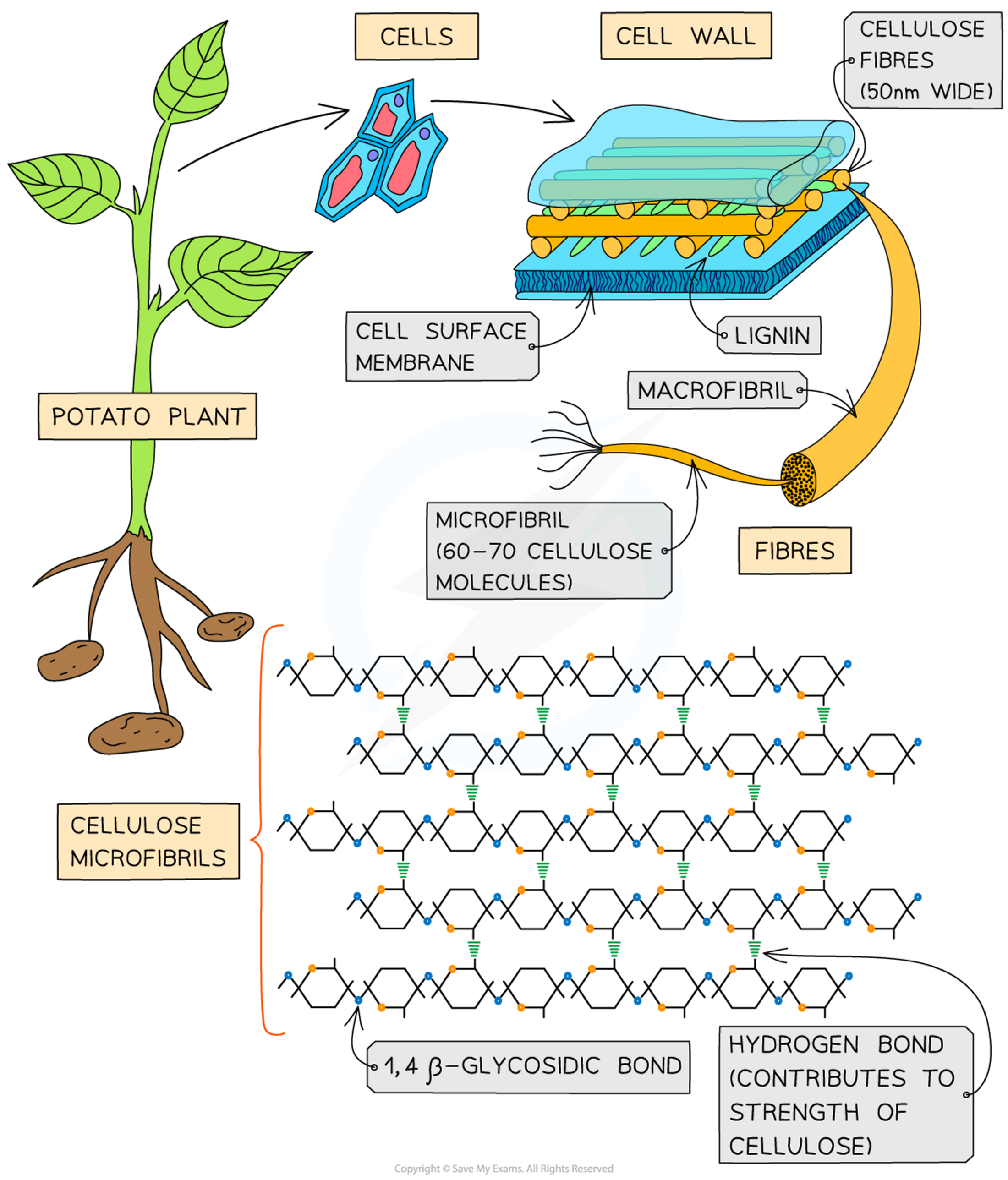
what is this?
cellulose
amylose: what glucose is it made of?
alpha
amylopectin: what glucose is it made of?
alpha
glycogen: what glucose is it made of?
alpha
cellulose: what glucose is it made of?
beta
structure/shape of amylose
long chain of glucose twisted to form a helix
coiled → compact
structure/shape of amylopectin
branched
formed by 1,6 glycosidic bonds between 2 glucose molecules
structure/shape of glycogen
more branched than amylopectin
more 1,6 glycosidic branching points
structure/shape of cellulose
straight chain
orientation of glucose units are flipped which causes a straight chain to be formed
solubility of amylose
less soluble
solubility of amylopectin
insoluble
solubility of glycogen
insoluble
solubility of cellulose
insoluble
how is amylose structure stabilised?
by hydrogen bonds between -O (in OH group) and -H groups on adjacent alpha glucose monomers
functions of amylose
used for energy in plants
as amylose is insoluble, why is this useful?
doesn’t exert any osmotic effect in cells
as amylopectin is branched, why is this useful?
molecules can be built up by condensation
can be broken down by hydrolysis more quickly - due to free ends
function of amylopectin
insoluble so built for storage
is glycogen or amylopectin more branched?
glycogen
if glycogen is more branched, why is this useful?
more compact
less space needed for it to be stored
function of glycogen
storage polysaccharide in animals
primarily stored in liver/skeletal muscle cells
why are cellulose used to make cell walls?
insoluble
enormous tensile strength
rigid
can cellulose form hydrogen bonds?
yes
function of cellulose (apart from cell wall)
they form between parallel stands creating structures called microfibrils.
microfibrils join together to form macrofibrils which join to form fibres.