coryne & rhodoco pt. 1
 Call Kai
 Learn
Learn Practice Test
 Spaced Repetition
 Match
Match Flashcards
 Knowt Play
1/73

There's no tags or description
Looks like no tags are added yet.
Name | Mastery | Learn | Test | Matching | Spaced | Call with Kai | Chat |
|---|
No analytics yet
Send a link to your students to track their progress
74 Terms
Actinomycetales
Corynebacterium belongs to the Corynebacteriaceae family of ______ order
Gram-positive rods
small
Short
Pleomorphic ____
rod
Coccoid
Club-shaped
Corynebacterium occurs in
Catalase
Corynebacterium
______ positive
Non-acid fast
Corynebacterium
non-
negative
Corynebacterium
oxidase-
Facultative anaerobic
Corynebacterium
usually …..
Non-motile
Corynebacterium
animal pathogens are
Rhodococcus equi
Previous name: Corynebacterium equi
Present name:
Corynebacterium kutscheri
Previous name: Corynebacterium murium
Present name:
Corynebacterium pseudotuberculosis
Previous name: Corynebacterium ovis
Present name:
Trueperella (Arcanabacterium pyogenes)
Previous name: Actinomyces (Corynebacteium) pyogenes
Present name:
Actinobaculum suis
Previous name: Eubacterium (Corynebacterium) suis
Present name:
Corynebacterium renale
Previous name: Corynebacterium renale type I
Present name:
Corynebacterium pilosum
Previous name: Corynebacterium renale type II
Present name:
Corynebacterium cystitidis
Previous name: Corynebacterium renale type IIi
Present name:
Rhodococcus equi
belongs to the corynebacteriaceae family of the actinomycetes order
has oxidative mechanism
This specieis is the only significant veterinary pathogen in the genus
It is considered an emerging human opportunistic pathogen in immunocompromised humaan
Rhodococcus equi
aerobic, gram-positive coccus or rod
Bacterial cell is capsulated
Sometimes weakly acid-fast
Catalase positive CP
has oxidative mechanims
skin
Mucuous membranes (nasopharynx)
Intstinal pseudotuberculosis
Corynebacterium is found on the:
Corynebacterium pseudotuberculosis
Can survive for 1-8 days on inanimate surfaces
Can survive for 7-55 days on particulate fomites (wood
shavings, hay, straw, and
Lower temperature extends their survival potential
Soil contaminated with manure from horse and farm animals
Rhodococcus equi - Natural Habitat
found in….
Volatile fatty acids
Rhodococcus equi - Natural Habitat
_________ in fecal material promote growth of bacterium
Acidic soils
Rhodococcus equi - Natural Habitat
lower soil moisture concentration and lower pasture heights
Give rise to elevated airborne concentration of virulen
________ may contribute to increased proportion of virulent strains with an R. equi population
Corynebacteria
Pyogenic bacteria causing a variety of suppurative conditions
Corynebacteria
______ on abdominal fluid cytology (species unknown). Note the ‘club-shaped’ rods.
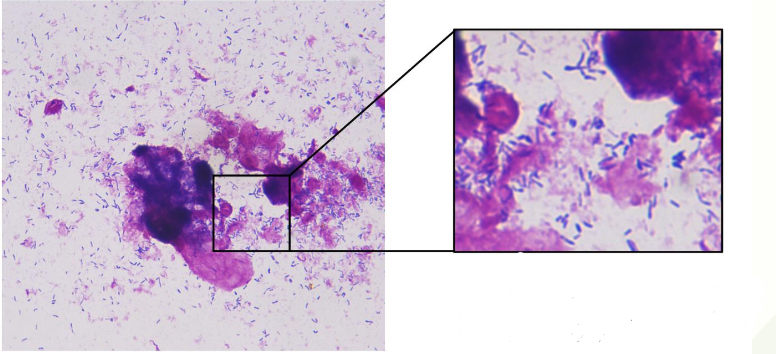
Corynebacterium pseudotuberculosis
causes caseous lymphadenitis
Forms abscesses in the skin, lymph nodes (external or internal) and organs such as spleen, lungs, liver and kidneys
Caseous lymphadenitis
chronic contagious disease
Affects foats and sheep (but can also aff3ct ofher animals)
Can cause severe economic losses
Corynebacterium pseudotuberculosis
Ceseating, necrotic lymph nodes in a sheed
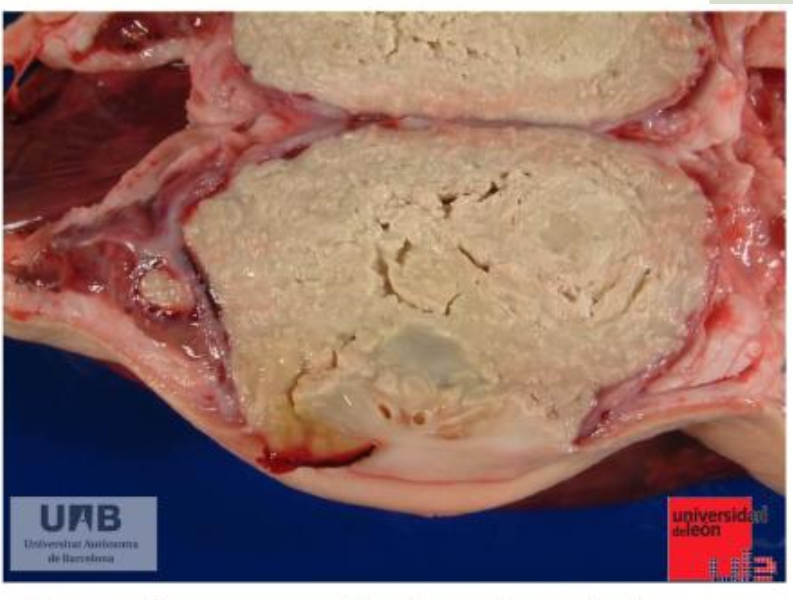
Corynebacterium pseudotuberculosis
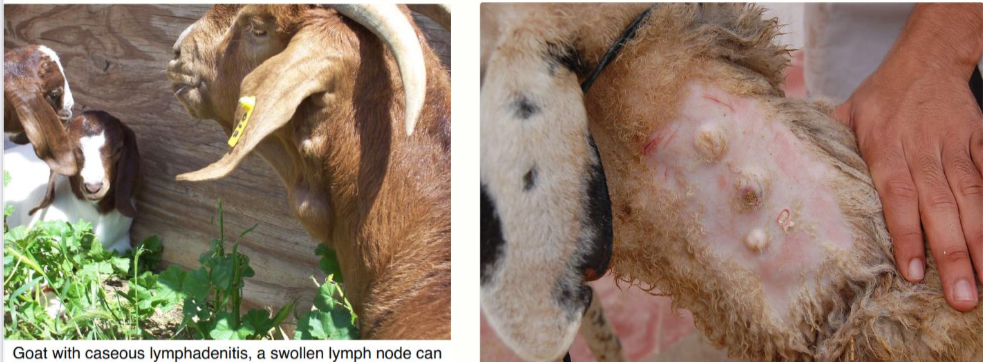
Corynebacterium pseudotuberculosis
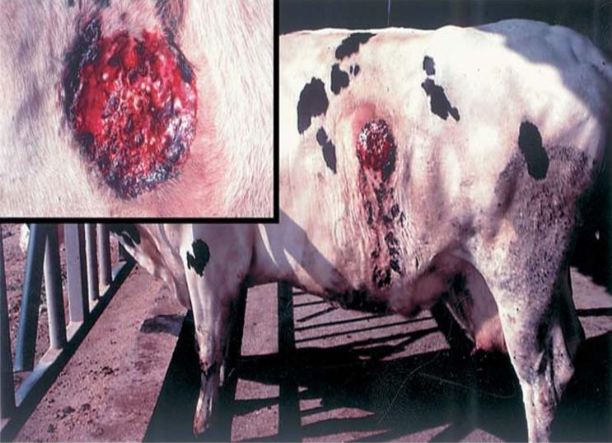
Corynebacterium pseudotuberculosis
can cause lymphadenitis and abscesses with granulomafous necrotizing lesions in humans
shearing
Castration
Skin wounds
Inhalation and ingestion are also possible
Corynebacterium pseudotuberculosis Is transmitted via
Lymph or the blood
Corynebacterium pseudotuberculosis
infected phagocytes disseminate the bacteria via the _______ to secondary sites where they cause lesion
Phospholipase D (PLD)
Corynebacterium pseudotuberculosis
virulence is attributed to
________ an exotoxin
Surface lipid layer adjacent to the cell wall
Corynebacterium pseudotuberculosis
virulence is attributed to
________ an exotoxin
__________________
Expression of fagB C D genes
Corynebacterium pseudotuberculosis
virulence is attributed to
________ an exotoxin
Surface lipid layer adjacent to the cell wall
______ - encode a putative iron uptake aystem
Corynebacterium diptheriae
had animal reports, but primarily a human pathogen
Rravel related (more common in developing countries)
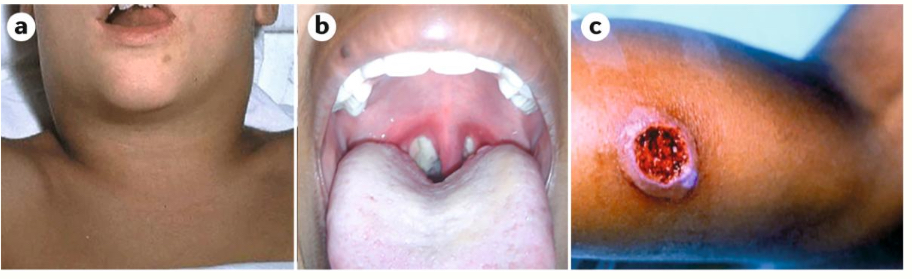
Respiratory diptheria
Cutaneous diptheria
Respirwtory diptheria
Corynebacterium diptheriae
fever, soree throat, malaise, croup-like cough
Pseudomembranous pharyngitis
Gry or bluish white membrane on soft palate, tonsils or back of the throat (bleeds easily)
Severe cervical lymphadenopathy
Bull neck
Cutaenous diptheria
Corynebacterium diptheriae
ulcerative lseions or cellulitis
Can occur independently of respiratory diltheria
Corynebacterium diptheriae
Respiratory droplets
Transmission of corynebacterium diptheriae
Diptheria toxin
Corynebacterium diptheriae peoduces ______
DTap vaccine
vaccine against diptheria, tetanus and perrussi
Completed by 4-6 age
Tdap vaccine
booster vaccine at 11-12 yo
Should be given to pregnant morher
Td vaccine
tetanus and diptheria toxoid vaccine
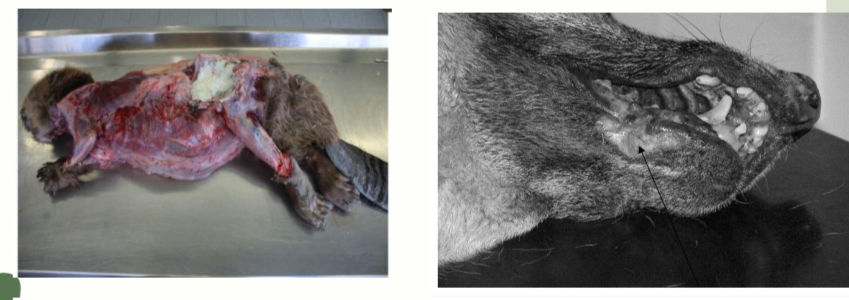
Corynebacterium ulcerans
rare cause of mild to severe bovine mastitis
Loss of affected quarter
Carry a phage that encodes for the diptheria toxin
Human diptheria has been reported after consumption of raw milk
Occasionally associated with disease in cats and dogs
Transmission from pets to humans can occur
Corynebacterium ulcerans
Phospholipase D (PLD)
Corynebacterium ulcerans
virulence is attributedd to
______- genetically fesembles the one produced by C. pseudotuberculosis
Corynebacterium bovis
rarely cause clinical mastitis
Considered a commensal of bovine mammary gland
May protect the gland from infection with more virulent pathogens
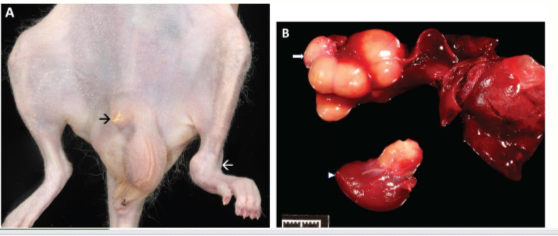
corynebacterium kutscheri
commensal of the upper respiratory and intestinal tracts of laboratory rodents
Infection is usually subclinical in mice and rats
When immunosuppressed, a pseudotuberculosis with high morbidity and mortality can appear in these animals
Corynebacterium kutscheri
c. Renale
C. cystitidis
C. pilosum
commensals of the bovine epeoductive tract
Opportunistic pathogens
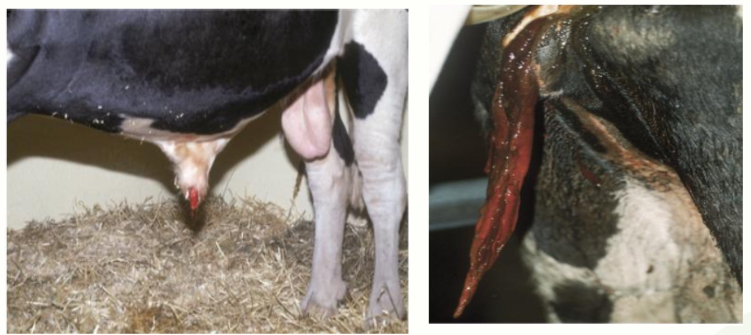
Cause simple or c9mplicated ascending urinary tract infections
C. Renale
most common cause of
cystitis,
ureteritis, and
pyelonephritis
C. pilosum
milder pathfoen often resulting to uncomplicated cystitis
Virulence is attributed to
pili,
urease, and
renalin
Pili
Meditate adhesion to epithelial cells of the bladder
Urease
Hydrolyzes urea and releases nitrogen
renalin
Play a role in lysis of host cells (manily C. renale)
C. renale
Rhodococcus equi
In immunocompromised humans
Necrotizing pneumonia
Can also cause wound infections and subcutaneous abscess
Necrotizing pneumonia
Rhodococcus equi
____ common form of infection
Suppurative bronchopneumonia
can multiple in soil enriches with equine feces
may be commensal in the intestine of horses
Cause of ______ in foals
Increases in prevalence wher high stocking rates occur
Usually seen in foals of 4-12 weeks of age
Due to decline in maternal antibody at about 6 weeks of age.
Rhodococcus equi
Severe pyogranulomatous pneumonia in a horse
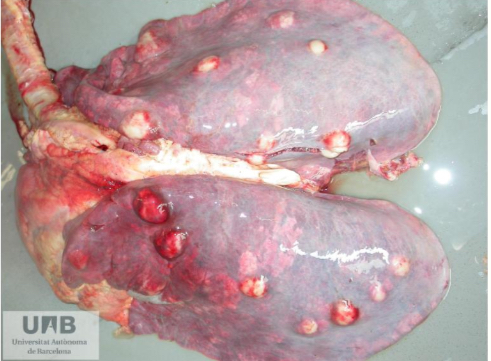
Inhalation
Rhodococcus equi main route of infection is
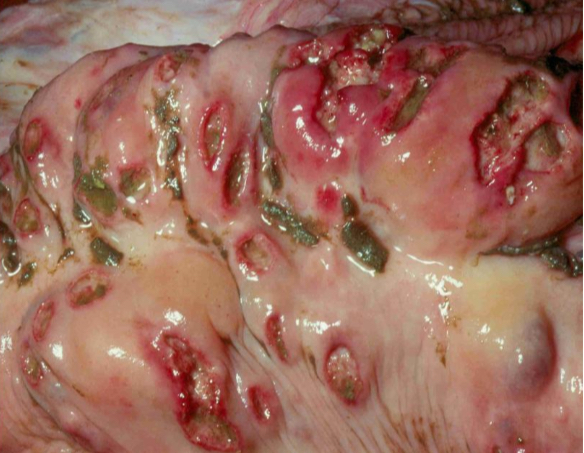
Ulcerative colitis and mesenteric lymphadenitis
Rhodococcus equi
heavily infected sputum may be swallowed by the affected foal leading to
Alveolar macrophages
Rhodococcus equi
bacteria multiplies in adn destroys ________ while neutrophils remain bactericidal
R. equi
80-90 kb plasmid
R. equi is associated with _____
includes pathogenicity islands containing the virulence-associated protein (vap) gene family
9
R. equi has _ chromosomal genes that were significantly induced in its cells
choD
fadD13
fbpB
involv3d in fatty acid and lipid bolism
hemE
Heme biosynthesis
mbtF
Iron utilixation
clpB
groEL
heat schock resistance and gene encoding chaperones
sigK
Sigma factor
moxR
transcriptional regularor