Infectious Diseases Practical
 Call Kai
 Learn
Learn Practice Test
 Spaced Repetition
 Match
Match Flashcards
 Knowt Play
1/21

There's no tags or description
Looks like no tags are added yet.
Name | Mastery | Learn | Test | Matching | Spaced | Call with Kai | Chat |
|---|
No analytics yet
Send a link to your students to track their progress
22 Terms
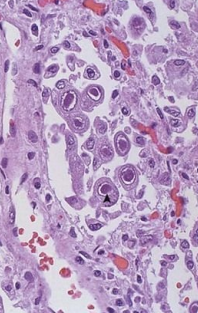
8.1 Side A (PBD9: 359; BP9: 310)
Questions
After a recent allogeneic bone marrow transplant, a 30-year-old woman develops fever, cough, and dyspnea; she is pancytopenic with markedly reduced numbers of granulocytes and lymphocytes. A bronchoscopic biopsy specimen has the microscopic appearance shown.
1. What is your diagnosis?
2. When did this infection start?
3. How does the causal agent avoid detection and destruction by the cell-mediated immune system?
Answers: Side B
1. These fungal organisms have a large capsule (▸) and display narrow-based budding (◂); these are typical characteristics of Cryptococcus neoformans.
2. Cryptococcal infections commonly cause meningitis, although the portal of entry is the lung; pneumonitis also is frequent. Wide dissemination is common in immunocompromised individuals, whereas infection is typically more limited in immunocompetent hosts.
3. The thick polysaccharide capsule interferes with phagocyte ingestion and suppresses antigen presentation, helping Cryptococcus avoid immune destruction.
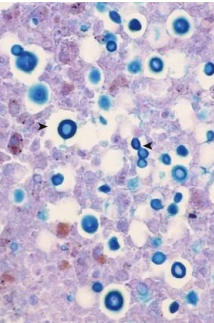
8.1 Side B (PBD9: 387; BP9: 829)
Questions
A 36-year-old man with a 3-day history of headache and fever has nuchal rigidity. His CD4+ lymphocyte count is 82/µL (nl 490–1740/µL). A lumbar puncture reveals the causal organisms as shown.
1. What is your diagnosis?
2. What other tissue sites does this organism commonly infect?
3. What underlying disease does this patient likely have?
Answers: Side A
1. The large epithelial cells with large intranuclear inclusions (▴) are infected with cytomegalovirus (CMV).
2. The immunosuppression likely led to reactivation of latent infection, which is present in more than half of adults. Infection may also be newly acquired via saliva, respiratory secretions, venereal transmission, or blood/tissue transplantation.
3. CMV downregulates surface MHC class I expression (preventing cytotoxic T-cell recognition) and upregulates ligands for inhibitory NK receptors. The low CD4+ cell count suggests HIV/AIDS.
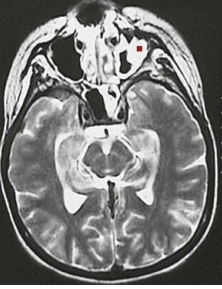
8.2 Side A (PBD9: 389; BP9: 313)
Questions
A 15-year-old girl has a 2-day history of pain and swelling of the left side of her face. Labs show glucose 447 mg/dL, CO₂ 9 mmol/L, 4+ glucose and ketones in urine. MRI is shown.
1. What infection is she likely to have?
2. Where is this infection spreading?
3. What underlying diseases does she have?
Answers: Side B
1. The soft-tissue swelling (▪) in the sinuses and hyperglycemia are most suggestive of mucormycosis.
2. The infection is spreading into the ethmoid, maxillary, and sphenoid sinuses as well as the cavernous sinus (rhinocerebral mucormycosis).
3. She has type 1 diabetes mellitus with ketoacidosis; diabetes favors the growth of Mucor circinelloides, a zygomycete fungus.
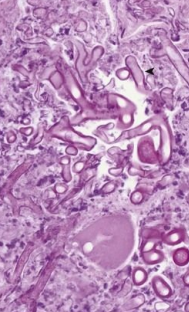
8.2 Side B (PBD9: 389; BP9: 313)
Questions
A 37-year-old man has fever and nonproductive cough for 2 weeks. His labs show pancytopenia with myeloblasts and Auer rods. Chest radiograph shows nodular densities; lung biopsy is shown.
1. What opportunistic infection does he have?
2. What is his underlying disease?
3. How is this disease spread?
Answers: Side A
1. Broad, nonseptate, irregular hyphae (◂) of Mucor circinelloides are seen.
2. He has acute myelogenous leukemia.
3. Zygomycetes are environmental fungi spread by inhalation of asexual spores; they are not transmitted person to person.
8.3 Side A (PBD9: 390; BP9: 418)
Questions
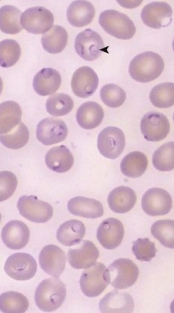
A 19-year-old man from Ghana presents with recurrent fever, rigors, and dark urine. His hemoglobin is 6.9 g/dL, and peripheral smear is shown.
1. What parasitic infection does he have?
2. What is the intermediate host?
3. What is the life cycle of this organism?
Answers: Side B
1. He has Plasmodium falciparum malaria. Infected RBCs clump and adhere to endothelium, causing vascular obstruction and ischemia; cerebral involvement causes cerebral malaria.
2. The female Anopheles mosquito is the intermediate host.
3. Mosquitoes ingest gametocytes from infected humans → sporozoites form in salivary glands → injected into new hosts → infect hepatocytes → release merozoites that infect RBCs → cycle continues.
8.3 Side B (PBD9: 390; BP9: 418)
Questions
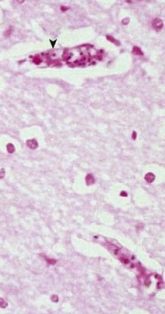
A 7-year-old Nigerian girl with fever and chills dies with cerebral edema. Her cerebral cortex is shown.
1. What is causing her cerebral edema?
2. What are the less virulent species of this parasite?
3. What imparts resistance to this organism?
Answers: Side A
1. Cerebral edema is caused by vascular occlusion from Plasmodium falciparum–infected RBCs adhering to endothelium.
2. Less virulent species include P. vivax, P. ovale, and P. malariae.
3. Hemoglobin S confers resistance by promoting splenic clearance of infected RBCs.
8.4 Side A (PBD9: 396; BP9: 313)
Questions
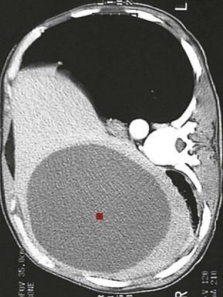
A 26-year-old man from the Caucasus Mountains has a 2-year history of right upper quadrant pain. CT shows a hepatic cyst.
1. What parasitic infection does he likely have?
2. What is the definitive host and the usual intermediate host?
3. What is the life cycle of this organism?
Answers: Side B
1. He likely has Echinococcus granulosus infection with a large hepatic cyst (▪).
2. Dogs are the definitive host; sheep are the intermediate host.
3. Humans ingest eggs → larvae migrate to tissues (liver, lung, brain) → develop into hydatid cysts. Dogs acquire infection by eating infected organs, completing the cycle.
8.4 Side B (PBD9: 396; BP9: 313)
Questions
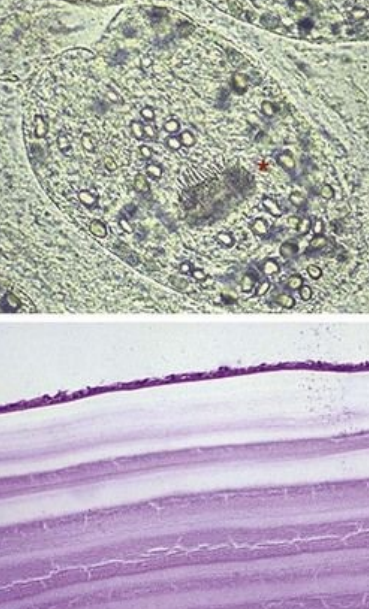
A 43-year-old man skins a fox, cuts himself, develops pain and seizures years later; cystic lesion in the aqueduct of Sylvius is excised.
1. What parasitic infection does he likely have, and what is shown in the upper panel?
2. What tissue sites are most often involved?
3. Name the presenting signs and symptoms.
Answers: Side A
1. Echinococcus infection; the upper panel shows hydatid sand with daughter scolices and hooklets (\*).
2. Liver, lung, bone, and brain are the most common sites.
3. Hepatomegaly, jaundice, seizures, or hydrocephalus depending on cyst location.
8.5 Side A (PBD9: 360; BP9: 426)
Questions
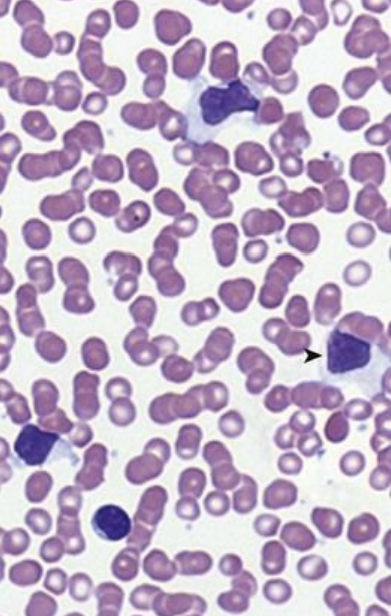
A 21-year-old man has fever, sore throat, and malaise. WBC count shows atypical lymphocytes; heterophile antibody titer is positive.
1. What does the peripheral smear show?
2. What infectious disease does he have, and how is it spread?
Answers: Side B
1. There are large atypical lymphocytes (activated CD8+ T cells) specific for virally infected B cells.
2. This is infectious mononucleosis, 90% due to Epstein–Barr virus (EBV), spread via saliva (“kissing disease”). EBV infects B lymphocytes and can remain latent.
8.5 Side B (PBD9: 360; BP9: 426)
Questions
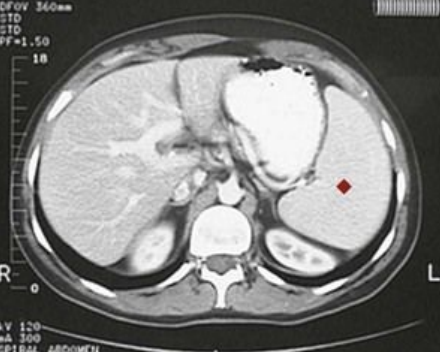
A 17-year-old boy with fever and lymphadenopathy has a positive Monospot test. CT shows splenomegaly.
1. What is the explanation for the left upper quadrant pain?
2. What is the possible long-term complication of an EBV infection?
Answers: Side A
1. The left upper quadrant pain is from splenic enlargement and stretching of the capsule.
2. Loss of T-cell control over infected B cells can lead to B-cell lymphoma (e.g., Burkitt, Hodgkin, or immunoblastic types).
8.6 Side A (PBD9: 367; BP9: 312)
Questions
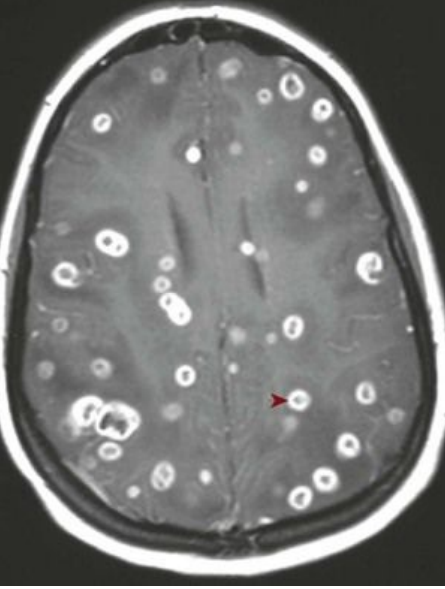
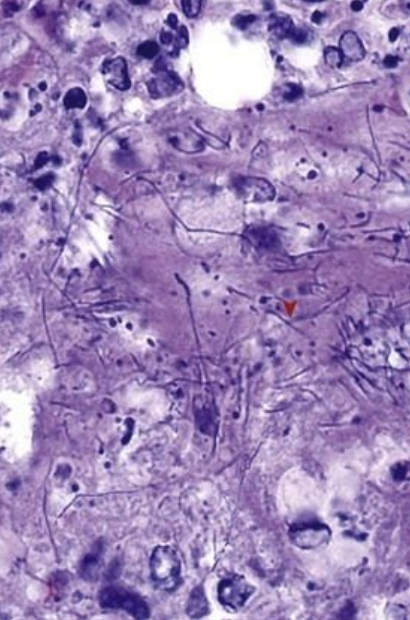
A 41-year-old cardiac transplant recipient develops fever, cough, and headache. CSF shows long filamentous gram-positive organisms; MRI shows brain abscesses.
1. What infection does he have?
2. What immune defect is likely present?
3. Where did this infection start?
Answers: Side B
1. This is Nocardia asteroides infection.
2. The immune defect is defective T-cell–mediated immunity due to immunosuppressive therapy.
3. The portal of entry is the lung; pulmonary nocardiosis can disseminate to the brain.
8.6 Side B (PBD9: 367; BP9: 488)
Questions
A 63-year-old diabetic man has fever, weight loss, and cough with lingular infiltrates; biopsy shows gram-positive, weakly acid-fast organisms.
1. What infection is this, and what other tissue sites does it commonly infect?
2. Why did he develop this infection?
Answers: Side A
1. This is Nocardia infection, which can involve lungs, brain, or skin.
2. He developed infection due to poorly controlled diabetes (hemoglobin A1c 10%) leading to impaired cellular immunity.
8.7 Side A (PBD9: 368; BP9: 317)
Questions
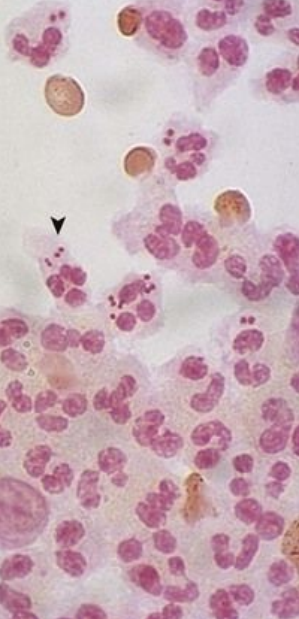
A 19-year-old woman develops acute meningitis with fever, nuchal rigidity, and low CSF glucose. Gram stain is shown.
1. What inflammatory cells are shown?
2. What organism is pictured?
3. Explain the CSF findings.
Answers: Side B
1. Neutrophils.
2. Gram-negative diplococci (Neisseria meningitidis).
3. Bacterial growth increases protein and decreases glucose in CSF; neutrophilic predominance indicates acute bacterial meningitis.
8.7 Side B (PBD9: 364; BP9: 825)
Questions
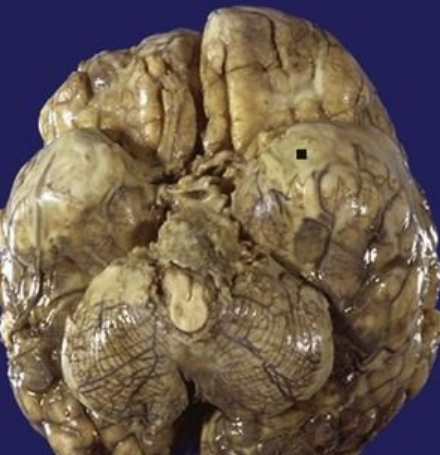
A 3-month-old infant with fever and papilledema dies despite antibiotics. Autopsy of brain shown.
1. What is present?
2. What organisms are likely?
3. Explain the papilledema.
4. How could death occur?
Answers: Side A
1. Thick yellow exudate over brain base = acute bacterial meningitis.
2. Likely E. coli and group B Streptococcus in neonates.
3. Increased intracranial pressure transmitted via optic nerve causes papilledema.
4. Death from brainstem herniation or sepsis with DIC and shock.
8.8 Side A (PBD9: 371; BP9: 493)
Questions
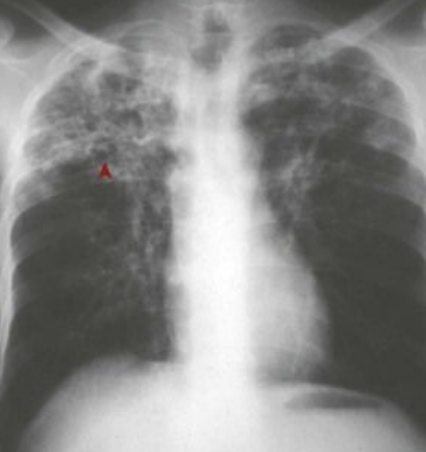
A 53-year-old homeless man has fever, night sweats, and cough. Chest X-ray is shown.
1. What infection does he likely have?
2. What is the immune mechanism?
3. What test would you order on his sputum?
Answers: Side B
1. Mycobacterium tuberculosis infection.
2. Defense is via a type IV delayed hypersensitivity reaction with granuloma formation.
3. Acid-fast (auramine) stain and culture for M. tuberculosis.
8.8 Side B (PBD9: 371; BP9: 493)
Questions
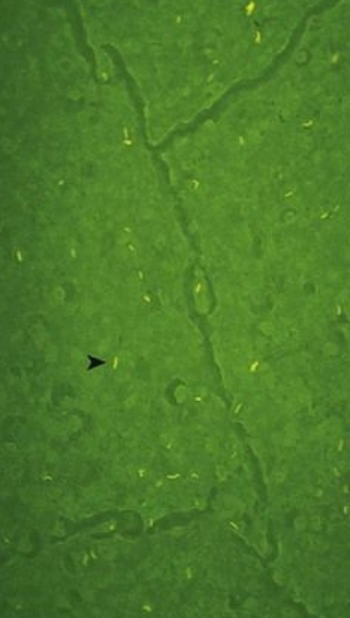
A 53-year-old man has miliary nodules on imaging and acid-fast bacilli on liver biopsy.
1. What is shown here?
2. What skin testing is useful?
3. What histologic appearance is expected?
Answers: Side A
1. Disseminated (miliary) tuberculosis with M. tuberculosis bacilli visible on auramine stain.
2. Tuberculin (PPD) skin test for delayed-type hypersensitivity.
3. Granulomas with caseous necrosis and Langhans giant cells.
8.9 Side A (PBD9: 386; BP9: 502)
Questions
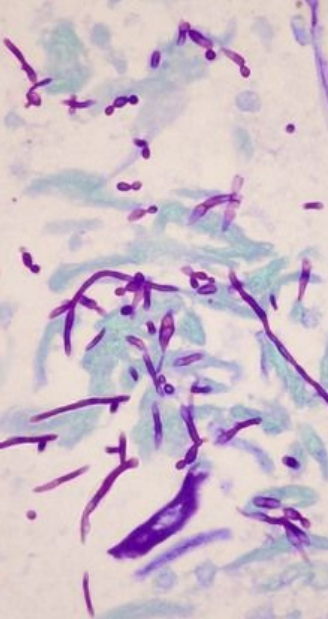
A 29-year-old man with leukemia develops fever and cough after chemotherapy; bronchoalveolar lavage PAS stain is shown.
1. What infection does he have?
2. What is missing from his WBCs?
3. What are some virulence factors?
4. Could this be a false positive?
Answers: Side B
1. Candida infection (budding yeasts).
2. He is neutropenic after chemotherapy.
3. Candida secretes aspartyl proteinases and catalases, evading oxidative killing.
4. No; the findings fit invasive candidiasis.
8.9 Side B (PBD9: 386; BP9: 502)
Questions
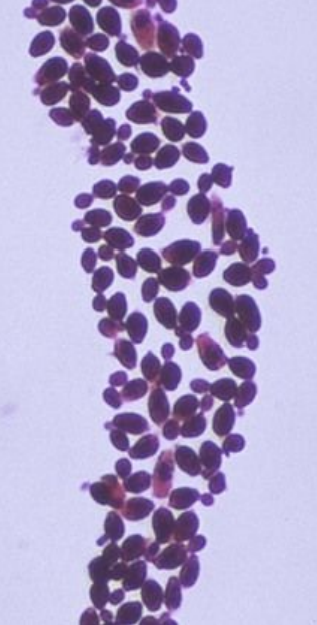
A 22-year-old woman develops vaginal itching and discharge after antibiotics. Gram stain shown.
1. What organism is present?
2. What role did antibiotics play?
3. What immune defense is key?
Answers: Side A
1. Candida albicans.
2. Antibiotics disrupted normal flora (Lactobacillus), allowing yeast overgrowth.
3. T-cell–mediated immunity (TH1) is critical for protection.
8.10 Side A (PBD9: 360; BP9: 503)
Questions
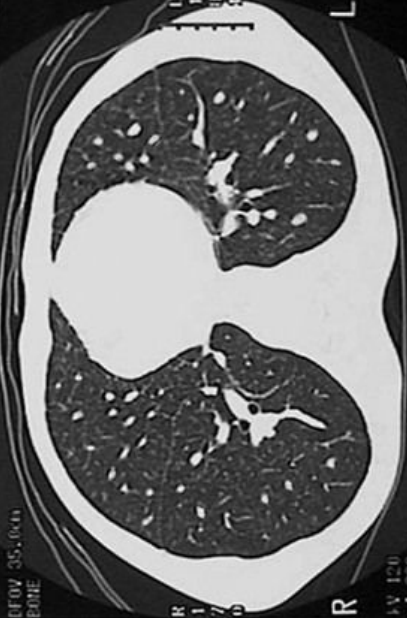
A 42-year-old man has fever, cough, and dyspnea for 3 weeks. CT shows diffuse reticulonodular pattern.
1. What radiographic pattern is present?
2. What fungi cause this?
3. What diseases predispose?
Answers: Side B
1. Reticulonodular (“tree-in-bud”) pattern consistent with disseminated granulomatous inflammation.
2. Cryptococcus, Histoplasma, and Coccidioides; miliary TB also possible.
3. Occurs in immunocompromised hosts (AIDS, leukemia, chemotherapy, transplant).
8.10 Side B (PBD9: 387; BP9: 829)
Questions
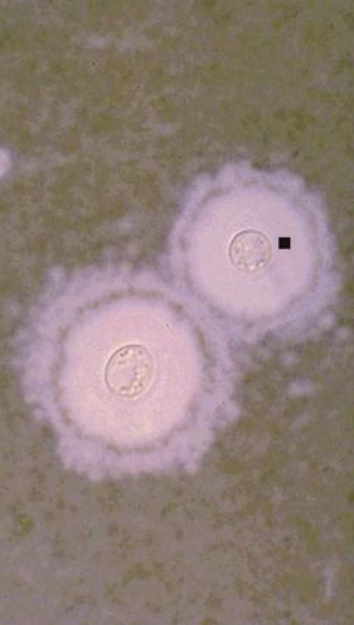
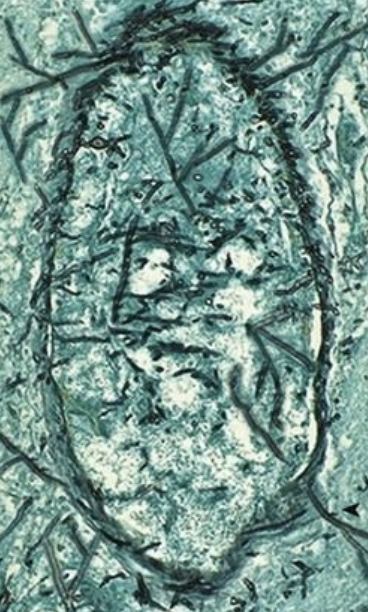
A 37-year-old HIV-positive woman develops meningitis; India ink shows encapsulated yeast.
1. What opportunistic infection is this?
2. What is her CD4+ count likely to be?
3. What virulence factor prevents phagocytosis?
Answers: Side A
1. Cryptococcus neoformans.
2. CD4+ count
3. Polysaccharide capsule inhibits phagocytosis.
8.11 Side A (PBD9: 388; BP9: 829)
Questions
A 32-year-old man with leukemia on chemotherapy develops fever, cough, and neurologic deficits. Brain CT shows hemorrhagic infarcts; vessel section GMS stain shown.
1. What infection does he have?
2. What immune defect is present?
3. Where did the infection start?
Answers: Side B
1. Aspergillus flavus.
2. Neutropenia predisposes to angioinvasive aspergillosis.
3. Infection begins in the lungs, then disseminates hematogenously.
8.11 Side B (PBD9: 388; BP9: 504)
Questions
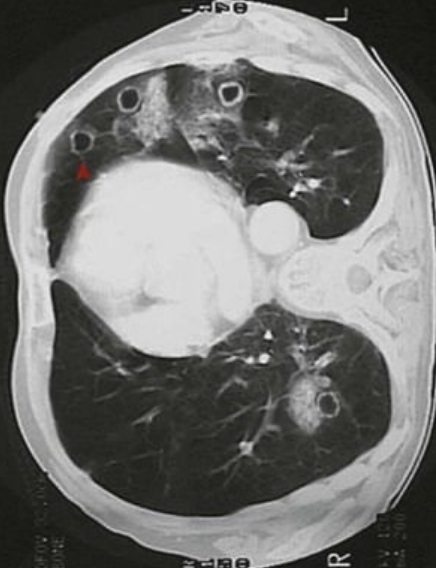
A 31-year-old woman with lupus on steroids develops cavitary lung lesions.
1. What fungal infection might this be?
2. Why do lesions enhance on CT?
3. What disease does this organism cause in asthmatics?
Answers: Side A
1. Aspergillus fumigatus infection.
2. Enhancement represents vascular invasion and inflammation around necrotic cavities.
3. Causes allergic bronchopulmonary aspergillosis in asthmatics.