Untitled Flashcards Set
 Note
Note Call Kai
 Learn
Learn Practice Test
 Spaced Repetition
 Match
Match Flashcards
 Knowt Play
1/4

There's no tags or description
Looks like no tags are added yet.
Name | Mastery | Learn | Test | Matching | Spaced | Call with Kai | Chat |
|---|
No analytics yet
Send a link to your students to track their progress
5 Terms
Privacy Program Lifecycle

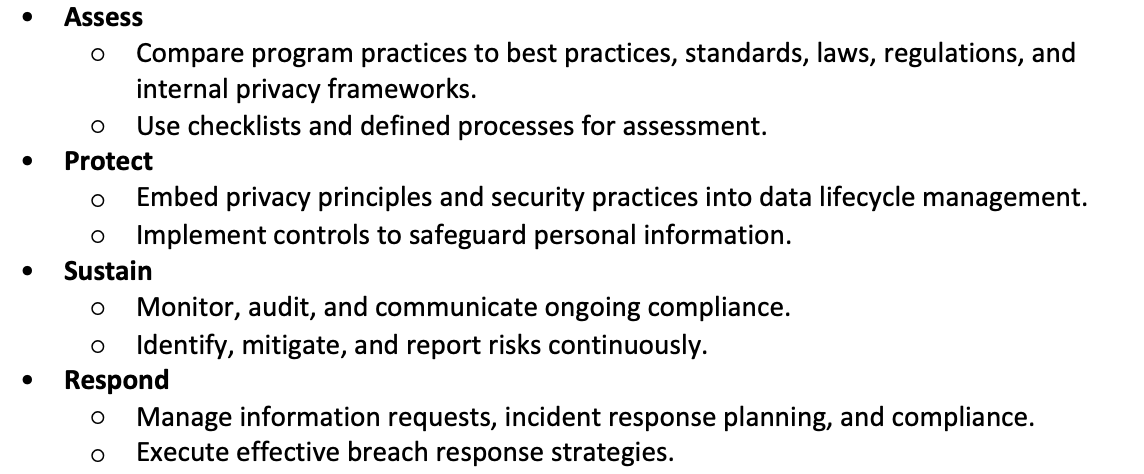
Assess
Compare program practices to best practices, standards, laws, regulations, and internal privacy frameworks.
Use checklists and defined processes for assessment.
Protect
Embed privacy principles and security practices into data lifecycle management.
Implement controls to safeguard personal information.
Sustain
Monitor, audit, and communicate ongoing compliance.
Identify, mitigate, and report risks continuously.
Respond
Manage information requests, incident response planning, and compliance.
Execute effective breach response strategies.
Responsibilities of Privacy Program Managers
Key Goals

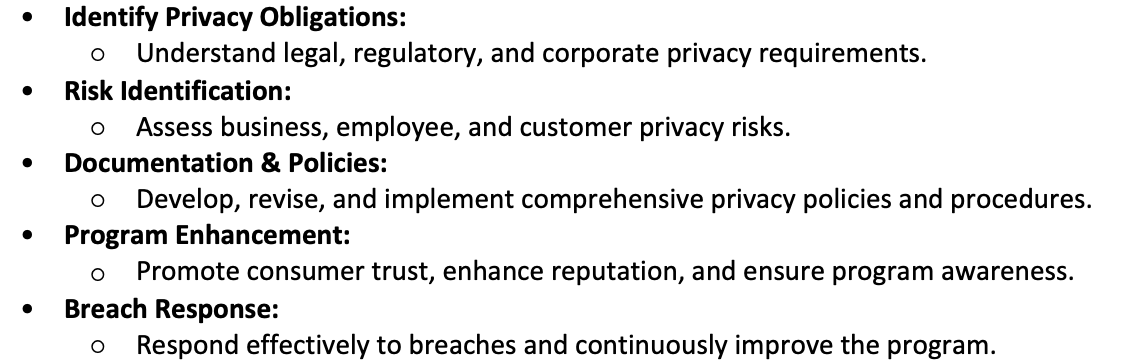
Identify Privacy Obligations:
Understand legal, regulatory, and corporate privacy requirements.
Risk Identification:
Assess business, employee, and customer privacy risks.
Documentation & Policies:
Develop, revise, and implement comprehensive privacy policies and procedures.
Program Enhancement:
Promote consumer trust, enhance reputation, and ensure program awareness.
Breach Response:
Respond effectively to breaches and continuously improve the program.
Rationale for a Privacy Program Manager (PPM)

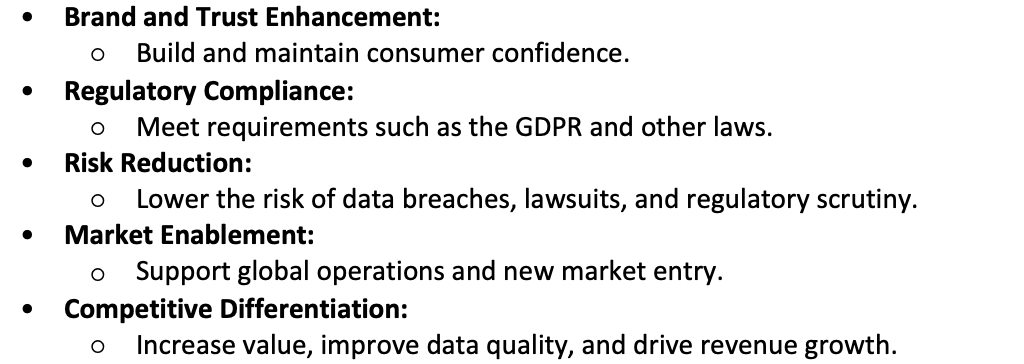
Brand and Trust Enhancement:
Build and maintain consumer confidence.
Regulatory Compliance:
Meet requirements such as the GDPR and other laws.
Risk Reduction:
Lower the risk of data breaches, lawsuits, and regulatory scrutiny.
Market Enablement:
Support global operations and new market entry.
Competitive Differentiation:
Increase value, improve data quality, and drive revenue growth.
Cross-Functional Collaboration
Key Stakeholders & Functions

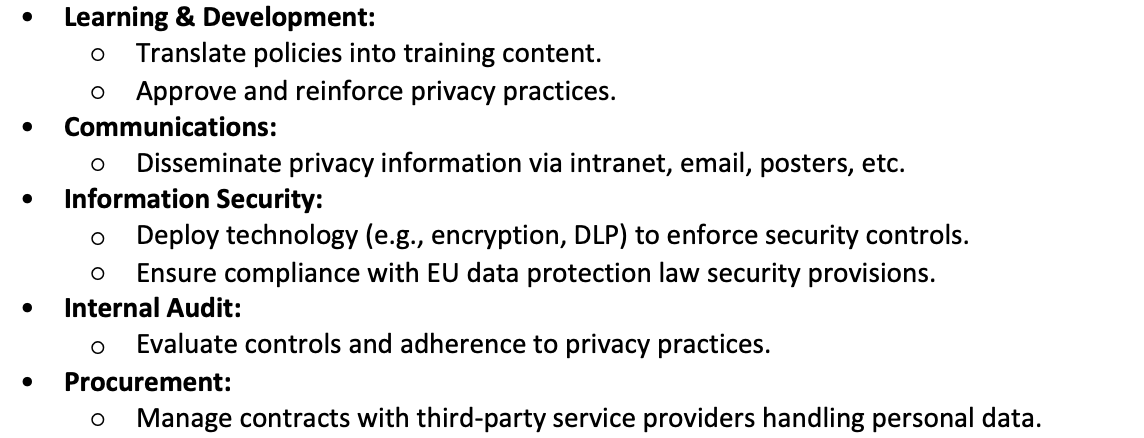
Learning & Development:
Translate policies into training content.
Approve and reinforce privacy practices.
Communications:
Disseminate privacy information via intranet, email, posters, etc.
Information Security:
Deploy technology (e.g., encryption, DLP) to enforce security controls.
Ensure compliance with EU data protection law security provisions.
Internal Audit:
Evaluate controls and adherence to privacy practices.
Procurement:
Manage contracts with third-party service providers handling personal data.
Accountability & Beyond Compliance

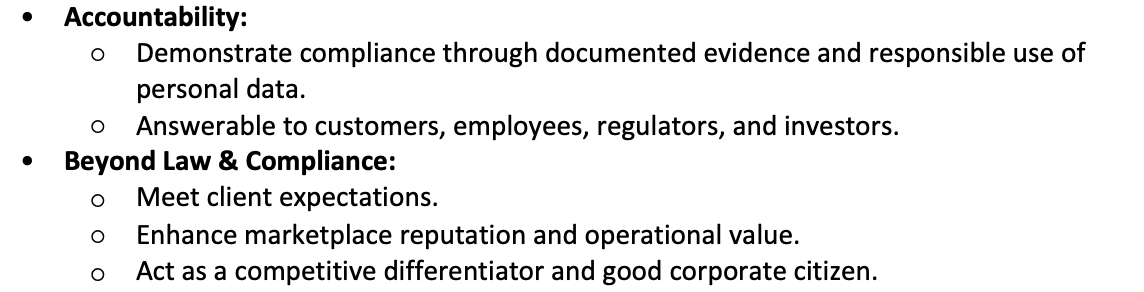
Accountability:
Demonstrate compliance through documented evidence and responsible use of personal data.
Answerable to customers, employees, regulators, and investors.
Beyond Law & Compliance:
Meet client expectations.
Enhance marketplace reputation and operational value.
Act as a competitive differentiator and good corporate citizen.