Mod 3: Vitals and Respiratory
 Call Kai
 Learn
Learn Practice Test
 Spaced Repetition
 Match
Match Flashcards
 Knowt Play
1/48

There's no tags or description
Looks like no tags are added yet.
Name | Mastery | Learn | Test | Matching | Spaced | Call with Kai | Chat |
|---|
No analytics yet
Send a link to your students to track their progress
49 Terms
Adventitious:
irregular lung sounds
Angina:
chest pain due to deoxygenated heart
arterial blood gas (ABG):
Blood test, measures ph, o2, and co2 levels
Atelectasis:
partial or complete collapse of lung lobe due to alveoli deflating/filling with fluid
Bronchial:
relating to bronchi
Bronchodilators:
medication that relaxes muscles in airway to widen them (inhaler)
Bronchovesicular:
area where bronchi meets lung
Capnography:
continuous measurement of exhaled co2
Crackles:
breathing through fluid
endotracheal tube:
Intubation in nose or mouth to help patient breathe
heart failure:
heart failures to pump sufficient blood and o2 to body
Hypoxemia:
low o2 <90% in blood (pulse ox)
Hypoxia:
Low o2 in tissues (low organ function/high blood acid levels)
internal respiration:
exchange of o2 and co2 in caps
Ischemia:
reduced or blocked blood supply
myocardial infarction:
blood flow to the heart stops (heart attack)
Oxygenation:
o2 into the blood
Perfusion:
delivery of o2 and nutrient rich blood to organs/tissues
pulmonary ventilation:
breathing
Respiration:
gas exchange
sinoatrial (SA) node:
Initial pacemaker
Spirometer:
tool gauges volume of air exhaled
Sputum:
saliva/mucus coughed from lungs and bronchial tubes
subcutaneous emphysema:
air trapped beneath skin (puffy)
Tracheostomy:
surgically opened in the neck into trachea for breathing
tracheostomy tube:
inserted into tracheostomy hole bubble keeps airway open; can be connected to devices
Vesicular:
small fluid sacs on the skin
Wheezes:
tightened airways
Apnea:
(sleep apnea) tongue obstructing the airway
auscultatory gap:
absence of sounds between phase I (latter) and II of manual bp measurement (Normal range is 40mmhg).
Bradypnea:
less than 10 breaths regular depth
diastolic pressure:
ventricular rest
Dyspnea:
shortness of breath or difficulty breathing
Eupnea:
Normal breathing rate
Febrile:
showing symptoms of a fever
Hyperventilation:
CO2 drop, high ph blood (respiratory alkalosis), rapid deep breaths. O2 delivery exceeds metabolic needs
Hypothermia:
below 95F
Hypoventilation:
CO2 buildup
Korotkoff sounds:
Tapping sounds heard through manual bp measuring. Phase I, appearance of noise initially as cuff is blown up. Phase II, pressure is released and blood starts flowing again systolic pressure is revealed. Phase III, loud thumping as pressure increases. Phase IV, muffling of thumping. Phase V, final thump (diastolic pressure)
Orthopnea:
shortness of breath while laying on your back (negated by standing or sitting up)
orthostatic hypotension:
blood pressure dropping when standing from laying position
pulse deficit:
Heart rate difference between chest and wrist (apical-radial, normal is 0), caused by weak heartbeat
pulse pressure:
systolic-diastolic 40mmhg (normal 30-50mmhg)
Pyrexia:
fever elevated temp
systolic pressure:
ventricular contraction
Tachypnea:
24> breaths shallow
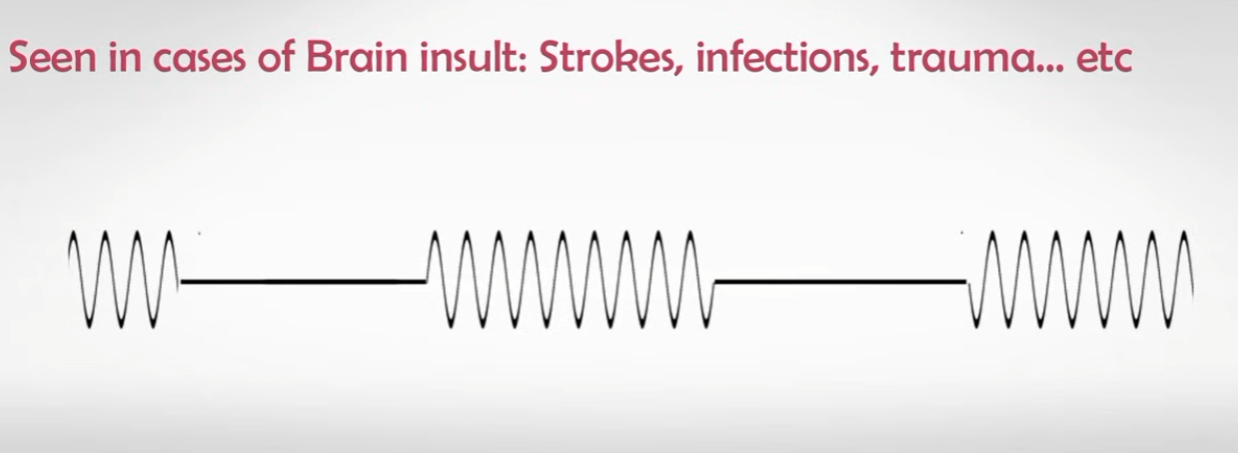
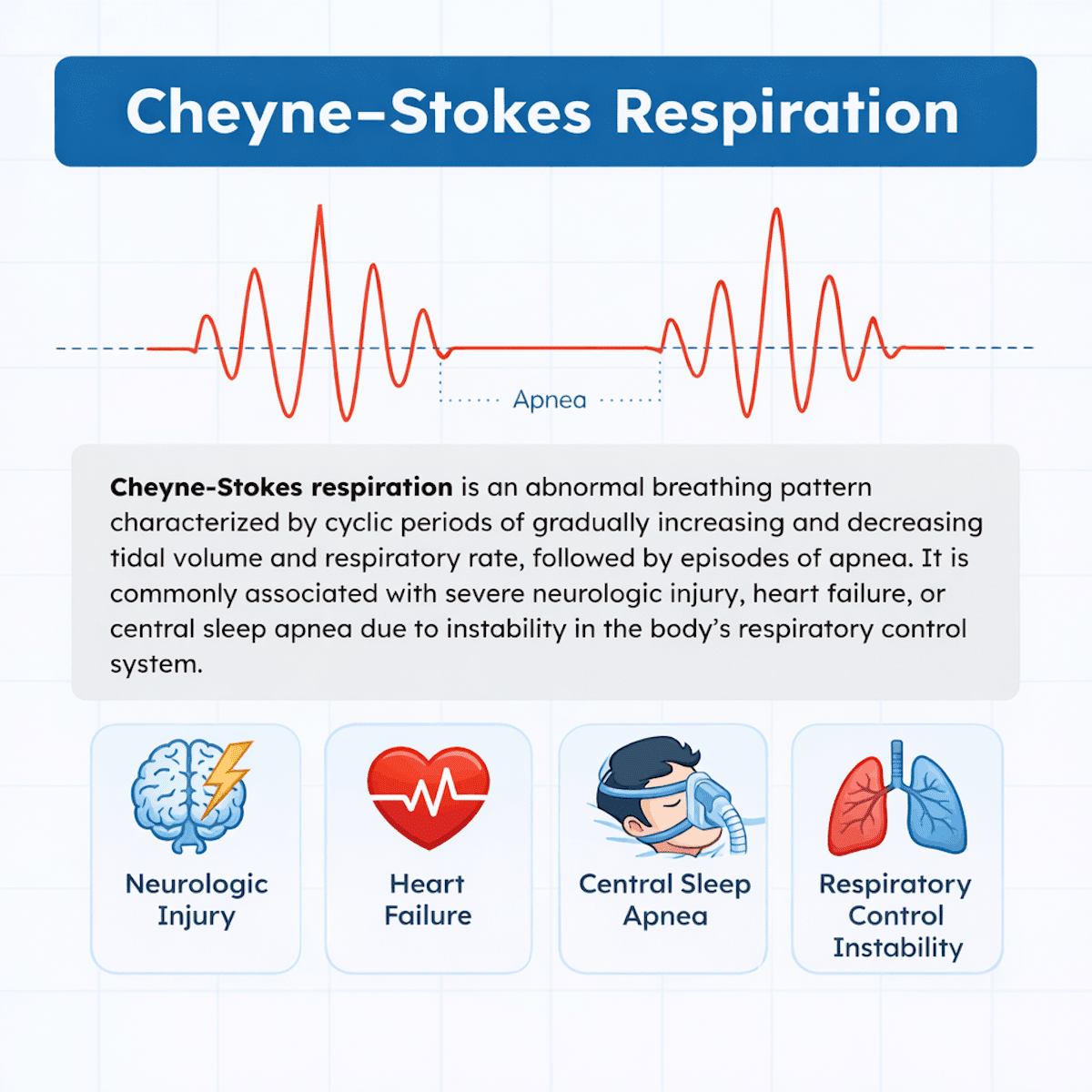
cheyne stokes breathing
gradual increase then decrease in breathing followed by apnea (CHF, heart cannot pump enough blood; stroke, MI)
kussmaul breathing
deep and rapid respirations. Caused by built up acidity in blood (medulla triggers hyperventilation) DKA

biots breathing
rapid panting followed by apnea (stroke)