Concept 24.3: Hybrid zones reveal factors that cause reproductive isolation
 Call Kai
 Learn
Learn Practice Test
 Spaced Repetition
 Match
Match Flashcards
 Knowt Play
1/5

Name | Mastery | Learn | Test | Matching | Spaced | Call with Kai | Chat |
|---|
No analytics yet
Send a link to your students to track their progress
6 Terms
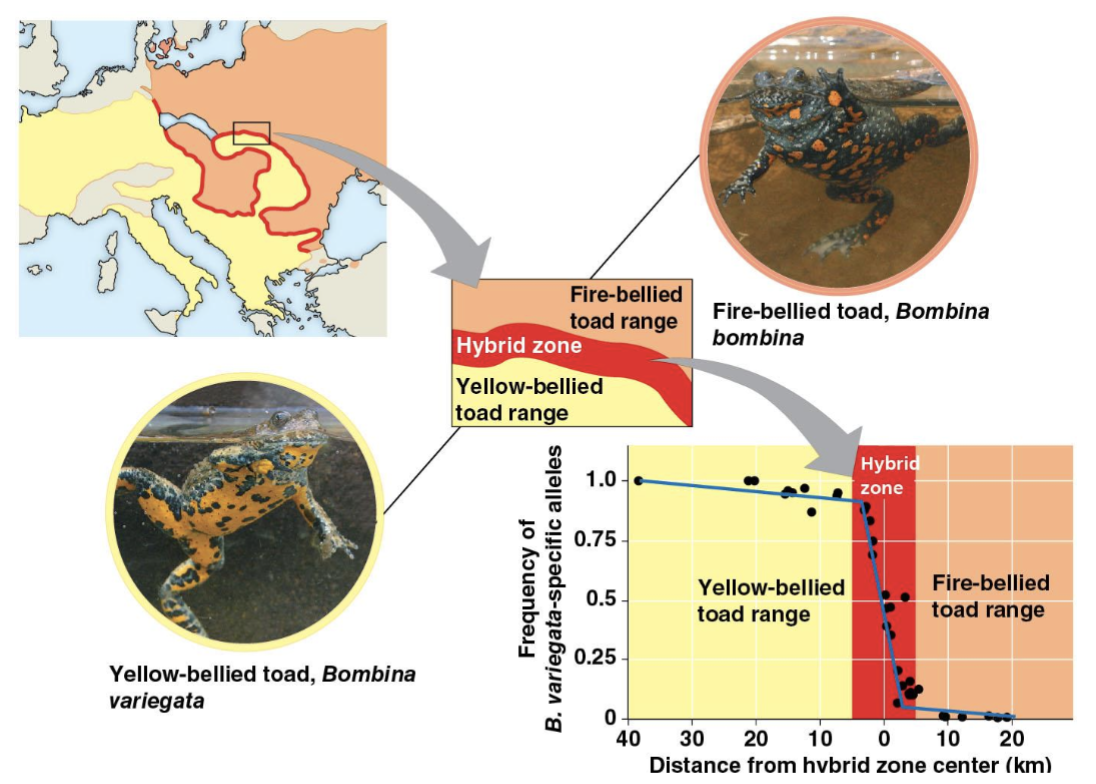
Hybrid zone
A region in which members of different species mate and produce hybrid offspring, given two species with incomplete reproductive barriers, albeit with reduced survival and reproduction rates
Some of these form as narrow bands where habitats of two or more closely related species meet; most are isolated patches, however
Two species of toad in the genus Bombina interbreed in one that is long and narrow
Either result in reinforcement, fusion, or stability as an outcome if hybrids do not become reproductively isolated
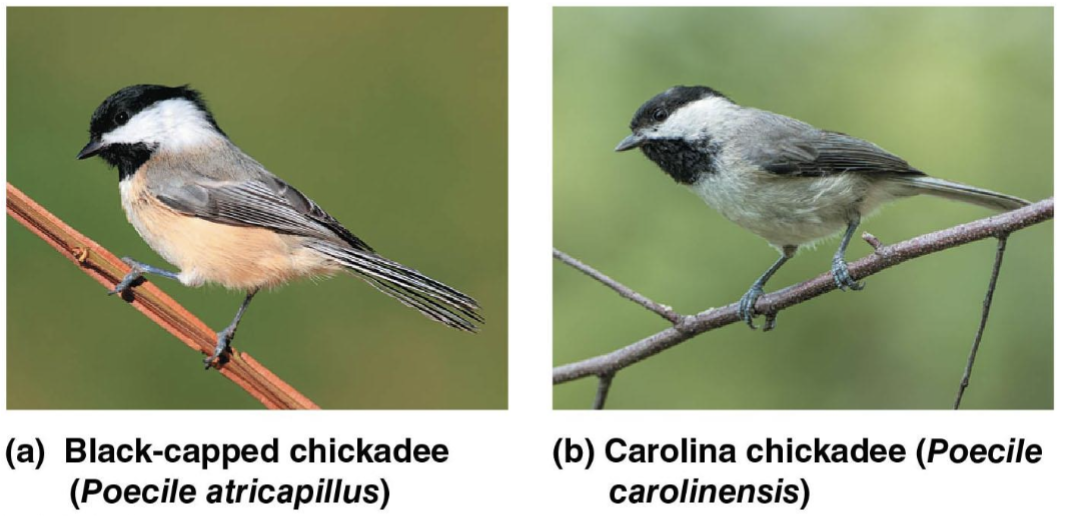
Environmental change
A potential driver of the relocation of hybrid zones
Seen with the zone between the black-capped and Carolina chickadees shifting northward in response to climate change
Allele transfer
This can be done between parent species through breeding between parents and hybrids
This may help parent species cope with changing environments with new alleles
Reinforcement
One possible outcome of a hybrid zone that strengthens reproductive barriers
If hybrids are less fit than the parent species, than strong selection for prezygotic barriers should reduce hybrid production
Stronger for sympatric populations
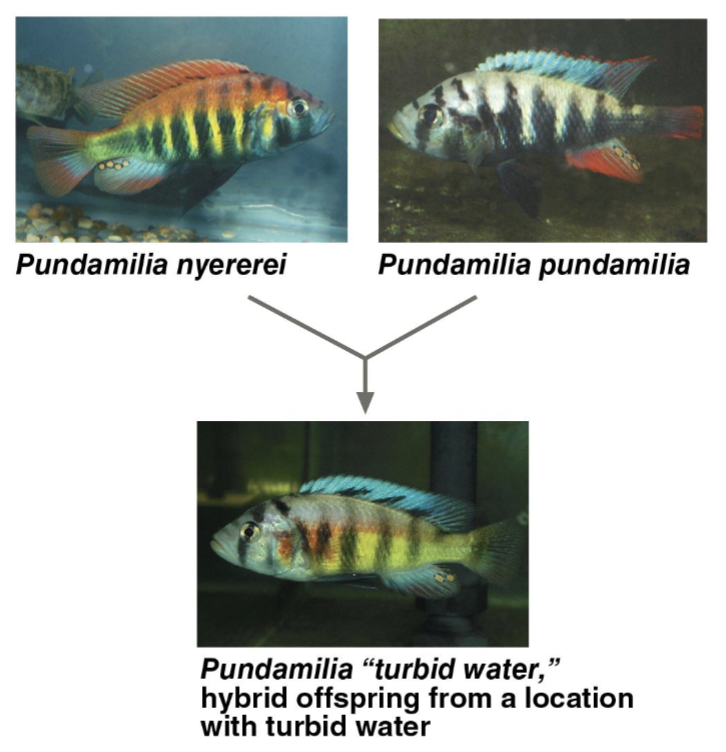
Fusion
One possible outcome of a hybrid zone that weakens reproductive barriers
If hybrids are as fit as the parent species, reproductive barriers can weaken, and the two parent species may fuse into a single species
Pollution in Lake Victoria has reduced the ability of female cichlids to visually distinguish between males of their own and different species
Stability
One possible outcome of a hybrid zone that continues the formation of hybrid individuals
Extensive gene flow from outside the hybrid zone can overwhelm selection for increased reproductive isolation inside the hybrid zone
Members of both parent species of Bombina routinely migrate into the narrow hybrid zone, resulting in ongoing hybridization