M1: Lab Safety, QA/QC, and Regulatory Compliance
 Call Kai
 Learn
Learn Practice Test
 Spaced Repetition
 Match
Match Flashcards
 Knowt Play
1/93

There's no tags or description
Looks like no tags are added yet.
Name | Mastery | Learn | Test | Matching | Spaced | Call with Kai | Chat |
|---|
No analytics yet
Send a link to your students to track their progress
94 Terms
What is OSHA?
aka Occupational Safety and Health Administration, publishes and enforces health and safety regulations for most industries
What is CDC?
aka Center for Disease Control and Prevention, regulation addresses biosafety
What is EPA?
aka Environmental Protection Agency, regulation addresses infectious waste management
What is HCFA?
aka Health Care Financing Administration, regulation addresses QA/QC policies, procedures, inspection, certification, and personnel requirements
What are some standards that OSHA established?
Hazard Communication
PPE
Lifting/ergonomics
Fire protection (exits, emergency plans, fire protection)
What is included in OSHA’s hazard communication standard?
Hazard classification
Labels
SDS
Lab safety info and training
When does lab personnel go through lab safety training?
At the time of initial assignment and annually thereafter
What should lab safety training address?
Recognition of hazards
Control of hazards
Emergency response measures
Safety information resources
Clean-up procedures and sterilization/decontamination measure
What is included in a hazard label?
Harmonized signal word
Pictogram
Hazard statement for each hazard class and category
Precautionary statements
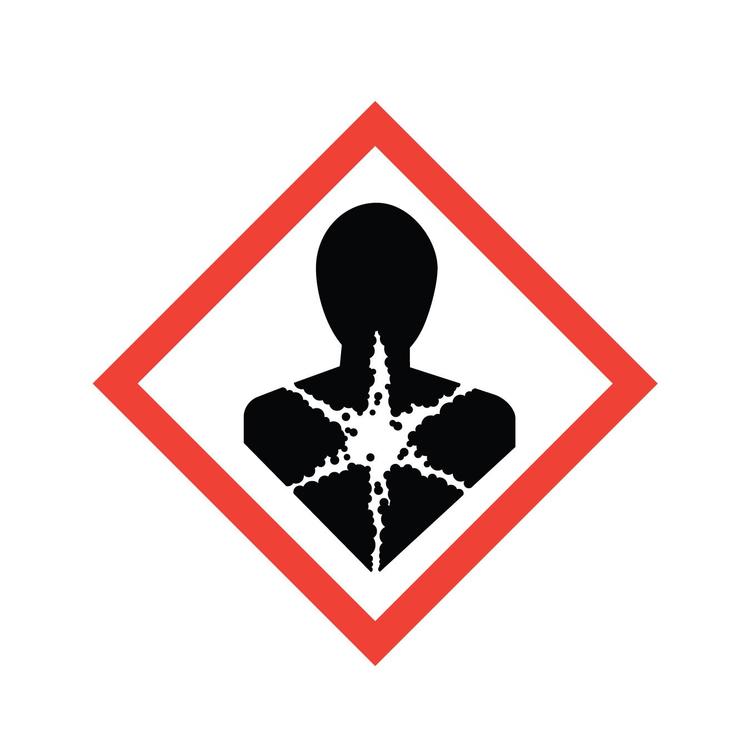
What hazard is shown here? (a human silhouette with a starburst/white shape across the chest)
Health hazard, warns that a substance causes serious, long-term, or chronic health damage
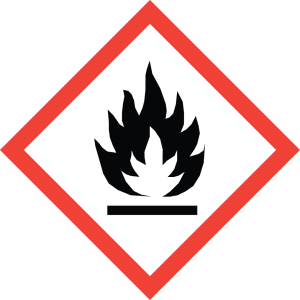
What hazard is shown here? (flame icon)
Flammable hazard, materials that can catch fire easily and burn rapidly
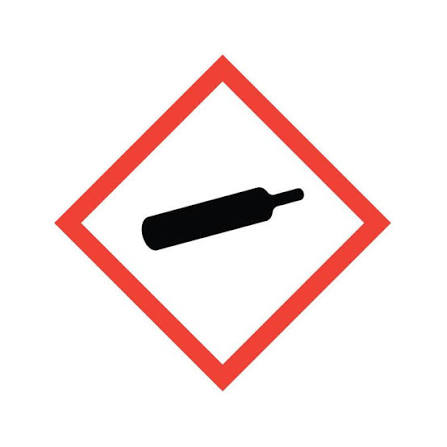
What hazard is shown here? (black gas cylinder icon)
Compressed gas hazard, warns that a container holds compressed, liquefied, refrigerated, or dissolved gas under high internal pressure
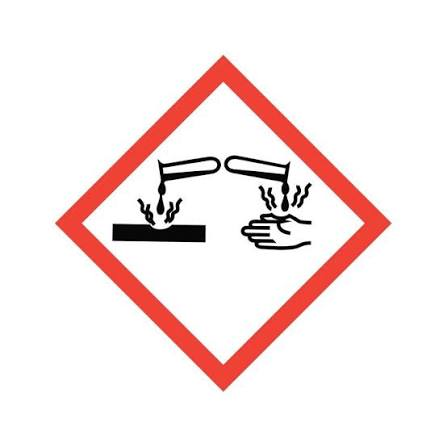
What hazard is shown here? (two test tubes pouring liquid onto a metal surface and a hand)
Corrosive hazard, can cause damage/burns to materials or skin upon contact
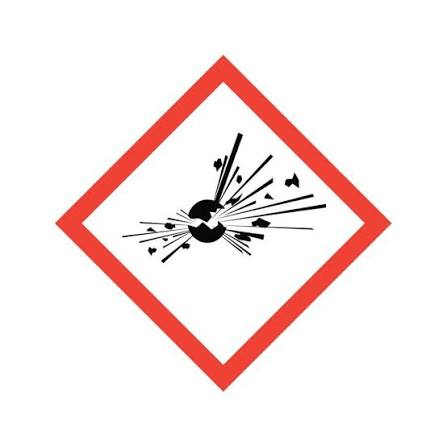
What hazard is shown here? (exploding bomb icon)
Explosives hazard, substance or product can explode rapidly upon heat, friction, impact, or instability

What hazard is shown here? (flame over a circle)
Oxidizer hazard, substance releases oxygen which can intensify a fire if nearby
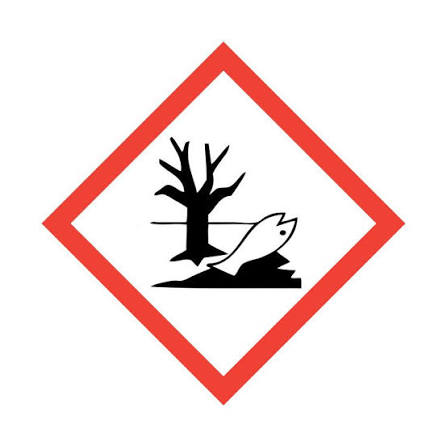
What hazard is shown here? (black silhouette showing a dead tree and a fish lying dead on the water)
Aquatic toxicity hazard, substance causes damage to aquatic life and surrounding environments
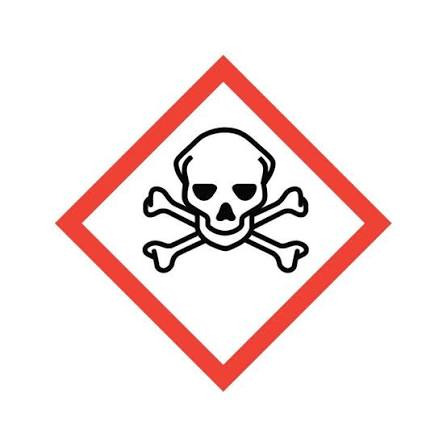
What hazard is shown here? (skull icon)
Acute toxicity hazard, a substance can cause severe, immediate, or fatal health effects after a single, short exposure
Which organization provided the four-color hazard label?
National Fire Protection Agency (NFPA)

What does each color of the four-color hazard symbol mean?
Red: Fire
Blue: Health
Yellow: Reactivity
White: Specific Hazard

What is an SDS?
A SDS is a document that relays vital information about certain chemicals and biological age
Is it okay to store chemicals in the fume hood?
No, store chemicals on shelves with raised edges, NOT the fume hood
What should be clearly labelled on a chemical’s original container?
Date of receipt and expiration date
Can bases and acids be stored together?
No, reactive materials should not be stored together
Can dry chemicals be stored together?
Yes, but separate organic and inorganic materials
Storing acids should be below or above shoulder height?
Below only, above shoulder height is dangerous
Where should flammables be stored?
Store flammables in an approved fire cabinet away from heat and flames. Flammable chemicals that require cold storage must be stored in refrigerators approved for flammable storage.
Hazardous chemicals used in a cytogenetic lab include (the two main ones)
DAPI and ethidium bromide
Handling chemicals include:
Using a fume hood
Using secondary containers for substance transfers
Primary barriers (BSC, PPE)
Avoiding contact with eyes and skin
What is a primary barrier + example?
Primary barrier protects people and the immediate laboratory environment from exposure to infectious agents
Ex: BSCs and PPE
What is a secondary barrier + example?
Secondary barriers protect the environment external to the laboratory from exposure to infectious materials
Ex: handwashing, decontamination, separate work/lab areas, special ventilation
What is the major infectious occupational health hazard in the health care industry?
Hepatitis B, can be prevented with vaccines
What is universal precautions?
Developed by CDC, an approach to infection control to treat all human blood and certain human body fluids as if they were known to be infectious for HIV, HBV and other bloodborne pathogens
CDC states that ___ is the single most important measure to prevent acquired infections
Handwashing
PPE includes what?
Gloves, gown, mask, and eyewear
Food and drinks can be stored in the lab?
False, do not store food and drink in the same refrigerators, freezers, or cabinets as specimens, chemicals, or reagents.
Using your mouth to pipette is okay?
False, use a pipette bulb, pipette aid or an automatic pipette.
What containers should be used to transport blood, body fluids, and tissues?
Leak‐proof containers labeled with proper handling and storage information
Why do we cover the stopper of an evacuated tube containing blood with gauze or paper?
To avoid infectious aerosols
What is considered biohazard waste?
Any material contaminated with blood, bodily fluids, or other infectious agents
What are typical uses of a Class I BSC?
Personnel protection only
Typical uses: toxic powder weight, necropsy
What are typical uses of a Class II BSC?
Personnel AND product protection
Typical uses: tissue culture, bacteria
Most commonly used cabinet in cytogenetic lab
What are typical uses of a Class III BSC?
Personnel AND product protection
Typical uses: extremely dangerous material like ebola virus, toxic powder, etc
Should needles be okay to recap?
No, needles should never be recapped and should be placed immediately in these special sharps containers after use.
Where should scalpels and broken glass be placed?
Designated punch resistant containers
How do you dispose cell culture media and blood waste?
1. Add 10% bleach by volume to the flask
2. Wait approximately 20-30 minutes for deactivation
3. Flush the materials down the sink
How do you dispose chemical liquids?
1. Dump in biosafety Can
2. Notify environment specialist to pick up
Two most used generic disinfectants are:
10% household bleach (sodium hypochlorite)
70% alcohol
Warning with 10% household bleach
Corrosive and irritant, should be wiped off a metal surface with water or alcohol after decontamination
What is 70% alcohol less effective on?
Residual organic material, due to its rapid evaporation rate
In events of a surface contamination:
Put on the appropriate PPE
Isolate contaminated area
Disinfect blood or body fluid spills with 10% bleach solution or 70% Ethanol
Discard all contaminated material into the appropriate puncture‐proof biohazard containers
What is decontamination?
Renders an item or material safe to handle.
What is sterilization?
Completely free of living microorganisms and viruses, using autoclave, ozone, or radiation.
What is disinfection?
Eliminates most pathogens but not necessarily all types of microbes.
What do you do in the case of a direct skin contact with a carcinogen or reactive material?
Immediately flush the affected area with plenty of water and use a good lather of soap to aid in physical removal
What is a Class A fire?
Ordinary combustibles or fibrous material, such as wood, paper, cloth, rubber, and some plastics.
What is a Class B fire?
Flammable or combustible liquids such as gasoline, kerosene, paint, paint thinners and propane.
What is a Class C fire?
Energized electrical equipment, such as appliances, switches, panel boxes and power tools.
What is a Class D fire?
Certain combustible metals, such as magnesium, titanium, potassium, and sodium.
What is the PASS method?
Pull the pin
Aim at base of fire
Squeeze the top handle or lever
Sweep from side to side
What is RACE?
R-Rescue patients, visitors and employees from immediate danger
A-alarm using pull stations or phone (911)
C-confine fire or smoke by closing all doors, including corridor doors
E- extinguish, if capable, or evacuate the area as directed
What is the function of flammable storage cabinets?
To keep fire away from flammable substances (EtOH, MeOH, Giemsa), do not keep combustibles such as paper or cardboard inside
What is considered a BSL1 lab?
Handling microorganisms that do not consistently cause disease in health adults
What is considered a BSL 2 lab?
Agents associated with human disease (HepB and measles). General required for any human-derived blood, bodily fluids, tissues in which infectious agent may be unknown.
(Cytogenetics lab falls into this category)
What is considered a BSL 3 lab?
Includes work on microbes that are either indigenous or exotic, and can cause serious or potentially lethal disease through inhalation (yellow fever, West Nile virus, TB)
What is considered a BSL 4 lab?
Very rare, but consists of work with highly dangerous and exotic microbes (Ebola and Marburg virus)
What is QC?
Quality control, a set of procedures used by clinical laboratories to maintain standard of quality and designed to minimize, detect, and evaluate errors.
QC Examples
This is accomplished by focusing on the equipment and reagents used, the methods employed in the testing.
Specimen/Equipment logs and Culture Worksheet
Reagent labeling
Procedure Manual
Validation of protocol and FISH probes
2 readers are necessary for 1 FISH case
What is QA?
Quality Assurance, the planned and systematic activities implemented in a quality system so that quality requirements for a product or service will be fulfilled.
Broader in scope than QC, QC is component of QA
QA Examples
The primary purpose of QA : make sure reagents, equipment, procedure AND personnel perform is acceptable
Personnel qualification and testing
Procedure for identifying specimen, culture failure, and other QC’s
Requirements for sample turn around times, minimum band level requirement (for development delay pt), and physical facilies
Periodically review QC data
What is the purpose of QA/QC program?
Provides checks and balances to prevent and identify clinical and clerical errors.
What is central to any QA/QC program?
Standard Operating Procedure (SOP) Manual includes requirements and policies for facilities, personnel, sample processing, and regulatory requirements
What is QI?
Quality Improvement, a laboratory’s plan to improve quality by increasing efficiency and effectiveness of laboratory procedures.
QI Examples
Training technologists and their CE’s
Verification documentation of abnormal prenatal results
Data/analyses of abnormal vs normal
What is CLIA ‘88?
Clinical Laboratory Improvement Amendments (CLIA) of 1988
Objective: Establish minimum quality standard to ensure the accuracy, reliability and timeliness of test results regardless of where the test was performed.
What is CMS?
Centers for Medicare and Medicaid Services has the primary responsibility for the operation of the CLIA Program.
What are the 3 levels of complexity of the CLIA ‘88?
Waivered test
Moderate complexity test
High complexity test
What is a waivered test?
No technologist or pathologist is needed. Ex. OTC tests such as urine tests, fecal occult blood, and pregnancy tests
What is a moderate complexity test?
Some technical intervention is necessary. Ex. gram stains, acid fast smears
What is a high complexity test?
Very manual test requiring technologist experience and physician interpretation. Example: cytogenetic analysis
What is CAP?
College of American Pathologists
is an approved accrediting organization to carry on survey in clinical cytogenetic laboratory under CLIA “88”
responsible for creating unknown samples for proficiency testing
lab inspections
What are examples of internal assessments (CAP lab self-inspection)
Typical quality indicators: Turnaround time for specimens; Success rate; Number of revised reports
What are examples of external assessments (on-site CAP inspection)
Proficiency testing and laboratory accreditation
What is proficiency testing?
Purpose: Ensure the laboratory can generate accurate results, unknown samples are sent to a laboratory by a CMS approved PT program to be tested in the same manner as the patient specimens. The lab’s and PT’s results are compared and assessed for accuracy.
How often are PT’s for labs by CMS standards?
3x a year
All slides from CAP for PT is identified as ___.
CYF i.e. CYF-1 and CYF-2
How often does CAP inspect a lab?
Every 2 years for:
Evaluate PT results
Evaluate QC, QA, and QI
Evaluate procedures and tests
Evaluate personnel qualification
Evaluate physical facilities
Evaluate laboratory safety (General checklist)
What is a Phase I deficiency?
These deficiencies occur in areas essential in the management of a laboratory but they may not seriously affect the quality of patient care or significantly endanger the welfare of a hospital or laboratory worker.
Ex: Space for technical work is not adequate, inaccurate logs, and inaccessibility of lab manuals
What is a corrective action to take for Phase I deficiencies?
A statement as to the corrective action being taken is sufficient. Recurring Phase I deficiencies will be reviewed critically as to the effectiveness of proposed actions.
What is Phase II deficiency?
These deficiencies occur in areas essential in the management of a laboratory. These deficiencies may have a serious effect on the quality of patient care or may affect the health and safety of hospital or laboratory personnel.
Ex: The band level for constitutional cases is lower than 400-band level for resolution and expired reagents
What is a corrective action to take for Phase II deficiencies?
Corrective actions must be accompanied by appropriate documentation. Such as policies or procedures, plus supporting records, such as patient reports, log sheets, , memos or minutes from meetings. These records must demonstrate compliance with the policy or procedure. Failure to provide this documentation will delay your accreditation.
What is HIPAA?
Health Insurance Portability and Accountability Act
Main purpose: Requires the protection and confidential handling of protected health information and patient’s privacy
Other roles include:
Allowing workers and families to continue health insurance after job loss/change
Reduces health care fraud and abuse
Establishes standards for electronic health care billing and information
Who enforces HIPAA?
U.S. Dept of Health and Human Resources (HHS) Office for Civil Rights
How to avoid HIPAA violation?
Follow SOP exactly when releasing results (usually only goes to patient or physician)
What is JCAHO?
Joint Commission on Accreditation of Healthcare Organization, an organization made up of individuals from the private medical sector to develop and maintain standards of quality in medical facilities in the United States.
No ties to the government, but still reliable for accreditation