community ch 10-11
 Call Kai
 Learn
Learn Practice Test
 Spaced Repetition
 Match
Match Flashcards
 Knowt Play
1/59

There's no tags or description
Looks like no tags are added yet.
Name | Mastery | Learn | Test | Matching | Spaced | Call with Kai | Chat |
|---|
No analytics yet
Send a link to your students to track their progress
60 Terms
target population
refers to a clearly identified segment of the population
can be broad or narrow in size and similarities
dental hygienists provide service and education to many different groups and frequently are asked to present dental health information to these groups
age
school
health related
target population community profile
a comprehensive overview of the target population that includes specific descriptions
researching is necessary for dental hygienists to determine a profile
areas to be assessed in creating include populations location, available resources, and partnerships
also termed community profile
demographics
location
resources
partnerships
faith-based initiatives
many religious groups play significant roles in health care, with many religious leaders having a great influence on health care beliefs, and many working diligently to help those in need
partnerships between faith-based and public sectors
possible barriers to obtaining dental hygiene and dental care
can be defined as anything that limits and individuals ability to receive dental services
Age, Language, Habit(s), Culture, Financial situation, Lack of confidence in treatment, Education, Lack of understanding, Fear, Transportation, Values
Safety of treatment, Attitudes, Denial of disease, Unavailability of dental providers, Sense of invulnerability, Inconvenience, Social issues, Provider conflicts, Inconvenient office hour, Requirements for supervision of dental hygienists
specific target populations
family caregivers
health care workers
hospice workers
school teachers
social workers
populations with medical conditions and/or diseases
support groups
socioeconomic status
populations with hearing and visual impairments
populations living in poverty
inmates
agency for health care research and quality (AHRQ)
collects data on the utilization of health and dental care services throughout the country through the medical expenditure panel surveys (MEPs)
bureau of the census
conducts the US census
CDC, Behavioral Risk Factor Surveillance System (BRFSS); CDC, Youth Risk Behavior Survey (YRBS)
Collects ongoing state-based data to measure behavioral risk factors among adults and youth
CDC, DATA 2020
Tracks data for Healthy People 2020
CDC, National Notifiable Diseases Surveillance System
Lists and collects national data on diseases required by law to be reported to official health authorities
CDC, National Oral Health Surveillance System (NOHSS)
Monitors dental health, disease, and use of dental services within states for a collaboration between the CDC and the Association of State and Territorial Dental Directors
CDC, National Health and Nutrition Examination Survey (NHANES)
Collects data on health and nutrition
CDC, Health Interview Survey (NHIS)
Uses household interviews on the health of noninstitutionalized, civilian adults in the United States
CDC, National Nursing Home Survey
Performs continuing series of national sample surveys of nursing home staff and residents
CDC, National Vital Statistics System (NVSS)
Collects data on births, deaths, fetal deaths, etc.
CDC, Pregnancy Risk Assessment Monitoring System (PRAMS)
Collects data on maternal attitudes and experiences
CDC, School Health Policies and Program Study (SHPPS
Conducts national survey to assess school policies and programs
CDC, Water Fluoridation Reporting System
Monitors public water fluoridation
Centers for Medicare and Medicaid (CMS)
Collects data on Medicaid utilization
Health Resources and Services Administration (HRSA)
Collects data on the dental workforce and patients with special needs
National Institutes of Dental and Craniofacial Research (NIDCR)
Provides resources for dental diseases and oral manifestations of disease
National Cancer Institute (NCI)
Collects information on cancer rates, trends, etc., through its SEER program
family caregiver
provide daily care to their family members
may be parents, grandparents, children, other relatives, or close friends
usually assume some responsibility specifically pertaining to oral hygiene care
hygienists could present information to this population on how to care for oral cavity
health care workers
this target group provides direct patient care and/or treatment
may include nurses, physicians, physician assistants, physical and occupational therapists, speech pathologists, and nurses.
may need additional information about how disease affects oral health
social worker
is a professional who helps individuals, groups and communities to enhance or restore their capacity for social functioning and to create societal conditions favorable to reaching the goals they set
influence populations they serve, and hygienists can work with them to provide access to dental care and education
should instruct in proper oral hygiene and serve as a liaison between the worker, patient, and dental home
dental hygienists and their target populations
relationship of oral health to overall health is most important to remember in working with these populations
patients with other disease may present with disease in the oral cavity
prenatal
Women who are pregnant present with a variety of oral health needs.
They may suffer from periodontal conditions exacerbated by hormonal fluctuations.
Pyogenic granulomas and pregnancy-induced gingivitis occasionally occur during pregnancy.
These conditions can be prevented by meticulous oral hygiene and professional dental hygiene care, information about which dental health educators provide
infancy
Periodontal disease in the mother has been associated with preterm births and babies with low birth weights.
Many infants are fed milk in bed or sugary drinks from a bottle, which causes early childhood caries, sometimes referred to as nursing (baby bottle) tooth decay
teething considerations
preschool
are interested in learning and are busy striving for independence. They are impressionable, and therefore their education is vital for a lifetime of good oral hygiene.
Early childhood caries is a preventable disease.
interactive learning with coloring and other hands on methods is effective
elementary age children
This population is interested in obtaining knowledge and continuing to strive for independence. It is important for dental hygienists to discuss a detailed concept of dental health care and the use of preventive interventions such as fluoride and dental sealants.
dental hygienists can easily schedule educational presentations for children through school
dental education materials integrated with the math, reading, and social sciences are helpful for this age group
teenagers
This population generally strives for total independence and prefers presentations on dental health without parental supervision.
many are concerns with their looks or basic presentation
discussing halitosis or tooth color may be effective for them, so look for positive reinforcements which can take the form of rewards such as t-shirts and hats
mouthguard discussions may be critical due to sports
adults
This population tends to be more cooperative in the oral health learning process if they are aware of the benefits
they focus on tie constraints and want to learn only what is practical
may have issues such as fear and anxiety
must understand individuals capabilities and values because no value = little interest in education
how do you make it interesting and of value?
older adults
Many remain independent, but others may have limited independence. Understanding this group’s capabilities is necessary.
a number of normal but significant changes occur during aging, few causing oral diseases
group is most likely without dental insurance
important for hygienists to serve as liaisons between older adults and dental care delivery system
This population may also be interested in information about dental caries, periodontal diseases, oral cancer, disease etiology and prevention, nutrition, holistic health care, and specific dental services such as tooth bleaching and cosmetic dentistry.
sociocultural theory
proposed by educational phycologist Lev Vygotsky
suggests that an individuals social interaction as a child leads to continuous changes in though and behavior that can vary greatly from culture to culture
imitative learning
instructed learning
collaborative learning
culture
is complex and multifaceted
encompasses
attitudes
values
beliefs
history
race
refers to a population with shared physical characteristics
ethnicity
represents social groups with shared history, sense of identity, geography and cultural roots
subculture
refers to a group of people with a culture that differentiates them from the larger culture to which they belong
acculturate
assimilate, or adapt to another culture by assuming its practices and beliefs to become part of the great “melting pot”
cultural sensitivity
displayed when people are aware of and respect cultural differences during interactions with people
cultural competency
is defined as the awareness of and respect for an individuals or a populations cultural differences, the recognition of how these differences impact a specific group, such as health care providers, and the ability to communicate effectively and work cross-culturally
•Cross-cultural dental hygiene
• National issues
• Professional policies
• Barriers to health care
• Public health dental hygiene
ethnocentrism
a belief that ones own culture or traditions are better than others
cultural biases
understanding one’s own culture
cross cultural communication
•Being able to effectively communicate with those from different cultures
•Practice management
•Stereotyping
•Transcultural communication
•Cultural blind spot syndrome
culture in healthcare
Inability to recognize cultural differences related to health care can lead to:
Treatment failure
Frustrations
Patient attrition
processes to develop cultural sensitivity
•Assess one’s own cultural beliefs and values.
•Recognize one’s culture influences affecting communication.
•Recognize one’s own cultural biases.
Be knowledgeable of the patient’s belief system.
•Be sensitive to gestures, concerns, and questions.
•Be able to collect culturally relevant data concerning the population’s health background and level of understanding of the presenting problems.
•Listen and observe.
•Be aware and respectful of cultural differences.
complementary alternative medicine
•Herbs, natural products and massage or yoga
•Not Western medicine
cultural representation
•Cultural Sensitivity
•Cultural Background of Providers
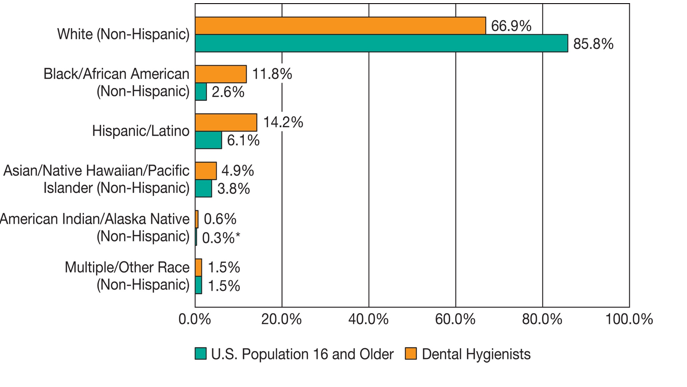
health promotion/disease prevention for diverse populations
•Validate and test assessment instruments/strategies/ mechanisms that increase health promotion and disease prevention among diverse populations.
•Investigate how diversity among populations impacts the promotion of oral health and preventive behaviors.
•Investigate the effectiveness of oral self-care behaviors that prevent or reduce oral diseases among all age, social, and cultural groups.
•Investigate how environmental factors (e.g., culture, socioeconomic status, education) influence oral health behaviors.
to deliver culturally competent care
Incorporate cultural practices into education and treatment when appropriate, but sensitively discourage harmful practices.
Incorporate culturally competent communication into oral health education.
Deliver dental hygiene services in a culturally sensitive manner and environment.
Develop relationships with health professionals from other ethnic and minority groups to promote a collaborative effort to improve the groups’ oral health.
to develop cultural awareness
Recognize how your culture influences your values, behavior, beliefs, and decision making.
Become a lifelong learner of diverse cultures, particularly those whose population you serve.
Know about your population’s cultural background.
Assess your population’s values, beliefs, and knowledge of oral and total health.
Consider the effects of religious beliefs on oral and total health.
Investigate cultural dietary practices and how they affect total health.
a. target population.
A group from a local church youth group could be considered a
a. target population.
b. target population profile.
c. faith-based initiative.
d. community agency.
a. The first statement is true; the second statement is false.
It is important not to frighten child patients. It is better not to tell the truth if a procedure could involve some discomfort.
a. The first statement is true; the second statement is false.
b. The first statement is false; the second statement is true.
c. Both statements are true.
d. Both statements are false.
a. The first statement is true; the second statement is false.
Faith-based initiatives funded by the federal government do not generally include health care.
a. The first statement is true; the second statement is false.
b. The first statement is false; the second statement is true.
c. Both statements are true.
d. Both statements are false.
c. to ensure social services for the population.
Social workers and dental hygienists can work together during programs for target populations
a. to provide dental hygiene care.
b. to assess dental health.
c. to ensure social services for the population.
d. to implement periodontal treatment
c. barrier to care.
Inconvenient office hours of a dental practice can become a
a. target population profile technique.
b. faith-based issue.
c. barrier to care.
d. long-term strategic plan.
c. Both statements are true.
The fact that only a small number of minorities work in the oral health care professions may be considered a barrier to oral health care. A study of the racial and ethnic composition of the health care workforce reveals that the dental workforce is the least diverse of all the health professions.
a. The first statement is true; the second statement is
false.
b. The first statement is false; the second statement is
true.
c. Both statements are true.
d. Both statements are false.
c. Language barrier
Which of the following could prevent a patient from seeking care or reduce effectiveness of care?
a. Unhealthy behaviors
b. Severe pain
c. Language barrier
d. None of the above
a. a melting pot.
A country in which people strive to acculturate into a new society and make valiant attempts to change their cultural patterns to those of their host society is colloquially called
a. a melting pot.
b. a salad bowl.
c. jello.
d. amalgam.
d. All of the above
Which of the following is/are guidelines to effective communication?
a. Assess one’s own cultural beliefs and values
b. Recognize those cultural influences affecting
communication
c. Understand a patient’s belief system
d. All of the above
c. Both statements are true.
Cross-cultural dental hygiene is the effective integration of the population’s socioethnocultural background into the process of care. Recognizing how your culture influences your values, behaviors, beliefs, and decision making is part of cross-cultural dental hygiene.
a. The first statement is true; the second statement is
false.
b. The first statement is false; the second statement is
true.
c. Both statements are true.
d. Both statements are false.