Human Phys - Chapter 10: The Central Nervous System
 Call Kai
 Learn
Learn Practice Test
 Spaced Repetition
 Match
Match Flashcards
 Knowt Play
1/68

There's no tags or description
Looks like no tags are added yet.
Name | Mastery | Learn | Test | Matching | Spaced | Call with Kai | Chat |
|---|
No analytics yet
Send a link to your students to track their progress
69 Terms
What are emergent properties?
Abilities that appear when many neurons work together but aren’t found in one neuron alone.
Examples: thinking, language, learning, memory, emotions
Easy:
One neuron = one player.
Neural network = the whole team.
What is neural plasticity?
The ability of neural circuits to change their connections based on experience or sensory input.
Easy: Plasticity = the brain can rewire itself.
10.2 — Evolution of Nervous Systems
How did nervous systems become more complex during evolution?
Nerve net → primitive brain → brain + ganglia → larger, specialized brain
Examples:
Jellyfish = nerve net
Flatworm = primitive brain
Earthworm = brain + ganglia
Humans = highly developed brain
Easy: spread out → more organized → more specialized
What is a ganglion?
A cluster of neuron cell bodies.
In earthworms, ganglia along the nerve cord can control simple reflexes without needing the brain.
Easy: ganglion = mini control center
What major brain change occurred as vertebrates evolved?
The forebrain/cerebrum became much larger, especially in humans.
Cerebrum → reasoning and cognition
Cerebellum → coordination and balance
Easy:
Cerebrum = think
Cerebellum = balance/move
10.3 — Anatomy of the CNS
What do the neural tube and neural crest become?
Neural tube → CNS
Neural crest → PNS
Hollow part of neural tube → brain ventricles + central canal
Easy:
Tube = central, Crest = peripheral.
What are the main brain divisions during development?
Forebrain → Midbrain → Hindbrain
Later:
Forebrain → cerebrum + diencephalon
Midbrain → midbrain
Hindbrain → cerebellum + pons + medulla
Plus the spinal cord.
Easy: Fore = cerebrum/diencephalon; Hind = cerebellum/pons/medulla.
Gray matter

mostly neuron cell bodies + dendrites
Gray = bodies
White matter

mostly myelinated axons
wires
Nucleus
cluster of cell bodies in CNS
Tract
bundle of axons in CNS
What are the meninges in order from outside → inside?
Dura → Arachnoid → Pia
Dura = thick outer layer
Arachnoid = middle
subarachnoid space
Pia = thin layer touching the brain
Easy: D-A-P
And the subarachnoid space is between arachnoid and pia.
What does CSF do?
CSF gives the CNS:
Physical protection → brain floats + gets cushioned
Chemical protection → keeps the neuron environment controlled
Easy: CSF = float + cushion + control
Your professor specifically emphasizes the brain’s effective weight dropping about 30× because of buoyancy.
Where is CSF made and where does it go?
Made by the choroid plexus in the ventricles.
Flow:
Ventricles → subarachnoid space → around brain/spinal cord → arachnoid villi → blood
Easy: Make → circulate → reabsorb.
What is the blood-brain barrier (BBB)?
A selective barrier that protects the brain by controlling what can leave the blood and enter brain tissue.
Made mainly by tight junctions between brain capillary cells, helped by astrocyte foot processes.
Easy: BBB = brain security checkpoint
The hypothalamus is an important exception because it needs to sample the blood for endocrine control.
Why does the brain need so much blood flow?
Neurons constantly need:
glucose + O₂ → ATP
The slides note that about 15% of blood pumped by the heart goes to the brain.
Easy: brain = energy hog
10.4 — The Spinal Cord
Dorsal root vs ventral root?
Dorsal root = sensory/afferent info IN to CNS
Ventral root = motor/efferent info OUT to muscles and glands
Easy:
Dorsal = sensory in, Ventral = motor out.
Dorsal root
sensory/afferent info IN to CNS
sensory in
Ventral root
motor/efferent info OUT to muscles and glands
motor out
What is the dorsal root ganglion (DRG)?
A cluster containing the cell bodies of sensory neurons.
Easy: DRG = sensory neuron bodies.
Posterior horn vs anterior horn?
Posterior/dorsal horn = sensory
Anterior/ventral horn = motor
Easy:
Back = sensory
Front = motor
Posterior/dorsal horn
sensory
Back = sensory
Anterior/ventral horn
Motor
Front = motor
What do the spinal cord tracts do?
White matter is organized into columns of axon tracts.
Ascending tracts = sensory info UP to brain
Descending tracts = motor commands DOWN from brain
Propriospinal tracts = stay within the spinal cord
Easy:
Ascending = up
Descending = down
Propriospinal = stays home
Ascending
sensory info UP to brain
Descending tracts
motor commands DOWN from brain
Propriospinal tracts
stay within the spinal cord
What is a spinal reflex?
A response that is integrated in the spinal cord without waiting for the brain.
The sensory information can still be sent to the brain afterward.
Easy example: touch something hot → hand pulls away before you consciously think about it.
10.5 — The Brain
What are the 3 parts of the brain stem and their main jobs?
Medulla → involuntary functions like breathing and blood pressure
Pons → relay between cerebrum and cerebellum; helps control breathing
Midbrain → controls eye movement and visual/auditory reflexes
Easy: Medulla = automatic, Pons = bridge, Midbrain = eyes
Medulla

involuntary functions like breathing and blood pressure
Pons

relay between cerebrum and cerebellum; helps control breathing
Midbrain

controls eye movement and visual/auditory reflexes
What does the cerebellum do?
It coordinates movement.
It helps with:
voluntary movement
posture
balance
eye movement

Easy: Cerebellum = coordination
What does the thalamus do?
The thalamus is a relay and integration center for sensory and motor information going to the cerebrum.

Easy: Thalamus = traffic station
What does the hypothalamus do?
The hypothalamus controls homeostasis.
It helps control:
hunger
thirst
body temperature
autonomic functions
endocrine functions

Easy: Hypothalamus = body balance boss
What are the 3 major gray-matter regions of the cerebrum?
Cerebral cortex → higher brain functions
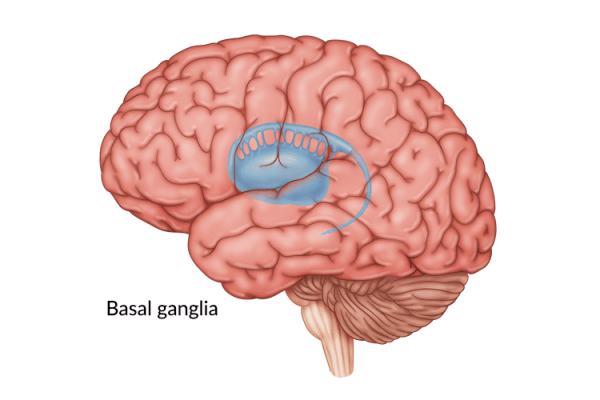
Basal ganglia → movement
Limbic system → emotion and memory
Easy: Cortex = think, Basal = move, Limbic = feel
Cerebral cortex
higher brain functions

think
Basal ganglia
movement
Limbic System
Emotion and Memory

feel
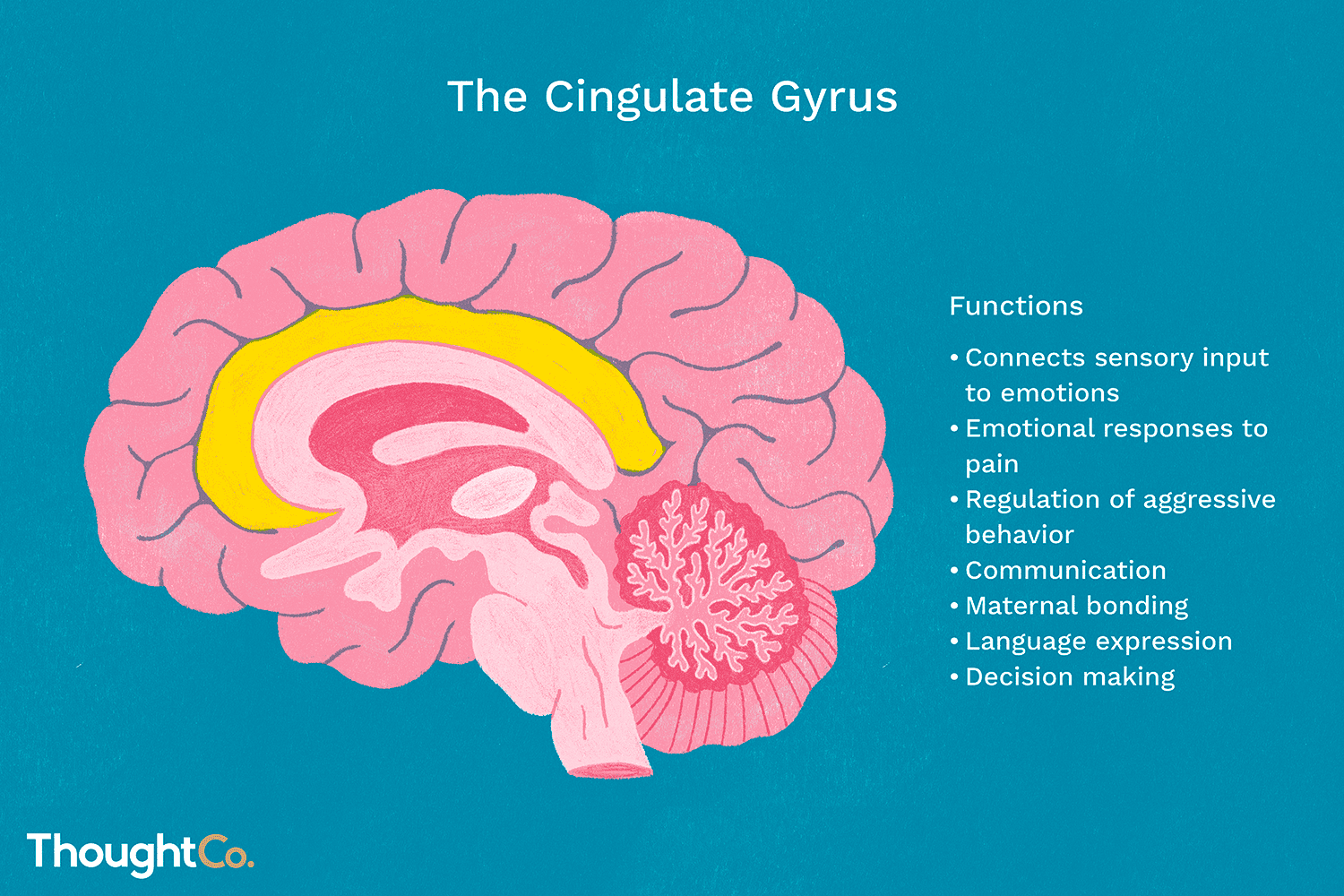
What are the main parts of the limbic system?
Amygdala → emotion + memory
Hippocampus → learning + memory
Cingulate gyrus → emotion
Easy: Amygdala = emotion, Hippocampus = memory
Amygdala
emotion + memory

Hippocampus
learning + memory

Cingulate gyrus
emotion
What does the corpus callosum do?
It connects the left and right cerebral hemispheres so they can communicate.

Corpus callosum = bridge between brain halves
What are the 4 lobes of each cerebral hemisphere?
Frontal, parietal, temporal, occipital
What are the major functions of the 4 cerebral lobes?
Frontal → voluntary motor control/behavior
Parietal → body sensation
Temporal → hearing + smell
Occipital → vision
Easy:
Front = move
Parietal = feel
Temporal = hear
Occipital = see
Frontal Lobe
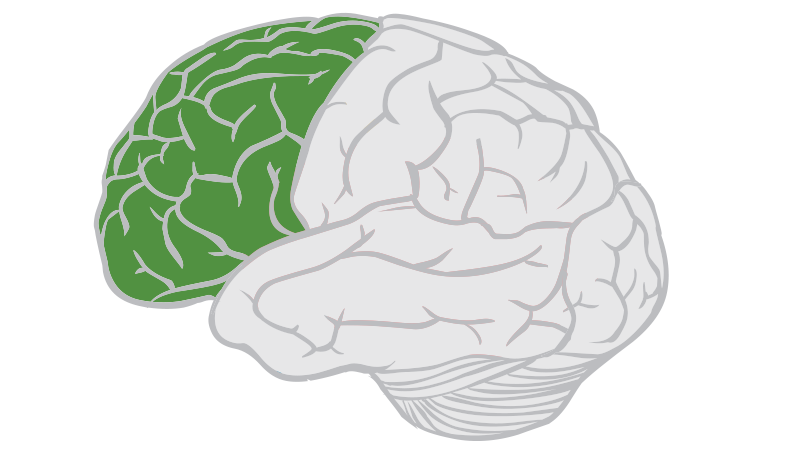
voluntary motor control/behavior
parietal lobe

body sensation/feel
temporal lobe

hearing + smell
occipital lobe

vision
10.6 — Brain Function Flashcards
What are the 3 systems that influence brain output?
Sensory system → monitors internal/external environment
Cognitive system → voluntary responses
Behavioral state system → sleep-wake state, emotions/arousal
Easy: Sense → Think → State
Sensory system
monitors internal/external environment
Sense
Cognitive system
voluntary responses
Think
Behavioral state system
sleep-wake state, emotions/arousal
What are the 3 functional areas of the cerebral cortex?
Sensory areas → perception
Motor areas → movement
Association areas → integrate information
Easy: Feel → Move → Connect
What is cerebral lateralization?
The two hemispheres specialize in different functions.
Left → language/math tends to dominate
Right → spatial processing tends to dominate
But there is lots of plasticity.
Easy: Left = language, Right = spatial
Sensation
sensory information enters the brain.
input
Perception
the brain interprets what that information means.
means
What are the 4 diffuse modulatory systems?
Norepinephrine
Serotonin
Dopamine
Acetylcholine
They influence things like arousal, sleep, mood, learning, memory, and motivation.
Easy: NE, 5-HT, DA, ACh = brain-state chemicals
What does the reticular formation help control?
Arousal and sleep, plus things like muscle tone and pain modulation.
Easy: Reticular formation = wake-up system
What are the major sleep stages?
N1 → N2 → N3 → REM
N3 = deepest/slow-wave sleep; delta waves
REM = dreaming; EEG looks more awake-like
Deepest sleep happens mostly early in the night.
Easy: N3 = deep, REM = dreams
How does memory move from short-term to long-term?
Short-term memory → consolidation → long-term memory
The hippocampus is especially important for forming explicit memories.
Easy: Consolidation = save button
What does neural plasticity mean for learning and memory?
Learning changes the strength or structure of synaptic connections.
Easy: “Neurons that fire together wire together.”
Implicit vs explicit memory?
Implicit/reflexive = automatic skills/procedures
Explicit/declarative = conscious facts and information
Easy:
Implicit = how
Explicit = what
Implicit/reflexive
automatic skills/procedures
How
Explicit/declarative
conscious facts and information
What
Wernicke’s area vs Broca’s area?
Wernicke’s → understands language
Broca’s → produces language
Pathway:
visual/auditory cortex → Wernicke → Broca → motor cortex
Easy:
Wernicke = understand
Broca = speak
What does the limbic system do in emotion?
The limbic system creates/processes emotion, then the hypothalamus and brain stem can trigger physical responses.
The amygdala is especially important for emotion/fear.
Easy: Limbic = feel
How can emotions affect the body?
Emotion can trigger:
somatic motor responses
autonomic responses
endocrine responses
immune responses
Easy: Brain emotion → whole-body response