Anatomy and Physiology MEGA Vocab Flashcards
 Call Kai
 Learn
Learn Practice Test
 Spaced Repetition
 Match
Match Flashcards
 Knowt Play
1/38

There's no tags or description
Looks like no tags are added yet.
Name | Mastery | Learn | Test | Matching | Spaced | Call with Kai | Chat |
|---|
No analytics yet
Send a link to your students to track their progress
39 Terms
Human Anatomy
Study of the structure or form of the human body
Human Physiology
Study of the body’s functions
Cellular composition
Cells are the smallest units that carry out functions of life
Metabolism
When living organisms carry out chemical processes to maintain life
Anabolism
"Building” processes in which smaller molecules are combined to form larger, more complex molecules, often requiring energy.
Catabolism
“Breaking down” processes
Chemical level
smallest level; chemicals range from tiny atoms to complex molecules
Cellular Level
groups of many different types of molecules combine in specific ways
Tissue Level
two or more cell types and material outside them, extracellular matrix, combine to perform a common function.
Organ level
two or more tissue types combine to form an organ with recognizable shape and performs specialized task
Organ system level
two or more organs that carry out a broad function in the body
Organism level
organ systems function together to make up the working human body
Levels of structural organization and body systems in order
Chemical level
Cellular level
Tissue level
Organ level
Organ system level
Organism level
Integumentary system
the outside layer (skin, hair, nails)
protects the body from external environment
produces vitamin D
retains water
regulates body temp
Skeletal System
the skeletons (bones, joints)
supports the body
protects internal organs
leverage for movement
produces blood cells
stores calcium salts
Muscular system
the muscles (skeletal muscles)
produces movement
controls body openings
generates heat
Nervous system
the vital parts (nerves, brain, spinal chord)
regulates body functions
provides sensation, movement, automatic functions, higher mental functions w nerves
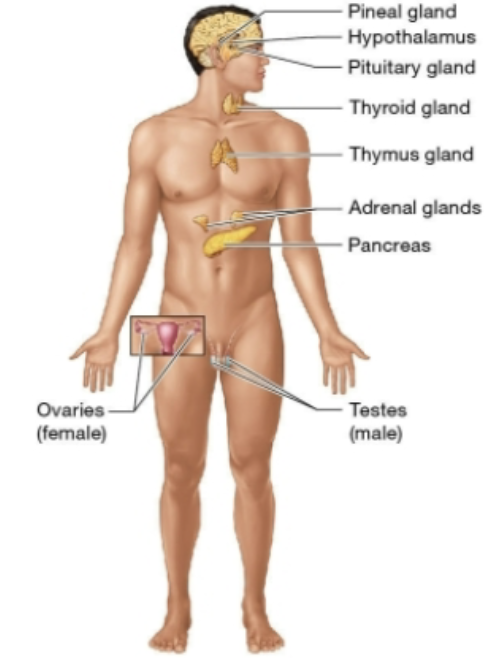
Endocrine system
pancreas, testes, ovaries, adrenal gland, thymus gland, thyroid gland, pituitary gland, pineal gland, hypothalamus
regulates body functions
regulates functions of muscle glands, and other tissues through hormones aka secretion of chemicals
Cardiovascular system
blood vessels, heart
pumps and delivers oxygen-poor blood to the lungs and oxygen-rich blood to the tissues
removes waste from tissues
transports cells, nutrients, other substances
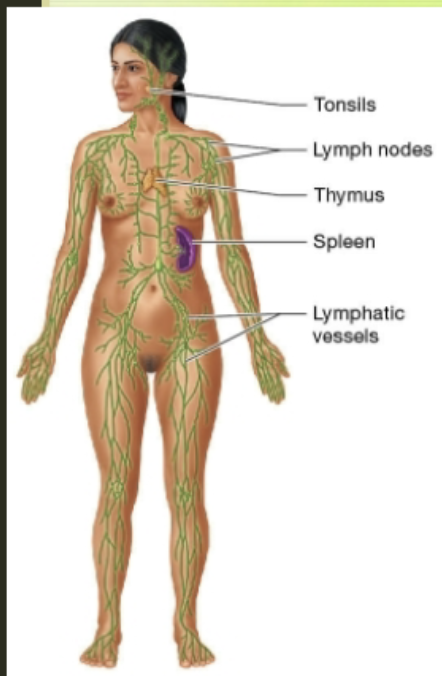
Lymphatic system
returns excess tissue fluid to the cardiovascular system
provides protection against diseases
Respiratory system
Breathing (lungs, trachea, larnyx, pharynx, nasal cavity)
Delivers oxygen to the blood
Removes carbon dioxide from the body
Maintains acid-base balance
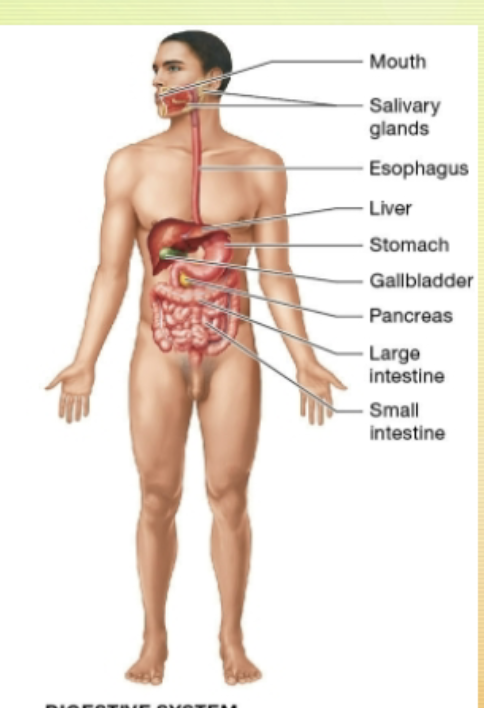
Digestive system
digests food
absorbs nutrients into blood
removes food waste
maintains fluid, electrolyte, and acid-base balance
Urinary system
kidneys, ureters, urinary bladder, urethra
removes metabolic wastes from the blood
maintains fluid, electrolyte, and acid-base balance
stimulates blood cell production
Reproductive System: male
produces and transports sperm
secretes hormones
sexual function

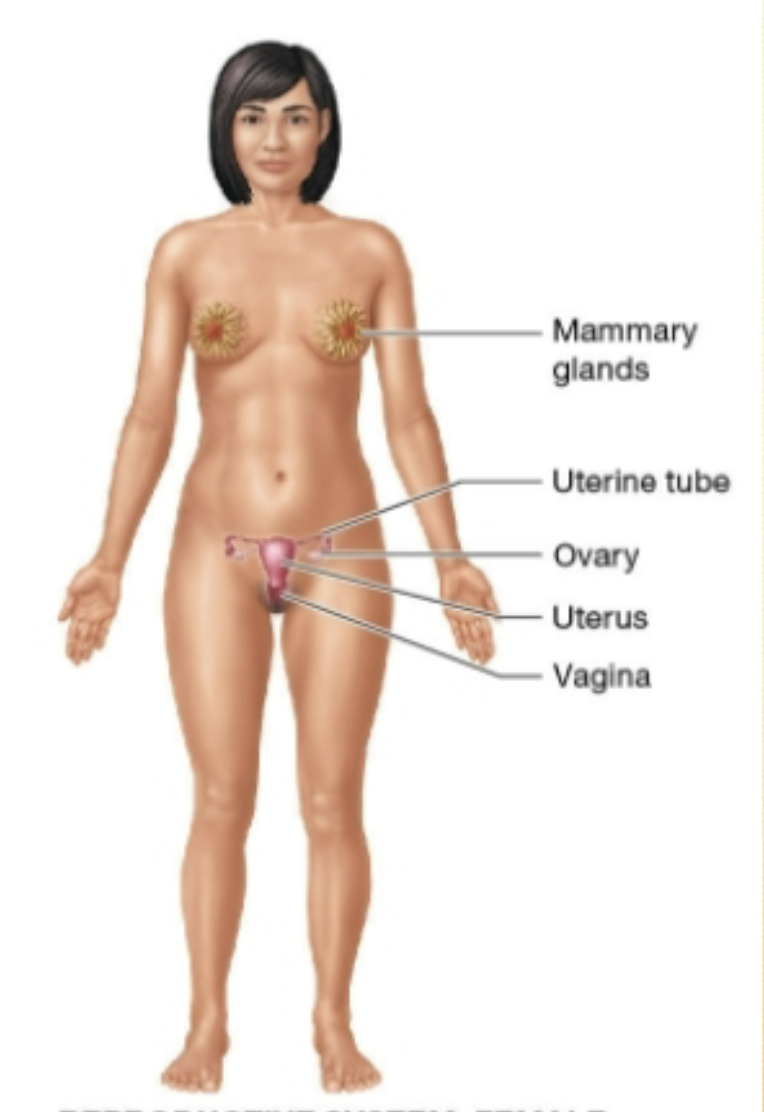
Reproductive System: female
produces and transports oocytes (eggs)
place of fetal development, nourishment, childbirth, lactation
secretes hormones
sexual function
Systemic Anatomy
Examines individual organ systems
Regional anatomy
examines the body in regions, like head and neck
Surface anatomy
examines surface markings
Gross Anatomy
examines structures that can be seen with the eye (no magnifying things)
microscopic anatomy
examines cells (cytology) and tissues (histology) with the use of a microscope
an- (root word)
without
encephala- (root)
brain
-ic (root)
condition of
Anatomical position
where all body parts and regions are described regardless of position
Anterior / Posterior
Anterior = front
Posterior = back
Superior / Inferior
Superior (cranial) = towards the head
Inferior (caudal) = towards the tail
*used to refer to positions on head, neck, trunk
proximal / distal
proximal = closer to the point of origin
distal = further from the point of origin
*used to refer to position on the limbs only
medial / lateral
medial = closer to the middle line of the body
lateral = position farther from the midline
proximal / distal
proximal = closer to the point of origin
distal = further