BIO III - Fungi
 Call Kai
 Learn
Learn Practice Test
 Spaced Repetition
 Match
Match Flashcards
 Knowt Play
1/28

There's no tags or description
Looks like no tags are added yet.
Name | Mastery | Learn | Test | Matching | Spaced | Call with Kai | Chat |
|---|
No analytics yet
Send a link to your students to track their progress
29 Terms
Hyphae
microscopic threadlike filaments of a fungal mycelium

Mycelium
interwoven mass of hyphae that forms the body of a fungus

Saprophytic nutrition
secrete enzymes into their environment and degrade the organic substrate then reabsorb the nutrients and carbon that's released from those
Spores
primary reproductive unit for all fungi; in eukaryotes, a single haploid cell produced by meiosis; it is distinct from a gamete, however, in being able to grow into a multicellular, haploid organism through mitotic divisions directly (no fertilization required).
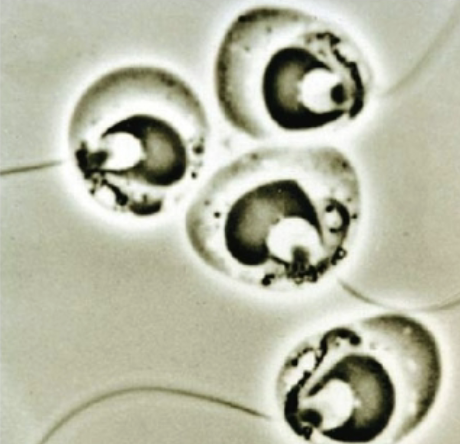
Chytrids
the only fungi that produce motile cells (flagellated cells); fungal decomposer of plant material in wet soils, ponds, and lakes
Zygomycetes
food molds; form yoked hyphae that produce sporangia
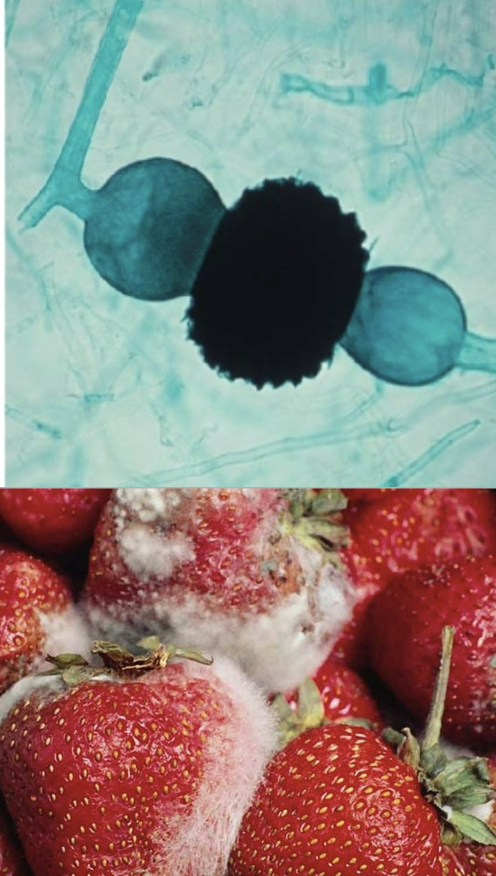
Sporangia
spore forming structures

Plasmogamy
fusion of the cytoplasm of two individuals
Karyogamy
fusion of two haploid nuclei to form a diploid nucleus
Pilobolus
type of zygomycetous mold that grows on animal dung in fields

Glomeromycota
group of fungi that are obligate symboints with most plant roots; monophyletic group of soil fungi that form arbuscular mycorrhizae with most land plants

arbuscular mycorrhizae fungi (AMF)
penetrate the root cell wall to contact the plasma membrane
Arbuscules
where the hyphae grow and create an exchange point where they can get carbon from the plant and then they grow their hyphae out in the soil and degrade nutrients and return phosphorous and nitrogen back to the plant
Ascomycota
sac fungi that produce spores in asci

Budding
when daughter cells pinch off the parent cell after mitosis
Lichens
consist of a fungus and a photosynthetic alga or cyanobacterium; they can survive extreme climates, act as indicators of air pollution, and disperse via small clusters called soredia
ascocarp
asci covering; fruiting body structure that will produce asci
Asci
spore-producing cell found at the ends of hyphae in Ascomycota; located within a ascocarp
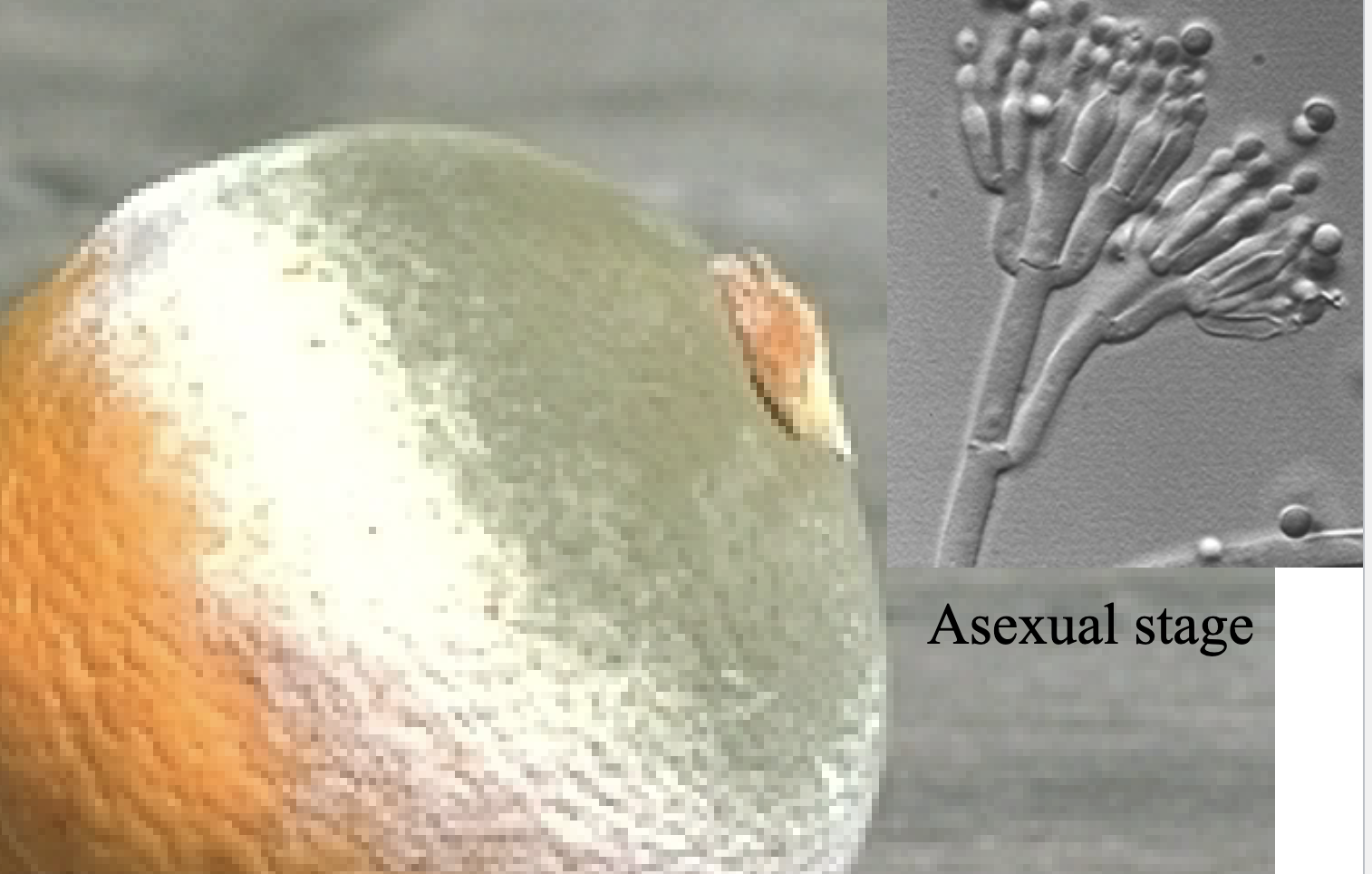
Penicillium
"incomplete fungi" while they're ascomycota, they do not have a sexual reproductive phase. asexual stage!
Basidiomycota
a monophyletic group of terrestrial fungi that includes mushrooms, bracket fungi, stinkhorns, and puffballs. During sexual reproduction, they form airborne spores in structures called basidia. Some can degrade wood. Others form ectomycorrhizae with certain trees.

Basidia
club shaped structures in basidiomycota where sexual spores are produced
Lignin
complex polymer found in the secondary cell walls of some plants; it is exceptionally stiff and strong. Most abundant in woody plant parts.
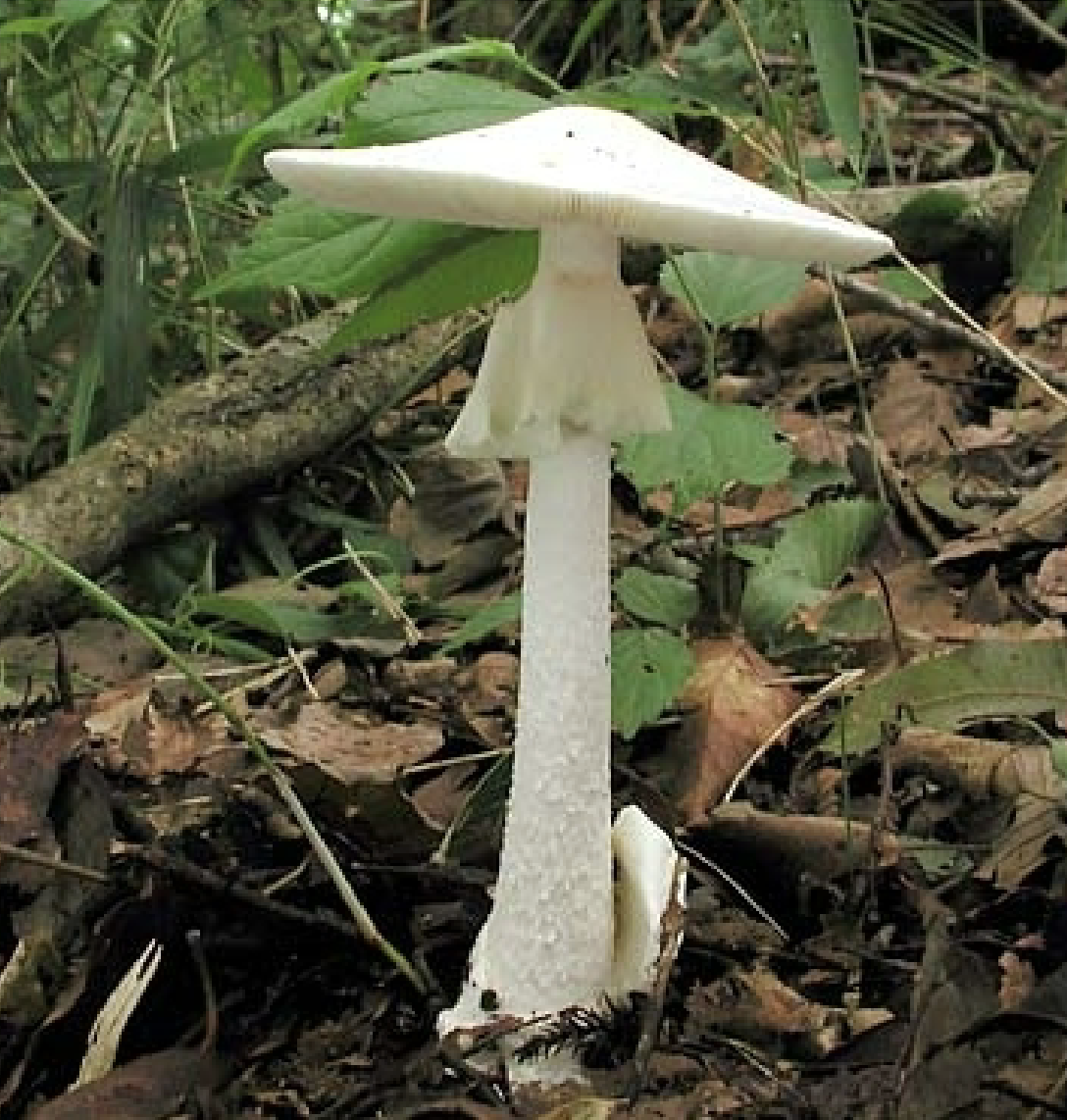
Destroying angel
common name for amanita virosa, a highly toxic mushroom from basidiomycota that can stop heart rate almost immediately
Ustilago maydis
fungus that causes common smut disease of maize

Ergot disease
fungal disease that replaces grains with sclerotia containing toxins from which LSD is derived
Mycorrihizae
(fungus root) mutualistic association between certain fungi and the roots of most vascular plants; provide minerals for plants
ectomycorrhizae (ECM)
form a dense sheath around tree roots and external hyphae between root cells
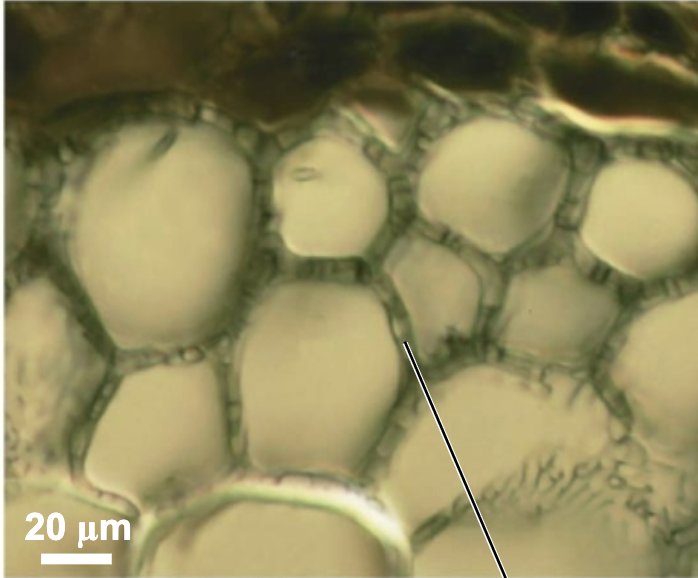
Yeasts
single-celled fungi that reproduce asexually by budding
Conidial Fungi
fungi for which only an asexual stage is known (such as Aspergilius and Penicilium)