Ch 7: Proteins and Enzyme Mechanisms: Allosteric Control, Active Sites, and Coenzymes
 Call Kai
 Learn
Learn Practice Test
 Spaced Repetition
 Match
Match Flashcards
 Knowt Play
1/51

There's no tags or description
Looks like no tags are added yet.
Name | Mastery | Learn | Test | Matching | Spaced | Call with Kai | Chat |
|---|
No analytics yet
Send a link to your students to track their progress
52 Terms
What is the Michaelis-Menten model used for?
Describing the behavior of many enzymes.
What does the term 'allosteric' mean?
Derived from Greek, meaning 'other shape'.
What is an allosteric enzyme?
A protein whose biological activity is affected by substances binding to a site other than the active site.
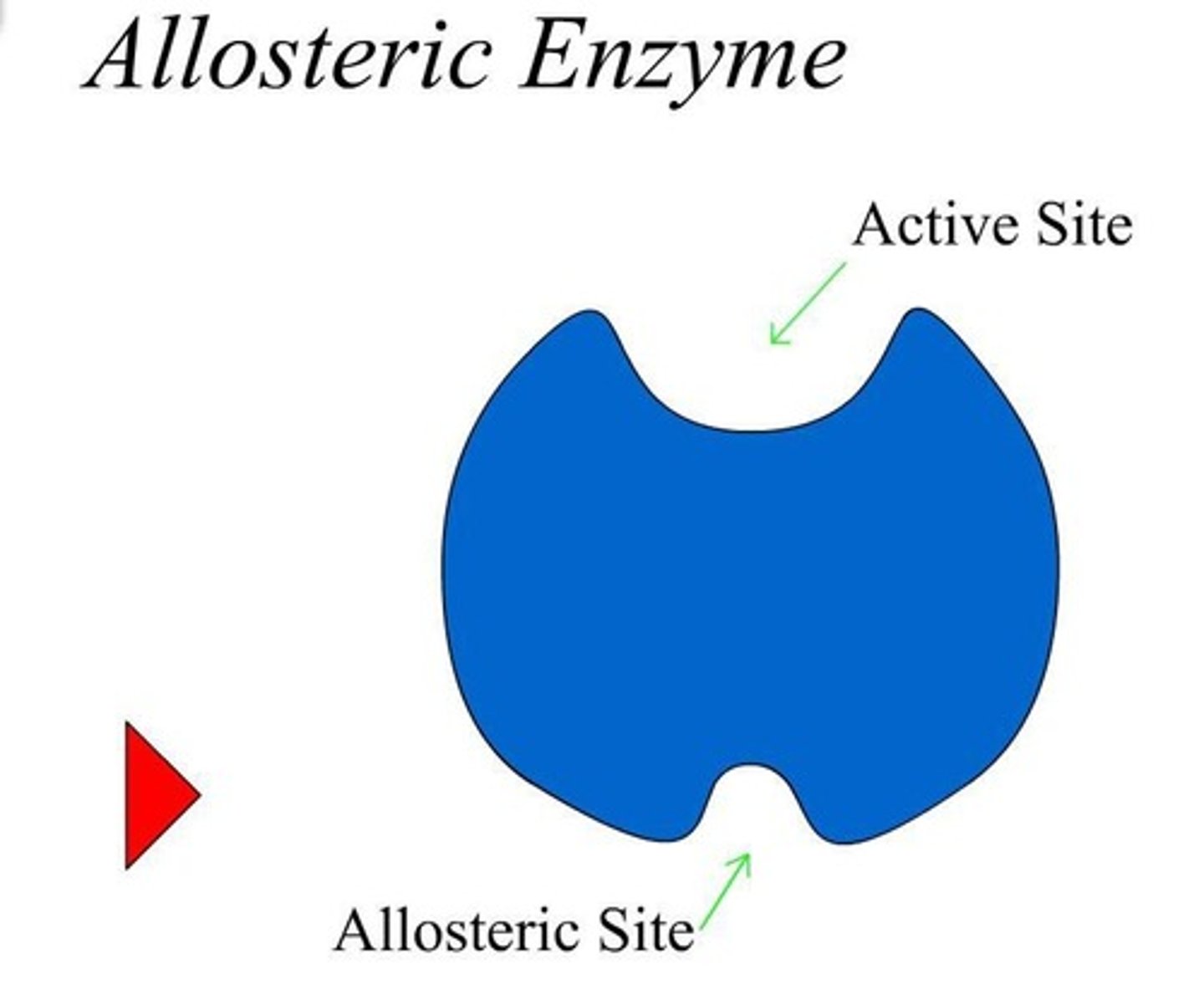
What is an allosteric site?
A site other than the active site where a substance can bind and affect the enzyme's activity.
What is an allosteric effector?
A substance that modifies the behavior of an allosteric enzyme by binding to it.
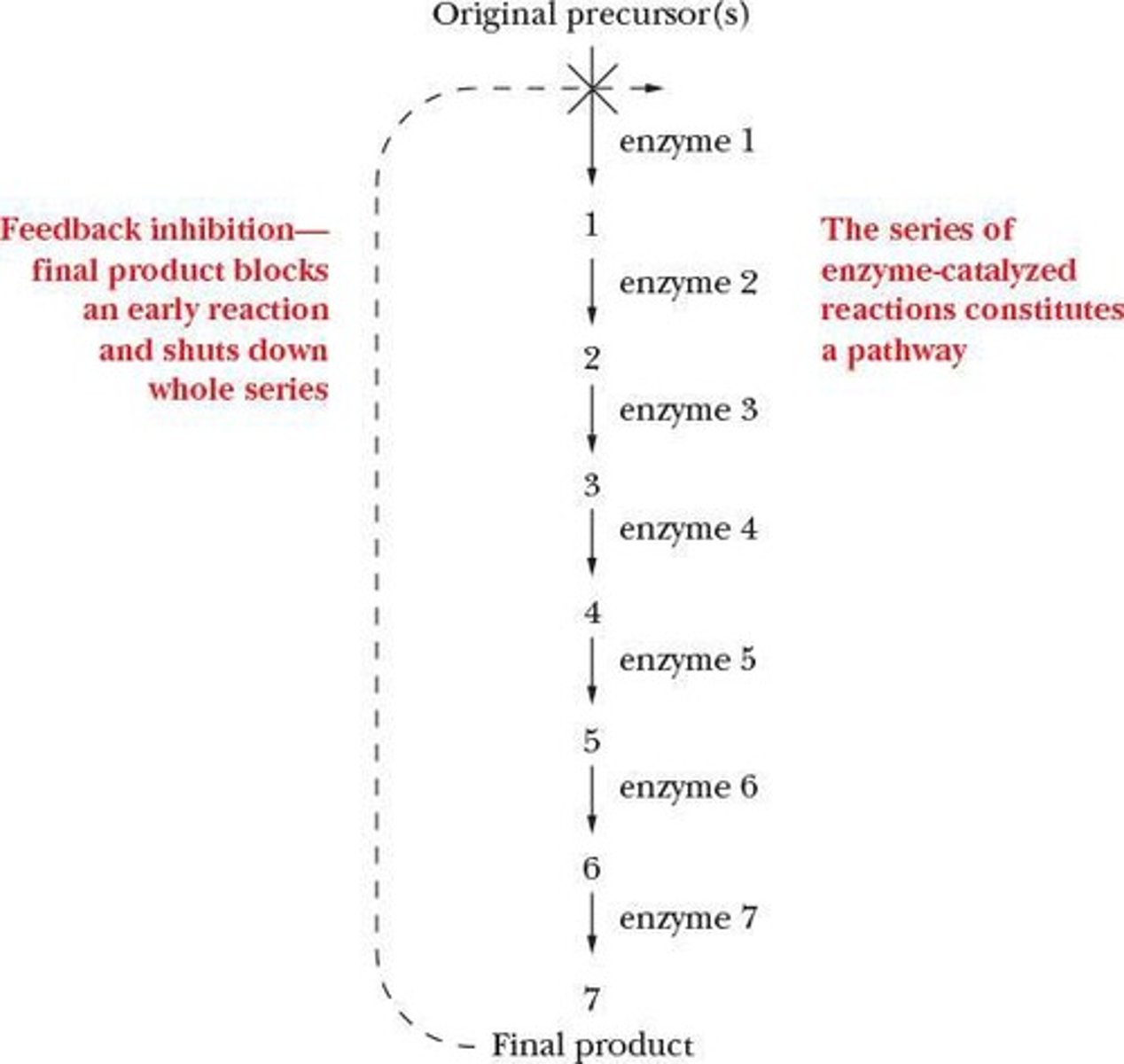
What is feedback inhibition?
A process where the final product of a series of reactions inhibits the first reaction in the series.
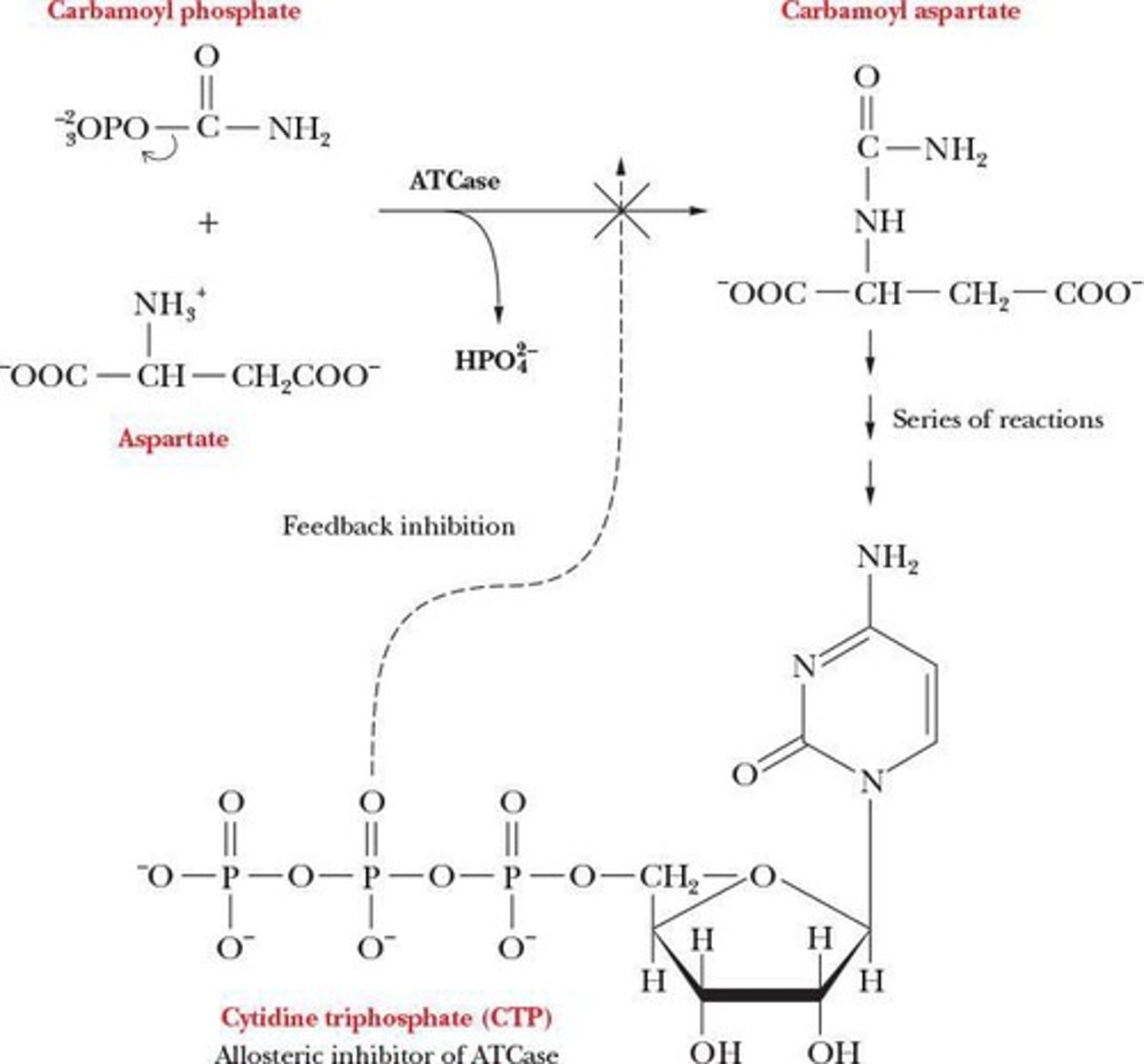
Which enzyme is involved in feedback inhibition and catalyzes the first step in producing cytidine triphosphate?
Aspartate transcarbamoylase (ATCase).
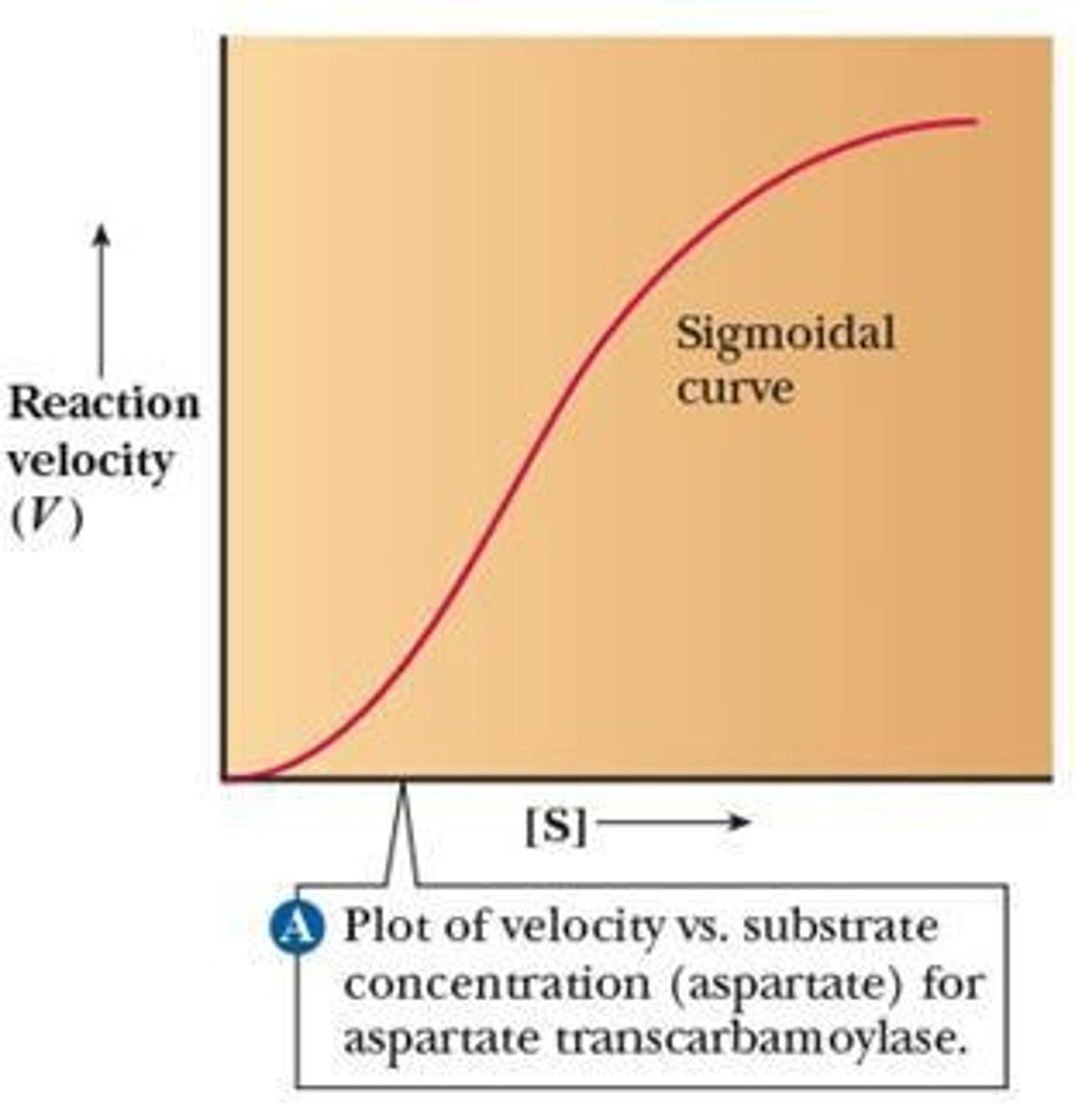
What does a sigmoidal curve indicate in allosteric enzymes?
It describes allosteric behavior due to positive cooperativity.
What is the concerted model of allosteric enzymes?
A model where all subunits are in the same conformation and ligand binds more tightly to the R state.
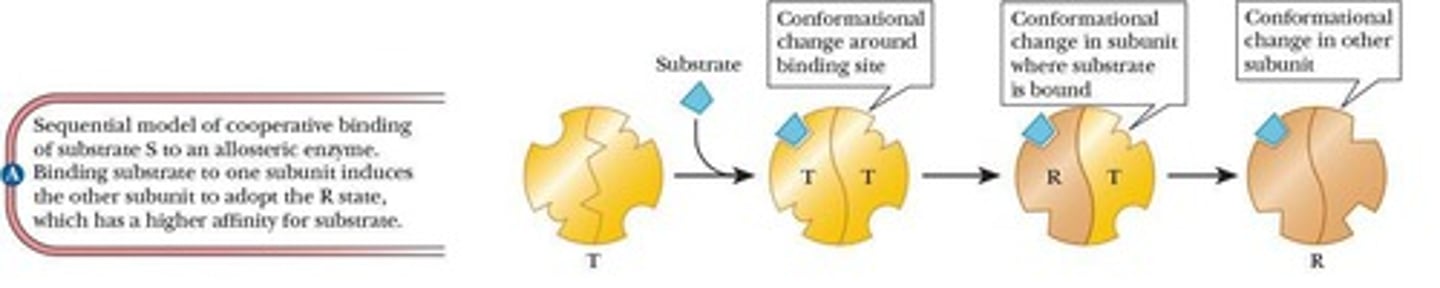
What is the sequential model of allosteric enzymes?
A model where each subunit can be in either high affinity (R state) or low affinity (T state) conformation.
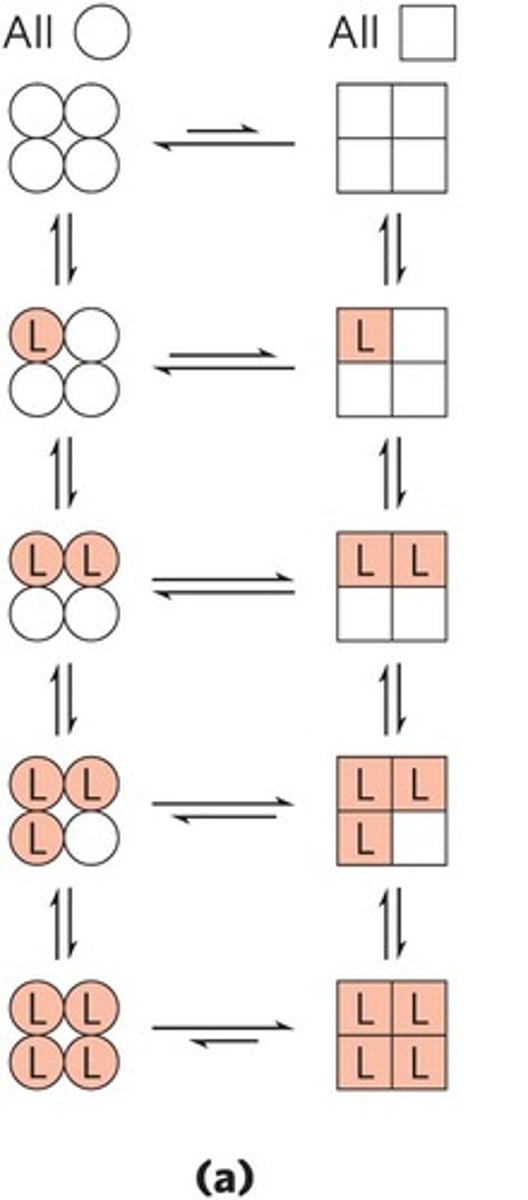
What is negative cooperativity in allosteric enzymes?
When the binding of one molecule decreases the likelihood of binding the next molecule.
How does phosphorylation control enzyme activity?
By adding a phosphate group to specific amino acids, which can activate or deactivate the enzyme.
What are zymogens?
Inactive precursors to enzymes that can be activated by cleavage of covalent bonds.
What is the classic example of a zymogen?
Chymotrypsinogen.
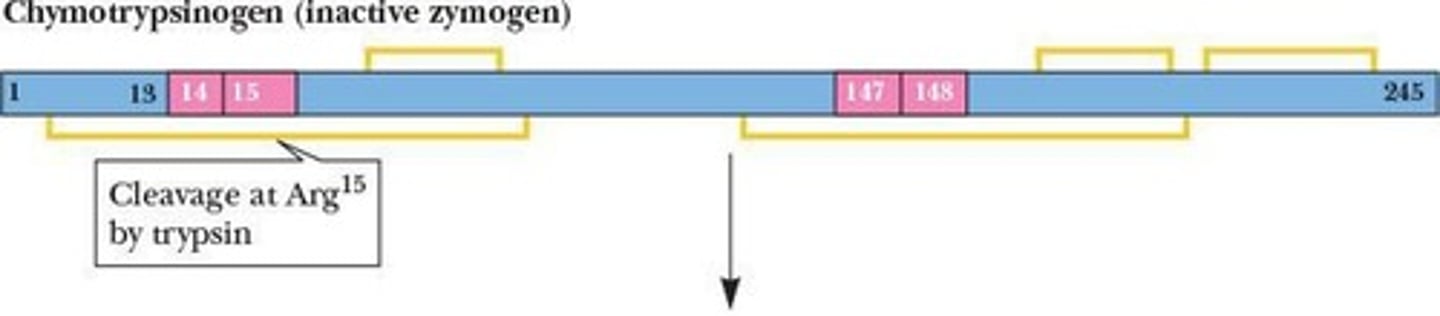
What happens to chymotrypsinogen in the small intestine?
It is cleaved by trypsin to form active π-chymotrypsin.
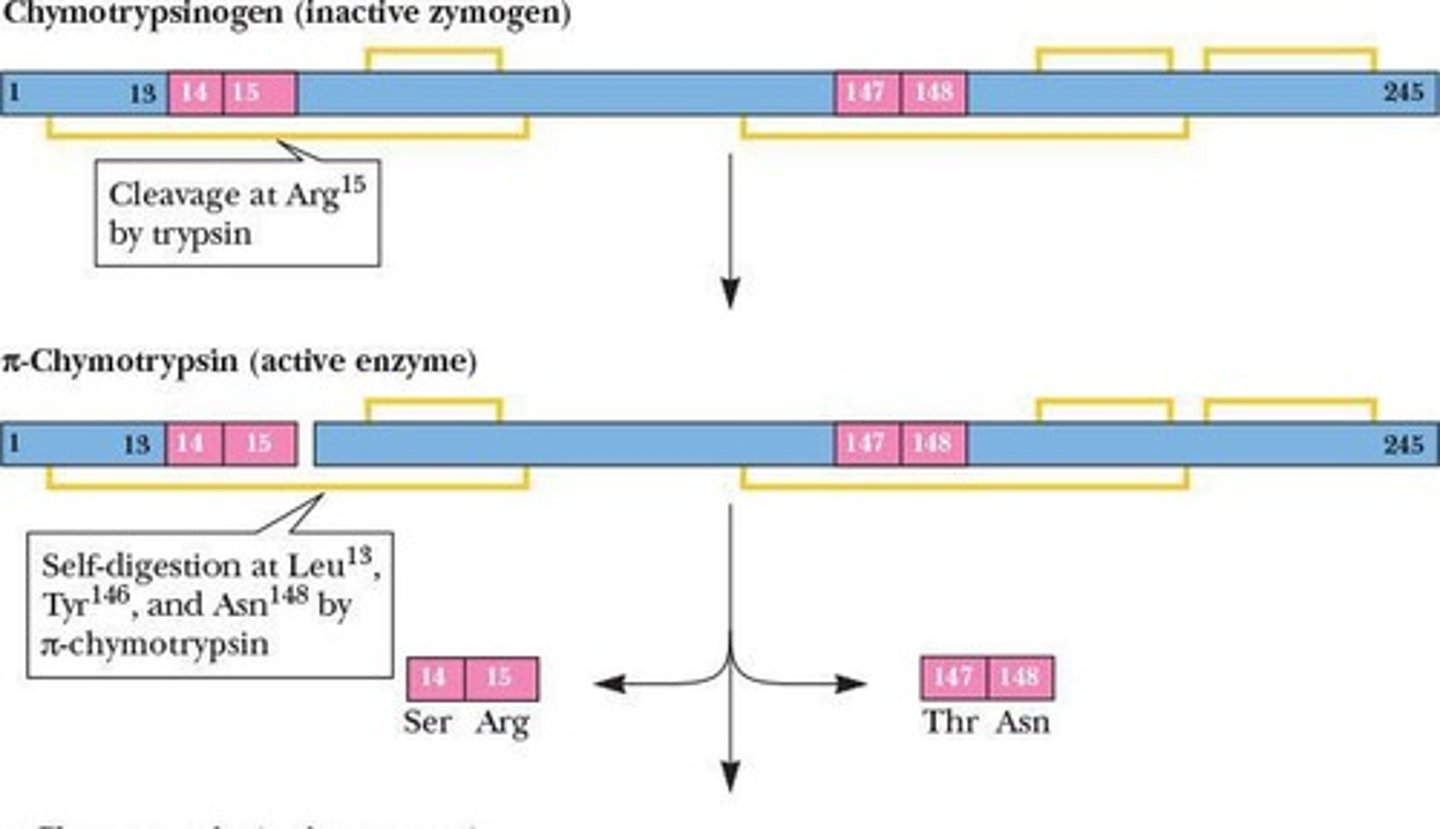
What structural change occurs when chymotrypsinogen is converted to α-chymotrypsin?
Changes in primary structure lead to changes in tertiary structure, resulting in enzymatic activity.
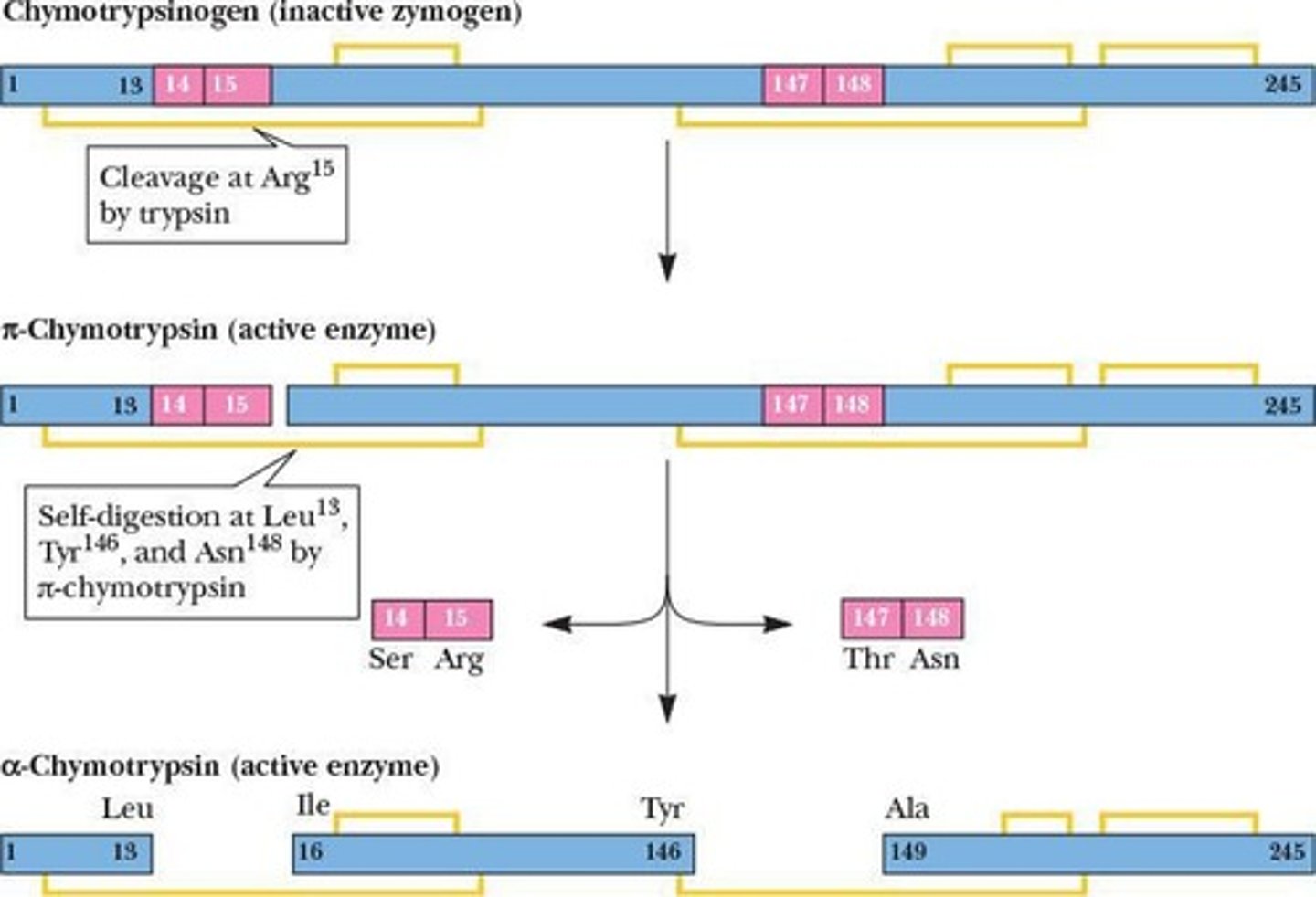
What role do amino acid residues in the active site play?
They catalyze the reaction by interacting with the substrate.
What is the role of protein kinases in enzyme activity?
They catalyze the phosphorylation of enzymes, which can activate or deactivate them.
What is the effect of AMP on glycogen phosphorylase?
AMP acts as an allosteric activator in muscle.
What are some allosteric inhibitors of glycogen phosphorylase?
ATP, Glucose, and Caffeine.
What is the significance of the active site in enzymes?
It is crucial for increasing the rate of a reaction through specific interactions.
What is the relationship between enzyme structure and function?
The three-dimensional structure of an enzyme determines its activity and specificity.
What is the primary function of aspartate transcarbamoylase (ATCase)?
To catalyze the first step in the synthesis of cytidine triphosphate.
How does allosteric binding behave like a 'dimmer switch'?
It can subtly activate or repress enzyme activity.
What is the role of GABA in relation to allosteric enzymes?
GABA is an inhibitory neurotransmitter that can be upregulated by allosteric activators like alcohol and Valium.
What is the importance of controlling enzyme activity?
To prevent overproduction of products and conserve resources.
What is the role of the active site in an enzyme?
The active site interacts with the substrate to catalyze the reaction.
Which amino acid residues are typically involved in the active site of enzymes?
Amino acids with reactive R groups, such as histidine, lysine, serine, tyrosine, aspartate, glutamate, and cysteine.
What is chymotrypsin?
Chymotrypsin is a digestive enzyme that catalyzes the hydrolysis of peptide bonds adjacent to aromatic amino acids.
What is the significance of serine 195 in chymotrypsin?
Serine 195 is essential for chymotrypsin's catalytic activity and is located in the active site.
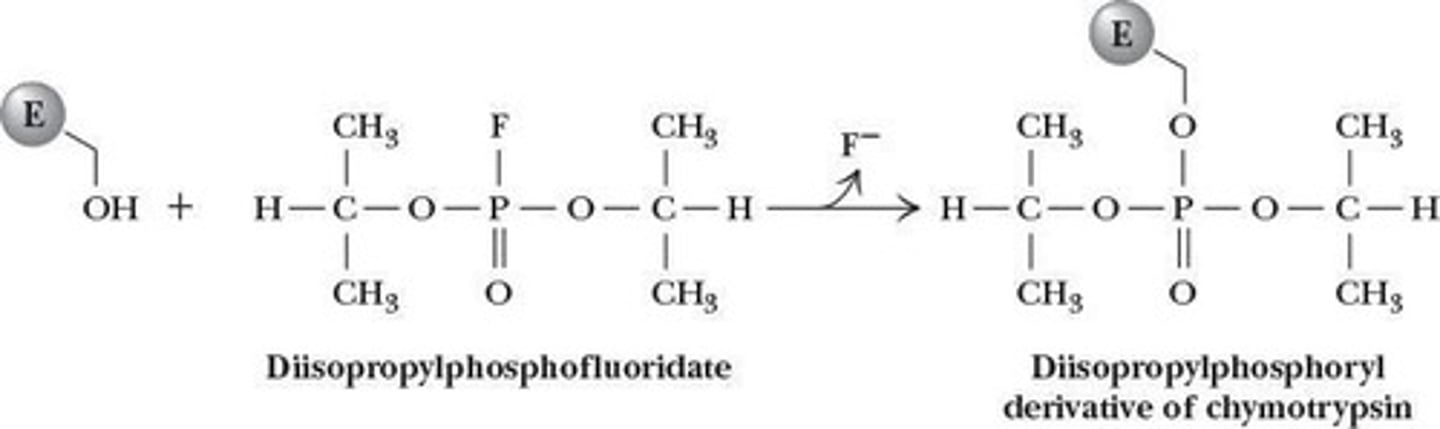
How does histidine 57 contribute to chymotrypsin's function?
Histidine 57 is critical for the activation of chymotrypsin and can be chemically labeled to confirm its role.
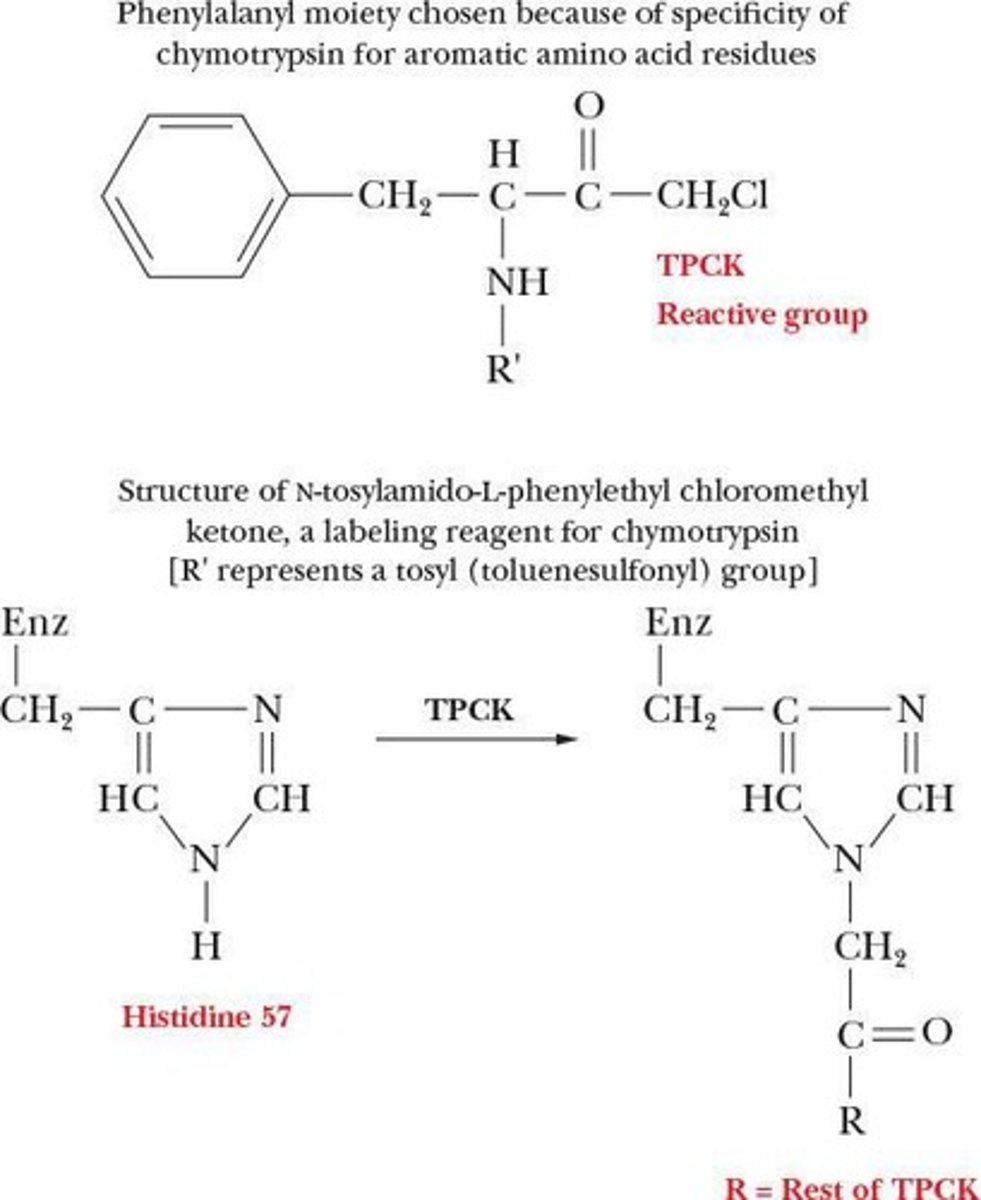
What role does aspartate 102 play in chymotrypsin's active site?
Aspartate 102 is involved in catalysis and helps position other essential amino acids in the active site.
What are the three general mechanisms enzymes may use for catalysis?
Covalent catalysis, acid-base catalysis, and metal ion catalysis.
What is covalent catalysis?
Covalent catalysis involves nucleophilic substitution where one functional group is replaced by another due to nucleophilic attack.
What is the difference between SN1 and SN2 reactions?
SN1 is unimolecular and follows first-order kinetics, while SN2 is bimolecular and follows second-order kinetics.
What is acid-base catalysis?
Acid-base catalysis involves the transfer of protons, often facilitated by amino acids in the active site.
What is metal ion catalysis?
Metal ion catalysis involves Lewis acids that accept electrons and are essential for enzyme activity.
How does zinc ion function in carboxypeptidase A?
Zinc ion activates the carbonyl group for nucleophilic acyl substitution.
What is the role of the hydrophobic pocket in chymotrypsin?
The hydrophobic pocket near serine 195 helps the enzyme specifically cleave peptide bonds at aromatic amino acids.
What is enzyme specificity?
Enzyme specificity refers to the ability of an enzyme to catalyze reactions only on specific substrates.
What is absolute specificity in enzymes?
Absolute specificity means the enzyme catalyzes the reaction of one unique substrate to a particular product.
What is stereospecificity in enzymatic reactions?
Stereospecificity means the enzyme catalyzes a reaction that preferentially reacts with one stereoisomer over others.
What is a transition state in enzymatic reactions?
The transition state is an intermediate chemical species that has a different structure from both the substrate and the product.
What are coenzymes?
Coenzymes are nonprotein substances that participate in enzymatic reactions and are regenerated at the end of the reaction.
What is Nicotinamide Adenine Dinucleotide (NAD+)?
NAD+ is a coenzyme involved in many oxidation-reduction reactions, derived from vitamin B3 (niacin).
What is the function of B6 vitamins in enzymatic reactions?
B6 vitamins act as coenzymes involved in the transfer of amino groups during amino acid biosynthesis.
What is the role of histidine in chymotrypsin's catalytic mechanism?
Histidine acts as both a base and an acid during the catalytic process, facilitating the transfer of protons.
What is the significance of the spatial relationship among active site residues?
The spatial arrangement of active site residues is crucial for the enzyme's catalytic activity.
What happens to chymotrypsin when serine 195 is inactivated?
Inactivation of serine 195 results in loss of chymotrypsin's catalytic activity.
What is the effect of removing essential amino acids from an enzyme?
Removing essential amino acids can be used to determine their role by observing changes in reaction rate.
What is the role of water in chymotrypsin's catalytic mechanism?
Water acts as a nucleophile that attacks the acyl-enzyme intermediate during the reaction.
What is a transition-state analog?
A transition-state analog is a synthesized compound that mimics the form of the transition state in an enzyme reaction.