period 2 vocab apworld
 Call Kai
 Learn
Learn Practice Test
 Spaced Repetition
 Match
Match Flashcards
 Knowt Play
1/62

There's no tags or description
Looks like no tags are added yet.
Name | Mastery | Learn | Test | Matching | Spaced | Call with Kai | Chat |
|---|
No analytics yet
Send a link to your students to track their progress
63 Terms
caravel
a small, highly maneuverable three-masted ship used by the portuguese and spanish in the exploration of the atlantic
volta do mar
“return through the sea,” a 15th century portuguese sea route that took advantage of the prevailing winds and currents in the atlantic (west of africa)
circumnavigation
sailing completely around something, such as the world
treaty of tordesillas (1494)
agreement between portugal & spain which declared newly discovered lands to the west of an imaginary line in the atlantic would belong to spain and lands to the east of the line would belong to portugal
VOC
vereenigde oostindische compagnie (dutch east india company)
BEIC
british east india company
joint-stock company
a company made up of a group of shareholders. each shareholder contributes some money to the company and receives some share of the company’s profits and debts
columbia’s exchange
the biological diffusion of plants, animals, & epidemic diseases between the old world (eurasia and africa) and the new world (the americas) following columbus’ voyages in the late 15th c.
manila galleons
spanish trading ships that scalded across the pacific ocean from the western mexico to the Philippines, carrying SIVLER to exchange for asian luxury goods
tainos
the indigenous peoples columbus came in contact with in the west indies (native americans)
smallpox
highly contagious, viral disease, characterized by fever and skin sores; brought to the new world from the old world during the colombian exchange
conquistadores
spanish adventures who conquered central & south america during the 16th c.
viceroy
royal governors sent by spain to rule the latin american colonies in the king’s name
audiencias
courts/jurists appointed by the spanish king who reviewed the administration to the viceroys in the spanish colonies in the latin america
peninsulares
european-born colonists in latin america that were born IN spain or portugal (from the iberian peninsula)
criollos
persons of european descent (usually spanish), but who were born in the americas
mestizos
persons of mixed spanish and native american descent
mulattoes
persons of mixed european and african descent
zambos
persons of mixed native american and african desecent; lowest tier of spanish colonial caste system, with no rights whatsoever
hacienda
spanish owned plantations in latin america
encomienda system
system in spanish america that gave settlers the right to tax and demand labor from native people in exchange for protecting them and teaching them skills
engenho
portuguese owned sugar mills in brazil; the term also came to symbolize the entire complex process of sugar production
indentured servitude
labor under contract to an employer for a fixed period of time, typically 5-7 years, in exchange for transportation (to the new world), food, clothing, lodging, and other necessities
métis
people of mixed native american and french canadian descent
penal colony
a colony to which convicts are sent as an alternative to prison
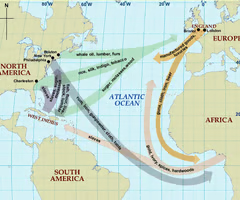
triangular trade
trade of slaves, manufactured goods, and raw materials between europe, africa, and the west indies from the 16th-19th c.
middle passage
voyage across the atlantic ocean between west coast of africa and the caribbean islands/americas; the longest part of the journey formerly made by slave ships
manioc
tropical plant grown for its starchy, tuberous roots; a staple crop in latin america (aka yuca, so yummy 🤤 !!!) and west africa
maroons
runaway african slaves in the west indies in the 17th and 18th centuries
syncretism
a blending of 2 or more religious traditions
vodun (voodoo)
a black religious cult practiced in the caribbean and southern US, combing elements of roman ritual with traditional african magical and spiritual rites
jesuits
members of the society of Jesus, a roman catholic religious order founded by ignacio’s of loyola; active missionaries in the spanish and portuguese colonies in the americas, africa, and asia

balance of power
condition of roughly equal strength between opposing countries or alliances of countries
mercantilism
an economic poly under which nations south to increase their wealth and power by obtaining large amounts of gold and silver and by selling more goods than they bought
capitalism
an economic system based on free enterprise and the private ownership of capital
absolute monarchy (absolutism)
a political system where a ruler/monarch holds absolute authority (total power); often legitimized by claims of “divine right”
westernization (of russia)
policies of czar peter the great (russia) to adopt western european ideas, technology, and culture, to promote modernization and encourage business with the west
mercantilism
economic policy under which nations (through actions of their governments) sought to increase wealth and power by obtaining large amounts of gold and silver and by exporting more goods than they imported
forbidden city
walled palace complex in beijing (built during ming dynasty) that served as a residence for ming and quinn emperors and their palace bureaucrats and concubines
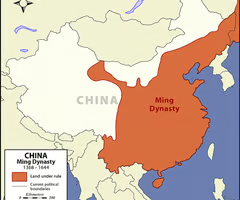
ming dynasty
ruled over china from 1368 - 1644; initially sponsored massive fleets of ships to collect tribute around the south china sea and indian ocean, but later withdrew from these missions and concentrated efforts on internal development within china and the fortification of the great wall
manchus (qing dynasty)
a people, native to manchuria, who conquered and ruled china during the qing dynasty (1644 - 1912)
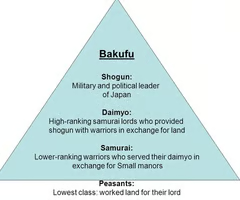
bakufu
military-style government of the japanese shogun
“gunpowder empires”
muslims empires of the ottomans, safavids, and mughals that employed cannonry and gunpowder to advance their military causes
ghazi
a warrior of islam
janissaries
christian boys taken through the devshirme system, who converted to islam, and rigorously trained as infantrymen to serve the ottoman sultan; eventually rose as an elite fighting force in the ottoman empire
sikhism
monotheistic religion, founded in northern india in the 16th c., combined elements of hinduism and islam
sufism
a group of devotional movements in islam, focused on spiritual rituals (as opposed to doctrine and sharia law)
twelve shiism
largest branch within the shi’a sect of islam; defined by its belief in 12 divinely appointed imams, who are considered the rightful spiritual and political successors of the prophet muhammad
qizilbash
swordsmen calvary of the safavid empire; fought (and lost to) to the ottoman janissaries in the battle chaldiran (1514)
cultural conservatism
tendency in traditional societies to favor continuity of customs, practices and beliefs over any new innovations or progress
divine faith
introduced by the mughal emperor, Akbar in 1582 CE, his idea was to combine islam and hinduism into one faith, but also to incorporate aspects of Christianity, zoroastrianism and jainism
vodun (voodoo again but it has more info)
a haitian faith that combine the animist beliefs from west africa with roman catholicism; evidence of the syncretism crated when european and african beliefs merged
santeria
cuban religion that combines catholics and west african beliefs
virgin of guadalupe
an apparition of the virgin mary said to have appeared to a mexican farmer (juan diego) in 1531. became an icon in mexican catholism
protestant reformation
a religious movement of the 16th c. that began as an attempt to reform the roman catholic church and resulted in the creation of protestant churches
lutheranism
religious doctrine developed by martin luther in the 16th c; believed could be achieved by faith alone, not good works
calvinism
protestant sect founded by john calvin in the 16th c.; emphasized a strong moral code and believed in predestination. they supported constitutional representative government and the separation of church and state
anglican church
form of protestantism set up in england after 1534; established by the act of supremacy during the reign of gentry VIII, with the monarch as the head of the church of england
english civil war (1642 - 1649)
armed conflict between royalists (supporters of charles I) and parliamentarians (led by oliver cromwell); resulted in the victory of pro-parliament forces & the execution of charles I
glorious revolution (1688 - 1689)
bloodless overthrow of king james II (catholic); est. william and mary (james daughter/protenstant and william of orange-netherlands) as new constitutional monarchs of england — after they constented to the english bill of rights in 1689
limited monarchy
government in which constitution or legislative body (like parliament) limits the monarch’s powers; est. in england as a result of the manga carta (1215) and the english bill of rights (1689)
enlightenment
european intellectual movement beginning in the 17th c.; focused on rational thought and the understanding of natural “natural laws” that govern human societies; politically emphasized limited government, natural rights, and individual civil liberties
seven years’ war (1756 - 1763)
conflict fought between european powers in europe, south asia, north america, and the caribbean; in north america it was also known as the “french and india war” (fought between the english and the french, along with their native american allies)