Brianna Hall PDF Intro to Anatomy Pt. 1-2 (Knowt Notes Flashcards)
 Call Kai
 Learn
Learn Practice Test
 Spaced Repetition
 Match
Match Flashcards
 Knowt Play
1/127

There's no tags or description
Looks like no tags are added yet.
Name | Mastery | Learn | Test | Matching | Spaced | Call with Kai | Chat |
|---|
No analytics yet
Send a link to your students to track their progress
128 Terms
Historic knowledge on human anatomy
Very limited, dissections were not allowed. Butchers had more knowledge of anatomy than physicians
Historically what did a physician depend on
bodily fluids such as blood, bile, phlegm which brought about bloodletting as a common medical practice
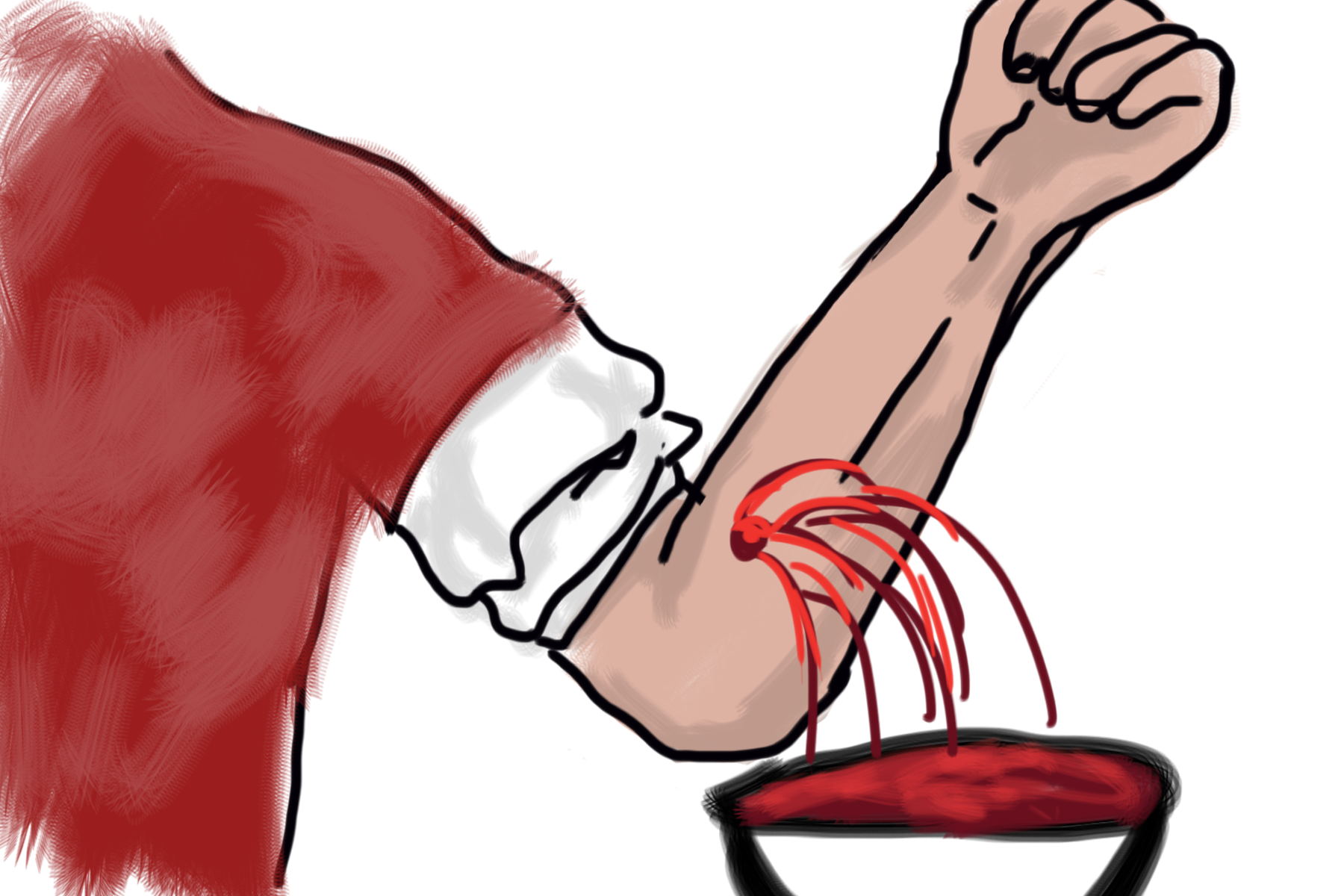
During the Renaissance how did things change?
Medical schools came about which promoted the dissection of human cadavers and use the scientific method of observation and hypothesis ttesting to prove direct links between illnesses and treatments
rather than relying on supestitious or religious traditions
Scientific Method
Single best method for obtaining true answers about the world because our current thinking can be progressively modified by new data
Anatomy Ana
up or apart
Anatomy looks at structure
Tomos
to cut
Inspection
looking
Examples
size: swollen ?
shape : broken?
color? black and blue
Palpation
touching
Examples
touching a child’s bruise
Percussion
tapping
Examples
massage therapy
diagnostic for lung conditions
Gross anatomy
features visible with naked eye
Microanatomy
A microscope is required for things such as cytology and histology
Histology
study of tissue
Auscultation
hearing
using a stethoscope to hear heartbeat
What are the four pillars of physical examination
Inspection
Palpation
Auscultation
Percussion
Cytology
Study of cells and cell types
Physiology
Function: How and why structures work
Anatomy would say that there are 206 bones, but physiology asks how those bones develop, remodel, and repair.
What is normal human body temperature
How do muscles contract
What does the frontal cortex of the brain do?
why do we sweat?
Why is Physiology important
Help provide techniques to improve function
Examples
how we know lifting weights increases muscle mass
how we develop medicines and procedures for repair or improvement
Observation Skills
deducing the function of a specific structure through structure = function
Examples:
Bones of the skull are thick and sturdy → function as protection of the brain
Thin membranes in the lungs → allow O2 to enter the blood and CO2 to leave
The lumen of the small intestine has many small folds → provide a significant amount of surface area allowing the body to absorb as much nutrients and water from food as it can to be delivered to the bloodstream
The skin of the palms and soles are thick → protects hands from injury and constant friction from daily use
Hierarchical Organization
relatively simple structures untie to form more complex structures
Examples:
Chemicals such as atoms forming molecules such as nucleic acids, lipids, carbohydrates.
Molecules form cells (200+ types)
Cells form tissues - epithelium, connective, muscle, nervous
Tissues form organs - stomach
Organ form the organ system - digestive system
Organ systems form an organism as a whole - human
Fucntions of Integumentary system
protection
regulation of body temperature
waste elimination
Production of vitamin D
sensations and insulation
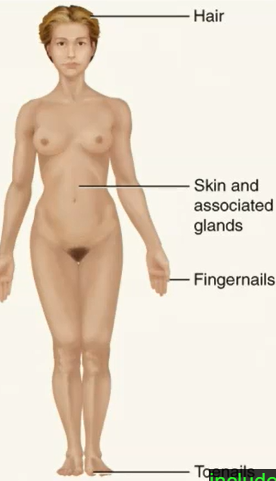
Components of integumentary system
hair
skin
fingernails
toenails
sweat glands
oil glands

Functions of integumentary system
protects body
helps regulate body temperature
eliminates some wastes
helps make vitamin D
detects sensations such as touch, pain, warmth, and cold
stores fat and provides insulation
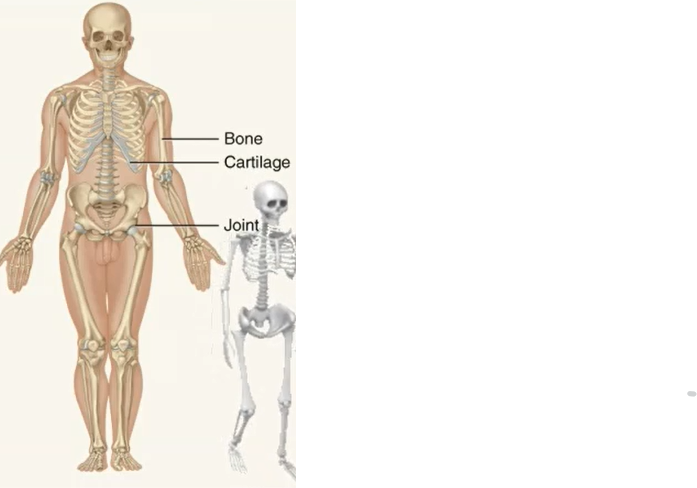
Skeletal System Components
Bones and joints of the body and their associated cartilages
joint: any place in your body where two bones meet
cartilage: Cartilage is a strong, flexible connective tissue that protects your joints and bones. It acts as a shock absorber throughout your body.
Skeletal System functions
Supports and protects body
provides surface area for muscle attachments
aids body movements
houses cells that produce blood cells (from bone marrow)
stores minerals (such as Calcium) and lipids (fats) within the marrow cavity of long bones
They do not move the body but muscles attach which do move the body

Note: some bones are more supportive, some are more protective. Examples?
supportive: femur
protective: skull
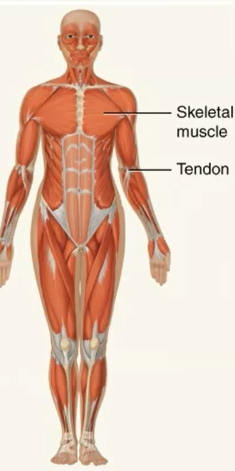
Muscular system components
Components: skeletal muscle tissue - muscle attached to bones (other muscle tissues include smooth and cardiac)
smooth: forms blood vessels and lines hollow organs like stomach and intestines
cardiac muscle: comprises the heart
skeletal: attached to bones and contracts to move the body

Skeletal system functions
Participates in body movements such as walking
maintains posture
produces heat
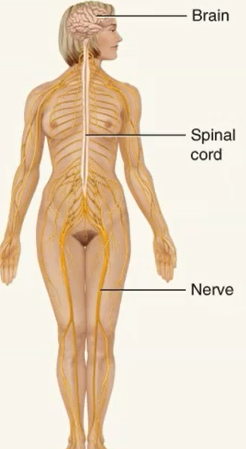
nervous system components
brain, spinal cord, nerves, and special sense organs such as eyes are ears
12 pairs of cranial nerves
31 pairs of spinal nerves: serve as highways for sensory information and outgoing motor responses
Example of motor response is the skeletal muscle contraction to remove your hand from a painful stimulus
Secretion of saliva by salivary glands when anticipating eating

Functions of the nervous system
generates action potentials (nerve impulses to regulate body activities)
detects changes in body internal and external environments
interprets change
responds by causing muscular contractions or glandular excretions
Muscle actions
specific type of movement the muscle can perform
Muscle innervation
specific nerves that excite the muscle to contract
information needed for the 100 muscles
Name
origin
insertion
action
innervation
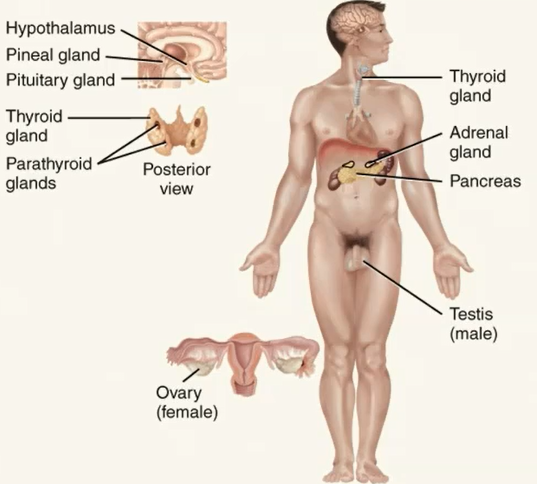
Endocrine system components
Hormone-producing glands (pineal gland, hypothalamus, pituitary gland, thymus, thyroid gland, parathyroid glands, adrenal glands, pancreas, ovaries, and testes)
Hormone-producing cells in several other organs
Functions of endocrine system
regulates body activities by releasing hormones (chemical messengers transported in blood from endocrine gland or tissue to target organ)

Epinephrine or adrenaline
hormone secreted by the adrenal glands during the emergency fight-or-flight response

Pancreas
organ that performs double duty functioning as both an endocrine organ and a digestive organ
Ovaries and testes
structures that secrete hormones as part of the endocrine system while also producing eggs or sperm as part of the reproductive system
Cardiovascular system components
blood, heart, and blood vessels
Function of the cardiovascular system
Heart pumps blood through blood vessels to the tissues of the body
blood carries oxygen and nutrients to cells and CO2 and wastes away from cells
blood helps maintain body temperature, fluid content, and acid-base balance while also helping defend against and repair damaged tissues
blood components help defend against disease and repair damaged blood vessels
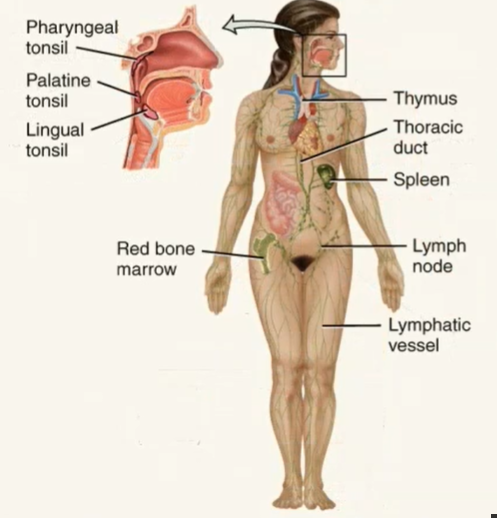
Components of the lymphatic system
lymphatic fluid and vessels, spleen, thymus, lymph nodes, tonsils, and cells that carry out immune responses such as B cells, T cells, and others
often colored light green in anatomy models and pictures
Functions of the lymphatic system
returns proteins and fluid to blood
carries lipids form GI tract to blood
contains sites of maturation and proliferation of B cells and T cells that protect against disease-causing microbes
Components of the respiratory system
Lungs and air passageways such as the pharynx (throat), larynx (voice box), trachea (windpipe), and bronchial tubes leading into and out of lungs

Functions of the respiratory system
transfers oxygen from inhaled air to blood and CO2 from blood to exhaled air
helps regulate acid-base balance of body fluids
air flowing out of lungs through vocal cords produces sounds

What is the difference between a pharynx and a larynx
Pharynx: muscular tube that starts behind the nose and mouth and goes down to the esophagus. It has three sections (nose, oro and laryngo pharynx)
Larynx: hollow structure made of cartilage and muscle located just below the pharynx and right above the trachea. Contains vocal cords and epiglottis

Larynx
voice box
Trachea
windpipe that carries air toward the bronchi
bronchi
airways that carry gases into and out of the lungs
olfaction
the sense of smell
Digestive system components
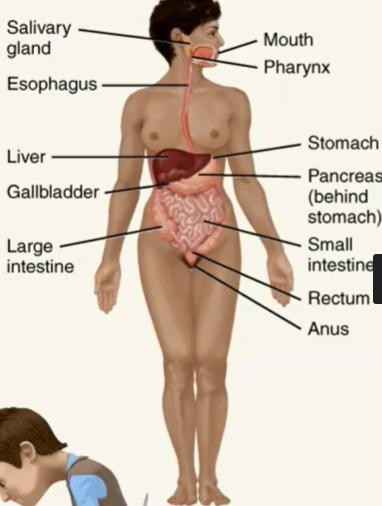
system consisting of a tube called the alimentary canal plus accessory organs (begins at mouth and ends at anus)
organs of gastrointestinal tract, a lung tube that includes the mouth, pharynx (throat), esophagus (food tube), stomach, small and large intestines, and anus
also includes accessory organs that assist in digestive processes, such as salivary glands, liver, gallbladder and pancreas
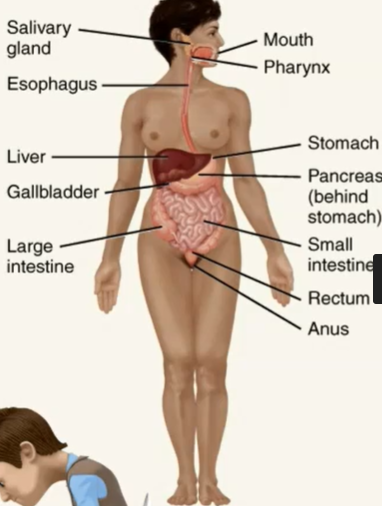
Digestive system functions
achieves physical and chemical breakdown of food
absorbs nutrients
eliminates solid wastes
organs that contribute juices and enzymes to help process foods as it moves through the alimentary canal
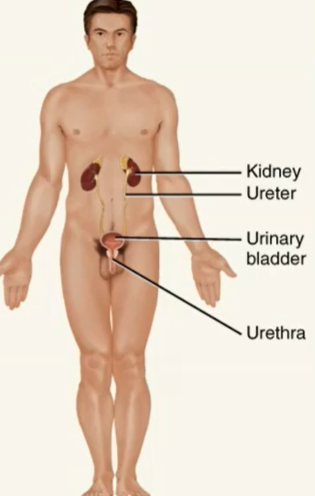
Urinary system components
kidneys, ureters, urinary bladder, and urethra
ureters → tubes that carry out urine from each kidney to bladder

urinary system functions
produces, stores, and eliminates urine
eliminates wastes and regulates volume and chemical composition of blood
helps maintain the acid-base balance of body fluids
maintains body mineral balance
helps regulate production of reed blood cells
the urinary system works with the cardiovascular system and respiratory system to maintain acid-base balance in body fluids
reproductive system components
gonads (testes and ovaries) and associated organs (uterine tubes, uterus, vagina, mammary glands; or epididymis, vas deferens, seminal vesciles, prostate and penis in males)
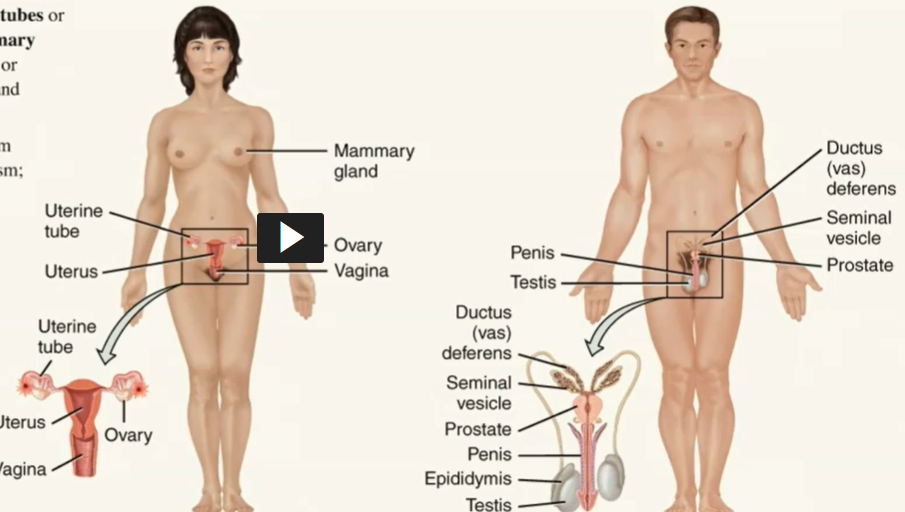
reproductive system functions
gonads produce gametes (sperm and oocytes) that unite to form a new organism
gonads also release hormones that regulate reproduction and other body processes
associates organs transport and store gametes
mammary glands produce milk
egg fertilization can occur in the tubes, while implantation in the uterus makes someone pregnant

epididymis
structure where sperm are stored after being produced in testes
prostate gland and seminal vesicles
glands that secrete fluid and nutrients into the vas deferens to provide resources for sperm during their journey out the penis
holy trinity of anatomy
what does it look like? → structure
what does it do? → function
where can I find it? → location
Why is location important in anatomy
Anatomical structures have characteristic locations
Like, how the humerus is in the upper arm and the tibia is in the lower leg.
anatomical position
a standardized method of observing or imagining the body that allows precise and consistent anatomical references.
provides common frame of reference for describing the location of structures
Do thumbs become medial when the palms are rotated backwards
no it is still lateral to the rest of the body
Why do those studying anatomy use anatomical position in related to bones and muscles
The change in body position changes how bones move and how muscle wraps around the bones. A consistent position makes learning the relationships between bones and muscles easier
If you stand on your head is your mouth superior to your eyes
body orientation does not matter, the eyes are still anatomically above
body region
large area of the body indicated by diagrams by capitalized region names
for example, the cephalic region in the image

body marking
smaller, specific point or area on the body’s surface
for example, the parts that make up the cephalic region
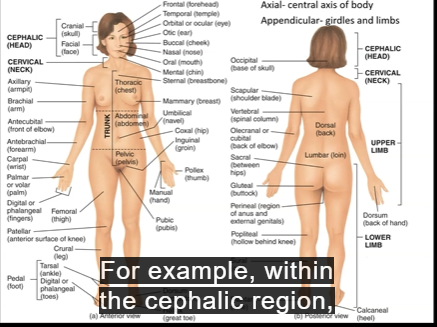
Importance of body regions and markings
form part of the language of anatomy, medicine, and science
allows precise communication of medical professionals
names of surface markings often indicate which bones or muscles lie underneath
midsagittal plane
there is only one section because only one plane divides the body into equal left and right halves
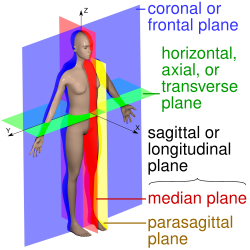
parasagittal
unequal left and right portions. infinite ways to be unequal
frontal/coronal section
divides body front-to-back separating the anterior portion from the posterior portion
coronal (crown) think of it like a headband
transverse
divides body into top and bottom portions like a donut blow-up
oblique section
a section made at an angle that is not straight up -and-down or straight side-to-side

Why are planes important in anatomy or when studying organs
an organ can look different depending on how it is sectioned, like the brain for example depending on where it is cut
Gross anatomy in helping with identifying a section
being familiar with gross anatomy helps us recognize which type of section is being shown in an image or medical scan
medial
toward the middle of the body

lateral
toward the side of the body
ex) ears are lateral to the nose

superior
above another structure

inferior
below another structure

proximal
close to the point of attachment or origin of a limb
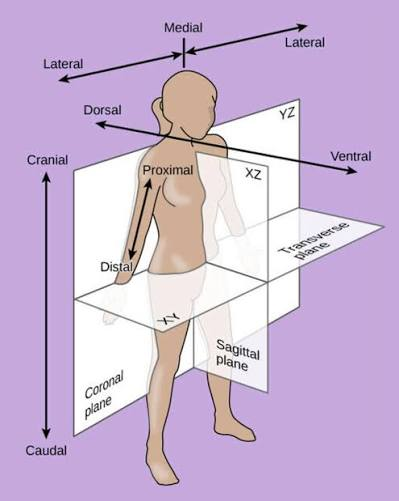
distal
farther away from the point of attachment or origin of a limb
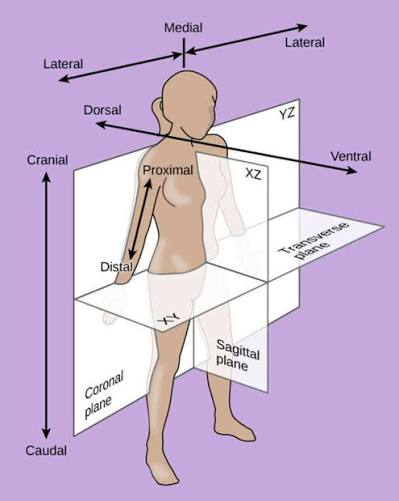
proximal and distal is used where?
use specifically for upper and lower limbs
ex) elbow, shoulder and wrist
the elbow is distal to the shoulder but proximal to the wrist
Why are proximal and distal considered relative terms
its because they describe the relationship between one body part and another rather assigning an absolute location
superficial
closer to the surface of the body
deep
farther toward the inside of the body
lpsilateral/lateral
on the same side of the body
ex) right hand and right foot are on the same side
contralateral
on opposites sides of the body
ex) right food, left hand
unilateral
only on one side fo the body
ex) a burn unilaterally (affects only one side of the body)
supine
face up
proe
lying down
Anterior
toward the front of the human body
posterior
toward the back of the human body
ventral
in humans, corresponds to the front surface
dorsal
corresponds to back surface
Is ant&ventral and post&dorsal interchangable for all animals?
no because humans for example walk on two legs so the front and back side will look different than for example a four-limbed walking animal
stomach relative to heart
inferior
brain relative to forehead
posterior
eyes relative to mouth
superior
heart relative to lungs
medial
wrist relative to elbow
distal
thumb relative to hand
lateral side of hand
ears relative to nose
lateral and external
body cavities
internal spaces that contain and protect organs. they can be thought of like Russian nesting dolls where larger cavities contain smaller cavities containing specific organs