APES Fall Final Review
 Studied by 1 person
 Call Kai
 Learn
Learn Practice Test
 Spaced Repetition
 Match
Match Flashcards
 Knowt Play
1/140

Earn XP
Description and Tags
Semester 1
Name | Mastery | Learn | Test | Matching | Spaced |
|---|
No study sessions yet.
141 Terms
community ecology
the study of how different species interact with each other within a particular habitat or ecosystem
Explain how the availability of resources influence species interactions
Abundant resources reduce competition and keep interactions stable, while limited resources intensify competition, affect predator-prey dynamics, and drive species to partition resources for survival
How does the availability of resources influence predator-prey interactions?
Abundant resources lead prey to thrive, tending to increase predator populations, which can then reduce the prey population, leading to a subsequent decline in predators (forming a cycle). When resources and prey are scarce, predator populations may decline, migrate, or switch to alternative prey.
Also impacts the trade-off prey face between maximizing food intake and minimizing predation risk.
How does the availability of resources influence competition?
Abundant resources lead to less intense competition, supporting higher populations. Scarce resources lead to more intense competition, which can result in exclusion, conflict, and even evolutionary adaptation.
resource partitioning
an ecological process essential to biodiversity where two species divide a resource based on differences in their behavior or morphology. Eg: using different parts of a habitat, occupying different ecological niches, feeding at different times, etc.
biodiversity
The diversity of life forms in an environment. High biodiversity indicates ecological resilience
What increases a population’s fitness?
Genetic diversity and biodiversity
population fitness
the ability of a population to survive and reproduce
genetic diversity
a measure of the genetic variation among individuals in a population; larger genetic diversity increases population fitness by having a wider gene pool that allows more individuals to possess beneficial traits which enhance adaptability and resilience.
population bottleneck
when a large population declines in number, the amount of genetic diversity carried by the surviving individuals is greatly reduced
how does a population bottleneck affect biodiversity?
drastically reduces biodiversity by creating a limited gene pool, making the remaining organisms less able to adapt to new challenges and pressures
species richness
the total number of species in an ecosystem (S)
ecological succession
the predictable replacement of one group of species by another group of species over time; increases species richness and biomass over time but productivity declines as ecosystems reach a climax
primary succession
establishment and development of an ecosystem in an inhabited area; ecological succession occurring on surfaces with bare rock and no soil. eg: volcanic lava creates new land
secondary succession
the succession of plant life that occurs in established ecosystems that have been disturbed but have not lost their soil; faster scale than primary; eg: fires, floods
keystone species
a species that is not very abundant but has large effects on an ecological community eg: beavers (ecosystem engineers), sea stars (predators/eat mussels), bees (pollinators/mutualists)
indicator species
a species that demonstrates a particular characteristic of an ecosystem. Eg: lichens indicate air quality through sensitivity to air pollution, mayflies indicate good water quality
pioneer species
in primary succession, the first organisms to inhabit new land that are carried by weather. Eg: moss and lichen that can grow on bare rock
succession of species notes
As pioneer species die, they become organic matter that helps create new soil. Mid-successional plants like grasses are easily disperse and improve soil quality. New species like trees colonize the area and outcompete mid-successional species.
ecosystem services
life-supporting resources such as clean water, timber, fisheries, and crops that come from natural resources or functions that ecosystems carry out that have measurable economic value to humans
provisioning services
Goods taken and used directly from ecosystems or made from natural resources (eg: water, wood, and food)
Regulating services
natural ecosystems regulate climate/air quality, reducing storm damage and healthcare costs (Eg: barrier islands)
Supporting services
natural ecosystems support processes we do ourselves, making them cheaper and easier (eg: bees pollinate crops)
Cultural services
Non-material benefits people gain from nature (Eg: spiritual enrichment, recreation)
Disruptions to ecosystem services
Human activities such as deforestation, pollution, and urbanization. Natural disruptions such as extreme weather, natural disasters, and invasive species.
primary productivity
the rate of converting solar energy into organic compounds over a period of time through processes like photosynthesis
gross primary productivity (GPP)
total amount of solar energy that producers in an ecosystem capture via photosynthesis over a given amount of time (rate of photosynthesis by plants)
net primary productivity
the energy captured by producers in an ecosystem minus the energy producers respire (energy made by plants and algae; represents energy available for other organisms in the food web to consume)
GPP and NPP equation
GPP - R = NPP
food web
a model of how energy and matter move through two or more interconnected food chains; productivity = complex food webs
what happens when a species is removed from the food web?
Can destabilize the food web/ecosystem through population imbalances: if a predator is removed, prey populations may explode due to a lack of predators leading to overconsumption of their own food sources. Decreases biodiversity and disrupts energy flow
10% Rule
Of the total biomass available at a given trophic level, only about 10 percent can be converted into energy at the next highest trophic level. 90% of the energy is lost to heat, life processes, and waste.
biome
a group of ecosystems characterized by distinct climate conditions, plants, and animals found in a particular region of the world
hot desert
a biome characterized by hot temperatures, extremely dry conditions, and sparse vegetation
savanna / tropical seasonal forest
a grassland biome marked by scattered trees, warm temperatures, migratory animals, and distinct wet and wildfire dry seasons
shrubland / woodland
a biome characterized by woody plants, hot, dry summers and mild, rainy winters
taiga / boreal forest
a forest biome primarily made up of coniferous evergreen trees that can tolerate cold winters and short growing seasons
temperate grassland / cold desert
a biome characterized by grasses, deep nutrient rich soil, cold, harsh, winters and hot, dry, summers. (think prairie)
temperate rainforest
a coastal biome typified by the tallest trees in the world, foggy, moderate temperatures and high precipitation
temperate seasonal forest
a biome characterized by deciduous trees, four distinct seasons with warm summers and cold winters with over 1 m of annual precipitation
tropical rainforest
a warm and wet biome near the equator with little seasonal temperature variation, high precipitation, and thin nutrient poor soil
tundra
a cold and treeless arctic biome with low-growing vegetation and frozen subsoil
k-selected species
a species with a low intrinsic growth rate (lower reproductive rate, fewer offspring, long lifespans) that causes the population to increase slowly until it reaches the carrying capacity of the environment; better at maintaining carrying capacity (eg: elephants, humans)
r-selected species
a species that has a high intrinsic growth rate (short lifespans + early maturity, produce a large number of spring with a low survival rate), and their population typically increases rapidly (Eg: mosquitoes lay thousands of eggs)
Survivorship curve
a graph that represents the distinct patterns of species survival as a function of age
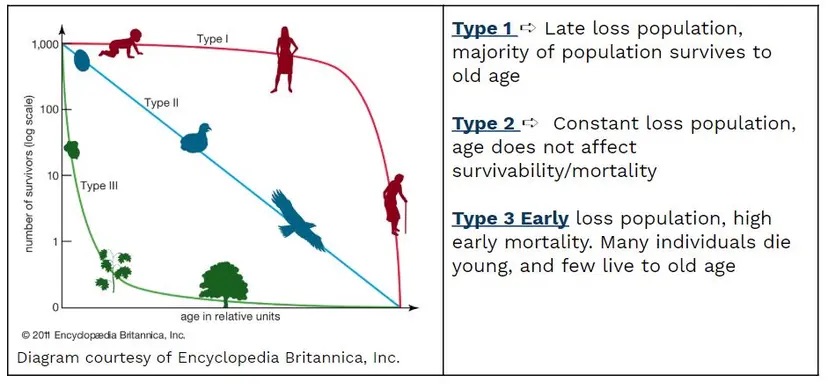
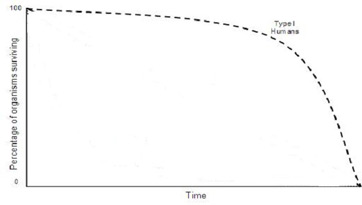
type 1 survivorship curve
a pattern of survival over time in which there is high survival throughout most of the life span, but then individuals start to die in large numbers as they approach old age (eg, human, applies to k-selected as they provide care for their young, increasing chance of survival to old age)
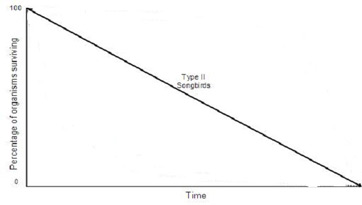
type 2 survivorship curve
a pattern of survival over time in which there is a relatively constant decline in survivorship throughout most of the life span (eg. song bird, specialist species)
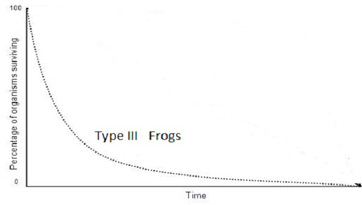
type 3 survivorship curve
a pattern of survival over time in which there is low survivorship (a high death rate) early in life with few individuals reaching adulthood (applies to r-selected species as they provide no parental care = high infant mortality)
carrying capacity
the maximum number of organisms that can be supported by an existing habitat or ecosystem without degradation of resources, denoted by K
overshoot
when a population becomes larger than the environment’s carrying capacity
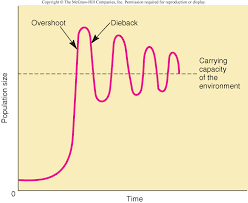
dieback
a rapid decline in a population due to overshoot resulting in resource depletion and environmental degradation
what are some factors that affect human population growth or decline?
environmental resistance factors— density dependent and independent
density-dependent factor
a factor that influences an individual’s probability of survival and reproduction in a manner that depends on the size of the population; such as competition for resources, predation, and disease; tend to be biotic
density-independent factor
a factor that has the same effect on an individual’s probability of survival and reproduction rate at any population size; such as natural disasters and severe weather events; tend to be abiotic
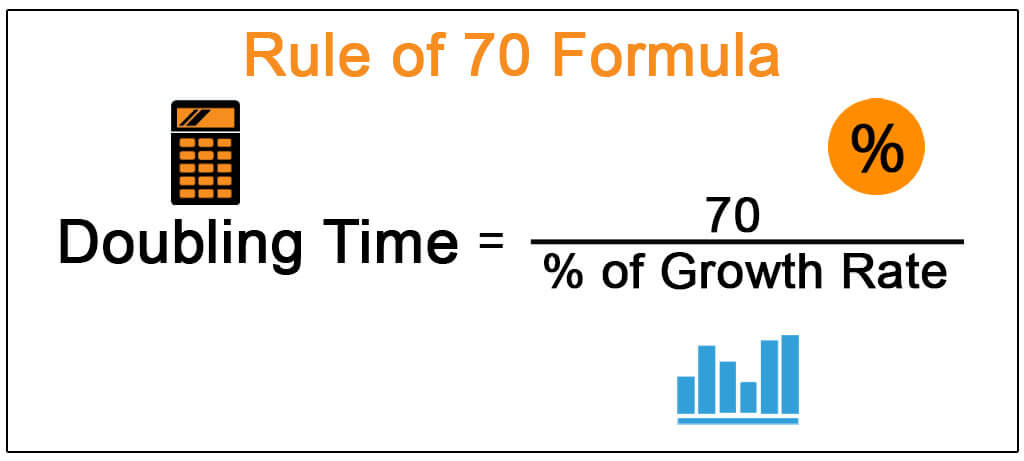
rule of 70
a method which dictates that by dividing the number 70 by the percentage population growth rate we can determine a population’s doubling time
ecological tolerance
fundamental niche; range of abiotic conditions an organism can endure before injury or death results. eg: changes in temperature, pH, or sunlight
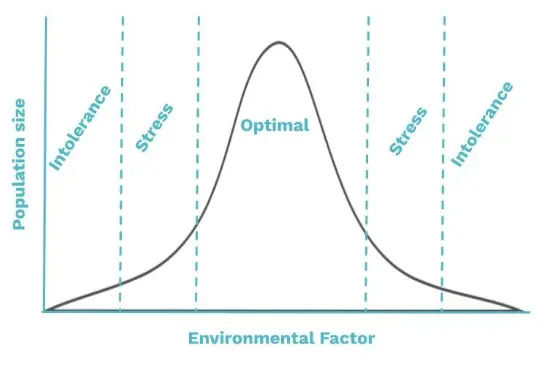
Why can ecological tolerance apply to individuals and to species?
For individuals, tolerance is physiological. For species, tolerance describes a more combined range across individuals and populations, which helps determine the different niches and geography of certain species. Both species and individual organisms have a range of tolerance for all the different environmental conditions of their habitat.
per capita usage
total energy consumption / population
percent change
(new-original)/original x 100
percent growth rate
(births - deaths) / population x 100
tragedy of the commons
Tendency of a shared, limited resource to become depleted if not regulated in some way.
causes of overfishing
fish industry competing for fish for maximum profit, lack of regulation in public resources, increasing demand
overfishing problems
endangering/wiping out species, unsustainable resource extraction, habitat/ecosystem loss, decreased biodiversity, future economic decline as fish industry runs out of supply
sustainability
the ability to meet the needs of the present without compromising the ability of future generations to meet their own needs through the balance of environmental, economic, and social factors.
3 factors of sustainability
environmental, economic, social-cultural
groundwater
found underground in between layers of soil and rock (aquifers). Replenished through percolation.
surface water
found in above-groun bodies of water such as lakes, rivers, and oceans. Replenished by rain and snowmelt.
purpose of water in ecosystem
supports the survival + growth of all living organisms, provides habitat for animals, essential for biodiversity and cycling nutrients
purpose of water in agriculture
necessary for irrigation to grow crops + provides drinking water for livestock. Largest use of water globally
purpose of water in industry
used in production + operation, producing energy, cooling power plants, and cleaning
purpose of water in household:
used for drinking + cooking and hygiene (bathing, toilet seat, washing hands, laundry, dishes)
largest domestic use of water
flushing toilets
salt water vs. fresh water composition
97% salt water, 3% fresh water
drinkability of water
Only fresh water is drinkable. Drinkable water is free from harmful chemicals and contaminants.
nonrenewable energy source
an energy source with a finite supply, primarily the fossil and nuclear fuels; take millions of years to from
renewable energy sources
sources of energy that are infinite
nuclear energy
the most powerful energy, providing a lot of electricity through nuclear fission while having zero emissions.
nuclear benefits
powerful and cheap— 128,000x more powerful than coal. Compared to the large amount of electricity it produces, the fuel costs close to nothing.
nuclear problems
even when the fuel can no longer produce electricity, It has a lot of energy, making it radioactive and dangerous to handle. Plants are also expensive to build.
bioenergy
biofuels are fuels produced by biomass, such as sugar fermented into alcohol or plant oil turned into diesel.
biofuel benefits
regional supplement that has the potential to be cheaper than fossil fuels. New technology involving bio fuels such as cellulosic ethanol could become the cheapest liquid fuels. Significantly healthier than fossil fuels as a renewable resource
biofuel problems
requires a lot of land, water, fertilizer, and money. Not currently reliable with the present technology, supply, and costs.
coal
a fossil fuel that is easy to use and affordable. a solid fuel formed from the remains of plant materials preserved hundreds of millions of years ago. creates heat, which boils water into steam that spins a turbine connected to a generator that generates electricity.
coal benefits
cheap and available, making it an affordable resource, especially for developing countries.
coal problems
coal is dirty, mining it is dangerous and produces high volumes of pollutants and ash, and burning it releases significant carbon dioxide emissions
geothermal
energy from the heat that rises to the surface from within the Earth. It’s used to heat homes and generates electricity by turning a steam turbine.
geothermal benefits
broad applications and can be powerful in locations with high-temperature geothermal areas. It’s renewable with a low footprint.
geothermal problems
high-temperature geothermal areas are few and far between, making benefits less distributed. There is also low energy return for high cost, and the cost highly depends on location.
hydropower
the ideal electricity resource, which produces energy by water being moved uphill by the weather and being brought down through turbines by gravity
hydropower benefits
since dams can spin turbines almost instantly, hydro can follow electricity demands quickly with zero emisisons
hydro problems
water has many other purposes, so hydro plants may not be long lasting due to droughts and a limited water-supply. Places to build plants are limited.
natural gas
a greenhouse gas and fossil fuel that plays a role in every energy area such as industry, electricity, and transportation. burned to heat water into steam that powers a turbine connected to a generator.
natural gas benefits
cheap and abundant, cleaner than other fossil fuels
natural gas problems
20 times more potent than carbon dioxide, which makes accidental releases very hazardous. hydraulic fracturing can contaminate water supplies.
oil
a fossil fuel able to pack energy into a lightweight and compact liquid form; main transportation fuel
oil benefits
very cheap; versatile for not just transportation but heating, power production, and chemical feedstock.
oil problems
causes a lot of pollution + emissions, and oil spills can be very dangerous. It is basically our only transportation fuel: high oil prices can cause a recession or changes in supply can destroy the global economy.
solar
solar power gets energy from the sun to generate electricity
solar benefits
fuel for solar power is free, and panels are easy to build. It is a cheap resource with zero emsisions
solar problems
large solar plants require a lot of land. it is cheap at the source, but scaling it requires money. There is also no power at night, and little amounts in the morning, evening, and depending on the weather