The Human Body: An Introduction
 Call Kai
 Learn
Learn Practice Test
 Spaced Repetition
 Match
Match Flashcards
 Knowt Play
1/52

Earn XP
Description and Tags
Ch.1 / Exam #1
Name | Mastery | Learn | Test | Matching | Spaced | Call with Kai | Chat |
|---|
No analytics yet
Send a link to your students to track their progress
53 Terms
Anatomy
The various structures of the body, and their relationship to one another
Gross Anatomy
Structures visible to the naked eye
Microscopic Anatomy
Structures that are microscopic
Physiology
How these individual body parts function on a normal level
Principle of Complementarity of Structure & Function
What a structure can do is dependent on its form
Chemical Organization
Atoms combine to form molecules
Cellular Organization
The smallest unit of life
Tissue Organization
Aggregations of living cells that carry out a similar function
Organ Organization
Two or more tissues operate together to perform a certain function
Organ System Organization
Multiple organs work together
Organismal Organization
All organ systems working together to keep the organism alive
Function: Maintaining Boundaries
Separates some parts from other parts
Function: Movement
Cooperation of skeletal & muscular systems to coordinate actions; conscious or not
Function: Responsiveness
Sensing environmental changes and responding to them
Function: Digestion
Food is broken down to simple molecules to be absorbed to blood & delivered to various tissues
Function: Metabolism
The sum of all the chemical reactions in the body
Function: Excretion
Removal of waste produced during digestive & metabolic functions
Function: Reproduction
Cells must divide for survival; production of offspring
Function: Growth
Increase in the number of body cells, or increase in size of individual cells themselves; building must occur faster than breakdown
Survival Needs: Nutrients
Brough into body by ingestion
Survival Needs: Oxygen
Cells can only survive a few minutes without
Survival Needs: Water
Provides environment for chemical reactions and serves as fluid base for secretions and excretion
Survival Needs: Endothermy
Body temperature must be maintained for chemical processes to occur
Survival Needs: Atmospheric Pressure
Breathing and gas exchange occur at an appropriate level
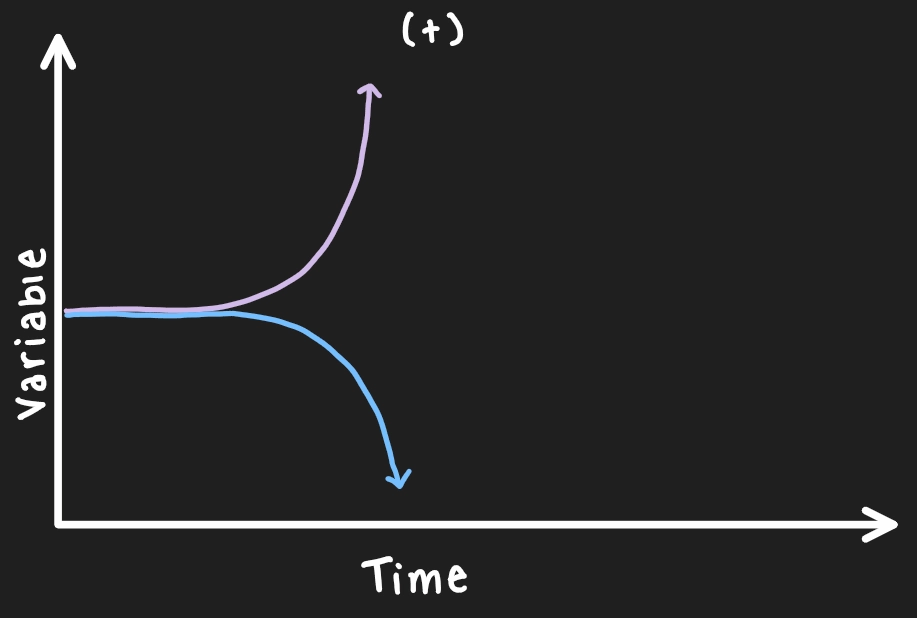
Homeostasis
The maintenance of the internal condition of the body despite a constantly changing external environment, not a static state
Variable
What organ or function is being controlled or regulated to maintain homeostasis
Receptor
Respond to a change in variable dependent on body states
Control Center
Receive signals from receptors to determine if/what needs to be changed
Effector
Receive signals from control centers that makes the necessary changes
Negative Feedback Mechanism
Regulatory mechanism that causes the variable to change in a direction that is opposite of the initial change

Positive Feedback Mechanism
Cause the original change of the variable to be enhanced
Reference Point
Anatomical position; right vs. left is always viewed in terms of the person being observed
Directional Terms
Helps us explain one body part in relation to the others
What is the opposite of dorsal?
Ventral
What is the opposite of lateral (further away)? (Ex. eyes & ears)
Medial (closer)
What is the opposite of distal (further away)? (Ex. arms & legs)
Proximal (closer)
What is the opposite of deep? (Ex. heart & skin)
Superficial
What is the opposite of superior? (Ex. head & neck)
Inferior
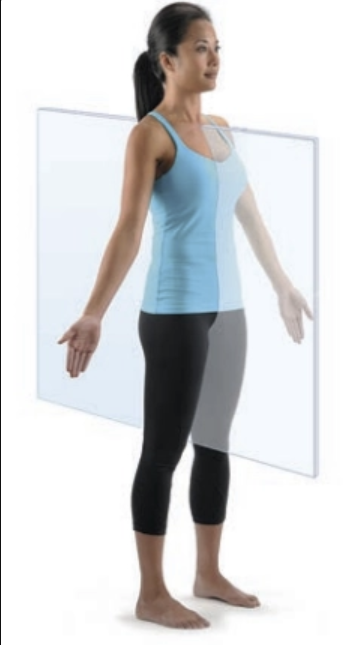
Sagittal
Divides body into left and right (exactly in half)

Frontal
Divides body into anterior and posterior
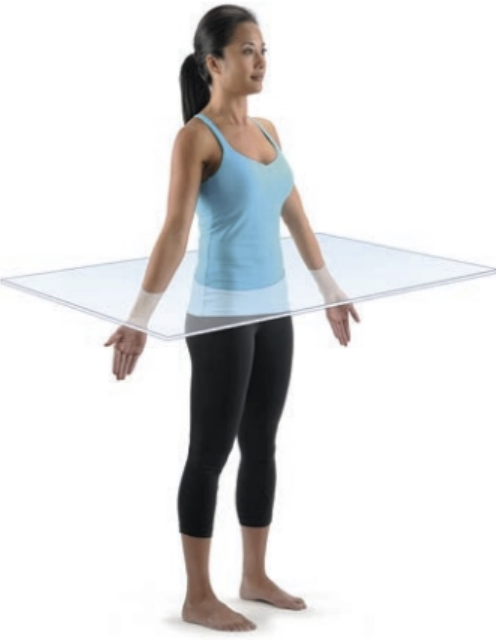
Transverse
Divides body in superior and inferior parts
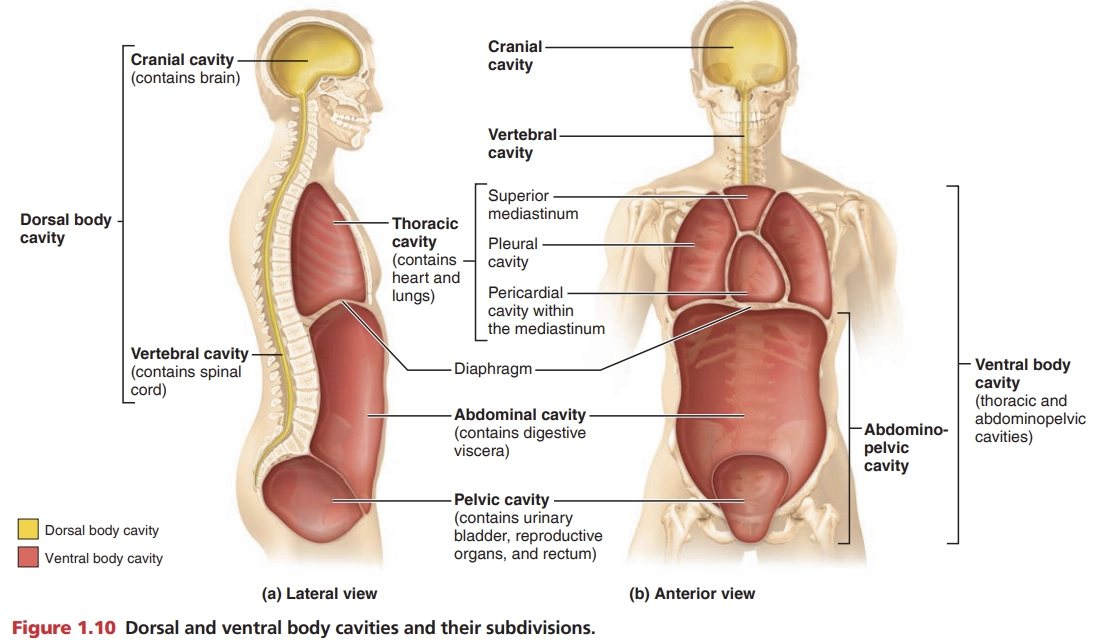
Dorsal Body Cavity
Protects organs of the central nervous system
What is the dorsal body cavity composed of?
The cranial & spinal cavity
Ventral Body Cavity
Houses visceral organs
Ventral Body Cavity: Thoracic Cavity
Contains heart & lungs
Ventral Body Cavity: Abdominopelvic Cavity
Contains the rest of the organs; separated by diaphragm
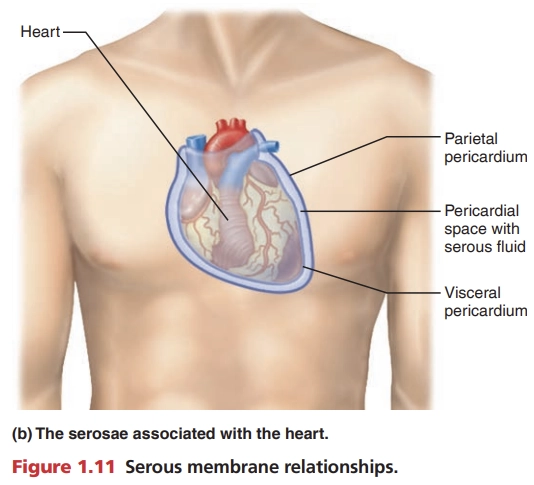
Serious Membrane (Serosa)
Double layered membrane
Serosa Membrane: Visceral
Innermost layer covering the organ
Serosa Membrane: Parietal
Outer layer lining the body wall of the cavity
How are the serosa layers separated?
Small amount of serous fluid to reduce friction
Pericardium Serous Membrane
Surrounding the heart
Pleura Serous Membrane
Surrounding the lungs
Peritoneum Serous Membrane
Surrounding most organs of the abdominopelvic cavity