Veterinary Pain Management and Anti-inflammatory Drugs: Chapter 7 Overview
 Call Kai
 Learn
Learn Practice Test
 Spaced Repetition
 Match
Match Flashcards
 Knowt Play
1/53

There's no tags or description
Looks like no tags are added yet.
Name | Mastery | Learn | Test | Matching | Spaced | Call with Kai | Chat |
|---|
No analytics yet
Send a link to your students to track their progress
54 Terms
What are nociceptors?
Pain receptors that may be activated through mechanical, thermal, and chemical stimulation.
What is physiologic pain?
Pain that can be beneficial, allowing an animal to avoid damaging stimuli.
What is pathologic pain?
Pain resulting from tissue or nerve damage, classified by origin, severity, or duration.
What is visceral pain?
Pain that arises from hollow abdominal organs, peritoneum, heart, liver, and lungs.
What is neuropathic pain?
Pain that arises due to injury to the peripheral or central nervous system (CNS).
What is preemptive pain management?
Pain management that occurs before tissue damage to prevent 'wind-up' pain.
Define analgesia.
Absence of the sensibility to pain; relief of pain without loss of consciousness.
What are the five cardinal signs of inflammation?
Heat, Swelling, Pain, Redness, Loss of Function.
What initiates the inflammation pathway?
Cell damage that exposes cell membrane phospholipids.
What are the mediators of inflammation produced during the arachidonic acid pathway?
Prostaglandins, leukotrienes, and thromboxanes.

What are the four steps of pain sensation production?
Transduction, Transmission, Modulation, Perception.
What is the role of local anesthetics in pain management?
They block the transduction of painful stimulation at sensory nerve endings.
What is the function of narcotics?
They relieve pain by binding to opioid receptors in the CNS and PNS.
What are the side effects of narcotics?
Sedation, respiratory depression, nausea, and constipation.
What is the difference between opioid agonists and antagonists?
Agonists activate opioid receptors, while antagonists block their response.
What is the ceiling effect in analgesics?
The dose beyond which there is no additional analgesic effect, increasing side effects instead.
What is tramadol classified as?
A central acting analgesic with complex mechanisms for analgesia and sedation.
What is the purpose of analgesic cocktails?
To enhance analgesia by combining two or more analgesics.
What are local anesthetics commonly used for?
To numb nerves and stop pain signals from being transmitted.
What is the antidote for acetaminophen toxicity in cats?
Acetylcysteine (Mucomyst).
What is the role of gabapentin in pain management?
An adjunct for nerve pain that acts as a CNS depressant.
What is the primary use of methocarbamol?
A muscle relaxant used as an adjunct for musculoskeletal pain.
What is the significance of the term 'wind-up' pain?
Pain that becomes more intense due to repeated stimulation of the nervous system.
What is the function of NSAIDs in pain management?
To reduce inflammation and relieve pain without causing loss of consciousness.
What is the mechanism of action for opioids?
They alter nerve impulse transmission and perception of pain within the CNS.
What is the difference between full agonists and partial agonists in opioid analgesics?
Full agonists activate receptors fully, while partial agonists activate them to a lesser degree.
What is the role of butorphanol in pain management?
A partial μ antagonist/κ agonist used for mild visceral pain relief and cough suppression.
What is acetaminophen commonly known as?
Tylenol
What is the primary function of acetaminophen?
It decreases fever and pain perception but is not an anti-inflammatory.
Why are cats particularly sensitive to acetaminophen?
Cats have diminished biotransformation ability, leading to methemoglobinemia and methemoglobinuria.
List the signs of inflammation.
Redness, pain, swelling, heat.
What is the role of glucocorticoids in inflammation?
They inhibit phospholipase, reducing inflammation.
What are the common side effects of glucocorticoids?
PU/PD (polyuria/polydipsia), polyphagia, panting, GI ulceration.
What is the importance of tapering glucocorticoids?
To avoid negative feedback effects and withdrawal symptoms.
What are the three types of glucocorticoids based on duration of action?
Short Acting (
Name a short-acting glucocorticoid.
Cortisone or hydrocortisone.
What is a common contraindication for glucocorticoids?
Viral or fungal diseases.
What is the mechanism of action of NSAIDs?
They inhibit cyclooxygenase (COX) enzymes.
What are the two forms of COX enzymes?
COX-1 and COX-2.
What is a key difference between COX-1 and COX-2?
COX-1 promotes prostaglandins for normal physiological functions, while COX-2 is induced during inflammation.
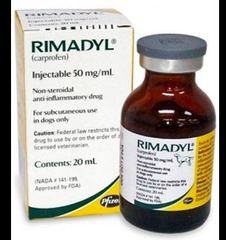
What is a common NSAID used for osteoarthritis in dogs?
Carprofen (Rimadyl).
What is a side effect of meloxicam?
GI ulceration and renal failure.

What is the rule regarding the use of NSAIDs and steroids?
Never give an NSAID and a steroid at the same time due to increased risk of GI ulceration.
What is the role of antihistamines in pain management?
They inhibit the effects of histamine and can control allergic responses.
What are glycosaminoglycans (GAGs) used for?
They are anti-inflammatory agents that help in joint health.

How can pain be assessed in animals?
By observing changes in posture, temperament, and locomotion.
What is a behavioral sign of pain in dogs?
Aggression or changes in vocalization.
What is a physiologic sign of pain in cats?
Tucked limbs and arched back.
What should be done if injecting glucocorticoids intra-articularly?
Use aseptic technique.
What is the significance of washout periods between different anti-inflammatory medications?
To prevent adverse effects and ensure safety.
What is a potential side effect of using NSAIDs in cats?
Renal failure.
What is the action of glucocorticoids on fibroblast function?
They decrease fibroblast function, which can impair wound healing.
What is the recommended dosing strategy for glucocorticoids?
Use the minimum effective dose and avoid abrupt cessation.
What is the role of omega-3 fatty acids in pain management?
They have anti-inflammatory properties and support joint health.