ANS 230 Exam 1 Question Format
 Call Kai
 Learn
Learn Practice Test
 Spaced Repetition
 Match
Match Flashcards
 Knowt Play
1/219

There's no tags or description
Looks like no tags are added yet.
Name | Mastery | Learn | Test | Matching | Spaced | Call with Kai | Chat |
|---|
No analytics yet
Send a link to your students to track their progress
220 Terms
What is not consider a nutrient?
Energy
What is ingestion and Digestion/Absorption?
Ingestion is feed uptake
Digestion is breakdown and uptake of feed
What is Metabolism, Assimilation, and Exctretion?
Metabolism is the chemical transformations
Assimilation is use for structure/function
Excretion: waste removal
What is metabolism?
energy comes from breaking bonds measured by ATP
It the interconversion of nutrients to supply energy
What is Catabolism?
Breakdown of nutrients
Generates chemical energy and heat
Exergonic glucose → ATP
What is anabolism?
Assimilation of new chemicals for structure and function- uses energy. Requires energy (endergonic) amino acids → muscle protein
What is redox protential?
a measure of the tendency of chemicals (nutrients) to acquire electrons or lose electrons and thereby be reduced or oxidized respectively. It is measured in volts (V), or millivolts (mV).
Electron move with protons (H+)
Generation of ATP
What is oxidation and reduction?
Chemical rx that results in the loss of electrons (oxidation)
chemical rx that results in the gain of electrons (reduction)
What is the first law of thermodynamics?
Matter and Energy cannot be created or destroyed
Laws of conservation of mass
They are always conserved.
In nutrition this means:
energy out must equal energy in
energy changes form as it goes through our body
What is intake?
retained + lost
What are all the factors that affect nutrient use by animals?
What animal
Health and well-being
Weight
Life stage
resources
metabolic rate
Intake: palpability, access
Gut environment: Microbiome, pH
Digestion & Absorption: enzymes, transit time
These factors explain variation in animal performance
What is the organization life and what are the different phases listed 1-7?
Atoms
Water molecule
Cellular level
tissue
organ
organ system
Organismal level
atoms
Simplest building blocks of matter: subatomic particles, atoms and molecules. Atoms made of protons and electrons.
water molecule
Biological molecules are C based. Two or more atoms combine to form a molecule.
cellular level
A variety of molecules combine to form the fluid and organelles of a body cell.
Cell- smallest independently functioning unit.
Bacteria- single celled organisms.
Animals- multicellular organisms.
Tissue
Group of many cells that work together to perform a specific function. Nutrients move in and out
Organ
Anatomically distinct structure composed of two or more tissue types. Each organ performs a specific physiological function
Organ system
Group of organs working together to perform major functions to meet physiological needs of the body
organismal level
Many organ systems work harmoniously together to perform the functions of an independent organism.
What is a prokaryotic cell?
Simple cell without a membrane-bound nucleus or organelles; Unicellular and include Bacteria and Archaea.
What is a Eukaryotic cell?
More complex, contains a membrane-bound nucleus and specialized organelles (such as mitochondria, and endoplasmic reticulum) and include animals, plants, fungi, and protists
What is the size difference of prokaryotic and eukaryotic cells?
Bacterial Cell: ~0.5 to 5nm in diameter
Animal cell: ~10 to 100 nm in diameter
An average animal cell is ~10-20 times larger in diameter than a bacterial cell, corresponding to roughly 1000 x greater volume.
If a bacterial cell were the size of a marble, and animal cell would be about the size of a tennis ball to a grapefruit.
What are the 6 nutrients
Carbohydrates- CHO, energy (glucose, starch).
Proteins- AA; energy; enzymes, structure, signaling (never use for energy requirements)
Lipids- energy (long term); membranes; insulation,
Water- temperature regulation; solvent for rxs.
Minerals- structural (Ca, P) vs regulatory (Na, K).
Vitamins- cofactors in metabolism
What are your sources of energy?
Carbohydrates, Proteins, Lipids
What are the two size amounts tour can find nutrients in?
large or small amounts
Macro
Micro
What are the organic and inorganic nutrients and what does it mean?
Minerals
H2O
Don’t have Carbons
What is dispensable nutients?
Do not need to include in diet (to meet animal’s requirements)
Synthesized by the animal (they can make it)
Still considered essential (still important)
What is the indispensable nutrient?
Must be provided in the diet.
Cannot be synthesized by the animal (can’t make it)
Conditionally indispensable ie. not synthesized in sufficient quantities (not made by the animal enough to meet requirements)
What are the factors that result in Conditionally indispensable?
Growth & Life stage
Disease/stress
Dietary imbalance
When it comes to Energy & Nutrition how are Plant Cell and Animal Cells different?
Plant Cell
Autotropic (make own food) using chloroplast for photosynthesis (sunlight to glucose).
Animal Cell:
Heterotrophic (eat others) using mitochondria for cellular respiration (glucose to ATP).
When it comes to Structure & support how are Plant Cell and Animal Cells different?
Plant Cell:
Rigid cell wall (cellulose) provides fixed shape, protection, prevents bursting in water.
Animal Cell:
Flexible cell membrane only, allowing movement, shape changes, & immune function (no wall).
When it comes to waste how are Plant Cell and Animal Cells different?
Plant cell:
Large central vacuole maintains turgor pressure (firmness) and stores water/ nutrients/waste
Animal cell:
Multiple small vacuoles/vesicles, rely on lysosomes (waste breakdown).
When it comes to Communication how are Plant Cell and Animal Cells different?
Plant cell:
Plasmodesmata (channels through cell walls) for direct cell-to-cell connection
Animal Cell:
Gap junctions, allowing flexibility in tissue structure
What do Plant cells store energy as?
Starch
What do Animal Cells store energy as?
glycogen or triglycerides
The animal cell contains a cell membrane composed of what?
a phospholipid bilayer and protein - no cell wall
Where do plants synthesize amino acids from
inorganic N (reduce nitrates)
What makes of 70% of what air we breathe?
Nitrogen
What is the 2nd law of thermodynamics?
In any energy transfer, the entropy (disorder) increases i.e. it is not 100% efficient
Never 100%, always a loss
Chemical reactions release heat
Heat is dissipated from the body
The efficiency of metabolism is related to the generation of heat
Every time you eat your body temp rises
How is energy typically measured by?
metabolic rate
what is metabolic rate? How is it expressed? How is is calculated
Is the amount of energy an animal uses over a specific period of time.
Usually expressed in units like calories (kcal) per unit time. (measurement of energy = calories)
Calculated by measuring O2 consumed and CO2 produced (indirect calorimetry)
What does Captial C stand for when it comes to calories?
Kilo calories (kcal)
1000 Kcal = 1 cal
What is basal metabolic rate?
Maintenance
baseline rate of energy an animal uses over a specific period of time to support its essential "maintenance" bodily functions. It represents the energy expended by a fasting animal that is breaking down its own tissue reserves to survive, which is why it is also formally referred to as fasting catabolism.
What is the daily energy expenditure and the three main categories?
Resting metabolism
60%
Largest is resting and maintenance
Physical activity
32%
Thermic effect
8%
Energy required for digestions, absorption, and nutrient processing
What does the BMR per unit of body weight?
BMR relative to the animals actual Body weight
Units:
kcal/kg
BW/day
This divides the animal’s energy use by its body weight. It tells you how many calories each kilogram of the animal uses
What does the BMR per unit of metabolic BW?
Most accurate to compare different species
Units
kcal/kg
BW0.75/day
This adjusts body weight using the ¾ power, which accounts for how metabolism scales with size
What is the BMR total energy expenditure
Units
kcal/day
This the total amount of energy the entire animal uses in a day. It doesn’t adjust for size, weight, or species differecnes.
Useful when you want to know how many calories this specific animal needs.
What is the BMR for lower mass animals?
High BMR
What is the BMR for High mass animals?
Lower BMR
Why does BMR matter for metabolism?
Heat is lost through surface area (skin)
Heat is generated in the volume (body tissues)
Because small animals have more surface area per unit of body mass, they lost heat faster and must burn energy faster → higher BMR per gram of body mass.
What is BMR also referred to as?
Fasting catabolism
Body breaks down its own tissue reserves: no external energy provided
Energy expanded in fasting animal
estimated by “heat” production
Heat production is measured by direct or indirect calorimetry in a respiration chamber.
What does metabolism produce as a byproduct?
Metabolism produces heat as a byproduct.
endotherms use this metabolic heat to maintain a stable internal body temperature.
What else matters when it comes to BMR related to activity?
Activity matters:
Metabolic rate increases with activity- more active animals burn more energy.
How can animals lower there metabolism?
Some animals can dramatically lower their metabolism during torpor.
Hibernation= winter torpor
Estivation= summer torpor
What is the biology of aging?
It is a post sexual maturity decline driven by a slowing of cell division and an accumulation of dysfunctional cells
How does environment cooling affect biology of aginig?
aquatic environments slow down heart rates and metabolic rates, directly delaying cellular aging in long lived species.
Why do large animals outlive small animals?
typically outlive smaller ones and examines the cellular bottleneck in very small organisms (like worms and flies) whose bodies are made of non-dividing cells that cannot be replaced once damaged
What species defy the size rule?
Breaks down why bats, birds, moles, and turtles live exceptionally long relative to their small body masses because of predator-avoidance adaptations (like flight, burrowing, or physical shells).
What species of animal has the slowest BMR?
Sloths survive on an extremely low‑energy lifestyle supported by a massive multi‑chambered fermentation stomach, ultra‑slow metabolism, and strict energy‑saving behaviors like weekly defecation and flexible thermoregulation. Because their diets provide so little usable energy, sloths (and giant pandas) rely on specialized metabolic pathway alterations that actively divert scarce nutrients toward reproduction, ensuring gestation and lactation can occur even under severe energy restriction. Across species, carbohydrate chemistry, microbial cellulose digestion, and the alpha‑ vs. beta‑linkage distinction form the biochemical foundation for understanding how animals capture, store, and utilize energy.
What state are Animal cells always in when it comes to maintenance?
Animal cells are in a state of ceaseless metabolic activity, even when the animal is asleep.
To support these baseline "maintenance" requirements, cells must carry out a complex, concerted array of biochemical reactions fueled primarily by carbohydrate energy
What does Plants use in order to synthesize glucose via photosynthesis?
solar energy and carbon dioxide
What does animals use to synthesize glucose?
Animals operate in the opposite direction via cellular respiration—inhaling oxygen and catabolizing glucose to yield metabolic energy, which they then exhale back out as carbon dioxide
What is the primary energy source for animals?
60% to 90% of plant dray matter
What are the precise chemical thresholds of monomer units used to distinguish between sugar monomers/dimers, oligosaccharides, and polysaccharides?
Monomers & Dimers: Single sugar units (monosaccharides, e.g., glucose, fructose, galactose) and two-sugar units joined together (disaccharides, e.g., maltose, lactose, sucrose).
Oligosaccharides: Intermediate carbohydrate chains containing anywhere between 3 and 10 monomer units.
Polysaccharides: High-molecular-weight carbohydrate chains containing more than 10 monomer units (often hundreds or thousands).
Contrast the molecular composition of a homosaccharide with a heterosaccharide.
Homosaccharides (Homopolysaccharides): Composed of only a single, uniform type of sugar monomer repeated throughout the entire chain (e.g., starch, cellulose, and glycogen are all made entirely of repeating D-glucose units).
Heterosaccharides (Heteropolysaccharides): Composed of a mixture of different types of monomeric sugars (e.g., hemicellulose and pectin, which contain mixtures of hexoses and pentoses like arabinose, glucose, and xylose).
Describe the physical structural difference between a linear polysaccharide and a branched polysaccharide. How do their structures arrange in three-dimensional space?
Linear Polysaccharides: Sugar molecules are arranged in a flat, straight plane, forming an unbranched, straight chain (e.g., amylose and cellulose).
Branched Polysaccharides: Feature a flat, straight linear backbone with additional sugar molecules covalently branching off above or below the primary molecular plane (e.g., amylopectin and glycogen).
Explain how the spatial orientation of hydroxyl (-OH) groups on adjacent carbons differs between alpha and beta linkages.
Alpha Linkages: The hydroxyl groups (-OH) on adjacent carbons of the sugar rings are positioned on the same side/plane (pointing in the same direction, typically pointing downwards on the underside of the rings).
Beta Linkages: The hydroxyl groups (-OH) are positioned across from each other in space, forming a rigid diagonal connection that crosses the molecular plane.
Why does the diagonal configuration of beta linkages render cellulose "structurally indestructible" to animal-produced endogenous enzymes, whereas alpha linkages can be cleanly cleaved?
The diagonal, crossing-plane layout of beta linkages creates a highly rigid, physically resistant structure that animal-produced enzymes cannot bind to or cleave. Because animals do not produce endogenous cellulase (the enzyme required to break beta 1-4 bonds), they cannot digest cellulose.
In contrast, the same-plane orientation of alpha linkages in starch is highly accessible, allowing animal-produced endogenous amylase enzymes to cleanly lock onto and cleave the bonds.
Why are monogastric diets (such as pigs) formulated with high levels of starch while cellulose is strictly excluded?
Monogastric animals (like pigs, chickens, and humans) produce endogenous enzymes to easily digest starch (alpha-linked).
However, they lack a rumen or specialized stomach compartments housing symbiotic fiber-fermenting microbes. Because they cannot produce cellulase, any cellulose (beta-linked) included in their diet cannot be broken down and is excreted unused as waste in the feces.
Ruminants (such as cows) are fed massive amounts of forage-based cellulose. Since their own tissues lack the enzymes to break down beta linkages, how do they physically extract energy from this fiber?
Ruminants rely entirely on a symbiotic relationship with gut microorganisms (bacteria, protozoa, and fungi) residing in their rumen.
These microbes naturally produce and secrete the enzyme cellulase. The microbes ferment the beta-linked cellulose, breaking it down into volatile fatty acids (VFAs) which are absorbed across the rumen wall to serve as the animal’s primary source of energy.
What surgical procedure did your instructor perform on 12 live cows for their Master's thesis, and what was the underlying objective of this study?
The instructor performed a complete rumen evacuation, which involved surgically opening the rumen and physically emptying the entire microbial and feed contents of 12 live cows.
The objective was to study and physically demonstrate the absolute reliance of ruminants on their gut microbes. Removing the rumen contents demonstrates that without these symbiotic microbes, the cow is physiologically equivalent to a monogastric/carnivore—completely unable to utilize cellulose fiber.
What animals’ species is able to digest cellulose and why?
Ruminants only possess the ability to digest cellulose because of the microorganisms residing in their rumen contents
What are the 2 common monosaccharides?
Hexose (glucose, galactose)
Pentose (arabinose and xylose)
What classification is monosaccharides?
Smallest carbs
Highly water soluble
What is the structural/architectural difference between the two components of plant starch, amylose and amylopectin?
Amylose is a linear, straight-chain starch polysaccharide. Its linear physical structure allows it to pack tightly.
Amylopectin is a highly branched-chain starch polysaccharide
Why it matters: This physical structural branching dramatically changes how enzymes access and break down the carbohydrate, directly altering the starch's overall solubility and its rate of digestion in the animal's gut.
If minor molecular variations in carbohydrates can alter an animal's digestive physiology so drastically, why don't commercial feed laboratories and nutritionists analyze feed for every individual carbohydrate species? What do they do instead?
Analyzing feed for every single individual carbohydrate molecule is structurally too complex and far too expensive to be practical or commercially viable
Instead of chasing every minor molecule, feed formulation and laboratory analysis rely on quantifying broad, functional groups of carbohydrates (such as starches, cell walls, or crude fiber)
Labs focus on these larger categories because standardized, cost-effective assays already exist to quickly and reliably measure them
What is resistant starch, and how does its physiological journey through a monogastric animal's digestive tract differ from that of normal starch?
Resistant starch is a specific functional category of starch that physically resists standard enzymatic cleavage (breakdown) in the small intestine of monogastrics
Instead of being digested by animal-secreted amylase and absorbed as glucose in the small intestine, resistant starch bypasses this region entirely intact
It travels directly to the hindgut (large intestine/colon), where resident symbiotic microbes ferment it. Consequently, it behaves physiologically and metabolically more like fiber than a typical starch
Why does the marketing term "soluble fiber" (used to describe foods like the fiber in lettuce) "give the instructor a headache"? Explain the biological and chemical contradiction behind this phrase.
The Chemical Definition of Fiber: Chemically and structurally, true fiber is composed of the plant's structural cell wall components, specifically cellulose and hemicellulose By their very biological nature, these structural cell wall carbohydrates are insoluble in water
Where Soluble Compounds Actually Belong: Water-soluble carbohydrates are not part of the structural plant cell wall skeleton; they reside inside the cell contents
Therefore, calling a water-soluble plant content compound "soluble fiber" completely violates the chemical definition of structural cell wall fiber, resulting in the classic contradiction that "gives the instructor a headache"
Where are structural polysaccharides sourced from?
The plant cell wall and include cellulose and hemicellulose
Where are non-structural polysaccharides found in?
Found inside the soluble cell contents (primarily starches and associated simple sugars)
What are the three hexose monomers?
glucose, fructose, and galactose
What is a non-negotiable prerequisite for any nutrient to be metabolized by an animal?
solubility in water
The insoluble nutrient will simply pass completely through the gastrointestinal (GI) tract intact and show up as a wasted nutrient in the feces, rendering it entirely useless to the animal.
what is the structural different of Alpha-Glucose and Beta Glucose?
Alpha-Glucose: The cyclic structure of starch monomers features adjacent hydroxyl groups (-OH) pointing downwards on the same side of the plane
Beta-Glucose: The same d-glucose monomer but the adjacent hydroxyl groups point in opposite direction upward.

What are the 3 functional groups?
aldehyde: -CHO
Hydroxyl: -OH
Carbonyl: -C=O
What is the aldose suagr?
Carbonyl group is on the terminal carbon (at the end of the chain)
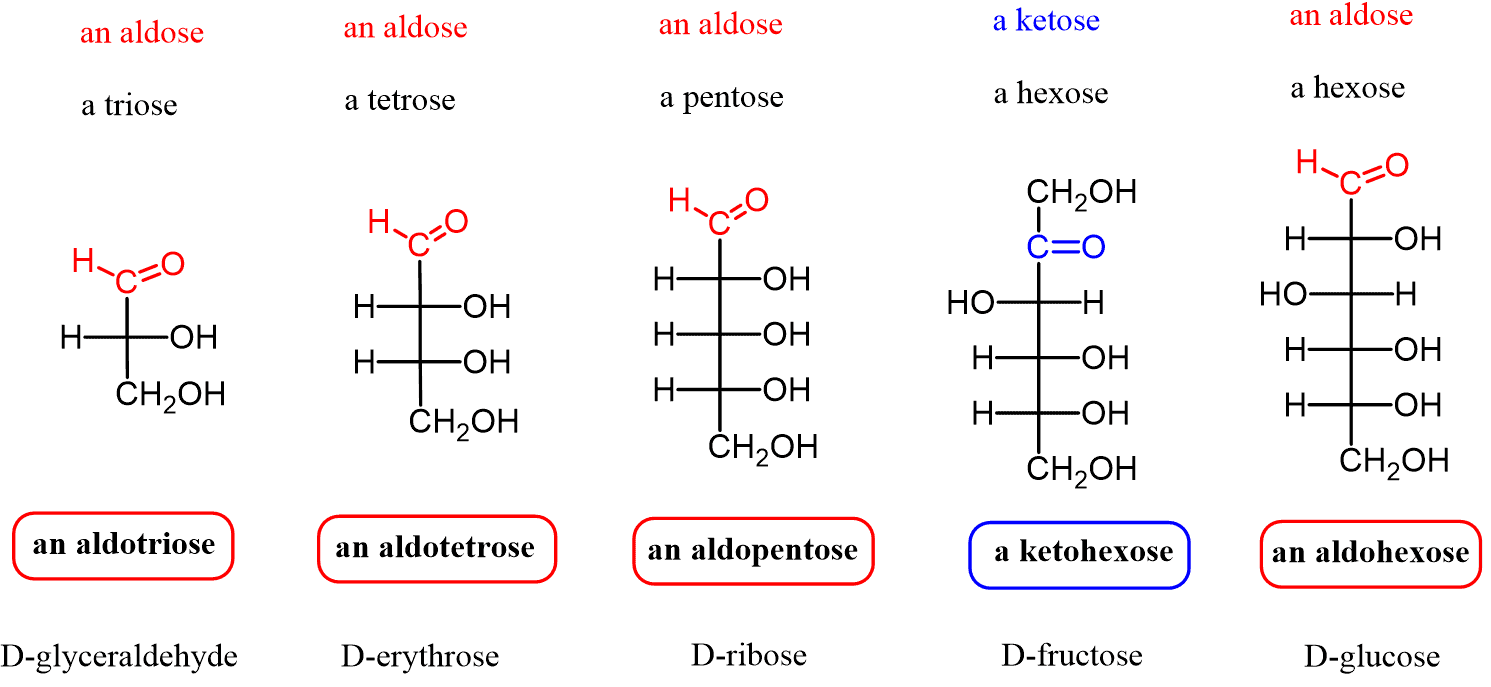
What is a Ketose sugar?
Carbonyl group is on an internal carbon

What are the 3 simple carbon sugars?
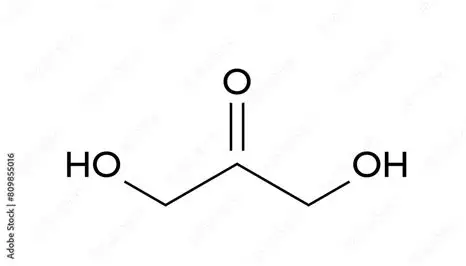
Dihydroxyacetone
Glyceraldehyde
Glycolytic intermediates
Dihydroxyacetone
Classified as a three-carbon ketose (keto sugar) that naturally exists in animal tissue. Because its carbonyl group -C=O located internally (in the middle), it acts structurally as an acetone ketone body.
Glyceraldehyde
Classified as a three-carbon aldose (aldehyde sugar) and represents the smallest functional carbohydrate in biology, featuring its carbonyl group at a terminal position

Glycolytic Intermediates
Notes that both DHA and glyceraldehyde are critical intermediate compounds in glycolysis (glucose breakdown), which will serve as the metabolic backbone of upcoming lectures
What type of sugar is glucose?
Glucose is an aldose sugar with a terminal carbonyl group
It has an aldehyde group (–CHO) on carbon 1, which is the terminal carbon.
What types of sugar is fructose?
fructose is a ketose sugar with an internal carbonyl
It has a ketone group (C=O) on carbon 2, which is an internal carbon.
What are characteristics of Ketosis regulation?
Almost all animals naturally experience some level of ketosis, and having ketone bodies circulating at baseline concentrations is healthy and normal
ketone bodies must be tightly regulated. If circulating levels rise too high or fall too low, it is a definitive sign that the animal's overall metabolism is off
Although hexane and 6-carbon sugars (such as glucose) both possess a six-carbon backbone, what elemental and structural differences classify hexane as a lipid/hydrocarbon rather than a carbohydrate?
Oxygen and Hydroxyl Absence: While both share a six-carbon chain backbone, hexane contains no oxygen or hydroxyl (-OH) groups whatsoever.
Hydrogen Saturation: Hexane's six-carbon chain is entirely loaded with hydrogen atoms
Classification: This lack of oxygen/hydroxyl decoration and complete saturation with hydrogen is why hexane is classified as a liquid lipid/hydrocarbon (conventionally associated with the petroleum and diesel industries) rather than a carbohydrate
At the molecular level, where does nutritional energy specifically reside within a carbohydrate molecule, and how do animal cells extract and utilize this energy?
The Carbon-Hydrogen Bond: Nutritional and metabolic energy does not float loosely in a cell; it resides specifically within the covalent chemical bonds connecting carbon and hydrogen in the carbohydrate molecule [37:45, 37:57, 38:05].
Cellular Capture: During digestion and intermediary metabolism, the animal's cellular pathways physically break these carbon-hydrogen bonds [38:05].
Physiological Work: Breaking these chemical bonds releases potential chemical energy, which cells systematically capture (primarily in the form of ATP) to fuel cell maintenance, tissue synthesis, and other vital physiological work [38:05].
What is the 2.5 x energy multiplier of lipids?
lipids provide two and a half times (the standard physiological constant is 2.25 times) more energy than carbohydrates or proteins on a per-molecule or per-gram basis
How is formaldehyde used?
is used as a highly effective preservative for anatomical specimens
It is classified as an aldehyde (not a ketone) because its carbonyl group C=O is attached terminally to hydrogen
How is acetone used?
Chemically, acetone is a ketone featuring an internal carbonyl group—identical to the ketone bodies found in animal tissues during clinical ketosis
It behaves physically as a highly powerful organic solvent, capable of dissolving almost any organic polymers it contacts
Characteristics of Glucose in plants
Most abundant monosaccharides
Basic unit of Strach & main storage form
Characteristics of Fructose in Plants
Most abundant monosaccharides
The main ketohexose of nutritional and physiological significance
Occurs mainly in green plants, honey, fruits, flowers
Component of sucrose (A disaccharide) and Fructans (polysaccharides)
Content of Glucose and Fructose Differens among plants