idaa ch 4: master the data preparing data for analysis
 Call Kai
 Learn
Learn Practice Test
 Spaced Repetition
 Match
Match Flashcards
 Knowt Play
1/26

There's no tags or description
Looks like no tags are added yet.
Name | Mastery | Learn | Test | Matching | Spaced | Call with Kai | Chat |
|---|
No analytics yet
Send a link to your students to track their progress
27 Terms
data analytics process
ask the question
master the data
perform the analysis
share the story
database
an organized collection of related data
purpose: to store data
ex., customers, invoices, and invoice lines
excel is NOT an example of this
DBMS
software that stores, retrieves and controls access to the data
purpose: allows authorized users to search, add, update, and delete information
ex., access, SQL server
relational database
organizes related information
each table stores one kind of record (but they are related)
ex., customer table, supplier table
row
record
tuple
each one has a unique line item

column
field, attribute, variable
every ? describes that specific record

primary key
uniquely identifies a record
required and unique
prevents you from having duplicate records

foreign key
references a key in another table
but this is a primary key in a separate table..
links these tables
may repeat across invoices

composite key
a primary key made of two or more columns
line item detail is in separate table (this allows you to have 1 line item or 500, but no blank lines)… each ivc has a diff no of line items.
like 2 columns that come together (ivc id and item id in sales inventory table)

entity relationship diagram
infinity sign→ each customer can have infinite ivcs
1<- each ivc can only have one customer
infinity sign→ an invoice can have multiple line items
1← each line item must tie back to only one invoice

data integrity rules
entity integrity
record identity; each row is a unique instance
ex., no duplicate or blank primary key
referential integrity
valid relationships; foreign key must reference a real existing record
sales can only be made to existing customers
entity integrity
record identity; each row is a unique instance
ex., no duplicate or blank primary key
referential integrity
valid relationships; foreign key must reference a real existing record
sales can only be made to existing customers
relational databases benefits vs excel
internal controls easier to enforce
enhanced security around data entry and table access
reduces redundancy
maintains version control
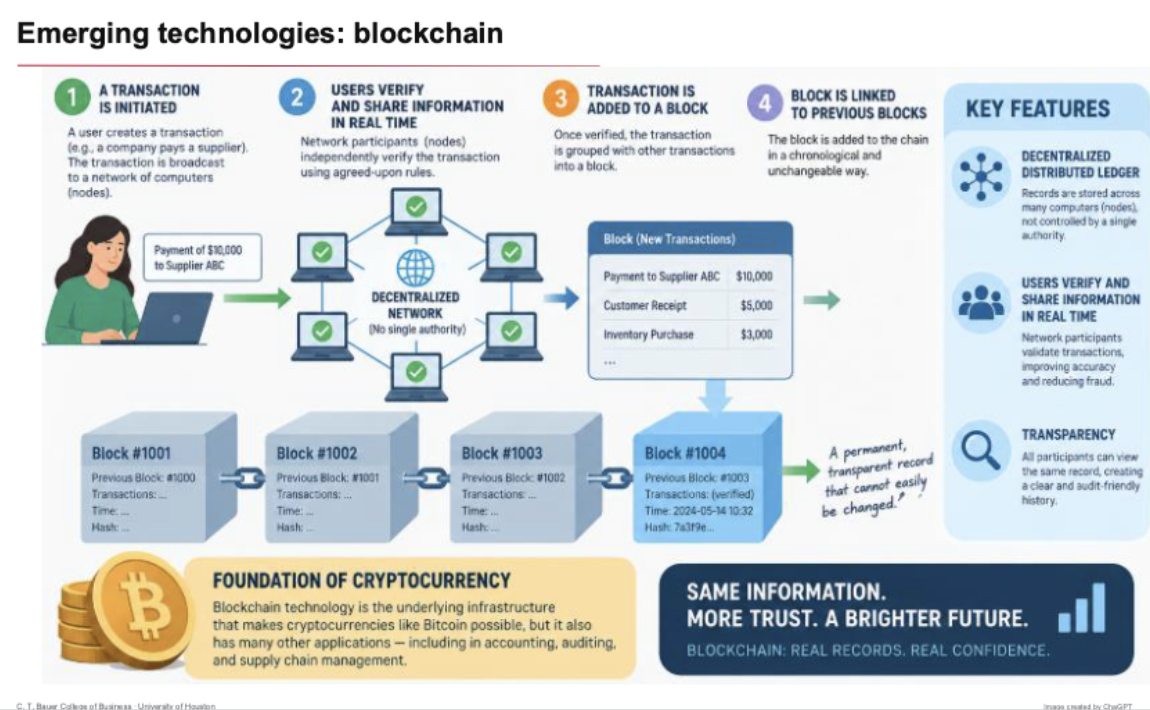
blockchain
trx initiated which is broadcast to network of computers (nodes)
users verify and share info in real time
network participants (nodes) independently verify the trx using agreed upon rules
once verified, trx is added to a block of other trxs
block is linked to previous blocks (chronological and unchangeable)
permanent, transparent, cannot be changed easily
foundation of cryptocurrency
decentralized distributed ledger, everyone can see it, so it’s difficult to manipulate.
hashes, proof of work, time delay to prevent u from recreating the entire proof of work
NoSQL
databases that store info differently from traditional relational databases
flexible and adaptable
ex., product could have different fields than other products wo requiring the database structure to change
lets you do more analysis of unstructured data
especially useful when need to
handle rapidly changing data
support enormous traffic
spread data across many serves
consider when flexibility and large scale distribution are important
many companies use both ? and SQL
SQL
structured and organized
database - set of carefully organized spreadsheets
every row follows same column structure and tables connect through defined relationships
use when data is highly structured and consistency is critical
ETL: extract, transform, load
what you do before you can even start doing analytics
extract
obtain data from approved sources
transform
clean, join, transform data
load
place prepared data in its destination
prepping data for analysis
ensure data quality
check data types match attributes
ex., string text, date, etc.
check all date data types
ex., differences in 07/09 vs 09/07
check all numerical data types
dollar amts have decimals, qty does not have decimals (unless it should)
0 as o or 5 as s
check all text data types, including
international characters and encoding
words and measures
validate data for completeness and integrity
record count
like system would time out in the middle and it wouldn’t download all the info…
compare descriptive analytics
maybe sum some your total dollar amt just to make sure it’s the same and all columns/rows transferred
validate date/time fields
make sure it does look like some number but a date
check string limits
cells may have a limit ex., 100 characters but your data has 200 characters- what to do
data wrangling
remove headings and subtotals
remove leading zeros and nonprintable characters
properly format negative numbers
color may not work for the analysis (e.g., red with no - or parentheses)
fix inconsistencies
abbreviations vs no abbreviations
address missing values
leave as is
remove records w missing values
add values to replace the missing ones
perform preliminary exploratory analysis
are you asking the right questions? do you have the data you need to answer the q?
start w descriptive statistics
ensure data quality
check data types match attributes
ex., string text, date, etc.
check all date data types
ex., differences in 07/09 vs 09/07
check all numerical data types
dollar amts have decimals, qty does not have decimals (unless it should)
0 as o or 5 as s
check all text data types, including
international characters and encoding
words and measures
validate data for completeness and integrity
record count
like system would time out in the middle and it wouldn’t download all the info…
compare descriptive analytics
maybe sum some your total dollar amt just to make sure it’s the same and all columns/rows transferred
validate date/time fields
make sure it does look like some number but a date
check string limits
cells may have a limit ex., 100 characters but your data has 200 characters- what to do
data wrangling
remove headings and subtotals
remove leading zeros and nonprintable characters
properly format negative numbers
color may not work for the analysis (e.g., red with no - or parentheses)
fix inconsistencies
abbreviations vs no abbreviations
address missing values
leave as is
remove records w missing values
add values to replace the missing ones
perform preliminary exploratory analysis
are you asking the right questions? do you have the data you need to answer the q?
do these numbers just seem off contextually? investigate
start w descriptive statistics