Outer and Middle Ear Physiology
 Call Kai
 Learn
Learn Practice Test
 Spaced Repetition
 Match
Match Flashcards
 Knowt Play
1/24

There's no tags or description
Looks like no tags are added yet.
Name | Mastery | Learn | Test | Matching | Spaced | Call with Kai |
|---|
No analytics yet
Send a link to your students to track their progress
25 Terms
what are the physiological functions of outer ear?
•Protection
•Amplification
•Helps provide cues that will eventually be used to help us localize sounds
The outer ear protects ...
the tympanic membrane and the middle ear from physical damage and abuse
the pinna collects...
sound waves
the ear canal is a ...
resonator
The main resonance cavity of the ear is
the ear canal
We usually give a range of ________-________ Hz for the frequencies most amplified by this resonance in humans.
2000-3000 Hz
So, the pinna provides the acoustic cues we use for ________ in the sagittal plane
localization
Horizontal localization 2 mechanism:
Interaural level or intensity differences
Interaural time differences
What cues do you need 2 working ears for?
Binaural cues
Intensity differences between the ears result in ...
interaural level or intensity difference (ILD) cues
Timing differences between ears result in ...
interaural time difference (ITD) cues
the sound will arrive at a later phase at the farther earHorizontal localization
interaural phase differences (IPD)
Major benefit of middle ear:
impedance matching
This energy loss is compensated by middle ear through....
IMPEDANCE MATCHING.
Impedance matching mechanisms of the middle ear
1. Area transformer most important
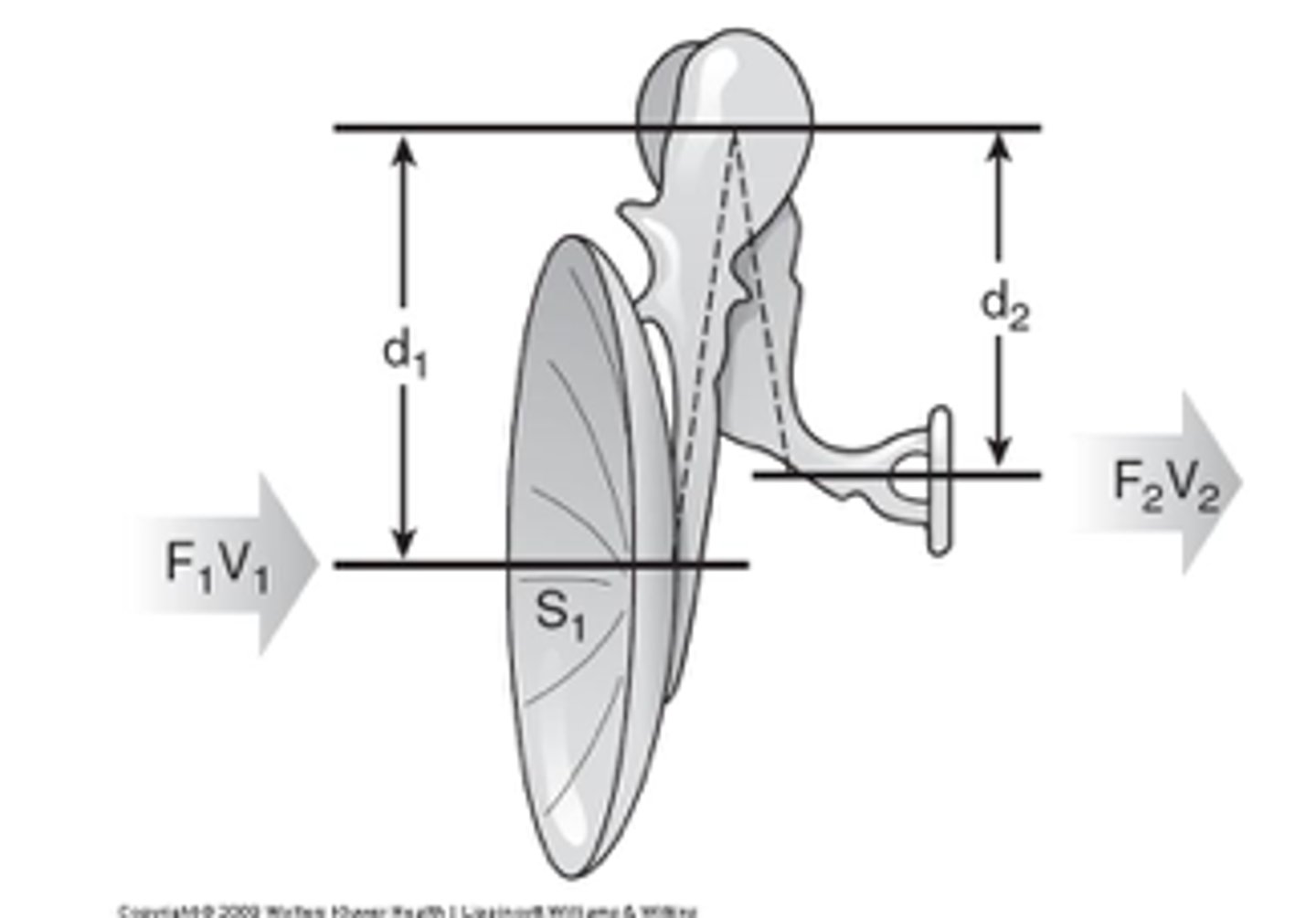
2. Ossicular lever transformer
3. Curved membrane effect
Area transformer
Effective vibratory area oftympanic membrane(55mm2) is more than stapesoval window surface area(3.2mm2)
So, force produced by sound concentrated over small area
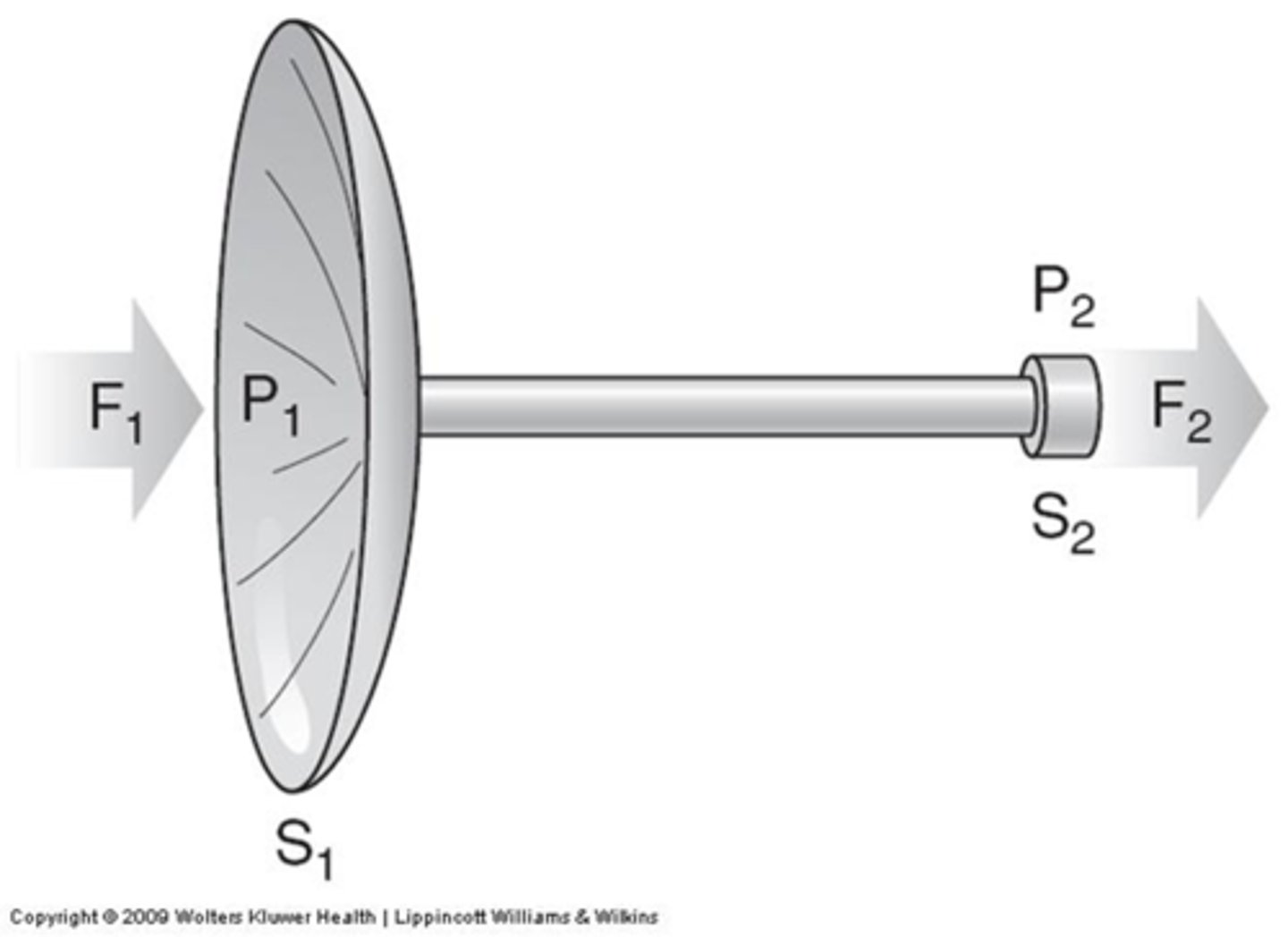
Ossicular Lever Transformer
The handle of Malleus 1.3 times longer than the Long process of Incus, providing Mechanical Leverage Advantage.
So, Ossicles increases force of movement by 1.3 times.
Curved Membrane Effect
Movement of the Tympanic membrane more at the Periphery than at Center where Malleus is attached.
A buckling motion of tympanic membrane increases force by a factor of 2:1
Area Transformer pressure ratio
17:1 (24.6 dB)
Ossicular lever transformer pressure ratio
1.3 :1 (2.3 dB)
Curved membrane effect pressure ratio
2:1 (6 dB)
Total advantage ratio=
approx. 44.2:1 at 1000 Hz Equivalent to about 33 dB24
The middle ear impedance matching mechanisms result in an increase in sound pressure of ___ dB
33 dB
pressure loss from the outer to inner ear is?
35-40 dB
The outer ear resonances, middle ear impedance matching, and some other factors work together to most effectively transmit sounds between about
500 and 6000 Hz.