8b. Protectionism - Quotas & Subsidies.
 Call Kai
 Learn
Learn Practice Test
 Spaced Repetition
 Match
Match Flashcards
 Knowt Play
1/11

There's no tags or description
Looks like no tags are added yet.
Name | Mastery | Learn | Test | Matching | Spaced | Call with Kai | Chat |
|---|
No analytics yet
Send a link to your students to track their progress
12 Terms
What is a quota?
A physical limit on the quantity of a good imported or exported.
Draw a trade quota diagram.
- Demand contracts: Q2 - Q4
- Imports: Q1 - Q3
- Domestic production: Q1, Q3-Q4
- Deadweight loss + domestic gains (blue).
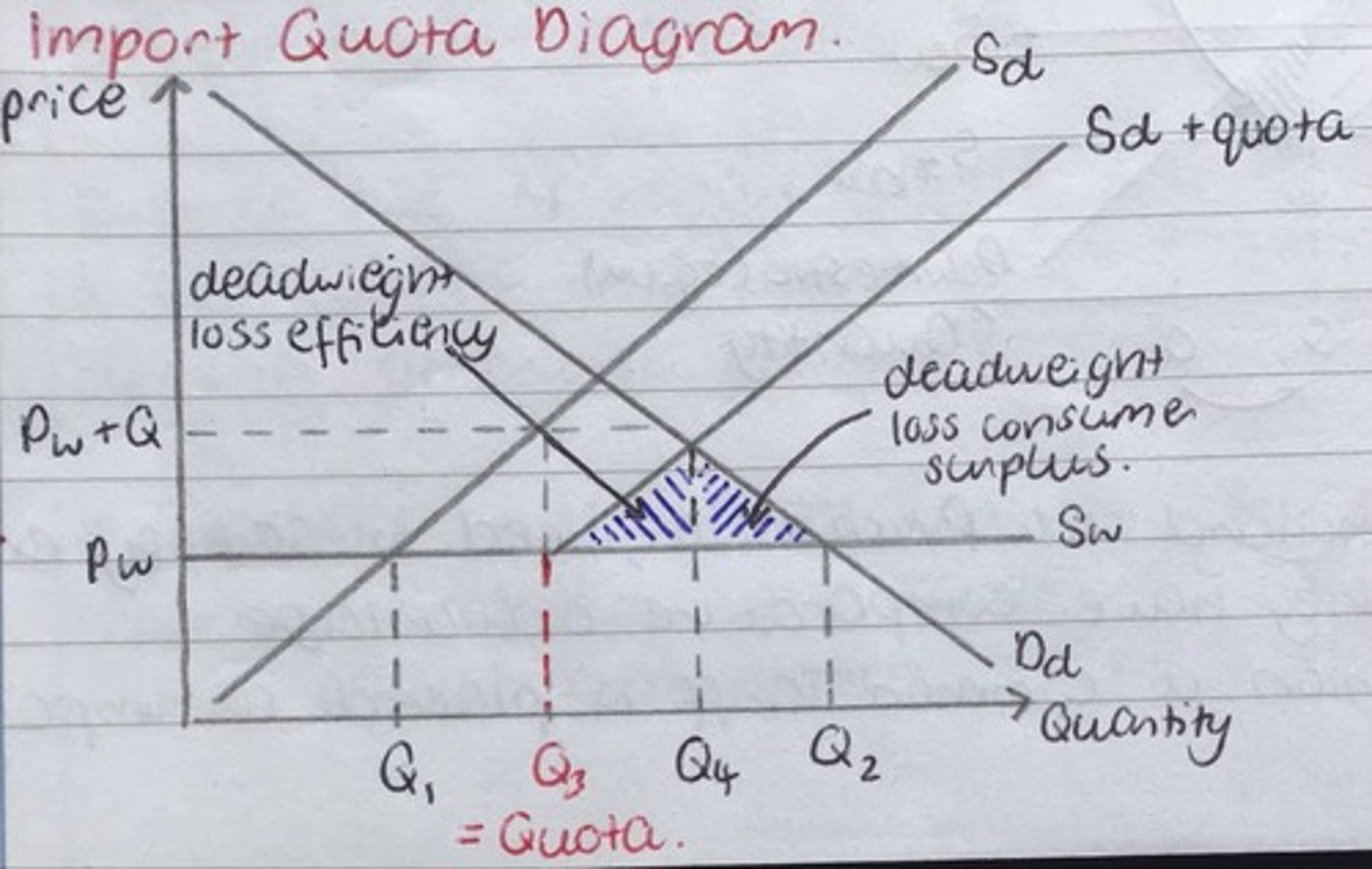
Explain the trade quota diagram.
1. Government imposes quota to limit imports.
2. Excess demand for goods causes a rise in price.
3. New suppliers enter the market as they are incentivised by new price.
4. Contraction of demand/ shrinking consumer surplus.
What is the impact of a quota on the producer/ consumer surplus?
- Producer surplus expands
- Consumer surplus shrinks
What is a subsidy?
A payment made by the government to the producer.
What do subsidies do?
1. Bring gains to domestic producers.
2. Create deadweight loss.
Explain how subsidies create deadweight loss.
They result in overproduction in the domestic economy, and underproduction in the rest of the world.
Draw a trade subsidy diagram.
- Move deadweight loss.
- Value of subsidy = vertical distance between supply curves.
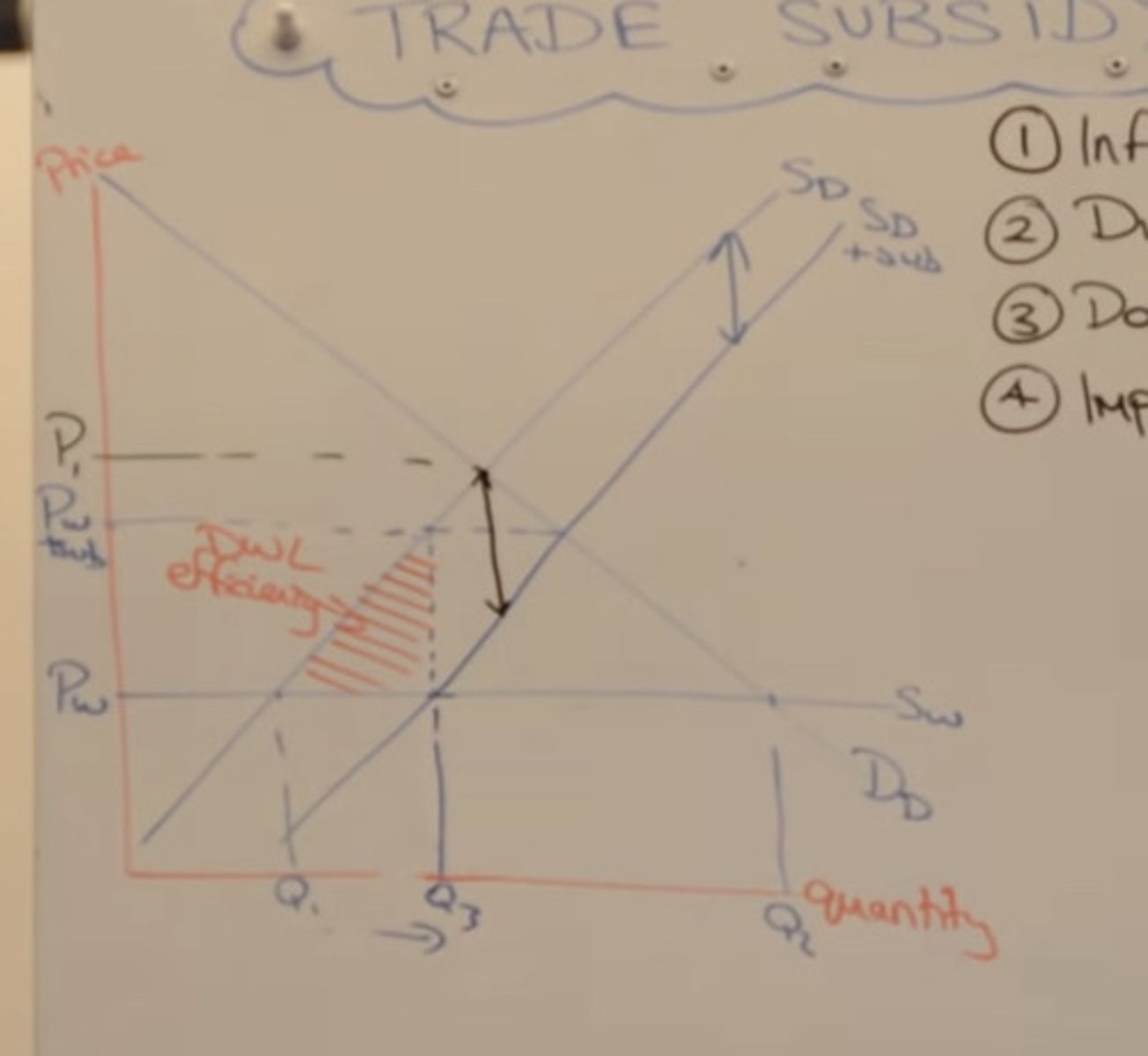
Explain the trade subsidy diagram.
1. Government provides subsidy to encourage domestic production.
2. This reduces costs for domestic producers.
3. Some consumers start buying domestically and imports reduce.
What do subsidies effect?
The price consumers pay domestically, not the world price.
Give some arguments for protectionism.
1. Protects infant industries who may need time to develop a comparative advantage.
2. Protects domestic industries against import dumping, especially for developing countries.
3. Can be used to take account of externalities and dealing with de-merit goods.
4. Firms benefit from increase in producer surplus/ governmental support.
5. Tariffs provide gains to government.
Give some arguments against protectionism.
1. Higher prices for consumers
2. Less choice and market access.
3. Loss of economic welfare.
4. Increases inequality.
5. Production inefficiencies and lack of innovation.
6. Trade wars/ retaliation from other countries.
7. Negative multiplier effect.
8. Subsidies cost government revenue.