6. domains, kingdoms or both
 Studied by 0 people
 Call Kai
 Learn
Learn Practice Test
 Spaced Repetition
 Match
Match Flashcards
 Knowt Play
1/9

There's no tags or description
Looks like no tags are added yet.
Name | Mastery | Learn | Test | Matching | Spaced |
|---|
No study sessions yet.
10 Terms
CLASSIFICATION
largest group was the ‘Kingdom’ and could be either plants or animals
kingdoms then divided into smaller groups, with characteristics of organisms becoming more similar
last group contained only 1 type of organism
last 2 groups give the organism its binomial name
KINGDOMS
Linnaeus first proposed that all living things be fitted into 2 main groups called the plant and animal kingdoms
as tech advanced scientists began to see microscopic organisms including bacteria and protista
structure of fungi was also seen to be very different from plants
new system was developed based on morphology with 5 kingdoms
In earlier system all prokaryotes are put into 1 kingdom, Monera
ARCHAEA
but, genetic analysis has revealed that Archaea genes are more similar to plant and animal genes than other prokaryotes
bc their genes contain ‘unused’ sections of DNA that are not used to make proteins but other prokaryotic genes don’t
1970’s- scientists discovered a new group of single celled organisms with no nucleus
called these ‘Archaea’ and classified them as prokaryotic cells, grouping them with bacteria
3 DOMAINS
bc of this, a scientist called Woese proposed that all organisms should be divided into 3 domains
Eukarya (have cells with a nucleus and unused sections in genes)
Archaea (have cells with no nucleus and unused sections in genes)
Bacteria (have cells with no nucleus and no unused sections in genes)
2 DOMAINS
for yrs scientists only divided living organisms into 2 domains
named them the eukaryotes (cells with a nucleus and complex cell structure) and prokaryotes (no nucleus)
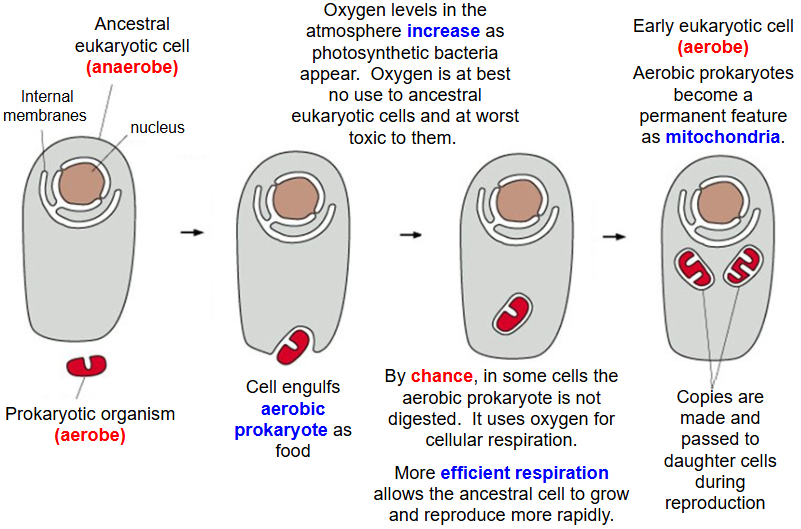
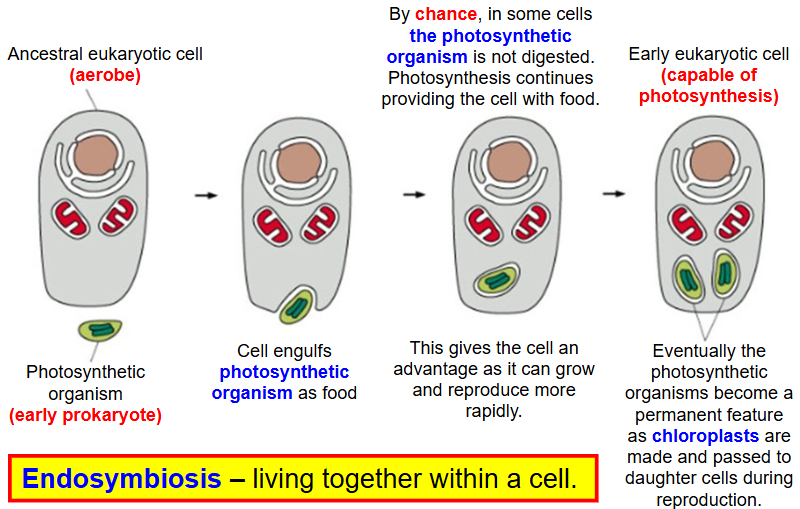
some scientists think that chloroplasts became part of ‘eukaryotic ancestor’ cells first while others think that mitochondria were the first endosymbionts (organism which lives inside the cells of another organism)
ENDOSYMBIONTS 1
ENDOSYMBIONTS 2
2 DOMAINS OR 3?
scientists are using molecular phylogeny to investigate the domains further
have looked at the internal structures of prokaryotes and eukaryotes and compared them to the biochemistry of the proteins involved in their ribosomes and enzymes
as a result a new theory developed that there are 3 domains – two prokaryotic (Archaea and Bacteria) and eukaryota
DIFFERENCES OF DOMAINS
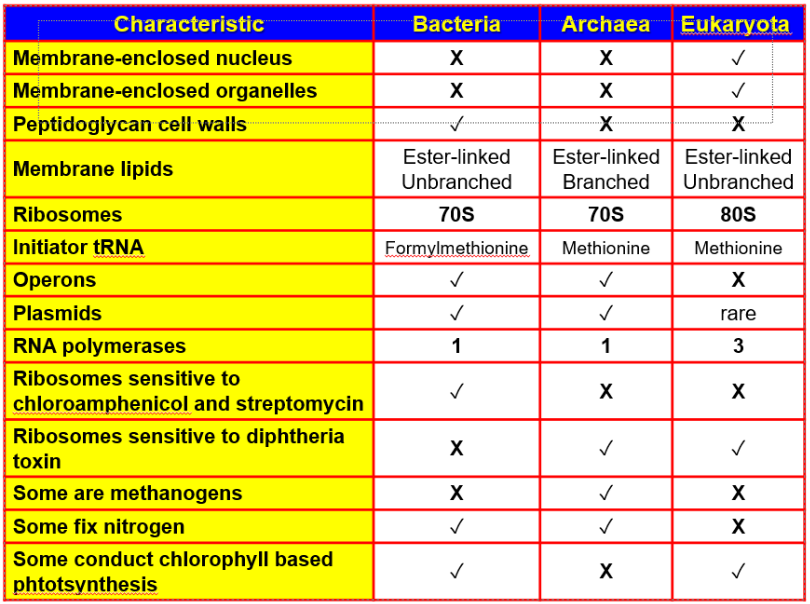
Archaea replicate by binary fission controlled by a cell cycle- seems homologous (similar) to the cell cycle in eukaryotes but is diff from replication in bacteria
membrane structure and membrane proteins of the archaea are unique– very diff from the similar ones in bacteria and eukaryotes- archaea have an ether link in their lipids making them branch and may give them extra strength in extreme environments
DOMAINS CHARACTERISTICS