Basic Keelboat Certification
 Call Kai
 Learn
Learn Practice Test
 Spaced Repetition
 Match
Match Flashcards
 Knowt Play
1/45

There's no tags or description
Looks like no tags are added yet.
Name | Mastery | Learn | Test | Matching | Spaced | Call with Kai | Chat |
|---|
No analytics yet
Send a link to your students to track their progress
46 Terms
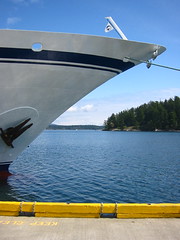
Bow
Front of Boat
Deck
Deck
Cabin Trunk
Roof and sides of cabin house

Port
Left
Cockpit
Low space in the deck where the crew sits and where the tiller is located
Stern
back of the boat
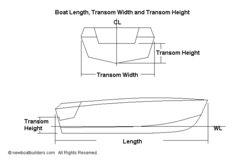
Transom
The flat or slightly curved surface at the stern of the boat
Rudder
The steering foil, directed by a tiller, that is used to turn the boar

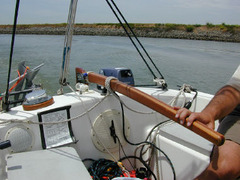
Tiller
The lever arm attached to the rudder that allows you to steer the boat
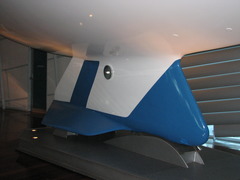
Keel
The weighted vertical fin at the bottom of the boat. Its weight reduces tipping (heeling) while its shape keeps the boat from sliding sideways through the water.
Companionway
A passageway from the cockpit to the area below the deck
Hull
The body of the boat that floats in the water
Starboard
Right
What is the rig?
The rig includes the sails, spars, supporting wires, and sail controls
Forestay
The part of the rigging that is attached to the bow of the boat that keeps the mast from falling backwards.
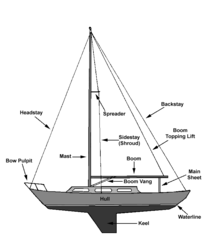
Mast
The vertical spar in the middle of the boat from which the sails are set
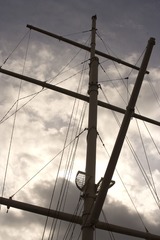
Jib
The forward sail that is attached to the forestay

Spreader
Struts that extend from the side of the mast that keep it from bending sideways
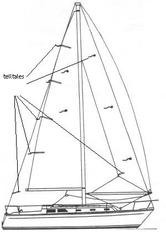
Telltales
Piece of cloth, yard, or tape that indicate wind flow over a sail
Shrouds
Rigging wires extending up from the sides of the boat to the mast that keep the mast from falling to either side. Attached to the spreader.
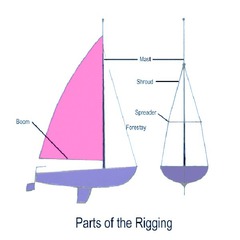
Boom
Horizontal spar extending back from the mast. The foot (bottom) of the mainsail is attached to it.
Mainsail
The sail hoisted on the back side of the mast and attached to the boom.

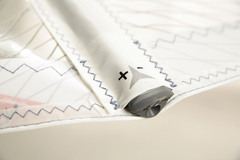
Batten
A slat of fiberglass, plastic or wood inserted into a pocket in the sail to help it hold its shape
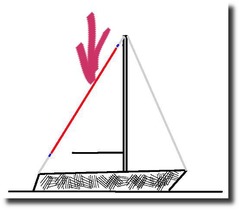
Backstay
The part of the rigging, attached from the top of the mast to the stern of the boat, that keeps the mast from falling forward.
Lift
When the wind comes from the side of the boat, flowing around both sides of the sail, creating lift which "pulls" the boat forward.
Push
When the wind comes from behind the boat, it "pushes" against the sail and simply shoves the boat forward.
Pull Mode
Wind creates higher pressure on the inside of the sail & lowers the pressure on the outside thus creating lift. The lift pulls the boat forward & sideways. The keel keeps the boat from being pulled sideways
Push Mode
Wind coming from behind, the sail and boat are simply pushed forward through the water
A sailboat cannot sail directly into the wind because...
there is no difference in wind pressure between one side of the sail and another, so no push or pull
Trimming the sails is...
the process of adjusting the position of the sails so they are sheeted (pulled) in until the sails stop luffing to make the boat go
Trimmed Too Loose
Sails are trimmed too far out; minimum power; reduce speed;
Trimmed Too Tight
Sails are trimmed too close and windflow is turbulent (slow);
How to correct trimmed too loose
Sheet in sails to point when they stop luffing
How to correct trimmed too tight
Let out the sails until they luff, then bring them back in until they stop luffing and feel the boat pick up speed
Reaching
Sailing across the wind; fast and easy way to sail
Beam Reach
Sailing across the wind; where the boat is perpendicular to the wind with the wind coming over the side of the boat
Checklist to Beam Reach
Wind is coming across the boat; sheet sails halfway out; steer towards landmark and adjust sails to changes in boat or winds direction.
No-Go Zone (upwind)
Boat cannot sail directly into the wind, can only sail about 45 degrees; 90 degree area in front is no-go zone
Close-Hauled
Sailing upwind; where the boat is as close to the direction of the wind as possible without going into the no-go zone
Checklist for Close Hauled
Wind is coming from bow; sheet in the sails all the way; steer to the jib using the telltales and the luff of the sails to achieve smooth air flow; helmsman sits on the windward (high) side opposite the boom; crew trim sails and move from one side to the other to help keep the boat from heeling
Broad Reach
Sailing downwind, but at an angle to it, so the wind is blowing over the quarter (back corner) of the boat and the sails are sheeted perpendicular to the wind.
Checklist for Broad Reach
Wind is coming from behind; sheet out sails so they are perpendicular to wind; adjust sail to changes in boat or wind direction; watch the jib for accidental jibe
Jibe
When the boom swings across the boat
How to correct a jibe
If the jib goes limp and starts to cross the boat, head the boat toward the wind by pushing the tiller toward the boom until the jib returns and fills with wind again.
Starboard Tack
The wind is blowing over the right side of the boat
Port Tack
The wind is blowing over the right side of the boat