Nucleotide Metabolism
 Call Kai
 Learn
Learn Practice Test
 Spaced Repetition
 Match
Match Flashcards
 Knowt Play
1/54

There's no tags or description
Looks like no tags are added yet.
Name | Mastery | Learn | Test | Matching | Spaced | Call with Kai | Chat |
|---|
No analytics yet
Send a link to your students to track their progress
55 Terms
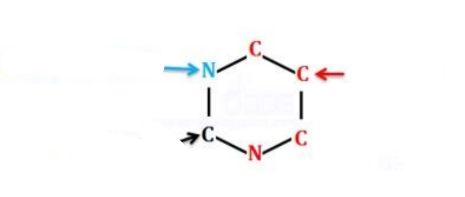
What type of base is this?
pyrimidine
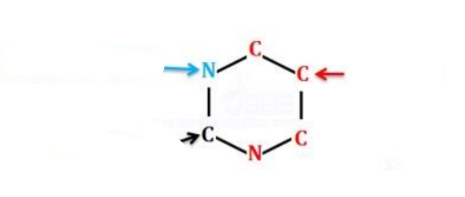
Where does the blue nitrogen come from?
glutamine amide
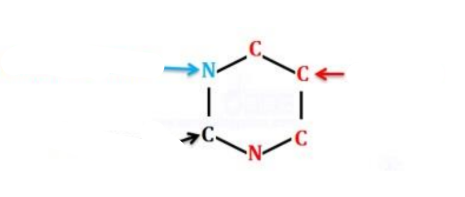
Where do the red elements come from?
aspartate
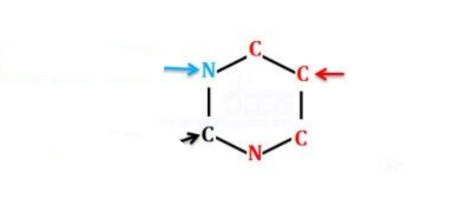
Where does the black element come from?
bicarbonate
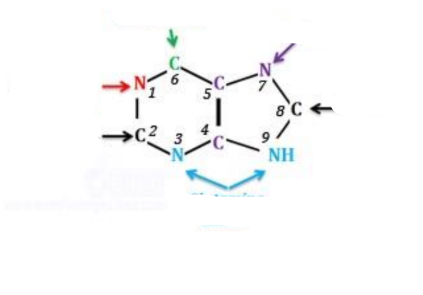
Where does the red element come from?
aspartate amine
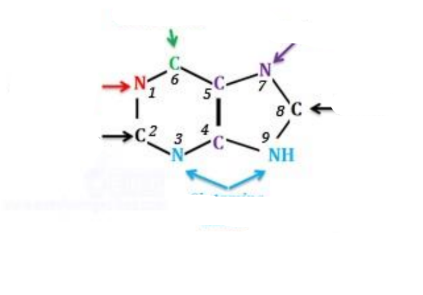
What base is this?
purine
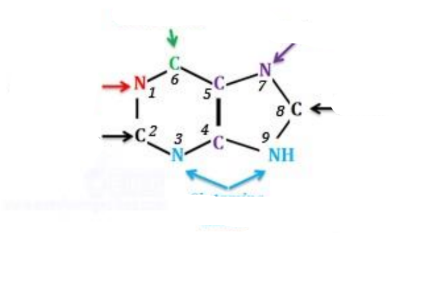
Where does the green element come from?
bicarbonate
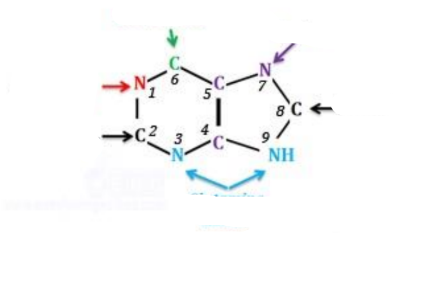
Where do the black Carbons come from?
formate
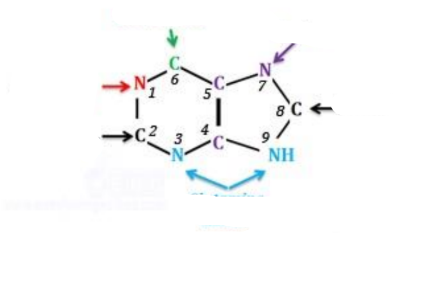
Where do the purple elements come from?
glycine
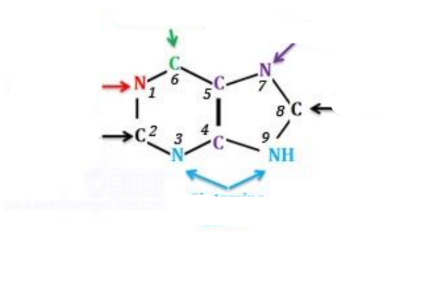
Where do the blue elements come from?
glutamine amide
What are the four phases of purine synthesis?
activation of ribose-5-phosphate into PRPP
conversion of PRPP into phosphoribosylamine (PRA)
PRA to construction of IMP
Conversion of IMP into ATP and GTP
What happens to purine synthesis when AMP and GMP accumulate?
synthesis is inhibited
How does purine synthesis exhibit cross regulation?
AMP synthesis is stimulated by GMP, and GMP synthesis is stimulated by AMP
What are the three phases of pyrimidine synthesis?
fabrication of pyrimidine ring as orotate
RATE LIMITING STEP
attachment of orotate to PRPP to generate UMP
conversion of UMP to CTP and dTMP
What is the enzyme for the rate limiting step of pyrimidine synthesis?
carbamoyl phosphate synthetase 2
What inhibits and activates carbamoyl phosphate synthetase 2?
Inhibits: UMP/UTP
Activates: PRPP
What does methotrexate do?
Targets dihydrofolate reductase (DHFR) to inhibit the conversion of dietary folate to THF, which clocks nucleotide synthesis, and disrupts DNA replication in rapidly dividing cancer cells
Why does methotrexate work on cancer cells specifically?
cancer cells take up methotrexate preferentially, sparing most cells
What is the clinical use of methotrexate?
antimetabolite chemotherapy, often combined with other agents
What is the systemic use for 5-fluorouracil?
colon, esophageal, breast, cervical, pancreatic cancers
What are the topical uses for 5-fluorouracil?
warts, actinic keratoses, basal cell carcinoma
How does 5-fluorouracil work?
It targets thymidylate synthase, blocking the methylation of dUMP into dTMP, which stops DNA synthesis in rapidly dividing cells resulting in cancer cell death
What is the clinical classification of 5-fluorouracil?
antimetabolite chemotherapy
How do sulfonamides/sulfa drugs work?
Act as a competitive inhibitor for dihydropterase synthetase, blocking the incorporation of p-aminobenzoic acid (PABA) into bacterial folate synthesis pathway, disrupting folate-dependent DNA replication and protein synthesis in bacteria
Why are sulfonamides selective for bacteria?
Bacteria must synthesize folate de novo from PABA, where as humans get folate as a dietary vitamin and are unaffected by PABA blocking. So only bacteria is impacted
What are the clinical uses for sulfonamides?
urinary tract infections and bladder infections
high urinary concentration of a drug provides effective local therapy
What is 6-mercaptopurine?
antineoplastic and immunosuppressive agent; purine antagonist
How does 6-mercaptopurine work?
It disrupts phase 2 of purine synthesis by inhibiting inosine monophosphate dehydrogenase (IMPDH), which stops the synthesis of guanosine nucleotides. This disrupts cell proliferation and immune response
What happens if 6-mercaptopurine is used alongside allopurinol?
toxic accumulation because 6-mercaptopurine is metabolized by xanthine oxidase and allopurinol inhibits xanthine oxidase.
How does acyclovir work?
Viral thymidine kinase has a higher affinity for acyclovir, so it will preferentially phosphorylate acyclovir into acyclo-dGTP. This is now incorporated into viral DNA but it doesn’t have the 3’ OH needed for DNA chain elongation, so the chain is terminated. This results in the inhibition of viral DNA polymerase and DNA replication stops.
What causes the viral selectivity for acyclovir?
Virus infected cells have high viral thymidine Kinase activity that prefers acyclovir. Uninfected cells have a low basal thymidine kinase activity, meaning there is minimal acyclovir activation.
What are the clinical uses for acyclovir?
herpes simplex virus (HSV), varicella-zoster (chicken pox, shingles), cytomegalovirus
What is purine catabolism?
ribose is removed from guanosine/inosine producing guanine/hypoxanthine, which combine to form xanthine that gets converted to uric acid
What are the key enzymes of purine catabolism?
adenosine deaminase (ADA) and xanthine oxidase
A deficiency in adenosine deaminase is associated with what?
SCID
If there is excess adenosine deaminase, what could be caused?
hemolytic anemia
What is the target for gout treatment?
xanthine oxidase
What is a diagnostic marker for gout?
serum uric acid levels
What does a serum urate level >9 mg/dL increase the risk of?
gout
What is gout?
hyperuricemia leading to monosodium urate crystal deposition in joints and tissues, causing painful gouty arthritis
What are the two forms of gout and what is the difference?
primary hyperuricemia: overproduction of uric acid (excess purine degradation)
secondary hyperuricemia: underexcretion of uric acid (most common)
What can worsen uricemia in gout?
acidemia, which increases URAT1-mediated reabsorption in the kidney
What can trigger gout?
high purine diet (beans, spinach, lentils, meat, seafood), and alcohol (increases purine degradation, inhibits urate excretion, promotes acidemia)
What are the treatments for gout (give a brief discription of how they work)?
Allopurinol: inhibits xanthine oxidase
anti-inflammatory: reduce granulocyte infiltration to affected joints (NSAIDs, colchicine)
Br
What is pyrimidine catabolism?
pyrimidines are converted to metabolized ketogenic (U and C) or glucogenic (T), water-soluble compounds
What are the potential products produced from pyrimidine catabolism
malonyl CoA (ketogenic), succinyl CoA (glucogenic), and methylmalonyl CoA (glucogenic)
What are the salvage pathways for purines?
adenine phosophoribosyltransferase (APRT)
generates AMP from adenine and PRPP
hypoxanthine-guanine phosphoribosyltransferase (HGPRT)
generates GMP or IMP from guanine/hypoxanthine and PRPP
What is lesch-nyhan syndrome?
rare x-linked disorder caused by defiiciency of HGPRT in the purine salvage pathway
What re the biochemical consequences of lesch-nyhan syndrome?
loss of salvage pathway
results in gout, urate kidney stones, renal damage
accumulation of PRPP
increases de novo purine synthesis, and can result in severe cognitive impairment, self-mutilation, and poor muscle control
What are the clinical manifestations of Lesch Nyhan syndrome?
hyperuricemia with gout and kidney stones
neurological dysfunction (cognitive, behavioral, motor) linked to excessive de novo synthesis and neurotransmitter degradations
<1.5% normal HGPRT activity results in what?
Lesch-Nyhan syndrome with severe neurological problems (cerebral palsy, choreoathetosis, and self-destructive biting)
>8% normal HGPRT activity indicates?
Kelley Seegmiller syndrome results with gout and kidney destruction without neurologic symptoms
8-15% HGPRT activity results in what?
variant lesch-nyhan syndrome with neurological problems ranging from clumsiness to motor dysfunction.
What drug can reduce joint and kidney problems associated with HGPRT levels, but has no effect on neurological symptoms?
Allopurinol