Lecture 2 & 3: General Parturition, Obstetrics, and Fetotomy
 Call Kai
 Learn
Learn Practice Test
 Spaced Repetition
 Match
Match Flashcards
 Knowt Play
1/42

There's no tags or description
Looks like no tags are added yet.
Name | Mastery | Learn | Test | Matching | Spaced | Call with Kai | Chat |
|---|
No analytics yet
Send a link to your students to track their progress
43 Terms
In domestic species, the ___ initiates parturition.
fetus
What must decrease for parturition to occur?
progesterone
What are the 3 stages parturition is divided into in domestic species?
1. Initiation of myometrial contractions (removal of “Progesterone Block”)
2. Expulsion of the fetus
3. Expulsion of the fetal membranes
What are the mechanisms of parturition?
• Maturation of the fetal hypothalamic-hypophyseal-adrenal axis
• Increased sensitivity of the fetal adrenal glands to ACTH
• Increased fetal corticoids from the adrenal cortex
• Activation/conversion of placental enzyme systems
• Uterine activity
How does fetal stress trigger parturition?
fetal cortisol is primary trigger → shifts hormonal balance from high progresterone (uterin quiescence) to high estrogen & prostaglandins (uterine contraction)
fetal stress/maturity → increase fetal ACTH → increase fetal cortisol → placenta decreases progesterone production and increases estrogen production → increased estrogen = increased oxytocin receptors in myometrium increased prostaglandin (PGF2alpha) synthesis → luteolysis → progesterone withdrawal → uterine contractions begin
What is the main role of increased estradiol in parturition?
increases oxytocin receptors
stimulates prostaglandin production to promote uterine contractions, cause luteolysis, and help soften and dilate the cervix
increases myometrial excitability (easier initiation of contractions)
increases gap junction formation - strong, coordinated contractions
relaxes cervix and pelvic tissues (along with PGs and relaxin)
What is stage 1 of parturition?
initiation of myometrial contractions (removal of the progesterone block)
dilation of cervix
What signs of stage 1 parturition can be present?
Restlessness, anorexia, abdominal discomfort, increased pulse and respiration, nesting and/or isolation from others, shifting weight, arched back, elevated tail, colic like signs can be present
What happens in mares, ewes, and cows during stage 1 of parturition?
the fetus rotates itself in preparation for exit → initiates Ferguson’s Reflex
What is Ferguson’s Reflex?
neuroendocrine reflex comprising the self-sustaining cycle of uterine contractions initiated by pressure on the cervix or vaginal walls (positive feedback)
fetus puts pressure on cervix/cervical canal → stimulates oxytocin release → stimulates uterine contractions → pushes fetus into cervix/cervical canal causing move pressure thus more oxytocin release
What is stage 2 of parturition?
• Fetus enters cervical canal
• Rupture of chorionic membranes (chorioallantois)
• Active controlled abdominal pressing
• Delivery of the fetus
What is stage 3 of parturition?
expulsion of fetal membranes (time to expulsion varies by species)
What is the possible presentations ofdelivery?
• Longitudinal – Cranial or Caudal (parallel to dam’s spine)
• Transverse – Ventral or Dorsal (perpendicular to dam’s spine - abnormal)
What is the four possible positions of delivery?
dorso-sacral: fetus back against dam’s sacrum = NORMAL
dorso-pubic: back faces dam’s pubis = ABNORMAL
dorso-left ilial: back faces dam’s left ilium = ABNORMAL
dorso-right ilial: back faces dam’s right ilium = ABNORMAL
What are the PPPs of delivery?
Presentation: relationship of the spinal axis of the fetus to that of the dam and the portion of the fetus that is entering the birth canal
Position: anatomic relationship to the dorsum of the fetus relative to the maternal pelvis
Posture: anatomic relationship of the fetal extremities to its own body
What are the three options of delivery posture?
flexed
extended
retained
must be specific about which joints are affected
What are the 3 Ps of normal delivery?
Cranio-longitudinal, dorso-sacral, head and forelimbs extended
What are the 3 Ps of normal delivery for horses?
Cranio-longitudinal, Dorso-sacral or ilial, head and forelimbs extended
What are the 3 Ps of normal delivery for dogs?
Cranio or caudo-longitudinal, dorso-sacral, head and limbs extended
What are the fetal factors that can affect delivery in dogs?
• Fetal monsters
• Multiple limbs
• Single pup (singleton)
• Hydrocephalus
• Schistosomus reflexus
What are some general causes for dystocia?
• Fetus too large or dam too small (feto-maternal mismatch)
• Abnormal presentation, position or posture
• Multiple feti
• Fetal malformations
True or false: dystocia is more common among primipara than multipara.
true
Who poses the highest and lowest incidence of dystocia?
highest: cattle
lowest: cats
What are some general ways to manage dystocia?
• Physical exam of the dam, vaginal examination
• Clean the perineal area
• Assess fetal viability, number, and PPP, Estimate fetal size---- is it deliverable vaginally?
• Large animals – both head and forelimbs of fetus and examiners arm should be able to fit into thepelvis with ease
• DEVELOP A DELIVERY PLAN (Varies by species)
• BE CLEAN
• BE GENTLE
• USE LOTS OF LUBE for entry and delivery
• Epidural
What type of lube can be fatal if introduced into the abdomen because it causes toxicity with marked accumulation of eosinophilic granular material in the bladder, kidneys, and spleen?
J-lube = polyethylene polymer
What are the safe options for lube for parturition?
petroleum
methylcellulose
KY jelly
What are the 4 methods of correction and delivery?
assisted vaginal delivery (standing or lying)
controlled vaginal delivery (anesthetized ± elevated - common in equine)
fetotomy
cesarean section
What are the 4 forms of obstetrical management of dystocia?
mutation: fetus restored to deliverable fashion
repulsion: pushing fetus out of maternal pelvis into uterine cavity (maternal abdomen) to enable correction
rotation: turning fetus on longitudinal axis
version: turning fetus on transverse axis into cranial or caudal presentation
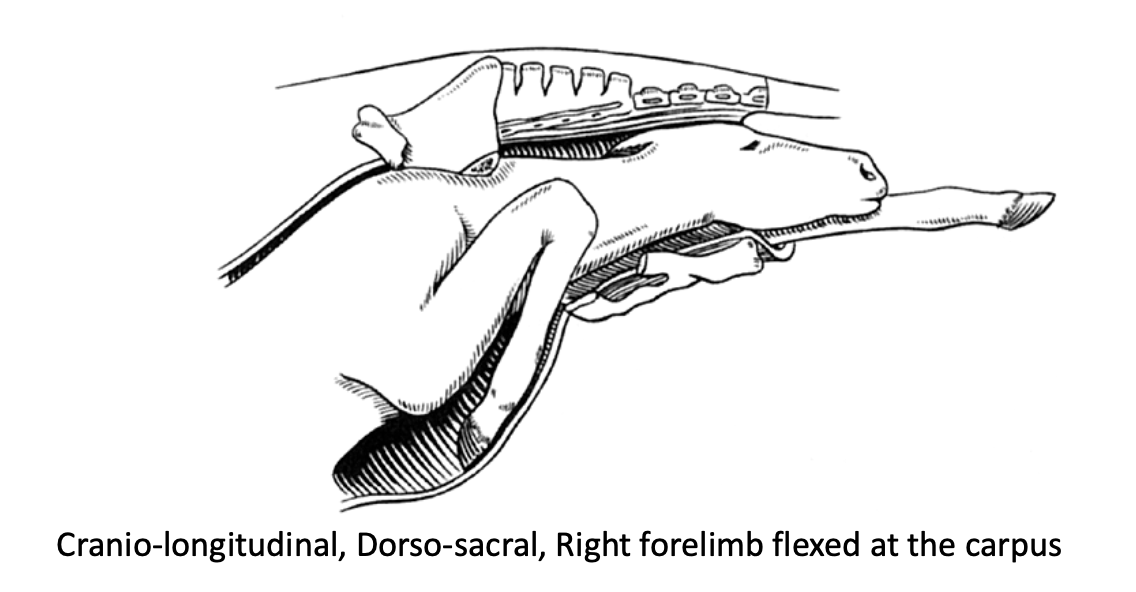
What is this posture abnormality?
retained leg
How do you correct a retained limb
bring limb up midline to protect uterus
pull leg forward
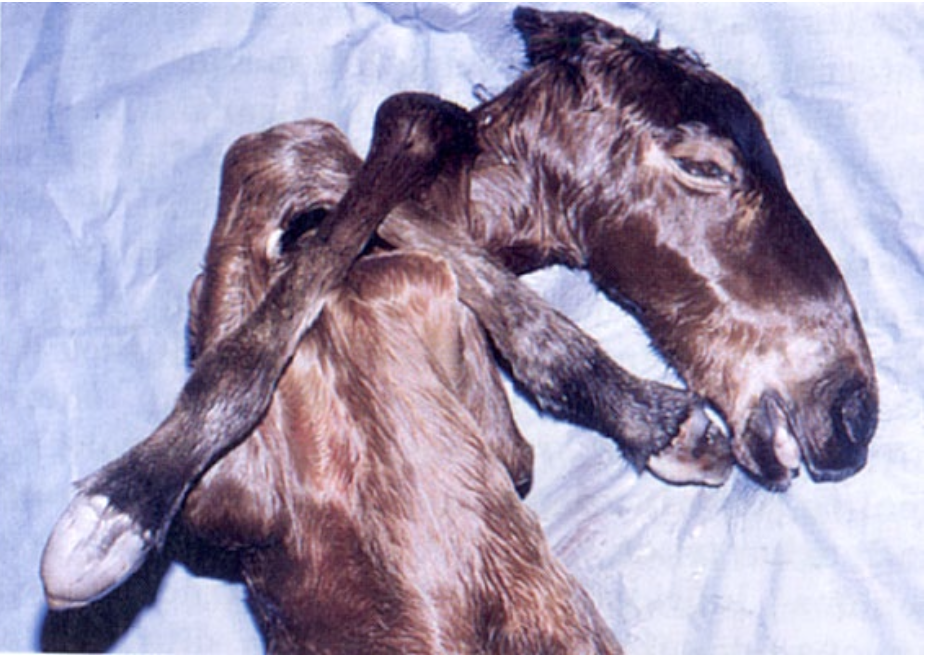
What abnormality is this?
contracted tendons
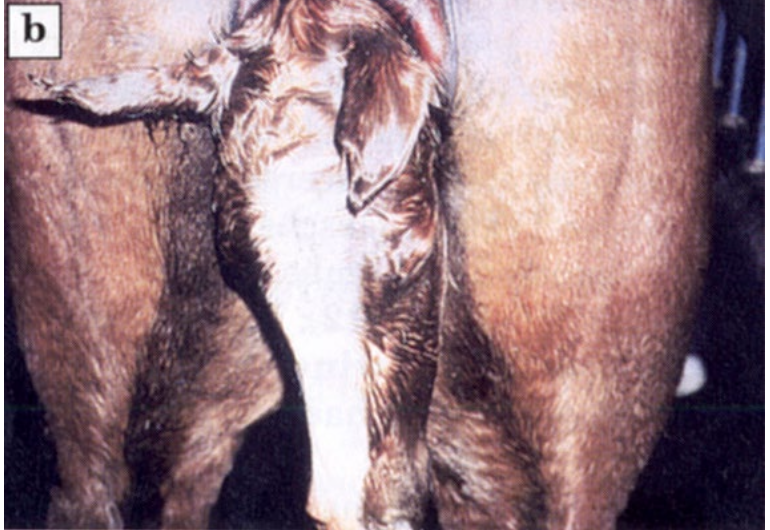
What abnormality is this?
retention of both front limbs
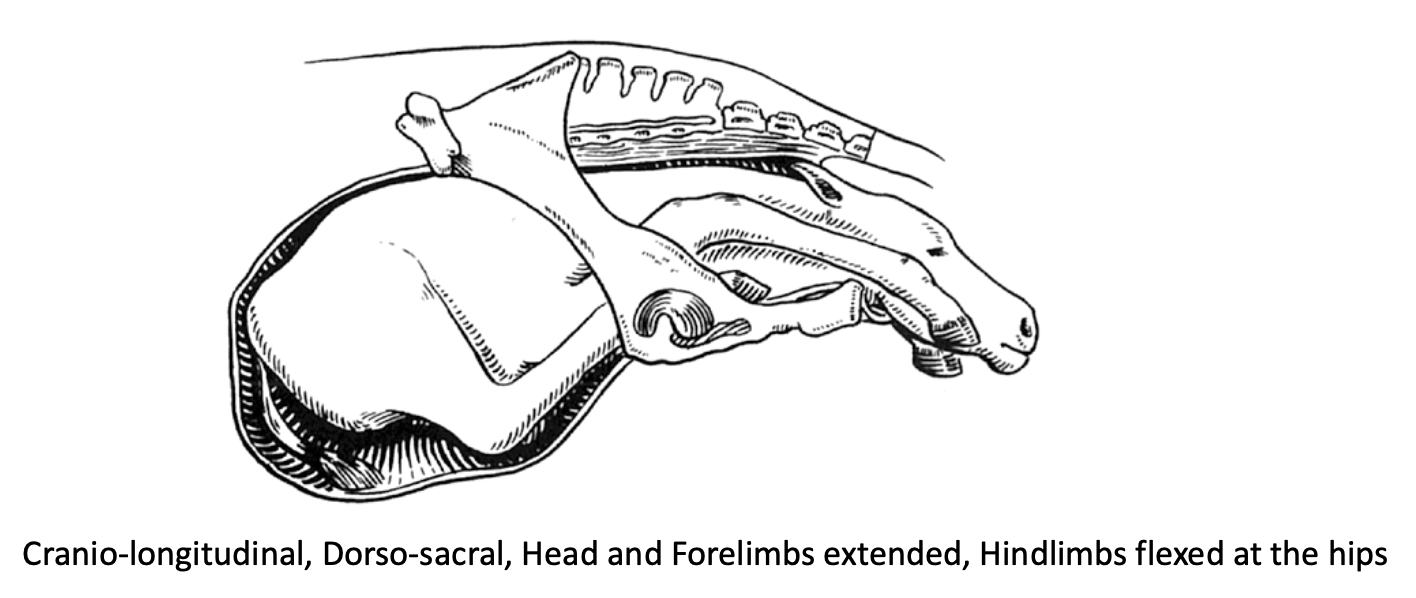
What abnormality is this?
dog sitting
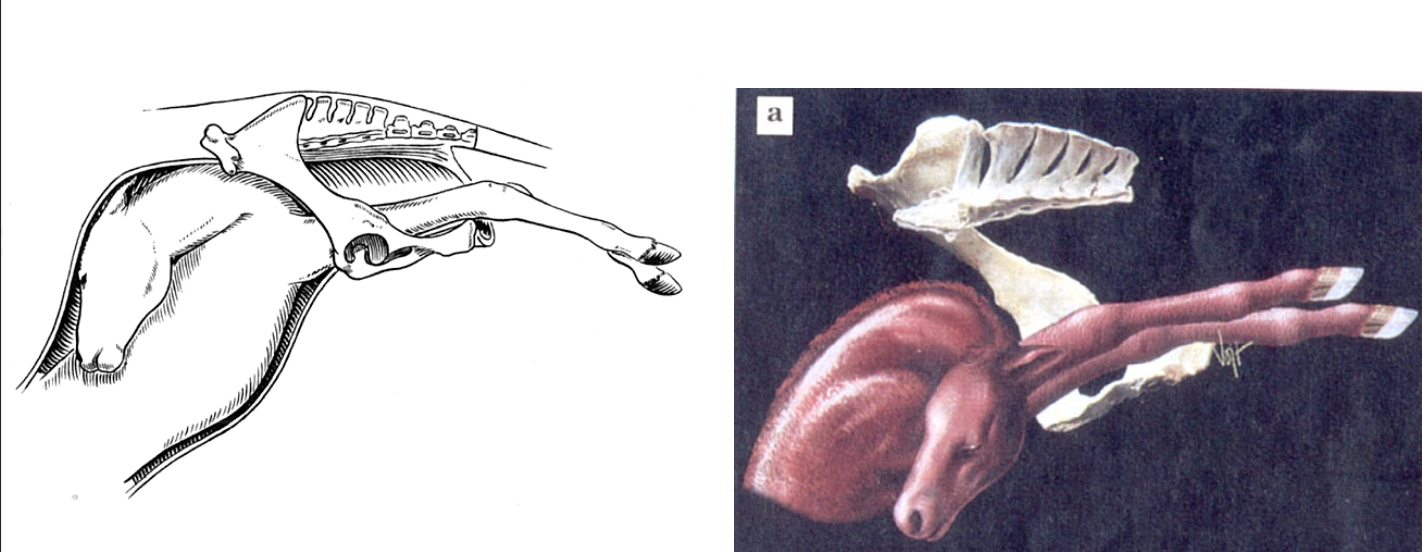
How is this abnormality resolved?
holding onto head:
• Nose hold
• Fingers in mouth - Intermandibular space
• Eye socket hold - Blunt eye hooks
• Noose around lower jaw
• Noose around head that passes through opening of mouth
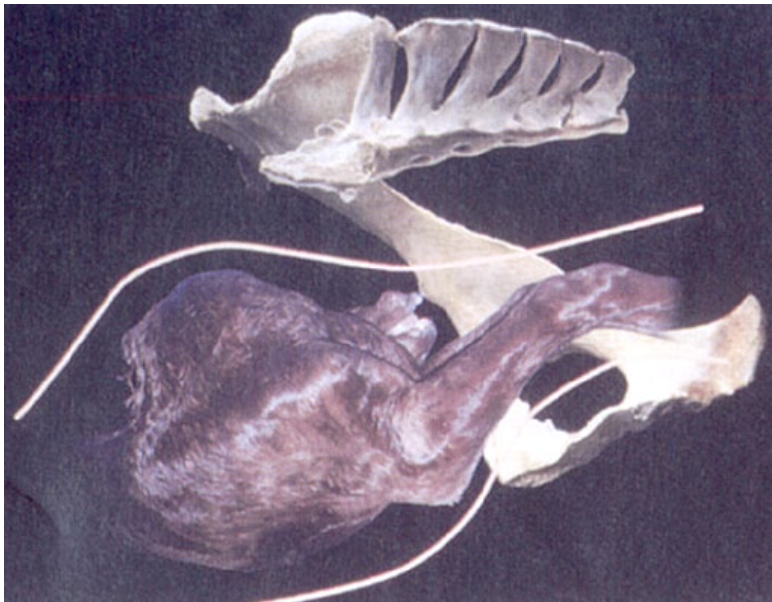
What abnormality is this and how is it fixed?
wry neck
it is the same as flexed neck, but impossible to correct since spine is fixed in this position → not agreeable with life → fetotomy or C-section
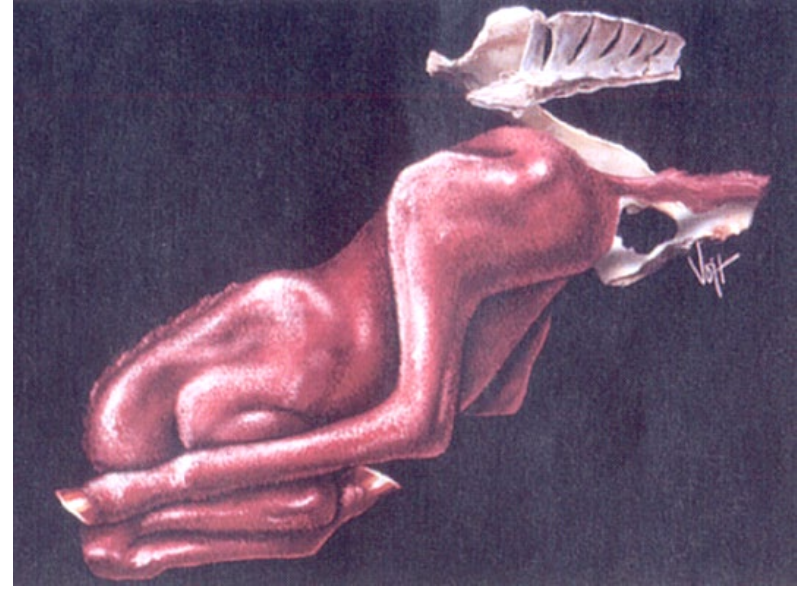
What abnormality is this?
breech
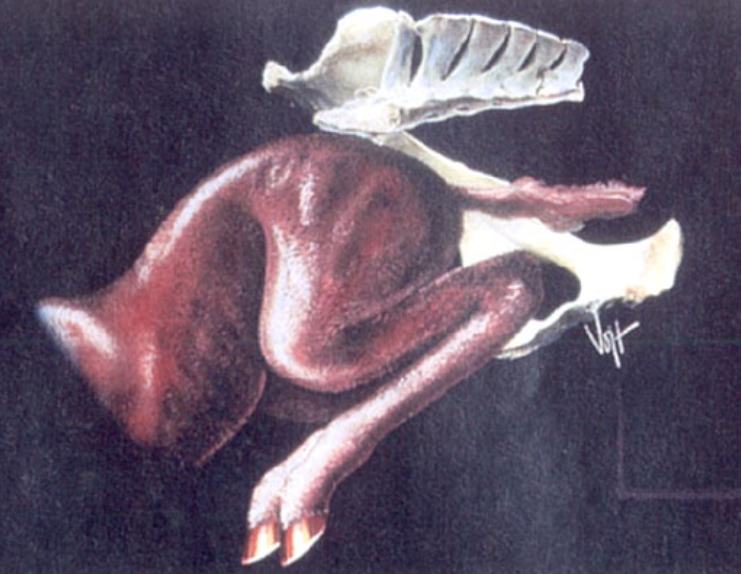
What abnormality is this?
hock presentation
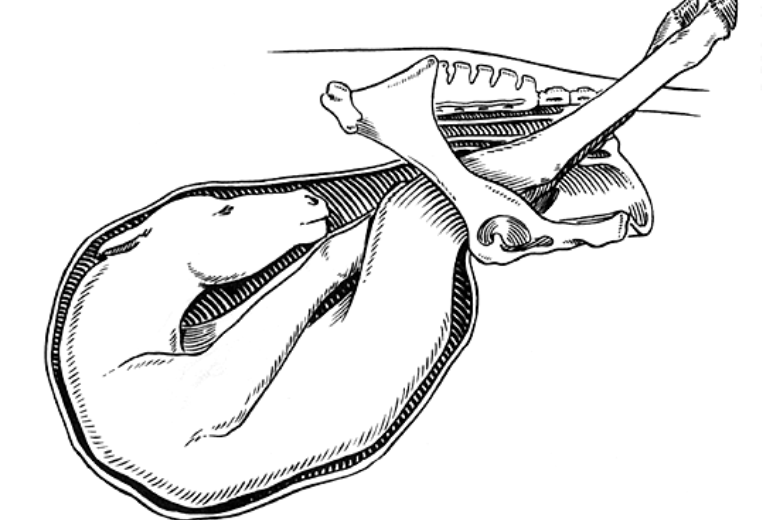
What abnormality is this?
rear feet pointed down
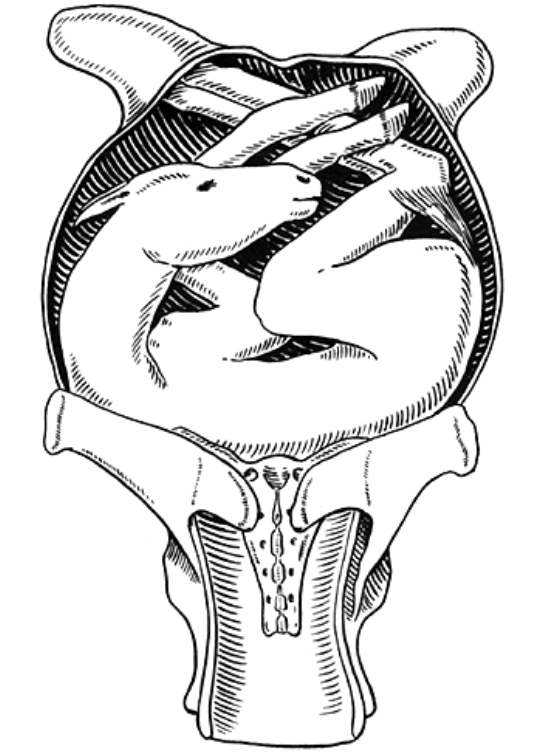
What abnormality is this?
dorso-transverse
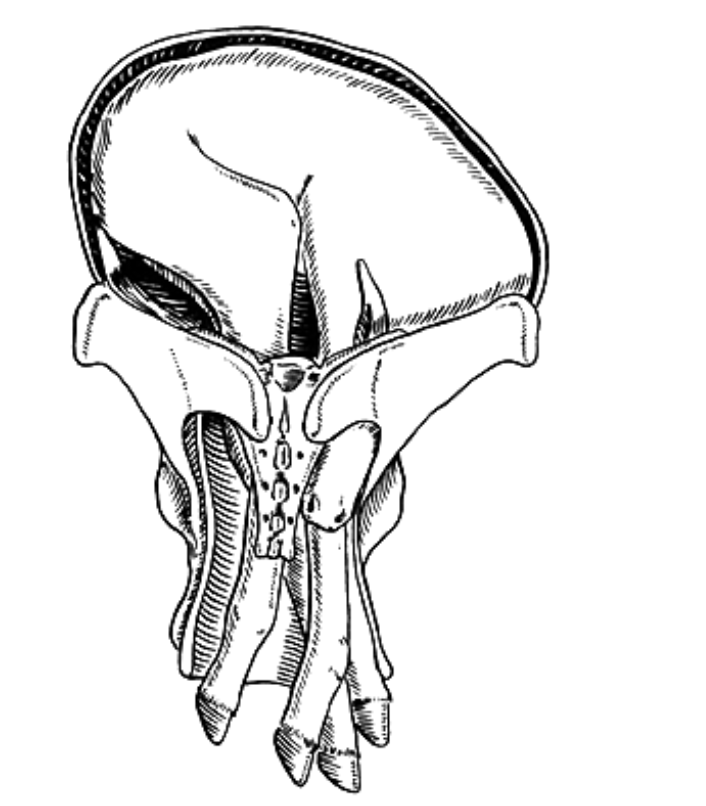
What abnormality is this?
ventro-transverse
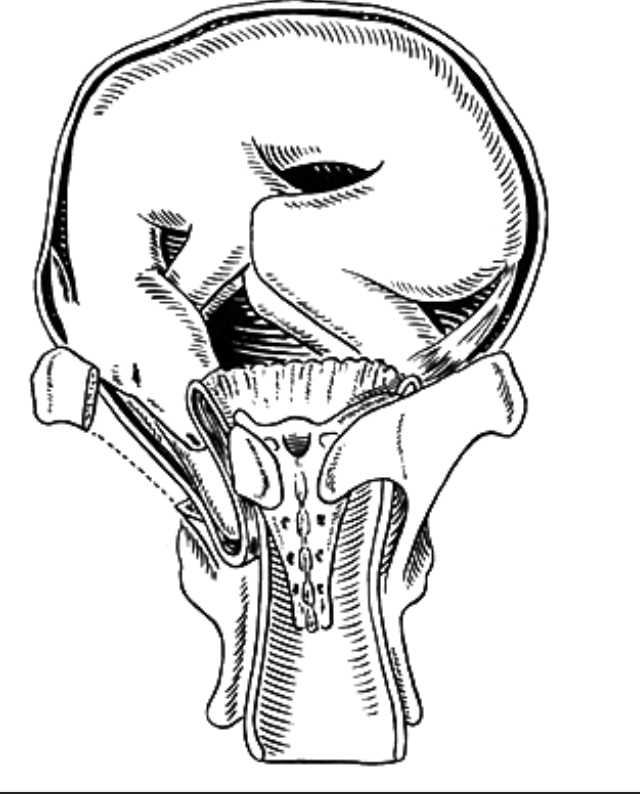
What abnormality is this?
ventro-transverse with ventral displacement of uterus and folding of the uterus/cervix
How should a fetus be extracted?
rotate calf as fetal head emerges from the vulva to prevent hiplock
hips of fetus are widest part
rotation allows hips (greater trochanter) more space
What are the cuts for a full fetotomy?
decapitation or cervical (vertebral) amputation = 1
amputation of forelimbs = 2 & 3
detruncation = 4 & pos. 5
division of pelvis - must be divided diagonally = 6