Exam #2 Study Guide: Romanticism, Modernism, and Postmodernism
 Call Kai
 Learn
Learn Practice Test
 Spaced Repetition
 Match
Match Flashcards
 Knowt Play
1/46

Earn XP
Description and Tags
A comprehensive collection of vocabulary terms, primary figures, artists, and philosophical movements covered in the Exam #2 study guide.
Name | Mastery | Learn | Test | Matching | Spaced | Call with Kai | Chat |
|---|
No analytics yet
Send a link to your students to track their progress
47 Terms
John Locke and Voltaire
Primary figures associated with the Enlightenment Era.
Jean-Antoine Watteau
Rococo artist known for the work Return from Cythera.

Jean-Honoré Fragonard
Rococo artist known for the work The Swing.

Angelica Kaufmann
Neoclassical artist known for The Artist in the Character of Design Listening to the Inspiration of Poetry (The Inspiration of Poetry).

Jacques-Louis David
Neoclassical artist whose works include The Oath of the Horatii, The Death of Marat, and Napoleon Crossing the Saint-Bernard.

Fichte, Hegel, and Kant
German thinkers known as the German Philosophical Revolutionaries.
David Hume and Edmund Burke
English Enlightenment philosophers whose ideas are related to the birth of Romanticism.
William Blake
Romantic poet who wrote "The Piper" and selections from The Marriage of Heaven and Hell.
William Wordsworth
Romantic poet who wrote "Tintern Abbey" and the "Preface."
John Keats
Romantic poet known for "Ode on a Grecian Urn."
John Constable
Romantic artist known for the paintings The Rainbow and The Hay Wain.

J. M. W. Turner
Romantic artist known for Snow Storm—Steam-Boat off a Harbour’s Mouth and The Upper Falls of the Reichenbach.

Caspar David Friedrich
Romantic artist known for Wanderer above a Sea Mist and Monk by the Sea.

Eugène Delacroix
Romantic artist known for Liberty Leading the People and Scenes from the Massacres at Chios.

Francisco Goya
Romantic artist who painted Third of May 1808 and Saturn Devouring One of His Children.

Théodore Géricault
Romantic artist known for The Raft of the "Medusa."

Notes from Underground Characters
The key figures in Dostoevsky's text include Liza, Simonov, Zverkov, and The Underground Man.
Chernyshevsky
A Utilitarian/Utopian Socialist mentioned in the context of Dostoevsky's Notes from Underground.
Édouard Manet
Proto-Impressionist artist known for Luncheon on the Grass and A Bar at the Folies-Bergère.

Claude Monet
Impressionist artist known for the "Water Lilies" series and Impression: Sunrise.
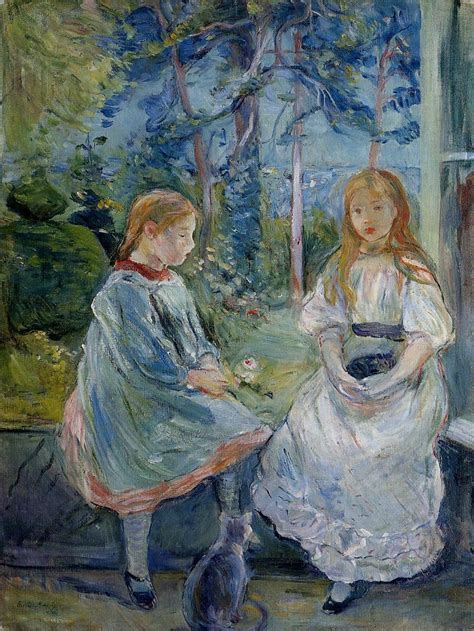
Berthe Morisot
Impressionist artist known for Young Girls by the Window.
Edgar Degas
Impressionist artist known for The Rehearsal (Adagio).

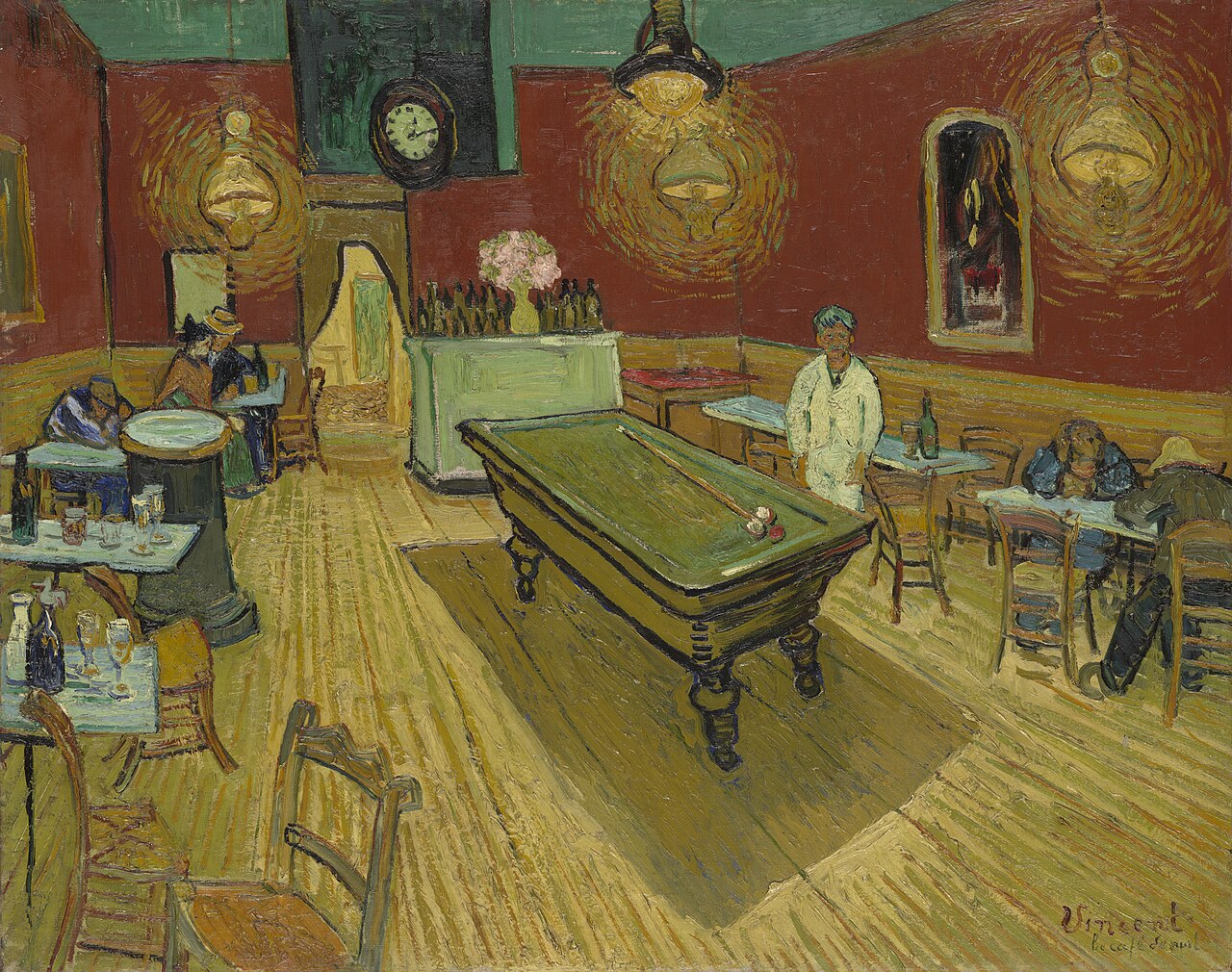
Vincent van Gogh
Post-Impressionist artist known for The Starry Night and Night Café.
Georges Seurat
Pointillist artist known for A Sunday on La Grande Jatte.
Toulouse-Lautrec
Post-Impressionist artist known for At the Moulin Rouge.

Pablo Picasso
Cubist artist known for the works Guernica and Les Demoiselles d’Avignon.

Characters in Albert Camus's The Plague
Includes Dr. Bernard Rieux, Jean Tarrou, Raymond Rambert, Joseph Grand, Father Paneloux, and Cottard.
Cubism
An approach to art emerging in early 20th century Paris where objects or people are portrayed from multiple perspectives simultaneously using geometric shapes.
en plein air
A method of painting "in open air" favored by Impressionists to capture the play of natural sunlight on city- and landscapes.
Existentialism
A mid-20th century philosophy asserting that life has no inherent meaning and that individuals define their moral meaning through actions and responsibility.
Fin de siècle
A term for the cultural mood of the late 19th and early 20th centuries, characterized by a feeling of decadence, moral exhaustion, and ennui.
Idealism
A philosophical position asserting that thought and ideas play the primary role in generating reality and human experience.
Impressionism
A late 19th century French art movement that used new brushwork and color theories to convey a painter's subjective vision and the effects of natural light.
Modernism
An early 20th century movement that challenged Enlightenment beliefs in a stable world, experimenting with nonlinear narratives and fragmentation.
Nationalism
A 19th century ideology stressing unique traditions and identities, arguing for a separate nation-state for every people.
Novel
An extended prose narrative that seeks to give a realistic representation of life, manners, and people, depicting the world "as it really is."
Pointillism
A technique developed by Georges Seurat using tiny dots of pure color that blend in the viewer's eye to create luminosity.
Post-Impressionism
An art movement (1880s to 1910) that rejected Impressionist focus on light in favor of arbitrary colors and distorted geometric shapes for emotional effect.
Postmodernism
A late 20th century view stressing fragmentation, relativism, and the multiplicity of identities, often celebrating irony and verbal play.
Realism
A post-Romantic trend of the mid-19th century that focused on daily struggles and portrayed life as it was rather than following exotic heroics.
Rococo
An early 18th century French style in visual arts characterized by light, elegant, and sensuous designs.
Romanticism
A cultural stance (1780s-1840s) emphasizing human feelings, nature's mysteries, artistic genius, and the organic unfolding of life over rational laws.
The Sublime
A Romantic concept referring to that which inspires terror and astonishment, often through the dark and powerful aspects of nature.
The Beautiful
A Romantic concept referring to that which inspires affection and domestic feeling, resulting in a relaxation of the body.
Utilitarianism
An early 19th century British movement seeking reforms to produce the "greatest good for the greatest number" based on mathematical calculation.
Utopian Socialists
Early 19th century socialists like Henri de Saint Simon who believed owners could be persuaded to relinquish resources for the good of all.
Volksgeist
A German term meaning "the spirit of the people," describing the transcendent force of an ethnic group sharing a common language and worldview.