Albrecht Durer
 Call Kai
 Learn
Learn Practice Test
 Spaced Repetition
 Match
Match Flashcards
 Knowt Play
1/33

There's no tags or description
Looks like no tags are added yet.
Name | Mastery | Learn | Test | Matching | Spaced | Call with Kai | Chat |
|---|
No analytics yet
Send a link to your students to track their progress
34 Terms
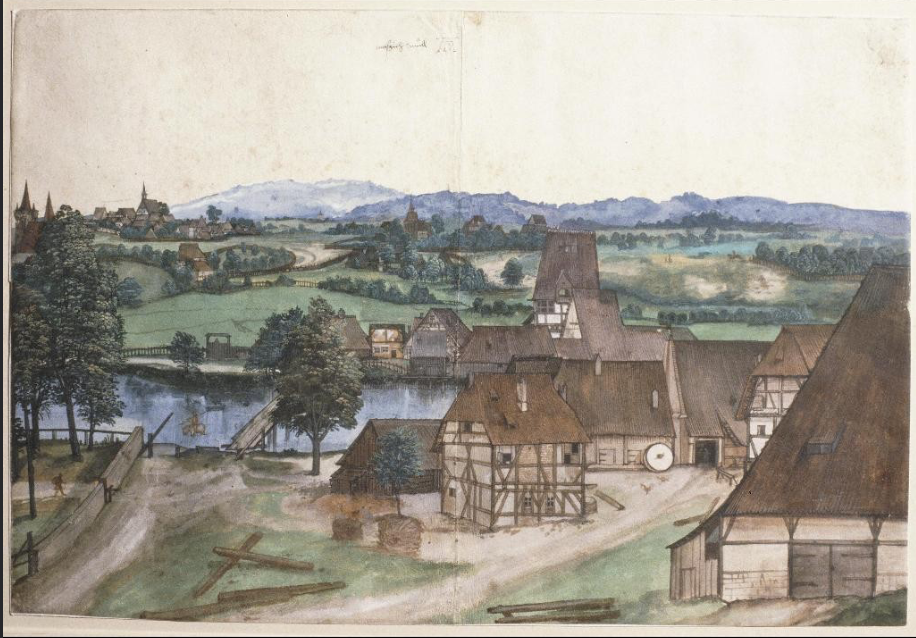
Wire-Drawing Mill, watercolor, c. 1489
watercolor medium used as a sketch/drawing to paint landscapes becuase watercolor paints are easier to travel with
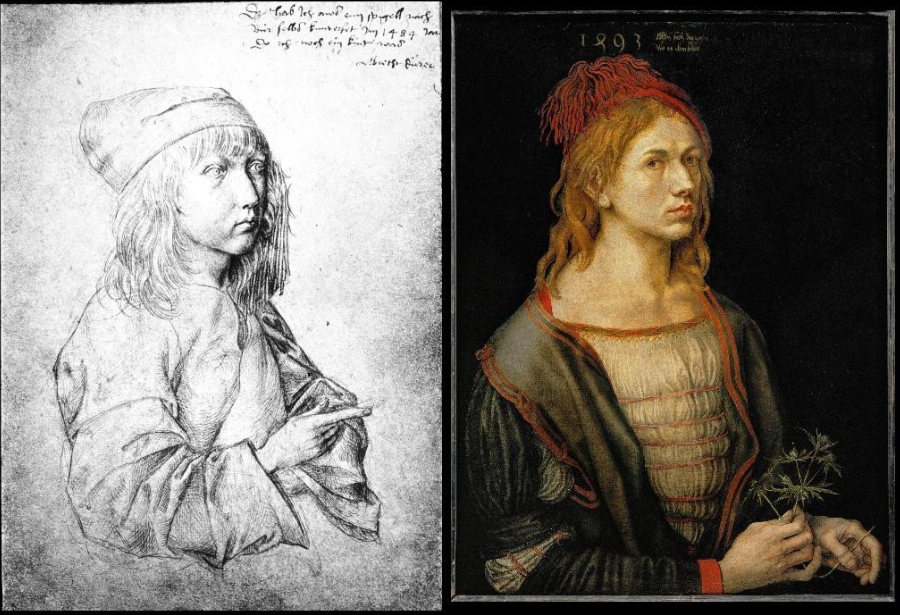
Self-Portrait, silverpoint, 1484
Self-Portrait, painting, 1493
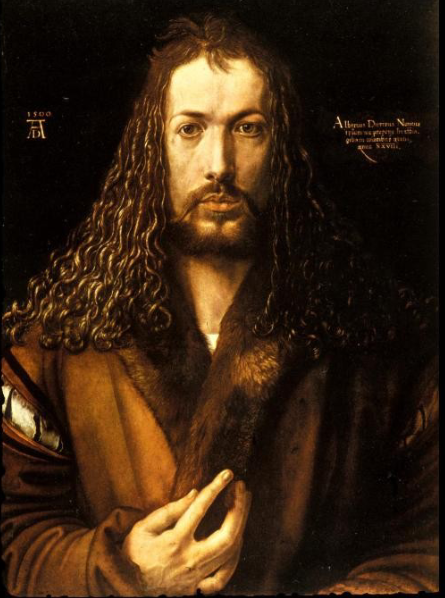
Self-Portrait, painting, 1500
would have been used to show potential patrons his work, portrait bears resembalence to imagery of Christ, the frontal pose, and 2 strands of hair on the forehead
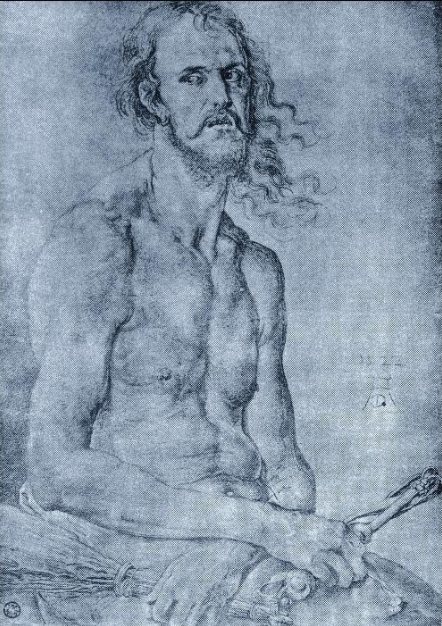
Self-Portrait as Man of Sorrows, drawing, 1522
Explicit reference to Durer portraying himself as Christ as the man of sorrows
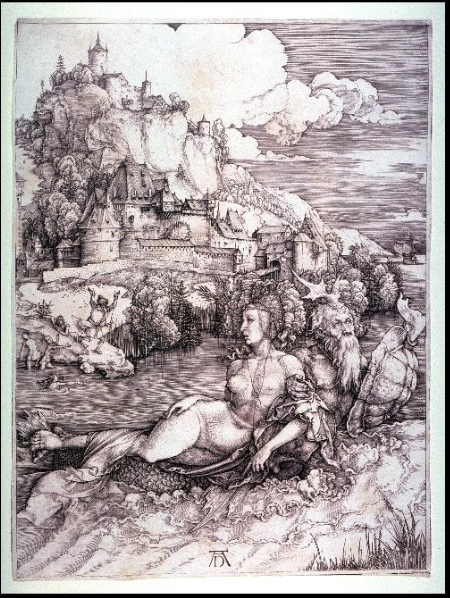
The Seamonster, engraving, c. 1498
Unknown imagery, the seamonster characterization is not see in any other artwork or literature
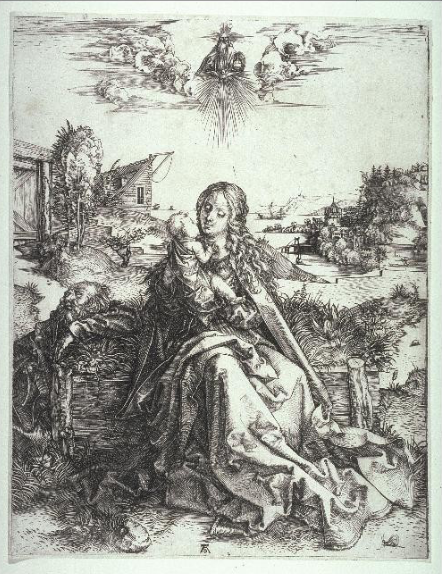
Holy Family with a Mayfly, engraving, c. 1495-1496
Durer creates a slightly comic image of Joseph, who is napping in a less-than-ideal pose, compared to the standard image of Mary and Christ
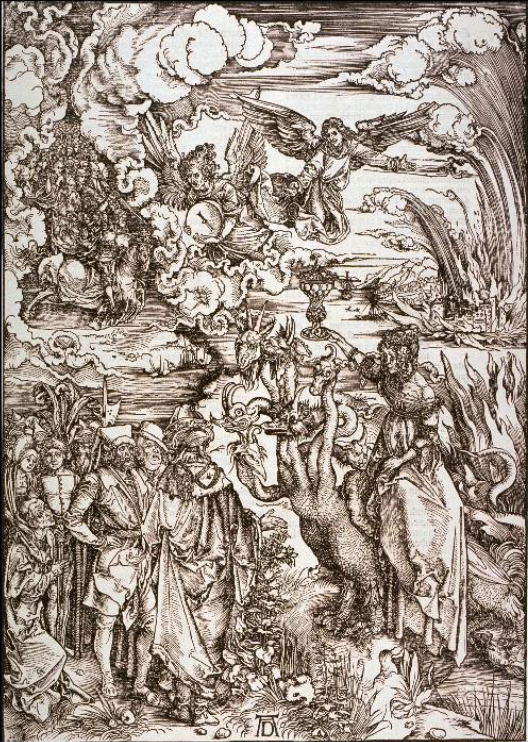
Apocalypsis cum Figuris, woodcut, 1496-1498
The Whore of Babylon
published in a book on the apocalypse, images were intended to help people interpret and understand the book of revelations
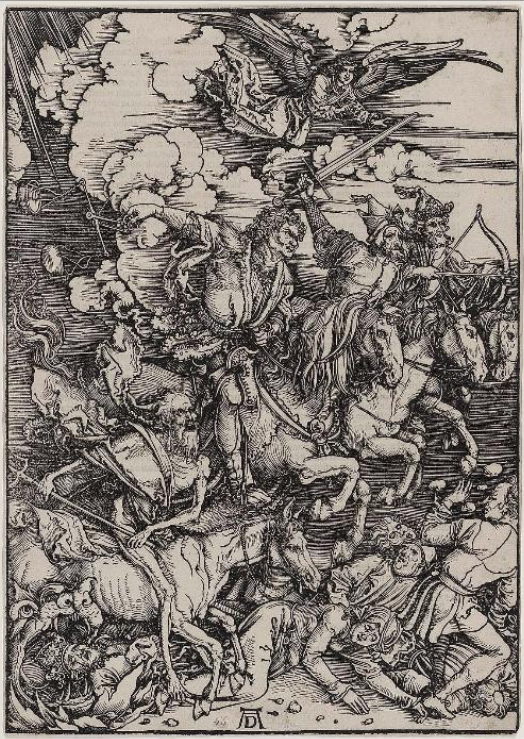
Apocalypsis cum Figuris, woodcut, 1496-1498
Four Horsemen
One of the most popular images of the apocalypse, the rays of light above them and the angel represents the santion of God and the punishment of sin
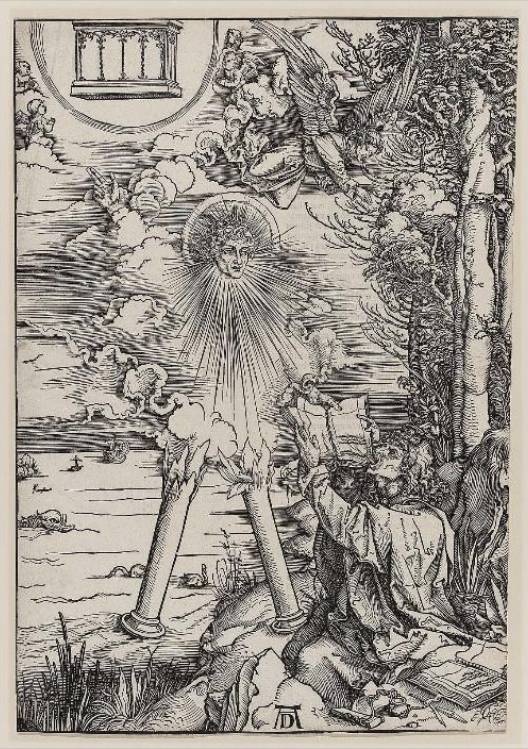
Apocalypsis cum Figuris, woodcut, 1496-1498
John Devouring his Book
John the Evangelist, author of the book of Revelation, speaks of devouring the holy book, a metaphor for consuming the word of Goc
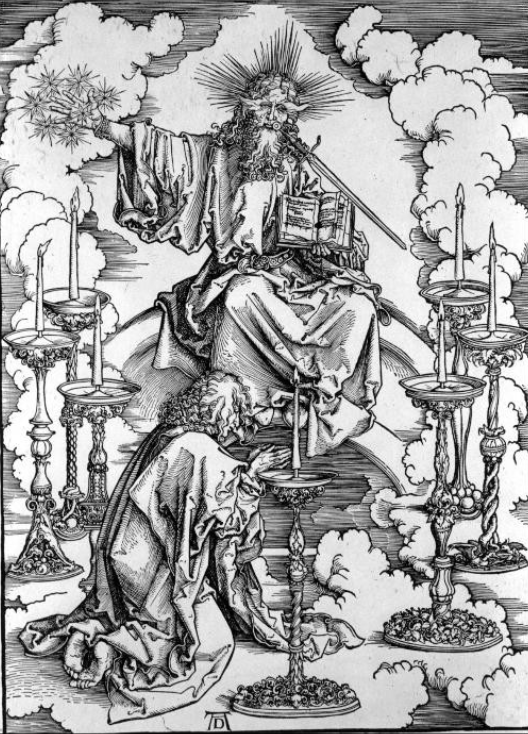
Apocalypsis cum Figuris, woodcut, 1496-1498
John's Vision of the Seven Candlesticks
Durers father was a metal worker, each of the candlesticks is different, he may have had candlesticks made by his father to use as reference
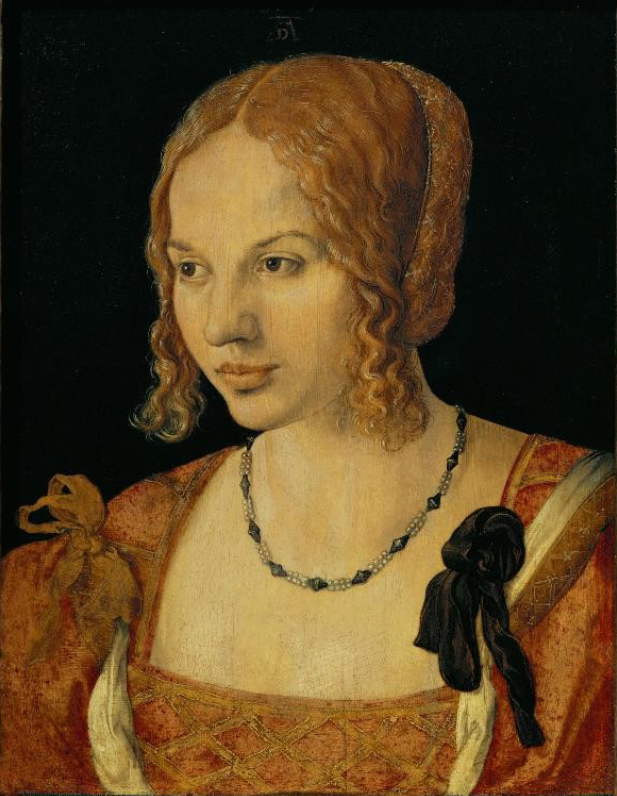
Young Woman of Venice, c. 1505
Portrait of an Italian woman, wearing italian fashion, Durer took many commissions furing his trip to Italy
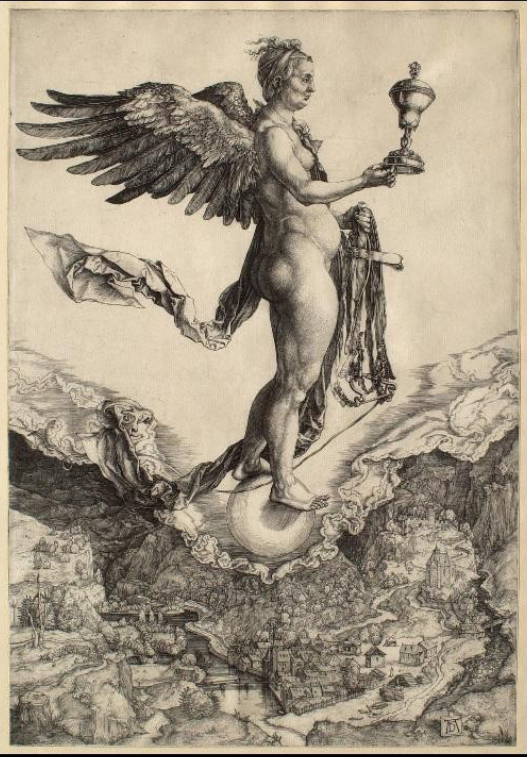
Nemesis (Great Fortune), engraving, 1501-1502
Landscape view from trip to Venice, growing interest in ancient subjects and italian imagery
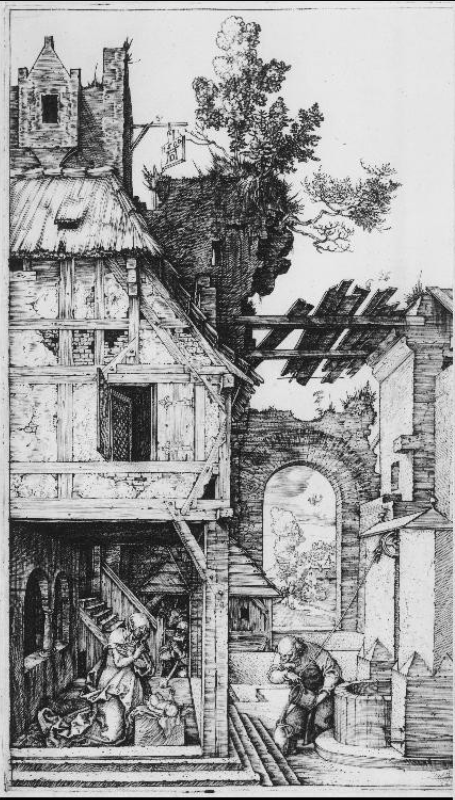
Nativity, engraving, 1504
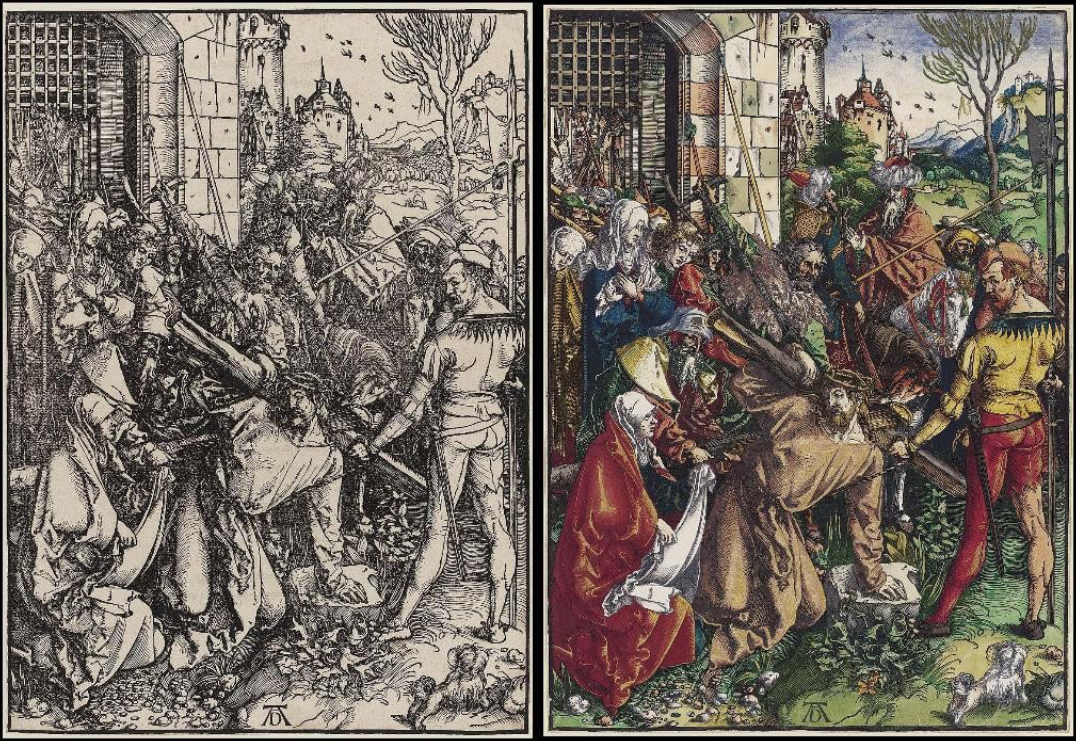
Way to Calvary, from the large woodcut passion, 1498-1499
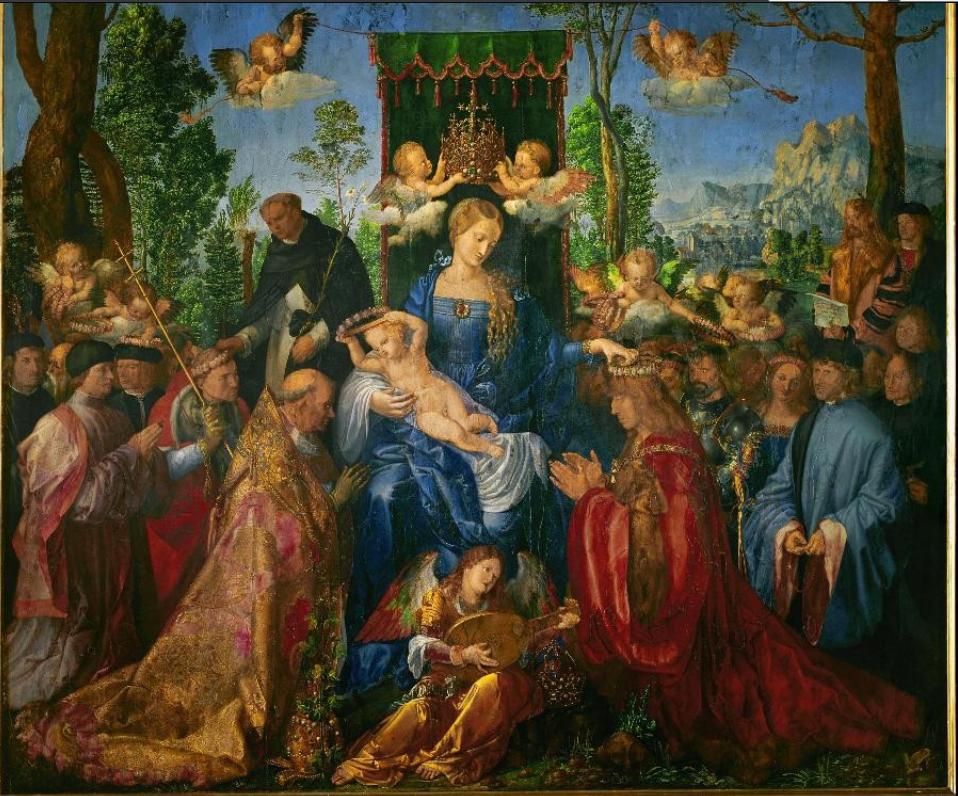
Feast of the Rose Garlands, painting, 1506
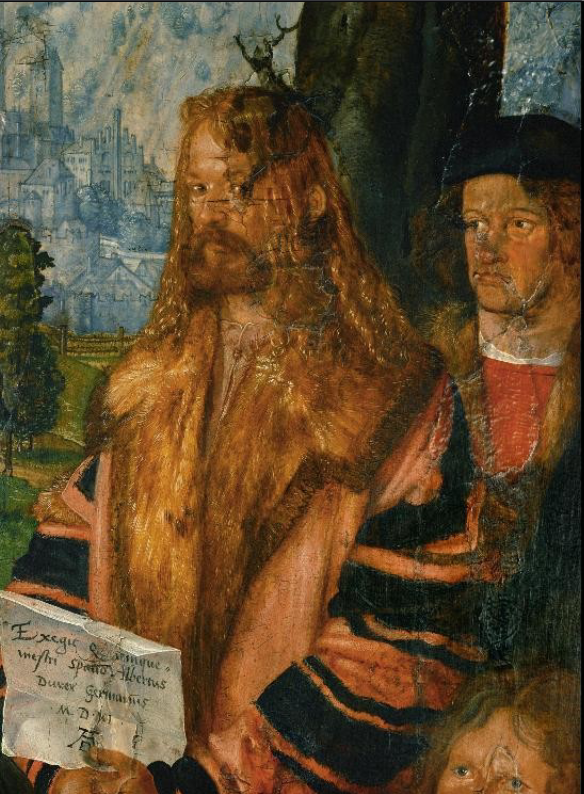
Feast of the Rose Garlands, painting, 1506
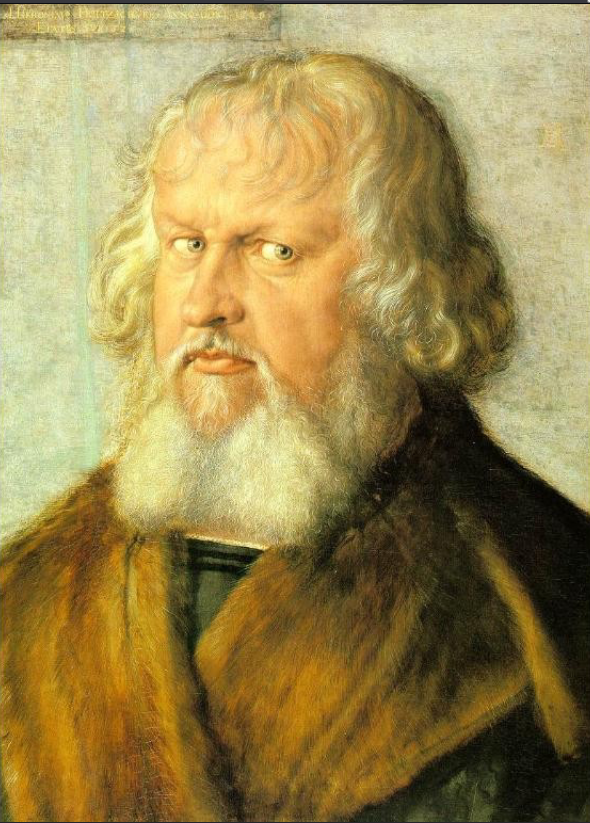
Hieronymous Holzschuler, painting, 1526
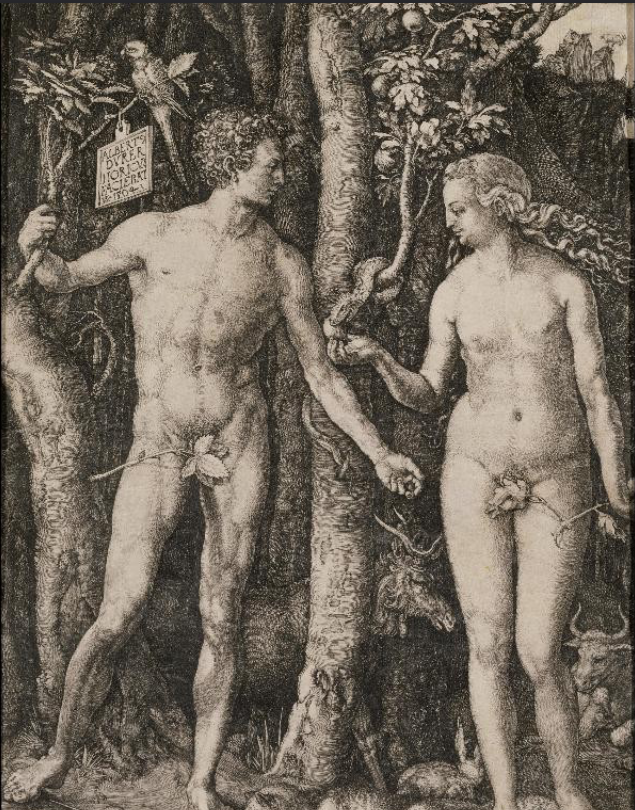
Adam and Eve, engraving, 1504
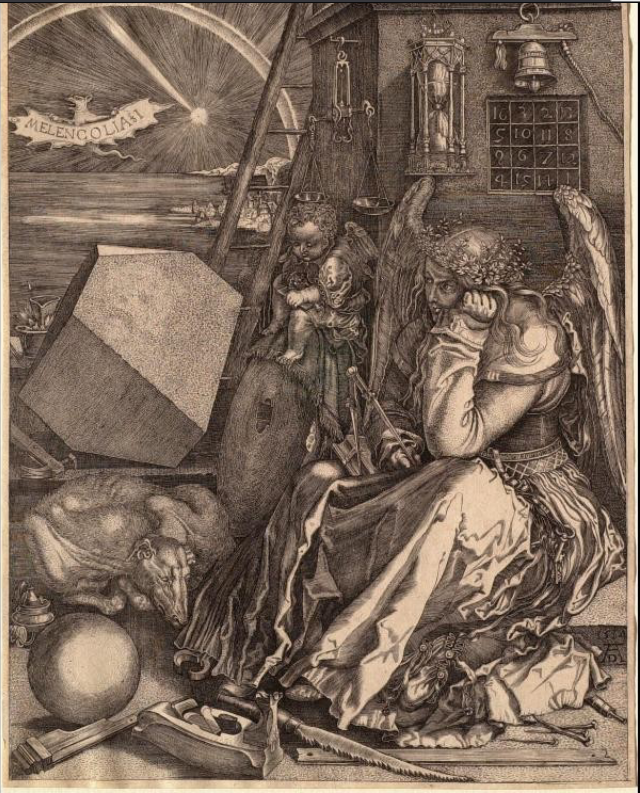
Melancolia I, engraving, 1514
Part of a group of prints referred to as Durer’s master engravings, all having to do with images of religious and intelectual images
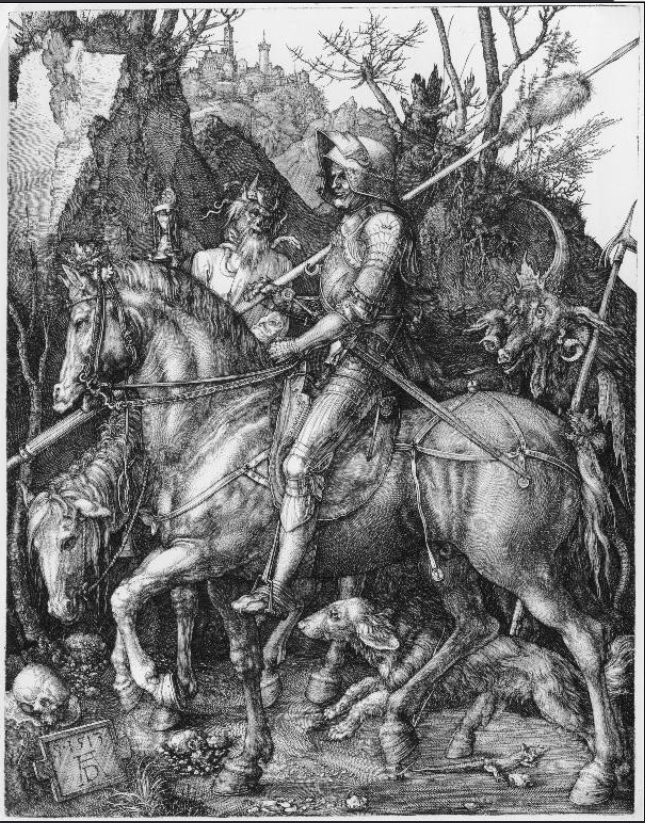
Knight, Death and the Devil, engraving, 1513
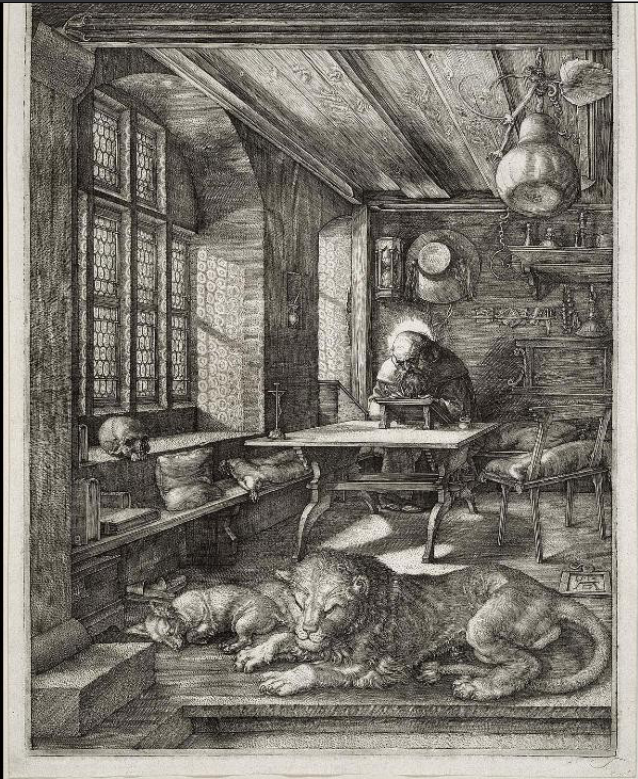
St. Jerome in His Study, engraving, 1514
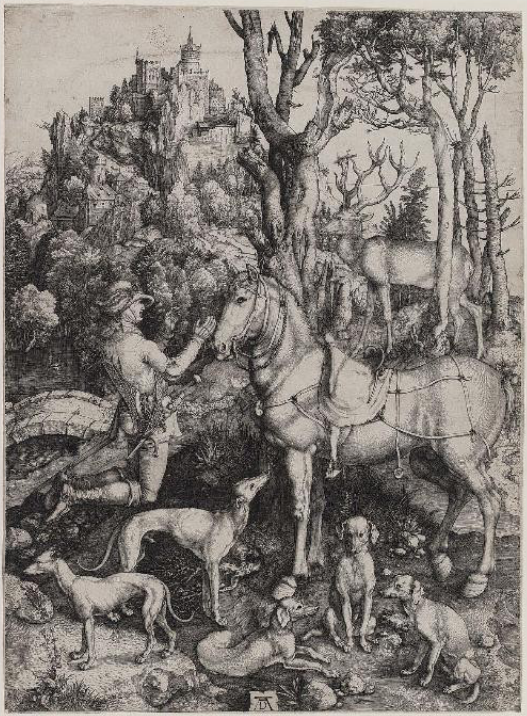
Vision of St. Eustace, engraving, 1500-1501
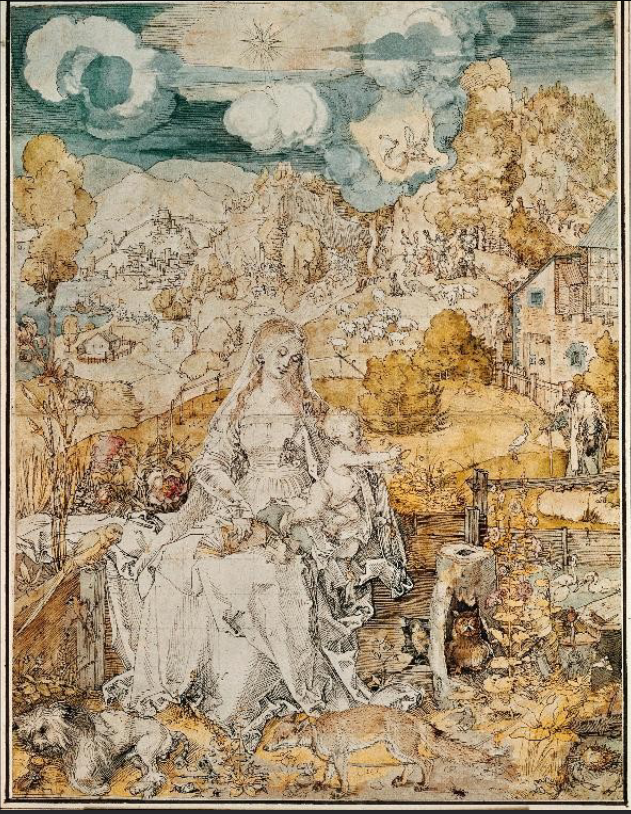
Madonna and Child with Animals, watercolor, 1503
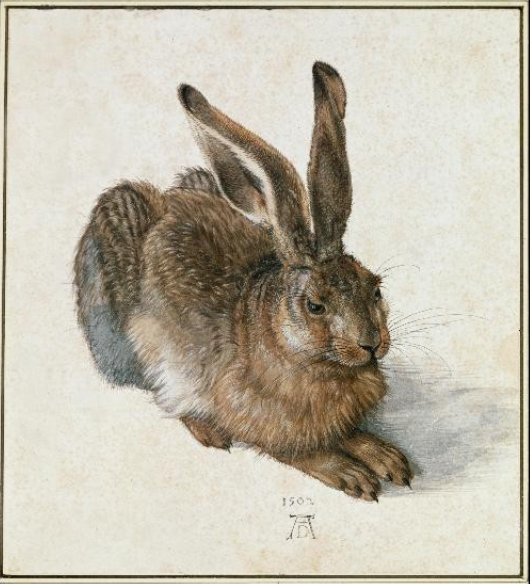
Rabbit, watercolor, 1502
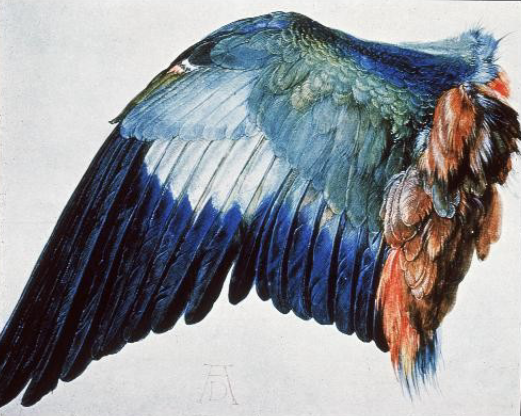
Bird's Wing, watercolor, 1512
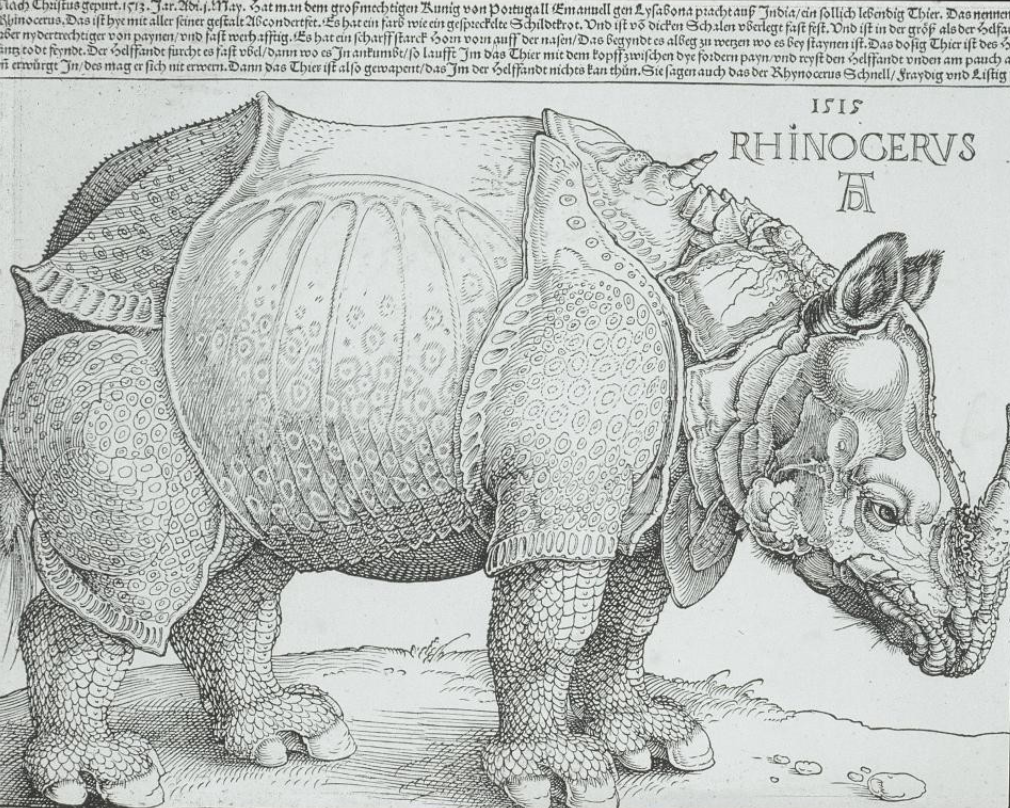
Rhinoceros, woodcut, 1515
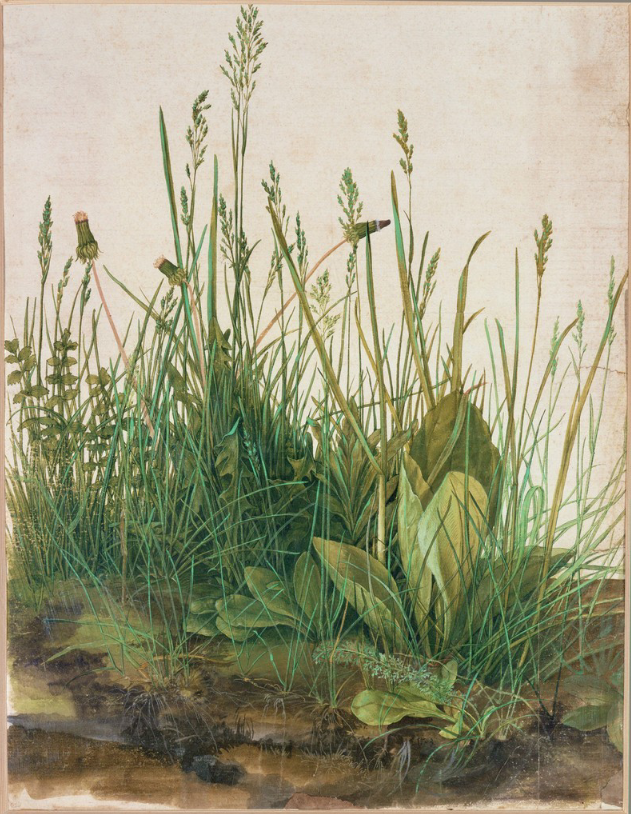
Great Piece of Turf, watercolor, 1503
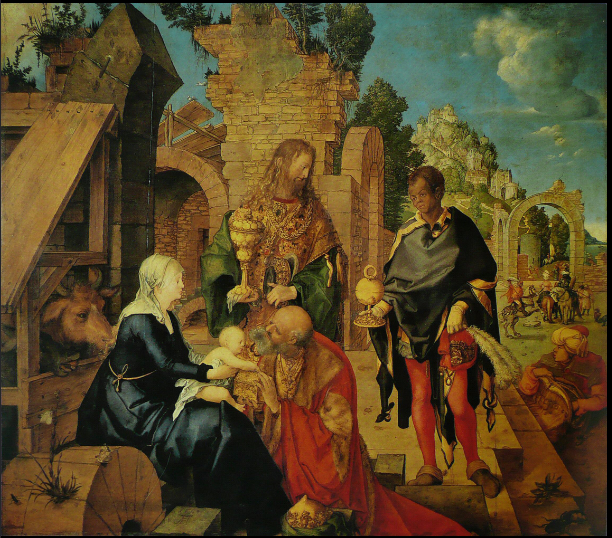
Adoration of the Magi, 1504, painting
Durer notably dresses the African Magi with European-style clothing, and the Magi’s attendant, with lighter skin, is wearing clothes associated with the Middle East
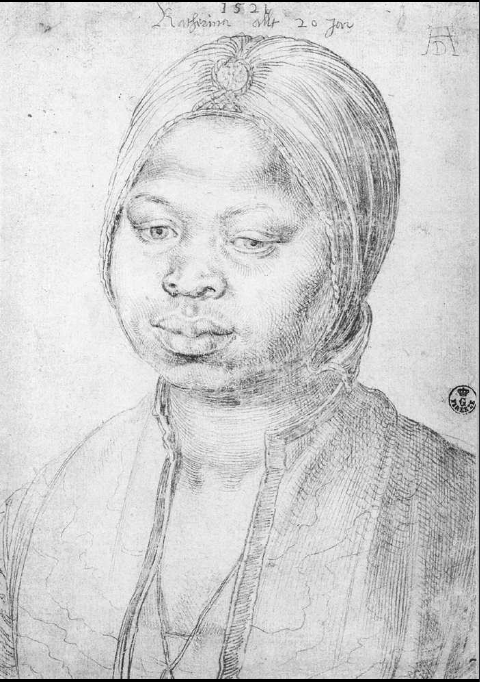
Katherina, silverpoint, 1521
shows large knowledge of working naturalistically and from life
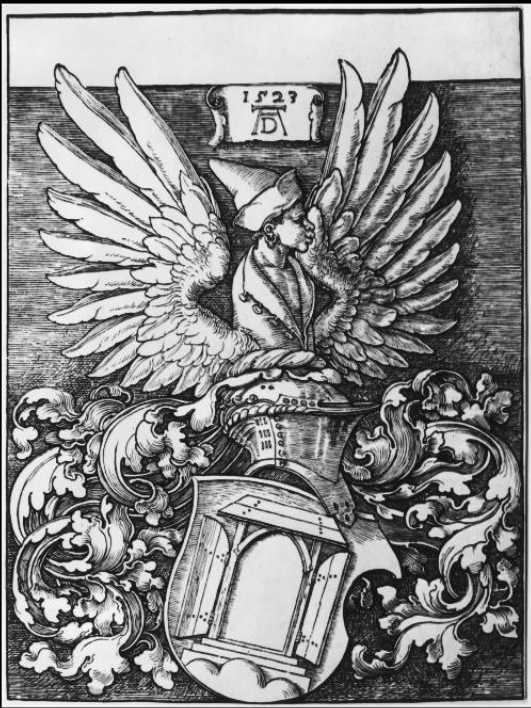
Dürer's Coat of Arms, woodcut, 1523
Doors on the shield come from a play on the artists family name Durer, the images may have come from his father
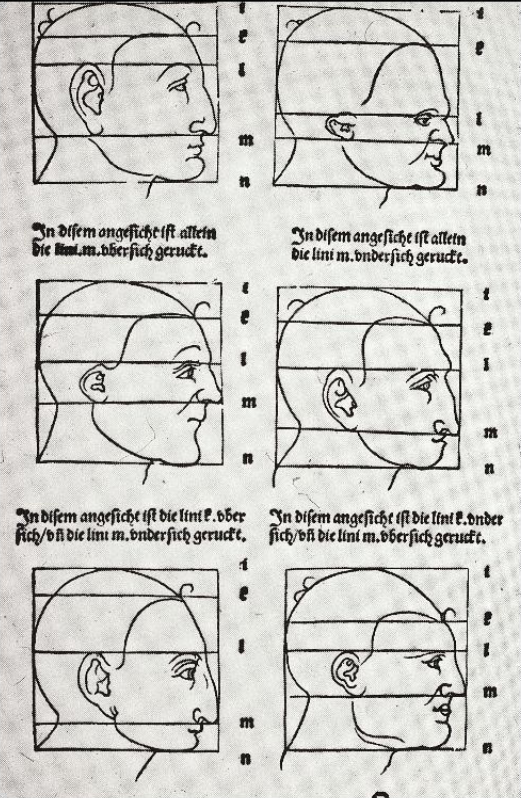
Six Head Profiles, woodcut, published 1528 and 1532
Bottom right head is what Durer believes to be the ideal man, other heads are examples of the unideal
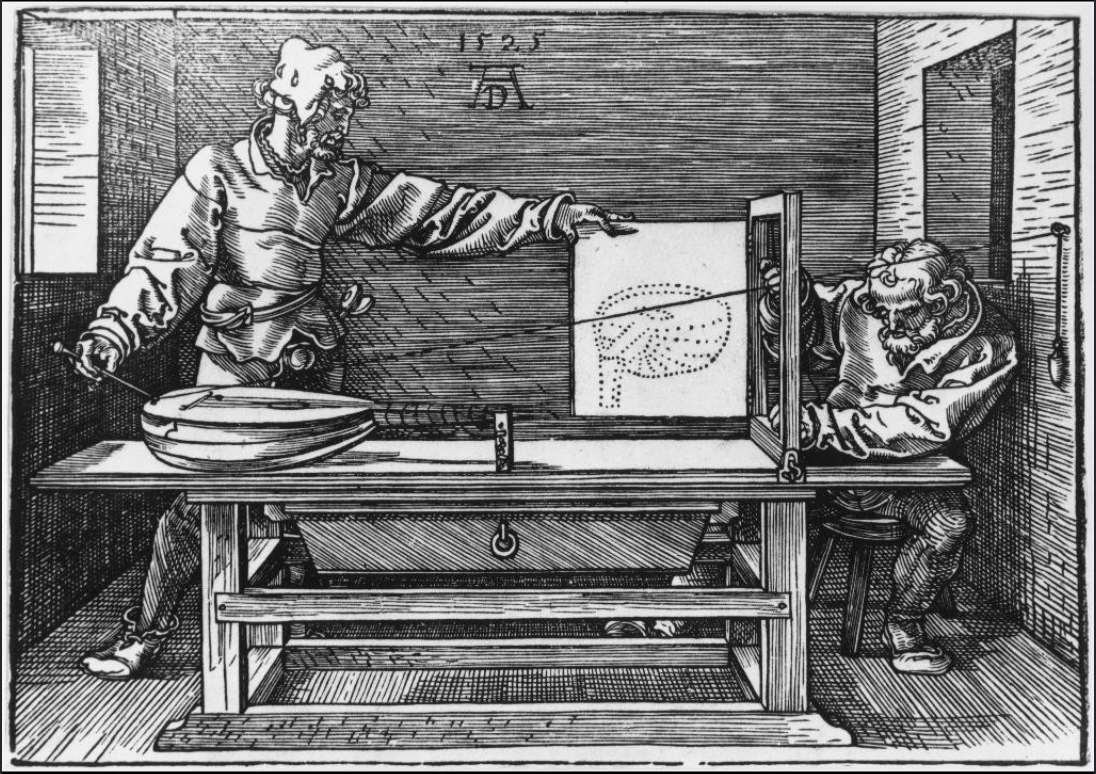
Drawing a Mandolin, woodcut, published 1525 and 1538
published in a book by durer about linear perspective and foreshortening, the image shows the steps someone might take to plot out the shape of a lute at an extreme angle
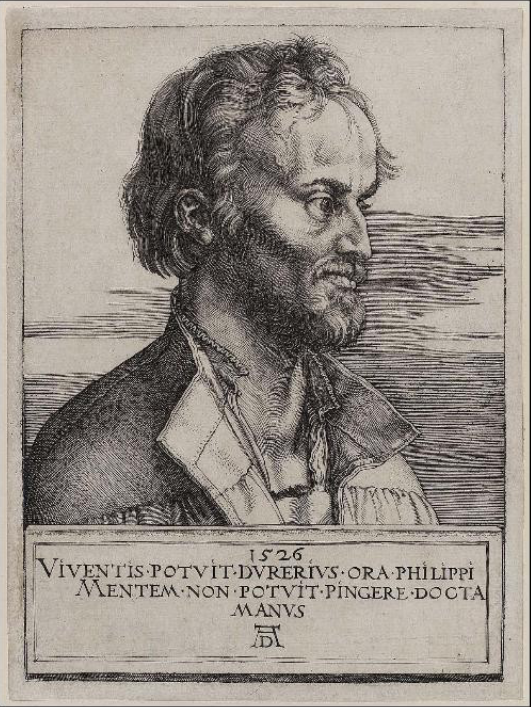
Philip Melancthon, engraving, 1526
letters on the print show the growing knowledge of italian and ancient roman text types
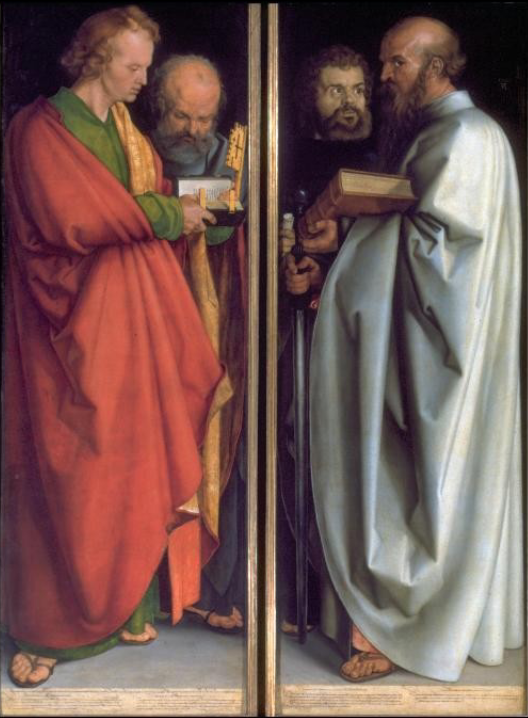
Four Apostles, painting, 1526
Because of reformist thought, the only ligitimate saints are figures in the bible or followers who were contemporaries of Christ, Picture shows st. John, St. Peter, St. Mark and St. Paul, the image also represents the 4 humors of the body, sanguine, phlegm, yellow bile and black bile