Kaplan Biochemistry Chapter 4 : Carbohydrate Structure & Function
 Call Kai
 Learn
Learn Practice Test
 Spaced Repetition
 Match
Match Flashcards
 Knowt Play
1/39

There's no tags or description
Looks like no tags are added yet.
Name | Mastery | Learn | Test | Matching | Spaced | Call with Kai | Chat |
|---|
No analytics yet
Send a link to your students to track their progress
40 Terms
Trioses
Simplest of the monosaccharides composed of three carbon atoms
4 carbons - Tetrose
5 carbons - Pentose
6 carbons - Hexose
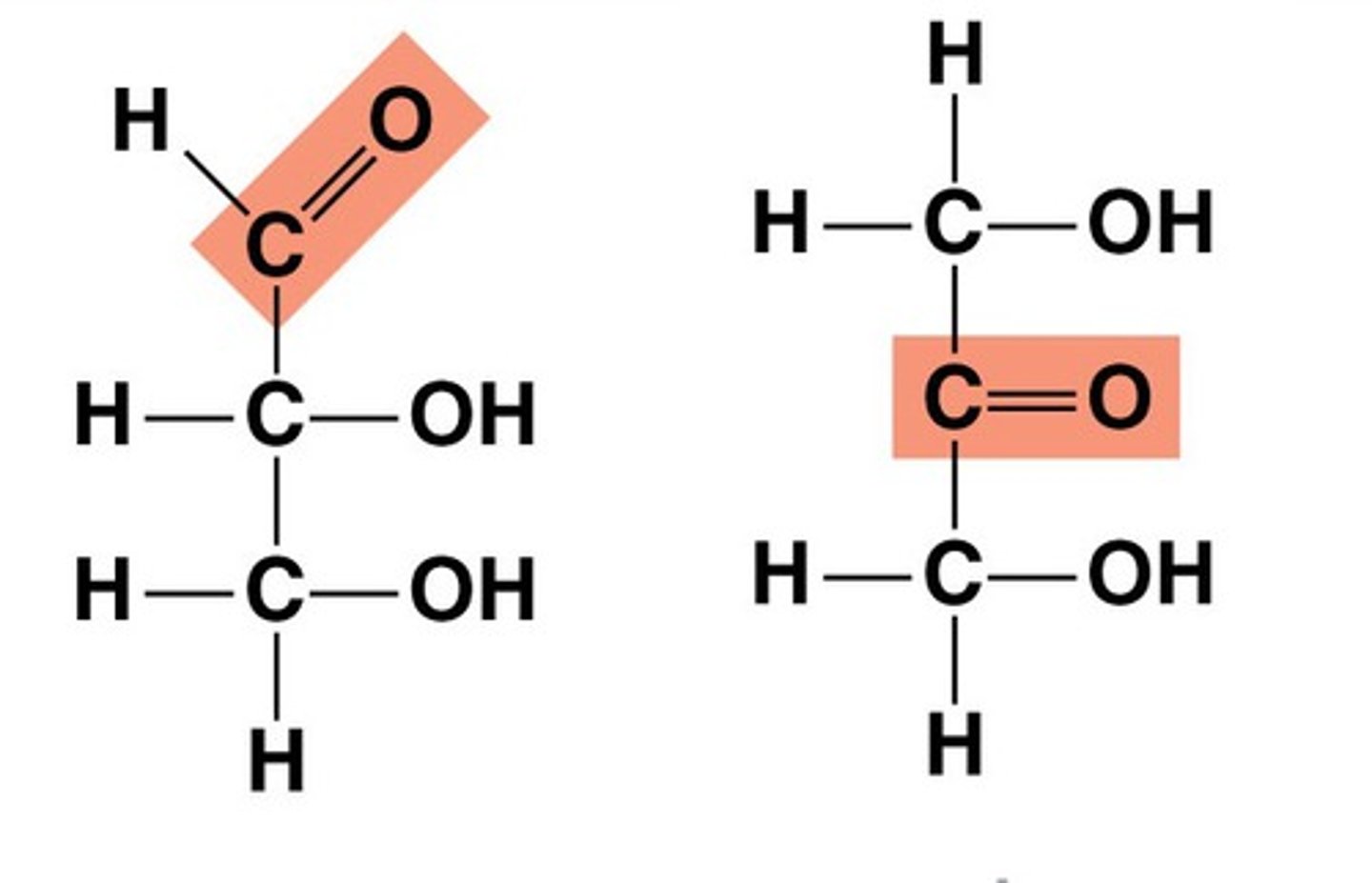
Aldose
Carbohydrates that contain an aldehyde as their most oxidized functional group
Can participate in glycosidic linkages
Ex - Aldohexose, Glyceraldehyde
Numbering of carbons on sugars follows IUPAC rules
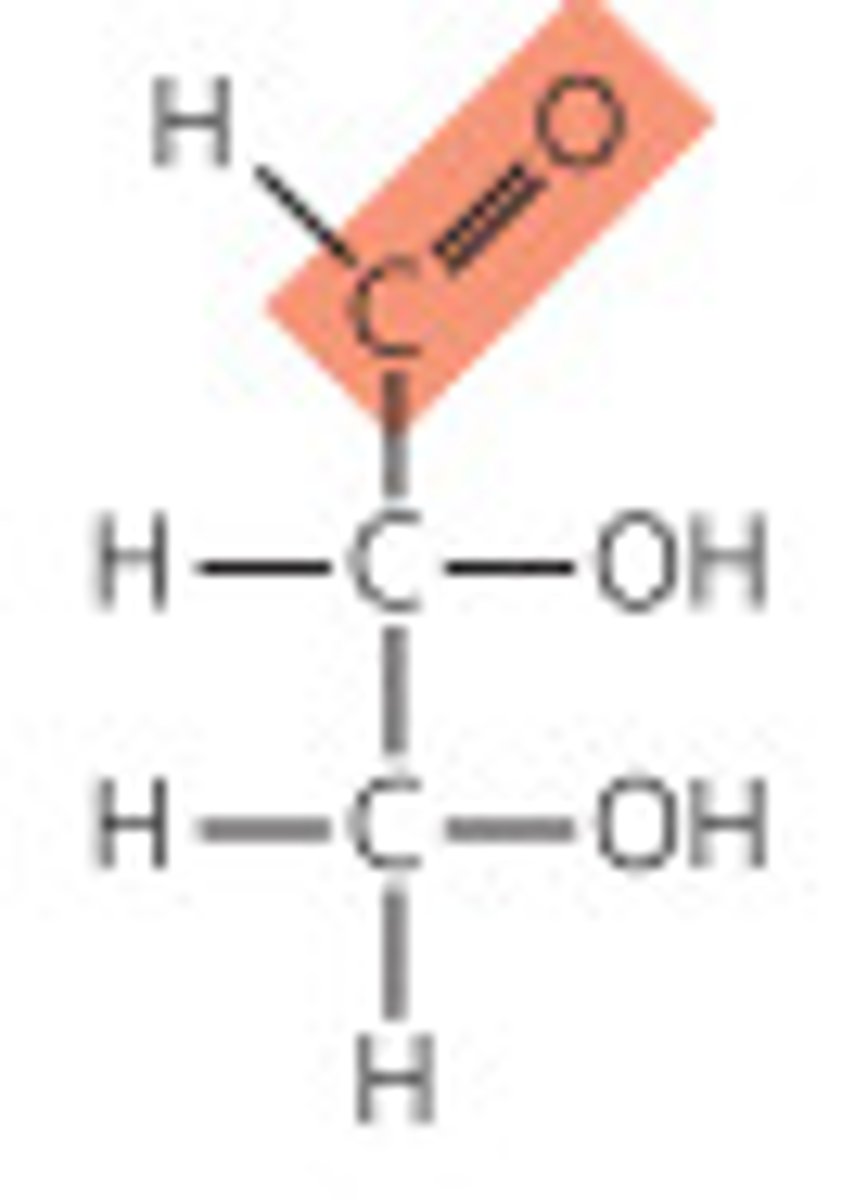
Ketoses
Carbohydrates that contain a ketone group as their most oxidized functional group
Ex - ketopentose
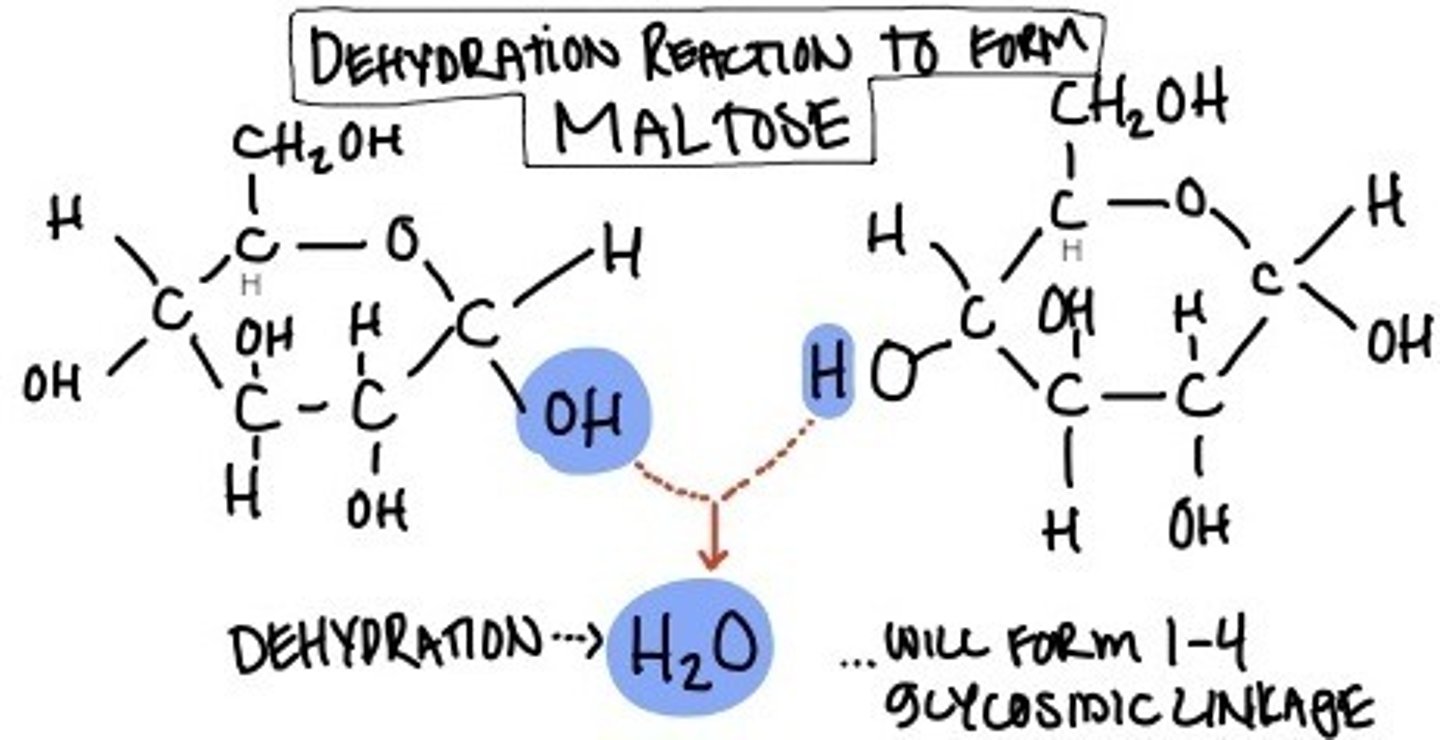
Glycosidic Linkages
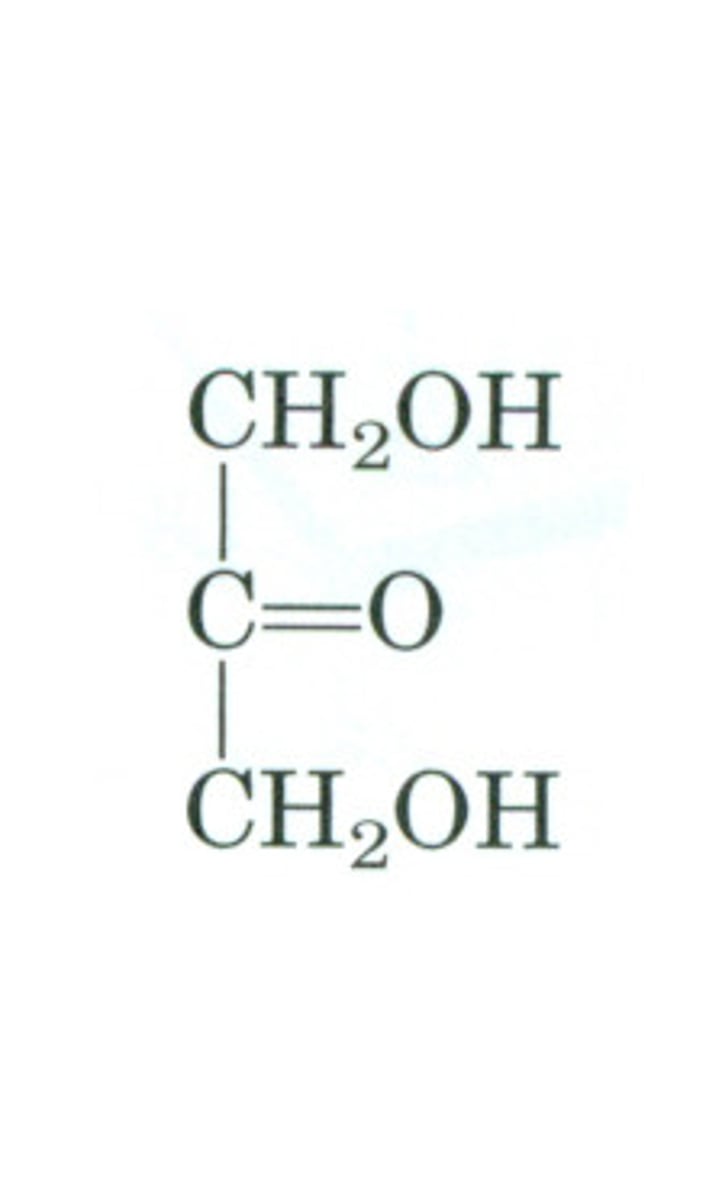
Dihydroxyacetone
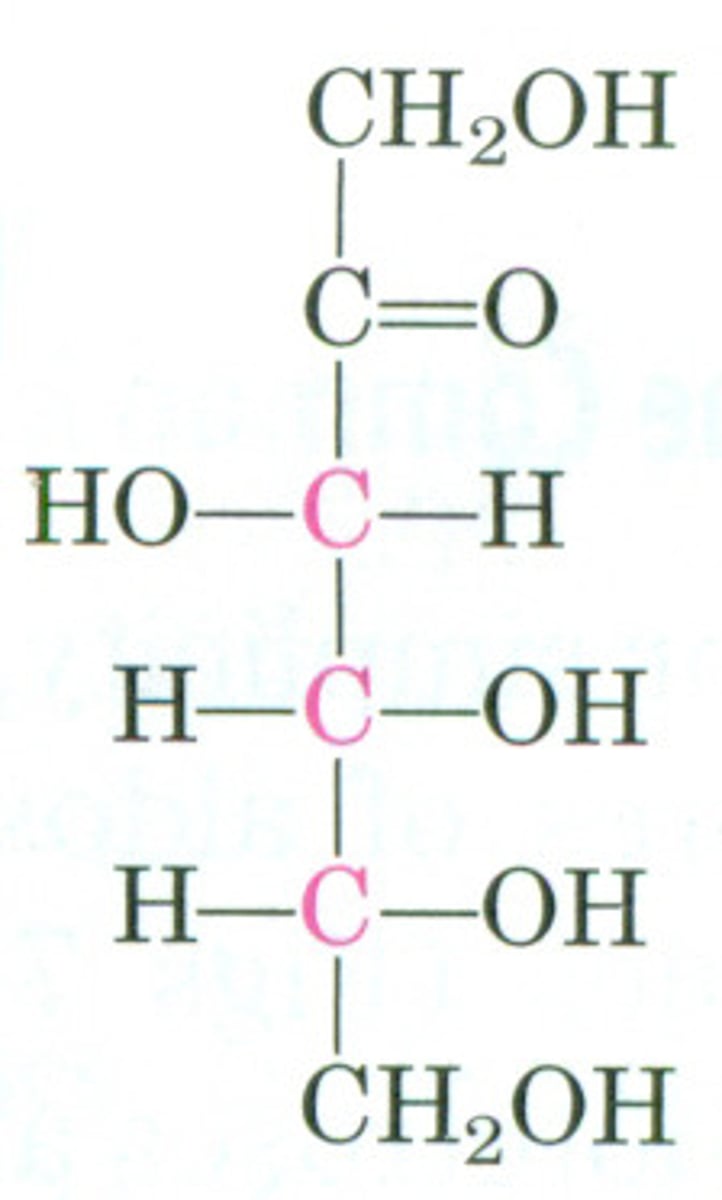
d-fructose
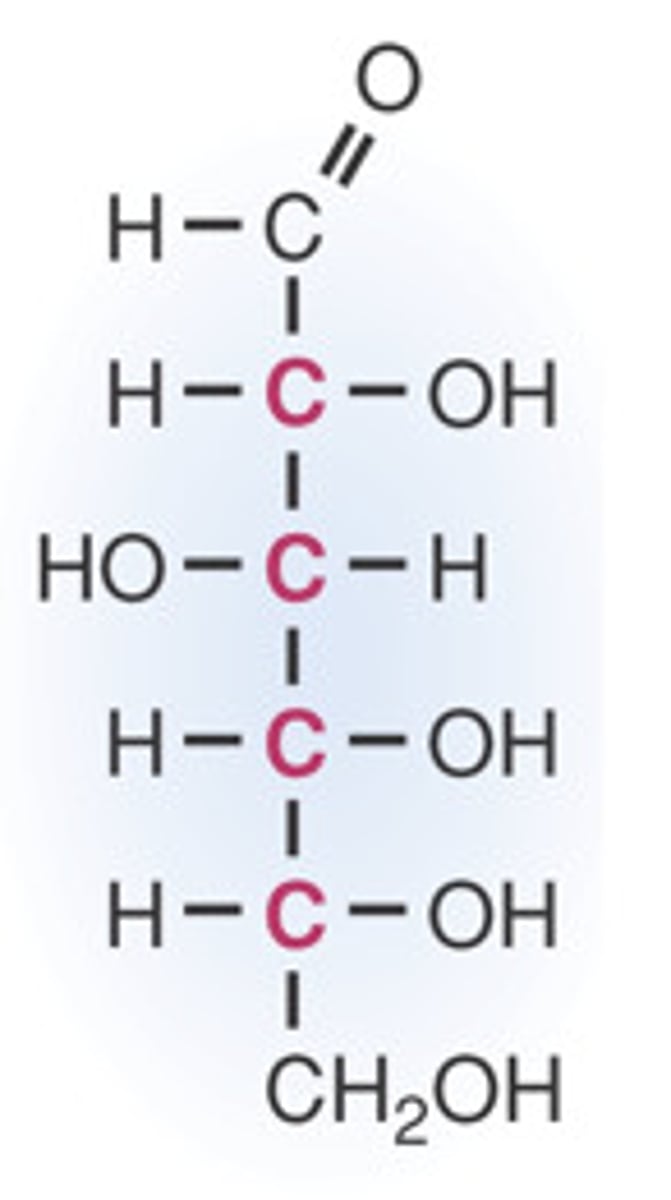
d-glucose
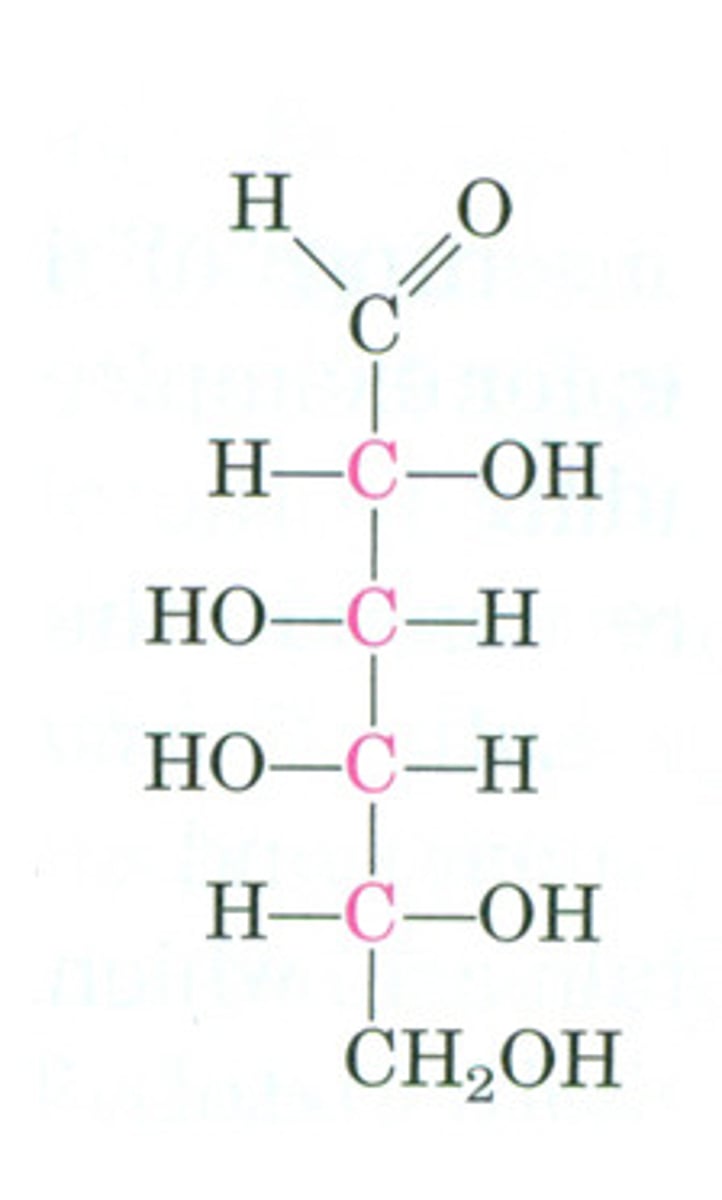
d-galactose
d-mannose
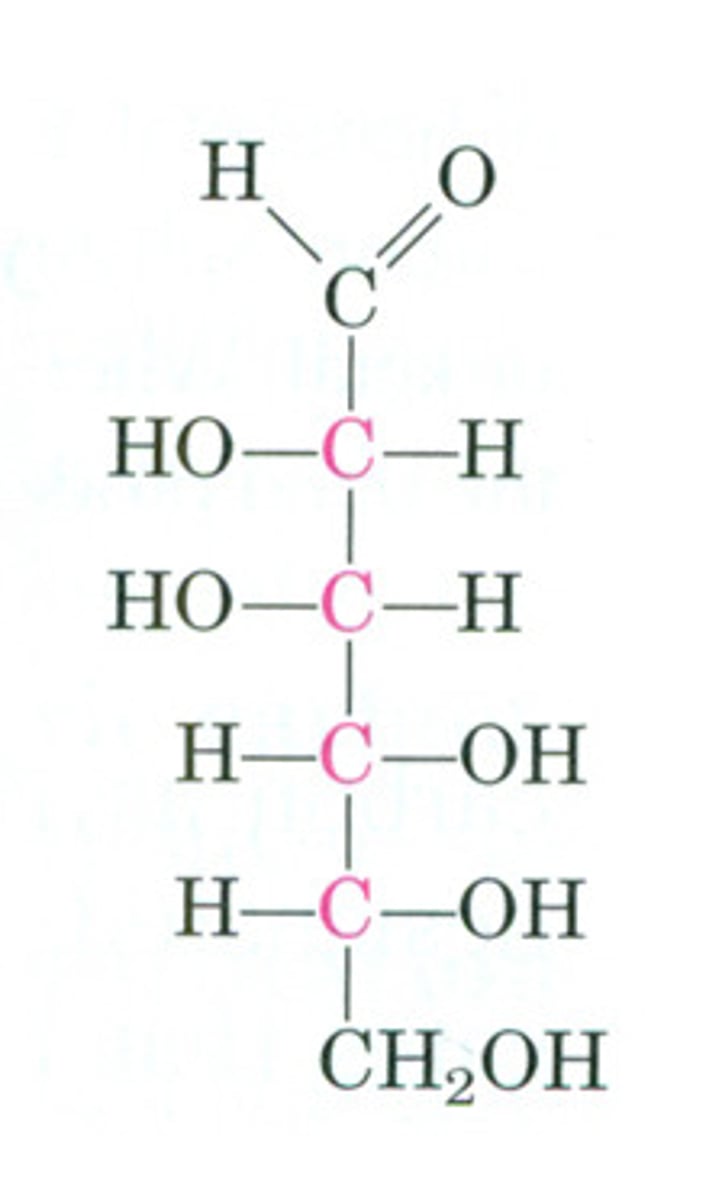
optical isomers (stereoisomers)
compounds that have the same chemical formula, differ only in spatial arrangement of atoms
# stereoisomers with common backbone
2^n (n= # of chiral carbons)
Enantiomers
special optical isomer...
stereoisomers that are onidentical, nonsuperimposable mirror images
any molecule with chiral carbons and no internal planes of symmetry has an enantiomer
same sugar, different optical family (ex. D-glucose versus L-glucose)
more chiral C = more stereoisomers
b/c one compound might havee many diastereomers
# stereoisomeers with common backbone = 2^ n (n = # chiral C)
Diastereomers
not identical, not mirrors; both either ketose or aldose with same # of carbons
Epimers
subtype of diasteromers, differ iin configuration at exactly 1 chiral center
draw all possible D-stereoisomers of glucose
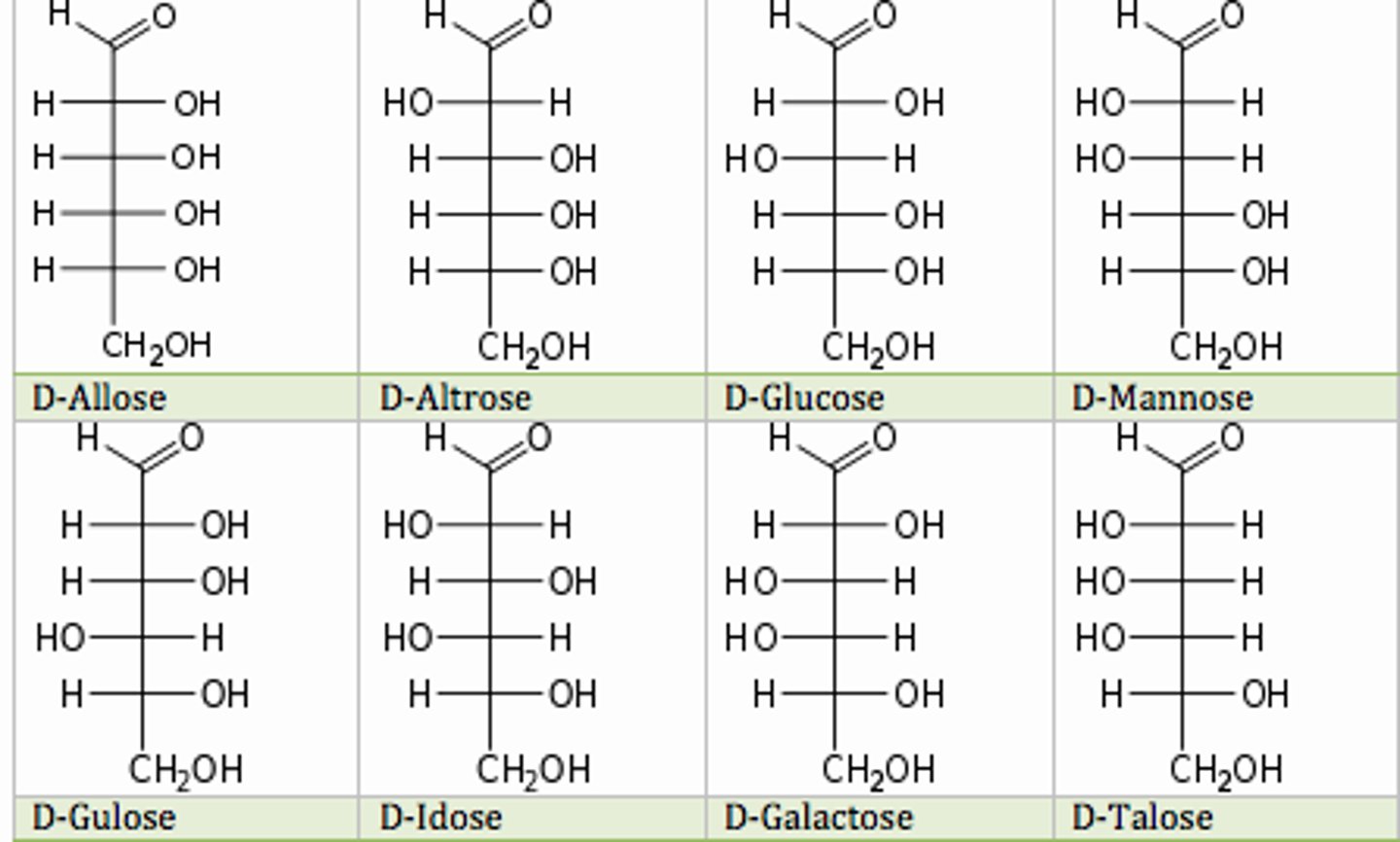
Hemiacetals vs. Hemiketals
hemiacetal = from aldoses
hemiketals = from ketoses
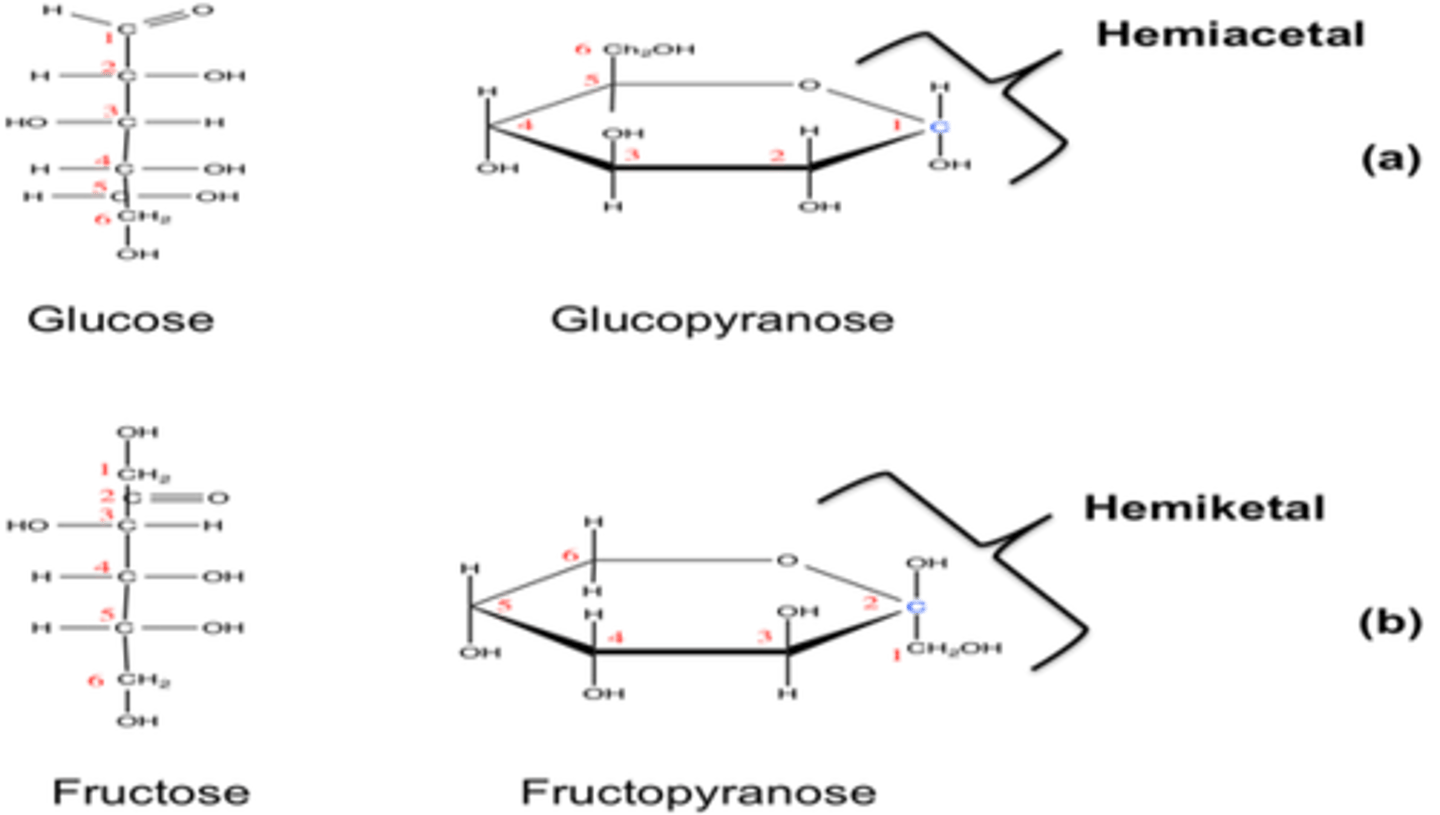
pyranose ring v furanose ring
pyranose = 6-membered ring; furanose = 5-membered ring
b/c of ring strain, only 2 that are stable
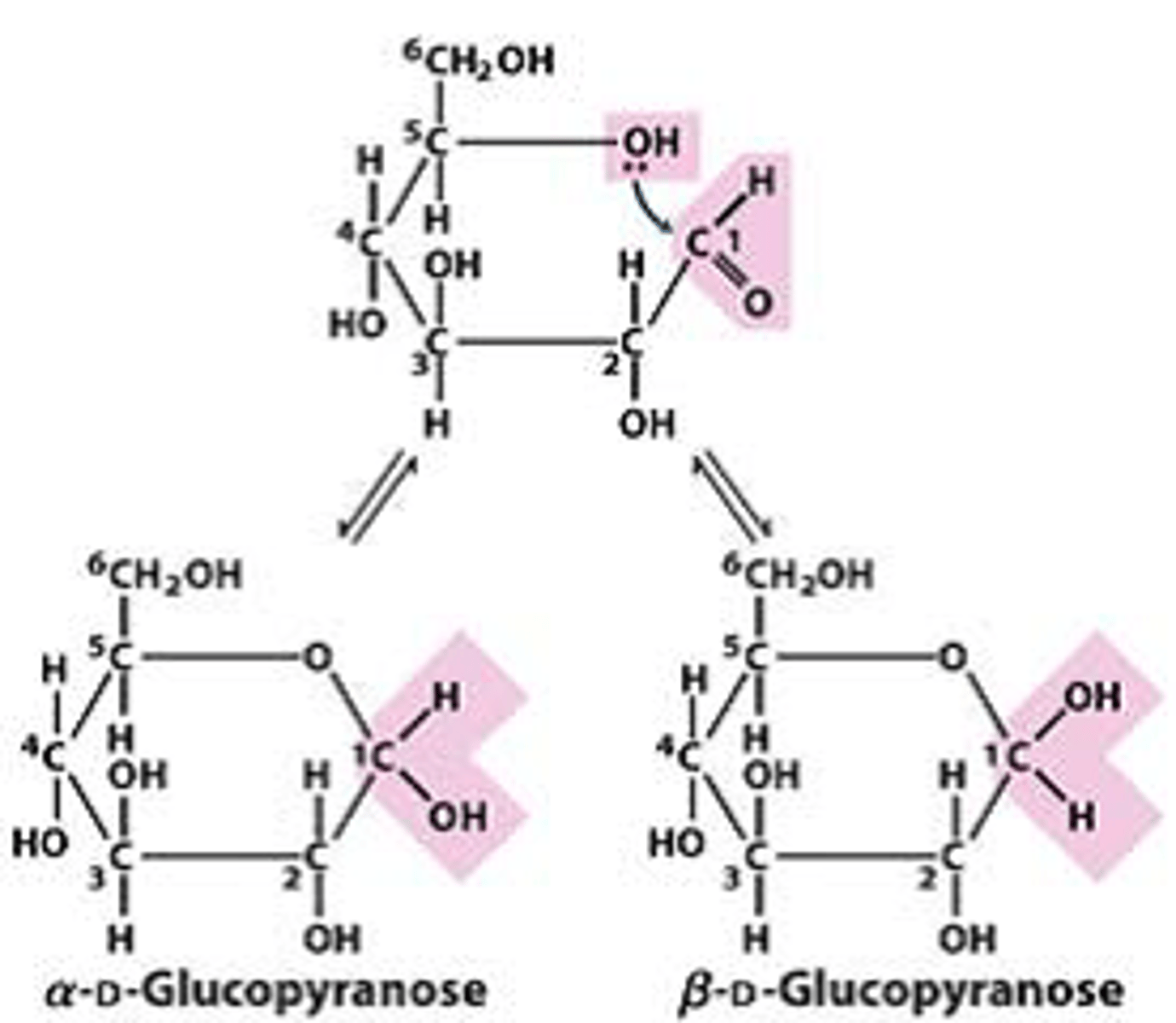
Anomeric Carbon
alpha = down; beta = up
in ring formation, hydroxyl group = nucleophile and oxygen becomes member of the ring
carbonyl carbon becomes chiral and is the anomeric carbon
a-anomer has -OH group of C-1 trans to CH2OH (AXIAL AND DOWN)
b-anomer has -OH group of C-1 cis to CH2OH (EQUATORIAL and UP)
mutarotation
spontaneous change between alpha and beta configuration; beta is more stable
Mutarotation
Monosaccharide Oxidation and Reduction
aldonic acid?
lactone?
monosaccharides are oxidized to yield energy (oxidized aldoses = aldonic acid if not in ring form) so they're reducing agents
If aldose is in ring form, oxidation = lactone
Tollen's rgnt and Benedict's rgnt
test for presence of reducing sugars, so they are oxidizing agents
ketose sugars are also reducing sugars and give positive Tollen's and Benedict's tests
ketones can tautomerize to form aldoses under basic conditions via keto-enol shift (cannot be oxidized directly to carboxylic acids)
polysaccharides: cellulose, starch, glycogen
all from D-glucose:
cellulose - structural component in plants (b-d-glucose, b-1,4)
starch (a-d-glucose, a-1,4, ex. amylose = plant starch and amylopectin = similar to amylose but branched)
glycogen - like starch but more a-1,6 branches: branches make more energy, more soluble, glycogen phosphorylase cleaves, leaving G-1-P
amylose
Acetals
hemiacetals react with alcohols to form acetals
resulting C-O bond is called a glycosidic bond, acetals formed are glycosides
*glycosides from furanose rings = furanosides
*drived from pyranose rings = pyranosides
monosaccharide + alchohol
forms an acetal
Maltose vs cellobiose
a-1,4: glucose-glucose vs B-1,4
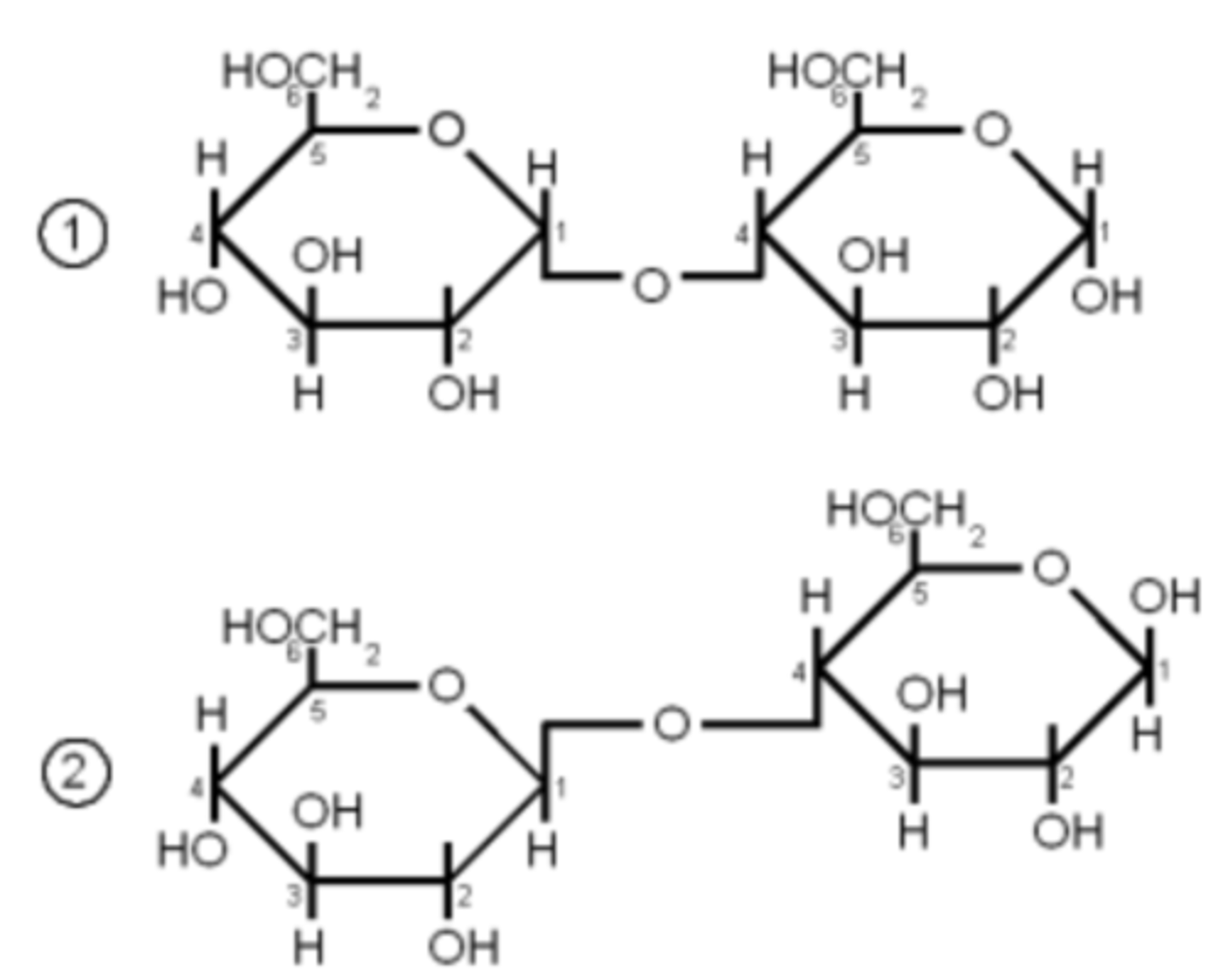
sucrose, lactose, maltose
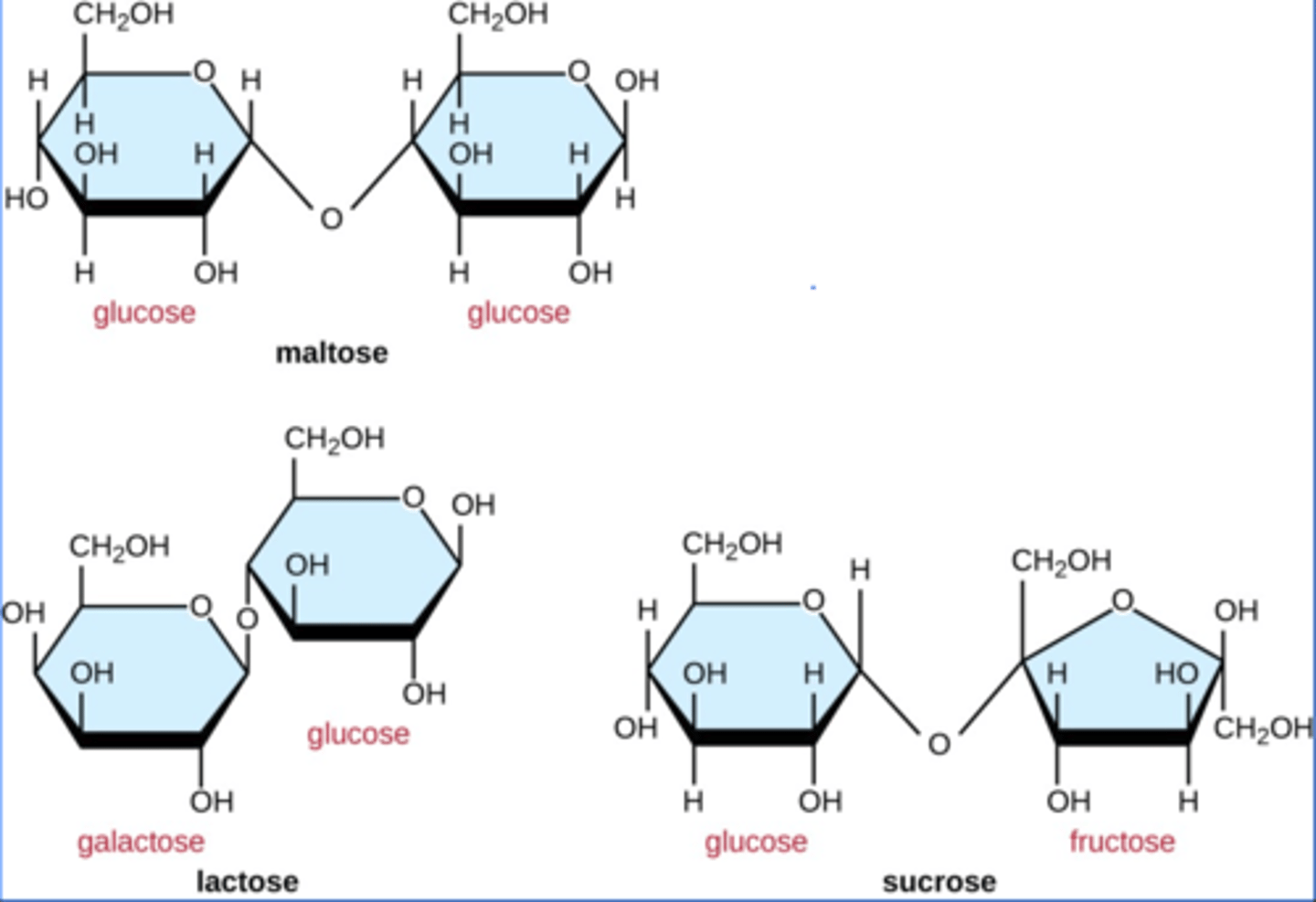
lactose
b-1,4: galactose, glucose
sucrose
a-1,2: glucose + fructose
Esterification
hydroxyl + carboxylic acid --> ester
glycosilation
alcohol + hemiacetal/ hemiketal --> alkoxy group
3 polysaccharides - cellulose
Cellulose (structure in plants, homopolysaccharide, B-D glucose molecules w/ B-1,4 glycosidic bonds)
*we lack cellulase
3 polysaccharides - starches
a-D-glucose monomers
plants store starch as AMYLOSE (linear glucose w/ a-1,4)
Amylopectin (a-1,4 and a-1,6) -- requires debranching enzyme
*iodine tests for starch
3 polysaccharides - glycogen
carb storage in animals
similar to starch but more a-1,6, very branched
(glycogen phosphorylase which cleaves can work in many sites at once)
(glycogen phosphorylase creates glucose 1-phosphate)
Epimers vs esteriomers
2 Notes:
1. Epimers usually have slightly different chemical + physical properties
2. Esteriomers have equal but opposite optical activity
Cellulose
chain of B-D-glucose, B-1,4 -- need cellulase
Amylose and amylopectin degradation
Amylose -- a-amylase and b-amylase
**a-amylase = cleaves randomly along chain for shorter chains, maltose, and glucose
**b-amylase = cleaves at nonreducing end to yield maltose
Amylopectin needs debranching enzyme
straight-chain fischer to ring conformation
anything on the right is "up", anything on the left is "down"
Cyclic forms of monosaccharides
hemiacetals and hemiketals