WEEK 2 - Intro to Accounting Data
 Call Kai
 Learn
Learn Practice Test
 Spaced Repetition
 Match
Match Flashcards
 Knowt Play
1/12

There's no tags or description
Looks like no tags are added yet.
Name | Mastery | Learn | Test | Matching | Spaced | Call with Kai | Chat |
|---|
No analytics yet
Send a link to your students to track their progress
13 Terms
The Impact Model
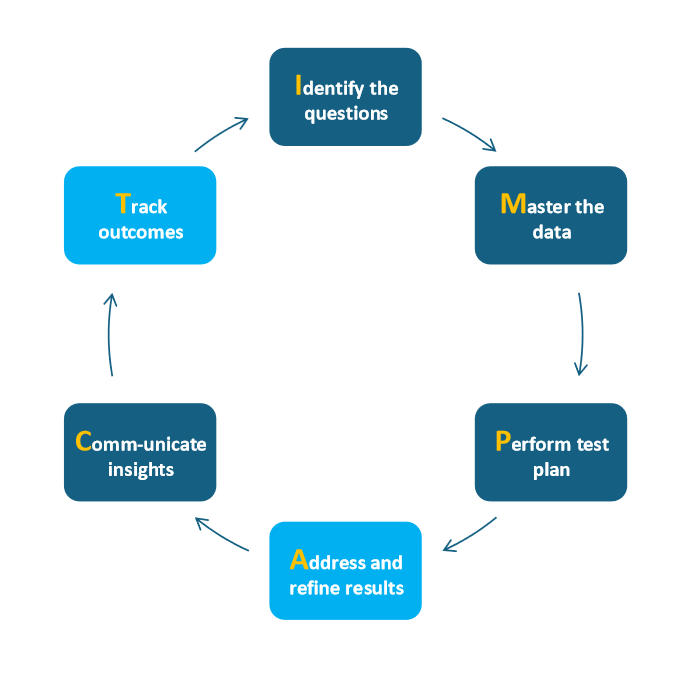
What is Big Data
Datasets that are too large and complex to be analyzed traditionally
What is Data Analytics
Process of evaluating data with the purpose of drawing conclusions to address business questions
Effectively seraching through large structured and unstructured data to find patterns and relationship
Four V’s of Biga Data
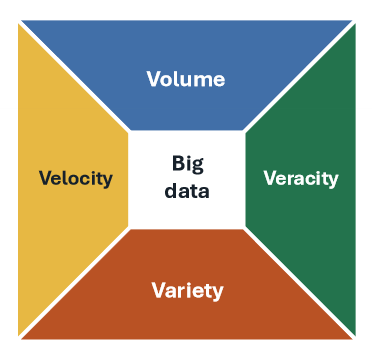
Volume
Amount of data
Velocity
Arrival rate and response time
Daily processing & immediate response
Variety
Different data formats
Structured: sales tables
Semi-Structured: must be transformed using formulas to process info and put into structured tables
Unstructured
Veracity
Trustworthiness of data
Sources of Data
Accounting Data:
records of business, financial statements
Other Data Sources:
context, market activity, economic indicators
Evaluating Usefulness (of EPS forecast)
Purpose: what decision and time period does it support
Comparability: do the forcast and outocme use the same EPS definition
Accuracy: Does it improve on a simple benchmark
Credibility: how recent is it and what could bias it
Types of Data
Categorical and Numerical
Categorical Data
Labels or ordered categories
Nominal: no inherent order
sale or return
Ordinal: an order but no defined spacing
low, medium or high satisfaction
Numerical Data
Measured or counted quantities
Interval: equal units, a reference zero
Temperature in Celsius
Ratio: equal units and meaningful zero
Number of units sold