010 Child Abuse
 Call Kai
 Learn
Learn Practice Test
 Spaced Repetition
 Match
Match Flashcards
 Knowt Play
1/75

There's no tags or description
Looks like no tags are added yet.
Name | Mastery | Learn | Test | Matching | Spaced | Call with Kai | Chat |
|---|
No analytics yet
Send a link to your students to track their progress
76 Terms
Why is a content warning often provided before teaching about child abuse and neglect?
Any recent act or failure to act by a parent or caregiver that:
Results in death, serious physical harm, serious emotional harm, sexual abuse, or exploitation, OR
Creates an imminent risk of serious harm.
What are the two broad categories included in the CAPTA definition of child abuse and neglect?
Actual harm (death, physical injury, emotional harm, sexual abuse/exploitation)
Failure to act or conditions that place a child at imminent risk of serious harm
Who is considered a “child” under CAPTA?
Any person younger than 18 years old who is not an emancipated minor.
How does Ohio's definition expand the population protected under child abuse statutes?
Ohio also includes individuals under 21 years old with developmental or physical disabilities.
What definition of child abuse and neglect should clinicians know for exams and practice?
Child abuse and neglect consists of a caregiver's act or failure to act that either:
Causes death, serious physical/emotional harm, sexual abuse, or exploitation, or
Places a child at imminent risk of serious harm.
Abuse includes both commission (harmful acts) and omission (failure to protect or provide care).
What are the major categories of child abuse commonly recognized in clinical practice?
Physical abuse
Emotional (psychological) abuse
Sexual abuse
Substance-related abuse/endangerment (recognized in some states)
How is physical abuse defined?
Non-accidental physical injury inflicted by a parent, caregiver, or another person responsible for the child. It is considered abuse regardless of whether the caregiver intended to cause harm.
What characterizes emotional abuse?
A pattern of behavior that impairs a child's emotional development, mental well-being, or sense of self-worth. It is often more difficult to prove than physical abuse.
What is the CAPTA definition of sexual abuse?
The use, persuasion, inducement, enticement, or coercion of a child to engage in sexually explicit conduct, as well as acts such as rape, molestation, prostitution, sexual exploitation, or incest involving a child.
What types of situations may be considered substance-related child abuse or neglect?
Examples include:
Prenatal exposure to drugs or alcohol
Drug manufacturing in the presence of a child
Providing/selling drugs or alcohol to a child
Caregiver substance use that impairs the ability to care for the child
How can the major types of child abuse be differentiated?
Physical: Non-accidental injury to a child.
Emotional: Pattern that damages emotional development or self-worth.
Sexual: Any sexual exploitation, coercion, or sexual activity involving a child.
Substance-related: Exposure to, provision of, or caregiver impairment from drugs/alcohol that endangers the child.
What are the major categories of child neglect?
Physical neglect
Medical neglect
Educational neglect
Emotional neglect
What constitutes physical neglect?
Failure to provide a child's basic physical needs, including:
Adequate food and shelter
Appropriate supervision
Protection from harm
What is medical neglect?
Failure to obtain necessary medical or mental health care for a child.
Examples:
Not obtaining needed treatment
Failure to provide necessary assistive devices (e.g., eyeglasses, hearing aids)
Failure to follow through with essential medical care
What is educational neglect?
Failure to ensure a child receives an appropriate education, including:
Failure to enroll in school
Chronic failure to ensure attendance
Failure to address required special education needs
What is emotional neglect?
Failure to meet a child's emotional and psychological needs, including failure to provide appropriate emotional support or psychological care.
What are the high-yield prevalence statistics for child maltreatment?
1 in 10 children experience child abuse or neglect.
1 in 16 children experience sexual abuse.
1 in 10 children witness family violence.
Among substantiated child maltreatment cases, which type is most common?
Neglect is the most common form.
Breakdown:
64% neglect
16% physical abuse
9% sexual abuse
7% emotional abuse
2% medical neglect
15% other (e.g., abandonment, threats of harm, parental drug addiction)
What is the key epidemiologic takeaway regarding child maltreatment types?
Neglect is far more common than physical or sexual abuse, making it the most likely form encountered clinically.
What demographic groups are at highest risk for child maltreatment victimization?
Risk is highest among:
Young children, especially infants and toddlers
Certain racial/ethnic groups (highest reported rates among African American, Native American, and multiracial children)
What age group is most vulnerable to child abuse and neglect?
50% of victims are younger than 1 year
75% are younger than 4 years
Is child maltreatment more common in boys or girls?
Rates are approximately equal, with 49% of victims being male.
Which age group accounts for the majority of child abuse and neglect fatalities?
47% of fatalities occur in children <1 year
79% occur in children <4 years
What is the mortality rate from child abuse and neglect in the United States?
Approximately 2 deaths per 100,000 children.
How are child maltreatment deaths distributed among abuse and neglect categories?
22% abuse alone
33% neglect alone
40% combination of abuse and neglect
What are common fatal mechanisms of abuse versus neglect?
Abuse
Chronic: Battered child syndrome
Acute: Shaking, suffocation, drowning
Neglect
Chronic: Malnourishment
Acute: Drowning due to inadequate supervision
Who are the most common perpetrators in child abuse and neglect fatalities?
Parents account for ~76% of perpetrators.
Non-parent caregivers account for ~15%.
What demographic characteristics are commonly associated with perpetrators of fatal child maltreatment?
Common characteristics include:
Mid-20s age range
Limited education
Poverty
Depression
Poor stress-coping skills
Personal history of abuse/victimization
Who reports most cases of child abuse?
Approximately 75% of reports come from professionals who are mandated reporters.
Which professional groups account for the largest proportion of child abuse reports?
Teachers: 24%
Police/Lawyers: 23%
Medical staff: 12%
Is the reporting pattern for sexual abuse different from physical abuse?
No. A similar reporting pattern is seen, with professionals responsible for the majority of reports.
What child and parent findings should raise suspicion for neglect?
Child signs:
Frequent school absences
Begs or steals food/money
Unmet medical needs (including glasses, dental care, immunizations)
Persistent poor hygiene/body odor
Inadequate clothing for weather
Substance use
Reports no caregiver available at home
Parent signs:
Indifferent toward child
Apathetic or depressed
Irrational or bizarre behavior
Alcohol or drug abuse
What ophthalmic finding can be a sign of medical neglect?
Failure to obtain or provide needed eyeglasses (or other necessary medical devices/treatment) may constitute medical neglect.
What behavioral changes in a child should raise concern for abuse?
Key red flags include:
Sudden decline in behavior or school performance
Persistent untreated medical problems
Hypervigilance ("always watchful")
Overly compliant, passive, or withdrawn behavior
Reluctance to go home
Fear of or reluctance to be around a particular person
Direct disclosure of maltreatment
What child behaviors are classically associated with possible abuse?
A child who is hypervigilant, withdrawn, excessively compliant, arrives early/stays late, or avoids going home should raise concern for abuse.
What parental behaviors are concerning for possible abuse?
Parents may:
Blame the child for problems
Encourage harsh physical discipline
Describe the child as bad, worthless, or burdensome
Have unrealistic physical or academic expectations
Depend on the child to meet the parent's emotional needs
Show little concern for the child
What should be done if a child discloses abuse?
Take the disclosure seriously, document appropriately, and follow mandatory reporting requirements. A child’s disclosure is itself a major red flag.
What child and caregiver findings should raise suspicion for physical abuse?
Child:
Unexplained burns, bites, bruises, fractures, black eyes, or unusual marks
Bruises noted after an unexplained absence from school
Fear of caregivers or distress when going home
Flinches/shrinks from approaching adults
Reports being injured by a caregiver
Cruelty toward animals
Caregiver:
Conflicting, absent, or implausible explanation for injury
Explanation inconsistent with developmental level or injury pattern
Describes child in extremely negative terms ("evil," worthless)
Uses harsh physical discipline
History of being abused
History of animal abuse
What bruise characteristics are suspicious for physical abuse?
Bruises that are:
In multiple locations
Located in soft tissue areas
Present in different stages of healing
Patterned or associated with other injuries
Which bruise locations are especially concerning for non-accidental trauma?
Bruises on:
Buttocks
Inner thighs/genitals
Cheeks
Ears
Upper lip/frenulum
Neck
Why are bruises over soft tissue areas more concerning for abuse than bruises over bony prominences?
Accidental injuries typically occur over bony areas such as the:
Forehead
Elbows
Knees
Why are bruises in multiple stages of healing concerning?
They may indicate repeated episodes of injury over time, suggesting ongoing abuse rather than a single accidental event.
What burn patterns are highly suspicious for non-accidental trauma (child abuse)?
Cigarette burns (round, well-demarcated lesions)
Branding burns (patterned burns matching an object)
Immersion/scald burns with clear lines of demarcation
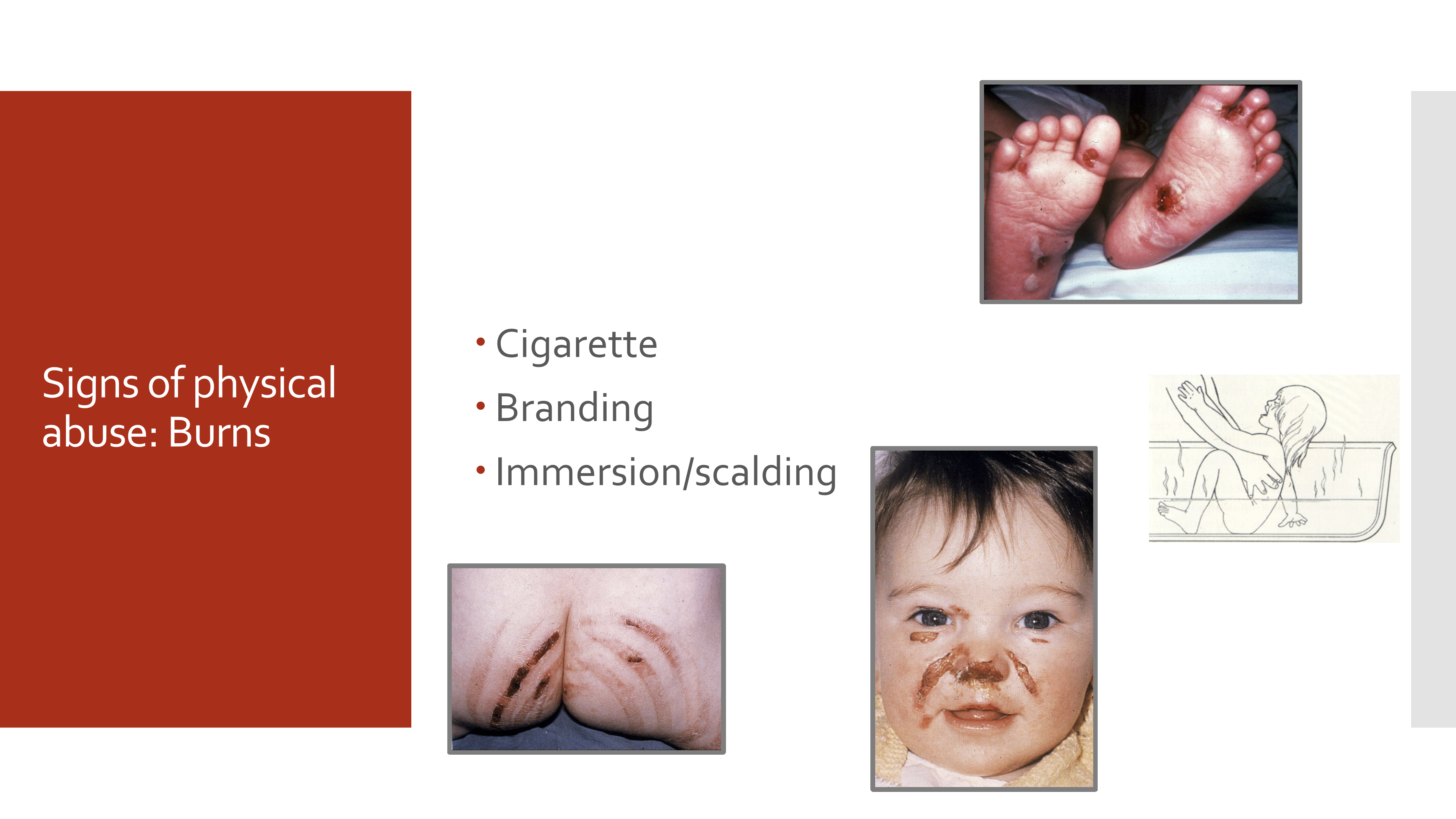
What features distinguish immersion/scald burns from accidental hot-water burns?
Immersion burns often show:
Sharp, well-defined borders
Symmetric distribution
Uniform burn depth
"Glove" or "sock" patterns on hands/feet
Sparing of skin folds ("zebra stripes")
These findings suggest the child was held in hot water rather than splashed accidentally.
What ocular findings should raise concern for child physical abuse?
Periorbital ecchymosis ("black eyes")
Subconjunctival hemorrhage
Retinal hemorrhage
Bilateral ocular involvement
What ocular finding is classically associated with abusive head trauma (shaken baby syndrome)?
Retinal hemorrhages, especially when bilateral and extensive.
Why is bilateral ocular involvement particularly concerning in suspected abuse?
Involvement of both eyes is more consistent with significant traumatic mechanisms such as abusive head trauma than with many common accidental injuries.
What types of patterned ("bizarre") marks are highly suspicious for physical abuse?
Injuries that reproduce the shape of an object, including:
Cord marks
Belt marks
Gag marks
Other patterned injuries matching a specific implement
What is the significance of retinal hemorrhages in children <2 years old with suspected abuse?
Retinal hemorrhages are much more common in abused children:
~60% of abused children have retinal hemorrhages
~10% of accidentally injured children have retinal hemorrhages
Exam Pearl: Retinal hemorrhages in a young child should raise strong suspicion for abusive head trauma (shaken baby syndrome).
Why is bilateral retinal hemorrhage particularly concerning for abuse?
Bilateral retinal hemorrhages occur more frequently in abuse:
~40% of abused children
~2% of accidental injuries
Bilateral involvement increases concern for abusive head trauma.
Are retinal hemorrhages pathognomonic for child abuse?
They may be highly suggestive, but clinicians should consider other causes such as:
Birth-related retinal hemorrhages (typically resolve within 1 month)
Significant accidental trauma/falls
Other medical conditions
What child behaviors should raise suspicion for sexual abuse?
Key red flags include:
Difficulty walking or sitting
Refusal to change clothes for gym or activities
Nightmares or new-onset bedwetting
Sudden appetite changes
Running away
Direct disclosure of sexual abuse
What developmental or behavioral findings are particularly concerning for sexual abuse?
A child who demonstrates sexual knowledge or sexual behaviors that are advanced, bizarre, or inappropriate for their age should raise concern for sexual abuse.
What medical findings strongly suggest sexual abuse?
Pregnancy in a child
Sexually transmitted infections, especially in children under 14 years old
Direct disclosure of abuse
What caregiver behaviors may be associated with sexual abuse?
Caregivers may:
Be overly protective or isolate the child
Restrict contact with peers
Be secretive and socially isolated
Display excessive jealousy or controlling behavior
What are the major long-term outcomes associated with childhood abuse and neglect?
Increased risk of:
Psychological disorders
Substance abuse
Criminal involvement
Impaired cognitive development
Social difficulties
Physical health problems
How strongly is childhood maltreatment associated with later psychological illness?
Approximately 80% of abused children who were evaluated at age 21 met criteria for at least one psychological disorder.
What is the relationship between childhood maltreatment and substance abuse?
Childhood abuse and neglect are strongly associated with later substance use disorders. Up to two-thirds of people receiving treatment for drug abuse report childhood maltreatment.
How do adverse childhood experiences (ACEs) affect future risk behaviors?
Males with 6 or more adverse childhood experiences were reported to be >40 times (4,000%) more likely to use IV drugs later in life.
How does childhood abuse affect later criminal involvement?
Abused or neglected children are approximately 9 times more likely to become involved in criminal activity later in life.
What are the major direct and indirect societal costs of child maltreatment?
Direct costs:
Lifetime cost of one year's child maltreatment cases and related fatalities in the U.S. ≈ $124 billion
Indirect costs:
Increased healthcare utilization
Mental illness
Substance abuse
Criminal activity
Domestic violence
Long-term economic burden on society
Why is preventing child abuse economically important?
Prevention benefits both children and society:
Prevention programs may save taxpayers billions of dollars annually
Investment in prevention yields a substantial return through reduced healthcare, criminal justice, and social service costs
What is the key message for healthcare providers and community members regarding child abuse?
Be vigilant:
Pay attention to warning signs
Talk with children and families
Act when concerns arise
Early recognition and intervention can prevent ongoing abuse and future harm
What is the healthcare provider's legal responsibility when abuse or neglect is suspected?
Healthcare professionals are mandated reporters and have a legal obligation to report suspected abuse or neglect.
Are healthcare providers legally protected when reporting suspected abuse?
Yes. Healthcare professionals who report suspected abuse in good faith are generally protected from civil and criminal liability.
What are the key steps when a healthcare provider suspects child abuse or neglect?
Consult supervising/attending clinician according to institutional policy.
Document findings, reasons for suspicion, and actions taken.
Report concerns to the appropriate child protective or law enforcement agency.
Continue prioritizing the child's safety and well-being.
What information is typically helpful when making a child abuse or neglect report?
Child's name, age, and address
Parent/caregiver name and address
Identity of suspected perpetrator (if known)
Specific observations and reasons for concern
Relevant injuries, behaviors, disclosures, or safety concerns
Can child abuse reports be made anonymously?
Yes, reports may often be made anonymously, but providing contact information can help investigators obtain clarification or additional details if needed.
What should guide a healthcare provider's actions when abuse is suspected?
Focus on protecting and advocating for the patient's safety. The provider's role is to:
Recognize warning signs
Document findings
Report reasonable suspicions
Facilitate appropriate evaluation and protection
What is the primary purpose of Ohio State University's Youth Activities & Programs Policy?
To protect the safety and welfare of minors participating in university-sponsored programs by:
Establishing standards of conduct
Training personnel and volunteers
Requiring reporting of suspected abuse or neglect
Promoting safe interactions with youth
What are key strategies for preventing child abuse when working with children?
Recognize signs of abuse and neglect
Know reporting procedures
Use appropriate/professional physical contact
Avoid high-risk situations
Avoid one-adult/one-child interactions when possible
Never use physical restraint except in emergencies involving imminent serious harm
What are examples of appropriate contact with children in youth programs?
Professional, observable interactions such as:
Handshakes
High-fives
Side-by-side hugs
Shoulder contact
Verbal encouragement
What should a person do if they observe or suspect child abuse or neglect in a youth program?
Determine if the child is in immediate danger.
If imminent danger exists, contact emergency services.
Report concerns to the appropriate child protective agency and designated institutional office.
Document concerns according to policy.
What are key expectations for employees and volunteers working with youth?
Act as positive role models
Follow university policies and laws
Maintain professionalism
Report suspected abuse or neglect
Provide a safe environment
Respect participant rights and dignity
What behaviors are specifically prohibited for individuals working with youth?
Physical abuse
Emotional abuse
Sexual abuse
Verbal abuse
Neglecting a child's basic needs
Intentionally placing oneself in inappropriate one-on-one situations with youth
What is the most important principle when child abuse is suspected?
Act immediately.
Protect the child.
Report reasonable suspicion.
Follow institutional procedures.
Document concerns.
Do not attempt to investigate independently.
Mnemonic: RAP
Recognize
Act (report)
Protect the child