TEAS Human Anatomy and Physiology
 Call Kai
 Learn
Learn Practice Test
 Spaced Repetition
 Match
Match Flashcards
 Knowt Play
1/382

There's no tags or description
Looks like no tags are added yet.
Name | Mastery | Learn | Test | Matching | Spaced | Call with Kai | Chat |
|---|
No analytics yet
Send a link to your students to track their progress
383 Terms
All cells contain 3 things. These three things are?
DNA, RNA, and synthesize proteins
The cell is filled with a fluid called?
cytoplasm or cytosol
A membrane is composed of?
phospholipids
Each cell consists of? (3)
nucleic acids, cytoplasm, and cell membrane
What is the one thing that all cells have in common?
They have a cell membrane
Nucleus
small structure that contains chromosomes and regulates the cell
What is the nucleus responsible for?
the passing on genetic traits between pores, chromatic, and ribosomes
Chromosomes
These are highly condensed, threadlike rods of DNA
What does DNA stand for?
deoxyribonucleic acid
DNA
genetic material that stores information about the plant or animal
Chromatin
This consists of the DNA and protein that make up chromosomes
Nucleolus
This structure contained within the nucleus consists of protein. Synthesizes and stores RNA (ribonucleic acid)
Nuclear envelope
Encloses the structures of the nucleus. Consists of inner and outer membranes made of lipids
Nuclear pores
involved in the exchange of material between the nucleus and the cytoplasm
Nucleoplasm
liquid within the nucleus, and is similar to cytoplasm
What are the parts of the cell membranes? (8)
• Glycoprotein
• Glycolipid
• Peripheral membrane protein
• Phospholipid bilayer
• Protein channel
• Cholesterol
• Filaments of cytoskeleton
• Integral membrane protein
Glycoprotein
protein with carbohydrate attached
Glycolipid
lipid with carbohydrate attached
What has selective permeability with regard to size, charge, and solubility?
cell membrane or plasma membrane
Selective permeability
allows what goes in and outside of the cell
Which two small molecules typically can pass through the cell membrane?
oxygen and water
Molecules that are soluble in phospholipids can usually?
pass through the cell membrane
Many molecules are not able to diffuse the cell membrane. How can they be moved?
active transport and vesicle
Ribosomes
involved in synthesizing proteins from amino acids. They are numerous making up about one quarter of the cell.
Golgi complex (Golgi apparatus)
involved in synthesizing materials such as proteins that are transported out of the cell. Transportation of proteins.
Vacuoles
sacs used for storage, digestion, and waste removal.
Vesicles
vehicle that helps move materials within a cell.
Cytoskeleton
consists of microtubules that help shape and support the cell
Microtubules
part of the cytoskeleton and help support the cell. They're made of protein.
Cytosol
liquid material in the cell. Mostly water, but also contains floating molecules
Cytoplasm
refers to cytosol and the substructures (organelles) found within the plasma membrane, but not within the nucleus
Cell Membrane (plasma membrane)
defines the cell by acting as a barrier.
Functions of cell membrane
Helps keep cytoplasm in and substances located outside the cell out. Determines what is allowed to enter and exit.
Endoplasmic reticulum
tubular network that consists of the transport system of a cell
What are the two types of endoplasmic reticulum and what is the difference between the two?
rough and smooth. Rough ER has ribosomes and Smooth ER does not.
Mitochondria
performs various functions such as generating ATP (energy), and is involved in cell growth and death.
The 4 functions of the Mitochondria are?
1. Production of cell energy (ATP)
2. Cell signaling
3. Cellular differentiation
4. Cell cycle and growth regulation
Aerobic respiration occurs in the?
mitochondria
The mitochondria consists of an inner and outer membrane• Between the inner and outer membranes are folds called?
cristae
Centrosome
comprised of the pair of centrioles located at right angles to each other and surround by protein.
The centrosome is involved in which cell divisions?
mitosis and cell cycle
Centriole
cylinder shaped structures near the nucleus that are involved in cellular division.
Lysosome
Digests proteins, lipids, carbohydrates, and transports undigested substances to the cell membrane so they can be removed.
Cilia
appendages extending from the surface of the cell, which causes the cell to move. They can also result in fluid being moved by the cell
Flagella
These are tail-like structures that use whip-like movements to help the cell move.
Cell cycle
process by which a cell reproduces, which involves cell growth, duplication of genetic material, and cell division.
What are the two ways that cells can reproduce?
mitosis and meiosis
Mitosis involves which kind of cells?
body cells
Meiosis involves which kind of cells?
sex cells or gametes
Cell differentiation
process that helps to determine the cell type for each cell
Process is controlled by the genes of each cell among a group of cells called a
zygote
Stages of mitosis
1. Interphase
2. Prophase
3. Metaphase
4. Anaphase
5. Telophase
6. Cytokinesis
Interphase
cell prepares for division by replicating it genetic and cytoplasmic material.
Interphase can be further divided into?
G1, S, and G2
Prophase
Chromatic thickens into chromosomes and nuclear membrane begins to disintegrate.
Prophase (Continued)
• Pairs of centrioles move to opposite sides of the cell
• Spindle fibers begin to form
• Mitotic spindle, formed from cytoskeleton parts, moves chromosomes around within the cell
Metaphase
spindle moves to the center of the cell. Chromosome pairs align along the center of the spindle structure
Anaphase
pairs of chromosomes, called sisters, begin to pull apart, and may bend
Anaphase (Continued)
When separated, they're called daughter chromosomes.
Grooves appear in the cell membrane
Telophase
Spindle disintegrates, the nuclear membrane reform, and the chromosomes revert to chromatin.
Telophase (Animal cells)
membrane is pinched
Telophase (Plant cells)
a new cell wall begins to form
Cytokinesis
physical splitting of the cell (including the cytoplasm) into two cells.
What's the difference between Mitosis and Meiosis?
The cells during Meiosis divide twice, and during the second division, interphase does not occur.
In the second division of meiosis, the daughter cells are haploid. What does haploid mean?
they contain half the genetic material of the parent cell
What is the final result in meiosis? How many cells are there?
4 daughter cells
Meiosis encourages?
genetic diversity
From lowest to high, give the levels of organization.
Chemical (molecular), cellular, tissue, organ, organ system, and organism
What are the 4 broad (main) categories of tissues
Epithelial tissue, muscular tissue, connective tissue, and nerve tissue
What are the three muscle tissue?
skeletal muscle, cardiac muscle, and smooth muscle
Skeletal muscles include muscles commonly called
biceps, triceps, hamstrings, and quadriceps.
Cardiac muscle tissue is found only in the
heart
Smooth muscle tissue provides tension in the
blood vessels, control pupil dilation, and aid in peristalsis.
What are the 7 Categories of Tissues?
Epithelial, muscle, connective, nervous, blood, bone, and cartilage
Epithelial tissue
Tissues in which cells are joined together tightly. Skin tissue is an example
Muscle tissue
helps support and move the body. The three types of muscle tissues are smooth, cardiac, and skeletal.
Connective tissue
may be dense, loose, or fatty. It protects and binds body parts
Nervous tissue
Cells called neurons form a network through the body that control responses to changes in the external and internal environment. Some send signals to muscles and glands to trigger responses
Blood
transports oxygen to cells and removes wastes. It also carries hormones and defends against disease
Bone
a hard tissue that supports and protects softer tissues and organs. Its marrow produces red blood cells.
Cartilage
cushions and provides structural support for body parts. It has a jelly-like base and if fibrous
The 11 Major Organ Systems are?
1. Integumentary system
2. Respiratory system
3. Cardiovascular system
4. Endocrine system
5. Skeletal system
6. Muscular system
7. Digestive system
8. Excretory system
9. Immune system
10. Nervous system
11. Reproductive system
Name the Three Primary Body Planes
transverse plane, sagittal plane, and coronal plane
Transverse plane
horizontal plane divides the patient's body into imaginary upper (superior) and lower (inferior or caudal) halves

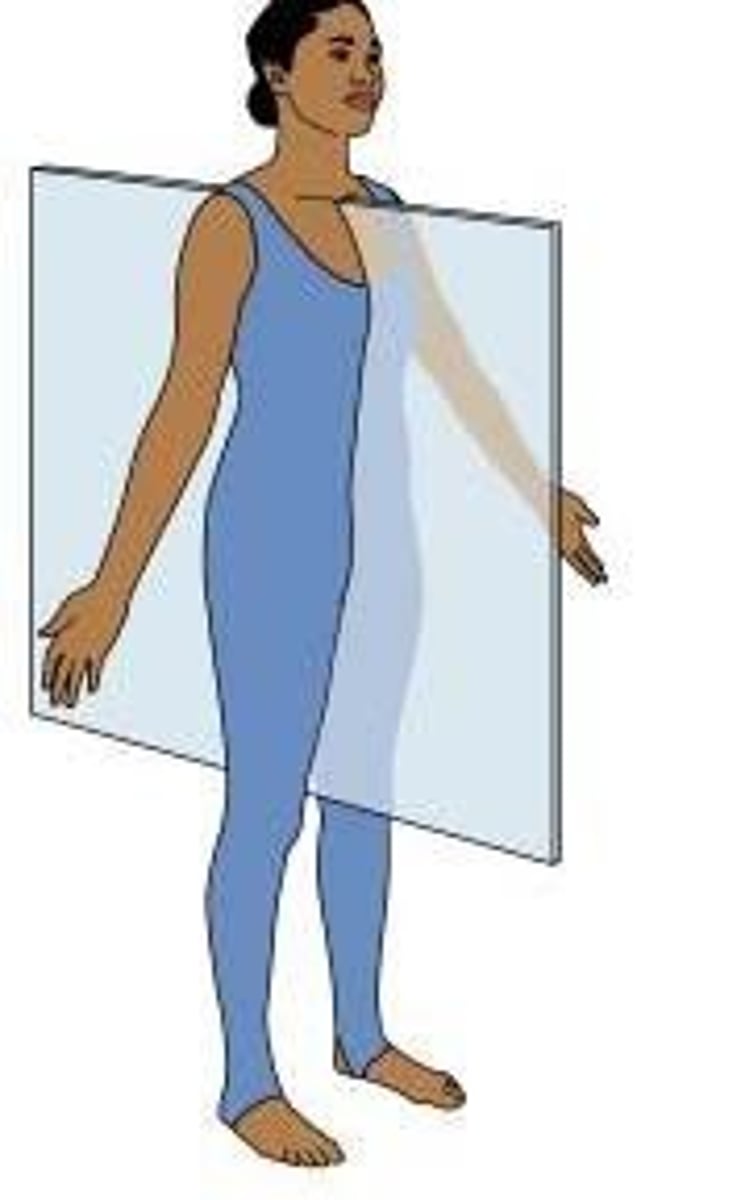
Sagittal plane
divides the body, or any body part, vertically into right and left sections. The sagittal plane runs parallel to the midline of the body.
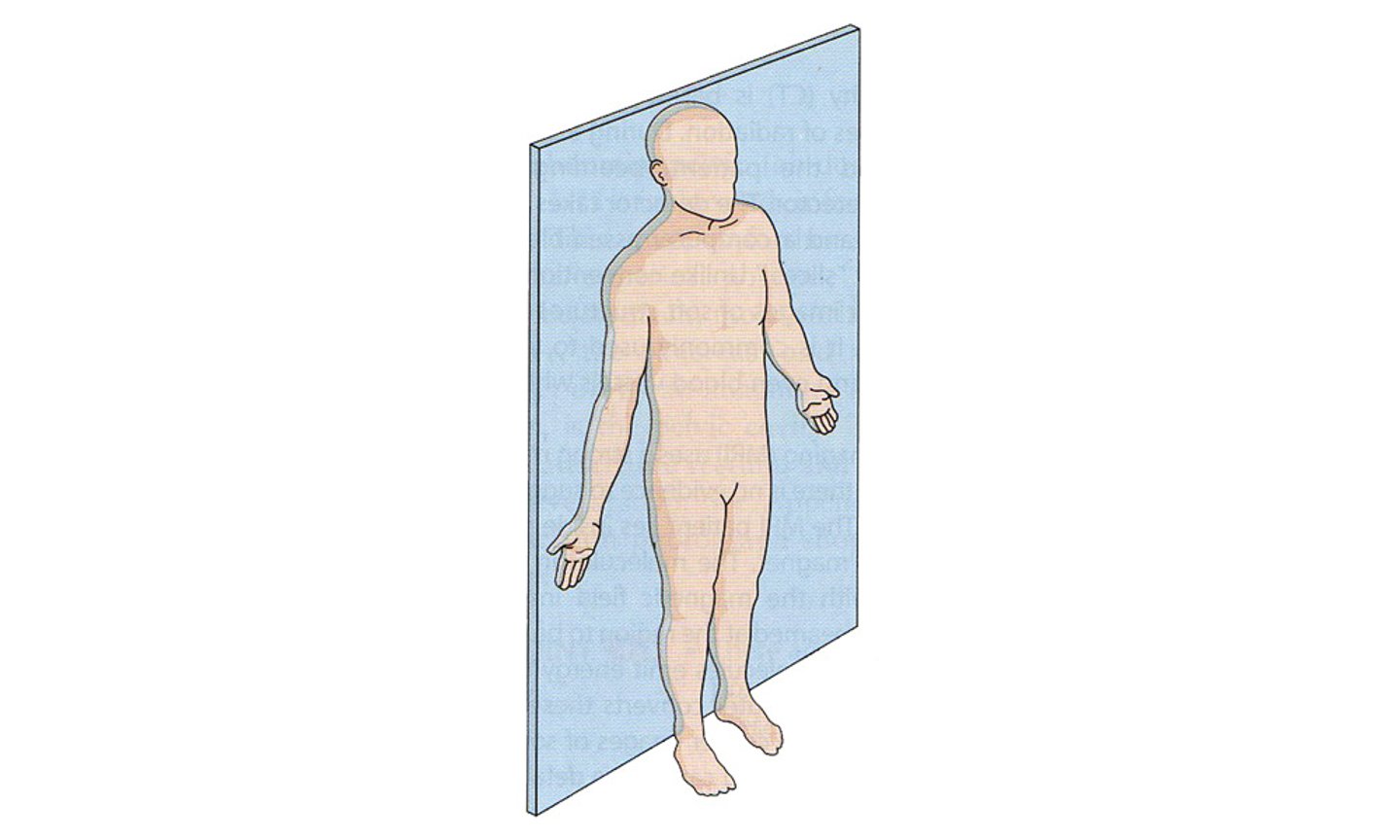
Coronal plane
frontal plane that divides the body, or any body structure, vertically into front and back (anterior and posterior) sections. Runs
Proximal
structures closer to the center of the body. The hip is proximal to the knee
Distal
refers to distance or structures further away from the center of the body. The knee is distal to the hip
Anterior
front
Posterior
back
Medial
nearer to the middle of the body. In anatomical position, the little finger is medial to the thumb
Lateral
to the side and is opposite of medial
Cephalad or Cephalic
meaning towards the head.
Cranial
meaning the skull
Caudad
towards the tail or posterior.
Caudal
hindquarters
Superior
above or closer to the head
Inferior
below or closer to the feet
The upper respiratory system includes?
• Nose
• Nasal cavity
• Mouth
• Pharynx
• Larynx
The lower respiratory system includes?
• Trachea
• Lungs
• Bronchial tree