Chemistry Unit 4 Test
0.0(0)
Studied by 4 people Call Kai
 Learn
Learn Practice Test
 Spaced Repetition
 Match
Match Flashcards
 Knowt Play
Card Sorting
1/22

Earn XP
Description and Tags
Last updated 10:32 PM on 11/15/22
Name | Mastery | Learn | Test | Matching | Spaced | Call with Kai |
|---|
No analytics yet
Send a link to your students to track their progress
23 Terms
1
New cards
What is effective nuclear charge?
The force of attraction the electrons on energy levels feel from the nucleus.
2
New cards
What is the effective nuclear charge that the valence electrons on Potassium (K) would feel?
+19 - 18e- = +1
Potassium's outer energy level would feel a +1 ENC
Potassium's outer energy level would feel a +1 ENC
3
New cards
How do you find what electrons feel?
subtracting the number of valence electrons from the total number of electrons in the atom.
4
New cards
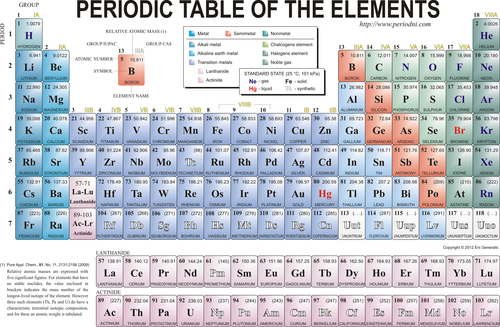
As you move left to right across a period... effective nuclear charge ___________,
Increases
5
New cards
As you move left to right across a period...atom size ___________
decreases
6
New cards
As you move left to right across a period...ionization energy ____________
increases
7
New cards
As you move left to right across a period...electronegativity ______________
increases
8
New cards
As you move down a group... effective nuclear charge
STAYS THE SAME,
9
New cards
As you move down a group... atom size
INCREASES,
10
New cards
As you move down a group... ionization energy
DECREASES
11
New cards
As you move down a group... electronegativity
DECREASES
12
New cards
Ionization energy is the energy required to
REMOVE AN ELECTRON FROM THE OUTER ENERGY LEVEL.
13
New cards
Electrons that are strongly attracted to the nucleus require
MORE energy to remove.
14
New cards
What is electronegativity? Why does it increase from left to right on the periodic table?
An atom's ability to attract/pull electrons closer to itself.
ENC increases from left to right on the P.T., so the nucleus's force of attraction on electrons is stronger as you go
towards the right, increasing its ability to pull in electrons.
ENC increases from left to right on the P.T., so the nucleus's force of attraction on electrons is stronger as you go
towards the right, increasing its ability to pull in electrons.
15
New cards
Why does oxygen have a higher ionization energy than boron?
Oxygen has a stronger ENC, so it takes MORE ENERGY to remove an electron from it than Boron.
16
New cards
Why does gallium have a lower ionization energy than boron?
The valence electrons are further away from the nucleus in Gallium, so it's easier to remove one of those electrons,
thus needs LESS ENERGY to remove.
thus needs LESS ENERGY to remove.
17
New cards
How do you find the number of neutrons?
mass number - atomic number
18
New cards
How do you find the atomic mass?
protons + neutrons
19
New cards
How do you find the valence electrons?
look at the group number
20
New cards
Why does electronegativity decrease as you go down the periodic table?
MORE ENERGY LEVELS creates more shielding from inner electrons and outer energy levels are further away from the
nucleus, making it more difficult (less ability) for the atom to pull electrons towards itself.
nucleus, making it more difficult (less ability) for the atom to pull electrons towards itself.
21
New cards
Why do atoms get larger as you go down the periodic table? Why do they get smaller as you go from left to right?
-Going down the P.T. = Adding MORE ENERGY LEVELS (rings) makes the atom size larger.
Going left to right = INCREASING ENC, so nucleus pulls in electrons closer, making the atom smaller
Going left to right = INCREASING ENC, so nucleus pulls in electrons closer, making the atom smaller
22
New cards
Why are cations smaller than neutral atoms? Why are anions larger than neutral atoms?
-Cations = more protons than electrons, so ENC is stronger, pulling in electrons more
-Anions = more negatively charged electrons cause more repulsion around electrons, causing them to spread out
-Anions = more negatively charged electrons cause more repulsion around electrons, causing them to spread out
23
New cards
How do you determine if a element is metal or non metal?