BIOMECHANICS BME.200 EXAM 2
0.0(0)
Studied by 12 people Call Kai
 Learn
Learn Practice Test
 Spaced Repetition
 Match
Match Flashcards
 Knowt Play
Card Sorting
1/94

Earn XP
Description and Tags
Last updated 11:50 PM on 11/16/22
Name | Mastery | Learn | Test | Matching | Spaced | Call with Kai | Chat |
|---|
No analytics yet
Send a link to your students to track their progress
95 Terms
1
New cards
Describe and calculate the vector quantities of displacement, velocity, and acceleration (both average and instantaneous) in both 1D and 2D
Vectors have magnitude and direction (ex: displacement)
scalars have only magnitude (ex: distance)
scalars have only magnitude (ex: distance)
2
New cards
1D
-Velocity
-Acceleration
-Velocity
-Acceleration
-Velocity: Δd/Δt; x'(t)
-accel.: Δv/Δt; v'(t)
-accel.: Δv/Δt; v'(t)
3
New cards
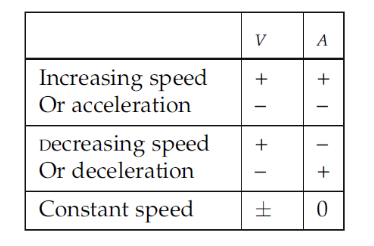
1D Acceleration Direction
Same sign - increasing speed
-Both positive: Increasing speed in positive x-direction
-Both negative: Increasing speed in negative x-direction•
Opposite sign - decreasing speed
V +, A - Decreasing speed in positive x-direction
V -, A + Decreasing speed in negative x-direction
-Both positive: Increasing speed in positive x-direction
-Both negative: Increasing speed in negative x-direction•
Opposite sign - decreasing speed
V +, A - Decreasing speed in positive x-direction
V -, A + Decreasing speed in negative x-direction
4
New cards
2D Velocity and Acceleration
velocity: v = vî + vĵ
v = sqrt(vx^2 + vy^2) where Θ = tan^-1(vy/vx)
acceleration: a = ai + aj+ ak
v = sqrt(vx^2 + vy^2) where Θ = tan^-1(vy/vx)
acceleration: a = ai + aj+ ak
5
New cards
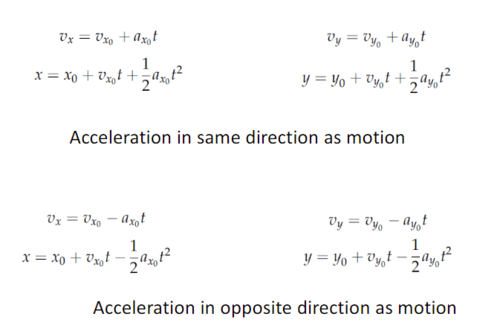
2D Kinematics w/ Constant Acceleration
Ax = 0, Ay = -g
max height vy = 0, vx = constant
max height vy = 0, vx = constant
6
New cards
Kinetics
why things move (force, energy, work, momentum)
7
New cards
kinematics
how things move (distance, velocity, acceleration)
8
New cards
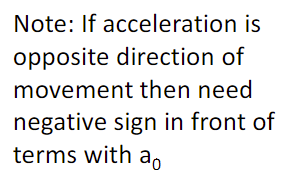
1D Kinematics w/ Constant Acceleration
v = v0 + a0*t
x = x0 + v0*t + (1/2)(a0)(t^2)
x = x0 + (1/2)*(v + v0)t
v^2 = v0^2 + 2*a0*(x - x0)
x = x0 + v0*t + (1/2)(a0)(t^2)
x = x0 + (1/2)*(v + v0)t
v^2 = v0^2 + 2*a0*(x - x0)
9
New cards
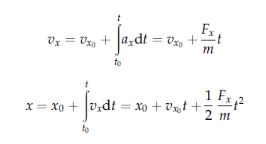
Kinetics - Constant Force
ax = Fx/m = constant
10
New cards
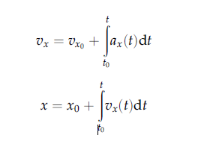
Kinetics - Time-Varying Force
ax(t) = Fx(t)/m
11
New cards
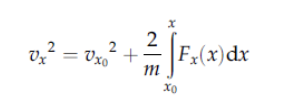
Kinetics - Displacement-Varying Force
dvx/dt = Fx(x)/m
12
New cards
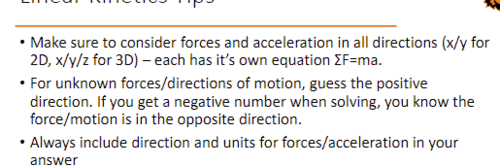
Linear Kinetic Problems
1) Start with simple diagram of system to be analyzed
2) Draw FBD of bodies of interest with all external (known and unknown) forces
3) Designate direction of motion (or guess if unknown)
4) Apply coordinate system and split forces/acceleration into components
5) Apply equations of motion and solve for unknown values
6) Can use kinematic equations to then solve for velocity/position if necessary
2) Draw FBD of bodies of interest with all external (known and unknown) forces
3) Designate direction of motion (or guess if unknown)
4) Apply coordinate system and split forces/acceleration into components
5) Apply equations of motion and solve for unknown values
6) Can use kinematic equations to then solve for velocity/position if necessary
13
New cards
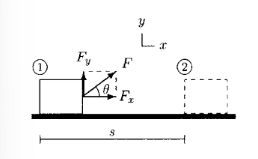
Work (+ Dot Product)
W = F * d
W = FcosΘ * d
Net W is sum of all work done by different forces
W = FcosΘ * d
Net W is sum of all work done by different forces
14
New cards
Positive/Negative Work
+ work: F and d same direction
- work: F and d opposite direction
- work: F and d opposite direction
15
New cards
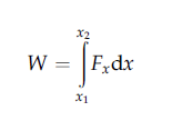
Work w/ Varying Force
W = F(x)*d*cosΘ,
Use Integration to solve over distance
Use Integration to solve over distance
16
New cards
Energy
the ability to do work
Mechanical has potential or kinetic
Mechanical has potential or kinetic
17
New cards
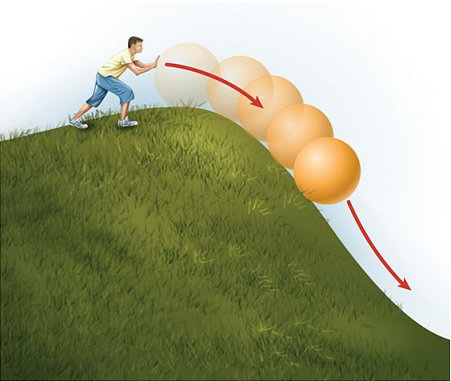
kinetic energy
energy of motion
Ek = (1/2)mv^2
Ek = (1/2)mv^2
18
New cards
potential energy
stored energy that results from the position or shape of an object
Ep = mgh
Ep = mgh

19
New cards
work-energy theorem
The work done on an object equals the change in kinetic energy of the object

20
New cards
Conservation of Energy
Eki + Epi = Ekf + Epf

21
New cards
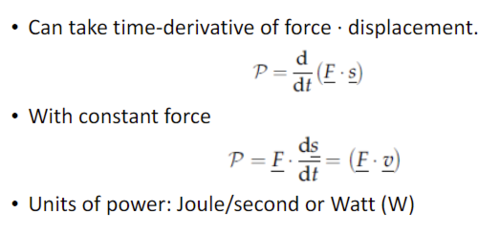
Power
the rate at which work is done
P = dW/dt
P = dW/dt
22
New cards
rectangular coordinates → polar coordinates
(x,y) → (r, Θ)
r = sqrt(x^2 + y^2)
Θ = arctan(y/x)
r = sqrt(x^2 + y^2)
Θ = arctan(y/x)
23
New cards
polar to rectangular coordinates
x=rcos(theta)
y=rsin(theta)
y=rsin(theta)
24
New cards
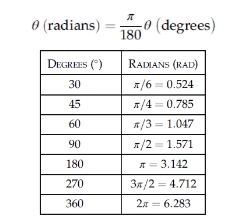
angular displacement, s
- the change in the angle as an object rotates
-units: radians
s = rΘ
-units: radians
s = rΘ
25
New cards
angular velocity, ω
-the rate at which the angle is changing in circular motion
-units: rad/s
instant: ω = dΘ/dt
average: ω = ΔΘ/Δt
-units: rad/s
instant: ω = dΘ/dt
average: ω = ΔΘ/Δt
26
New cards
angular acceleration
-The rate of change of angular velocity
-units: rad/s^2
instant: α = dω/dt, d^2Θ/dt2 (α=Θ'')
average: α = Δω/Δt
-units: rad/s^2
instant: α = dω/dt, d^2Θ/dt2 (α=Θ'')
average: α = Δω/Δt
27
New cards
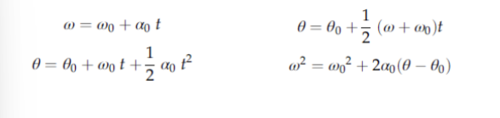
Angular-Linear Kinematics
(w/ Constant Acceleration)
(w/ Constant Acceleration)
Split into 2 components:
Normal/radial direction
Tangential Direction
Normal/radial direction
Tangential Direction
28
New cards
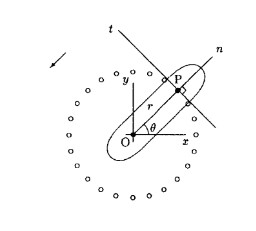
Angular and linear displacement
Normal: 0
Tangential: s = r*Θ
Tangential: s = r*Θ
29
New cards
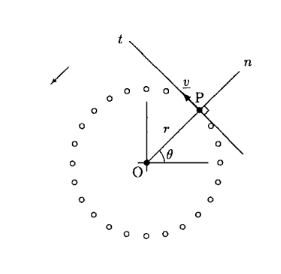
Angular and Linear Velocity
Normal: vn = 0
Tangential: vt = r*ω
Tangential: vt = r*ω
30
New cards
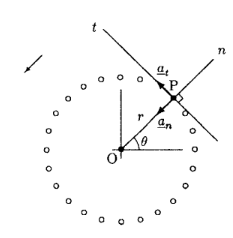
angular and linear net acceleration
a = at(t-direction) + an(n-direction)
a = sqrt[(an)^2 + (at)^2]
a = sqrt[(an)^2 + (at)^2]
![a = at(t-direction) + an(n-direction)
a = sqrt[(an)^2 + (at)^2]](https://knowt-user-attachments.s3.amazonaws.com/72a7402b55d84eb0a8523bc2cdb1e5e1.png)
31
New cards
angular and linear acceleration
Normal: an = v^2/r = r*ω^2
-Normal points in center
Tangential: at = r*α
-Normal points in center
Tangential: at = r*α
32
New cards
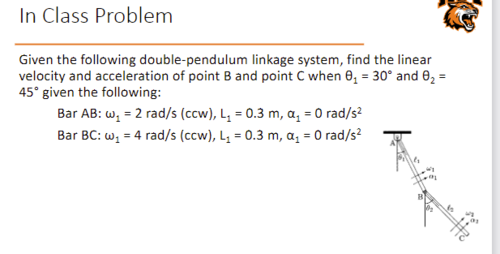
Linkage systems (don't need to know how to solve)
-usually double pendulum
-first determine s, vt, at, an for each part
-Use geometry of system to convert to global coordinates (i and j)
-use relative motion to find each unknown
-first determine s, vt, at, an for each part
-Use geometry of system to convert to global coordinates (i and j)
-use relative motion to find each unknown
33
New cards
linkage problem example
34
New cards
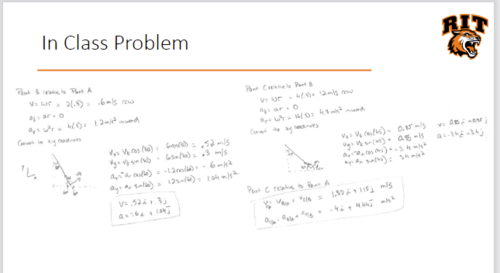
linkage problem solution
35
New cards
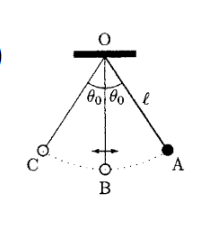
harmonic motion (we probably don't need this but just in case)
motion that repeats in cycles
Θ0 = starting angle
T = period (1/f)
Θ0 = starting angle
T = period (1/f)
36
New cards
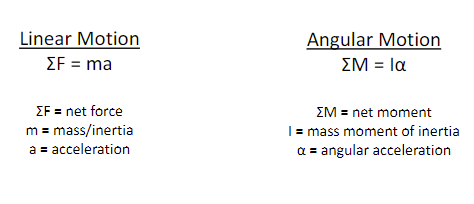
Angular vs Linear Kinetics
Equation of Motion
37
New cards
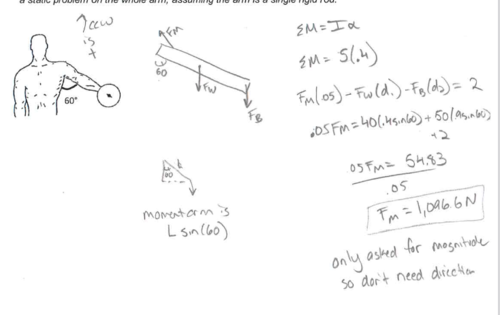
Newton's 2 Law w/ Angular
Taken from quiz
38
New cards
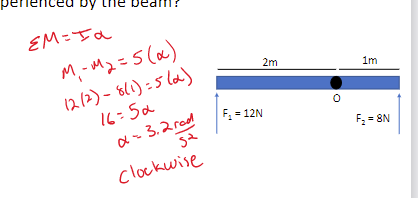
mass moment of inertia (you'll be given specific formulas for inertia)
the resistance to rotation
- single particle: I = mr^2
- rigid body:
I = Σ(mi)(ri)^2
- single particle: I = mr^2
- rigid body:
I = Σ(mi)(ri)^2
39
New cards
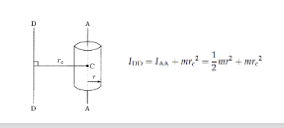
Parallel Axis Theorem
I = Ic + m(rc)^2
Ic = I of centroid
rc = distance between centroid axis and new axis
Ic = I of centroid
rc = distance between centroid axis and new axis
40
New cards
Angular Kinetic Energy
Ek = (1/2)*I*ω^2
41
New cards
Angular Work (IN RADIANS)
- constant M: W=MΘ
- vary M: W = ∫MdΘ (from Θ1 to Θ2)
- given velocity:
W = (1/2)*I*ωf^2 - (1/2)*I*ωi^2
- vary M: W = ∫MdΘ (from Θ1 to Θ2)
- given velocity:
W = (1/2)*I*ωf^2 - (1/2)*I*ωi^2
42
New cards
Angular Power
P = Mω
43
New cards
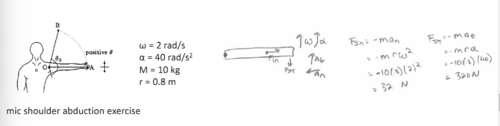
Dynamic Analysis of Joints
- use simplified models + "fictious" forces (N's 3 Law)/forces that oppose motion and in opposite dir. of at and an
44
New cards
How to for Dynamic Ana. Joints
• Step 1: Draw diagram
• Step 2: Identify and add forces
• Step 3: Identify what quantities can be measured• Kinematic analysis of body segment using various experimental techniques• Measure angular displacement overtime, and then can calculate ω and α.
• Step 4: Make appropriate assumptions/simplifications• Same as with statics but also need to assume moment of inertia and axis of rotation are known
• Step 5: Solve for unknowns using equations of motion/static equilibrium equations. Typically Fm and Fjrf
• Step 2: Identify and add forces
• Step 3: Identify what quantities can be measured• Kinematic analysis of body segment using various experimental techniques• Measure angular displacement overtime, and then can calculate ω and α.
• Step 4: Make appropriate assumptions/simplifications• Same as with statics but also need to assume moment of inertia and axis of rotation are known
• Step 5: Solve for unknowns using equations of motion/static equilibrium equations. Typically Fm and Fjrf
45
New cards
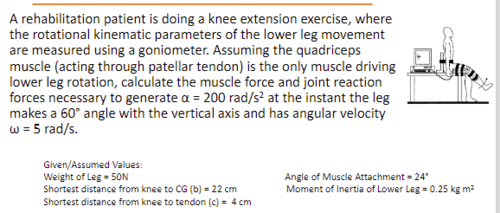
Dynamic Ana. Joints Question
lecture 18 slide question
46
New cards
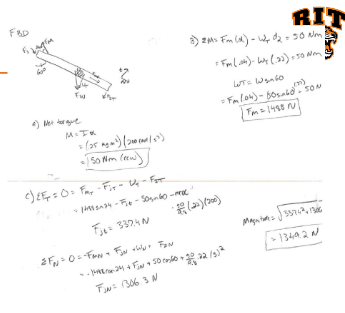
Dynamic Ana. Joints Answer
lecture 18 slide answer
47
New cards
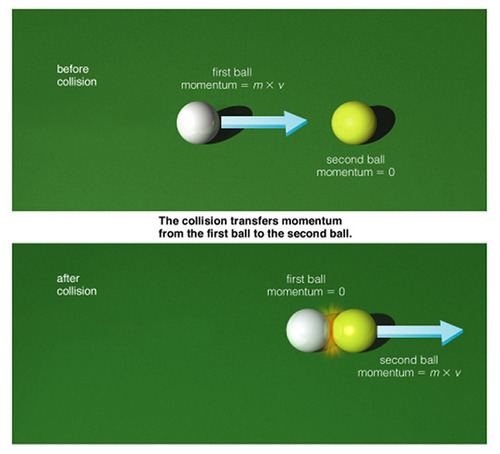
Momentum
ρ = m x v
- units: (kg*m)/s
- magnitude and direction
- units: (kg*m)/s
- magnitude and direction
48
New cards
Impulse-Momentum Theorem
- The impulse on an object is equal to the change in its momentum
- constant force: more time = more change in mom.
- constant change in mom.: more time = smaller force
- constant force: more time = more change in mom.
- constant change in mom.: more time = smaller force
49
New cards
Impulse-Momentum Theorem w/ constant force
Δρ = FΔt
50
New cards
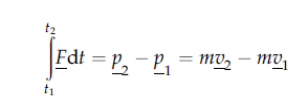
Impulse-Momentum Theorem w/ time-vary force
Integral of force-v-time fxn.
51
New cards
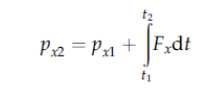
Impulse: Direction of force in direction of motion
addition of the two
52
New cards
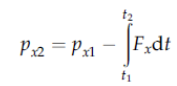
Impulse: Direction of force against direction of motion
difference of the two
53
New cards
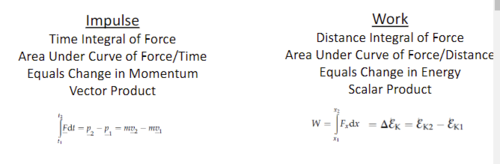
Impulse vs Work
Impulse vs Work
54
New cards
Impulse/mom. Kinetic Problem
question of impulse

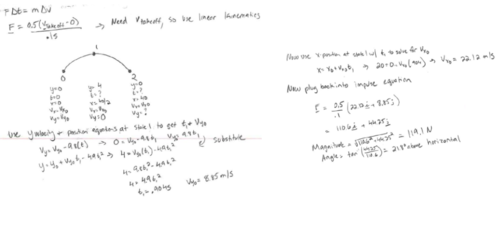
55
New cards
impulse/mom. kinetic answer
answer to impulse
56
New cards
Difference between elastic, inelastic, and completely inelastic collisions
- MOMENTUM IS CONSERVED IN ALL COLLISIONS
- Elastic → kinetic energy + mom. conserved
- Inelastic → mom. conserved
- completely inelastic → objects stick together w/ same v
- Elastic → kinetic energy + mom. conserved
- Inelastic → mom. conserved
- completely inelastic → objects stick together w/ same v
57
New cards
conservation of momentum
m1v1i + m2v2i = m1v1f + m2v2f
58
New cards
Perfectly inelastic problem
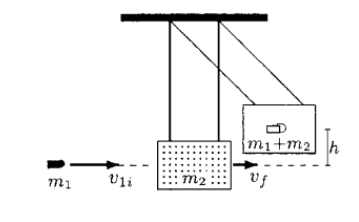
The diagram below contains a depiction of a ballistic pendulum, which was the primary method for determining the velocity of projectiles which were too difficult to measure on their own. A bullet is fired into a wooden block suspended by ropes, and the height of the block at the peak of its swing is recorded. Define an equation for v i as a function of the mass of the projectile, mass of the block, and height the block moved.
59
New cards
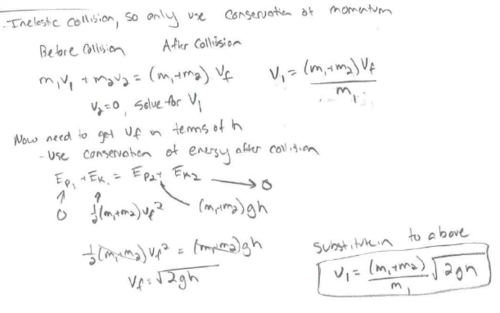
perfect inelastic answer
perfect inelastic answer
60
New cards
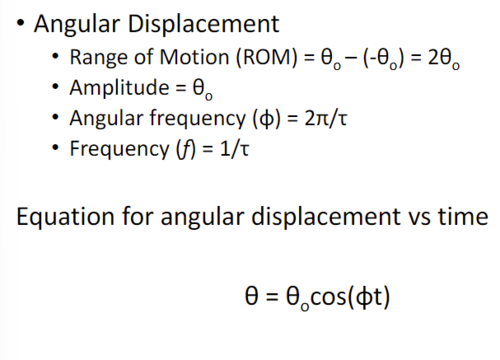
Harmonic Displacement
61
New cards
Harmonic Velocity and acceleration
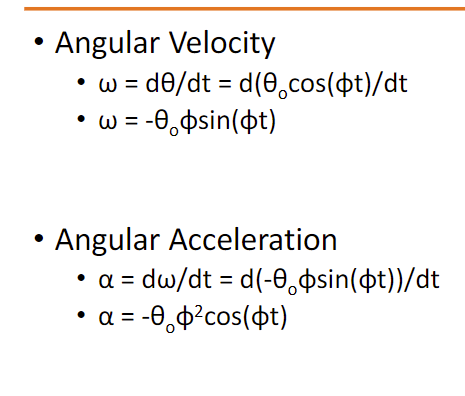
62
New cards
coefficient of restitution
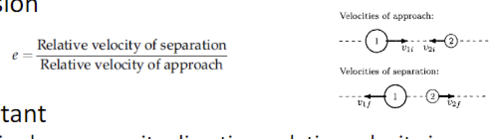
the absolute value of the ratio of the velocity of separation to the velocity of approach
63
New cards
coefficient of restitution (2)
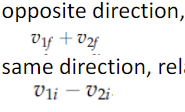
(2) If individual velocities have opposite direction, relative velocity is summation• If individual velocities have same direction, relative velocity is difference
64
New cards
coefficient of restitution for perfectly inelastic
COR: 0
65
New cards
coefficient of restitution for perfectly elastic
COR: 1
66
New cards
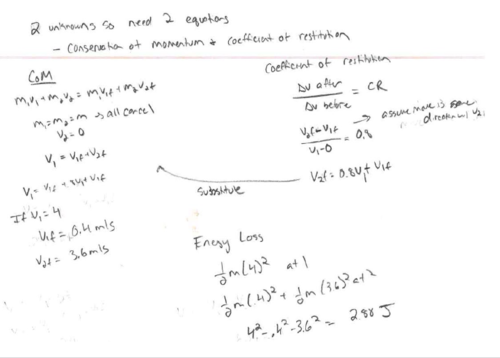
Coefficient of restitution problem
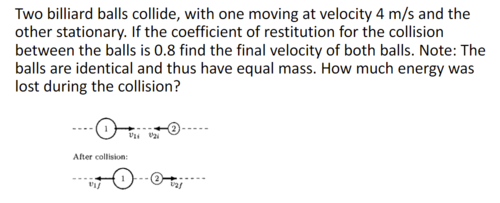
problem statement
67
New cards
coefficient of restitution answer
answer to COR
68
New cards
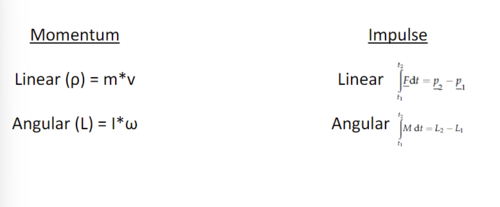
Momentum vs. Impulse
difference between mom. and impulse for linear and angular values
69
New cards
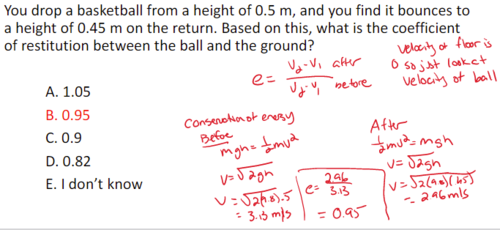
COR for inelastic
iclicker for COR inelastic
70
New cards
Types of Deformation
- Tensile/compressive
- shear
- twist moments/torsion
- bend moments
- shear
- twist moments/torsion
- bend moments
71
New cards
tensile/compressive forces
- lengthen or shorten object in direction of force
- perpendicular to cross-sectional area
- perpendicular to cross-sectional area
72
New cards
shear forces
-aka tangential forces
-Change angle of line in object with external reference (sliding)
- tangential to object surface
-Change angle of line in object with external reference (sliding)
- tangential to object surface
73
New cards
twisting moments (torsion)
- Change in the path of a straight line within an object
- perpendicular to cross-sectional area (internal)
- perpendicular to cross-sectional area (internal)
74
New cards
bending moments
- Combination of shear, tension, and compression within different parts of the object
- tangential to object (internal)
- tangential to object (internal)
75
New cards
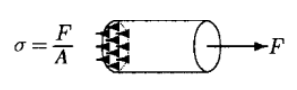
normal stress σ
- perpendicular to the surface
- units: Pa (N/m^2)
σ = F/A
- units: Pa (N/m^2)
σ = F/A
76
New cards
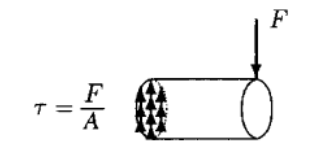
shear stress τ
- component of stress that acts tangential to area
- units: Pa (N/m^2)
τ = F/A
- units: Pa (N/m^2)
τ = F/A
77
New cards
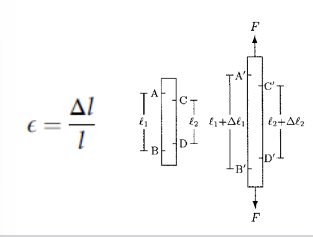
Normal strain ε
- Change in length of dimension parallel to force
- units: none
- pos value (+) = tension
- neg value (-) = compression
ε = ΔL/L
- units: none
- pos value (+) = tension
- neg value (-) = compression
ε = ΔL/L
78
New cards
shear strain γ
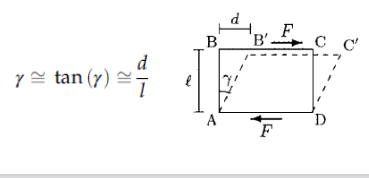
- Change in angle between line of object before and after
- uses radians
γ = tan(γ) = d/L
- uses radians
γ = tan(γ) = d/L
79
New cards
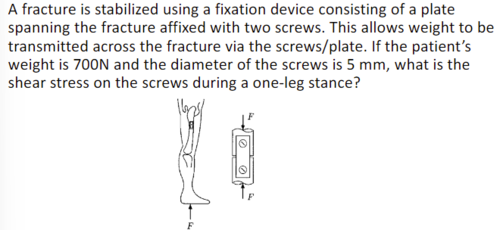
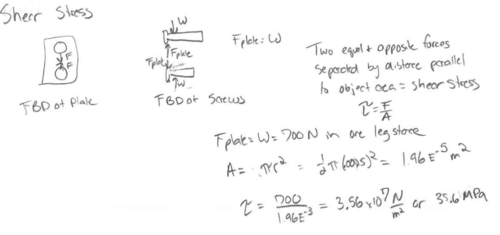
Shear stress problem
shear stress statement
80
New cards
shear stress answer
shear stress math
81
New cards
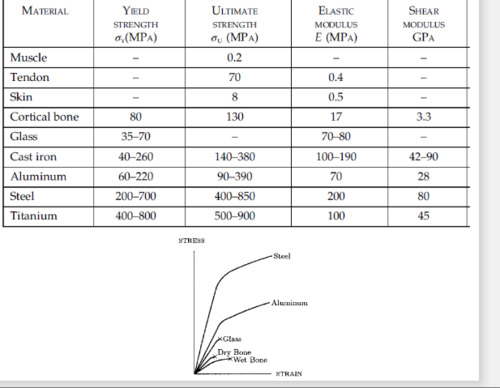
Evaluate stress-strain curves and use information from those graphs to compare and characterize different materials. You should know and be able to evaluate all mechanical characteristics of materials covered in the lecture slides.
- each curve can compare different materials/situations
- situations can change materials and values (ex: temperature)
- situations can change materials and values (ex: temperature)
82
New cards
Properties of Materials from Curves
- Stiffness → higher E = stiffer material
- Brittleness → more brittle if ruptures at smaller strain
- Toughness → total area under curve = toughness
- resilience → area under elastic region (σPεP/2 for linearly elastic)
- strength → the max stress withstood before rupture
- Brittleness → more brittle if ruptures at smaller strain
- Toughness → total area under curve = toughness
- resilience → area under elastic region (σPεP/2 for linearly elastic)
- strength → the max stress withstood before rupture
83
New cards
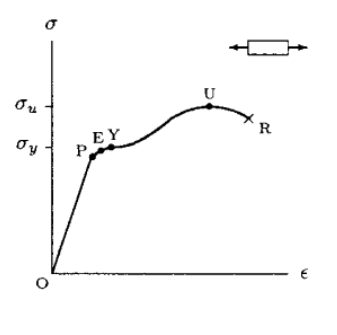
anatomy of strain/stress curve
• O - starting point with no applied load
• P - Proportionality limit - stress and strain are linearly related to this region
• E - Elastic Limit - Greatest stress that can be applied without permanent deformation
• Y - Yield Point - Point at which large strain can occur with minimal additional stress
• σy - Yield strength - stress at which yield point occurs
• U - Highest point of yield curve
• σU - Ultimate strength - highest stress a material can experience
• R - Rupture - point at which material breaks/fails Note: Yield Point and Elastic Limit are typically the same
• P - Proportionality limit - stress and strain are linearly related to this region
• E - Elastic Limit - Greatest stress that can be applied without permanent deformation
• Y - Yield Point - Point at which large strain can occur with minimal additional stress
• σy - Yield strength - stress at which yield point occurs
• U - Highest point of yield curve
• σU - Ultimate strength - highest stress a material can experience
• R - Rupture - point at which material breaks/fails Note: Yield Point and Elastic Limit are typically the same
84
New cards
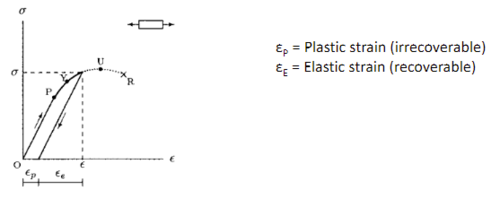
Elastic Deformations
- a deformation in which the object returns to its original dimensions due to application of stress
- linearly elastic: P and Y are same point
- nonlinear elastic: P and Y are NOT the same point
- linearly elastic: P and Y are same point
- nonlinear elastic: P and Y are NOT the same point
85
New cards
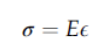
Young's Modulus
Relationship between stress and strain (slope of line)
stress = E*strain
stress = E*strain
86
New cards
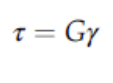
Elastic shear stress
- Materials can also undergo elastic deformation due to shear stress
- For linearly elastic shear materials
G = Shear modulus/Modulus of Rigidity
- For linearly elastic shear materials
G = Shear modulus/Modulus of Rigidity
87
New cards
plastic deformation
- permanent deformation caused by strain when stress exceeds E/Y
88
New cards
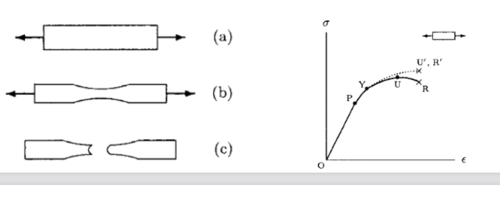
Necking
- Process known as necking - decrease in cross-sectional area during deformation
• Stress calculated based on original area, but that changes during necking.
• If accounting for area change, graph would not decrease
• Stress calculated based on original area, but that changes during necking.
• If accounting for area change, graph would not decrease
89
New cards
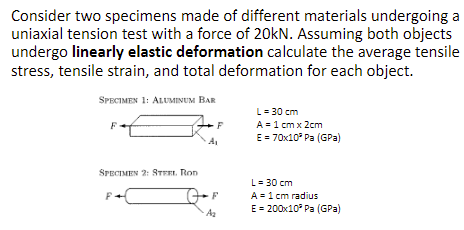
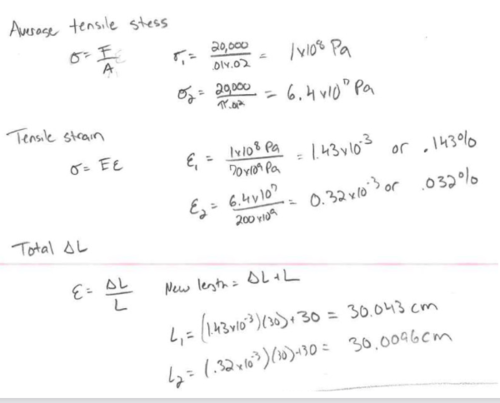
linear elastic deformation problem
linear elastic deformation statement
90
New cards
linear elastic deformation answer
linear elastic deformation answer and work
91
New cards
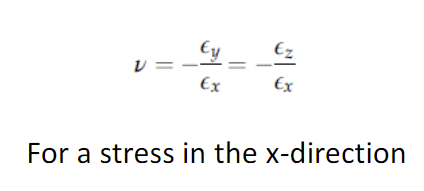
Poisson's Ratio (v)
v = - (lateral strain/axial strain)
- how much strain in one direction affects strain in the other direction
- how much strain in one direction affects strain in the other direction
92
New cards
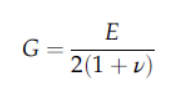
How poisson's ratio relates normal stress-strain to shear stress-strain
poisson's ratio creates relationship to get G (shear) from E (normal) and vice versa
93
New cards
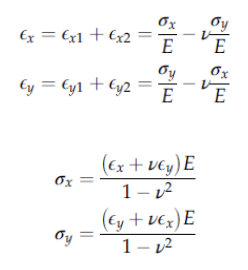
Multiaxial Stress/Strain
stress/strain happening in multiple axes at once
94
New cards
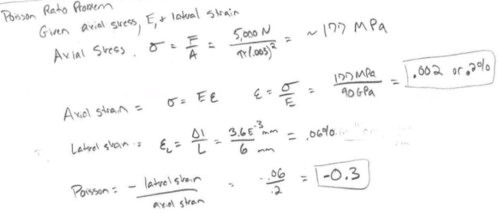
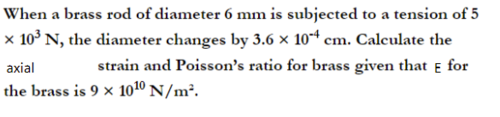
Poisson's Ratio problem
Poisson's Ratio problem statement
95
New cards
Poisson's Ratio problem answer
Poisson's Ratio answer and work