5.2 Supply of labour
 Call Kai
 Learn
Learn Practice Test
 Spaced Repetition
 Match
Match Flashcards
 Knowt Play
1/9

There's no tags or description
Looks like no tags are added yet.
Name | Mastery | Learn | Test | Matching | Spaced | Call with Kai | Chat |
|---|
No analytics yet
Send a link to your students to track their progress
10 Terms
Supply of labour
The number of hours workers are willing and able to supply at a given wage rate
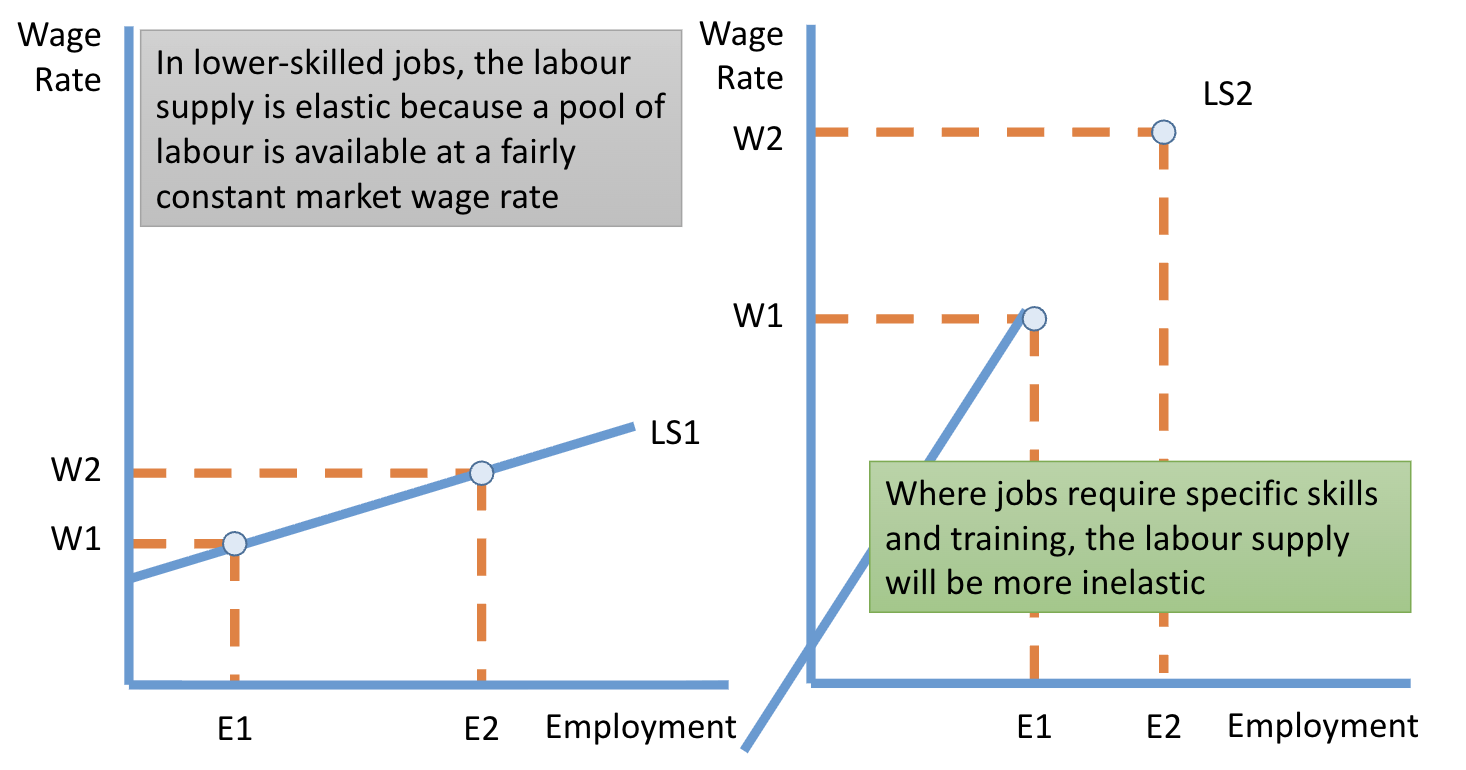
The wage elasticity of the supply of labour
The responsiveness of the supply of labour to a change in the wage rate
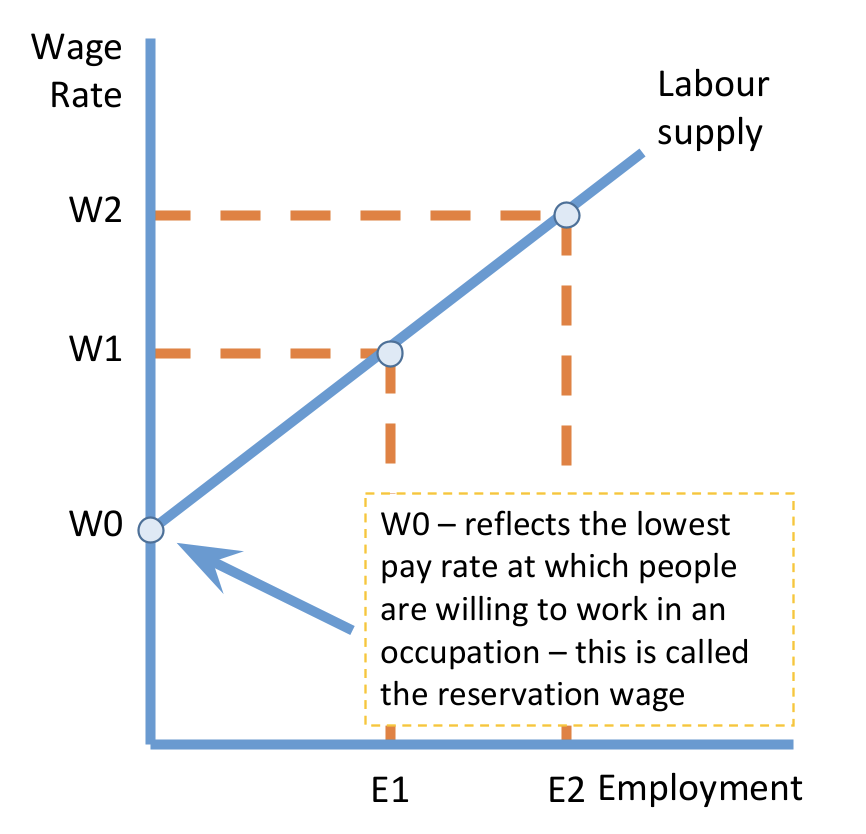
Labour supply curve
The labour supply curve for any industry or occupation will be upward sloping.
As wages rise, other workers enter this industry attracted by the incentive of higher pay
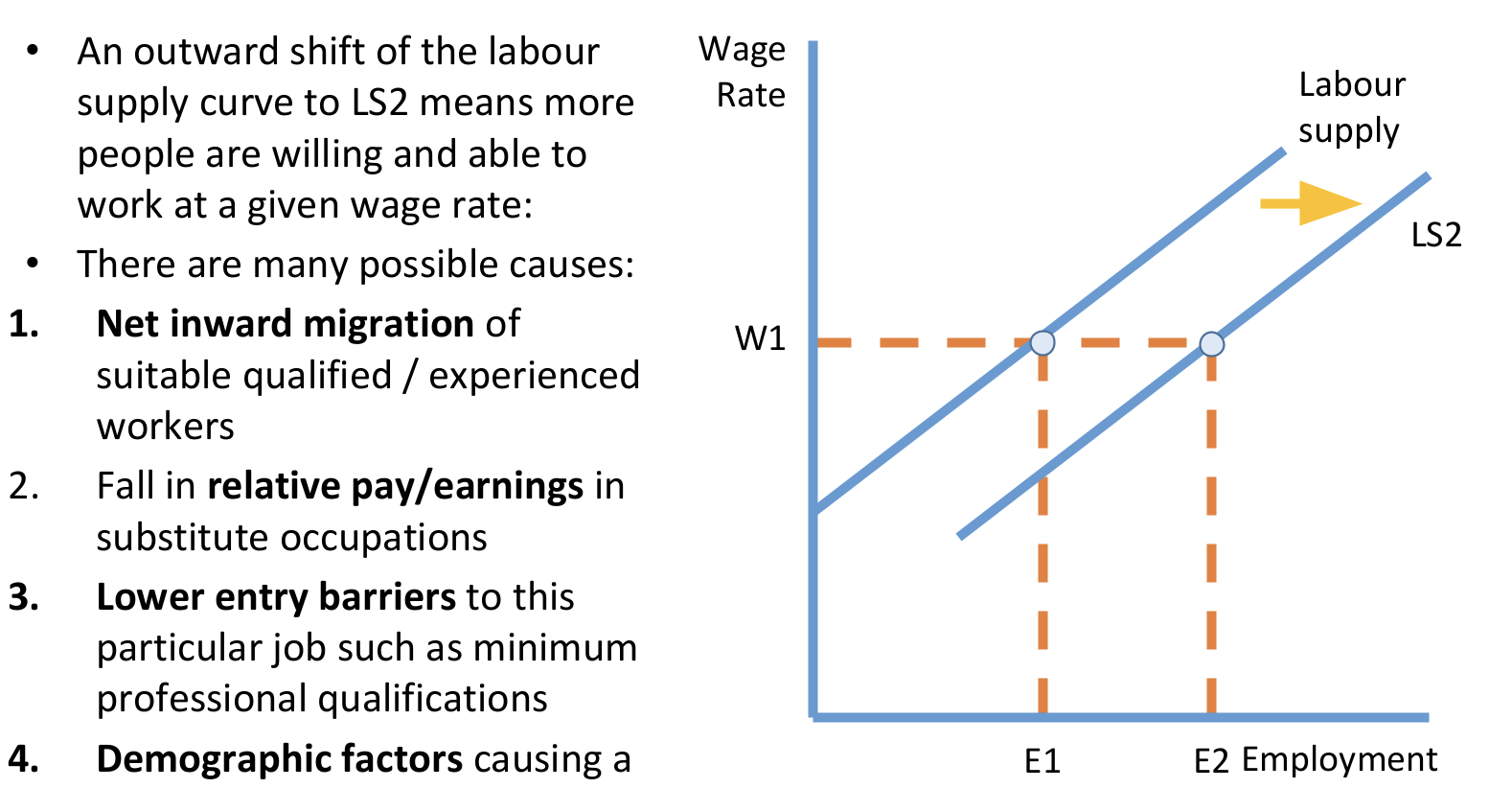
Causes of outward shifts in labour supply
-Net inward migration of suitable qualified / experienced workers
-Fall in relative pay/earnings in substitute occupations
-Lower entry barriers to this particular job such as minimum professional qualifications
-Demographic factors causing a rise in the active labour supply
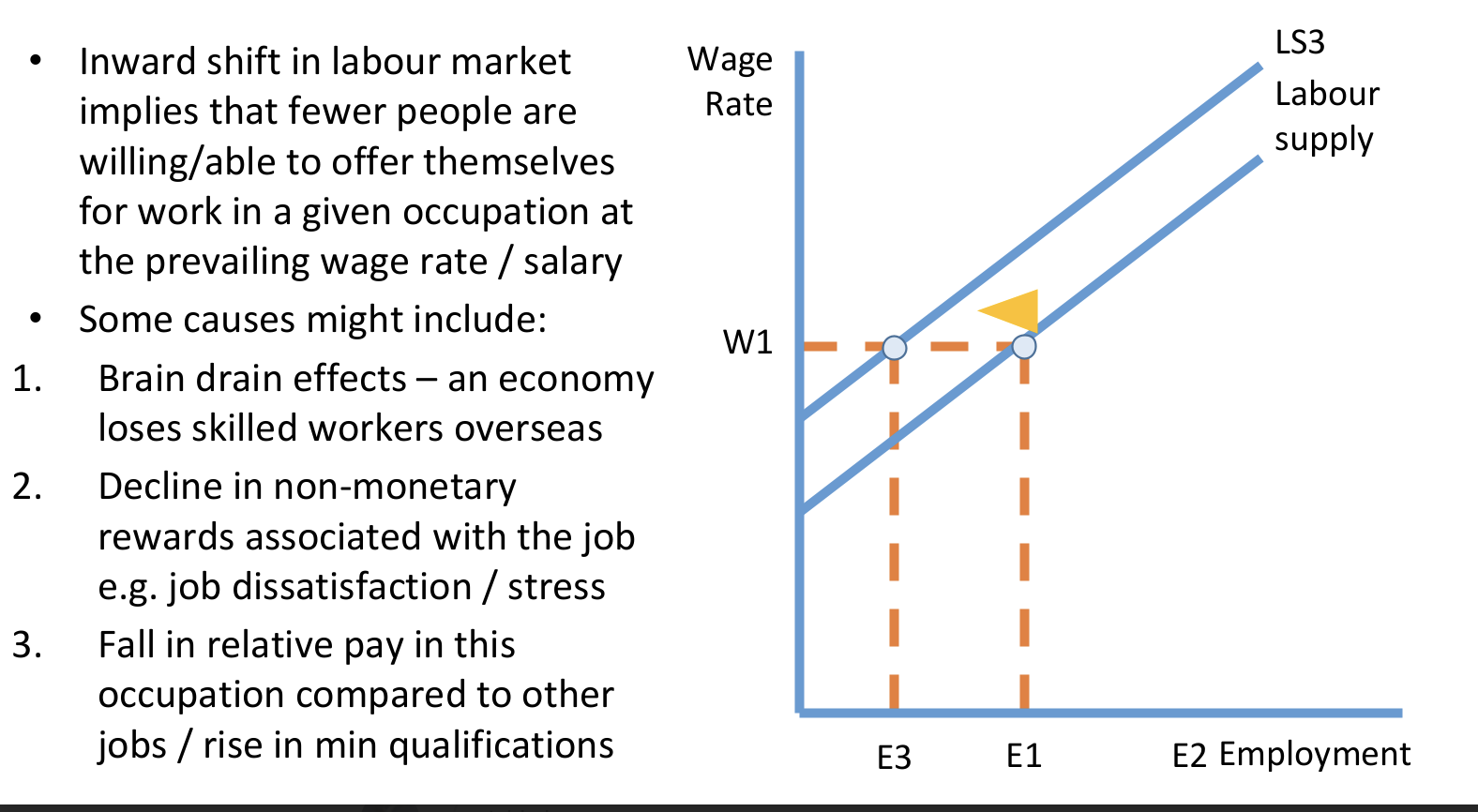
Causes of inward shifts in labour supply
-Brain drain effects – an economy loses skilled workers overseas
-Decline in non-monetary rewards associated with the job e.g. job dissatisfaction / stress
-Fall in relative pay in this occupation compared to other jobs / rise in min qualifications
Non financial factors affecting labour supply
-The convenience and flexibility of hours
-Status/Promotion chances
-Flexibility of location
-Qualifications and skills
-Highly skilled workforce required = less demand
-Job security
-Pleasantness of the job
-Holidays
-The quantity and quality of training
-Location
Transfer earnings
The minimum income necessary to encourage a worker to take a particular job
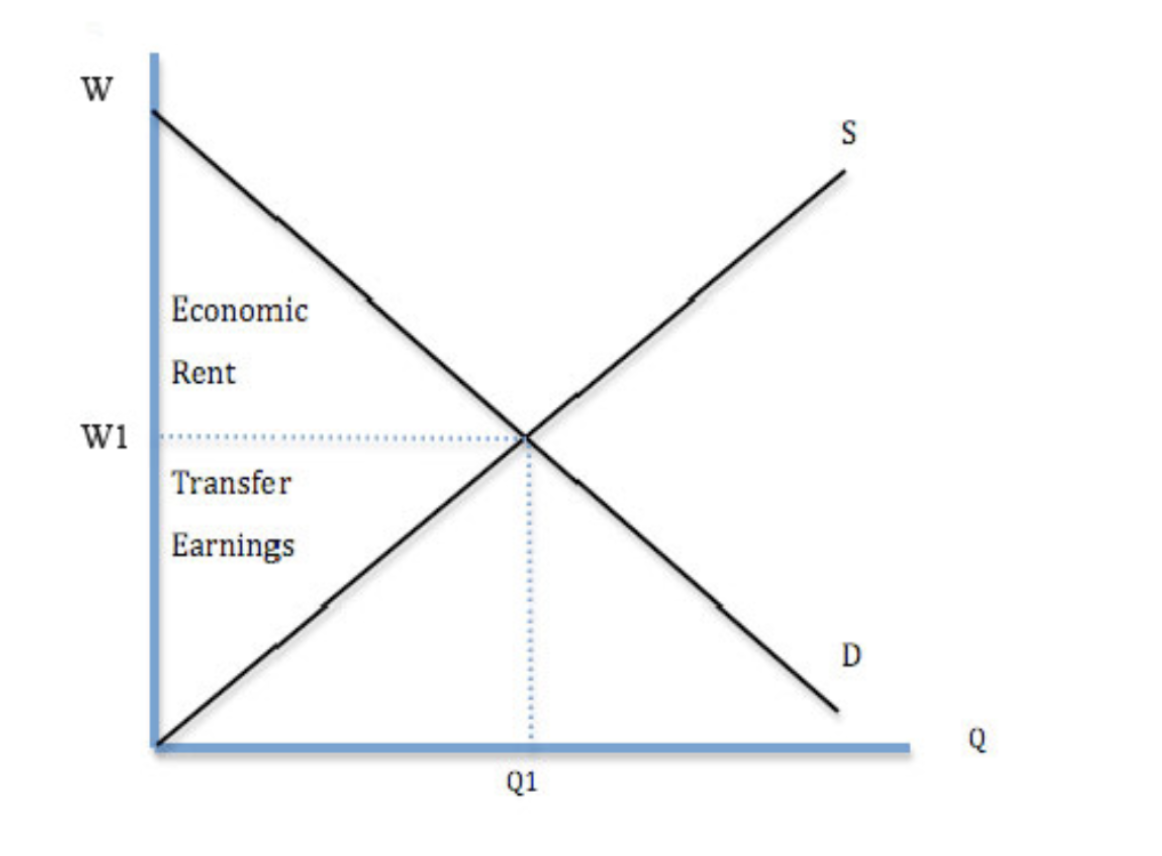
Economic rent
Income above transfer earnings - the additional income a worker receives
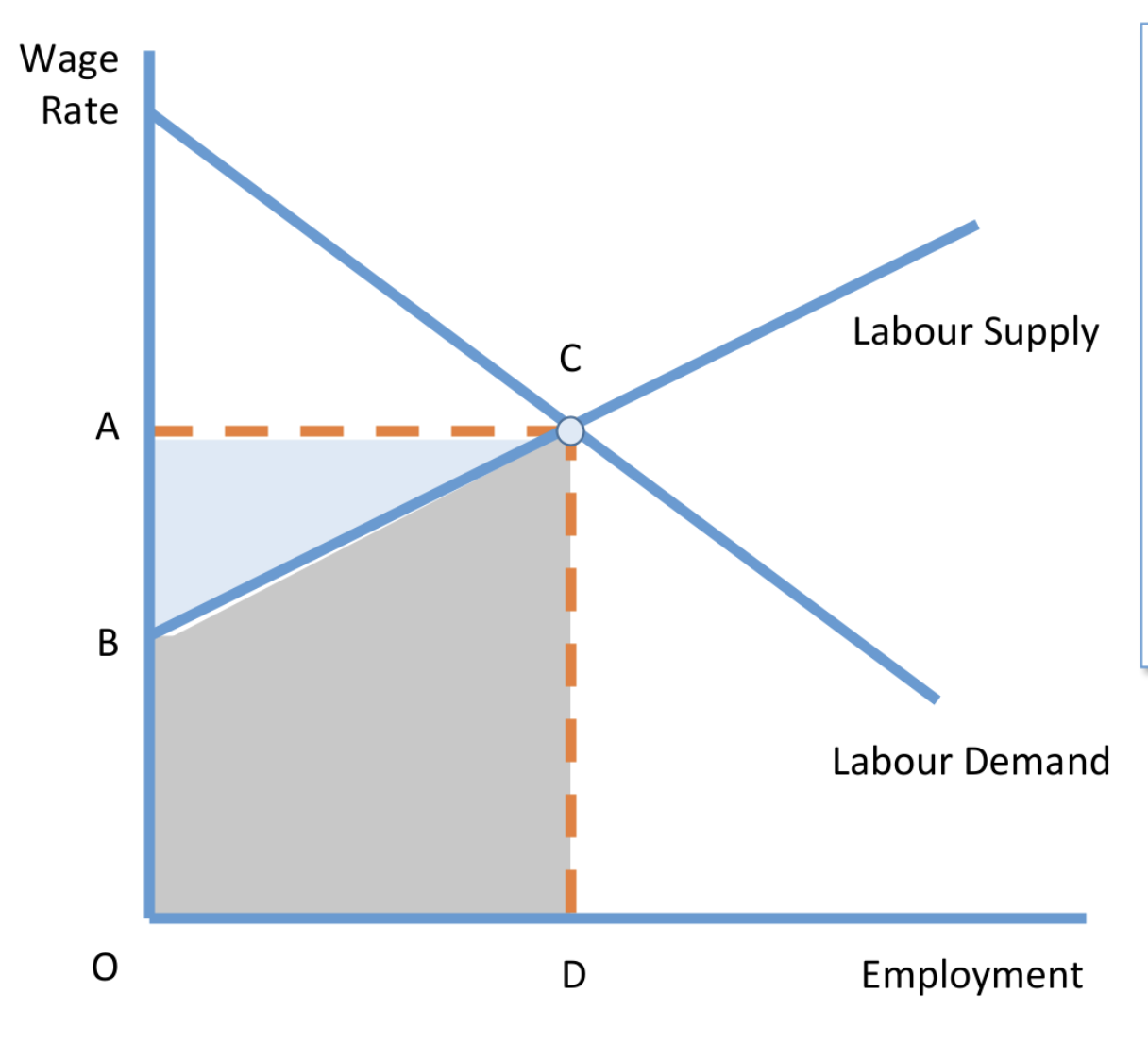
Occupational Immobility of Labour
Occurs when there are barriers to the mobility of factors of production between different industries leading to these factors remaining unemployed, or being used inefficiently
Causes of geographical immobility of labour
-Family and social ties – older people more reluctant to move
-Financial costs involved in moving home including the costs of selling a house and removal expenses.
-Regional / local variations in house prices leading to a shortage of affordable housing in many areas
-High cost of renting a suitable property
-Differences in the cost of living between regions and countries
-Migration controls e.g. possible caps on inward migration
-Cultural and language barriers to living and working overseas
-A default behavioural instinct which is a dislike of change