MH Exam 3
 Call Kai
 Learn
Learn Practice Test
 Spaced Repetition
 Match
Match Flashcards
 Knowt Play
1/89

There's no tags or description
Looks like no tags are added yet.
Name | Mastery | Learn | Test | Matching | Spaced | Call with Kai | Chat |
|---|
No analytics yet
Send a link to your students to track their progress
90 Terms
Levels of Anxiety (what they are)
- low, moderate, severe, panic
MildAnxiety Manifestations
- the good anxiety
- restless
- seeking reassurance
- voicing concern
- increased senses and focus
Moderate Anxiety Manifestations
- frustration
- restlessness
- difficulty concentrating
- increased worry
Severe Anxiety Manifestations
- impacts cognition
- increased anxiety, restlessness
- anger
- feel dread/doom
Panic Anxiety Manifestations
- terror
- exhaustion
- cannot communicate, detached from reality
Anxiety Interventions (for each level)
- mild: encourage problem-solving
- moderate: use simple/short sentences, guide back to the task
- severe: therapeutic environment, stay with client, short/simple sentences
- panic: stay calm, stay with patient, safety first, may need meds
OCD definitions and examples (obsession, compulsion)
- Obsessions: persistent and recurrent thoughts or urges that are unwanted and intrusive
-- fear of safety, concern for cleanliness, thoughts about being harmed, fear of forgetting something important
- Compulsive: repetitive behaviors performed to lessen or prevent anxiety from obsessions
-- steps for handwashing, locking doors many times, repeating activity multiple times, hair pulling
Risk factors for Anxiety and OCD (what they are)
- brain chemistry (GABA)
- social influence
- family background (growing up)
- lifestyle (diet)
- genetics
ACEs Examples
- child not close to their family
- cannot talk about their feelings
- few/no friends
- inconsistent discipline
- low levels of monitoring/supervision
PCEs Examples
- unconditional love
- spending time with friends
- volunteering/helping others
- active in a social group
- mentor outside of family
- basic needs met (housing, food)
- opportunities to learn
- having hobbies
- being active/playing sports
- routine and fair rules at home
Physical Manifestations of Anxiety
- increased HR and RR
- dry mouth
- sweating
- fatigue/exhaustion
- difficulty concentrating
- GI disturbances
- sleep disruptions
Panic Disorder/Attacks (what it is, impacts)
- unexpected with no reason
- begin to avoid situations, people, and events that trigger attacks
- worry that another attack will occur
Generalized Anxiety Disorders (what it is, impacts)
- excessive anxiety and worry in numerous situations (work, school, relationships, performing)
- have these feelings daily and impact daily life
Types of OCD Disorders (what they are)
- OCD
- Body dysmorphic
- hoarding
- trichotillomania
- excoration
OCD (what it is, examples)
- pattern of uncontrollable obsessive thoughts and associated compulsive behaviors/rituals
- cleaning, washing hands, forbidden thoughts, counting objects
Body Dysmorphic (what it is, examples)
- persistent preoccupation with perceived defects or flaws in one's appearance
- mirror checking, grooming, reassurance, possible eating disorder
Hoarding (what it is, examples)
- persistent difficulty or inability to discard possessions
- excess accumulation that overwhelms the living area
Trichotillomania (what it is, examples)
- serially and intentionally pulling one's hair
- behaviors triggered by boredom/anxiety
- pulling hair decreases tension, causes gratification, pleasure, and a sense of relief
Excoriation Disorder (what it is, examples)
Trauma-Informed Care (aspects)
- safety
- trustworthiness
- peer support
-collab and mutuality
- empowerment, voice, choice
- consider cultural, historical, and gender issues
Trauma-Informed Care (what to do)
- figure out what happened
- make sure basic needs are met, then focus on emotions
- look at current manifestations, life stressors, functional impairment
- demostrate positive regard
- predictabilityy and follow through
- AVOID RETRAUMATIZING
Exposure Therapy for Anxiety (what it is, examples)
- exposed to the underlying cause of anxiety that they are avoiding to become more comfortable with the activity
-ex: riding in elevators
Lifestyle Treatment for Anxiety (what it is, examples)
- help make better choices
- healthy diet, exercise, avoid caffeine and substances
Meds for Anxiety (what they are, uses)
- Benzos: typically used in emergency
- SSRIs: first line
- SNRIs
- antidepressants: paroxetine, venlafaxine
Resilience and Protective Factors (examples)
- positive self-esteem/coping skills
- connected to community
- secure attachment with caregiver
- strong support system
- access to healthcare/resources
- ability to regulate emotions
- healthy diet
- economically stable
- meeting milestones
- sense of hope
Manifestations of Toxic Stress in Children (categories, examples of each)
- developmental: failure to thrive, learning difficulty
- behaviors: engaging in risky behavior (sex, smoking)
- physiological: risk of autoimmune disease, obesity, headache, sleep problems, asthma
- mental health: suicide attempts
Signs of PTSD in Adults (what they are, examples)
- intrusive manifestations (bad thoughts)
- avoidance (do not talk about it, avoid similar situations)
- negative mood/cognition (low self-esteem, anger, blame self, do not remember)
- arousal/reactive (flashbacks, nightmares, hard time concentrating)
- depersonalization: detached from self (feel out of body, in a dream, looking at self from above)
- derealization: out of reality (dreamlike, distorted)
Protective Factors/PCE or PACEs (what they are)
- unconditional love
- spending time with friends
- volunteering/helping others
- active in a social group
- mentor outside of family
- basic needs met (housing, food)
- opportunities to learn
- having hobbies
- being active/playing sports
- routine and fair rules at home
Populations at an Increased Risk of Trauma (what they are)
- women (2x more likely)
- adolescents (increased recently)
- Black, Hispanic, Indigenous
- LGBTQ+
- Military
- First Responders
Historical Trauma (what it is, examples, risks)
- ex: Holocaust, slavery, genocide
- ancestors go through trauma, then it is passed down
- risk: increased risk for inherited risk factors (anxiety, worry, hypertension) impacting future generations (if trauma is not resolved)
Acute Stress Disorder vs Post-Traumatic Stress D/O (definitions of each, similarities)
- PTSD: S/S longer than one month
- Acute Stress: 3 days to 1 month post-trauma
- both: intrusion and negative alterations in cognition/mood
Child Behavior in Reactive Attachment and Disinhibited Social Engagement Disorder (differences)
- Reactive attachment: not attached to the caregiver
- DSE: kids like strangers and seek attention from them
PTSD S/S in Children (what they are)
- time skew: remember events in a different sequence
- Omen formation: believe they missed warning signs and can prevent future trauma if they stay alert
- post-traumatic play and reactment: compulsive, repetitive behavior based on recreating trauma
Depersonalization/Derealization r/t Trauma (what each are, why they happen)
- depersonalization: being an outside observer or detached from self (this is not happening to me; feel in a dream)
- derealization: experience of unreality, distortion, distance (things not real)
- both happen because of stress; most know that it is not real
Key Principles of Trauma-Informed Approach
- safety
- trustworthiness and transparency
- peer support
- collaboration and mutuality
- empowerment, voice, choice (voice taken away during trauma)
- cultural, historical, gender issues
Non-pharm Treatment of Trauma-Related Disorders (what they are, purpose)
- CBT
- Prolonged Exposure Therapy: facing what they have avoided to address feelings
- Cognitive Processing Therapy: helps change beliefs about trauma
- Eye Movement Desensitization and Reprocessing
- Parent/Child Interaction: parent learns how to change negative aspects
Criteria for Somatic Symptom Disorders (what it is, example, timeline)
- one or more S/S of SSD that are distressing or disrupt daily functioning
- ex: disproportionate thoughts, feelings, and behaviors with somatic symptoms or spending excessive time thinking of manifestations or health
- must be present for 6 months or more
Factitious Disorder (what it is)
- harm themselves on purpose to seem sick
- done so that their emotional needs are met or to maintain a relationship with the healthcare provider
Treatment and Mgmt of Somatic Symptom D/Os (for each disease)
- SSD: try to get the person to understand it's emotional (therapy, support system)
- Illness Anxiety: antidepressants, CBT
- Functional Neurological: needs lots of treatment (PT, OT, psychotherapy, meds, CBT, coping skills)
- Factitious: safety, SSRI, reduce treatments and tests, therapy, coping skills
Nursing Interventions for Somatic Symptoms D/Os (what they are)
- therapeutic communication
- healthy coping strategies and skills
- encourage healthy lifestyle
- psychosocial education
Nursing Process: Implementation - Dissociative D/O (what to do)
- therapeutic communication
- provide routine, help with decision-making
- confirm identity
- reflect and affirmation
- teach stress reduction, coping strategies
- safe environment
- explain that symptoms are from stress
Personality Disorders- Clusters and Types in each (what they are)
- A: odd, eccentric (paranoid, schizoid, schizotypal)
- B: dramatic, emotional, erratic (antisocial, borderline, histrionic, narcissistic)
- C: anxious, fearful (avoidant, dependent, OCD)
Etiology of Personality Disorders (what it is)
- not fully known
- diathesis-stress model (emotions, stress as a child)
Risk Factors of Personality Disorders (what they are)
- genetics (same cluster passes down)
- abuse, neglect, hostility (ACEs)
Paranoid S/S (what they are)
- suspect that others are exploiting, harming, or deceiving them
- unjustified doubts about the loyalty and trustworthiness of friends
- do not confide in others because of use against them
- reads hidden/demeaning meaning into remarks and events
- bears grudges/unforgiving
- perceive attack on own character and react angrily
- suspicious of fidelity
Schizoid S/S (what they are)
- doesn't want close relationships or to be part of a family
- chooses solitary activity
- little interest in sex
- takes pleasure in few activities
- lack friends
- don't care what others think
- emotional coldness, detachment, flat affect
Antisocial DSM Criteria/Traits (what it is, age)
- failure to conform to social norms/laws
- deceitful (lying, aliases, conning for pleasure)
- impulsive/do not plan ahead
- sweet and manipulative (to get what they want)
- irritable and aggressive
- do not care about safety of self or others
- irresponsible
- lack of remorse
-age: since 15 years (conduct disorder before)
Borderline Personality D/O Traits r/t Safety
- recurrent suicidal behavior, gestures, threats, self-mutilating behavior
- unstable self-image and sense of self
- affective instability due to marked reactivity of mood (dysphoria, irritability, anxiety)
- intense anger, difficulty controlling
-unstable/intense relationships
- DO ANYTHING TO AVOID ABANDONMENT
Narcissitic P/O S/S
-m need for admiration, grandiosity, lack of empathy
- expected to be recognized as superior
- fantasises of success, power, love
- believe they are the best at everything and that no one is at their level (everyone jealous)
- only care about themselves (arrogant)
- takes advantage of others
- lack empathy
Excoriation Disorder (what it is, examples)
- recurrent picking at skin, resulting in lesions
- may pick at pimples, scabs
- extensive time spent picking
- attempt to cover with clothing or makeup
Cluster A traits and behaviors
Traits: odd, eccentric, peculiar
Behaviors
Paranoid - distrust and suspicious of others, grudges
Schizoid - detachment from social relationships, flat affect
Schizotypal - odd beliefs, social anxiety, lack of relationships
Cluster B traits and behaviors
Traits: dramatic, emotional, erratic
Behaviors:
Antisocial - deceitful, lie steal cheat, no rules, disregard to safety of themselves or others
Borderline - suicide risk, don't want to be alone, impulsive, intense anger
Histrionic - center of attention, follower, lots of friends, thinks relationships are closer than they are
Narcissistic - they are special, no one is like them, lacks empathy, doesn't care for others
Cluster C traits and behaviors
Traits: anxious, fearful
Behaviors:
Avoidant - dependent on others, low self esteem, fearful of criticism
Dependent - can't make decisions, doesn't express disagreement, feels uncomfortable alone, needs a relationship
OCD - inflexible, detailed, doesn't spend money
Cluster A therapeutic presence and care planning
Help process feelings and emotions they cant share with others, not too nice but matter of fact
Find and maintain interpersonal relationships
Cluster B therapeutic presence and care planning
Nurse needs to set boundaries
Safety, emotional regulation and set limits on dramatic and inappropriate behaviors
Cluster C therapeutic presence and care planning
Reassure, suggest coping skills, empower
Decrease anxiety
Depression
symptom and disorder
symptoms can be present throughout the lifespan triggered by stressors
diagnosis is DSM by symptoms on a spectrum overtime
Mania
symp - overactivity, not sleeping, talking quickly, sexual, unsafe
Hypomania
mild version of mania, not depression, not as severe as mania
Bipolar I
major depression and mania
Bipolar II
hypomania and depression
Cyclothymia
alternates between mania and mild to moderate depression for at least 2 years, not as severe as bipolar I or II
Risk factors and warning signs for suicide
SAD PERSONS
sex, age (
Suicide (plan) assessment
- develop before discharge
- what to do if thoughts return (multiple steps and options)
- give numbers/resources -> coping skills -> counselor -> ER
- have them sign safety plan to be committed and hold themselves accountable
Community and societal increased risks for suicide
barriers to access healthcare, cultural beliefs (noble resolution), community cluster, stigma, access to meds or weapons, media portrayals
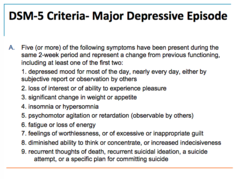
DSM criteria for MDD
SNRI indications, risks, side effects, med names
Names: xine, tine, pran
Indications: ADHD and depression
Risks: serotonin syndrome, suicide risk, high BP
Side effects: N/V, dizziness, headaches, LOA, dry mouth, diaphoresis
TCA indications, risks, side effects, med names
Names: end in -tyline or -mine
Indications: Antidepressant
Risks: likely to die if overdose, long QT interval, dont mix with other CNS depressants
Side effects: Anticholinergic effects (dry mouth, blurred vision, constipation), drowsiness, weight gain
Adverse Effects off Antipsychotic Meds
1st - lower WBC (agranulocytosis), infection, fever, cough, not healing, respiratory issues
2nd - no WBC problems, wt gain, insulin resistance, inc waist circumference, increase in triglycerides
Nurses Role in ECT
- monitor client status and respond to emergencies
- NPO 6-8hrs before
- discontinue benzos
- give anesthetic and muscle paralyzer before
- blood pressure cuff on lower legs
Different types of brain stim treatments
ECT, Vagus nerve stimulation, repetitive transcranial magnetic stimulation, deep brain stimulation
Contraband, unsafe materials, and milieu
- scissors, knitting needles, belts, lighters, spiral notebooks
- safe and therapeutic environment
Unit checks, monitoring and responsibility of the nurse
- check for safety, suicide risk patients always have eyes on
Analyzing cues - safety first
- check for suicide risk and harm to others
- giving away possessions, dont allow in personal room during group, observed at all times
Nursing interventions for client with mania
Inpatient - high calorie, high quality finger foods, unit is quiet at night and designated quiet periods, make sure client is not roaming unit during evening, low stimuli, scheduled meds
Outpatient - high calorie, high quality finger foods, good sleep hygiene
"take action" intervention for client with depression
Inpatient - body slows down, need structured plan for daily activities, BM may be slowed so allow walking, fiber in diet, extra fluids, stool softener, monitor for suicide risk
Outpatient - need case management to coordinate both med management and psychotherapy
Expected outcomes for clients with mood disorders
Short term - free of injury, ability to care for self, alterations in thought processes, ability to function and heal in outpatient setting, mood stability, knowledge of disorder, absence of suicidal ideations
Long term - adherence with meds and treatment, lack of suicidality, functional in relationships and life
Components of mental status exam
- Observation (appearance, speech, eye contact, motor activity, affect)
- Mood
- Cognition (orientation, memory, attention)
- Perception (hallucinations, derealization/depersonalization)
- Thoughts (suicide or homicide)
- Behavior
- Insight
- Judgement
Diagnosis, first episode "psychotic break"
- Diagnosed as brief psychotic disorder when symptoms last 1 day to 1 month
Risks to client with schizophrenia
- early mortality, suicide risk, challenges in daily functioning, personal relationships, employment, more stigma, discrimination, and social isolation
Environmental RF for schizophrenia
- cannabis use, living in populated city, poverty, ACES, discrimination
Positive/negative/cognitive manifestations
Positive - hallucinations, paranoia, delusions, disorganized speech
Negative - alogia (lack of speech), anergia (lack of energy), anhedonia (lack of pleasure)
Cognitive - poor concentration, slow thinking, poor memory
Types of Delusions and therapeutic communication
Persecutory delusions (believing one is being targeted or harmed)
Grandiose delusions (believing one has great power or importance)
Somatic delusions (false beliefs about the body)
Reference delusions (believing random events are directed at oneself)
Erotomanic delusions (believing someone is in love with them)
Nihilistic delusions (believing a catastrophe will occur or that one is dead/nonexistent)
Therapeutic communication - listen actively, do not argue or reinforce delusion, focus on feelings and safety
Catonia
extreme withdrawal or unusual movements and behaviors. It can present as immobility, rigidity, or purposeless agitation
Tardive dyskinesia
involuntary and repetitive movements
Pseudoparkinsonism
medication induced slumped posture, shuffling gait, drooling, tremors, and 'pill-rolling' finger movements
Therapeutic Communication techniques and tips
- affirmations, reflection, summarizing, open ended questions
Clients with delusions nursing considerations
- safety
- be aware of meds that may cause delusions
- avoid arguing, use clear and non confrontational language, acknowledge client feelings
- dont reinforce delusion but gently redirect to reality
Clients with hallucinations nursing considerations
- stay calm, use clear and simple language
- acknowledge their feelings without reinforcing hallucination ("i understand this might feel frightening)
- encourage reality reorientation
- ensure safety
Client/Family Teaching
- Educate clients and families on medications, including their purpose, dosage, and side effects during hospitalization, outpatient visits, and at discharge.
- Discuss the nature of the mental disorder, expected behaviors, and ways to respond effectively.
- Include signs of relapse and steps to take for prevention.
- Reinforce concepts learned in therapy and provide ongoing support.