Physics - Radioactivity*
 Call Kai
 Learn
Learn Practice Test
 Spaced Repetition
 Match
Match Flashcards
 Knowt Play
1/80

There's no tags or description
Looks like no tags are added yet.
Name | Mastery | Learn | Test | Matching | Spaced | Call with Kai | Chat |
|---|
No analytics yet
Send a link to your students to track their progress
81 Terms
What is radioactivity?
the spontaneous breakdown (decay) of unstable atomic nuclei, releasing energy and particles (like alpha, beta, gamma rays) as they transform into more stable atoms
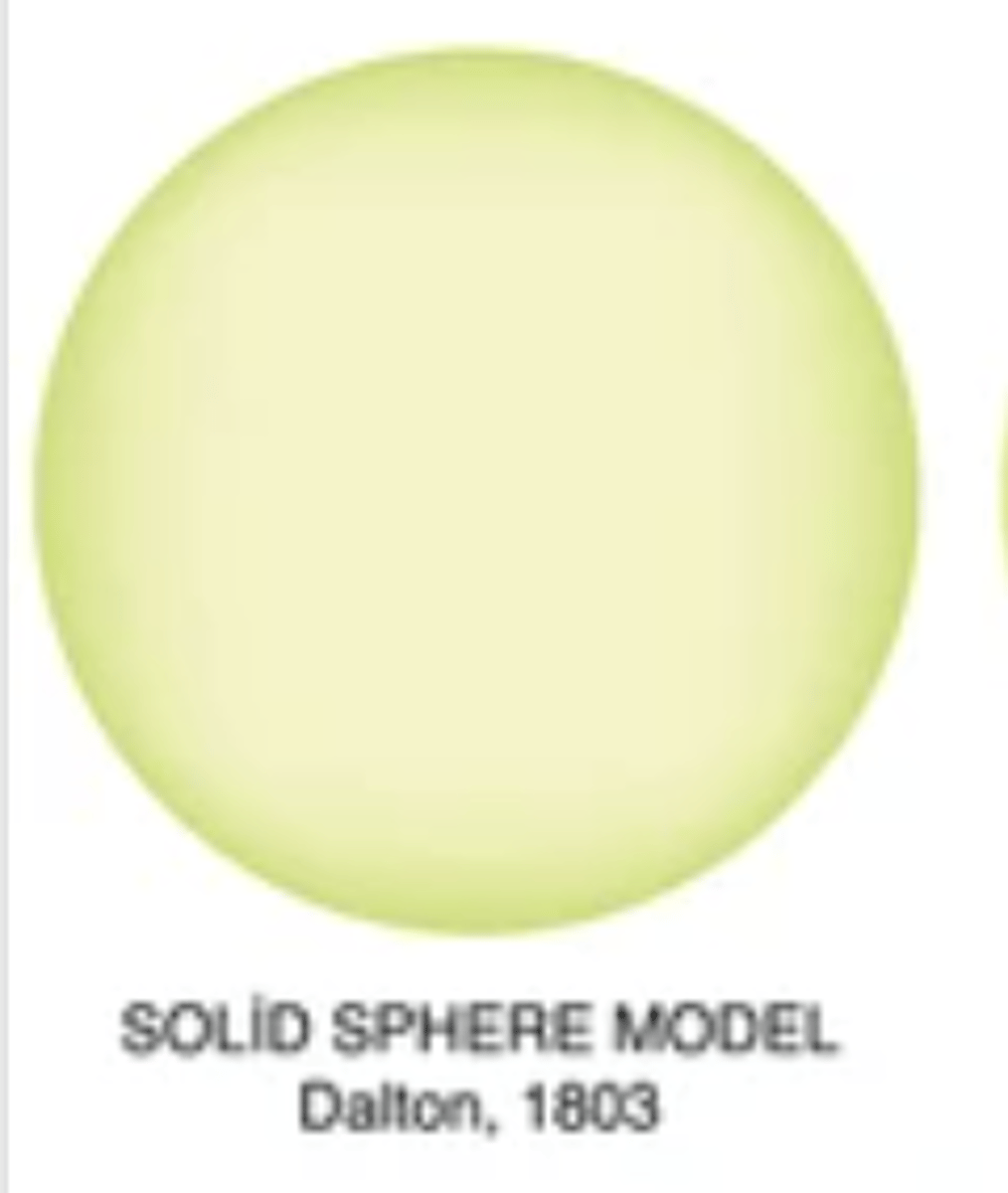
What was John Dalton's model?
Solid sphere model
What did John Dalton discover?
- The Atomic theory (all substances are made of atoms)
- He proposed that atoms were indivisible particles that combined in fixed ratios to form compounds
- His model was based on experimental evidence, but it did not account for the internal structure of atoms.
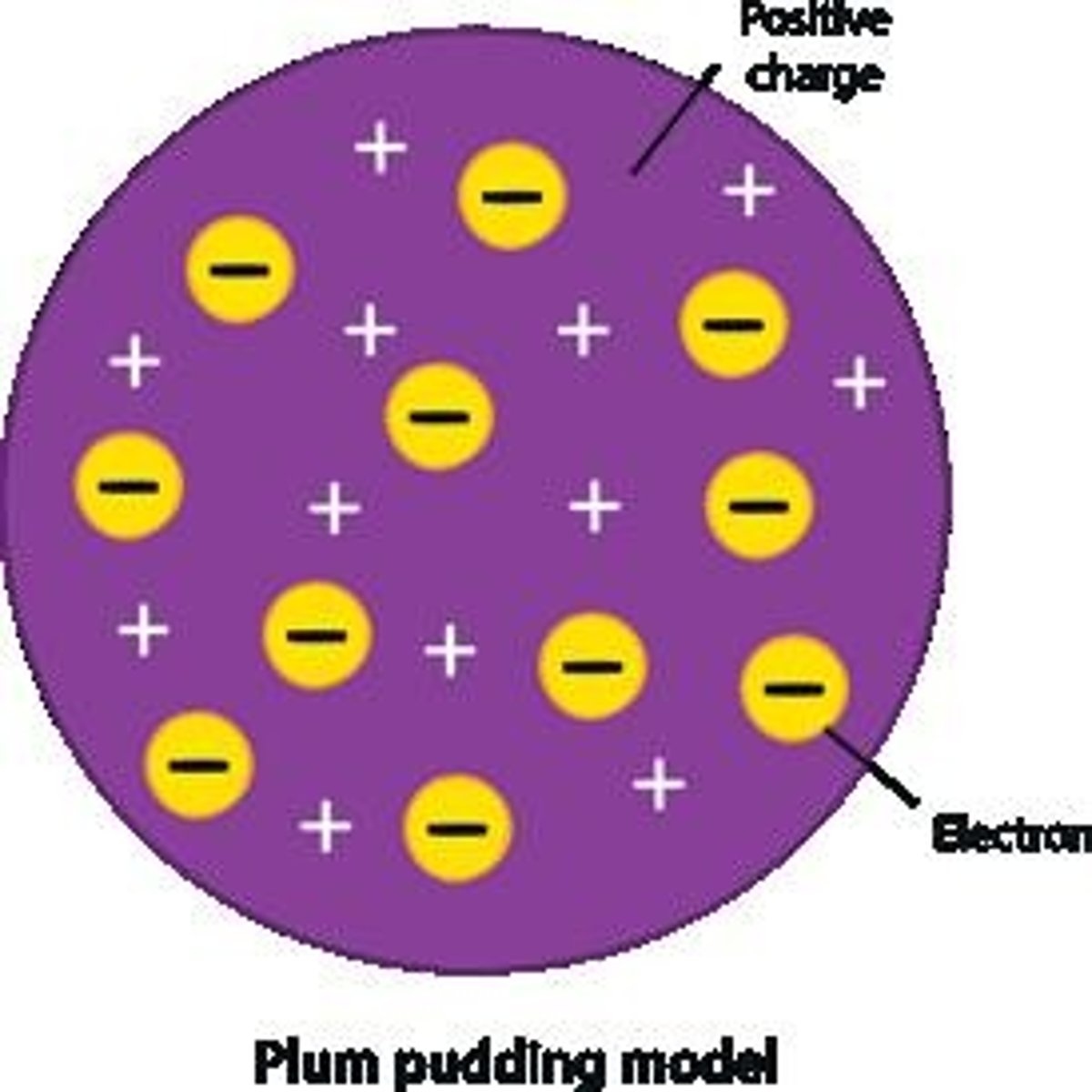
What is the plum pudding model
It states that atoms are a ball of positive charge, with negative electrons randomly embedded in it
Who discovered the plum pudding model?
JJ Thomson
What did JJ Thomson discover?
He discovered the electron and created the plum pudding model
Who conducted the gold foil experiment?
Ernest Rutherford
What did Rutherford discover?
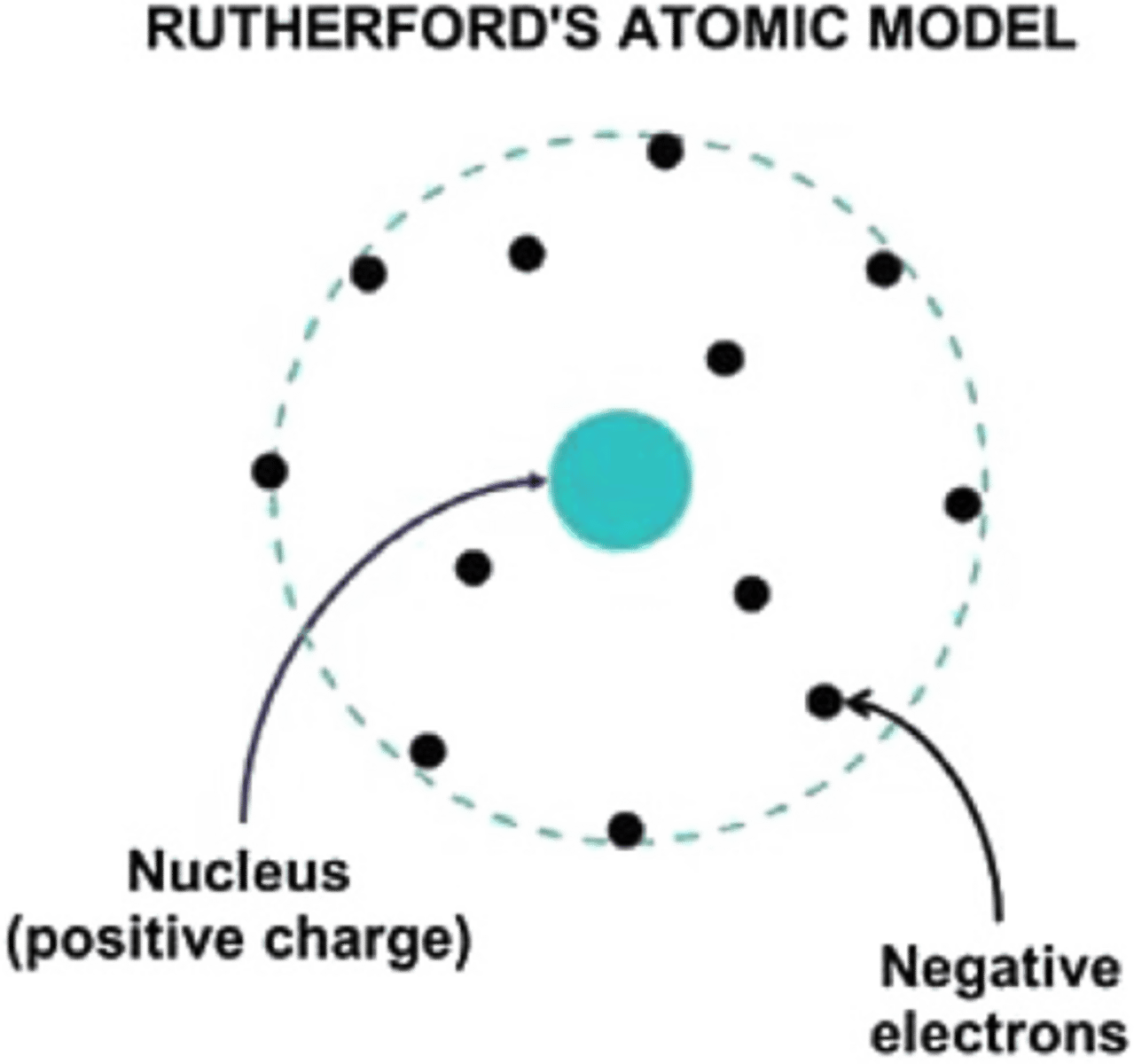
- that atoms have a small, dense, positively charged nucleus.
- that atoms are mostly empty
What is the gold foil experiment?
experiment where positively charged alpha particles were fired at a thin gold foil
What did James Chadwick discover?
neutron
What were the results of the gold foil experiment?
Most of the alpha particles went through the foil; only 1% were deflected at angles and only very few bounced back
What did the results of the gold foil experiment prove?
Most of the alpha particles passed through. This proved that atoms are mostly empty space
Some were deflected, which proved that there is a positive charge inside the atom causing the alpha particle to repel
A tiny fraction bounced right back, which showed that the positive charge and most of the mass were concentrated in a tiny, dense central region (the nucleus), leading to head-on collisions
What was Rutherford's model?
Nuclear model
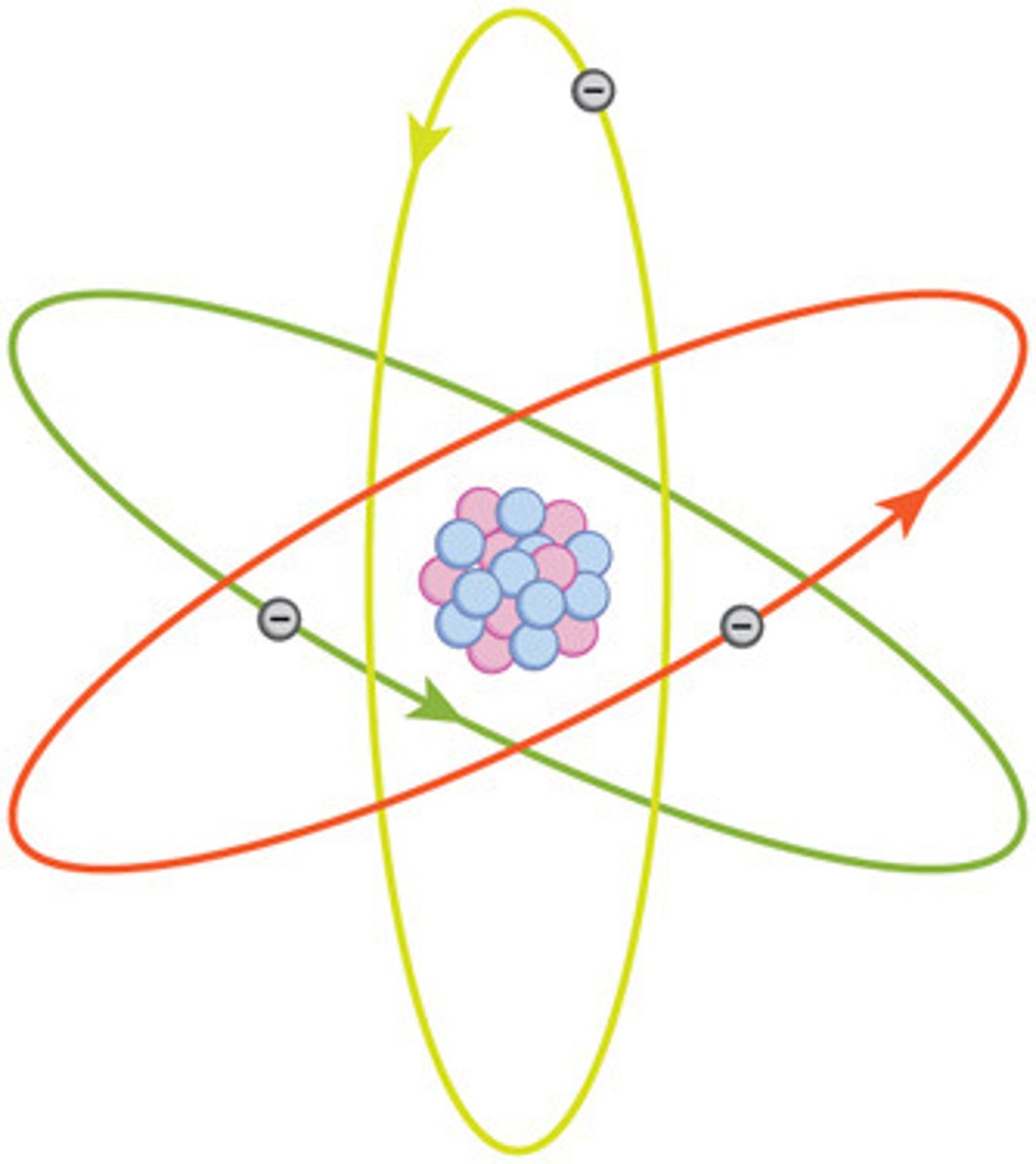
What is Bohr's model?
Planetary model
What did Niels Bohr discover?
electrons orbit in fixed energy levels (shells)
Why was Rutherford's model wrong?
physics predicted that the orbiting electrons should continuously lose energy and spiral into the nucleus, making atoms unstable, yet atoms are stable
What is the quantum model?
model we use today, puts electrons within regions called orbitals instead of in specific orbits
What are isotopes?
Atoms of the same element with different numbers of neutrons
What is background radiation?
The low-level radiation that is around us all the time.
Why do atoms decay?
to become stable (because they have an unstable nuclie)
What are the types of radiation?
alpha, beta, gamma
What is alpha radiation?
When an alpha particle is emitted from the nucleus
What is an alpha particle?
Two neutrons and two protons, the same as a helium nucleus
Why do atoms emit alpha particles?
to become more stable when their nucleus is too large and has an unstable ratio of too many protons or neutrons. This reduces the atom's mass and proton count
What are the properties of alpha particles?
Shorter range, easy to stop, strongly ionising, big and slow
How far do alpha particles travel?
a few cm of air
What are alpha particles stopped by?
paper or skin
What are alpha particle's ionising power?
very high
What type of radiation has the highest ionising power?
Alpha
What is the symbol for alpha particles?
α
⁴₂α
What are beta particles?
high-speed electrons
What is beta radiation?
When a beta particle is released from the nucleus
How ionising are beta particles?
Moderately (less than alpha, more than gamma)
How far do beta particles travel?
a few metres in air
What are beta particles stopped by?
5mm of aluminium
What is the symbol for beta particles?
e⁰₋₁
β
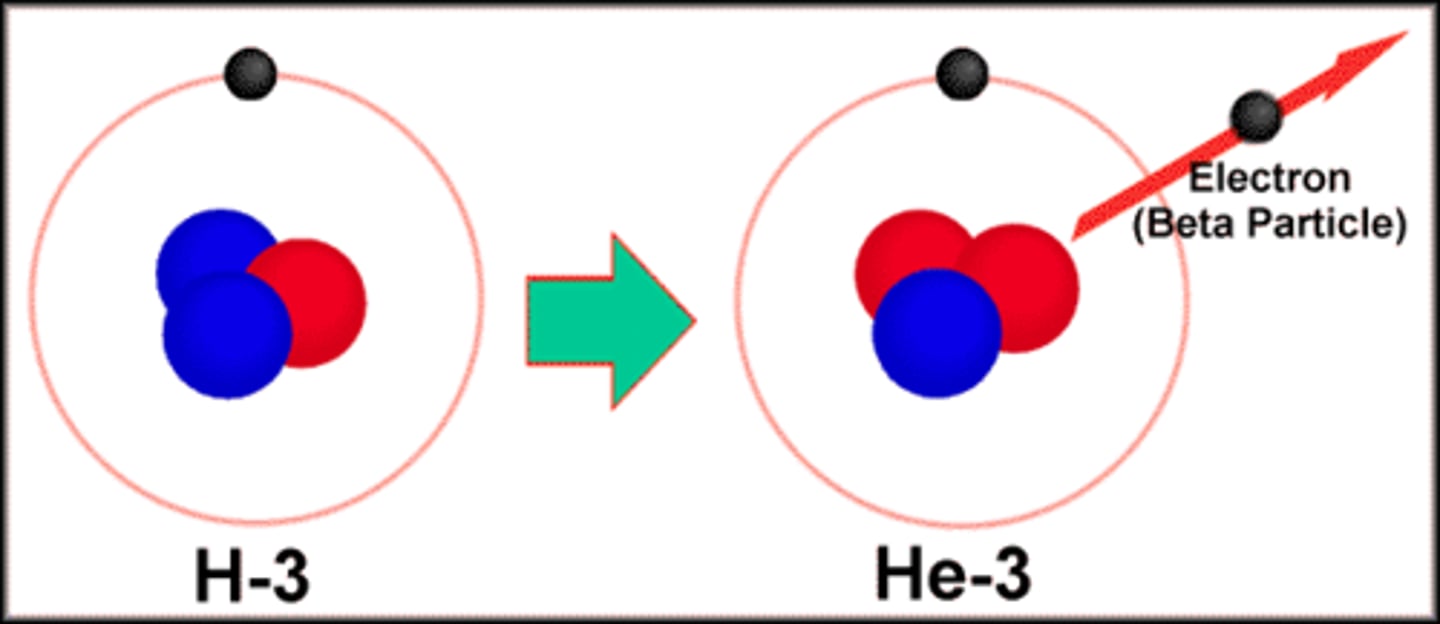
What happens during beta decay?
- An unstable nucleus with too many neutrons transforms a neutron into a proton and emits a beta particle
- The atomic number increases by one, creating a new element, while the mass number stays the same because a neutron becomes a proton.
Example formula of alpha radiation
²²⁸₉₀Th → ²²⁴₈₈Ra + ⁴₂α
Example formula of beta radiation
⁴⁰₁₉K → ⁴⁰₂₀Ca + ⁰₋₁β
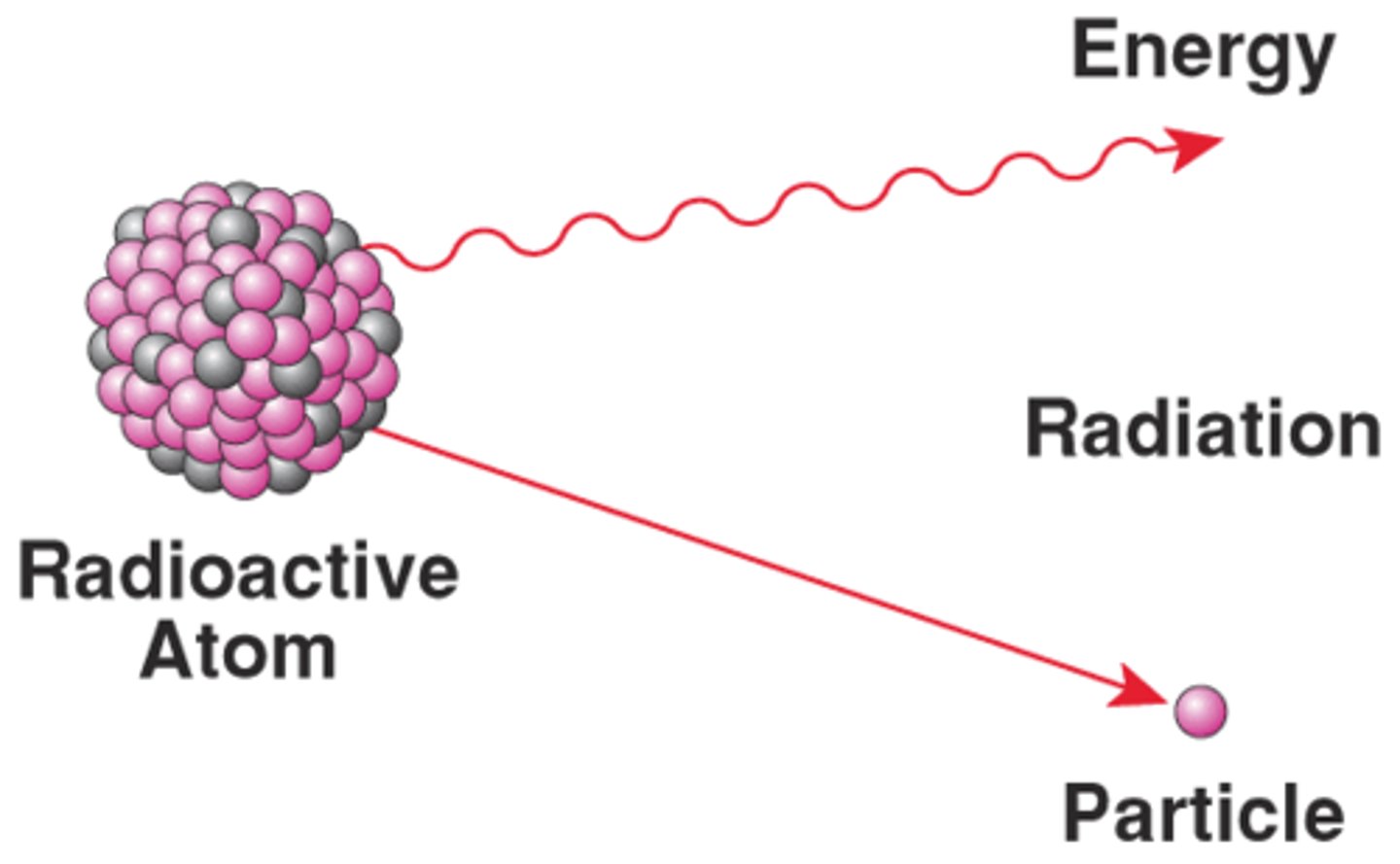
What is gamma radiation?
Electromagnetic rations from the nucleus
Why do atoms emit gamma rays?
- Because their nucleus is unstable and has excess energy, often after emitting alpha or beta particles.
- To reach a lower, more stable energy state, the nucleus releases this excess energy as a gamma-ray photon
What are gamma rays
Electromagnetic waves with the shortest wavelengths and highest frequencies
What is the ionising power of gamma rays?
very low
How far does gamma radiation travel?
unlimited range in air
What is the least ionising form of radiation?
Gamma
What is gamma stopped by?
several centimetres of lead or metres of concrete
What is the symbol for gamma?
γ
What is the activity of radioactivity?
The number of decays per second.
Measured in Becquerels (Bq)
What is 1 Bq?
1 decay per second
What are Geiger counters?
Use a thin wire and specific pressurised gases to measure radiation
What is a half-life?
length of time required for half of the radioactive atoms in a sample to decay
or
the time it takes for the count rate to half
What do half-lives tell us?
How long a substance stays radioactive for
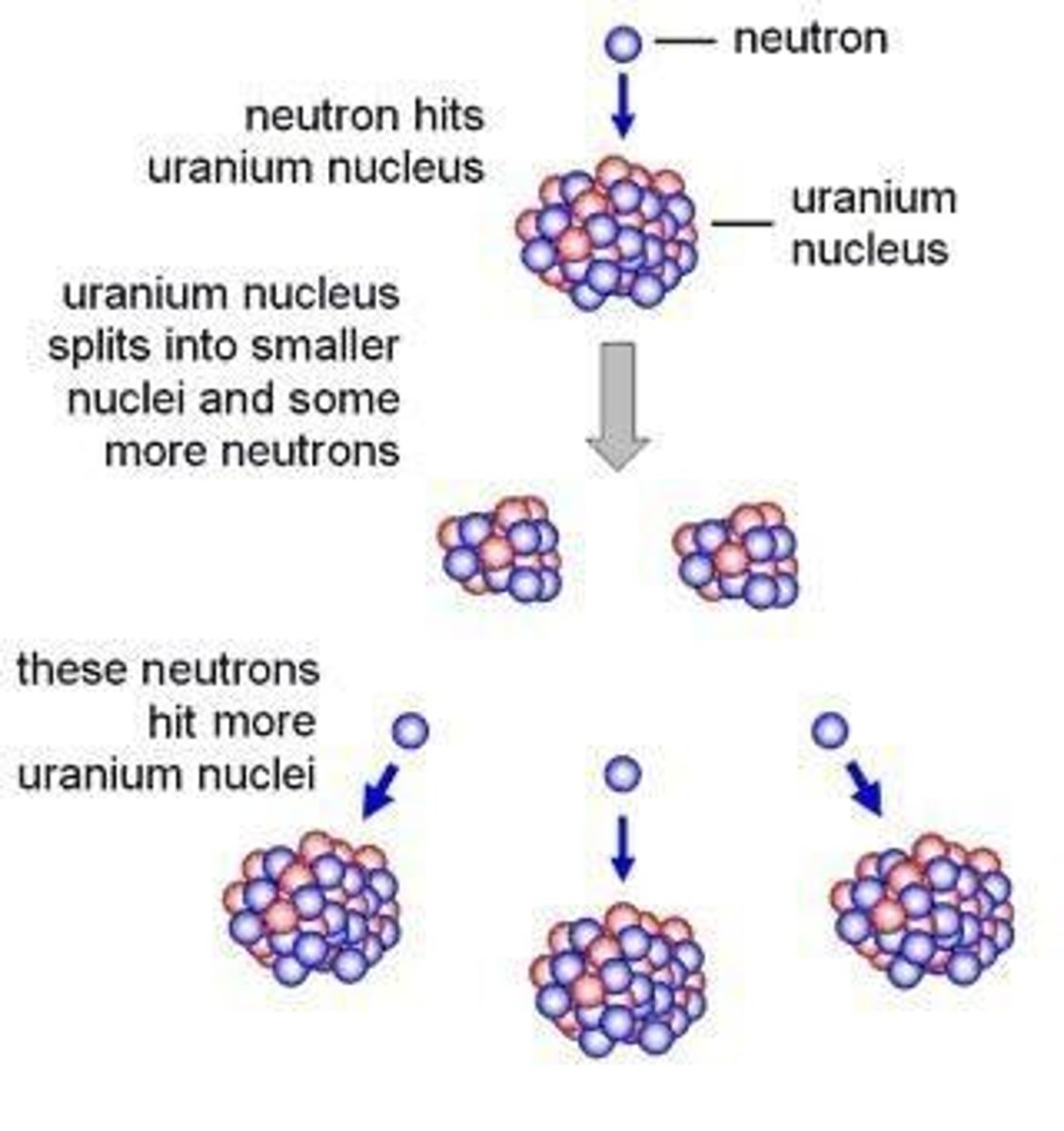
What is nuclear fission?
When a large, heavy, unstable nucleus absorbs an extra neutron and splits into two or more smaller nuclei of roughly equal size. Large amounts of energy, gamma rays and neutrons are emitted.
What is spontaneous fission?
A nucleus can undergo fission without a neutron being absorbed - very rare.
How is nuclear fission used in power stations?
1. Fuel rods that contain unstable nuclei (usually uranium 235 or plutonium 239) are placed inside the reactor core
2. A slow-moving neutron is fired at the unstable nucleus
3. The nucleus absorbs the neutron and splits into two or more smaller nuclei. This releases energy and more neutrons
4. The released neutrons can go on to hit other uranium nuclei. This causes a self-sustaining chain reaction, releasing more energy
5. The energy released is used to heat water, which turns into steam
6. The steam turns a turbine, which is connected to a generator, which produces electricity
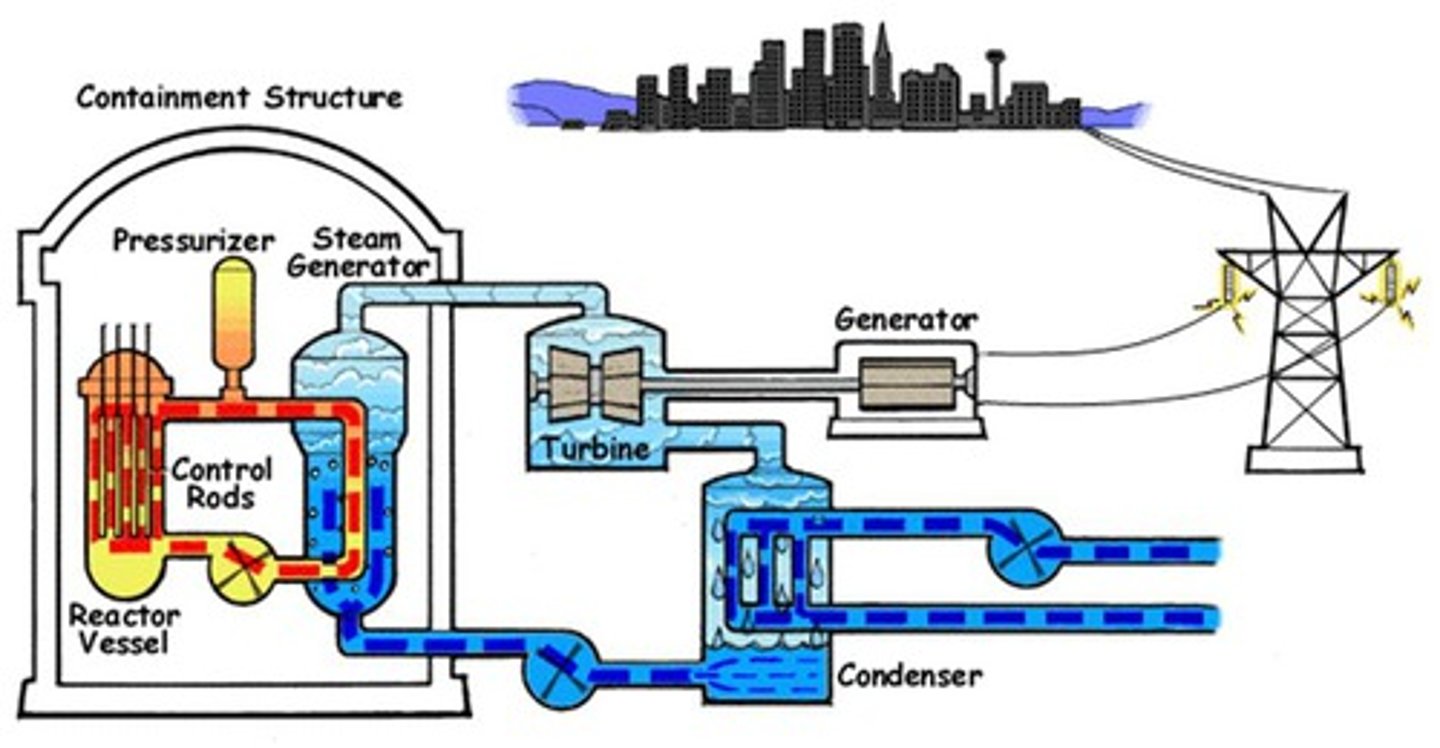
What is nuclear fission used for?
it generates electricity by splitting uranium atoms in a reactor, releasing heat that boils water into steam, which then spins turbines connected to generators
What are the safety features of nuclear power stations?
- Coolant system (like water or gas) carries heat away to stop the reactor from overheating
- Control rods absorb excess neutrons to control the chain reaction
- moderators slow down neutrons so they are more likely to cause fission
- Thick concrete or lead absorbs harmful radiation
What is nuclear fusion?
When two light nuclei (like hydrogen) join to make a heavier one (e.g, helium). Some of the mass is converted into large amounts of energy and is transferred as radiation
Where does nuclear fusion take place?
star's cores
Example of nuclear fusion?
Hydrogen nuclei fusing to produce a helium nucleus
What are the conditions needed for nuclear fusion to take place?
extremely high temperatures and immense pressure to overcome the electrostatic repulsion between positively charged nuclei
Why are scientists trying to make fusion reactors?
To make a clean energy source as heavy hydrogen is easily available, and helium is harmless
Why would nuclear fusion be a good energy source?
it offers virtually limitless, clean, safe, and abundant power, generating vast energy from readily available fuels like hydrogen (from water) and lithium, with helium as the main byproduct, and without producing greenhouse gases or long-lived radioactive waste
What is irradiation?
When an object is exposed to nuclear radiation. The irradiated object does not become radioactive
What is irradiation used for?
Sterilising food and medical equipment
What is contamination?
When unwanted radioactive atoms get onto or into an object, it becomes radioactive and dangerous because it emits radiation continuously from within
What is the formula for half-life
Remaining Amount = Initial Amount × (½)^n
n = the number of half-lives
What is background radiation caused by?
By the radioactive materials in rocks and by cosmic radiation from outer space, it is always present.
What are natural radiation sources?
cosmic radiation
terrestrial radiation
What is cosmic radiation?
radiation that comes to Earth from distant stars
What is terrestrial radiation?
Terrestrial radiation is infrared radiation emitted by Earth's surface.
What are radioactive isotopes with short half-lives used for?
Medical Imaging and Treatment
What is radioactive carbon dating?
a method to find the age of organic materials (like bones, wood, cloth) up to about 50,000 years old, by measuring the decay of radioactive Carbon-14 that living things absorb from the atmosphere.
How can contamination happen?
- Spills or leaks-e.g, from a nuclear power plant or a laboratory
- Particles-Radioactive dust or particles can be inhaled or ingested, contaminating the body.
- Improper disposal-Radioactive waste that isn't handled or stored correctly can spread contamination.
How can contamination be prevented?
- Protective Clothing can help prevent radioactive particles from coming into contact with the skin or being inhaled.
- Containment - Radioactive materials must be stored in secure containers that prevent the release of radiation.
- Decontamination - If contamination occurs, it may be necessary to wash or remove contaminated clothing or areas to reduce exposure.
How is nuclear fission used in nuclear weapons?
During each fission event, energy is released in the form of kinetic energy. The large amount of energy released during the nuclear fission chain reaction is responsible for atomic bomb explosions. Atomic bombs usually contain radioactive isotopes of uranium or plutonium and are capable of destroying whole cities.
What is alpha radiation used for?
in smoke detectors
How are alpha particles used in smoke detectors
they ionise the air in a smoke detector, creating a small electric current; when smoke enters, it absorbs the alpha particles, disrupting the current and triggering the alarm because alpha radiation is weakly penetrating and easily stopped by smoke
What is beta radiation used for?
Thickness detectors. beta radiation can be used to measure the thickness of materials like paper, plastic, or metal. The material absorbs some of the radiation, and the amount of radiation that passes through is used to determine the thickness.
What is gamma radiation used for?
sterilizing medical supplies and food, medicine for cancer treatment (radiotherapy) and imaging (PET scans)
What is radiation used for?
sterilization in the medical field and food industry