Introduction to Movement TMJ and Cervical Spine Exam 2
 Call Kai
 Learn
Learn Practice Test
 Spaced Repetition
 Match
Match Flashcards
 Knowt Play
1/23

Earn XP
Description and Tags
Introduction to Movement TMJ and Cervical Spine Exam 2
Name | Mastery | Learn | Test | Matching | Spaced | Call with Kai | Chat |
|---|
No analytics yet
Send a link to your students to track their progress
24 Terms
What movements are used to test muscle strength of the cervical spine?
flexion, extension, and lateral flexion
What movements are used to test muscle strength of TMJ?
opening & closing, protrusion & retrusion, and lateral glides
upper cervical Flexion/Extension
Nodding motion (Atlanto-Occipital Joint (C0–C1) without lower cervical involvement
Flexion: ~5°
Extension: ~10°
Total sagittal plane motion (flexion + extension): ~15°
upper cervical side-bending (lateral flexion)
Range: ~5° per side
Coupling: side-bending is coupled with rotation to the contralateral side (e.g., when the head side-bends to the right, LEFT rotation occurs)
lower cervical spine (C3–C7) flexion/extension
The lower cervical spine (C3–C7) contributes the majority of full neck flexion and extension in the cervical region.
• Flexion: ~35–40°
• Extension: ~50–60°
• Total (C3–C7) sagittal plane motion: ~85–100°
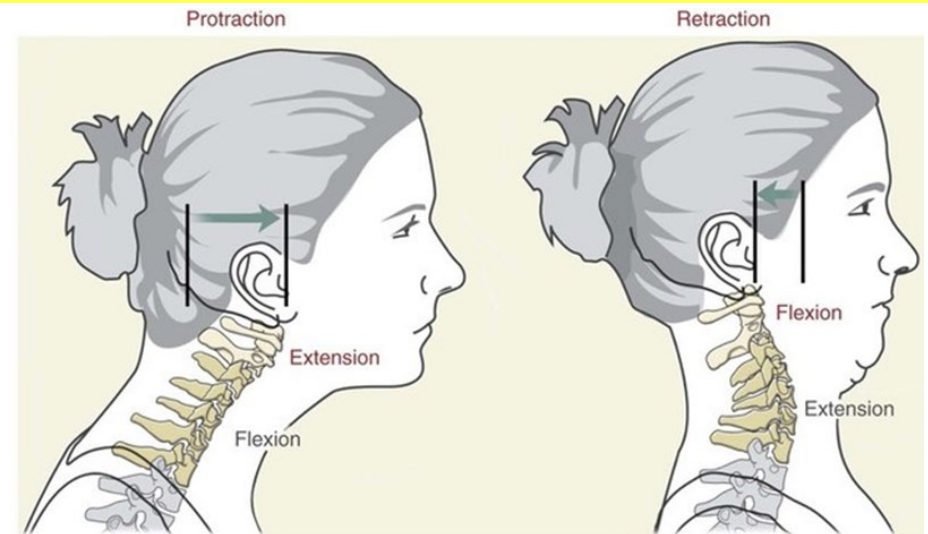
cervical spine retraction and protraction
These are combined movements involving both the upper and lower cervical spine
Upper cervical spine (0–C2): Flexion during retraction, extension during protraction
Lower cervical spine (C3–C7): Extension during retraction, flexion during protraction
Protraction: ~6–8 cm forward
Retraction: ~3–4 cm backward (from neutral)
lower cervical spine lateral flexion (side bending)
The lower cervical spine (C3–C7) is responsible for the majority of lateral flexion (side-bending) in the cervical region.
• Range: ~30–45° per side
• This accounts for ~85–90% of total cervical side-bending.
• Side-bending is typically “coupled” with ipsilateral rotation due to the orientation of the facet joints (e.g., right side-bending occurs with right rotation).
• Overall Cervical Side-Bending (0–C7)
• Total range: ~35–45° per side • Upper cervical (0–C2): ~5° per side
• Lower cervical (C3–C7): ~30–40° per side
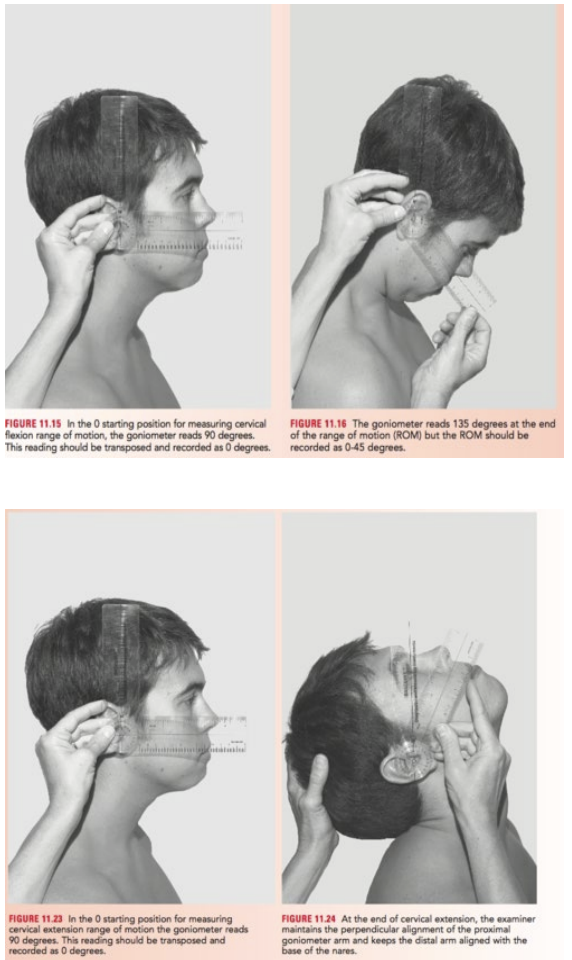
Assessment (Goniometer/Inclinometer) Upper & Lower Cervical Flexion/Extension
The goniometer's axis (fulcrum) is aligned with the external auditory meatus (ear canal), the stationary arm is perpendicular to the ground (either up or down), and the moving arm aligns with the base of the nose.
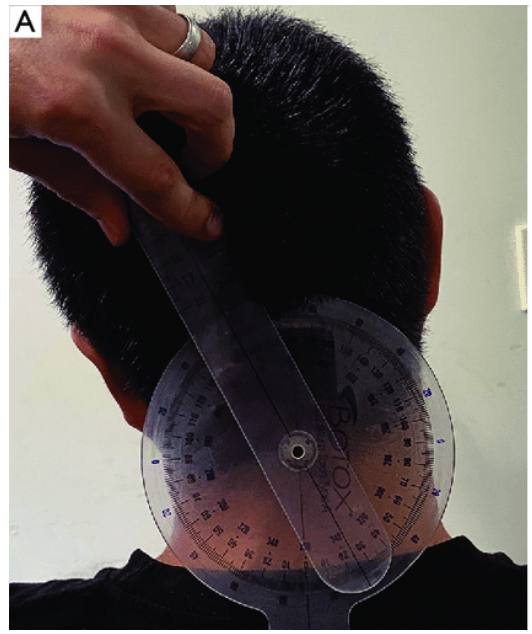
Assessment (Goniometer/Inclinometer) Upper/Lower Cervical Side-bending
• The goniometer's fulcrum is placed over the spinous process of C7.
• The stationary arm is aligned with the spinous processes of the thoracic spine (ideally T1).
• The moving arm is aligned with the dorsal midline of the head.
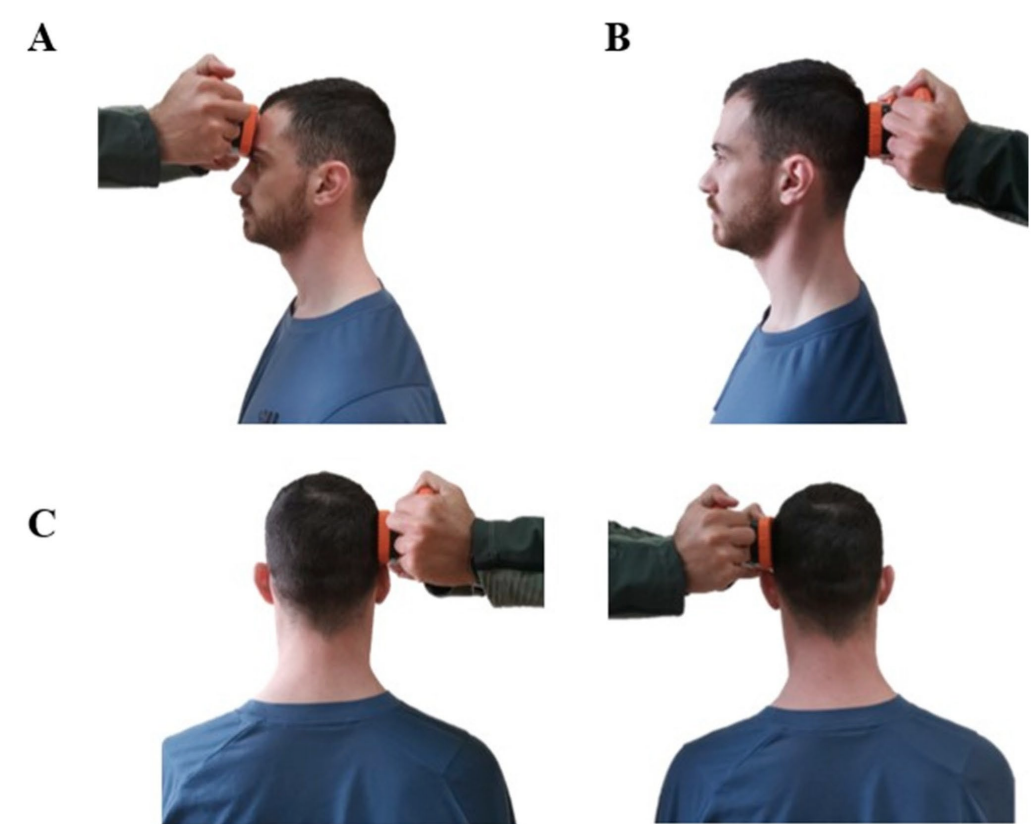
Assessment of Strength in the Cervical Spine (Isometrics)
• Manual assessment: Therapist applies resistance to the patient's head during specific neck movements (flexion, extension, lateral flexion, rotation) while the patient tries to hold the position. • “Don’t let me move you”
• Handheld dynamometer: The patient uses their neck muscles to resist the force applied by the dynamometer, which measures the force generated
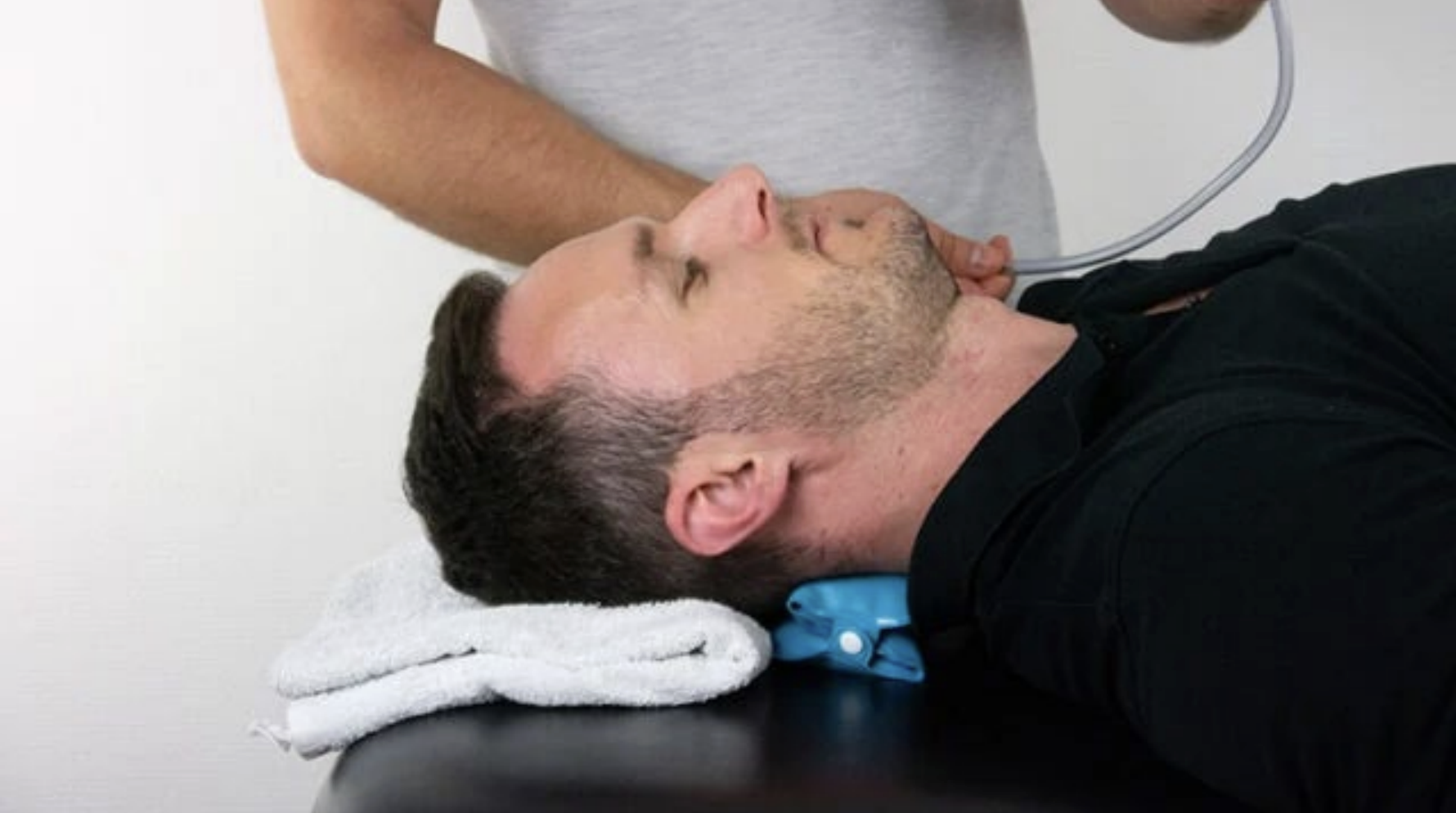
Assessment of Strength in the Cervical Spine (Retraction)
Retraction with BP Cuff: The Cranio-cervical Flexion Test (CCFT) - Deep Neck Flexors
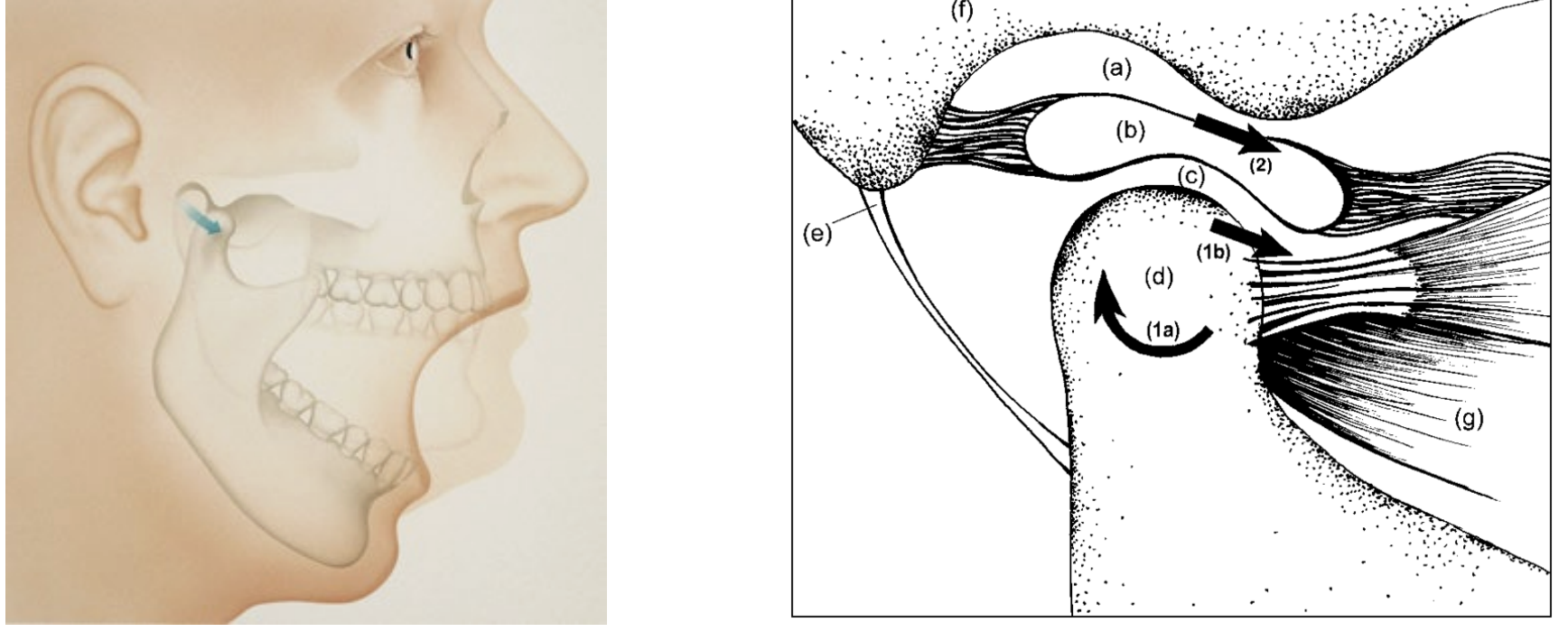
TMJ - Two-Phase Opening
• Initial opening (first ~20–25 mm):Occurs in the lower joint — condylar rotation beneath the disc
• Further opening (beyond ~25 mm):Involves the upper joint — condyle-disc complex translates forward along the articular eminence
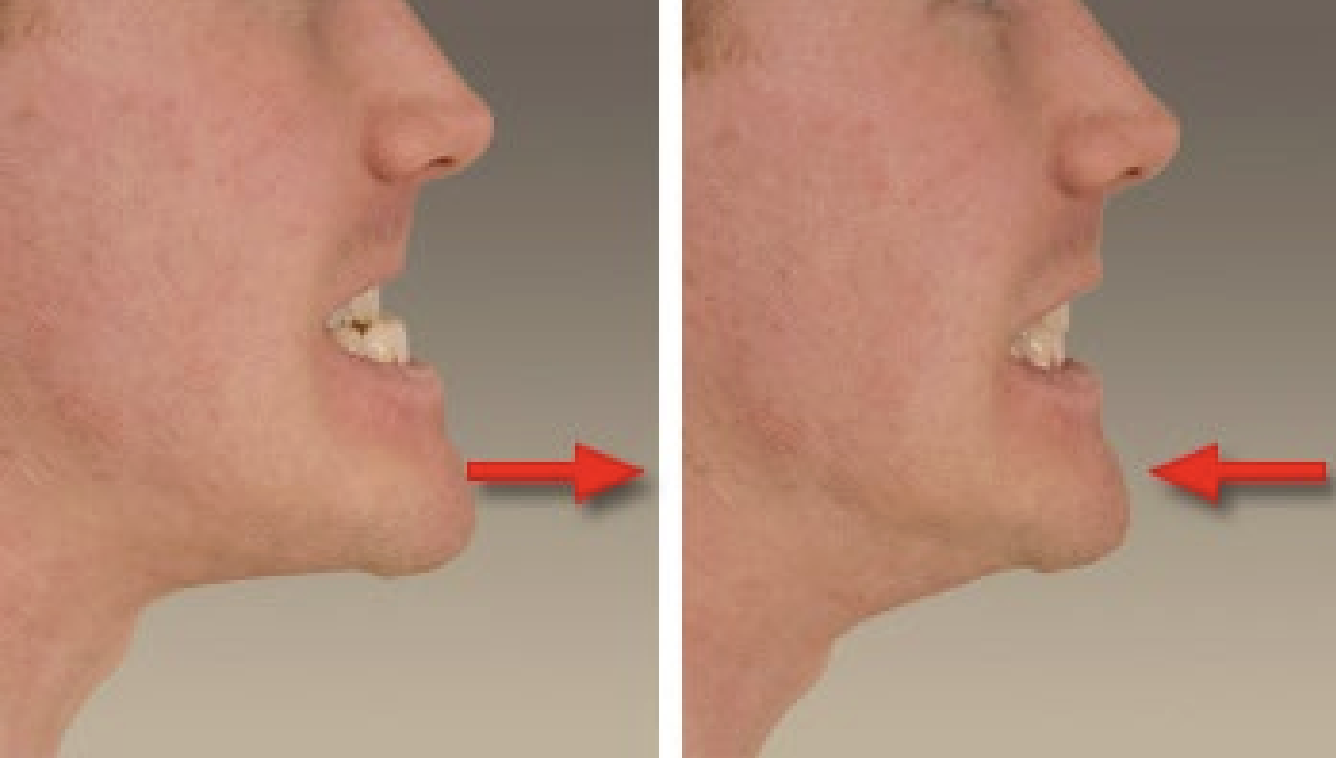
TMJ Protrusion & Retrusion
These are anterior-posterior gliding movements of the mandible within the upper compartment of the temporomandibular joint (TMJ).
• Protrusion and Retrusion are linear and do not involve rotation— unlike jaw opening/closing, which involve both rotation and translation.
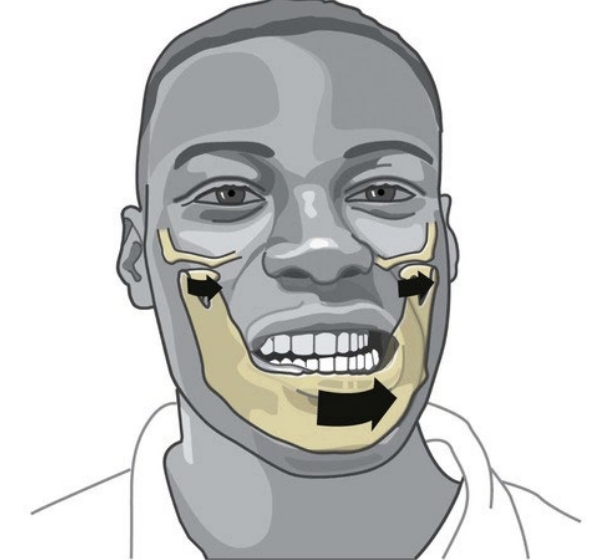
Sideglide (Lateral Excursion)
• Called lateral deviation or lateral excursion—is the side-to-side movement of the mandible, used primarily in chewing and grinding motions.
• Lateral excursion is a combined motion that occurs in both TMJs simultaneously, but in different ways on each side
Ipsilateral TMJ (same side as movement) Rotates or pivots around a vertical axis in the lower joint compartment with minimal translation
Contralateral TMJ (opposite side) Translates anteriorly and medially in the upper joint The condyle and disc glide forward and inward
Normal Range of Lateral Excursion:~8–12 mm per side
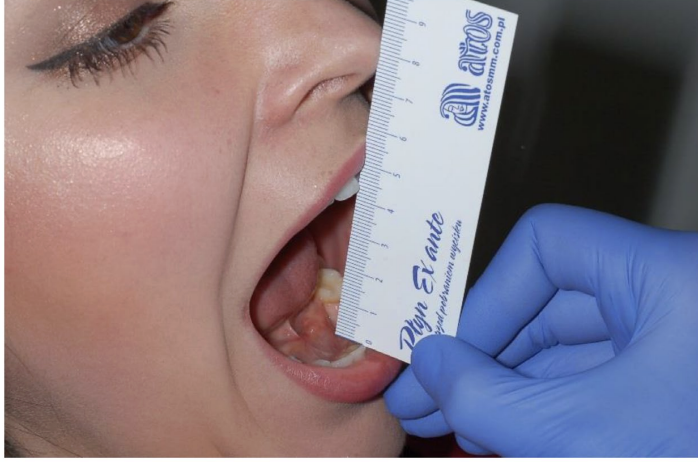
TMJ ROM Measurements for Opening/Depression
• Measuring how far the jaw can open, both comfortably and with maximum effort. Measure between top & bottom teeth. Observing the movement for any deviations or pain.
• Normal opening range is typically between 40-55 mm. Greater than 50mm is considered “hyper-mobile”
• “3-finger test”
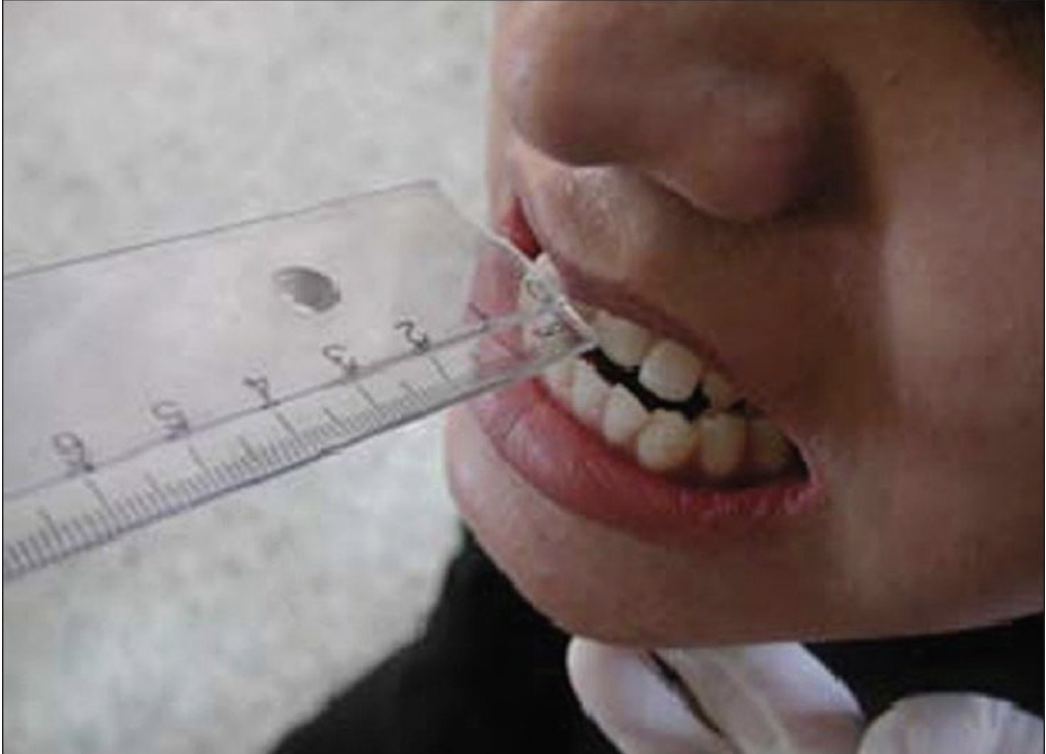
TMJ ROM Measurements for Protrusion/Retrusion
• Protrusion is typically 8-12 mm
• Retrusion is about 3 mm (from neutral)
• measurement taken from the incisal edges (biting surfaces) of the front teeth.
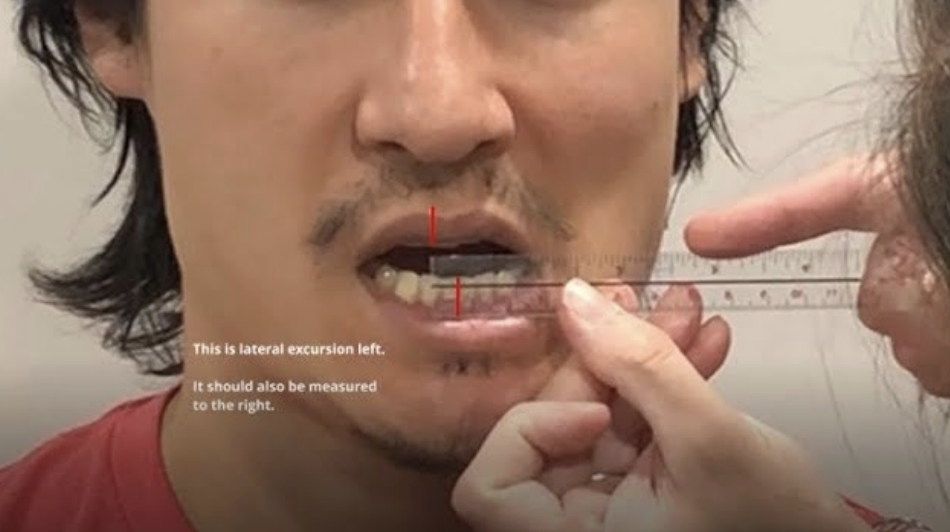
TMJ ROM Measurements for Side-gliding
• Linear distance between the center of the upper incisors and the center of the lower incisors in millimeters.
• Typically ranges from 8 to 12 mm to each side.
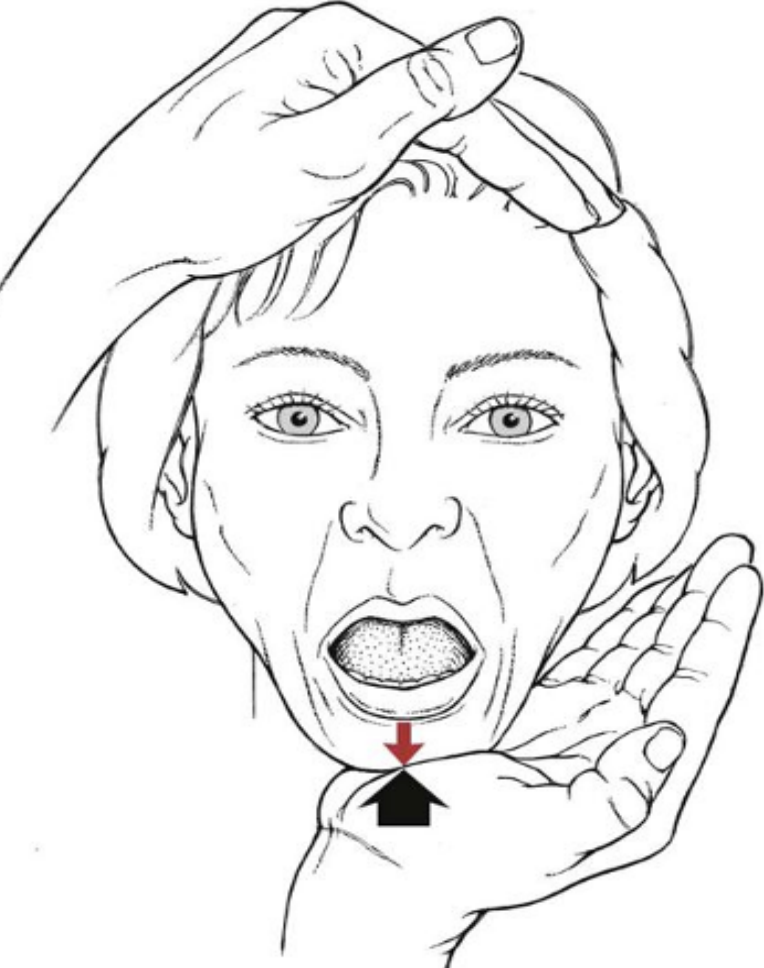
TMJ Strength Measurements for Opening/Depression
• Resistance is applied to the jaw opening movement to test the supra-hyoid and infrahyoid muscles
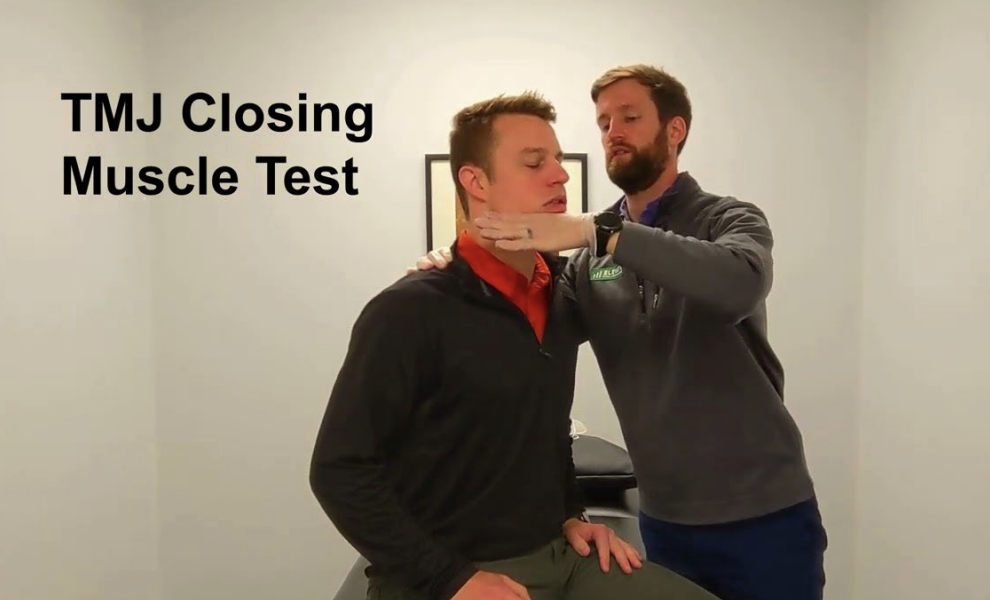
TMJ Strength Measurements for Closing/Retraction
• Resistance is applied against jaw closure to test the strength of the masseter, temporalis, and pterygoids muscles.
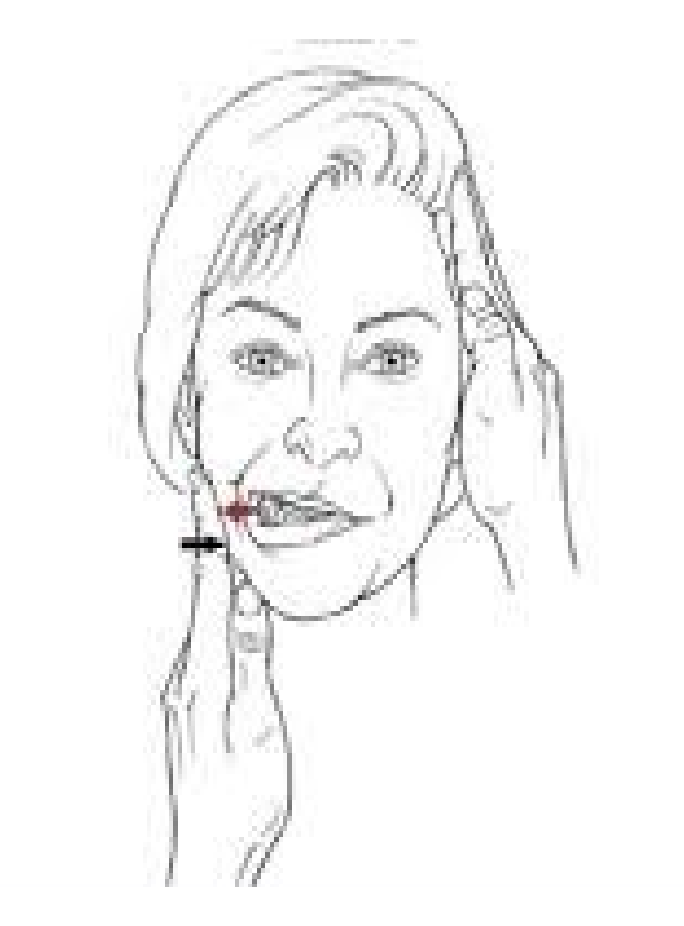
TMJ Strength Measurements for Lateral deviations/Side-glides
• Resistance is applied against lateral jaw movement to assess the pterygoids on the opposite side
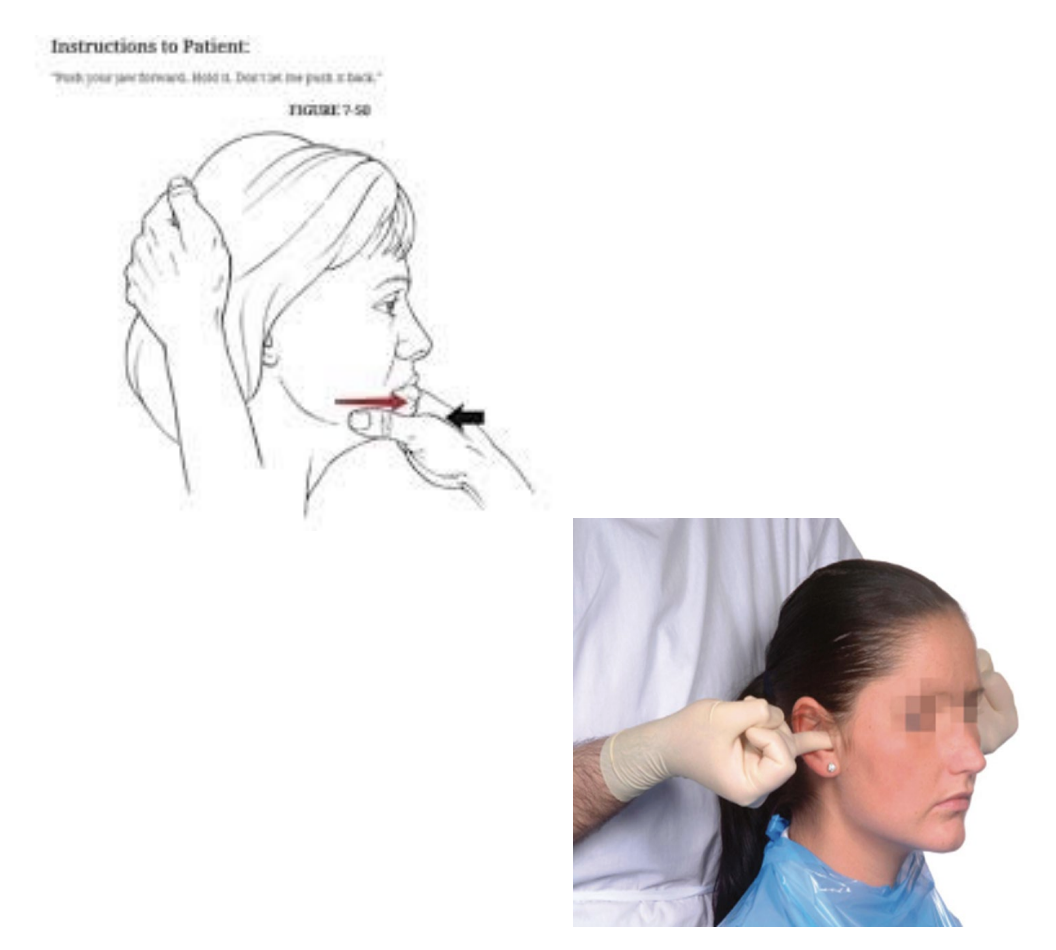
TMJ Strength Measurements for Protrusion/Retrusion
• Resistance is applied against forward jaw movement to test the lateral pterygoids.
• For retrusion, resistance is applied posterior on the mandibular condyle
Deep neck flexor muscles
1) longus colli
2) longus capitis
3) rectus capitis anterior
4)rectus capitis lateralis
Muscles that produce movement for TMJ
Elevation (close mouth)
Muscles involved: Temporalis, masseter, and medial pterygoid
Depression (open mouth)
Muscles involved: Lateral pterygoid, suprahyoid, and infrahyoid
Protrusion (protrude chin)
Muscles involved: Lateral* and medial pterygoids, and masseter
Retrusion (retrude chin)
Muscles involved: Temporalis and masseter
Lateral movements (grinding and chewing)
Muscles involved: Temporalis (same side), pterygoids (opposite side), and masseter (same side)
Muscles that may limit motion (the muscles or structures that stop the movement from going farther because they're being stretched or compressed)
Motion | Main limiting muscles |
|---|---|
Cervical flexion | Splenius, semispinalis, upper trapezius, levator scapulae |
Cervical extension | Sternocleidomastoid, longus colli/capitis, scalenes |
Right side bend | Left upper trapezius, left levator scapulae, left scalenes |
Left side bend | Right upper trapezius, right levator scapulae, right scalenes |
Right rotation | Left SCM, left splenius, left semispinalis |
Left rotation | Right SCM, right splenius, right semispinalis |
TMJ opening | Masseter, temporalis, medial pterygoid |
TMJ closing | Digastric, mylohyoid, geniohyoid, lateral pterygoid |
TMJ protrusion | Posterior temporalis |
TMJ retrusion | Lateral pterygoid |