Topic 3 (Bondings and Polarization)
 Call Kai
 Learn
Learn Practice Test
 Spaced Repetition
 Match
Match Flashcards
 Knowt Play
1/8

There's no tags or description
Looks like no tags are added yet.
Name | Mastery | Learn | Test | Matching | Spaced | Call with Kai | Chat |
|---|
No analytics yet
Send a link to your students to track their progress
9 Terms
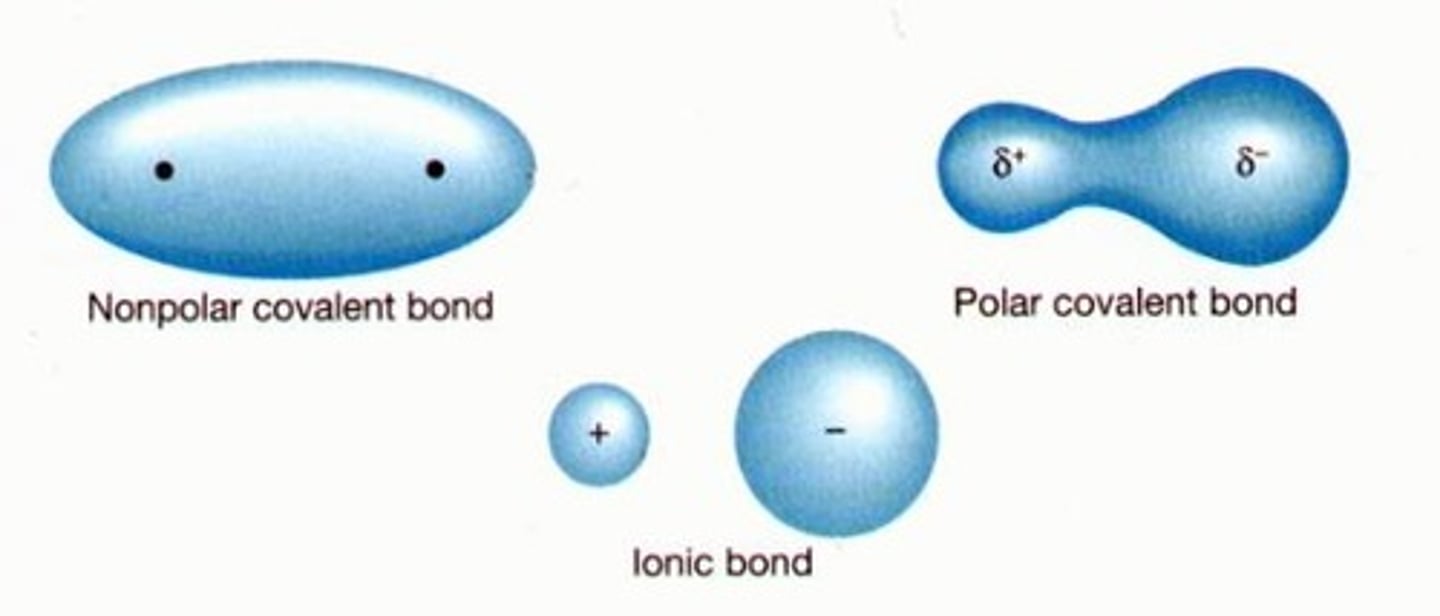
Draw electron density map for:
Non-polar covalent bonds (like H₂, Cl₂, O₂)
Polar covalent bonds ( like HCL)
ionic compounds/bonds ( like NaCl)
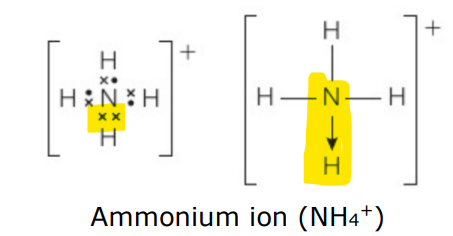
State what is meant by a dative covalent bond. (2 marks)
- A covalent bond where both electrons in the shared pair are
- provided by one atom
NOTE:
In NH4+ both electrons are provided by N
the arrow → means dative covalent bond
Nitrogen has no vacant d orbitals, so it cannot expand its octet beyond eight electrons. Therefore, it cannot form five covalent bonds (NCl₅).
Explain why aluminium chloride in the solid state has significant covalent character
[2marks]
- Al³⁺ is small and highly charged
- so it strongly polarises the (electron cloud of) Cl⁻, thus giving AlCl₃ significant covalent character.

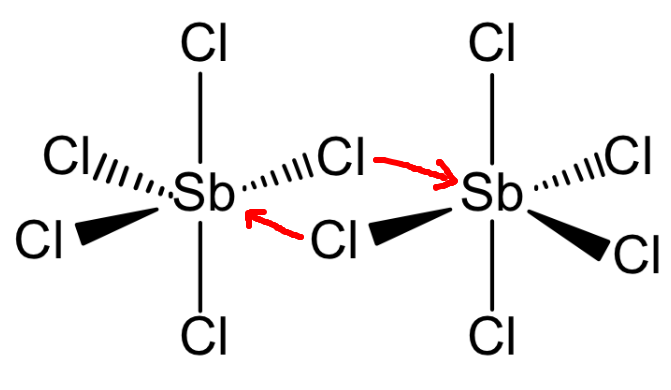
they are joined by dative covalent bonds
(draw the diagram in pic)
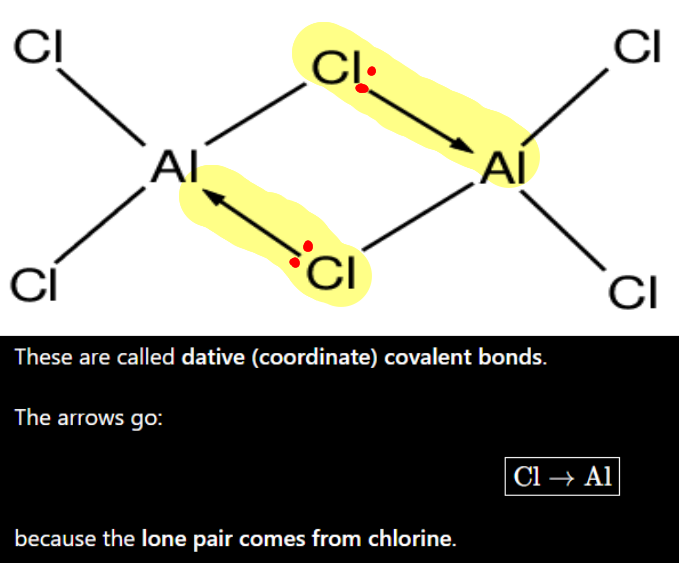
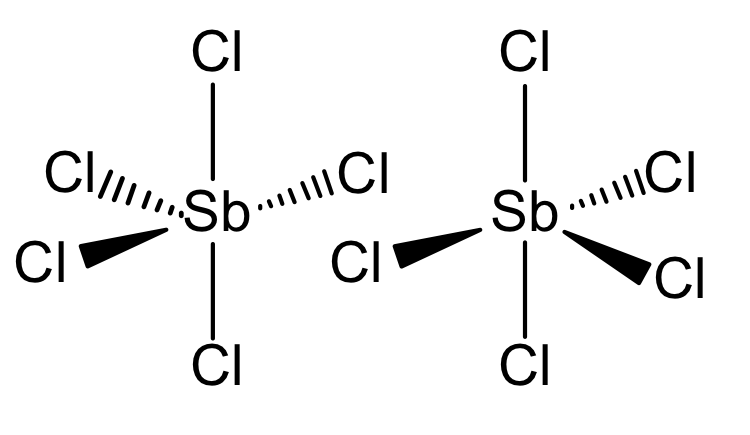
Complete the diagram to show dative covalent bonds.
State why N cannot form pentachlorides like Sb
arrows from Cl → Sb because Cl has lone pairs so its contributing/providing both electrons
In N(1s2 2s2 2p3) no 2d orbitals exist (so it cannot expand it's octet)
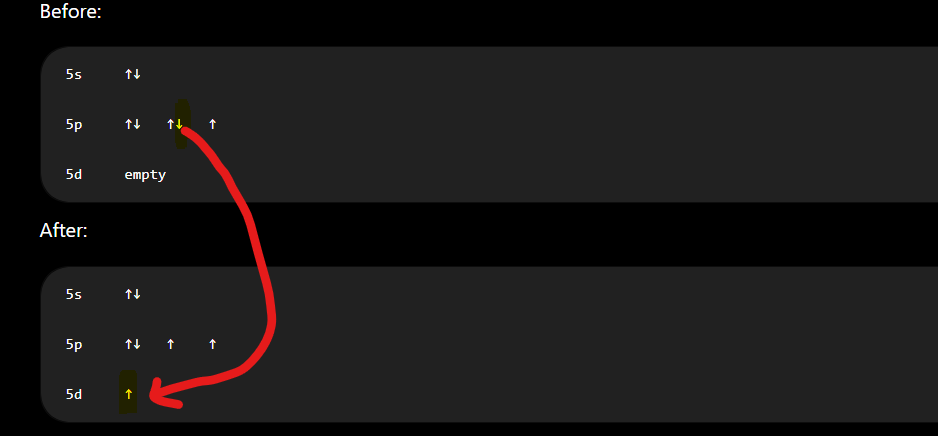
Suggest how the electrons in outer shell of iodine rearrange to form ICl3
[2marks]
- One electron from the 5p orbital is promoted (to an empty 5d orbital)
- iodine can form 3 covalent bonds and 2 lone pairs

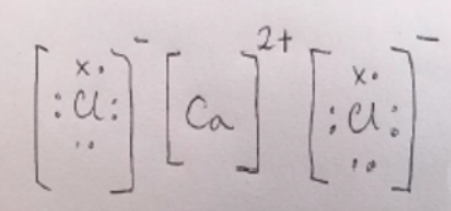
Since CaCl2 is an ionic compound, add + & - charges
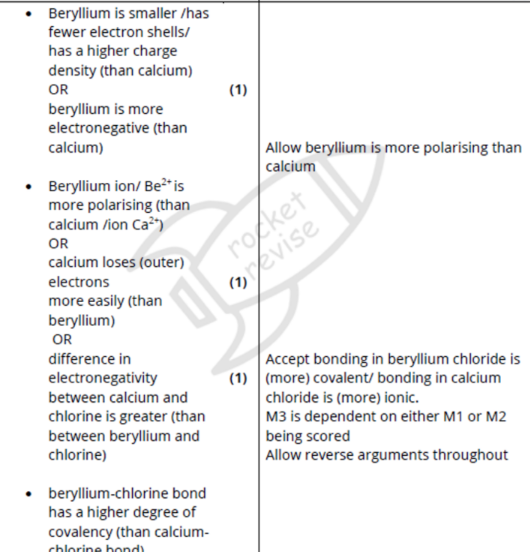
Explain why gaseous beryllium chloride and solid calcium chloride have different types of bonding.
[3 marks]
check this:
- Be2+ ion is smaller
- so it has more polarizing power
- thus BeCl2 is more covalent and CaCl2 is more ionic